




★★★
“Just because we’re girls, why do we have to be afraid all the time?”
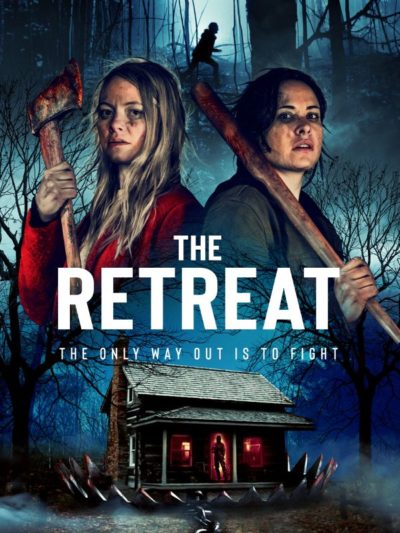
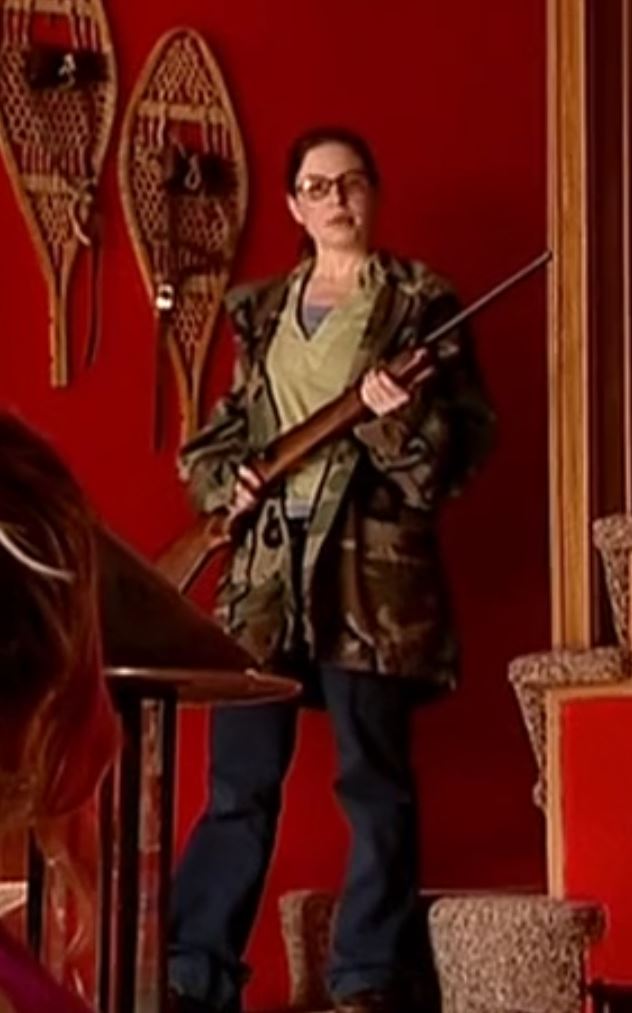 Three teenage girls, Ruth (Brox), Deborah (Henning) and Kate (Humiston) head off to the remote mountain cabin owned by Kate’s parents for a weekend away. Initially, it’s an overdose of teenage drama bullshit in various flavours, as they drink, smoke weed, talk about sex and so on. But their soap-opera idyll is interrupted by the unexpected return of Ed (Morrison), who has been squatting in the cabin. The girls capture him, using the gun he left behind, with the intent of taking him down the mountain to the police the next day. But as the night goes on, the tensions between the three young women begin to fracture their friendship. There’s also the question of Ed: is he the innocent drifter he claims to be, or is there a connection to a long-buried trauma in Kate’s history?
If you’re hoping for definitive answers to at least some of the questions asked by the film, you’re going to come away disappointed. Ed is almost a MacGuffin in human form. He exists largely to propel the rest of the film forward, and act as a force which will cause the girls to reveal their true nature over the course of events. They are three very distinct personalities, to the point that I wondered if (and not for the first time) they were intended to represent the three aspects of the psyche: id, ego and super-ego. While my recent knowledge of teenage girls is strictly limited to parental experience – and thus not that recent – if there’s one thing I know, it’s that they tend to congregate with those like them. The disparate trio we get here wouldn’t last 10 minutes in high school before tearing themselves apart. Though I guess that is what happens for a good chunk of proceedings here.
You should probably be forgiven for having strong reactions to them: my instant dislike of Kate, turns out to be not unjustified, considering the ease with which she embraces her inner psychopath. Deborah, meanwhile, is a little too one-dimensional and obvious for my tastes, so it’s left to Ruth to do a lot of the dramatic heavy lifting. Brox does well enough in that task to keep the movie interesting; at least, once it gets past a rocky opening 20 minutes, and the thriller aspects come into play, more than the “teen angst” ones. I will confess to being somewhat disappointed by the ending, which seems contrived in such a way as to achieve closure, without any of the participants having to take personal responsibility for their actions. There are also any number of poor choices made by the trio, in order to reach that point. Though, against speaking from my parental experience, that’s probably about par for the teenage girl course. There was just about enough here to sustain its brisk 78 minute running-time, and going much longer would likely have been a mistake.
Dir: Eli B. Despres, Kim Roberts
Star: Jeanette Brox, Megan Henning, Ali Humiston, James Morrison
 Running a crisp 58 minutes in its omnibus edition, this is a bit like
 I kinda agonized, for far longer than I should have, over whether this was a 3-star or 2½-star film. It’s probably 2¾. Or perhaps 2 5/8. No, 2 11/16. In the end though, it doesn’t matter. It’s just another in Megan Fox’s attempts to become the next Angelina Jolie, following in the footsteps of the similarly okay but not exactly memorable
  ★★★
★★★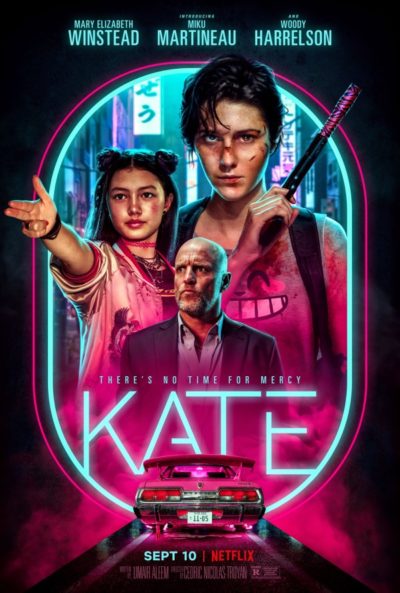 There is also, quite often, some kind of emotional resonance, in the cases where the child is not biologically related [when that is the case, you don’t typically need or get any more explanation, blood being thicker than water]. Maybe the kid acts as a surrogate, a replacement for one previously lost (Alien), or the heroine could never have. Or if a girl, the protagonist can perhaps see a younger version of herself. The other common theme is the use of the child as a key, to unlock the adult. Often, the latter has lost her humanity, typically through harsh circumstances, becoming largely a lone figure, with her emotions suppressed. The “childlike innocence” of the young person, to use a cliché, can be used as a psychological crowbar, pricing open the hard shell of the grown-up, allowing them to reconnect with their humanity. The more emotionally-driven immaturity also stands in contrast to the adult’s stoicism, often to an extreme degree.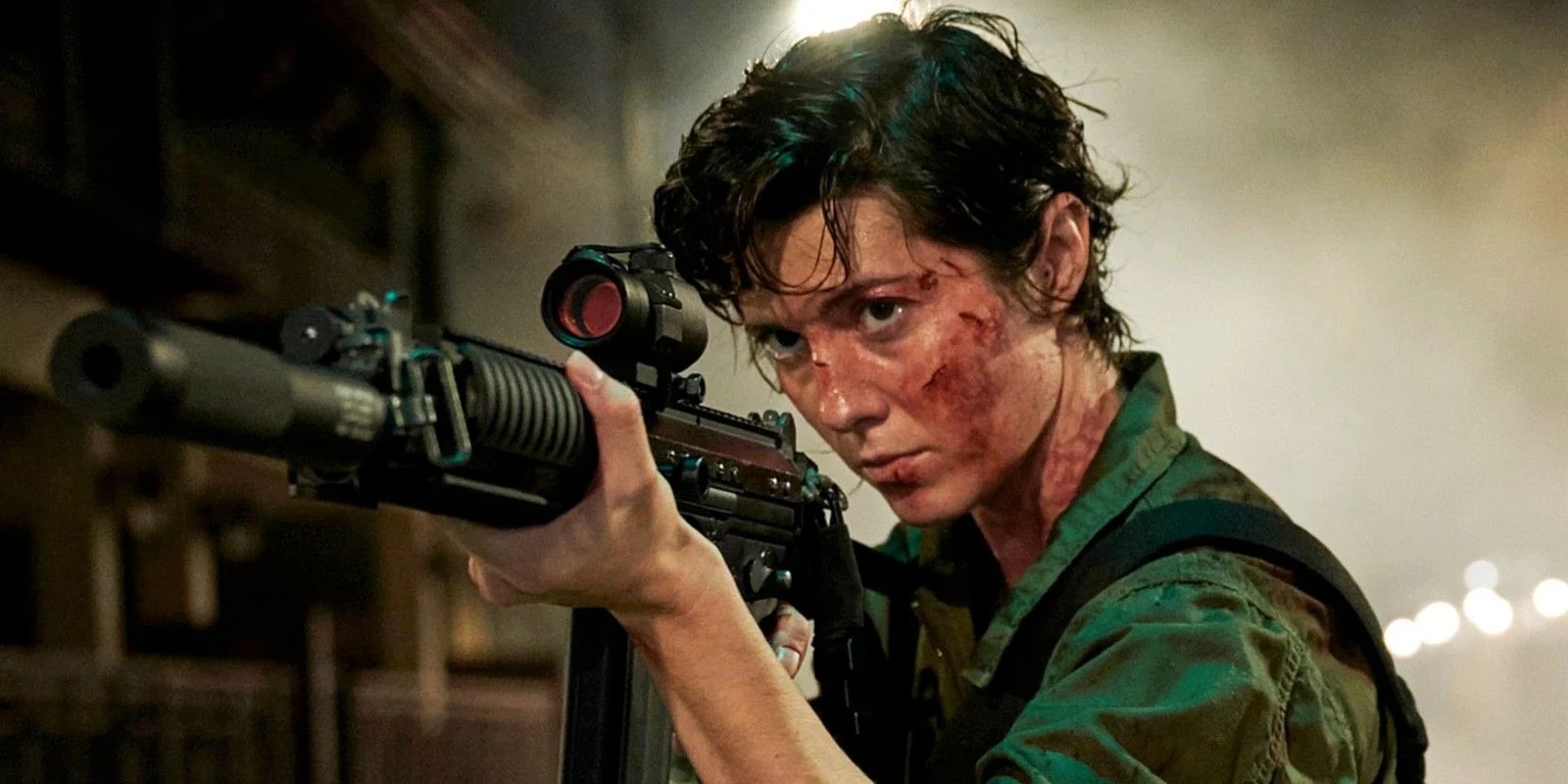
 After the unexpected pleasures of

 The sport of arm-wrestling has been featured in the movies before, most notably the Sylvester Stallone vehicle, Over the Top. But that wasn’t a comedy – at least, not intentionally. This entry, as well as switching to the distaff side, also has its tongue in cheek, while still sporting a strong message about female empowerment, that never becomes a lecture. If you’re looking for an inspiration I’d saw the