 ★★★★
★★★★
“TV Sinners”
 Most action-heroine fans will know that this was not the first TV series inspired by Luc Besson’s classic GWG film. Between 1997 and 2001, La Femme Nikita ran for four full seasons, plus a shorter fifth one, with Peta Wilson playing Nikita. In early 2010, the CW Network announced it was developing a pilot to try out a new version of the show, and this was picked up for a series in May. The CW seemed a bit of an odd choice: their idea of an action heroine tends more towards shows like Gossip Girl and the 90210 reboot, with a target demographic of 18-34 year-old women. So was this version going to showcase a kinder, gentler Nikita?
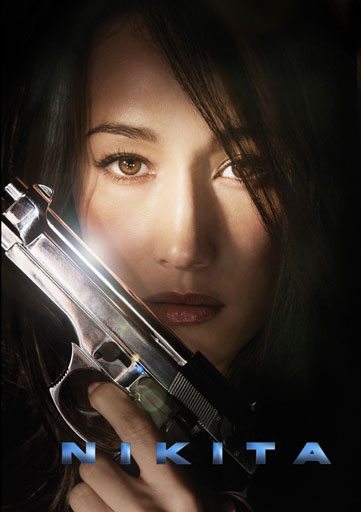 I was reassured by the casting of Maggie Q as the lead, who has a solid action pedigree, both in Hong Kong (Naked Weapon) and the West (Live Free or Die Hard and M-I:3). While its source material was clear, it took a different approach. Instead of telling Nikita’s story from the beginning, with her recruitment into a shadowy semi-official organization and training as an assassin, it starts later, after she has mutinied and left them. Now, she is working to bring down the organization known as Division, its leader, Percy (Berkeley), and his right-hand man, Michael (West), who trained Nikita before she went rogue. Her ‘secret weapon’ is Alex (Fonseca), a new recruit going through training, while acting as Nikita’s mole and feeding her information, allowing her to sabotage and obstruct Division’s missions.
The results have generally been pretty impressive, probably the closest thing to a true kick-ass heroine on network TV since the demise of Alias [which may have have happened some time before the end of Alias, if you get my drift]. If not quite as dark as the Wilson incarnation, it is certainly satisfactory on this level, with death, torture and treachery lurking in just about every episode. The characters arcs certainly have their twists and turns: the alignment of loyalties at the end of the series is radically different from where they started, with people on both sides crossing over. It’s easy for a show like this to get into a rut – Division sets up an operation, Nikita foils it, or whatever – and the generally avoided this pitfall.
In what one suspects was a nod to the target demographic, this was as much about Alex as Nikita, who has her own past to contend with. There is, probably inevitably, the love interest, in the form of a blandly attractive next-door neighbour, who is basically the first man she meets after Alex completes her training and goes into the outside world. There was something similar for Nikita, though this first looked to be heading in one direction, then swerved in another during the second half of the show. That was one of a number of changes made mid-season: it seemed as if the makers needed to fine-tune things on the fly; I was concerned where this might lead, but it didn’t hurt the show.
One particular improvement was the appearance of Amanda (Melinda Clarke). Initially Division’s psych evaluator, she took a much more prominent role, and the relationship between her and Alex made for an interesting dynamic, not unlike Sidney Bristow/Irina Derevko [hmmm…]. We also enjoyed Berkeley’s portrayal of Percy: remembering him as the heroic, if inept George Mason in 24, this was a real change. The final couple of episodes had some epic twists, though I was a bit peeved with the “deaths”, which proved not to be terminal. I find it a cheat: as we saw with Buffy, once a character has come back from the grave, death tends to lose its sting, though the execution here was not as clunky or contrived.
 They even crammed in nice nods to the original movie and its TV predecessor too, with a dive down a chute to escape, and a cameo from Alberta Watson, one of La Femme Nikita‘s actors, as part of the intelligence committee supposedly in charge of Division. By the time the dust has settled, Nikita was driving off into the sunset with a surprising ally, and Alex was also teamed up in a new way, setting things up nicely for the second series. Whether it was going to get one or not seemed in doubt for a while, as the rating did sag mid-season, dropping the show onto the ‘bubble’. However, it was announced in May that the CW would pick it up for another series, moving the show to Friday nights to play along with Supernatural.
However, all the plot is perhaps secondary; we want to see ass being kicked. I have largely to agree with Maggie Q, who said, “In terms of action, I don’t see our quality of action on any other show right now. I’m sorry. They may have bigger explosions, but our fights are genius.” For TV work, it’s certainly well above average, and she was apparently instrumental in getting the original co-ordinator fired: “This is my genre, what I’ve been doing for 14 years. I know it well. There’s a level of quality I will not let dip, ever, when it comes to the action… I said, he’s gotta go. It’s dipping. It hasn’t dipped enough in a way that audiences have recognized yet, but it will. I know his style. He’s not innovative. He doesn’t have what it takes to take the show to the next level. And we’re done. We’re done here. We need to bring someone else in.”
What stands out in particular is how much of her own work Q is doing [and, to a lesser extent, Fonseca]. As she also pointed out how much things have changed: “I remember seeing bad wigs on doubles. Then they cut to a close-up, then there’s a wide shot and you know the actress is not doing it. When I fight, you’re right there in our faces – very Bourne. You expect that from that calibre [of film], so why wouldn’t you expect it on TV?” That’s what I think probably impressed me most about the show: at its best, you could stand it beside Salt, and it would not suffer in the comparison. Here’s an example:
Yep. I think it’s safe to say that the series has delivered copious amounts of high-quality action, combined with mostly interesting characters, and sufficient plot twists to keep us thoroughly entertained. Overall, it ranks among our favourite five shows of the year to date, of any genre, and comfortably leads the pack as far as action heroines go. We’re already looking forward eagerly to its return, so we can find out what lies in store for Nikita, Alex and Amanda. Oh, and some of the non-heroines too. I guess. :-)
Star: Maggie Q, Shane West, Lyndsy Fonseca, Xander Berkeley




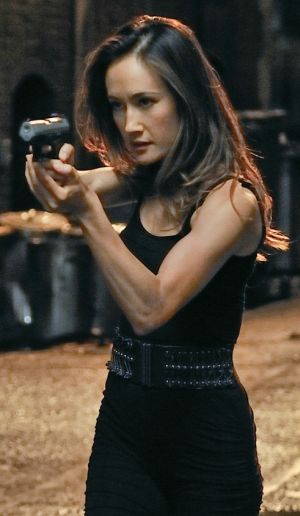 When we last saw Nikita (Q), she’d gained some help for her struggle against Division in the shape of fellow defectors from the organization, Michael (West) and tech guy Birkhoff. But she’d lost protege Alex (Fonseca), who had stayed with Division to further her lust for revenge on those who’d killed her parents, while reclaiming her family fortune. Meanwhile, Nikita’s nemesis and former boss Percy had been usurped by Amanda (Clarke), and was now in a plexiglass box in the basement. Throw in Oversight, the government committee supposedly in charge of Division under Senator Madeline Pierce; CIA agent Ryan Fletcher and Pierce’s son Sean, who join Team Nikita; Owen, a rogue guardian, keeper of one of Percy’s black boxes… And I haven’t even got to Michael’s love-child, a source of much angst for all concerned.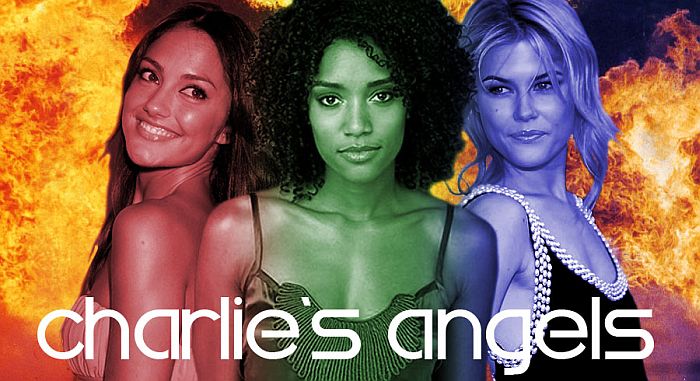
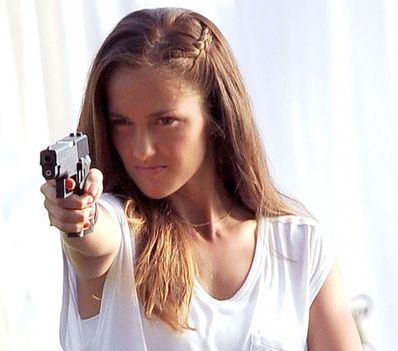 It could perhaps have withstood these barbs, if it hadn’t been for the poor ratings. 8.76 million viewers watched the Sept. 22 premiere, leaving it third in the timeslot, with less than half the audience for CBS and Fox’s offerings. That was disappointing enough, but it lost 19% of its audience the following episode, and by week three, it was down below six million. The death-knell was that, among the 18-49 year old demographic key to advertisers, Angels was on a mere
  ★★★½
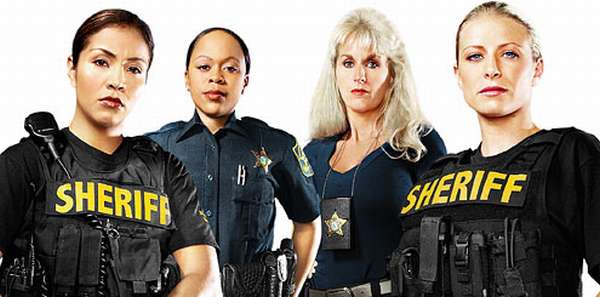
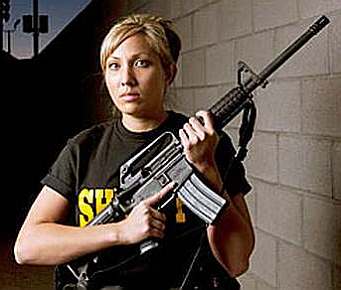
★★★½ Twenty years ago, Cops debuted on Fox, and has become a part of the cultural landscape, leading to an avalanche of spin-offs, ranging from the serious to the complete spoofs (Reno 911 being the most notable). The very first episode took place in Broward County, Florida and, two decades later, the latest in the field returns there. PoBC, as I’m going to refer to it for obvious reasons, follows four women members of the Sheriff’s Department there, both at home and on duty, as they take down the bad guys and deal with the public.
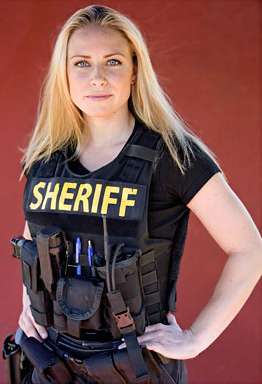 Despite Murillo’s unquestioned position as Empress of Lip-gloss, it’s blonde, blue-eyed Penoyer who is the glamour queen of the show – though the illusion is somewhat damaged when she starts yelling commands at suspects in a voice that’s probably the audio equivalent of getting Tazered. Though as she points out, such an attitude is necessary: “When someone walks in a room and you got a cop who is 6’5″ and 300 pounds, he looks intimidating. So we have to act intimidating: we have to be very, very serious and let people know we’re not playing around.” Well, not all the time, anyway. We also get to see Penoyer and her policewomen friends shopping for guns, and relaxing on the beach. In their bikinis.
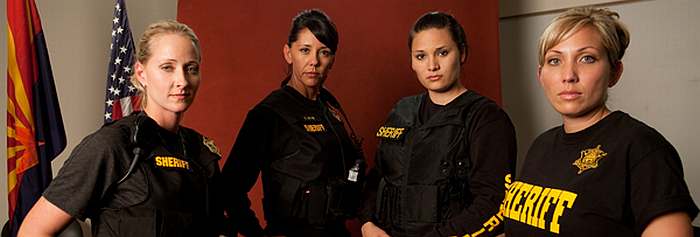 ★★★★
★★★★ The second series of TLC’s “mommy cops” reality series struck close to home, centered as it was on Phoenix. It didn’t come as much surprise as our local sheriff, Joe Arpaio, is infamous locally as a media whore, who wastes no opportunity for self-promotion, and is a sharply-divisive figure locally, adored and loathed by about equal parts of the population. We wondered how long it would take before Joe slimed his way onto the screen: six minutes into the first episode, we had our answer. Fortunately, this was more of a blip, and our fears of an Arpaio-centered show proved largely unfounded [see the execrable Smile… You’re Under Arrest for how bad this could have been].
 As notable as what is shown, is what was
 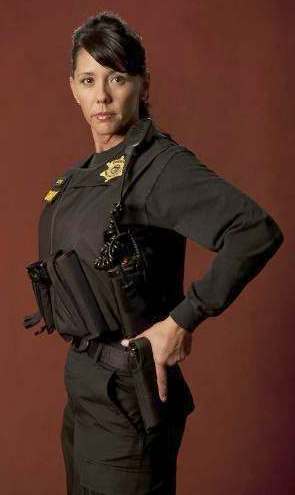 Finally, there’s Detective Deborah Moyer (right), who is completely marvellous, and the main reason to watch the show. A 19-year veteran, we’d be entirely happy if the show was 100% about her. While the other women occasionally seem very scripted when they are talking to the camera, that isn’t the case with Moyer: there’s a definite sense that what you see is what you get with her. While her policing style may not be “by the book” – in one episode, she basically arrests a teenage girl for failing to hug her father – her reactions are entirely natural and certainly had us nodding in approval more often than not. She just comes across as being very normal: when she encounters a young perpetrator, she tends to think about her own kids of the same age.
 The double-pilot. Probably deserving of a place on the FAQ is, “Why don’t you include Sarah Connor?” The reason is simply that she was a supporting character in the first two Terminator films; one essential to the plot, that’s for sure, but clearly over-shadowed by her male counterparts in both movies. The TV series finally moves Connor (Headey) front and center, and also adds an additional action-heroine dimension, in the shape of Cameron Phillips (Glau), a schoolmate of John Connor’s who turns out to be a new model of Terminator, sent back to watch over him. The show starts in 1999, a couple of years after the events of Terminator 2, but soon shifts to the present day; it thus largely ignores the timeline of Terminator 3, in which Sarah Connor was reported to have died of leukemia in 1997.
 The rest of the series If there’s an unfinished feel to the show, that would be because it was. Thanks to the writer’s strike, the final four episodes never made it to the screen, and the storylines will be incorporated into the upcoming second series, confirmed by Fox in April. While not perhaps the makers’ fault, it undeniably had an effect, basically leaving us to turn to each other at the end [which involved a car-bomb] and go, “Is that it?” The rest of the series, however, wasn’t so terrible, though it did feel somewhat stretched. The main plot threads were extensions of the pilot: a) the Connors trying to stop Skynet from becoming active, in particular through locating a chess computer called The Turk, and b) evil Terminator Cromartie trying to stop them. There’s also c) an FBI agent (Jones) who is trying to piece together the pieces, trailing both parties, and d) the arrival of Derek Reese, the brother of Kyle and therefore John Connor’s uncle.
 With somewhere north of two hundred cable channels to surf through, a show has about ten seconds to grab our attention. When we spotted Ninja Warrior on G4 Tech TV, I thought it would probably be one of those anime series. I couldn’t be more wrong. It’s actually a sports entertainment series from Japan, where competitors go through four assault-course type stages, of increasing toughness. It’s pretty brutal; in the decade the show has been on the air, only two of the 1,800 entrants have made it all the way to the end. However, it’s presence here is due to the spin-off for female competitors, which is being broadcast, also on G4, as Women of Ninja Warrior; the Japanese title Kunoichi translates, more or less, as “female ninja.”
 The tests here, however, are aimed more at agility than strength, such as Domino Hill (top, right) a precarious test of balance on increasingly-unstable block. They certainly remain extremely challenging: the first tournament was so brutal, that only two competitors made it past stage one, and neither survived the first obstacle on stage two. Only one woman has ever completed the course, the “Queen of Ninja Warrior”, G-Rockets dancer Ayako Miyake, and she has done it an incredible three times, despite adjustments made after each tournament. That’s hasn’t stopped Miyake, who has whizzed up the final stage (bottom, left) without apparent problem, netting her the grand prize of two million yen (about $20,000) per show, and making the tiny (5’2″, 90-pound!) dancer something of a celebrity. She’d be great as Kei if they ever did a live-action version of Dirty Pair Flash.
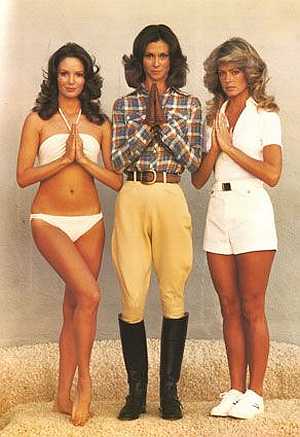 I suppose my main surprise is how pedestrian this was. Action? Hardly anything to speak of at all, despite the credit sequence which shows them training as police officers. The story has them going undercover at a vineyard, whose owner vanished seven years ago, and is about to be declared legally-dead: his ex-wife (Muldaur) and the sleazy foreman will clean up…unless the daughter, also missing, shows up. Of course, the Angels play both a fake daughter (Smith) and the ‘real’ thing (Jackson) – the former is designed to be exposed, in order to get herself involved with the wife and foreman, and reveal what’s going on. Quite cunning, really.
 Our once-favourite TV show walks off into the sunset – literally – and we are confirmed in our belief that it is very, very hard to keep interest in a series going past the third season. Especially if you’re creator JJ Abrams, who was missing, presumably making the very Alias-like Mission Impossible III; he didn’t even return to write or direct the season finale. It was, on the whole, a credible stab at trying up loose ends: Rambaldi, the question of whether Sloan was good or evil, Syd’s relationship with her mother, and the real identity of Vaughan, about to be revealed at the end of season four, when he and Sidney were in a car-wreck. This led into the main arc of the series, a hunt for ‘Prophet 5’, a shadowy organization intent on the usual things shadowy organizations want. As opposed to, say, the Alliance, the Covenant, K-Directorate, SD-6, etc…