★★★½
“Could do with some more action, yet still more than acceptable.”
 The double-pilot. Probably deserving of a place on the FAQ is, “Why don’t you include Sarah Connor?” The reason is simply that she was a supporting character in the first two Terminator films; one essential to the plot, that’s for sure, but clearly over-shadowed by her male counterparts in both movies. The TV series finally moves Connor (Headey) front and center, and also adds an additional action-heroine dimension, in the shape of Cameron Phillips (Glau), a schoolmate of John Connor’s who turns out to be a new model of Terminator, sent back to watch over him. The show starts in 1999, a couple of years after the events of Terminator 2, but soon shifts to the present day; it thus largely ignores the timeline of Terminator 3, in which Sarah Connor was reported to have died of leukemia in 1997.
The concept, as explored in the first two episodes, is very familiar: Sarah must protect son John (Dekker), so he can lead the human resistance after Skynet declares war on us. Skynet sends its unstoppable robotic henchmen back in time to take him out, but she also has an unstoppable robot of her own – this Terminator is more advanced than Arnie’s, being capable of ingesting food. However, there is further development, with the interesting idea that the future John Connor has sent back other humans, to provide a support network for Sarah in her struggle. It is only brushed against in the opening two hours, but may be developed in further episodes. There is also an FBI agent (Jones), who has been hunting Connor since her escape from the mental asylum, and her former fiancee, on whom Sarah bailed.
Glau and Headey both have action experience, from their roles in Serenity and 300 respectively, and they bring the necessary resilience to the role. Glau has a balletic grace and flexibility which helps make up for her obvious lack of size, and while there is clearly some body-doubling done, it’s mostly well-handled and the editing of the fight sequences is above-average. We also liked the deadpan portrayal she brings to the role. Headey does not yet exhibit the ferocious passion which Hamilton brought to her role, so that’s something we want to see develop, and we also hope they do not get bogged down and become a ‘Terminator of the Week’ show. It seems that time-travel may be a significant part of the story, and this would open up an almost infinite range of possibilities. This was a solid, entertaining opening, and fingers crossed the rest of the series can build on the potential.
 The rest of the series If there’s an unfinished feel to the show, that would be because it was. Thanks to the writer’s strike, the final four episodes never made it to the screen, and the storylines will be incorporated into the upcoming second series, confirmed by Fox in April. While not perhaps the makers’ fault, it undeniably had an effect, basically leaving us to turn to each other at the end [which involved a car-bomb] and go, “Is that it?” The rest of the series, however, wasn’t so terrible, though it did feel somewhat stretched. The main plot threads were extensions of the pilot: a) the Connors trying to stop Skynet from becoming active, in particular through locating a chess computer called The Turk, and b) evil Terminator Cromartie trying to stop them. There’s also c) an FBI agent (Jones) who is trying to piece together the pieces, trailing both parties, and d) the arrival of Derek Reese, the brother of Kyle and therefore John Connor’s uncle.
The extra time available to a TV series does allow for expansion, perhaps most notably that Skynet does more to try and affect the past than just send back Terminators – it is supposed to be a super-intelligent system after all. On the other hand, the action elements are significantly reined back, perhaps in association with budget restrictions. However, I particularly liked the SWAT assault on Cromartie in the final episode, set to Johnny Cash’s The Man Comes Around, which I’ve loved since they used it in the opening to the Dawn of the Dead remake. Needless to say, that goes about as well for the SWAT team as you might expect. Glau is particularly good, with her character actually developing in unexpected ways, such as discovering a taste for ballet.
However, there has been a fair bit of sniping regarding Headey, comparing her physical presence unfavourably (the word “weedy” gets used a good deal) with Linda Hamilton’s. Said one such critic: “There are two issues here: having a toothpick-thin, feeble-looking Sarah Connor is a crime against the iconography of the character; and presenting a clearly emaciated actress as a heroine is a crime against women.” Headey’s response was blunt and to the point: “It’s a TV show, for God’s sake!” – and I’m inclined to agree. We’re dealing with a series about time-travelling robots here, folks. If you seek role models for your body here, there’s probably no hope for you. Here’s to the second series, especially if there’s more ass-kicking from Headey and Glau.
Dir: David Nutter and others
Star: Lena Headey, Thomas Dekker, Summer Glau, Richard T. Jones




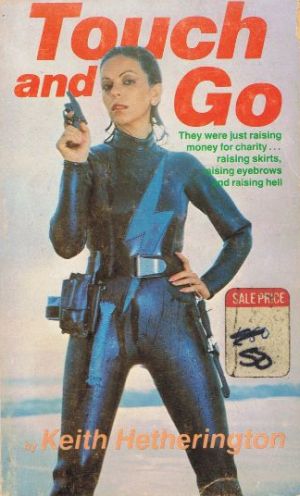 This 1980 film was originally called Friday the Thirteenth, but went through a title change in production, after they discovered some other film with that title being made… No hockey-masks to be seen here: instead, it’s the story of three young women, Eva (Hughes), Fiona (Contouri) and Millicent (Duncan), who start robbing places, largely for amusement – they donate the proceedings to an orphanage. However, after one of their victims ends up making far more money than they do, thanks to a bogus insurance claim, they switch targets and set their sights on a bigger fish, in the shape of a luxury hotel which contains a bank, jewellery store and other treats. This requires expanding their team, but with larger hauls come larger risks, as they find out, even once the actual crime has been carried out.
 This was the title that finally ‘broke’ Chris, and she wondered what the hell I was Googling to come across this movie. Shame she missed it, as despite some rather nasty sexual sadism, it’s among the best of the genre. Girl gang leader Noriko (Sugimoto) is assigned to the “School of Hope”, a morally-bankrupt educational establishment for delinquent girls. It’s principal is entirely ineffectual, and it’s actually run by the vice-principal (Imai), with the collaboration of the “Disciplinary Committee,” a group of the girls he allows to dish out punishment. Noriko isn’t going to stand for that, and teams up with a sleazy journalist (Watase) to bring down both the Committee and those in charge.
 Based on the original source material – which was very much focused on John Wayne – and the trailers, you’d be forgiven for thinking of this as just another macho Western. However, I read some pieces which suggested that wasn’t the case, with the story [as in the original novel] told from the viewpoint of teenage girl Mattie Ross (Steinfeld), who hires drunken Marshal Rooster Cogburn (Bridges) to hunt down the outlaw (Brolin), who killed her father. That is indeed the case – despite Steinfeld getting an Oscar nomination for Best Supporting Actress, while Bridges was listed for Best Actor. Go figure.
 That said, there’s something refreshing about the way this is…well,
 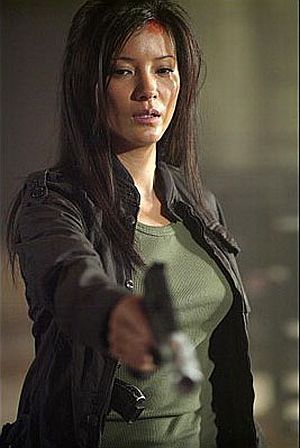 Every seven years, thirty of the world’s greatest assassins gather together for a battle. The winner gets $10 million, while bettors view the action remotely and gamble on the duels, face-offs and bloodbaths which ensue. Each assassin has a tracker implanted, and has a scanner where they can see the location of any other contestants nearby. This time, it’s in Middlesbrough, England, with reigning champion Joshua Harlow (Rhames) returning after he it told the murderer of his wife will be taking part. One of the 30 dumps their tracker into an alcoholic priest (Carlyle), who is “surprised”, shall we say, to become the target for the other 29. Lai Lai Zhen (Hu) realizes he’s an innocent, and vows to protect him, while also trying to win the competition.
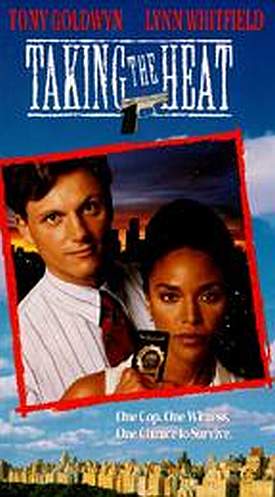 Michael Norell (Goldwyn) sees mob boss Tommy Canard (Arkin) whacking a debtor, but won’t admit it to the cops. However, when they look at the credit-card transactions, the truth comes out and Detective Hunter (Whitfield) is sent to retrieve the witness; Canard, thanks to a mole, also finds out and send his top hitman to ensure Norell never reaches the courthouse. A heatwave has simultaneously hit New York, leading to blackouts, gridlock and a breakdown in communications, so it’s down to Detective Hunter, back on her old stomping ground, to negotiate her way through the traffic jams and dodge the killers out to get Norell.
 The creators of the Tank Girl comic once said: “It’d be cool if a bunch of tinseltown producers could get hold of her, totally misunderstand what they’re dealing with, ignore our advice, and bring out a movie that would bomb, alienate our fan-base, destroy the comic, and bankrupt the pair of us in the process.” Mission accomplished. I never really liked the original comic, but the anarchic appeal of a minor cult classic is almost entirely removed, in favor of a lead character who never gets beyond irritating. The setting is the same: a post-apocalyptic wasteland where water is almost entirely under the control of the evil Water & Power, headed by Malcolm McDowell. When his minions destroy the compound where ‘Becca (Petty) and her pals live, she is enslaved, but escapes with the help of Jet Girl (the then-unknown Watts) and teams up with the shadowy, feared Rippers to take on W&P.
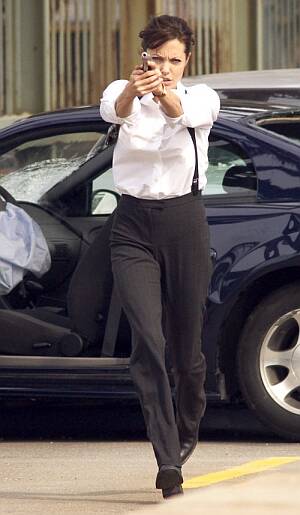 Rarely has a film started so promisingly, and gone so consistently downhill. The start is fabulous, with one of the most shocking moments I’ve seen…though if you’ve seen the trailer, you’ll have had it spoiled. But regardless, the first time we meet FBI profiler Illeana Scott (Jolie), on special assignment to Montreal, she’s lying in a grave. She is hard as nails, and takes absolutely no crap from anyone: her local friend, Captain Leclair (Karyo) hardly needs to bother protecting her, despite the nicely-handled cross-border tension. The case is that of a serial killer who, as the title suggests, inhabits the lives of his victims: the crack comes when his mother (Rowlands), believing him dead for two decades, spots him in Montreal by chance. However, the only other person to have seen the suspect is art-gallery owner James Costa (Hawke), but Scott starts finding her emotions getting in the way of her work…