




★★★½
“Because Cheryl Strayed is a wuss.”
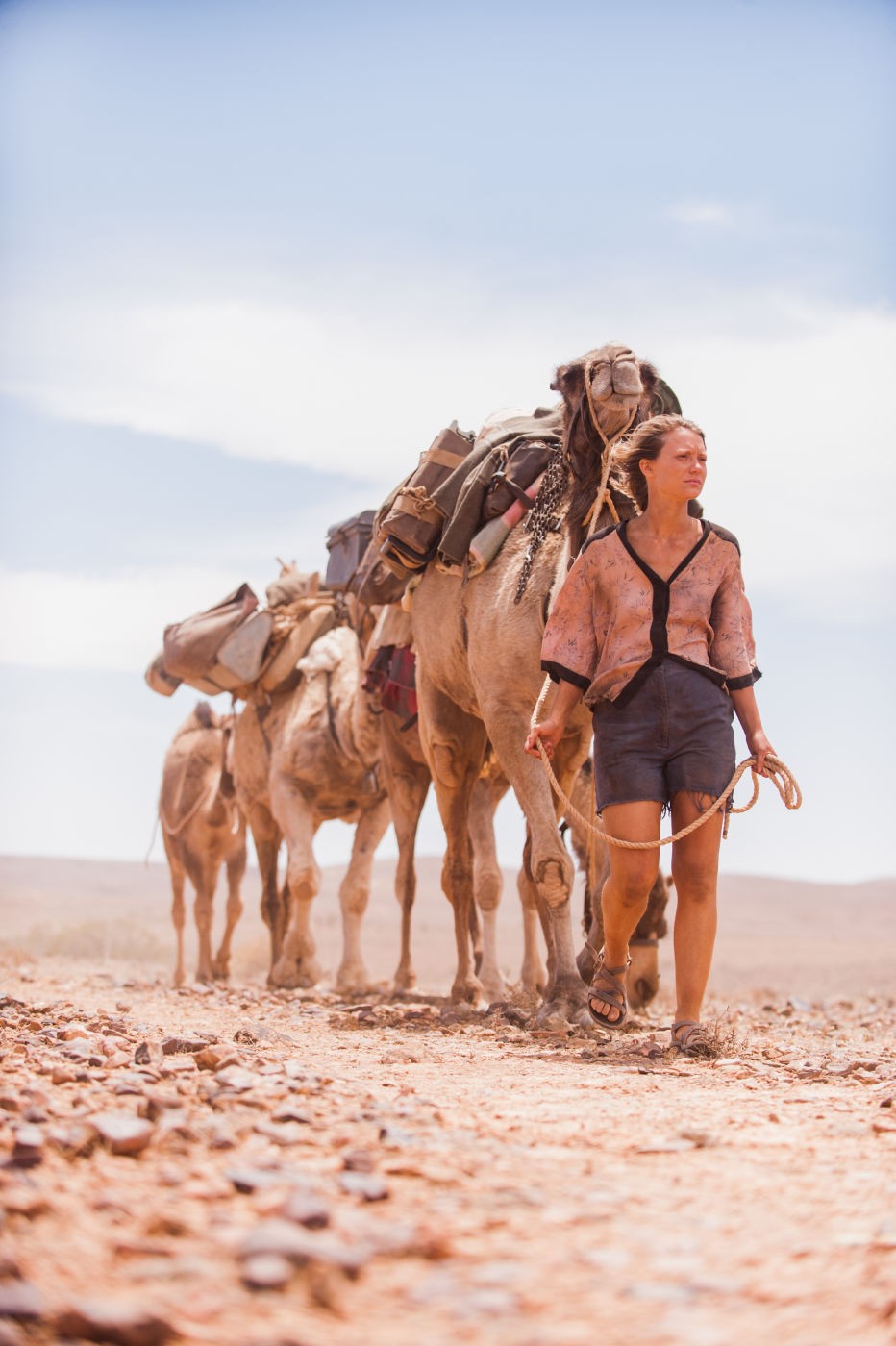 I am getting an echo of Wild here, even though this actually came out first. Both are based on books by women who decided to deal with their emotional and psychological baggage by striking out on a lone trek through the wilderness. But rather than the relatively civilized world of the Pacific Crest Trail, the heroine here, Robyn Davidson (Wasikowska), heads 1,700 miles across the Australian outback, from Alice Springs to the Indian Ocean coast, accompanied by four camels and a dog. That’s hardcore, being far more of a solo voyage, with long periods where Davidson is entirely on her own – the sole regular companion is photographer Rick Smolan (Driver), who drops in sporadically to document the trek for her sponsor, National Geographic magazine. We first see Davidson as she arrives in Alice Spring, following her as she goes from a naive woman with no experience of the livestock she’ll be managing, to someone who can handle what’s basically a cross between a cow with a bad attitude and a giraffe.
As with Strayed, there is trauma in the past which, it’s implied, acts as the trigger for the expedition. In the case of Davidson, it’s more childhood trauma, with a mother who committed suicide, and a father who, unable to cope with the aftermath, shipped Robyn off and had her dog put down. This is revealed in flashbacks, and for my money, is handled rather better than in Wild, in part because it doesn’t dwell on this or make it the focus. Tracks is more about the physical journey, with the spiritual one a side-dish, the reverse of the situation in Wild.
This does require a lot more restraint from Wasikowska, in terms of her performance: she has to do more acting and less Acting, if you see what I mean. I prefer that approach, and the smaller, quieter portrayal we get here only emphasizes the enormity of the landscape through which she is moving. The outback is, in many ways, an unspoken character here, sometimes threatening, sometimes staggeringly alluring, though I’d have been interested to hear some more of the nuts and bolts of the expedition: even prosaic stuff, such as, how the hell does Robyn not get incinerated without a hat? Maybe there’s a documentary film that can fill in these blanks.
There’s not much sense of threat on the human side, with just about everyone who encounters the “camel lady” being generally supportive. The worst issue is when Rick photographs an Aboriginal ceremony he shouldn’t be, leading to some friction with the natives, but it’s hardly the stuff of great drama. It’s more of a character study/travelogue, and from what I’ve seen, Wasikowska – best know as Alice in Tim Burton’s Wonderland – certainly looks the part of Davidson. Yet its calm tranquility ends up more a strength than a weakness, and even when there isn’t much going on, the landscapes still hold your attention with their sparse beauty.
Dir: John Curran
Star: Mia Wasikowska, Adam Driver, Rolley Mintuma



 Twins Effect, the first film starring the Cantopop duo, Twins, was a frothily entertaining mix of action and humour, that was surprisingly entertaining. Its sequel? Despite a stellar supporting cast, and some great action, not so much, with a historical setting, and a balance that tilted unfavourably towards comedy. This third entry does at least return to the modern era, and also continues some impressively slick fights – and more broken glass than any other movie I can immediately think of – but has a similarly lumpy attitude, feeling almost like two films spliced together.
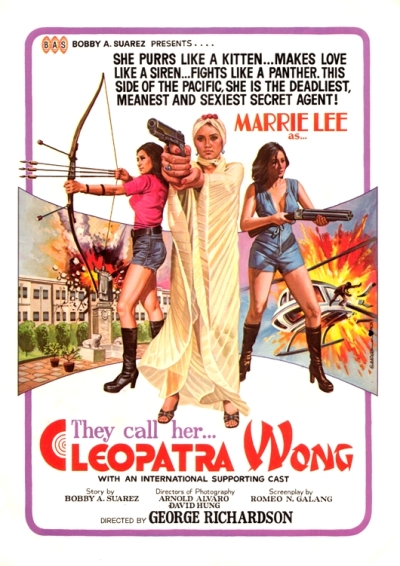 “Cleopatra Wong is Asian Interpol’s answer to James Bond, Flint, Cleopatra Jones and Stacey.” Well, less an answer, more like a repetition of the question, since this is firmly in “cheap Asian knock-off” market, though has some charm in its first half. Wong (Lee) is an agent, assigned to investigate a flood of near-undetectable counterfeit money which is flooding the markets in Hong Kong, the Philippines and elsewhere in the far East. It’s happening in such volume, there’s potential to destabilize the entire economies of the affected countries. She takes down the Singapore branch of the operation, and then discovers the money is being transported in shipments of strawberry jam, emanating from a monastery north of Manilla. After finding them to be not exactly a social order, Wong takes pictures by flying over their compound, which shows that these nuns have some nasty habits – specifically, they’re brothers rather than sisters, and concealing automatic weapons under their vestments. Time for Cleo to assemble and lead a team of crack agent in a raid on the convent, take out the bad guys, rescue the real nuns and save the world for free-market capitalism.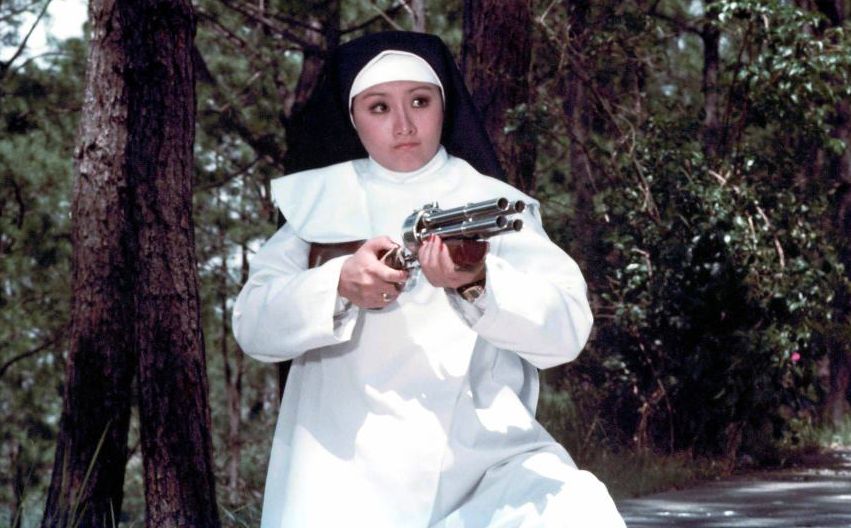

 I’m on the fence with regard to the Japanese uber-gore films, most notably, by the Sushi Typhoon studio, which have achieved renown (or infamy) of late. While some (
 This is definitely a case where less would have been more, and with a more enthusiastic hand on the editor’s knife, this could have become a decent eighty-minute feature – and possibly an even better 50-minute one. Kamikura does often demonstrate an awareness and acceptance of exactly how ludicrous the entire scenario is, and the film is at its best when wholeheartedly embracing its own insanity. For instance, each of the cyborg athletes’ talents is influenced by their sport: Hitomi Oka is a tennis-player, so whacks people with an over-sized, pneumatic racket, and lobs exploding tennis-balls at them. Additional helpings of that kind of imaginative lunacy – and considerably less tied-up schoolgirls being prodded or whipped – would certainly have made for a more entertaining end product.