




★★★
“Run Mary Run”
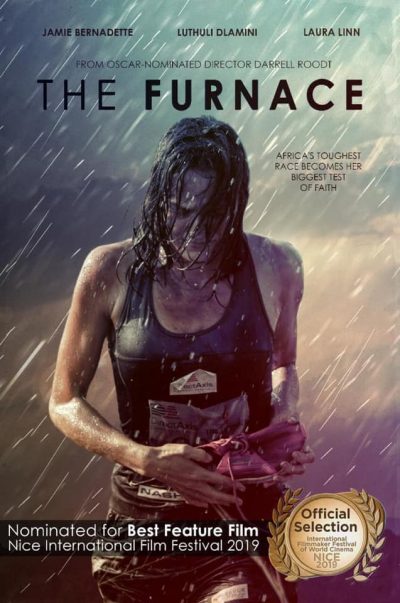 Two days after getting married, Mary Harris (Bernadette) is involved in a car accident which kills her new husband and leaves her barely able to walk. But she has one goal: to compete in the Furnace, an ultra-marathon race through the African wilderness, in which she and her late husband had been planning to take part. This aim goes strongly against the desires of her mother, but Mary won’t be deterred. With the help of her mentor (Dlamini, looking like a younger version of Morgan Freeman), nicknamed “Coffin” due to his day-job as a gravedigger, she claws her way back to fitness, and to the start-line. But is she prepared for everything the environment can throw at her, and make it to the finish? To do so, she’ll have to overcome not just the lethal heat, but also predators for whom she’d be a tasty snack, and poisonous scorpions whose venom induces disorienting hallucinations.
It’s certainly a change of pace for Bernadette, who has previously been seen on this site in Killing Joan and All Girls Weekend, as well as the largely woeful I Spit On Your Grave reboot, Deja Vu, not reviewed here. This is a film heavy on the F-word – by which I mean “faith”. Its religious overtones may be enough to write it off for many, but even as someone who possesses no real commitment there, it still worked well enough as a story about fighting through and triumphing over adversity. The race itself is the most effective section, with a constant stream of problems to overcome, and fortunately that does represent the majority of the film’s running-time. I must admit, I guessed the truth about her running companion, Raphaella (Linn) well before the film revealed it, and that angle is perhaps one where the faith-based elements become more than a little overwhelming.
Exhaustive research i.e. five minutes of Googling, couldn’t locate any race comparable with the Furnace, and it does seem a highly perilous endeavour, even with a GPS attached to participants. “If you’re stationary for more than seven hours, you’re disqualified, and we come pick you up,” says the organizer. Shouldn’t that be “If you’re stationary for more than seven hours, you’ve been eaten by hyenas, and we come pick up whatever is left in a bucket”? It’s certainly not my idea of a challenge to which I aspire, but there are people like Mary who seek to push their limits, so it’s not that far-fetched. Throw in decent cinematography and animal work and you’ve got something that entertained me rather more than I perhaps expected, though Coffin’s voice-over does become a little superfluous in places. It’s not a film which an atheist is likely going to be able to appreciate, yet dammit, even I found myself getting fractionally emotional for the final scene. I’d probably be more inclined to credit Peters’s performance for that, rather than any kind of divine intervention.
Dir: Darrell Roodt
Star: Jamie Bernadette, Luthuli Dlamini, Laura Linn, Thandi Puren
 Crown International were an independent movie studio, who operated from the sixties through the eighties: we’ve covered some of their work before, such as
 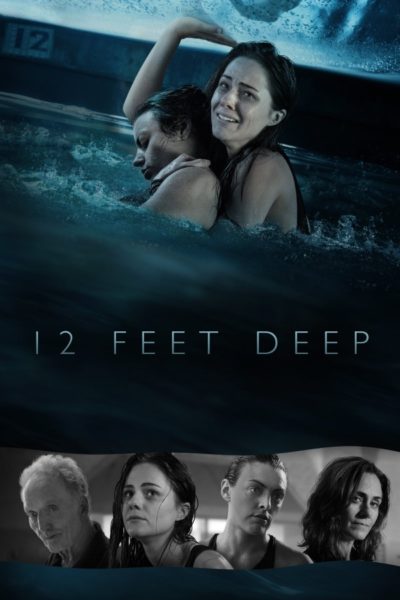 There aren’t many films which will be reviewed both here and on aquaticsintl.com, a site offering “Commercial swimming pool and waterpark industry news” [their opinion: a “woefully inaccurate portrayal of pool technology”]. But then, if you see only one film about sisters trapped underneath a swimming-pool cover this year… Yeah, it’s highly likely to be this one. Eskandari deserves some credit for taking a paper-thin and highly dubious premise and almost stretching it out to feature length. But even he eventually runs out of steam at about the hour mark, and derisive snorting will take over from there.
 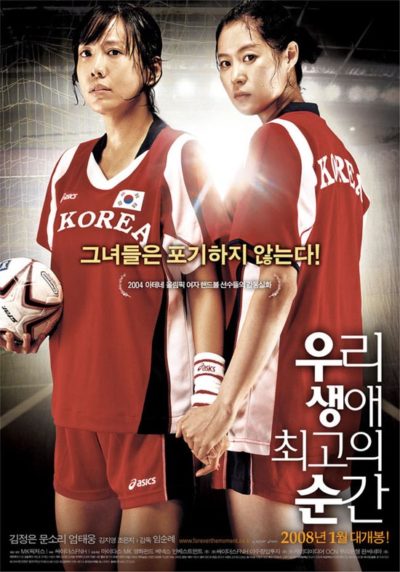 Every four years, when the Olympics arrive, we fall in love with handball. What is handball, you might be asking. Basically, think seven-a-side soccer, except (obviously), played with the hands rather than feet. It’s an amazing sport, all but unknown in the UK and US, and deserving a far wider audience – a YouTube search for “Olympics handball” will get you sorted. Which is why we were fascinated by the idea of a film focusing on it, specially, the story of the 2004 South Korean women’s team. What they did was roughly that country’s equivalent of the 1980 ‘Miracle on Ice’. The once-dominant Korean team had fallen far from grace, and barely qualified for the Athens Olympics. But they reached the final, against the Danish side, which went into double overtime, and then a penalty shootout.
 The above line of dialogue is a perfect litmus test for what you’ll think of this. If your reaction is a derisive snort, this pair of hour-long items – I have qualms about calling them anything as high-minded as “feature films” – is probably not for you. And I cheerfully admit, snorting is probably the default, and understandable, reaction. If, on the other hand, you are giddy with anticipation at the very thought, then I probably cannot recommend it highly enough.
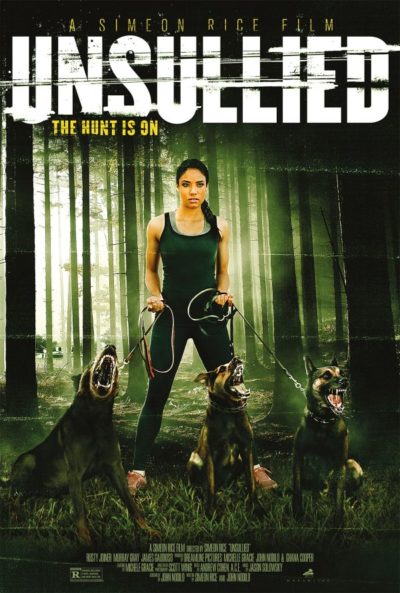 If you’re looking for unsubtle social commentary, you’re in the right place, because this take on The Most Dangerous Game ticks off the trifecta of -isms:

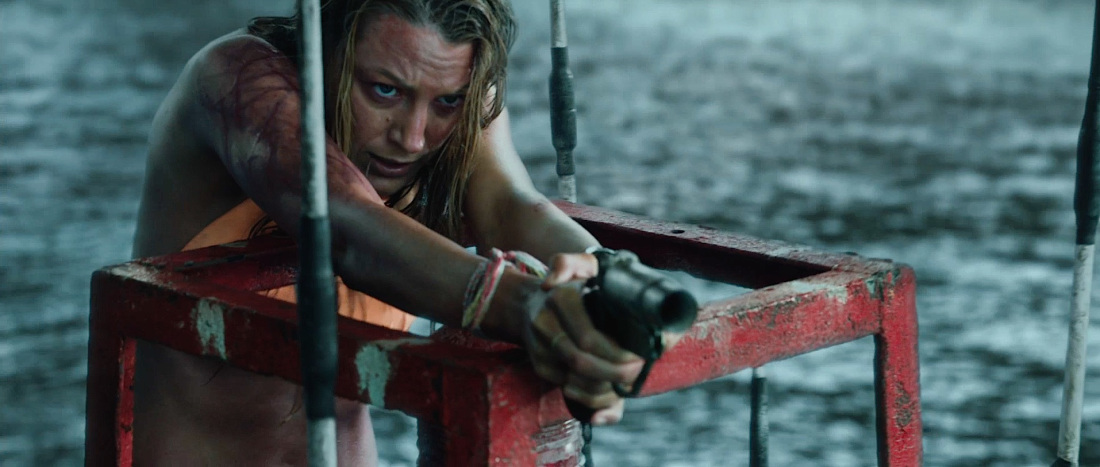 The older I get, the less any kind of extreme sports appeal. It’s likely an awareness that life is limited, and I’d rather hang on to it for as long as possible, rather than risk it in pursuit of a quick thrill. Parachuting? Skiing? Hell, even camping? No, thanks. I’ll be by the pool – not in it – with a cold drink and an exciting novel. This inevitably limits the attraction of this kind of “true life” adventures, because they rarely bother to demonstrate why the protagonist is doing what they are. Admittedly, that’s not the point: it’s all about the peril into which they get, and their struggles to extricate themselves. Everything else is somewhat superfluous, and that’s one of the issues here. Do we care about Nancy’s mid-twenties career choice crisis? Or that she’s on the beach because her late mother was there decades previously? Probably not. We’re here to see woman vs. shark.