


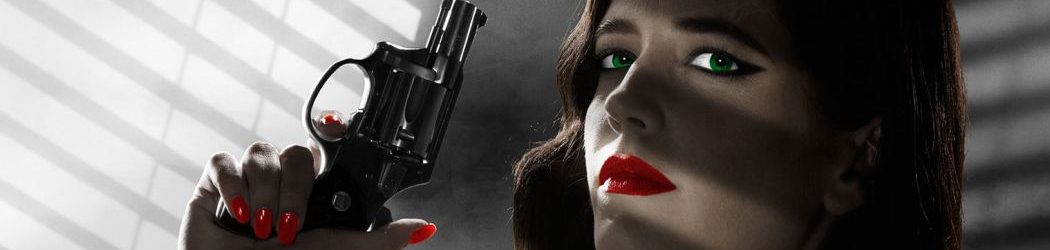

★★★
“Cowgirls behind bars.”
 Well, this is certainly the first film I’ve reviewed here which drops both into the “women in prison” and the “sports” category. It takes place in Oklahoma, where since 1940, they have been staging an annual prison rodeo event in McAlester. The competition takes place in an arena built just inside the walls of the State Penitentiary, and includes competitors from facilities across the state. In 2006, the event was opened to female inmates as well, and this documentary (while not absolutely focused on just the women, also including 13-year rodeo veteran and convicted murderer Liles) is about their preparation for the 2007 event, training on a rig pulled back and forth by fellow inmates, and climaxing with the event itself.
What stood out in particular was how normal most of the inmates seemed, though my perceptions there were likely skewed by the more, ah, dramatic depictions of life behind bars. You’d be hard pushed to pick the likes of Brooks, Witte and Herrington out of a line-up at the local PTA, though some of the stories they tell are startling – as much for the casual air with which they admit to dealing drugs or violent robbery. The rodeo gives them a bit of relief from the crushing boredom of life inside, though it’s very much a privilege. Brooks is kicked off the squad when caught in possession of contraband, reportedly unauthorized lipstick, an incident which also puts her release on parole in doubt.
While regular rodeo typically limits female involvement to the less dangerous events, such as barrel racing, there’s no such restriction here. The women inmates take part in bull and bronco riding, as well as the particularly fraught event called “Money the Hard Way”, where the first person to pluck a ribbon tied to a bull’s head wins $100. The beast is clearly no respecter of the fairer sex, sending both men and women into the air with a strictly gender-neutral approach. The comparisons of the event to gladiatorial combat seemed particularly apt here. Yet this feels more like a backdrop to the lives of the prisoners, and I found myself Googling their names in hopes of recent updates.
As with most documentaries, it’s not tidy, with loose ends a-plenty, and if I was both informed and reasonably entertained, I can’t say I reached the end with any life-changing revelations. It feels quite “safe” and conventional as a film of its genre, and Beesley clearly is not interesting in challenging narratives, least of all the self-reported ones of the women’s lives. While they do largely accept responsibility for their crimes, it’d be interesting to hear an outside perspective on those. Not mentioned in the film: the event was canceled in 2010 due to a state budget shortfall. It hasn’t returned since, mostly because the arena has now fallen into disrepair, despite support from the warden, local community and state governor for that. Whether it ever will is uncertain, leaving the documentary a record of an odd slice of Americana that may be forever gone.
Dir: Bradley Beesley
Star: Jamie Brooks, Brandy Witte, Danny Liles, Crystal Herrington
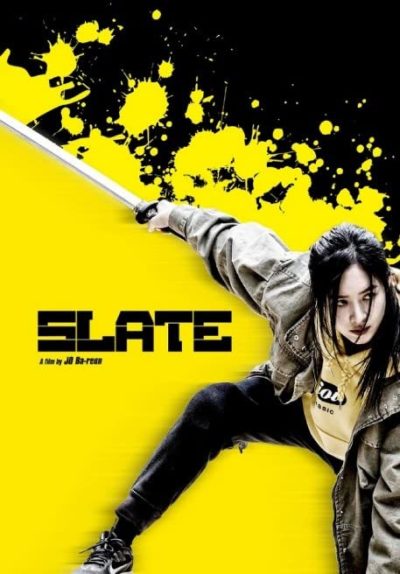 This is definitely an interesting idea, and potentially the most meta action heroine film I’ve seen. Cha Yeon-hee (Ahn) has wanted to be a movie heroine ever since she was a child, though it’s an ambition which has always eluded her – in part because of her refusal to work her way up in the industry. She eventually and grudgingly accepts a stunt double position in a historical swordplay film, and shows up on the set for her first day. However, due to circumstances involving a magical clapperboard (hence the title) and an inconvenient portal, she finds herself transported to a parallel dimension. It’s kinda like modern Korea in clothes and speech, but run by warlords and their sword-carrying minions.
 Within ten seconds of Chris having entered the room when this was on, she asked, “Are you watching Moonlighting?” No, I wasn’t – but it’s certainly a valid question. Just a couple of years earlier, Shepherd had finished off a run playing a private eye alongside Bruce Wills on that highly successful show. And here she is, again playing a private investigator on television, with a fondness for cracking wise and showing off her legs. What
  Twenty minutes into this, I was certain I had made a terrible mistake. These four young women were among the most grating and unpleasant characters I’d seen in a movie. I’m talking actively awful: crass, shallow and entitled. They head off to Thailand for a girls’ getaway on a private jet owned by the father of Diamond (Luss), a film producer. By the time they land, check out their mansion and enjoy the local sights, I was ready to set up the guillotines. Then there’s a luggage mix-up, leaving them with a large quantity of Thai cartel coke, and one of their number is kidnapped, in order to coerce them into returning the goods.
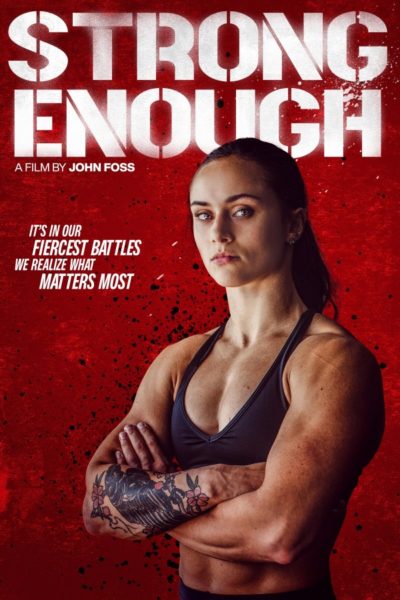 This is a very small-scale and restrained production, which unfolds, largely in real time, over one afternoon in the single location of a cross-fit gym. Athlete Sam (Jerue) is set for an attempt to see five world records in a 30-minute span, supported by her trainer Shane (Grosse) and under the eagle eye of adjudicator Alec (Sawyer) – it’s clearly intended to be the Guinness Book of World Records, but their name is never mentioned! However, a fly in the ointment shows up, just minutes before Sam is scheduled to start. Her husband, Charlie (Kershisnik), from whom she is currently separated, arrives at the gym, followed rapidly by Sam getting served with divorce papers, in what can only be called a dick move.
 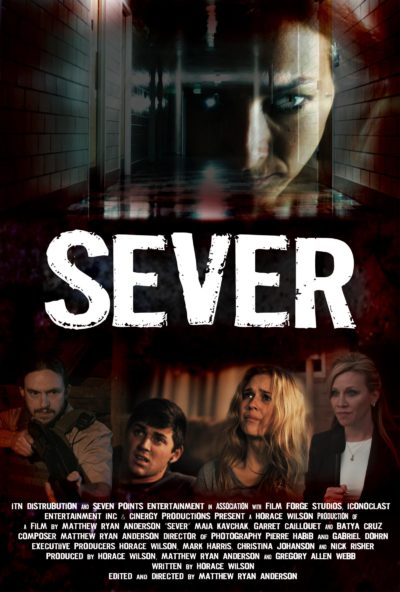 The French film
 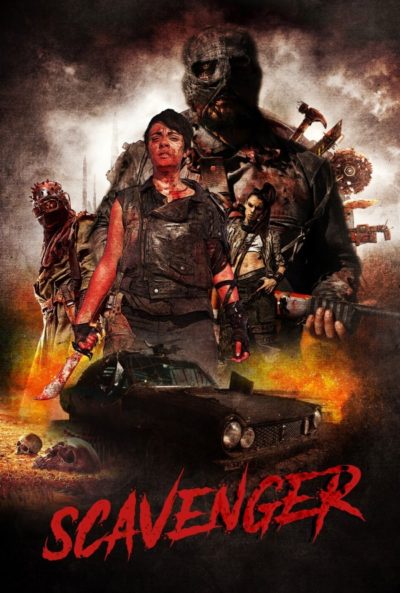 This should be right up my alley. For it’s a grungy, post-apocalyptic story of revenge, which is heavy both on the carnage and the nudity. Throw in disapproving reviews containing lines like, “Downright nasty movie that takes all the worst bits of exploitation cinema and proudly puts it on display,” or “Scavenger is truly appalling,” and you’ll understand why it was fast-tracked for viewing. However, the weird thing is… those reviews aren’t wrong – it is a bad movie, just not for the reasons they espouse. The bigger problem is simply poor execution, in a way that manages to take the sex ‘n’ violence, and make it all painfully dull. Of all the cinematic sins, that’s one I find hard to forgive.
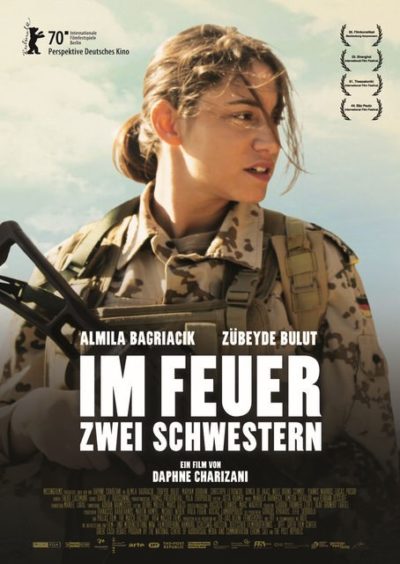 There seem to have been quite a few movies out of Europe over the past couple of years, about the female soldiers fighting in Kurdistan for independence with the PKK and related groups. French films
 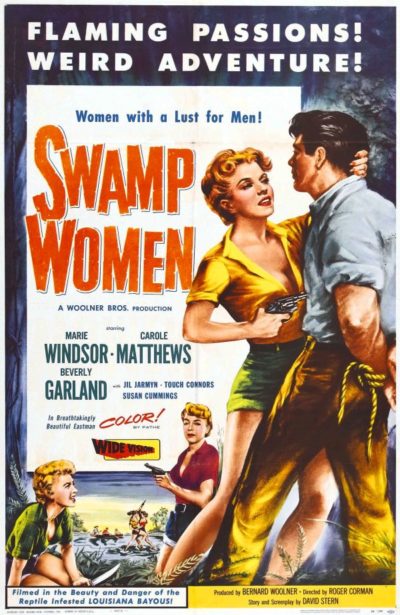 One of the earliest films directed by Roger Corman, it’d be a major stretch to call this a good film, yet I can’t deny I found it entertaining. It definitely has better female characters than most movies of the mid-fifties. Four women break out of jail and head into the swamps, in search of stolen diamonds which were previously hidden in the Louisiana swamps. Except, one of them is an undercover police officer, Lee Hampton (Mathews), who had been inserted into prison to join the gang and lead the escape, in the hope of recovering the loot. After the car breaks down, they hijack a boat owned by an oil prospector, Bob, and his girlfriend, taking them hostage as they head deeper into the bayou.
 I am, probably, biased here. Scottish action heroines are pretty rare, to the point I am hard pushed to think of a single one I’ve covered previously, in the twenty years I’ve been running this domain. [I just made myself feel
 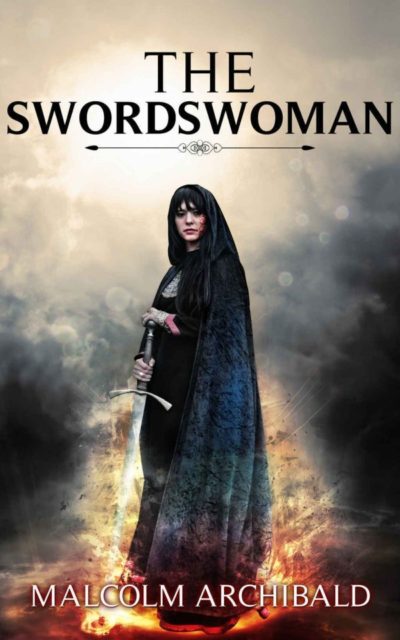 That peace is shattered when someone is washed up on the Western Isles island of Dachaigh where 20-year-old Melcorka lives with her mother. It turns out the Norse are invading, and the king must be notified of the threat. Melcorka and the rest of her clan head towards the capital, only to arrive too late: the army of Alba (as Scotland was then called) has been routed and the nobles scattered. However, Melcorka has a destiny to fulfill… And also inherits a large sword, Defender, with a history dating back centuries, whose powers transform her into the titular character. It’s up to her to rally forces, including the ferocious Picts from the North, to take on the invaders, and send them back across the North Sea to Scandinavia.