




★★★½
“Revenge, truly served cold.”
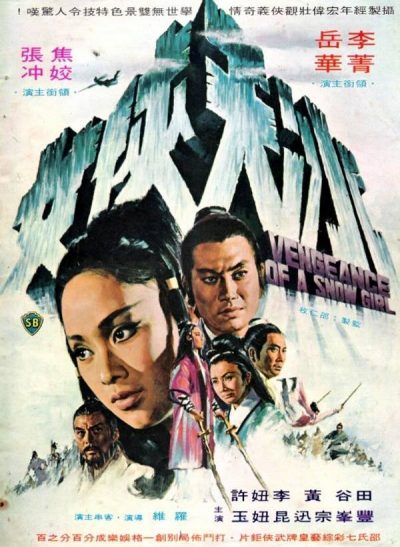 The elevator pitch version of this sounds like a million other kung-fu films: Shen Ping Hong (Li) seeks revenge on the people who killed her parents and left her crippled. But there’s rather more going on beneath the surface, and shades of grey on both sides. One of her targets, Lord Kao Hung, regrets what happened and wants to help Shen regain the use of her legs. But Shen only agrees to let his son Tien-Ying (Yueh) help, in the belief that it will make her mission of vengeance easier. It feels almost like she’s a mad dog, lashing out at anyone who tries to help; keeping the severed heads of her victims in jars is a clue there. Meanwhile, Kao’s associates – and Tien-Ying’s ex-girlfriend (Chiao) – think he’s helping because he wants to get Shen’s jade sword for his own ends, and are intent on getting their revenge in on her first.
Let the record show, Chris wandered in half-way through this, glanced at the screen and said, “Is that Sammo Hung?” Knock me down with a feather if it wasn’t Sammo, in a minor supporting role as a villainous henchmen. This is why I love my wife: her ability to spot martial arts legends in 1971 cameos. Er, well… Not just that. Anyway, this would be massively overshadowed by the release, just two days later, of another Lo Wei film, his first for fledgling studio Golden Harvest. The Big Boss would put both studio and its star, one Bruce Lee, on the map, and Snowgirl would be all but forgotten.
In particular, the way it twists the usual “You killed my _____ and must die!” tropes are what makes this stand out, along with a second half which turns into something resembling a series of video-game side quests. Because the spring where Shen can heal her legs is so frigid, you need a magic pearl to survive near it for more than a few seconds… The pearl is in the belly of a volcano, reaching which requires a suit of flame-resistant armour (looking remarkably like a fireman’s uniform)… This is held in the treasure house of a remote prince, who will only agree to lend it out, if Shen can beat his champion… And there’s not a save point in sight.
The fights are decent, rather than spectacular, and we never get the hoped-for face-off between Shen and the disgruntled ex-girlfriend, who has skills of her own. On the other hand, Li does a good job of working round her character’s disability – though her ability to fly, makes me wonder why she bothers walking anywhere! Lo, who also makes a brief appearance as the heroine’s father, shoots good, long takes which help enhance his lead actress’s talents, and if nothing else, the ending will likely stick in your mind for its unexpectedly downbeat example of altruism and self-sacrifice. It mostly looks very nice, except for a thoroughly unconvincing “volcano”, and all told, it’s a shame this isn’t more well-known.
Dir: Lo Wei
Star: Li Ching, Yueh Hua, Ku Feng, Lisa Chiao
 After reading some particularly scathing reviews of this, e.g. “stunningly atrocious”, I was braced for something
  We’ve previously written about Pearl Ling Chang’s mad
 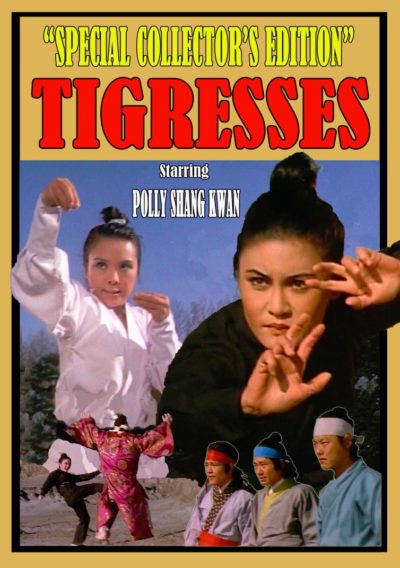 After their parents are killed by Ji-Gyeum Yoon (Kim Y-i), who wants to take over their father Sung’s position, sisters Su-Yung and An-Yung are split up and sent off for their safely, each owning half of a jade pendant. Fifteen years later, An-Yung (Shang Kwan) begins to take her vengeance on the usurper – not just physically, but also waging psychological warfare, sending him notes to ensure he knows he is being targeted, although not initially why or who. Though I’m a little surprised Yoon doesn’t figure it out immediately, given he’s still so paranoid about Sung’s daughters coming out, he freaks out when left alone with a maid, stating the position given in the tag-line above.
 Look, I tried. I really did. When I found my attention had drifted away from watching the film, in good faith, I rewound the film to the point where I’d lost interest, and took up the movie again the following day. After all, maybe it was me. But when I still could barely bring myself to finish this leaden lump of poorly-crafted revenge-fu… No, having gone above and beyond the required effort, it’s really not me. This is lacklustre stuff, to put it mildly, even by the generally low standards of Taiwan.
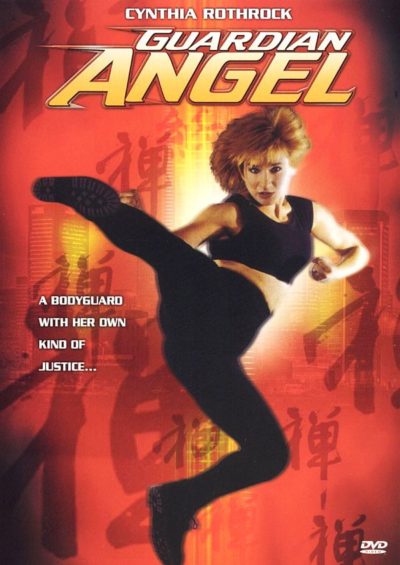 To explain the above, there are significant chunks of this which are terrible: make no sense, or are flat-out dumb. Its depiction of policing, in particular, is awful. Apparently, if you’re on a stakeout and a deal between two gangs has turned into a Mexican standoff, the best way to defuse the situation is to run downhill towards them, firing your gun in the air – and not bothering, at any point, to identif yourself as a law enforcement officer. I laughed like a drain at that, and there are innumerable other moments of such character stupidity or cinematic incompetence. Yet, none of that stopped me from being adequately entertained.
 That’s the voice-over with which this starts, segueing into a bit of nude interpretive dance – well, semi-nude, the guy keeps his Y-fronts on, for which I am grateful – that has absolutely no relation to the rest of the film. At its core, this is a battle of triad versus triad: one overseen by Lau, the other by Fung. The former is assassinated, and his daughter, Angel (Yeung) takes over – she’s also keen to track down the perpetrators, with the most obvious beneficiary being Fung. But not so sure is Fung’s right-hand man, Jimmy Lee (Lee), who was there for the killing, and helps Angel’s investigation.
 This is a modern update of the story of Savitri and Satyavan, originally found in Indian epic saga the Mahabharata [and when I say, “epic saga”, it’s 1.8 million words long!]. The tale has been an immensely popular topic for Bollywood, Wikipedia saying there have been thirty-four different film versions, dating back over a century to 1914’s Satyavan Savitri. The basic story is of a woman, Savitri, who defies a prediction that her chosen husband, Satyavan, will die in a year, and marries him anyway. She then has to talk the god of death out of collecting him.
 I’ve come to the conclusion I prefer bad films to bad books. A bad film can be appreciated and offer entertainment in unexpected ways. I’ve rarely found that to be the case with literature, which just… lies there, dully. If a movie sucks, then you can at least allow it to drift into the background, while you check your phone, play with the cat, or do household chores. A bad book, on the other hand, requires every bit as much effort as a good one: the return on that investment is just a great deal less.
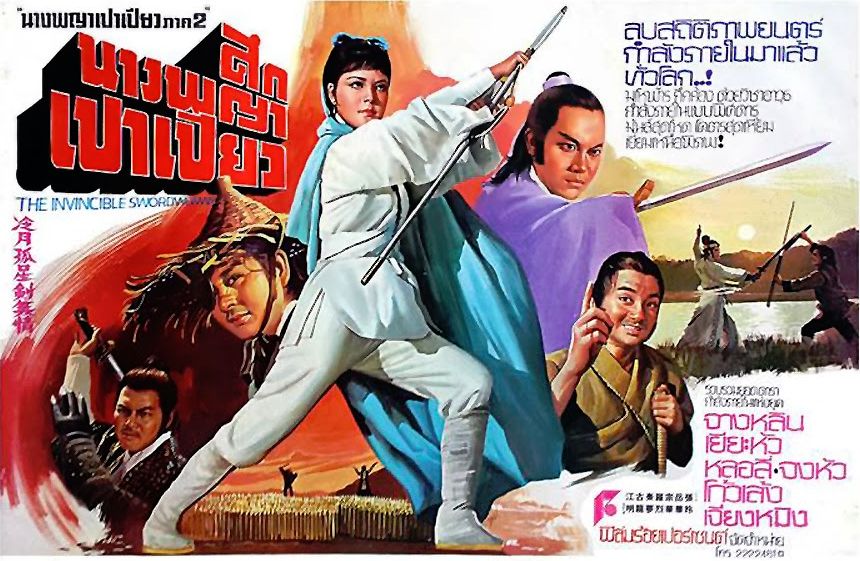
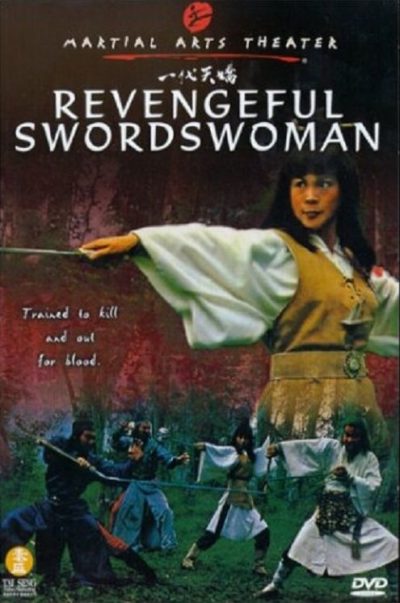 There’s no hanging around here. Virtually as we meet our heroine, Hsiang Ying (Lee), she’s getting tossed off a cliff by her kung-fu teacher, into a pack of wolves. Having survived that and made her way back – perhaps assuming this was all some terrible misunderstanding – her master then disavows her, announces he was the man responsible for killing her father, and locks her up in a cage. This all happens within, literally, three minutes of the film starting. Fortunately, a passing stranger sees fit to free her from the cage, and the ‘Heartless Lady’, as she becomes known, can go on her way, with the eventual aim of being exactly what the title suggests: revengeful.