



★★½
“Sisters are doing it for themselves.”
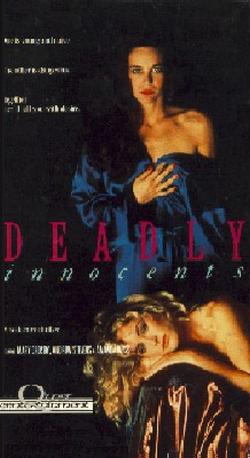 After shooting her husband, Beth (Crosby) is sent to the funny farm, due to her split personality, Cathy, who was responsible for the murder. Busting out of the funny farm after Cathy takes full control, she holes up in a gas station, run by Angela (Wyss), who is almost as loopy, albeit in a less murderous way, having been raised by her religious fruitcake father, who just passed away. Cathy/Beth’s resemblance to Angela’s late mother helps cement a relationship between the two women. Initially, it may all be frilly dresses, make-up and feminine bonding, as the newcomer brings the repressed young girl out of her shell. But how long will it be before Cathy is stabbing customers in the neck with syringes? [That’s almost guaranteed to get you a poor Yelp review: “while restrooms were clean, the murderous assault by a deranged member of staff was somewhat off-putting”]
Meanwhile, a local cop (Stevens) is courting Angela, and a local retard (Hellman) – hey, you watch the film and tell me that’s not the most accurate description – is exercising her investigative skills, which appear to be at least the equal of the local force. It’s the kind of the overblown Southern melodrama that’s basically begging for a drag queen singalong version; maybe a remake starring Gina Gershon as Cathy, or at least, Jennifer Tilly. Instead, however, we’ve got to make do with Bing Crosby’s daughter, who admittedly, probably knows a bit about controlling fathers. Here, the main takeaway is a new-found respect for Andy Serkis’s portrayal of Gollum, because watching Crosby switch between Beth and Cathy is cringeworthy. Fortunately, the makers appear to realize it, with this aspect all but abandoned once she escapes the mental hospital, and Crosby makes for an entertainingly loony tune.
However, there isn’t actually much, in content or execution, which will stick in your mind – between a couple of bits of gratuitous nudity, this feels for long periods more like a TV movie, or something you’d find on the Hallmark channel. I did quite like the ending, which I’ll confess didn’t see coming, and is darker than I expected. However, too much of this comes over as watered-down, without the courage of any convictions, and it needed to go a good deal further into the realms of madness, to possess any lasting value.
Dir: John D. Patterson.
Star: Mary Crosby, Amanda Wyss, Andrew Stevens, Bonnie Hellman
 Great concept: Lilith, Adam’s first wife, condemned to immortality, is now an amnesiac in a minimum-wage job. But when a demon threatens to unleash a plague of biblical proportions on the Earth, she has to be shown her true nature and convinced to hunt down the enemy. Unfortunately, almost every aspect, from exposition through characters to the action and CGI-heavy effects, are awful. Not just bad:
  There are times when not saying too much can work for a film; Night of the Living Dead is the classic example, and it works, because you don’t
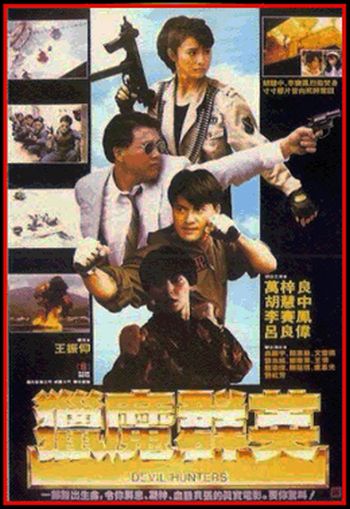
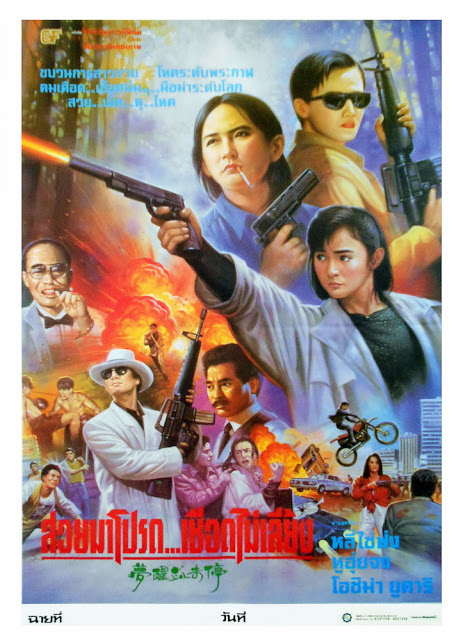
 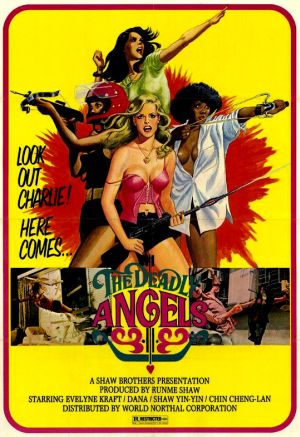 Inspired though the alternate titling of The Bod Squad might be, the original title likely gives a better idea of the inspiration for this 1977 Shaw Brothers flick: think Charlie’s rather than deadly. Three women, from Korea, Hong Kong and Japan, under the orders of
 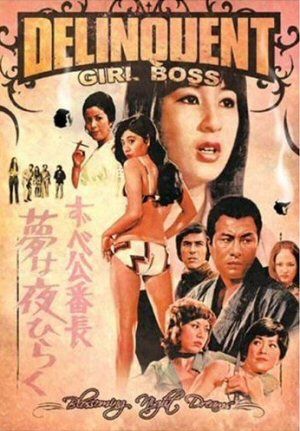 This was my first true vintage “pinky violence” movie, though I had bumped against some fringe entries in the genre before e.g. Female Convict Scorpion: Jailhouse 41, which I enjoyed and really must get round to reviewing for here some time. This one…not so much. It focuses on Rika (Oshida), who gets out of reform school, and gets a job as a ‘companion’ at a bar, where most of the girls have a similarly troubled background. The local Yakuza boss is sniffing around, and his path crosses Rika’s after she (semi-unwittingly) helps a colleague steal some drugs from them. As a result, the house mother/bar owner, is on the hook for three million yen, plus interest.
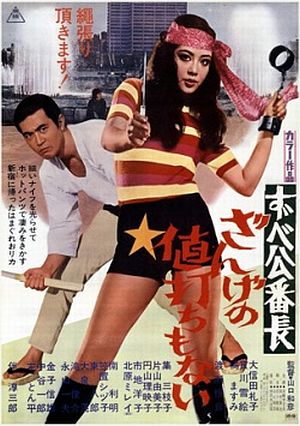 When Rika (Oshida) gets out of reform school, she goes to visit her friend Midori (Katayama), and gets a job working in the garage belonging to Midori’s father Muraki (Ban), even though Midori is estranged from him – except when she needs money to pay off her boyfriend’s gambling debts to the local Yakuza under Boss Ohya (Nobuo Kaneko). Another friend of Rika’s is working in an “art studio”, doing nude modelling to support her sick husband, and still others are hostesses at the Ginza Girls cabaret, a dance-hall which Ohya’s gang are also extorting for protection money. After Muraki has to take a loan using the garage as collateral to pay Ohya, Rika tries to offer herself as an alternative to the boss. This goes about as well as you’d expect, though there’s a genuinely cool twist in which we find someone isn’t quite who we seem. There’s a tragic fatality, which sets the scene for all the girls to get together and take on Ohya’s gang.
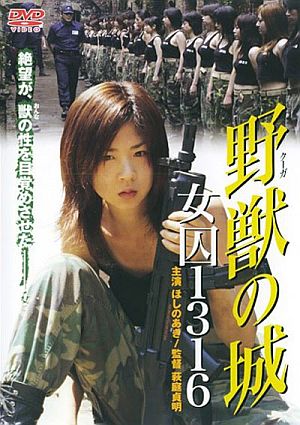 Misaki (Hoshino) is in prison for stabbing a policeman to death, but is taken from her jail to a remote island. There, she joins the rest of the hand-picked prisoners, who are there to be trained by a mysterious government organization, and moulded into operatives who can be used to protect national security. Most of the inmates just want to make things easy, sleeping with the guards in exchange for privileges, but Misaki is made of tougher stuff, and won’t buckle down to the authorities. While she begins plotting how to escape the island, she needs to overcome a number of problems, not least having no idea about where it is, and whether the small boat they stumble across will be capable of getting them to any other land.
 So opens this rare example of British grindhouse. We don’t generally