Deadly Sanctuary

★½
“Razing Arizona”

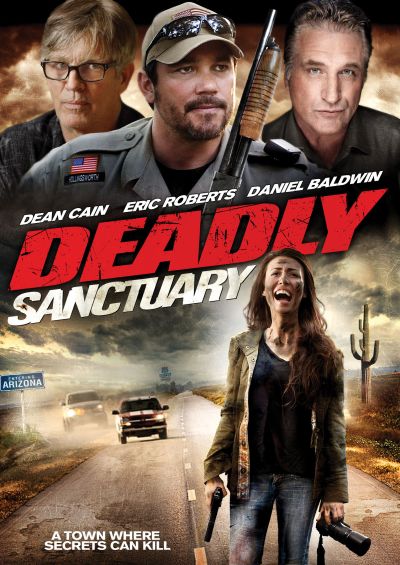
deadlysanctuary“Feisty, flame-haired reporter, Kendall O’Dell is drawn into an evil web of conspiracy beyond anything she could have ever imagined when she accepts a position at a small newspaper in Castle Valley, Arizona.” Action heroine and local interest? Okay, I’m in. I shouldn’t have bothered though, because virtually from the get-go, this is cringe-inducingly bad. Nice though it is to see our state used, with scenes shot in New River and Black Canyon City, the script feels like it was written by someone who had never been to Arizona, and based it entirely on stereotypes.

Which is a bit of a surprise, because author Sylvia Nobel, who wrote both the source novel and co-wrote the screenplay, has apparently lived here since before I was born. So there’s absolutely no excuse for a world in which half the men wear Stetsons and there appears to be more lethal fauna than Australia. I’ve lived here for almost 15 years, and have never even seen a live snake in the wild: the heroine here (Kochan) virtually steps on one the first time she gets out of her car. About the only thing it gets right is that, yes, we locals do hate with a passion, the “snowbirds”, part-term winter residents who clog up restaurants and the freeways for us locals.

Not, under ANY circumstances, to be confused with the 1969 film in which Klaus Kinski played the Marquis De Sade, this sees O’Dell seeking to unentangle a web involving dead girls in the desert, an apparent police cover-up and a shady home for young runaways, all the while fending off the attentions of a rich adoption lawyer and a colleague at the paper. It certainly doesn’t help that five minutes in the company of Kendall would have any domestic abuse advocate reconsidering their position, she’s so irritatingly perky. The rest of the characters are one-dimensional cliches as well, and the storyline requires a staggering degree of belief suspension.

While the concept at its core is marginally plausible, it’s quite inconceivable that those involved would execute it in such a half-assed and incompetent way, behaving in a manner the writers of Scooby-Doo would reject as laughably implausible. Indeed, between its simplistic characters and Nancy Drew level plotting, the whole thing feels like a story written for an undemanding eleven-year-old.  Interestingly, seven years ago, Nobel was involved in an earlier effort to get her work filmed, only to see it melt down in a morass of shady financing. That piece also talks about the circuitous route Nobel had to take to get the O’Dell franchise going, including selling her romance novels at Walmart, and it’s a great saga of someone with a dream coming out on top. Unfortunately, based on this lettuce-limp adaptation, they should have left the idea buried, as the cinematic gods clearly intended.

Dir: Nancy Criss
Star: Rebekah Kochan, Eric Roberts, Paul Greene, Bobbi Jeen Olson

Dark Angel: The Ascent

★★½
“The devil in the details.”

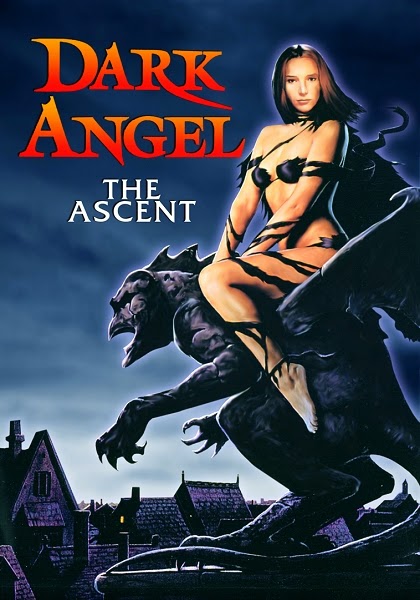
darkangelThis is actually a really interesting idea. We generally think of devils as “bad” – but what if they don’t see themselves the same way, and feel they are doing an important part of the Lord’s work, by punishing sinners? That’s the concept here, which sees the demonic Veronica (Featherstone) clamber out of hell through a conveniently unguarded exit, to see what the world above is like – let’s face it, since all she gets are the wrongdoers sent to damnation, her opinion is a little skewed. Apparently unaware of such everyday issues as traffic (and likely more importantly for most male viewers, clothes), she rapidly gets nailed by a truck. In hospital, she is treated by Dr. Max Barris (Markel), who is perplexed by the odd behaviour of his new patient, but she pulls a Satanic version of the Jedi mind trick, and convinces him that she should move into his apartment. There, she watches television, discovers that there are plenty of perfectly-good wrongdoers here on Earth who need to be punished, and begins a vigilante campaign to take them out. This draws the attention of both the local cops investigating the trail of corpses, and corrupt local official, Mayor Wharton (James), who becomes Veronica’s #1 target.

I love films with a different take on the traditional heaven/hell division – Don’t Tempt Me is a personal fave – and this movie also raises some interesting questions, about whether it’s acceptable to do bad things for good reason. An example: generally, ripping someone’s spine out of there back is frowned up in most cultures. But what if they have been caught in the act of trying to rape a young woman? Where is your morality now? This isn’t pulled out thin air, and is actually what happens here; Veronica appears faintly perplexed that the victim doesn’t want the dripping spine as a souvenir of the incident. Of course, her ability to do that Jedi thing certainly makes life easier, even when her actions draw increasing attention – “covering her tracks” should be added to her long list: “Things of which I’m entirely oblivious.” It’s a shame that there isn’t more investigation into the spiritual aspects, like the scene where she meets a pair of nuns, and gets down on her knees for them. The poor sisters are even more confused when the cross they give Veronica  bursts into flames…

Instead, the film limps off into something that’s partly a love-story, and partly Veronica stalking the Mayor, neither of which are anywhere near as interesting. It feels as if they came up with the brilliant idea, started filming a movie based on the concept… and only then figured out they didn’t know what to do with it. Things peter out in a disappointing matter, and I suspect the makers (it’s a Charles Band production) were looking to start another of their franchises, alongside Trancers, Demonic Toys, etc. Perhaps future installments could have done a better job of exploring the potential in a universe, which is only hinted at here.

Dir: Linda Hassani
Star: Angela Featherstone, Daniel Markel, Milton James, Michael C. Mahon

Danger Dolls

★★★
“Fringe with fringes”

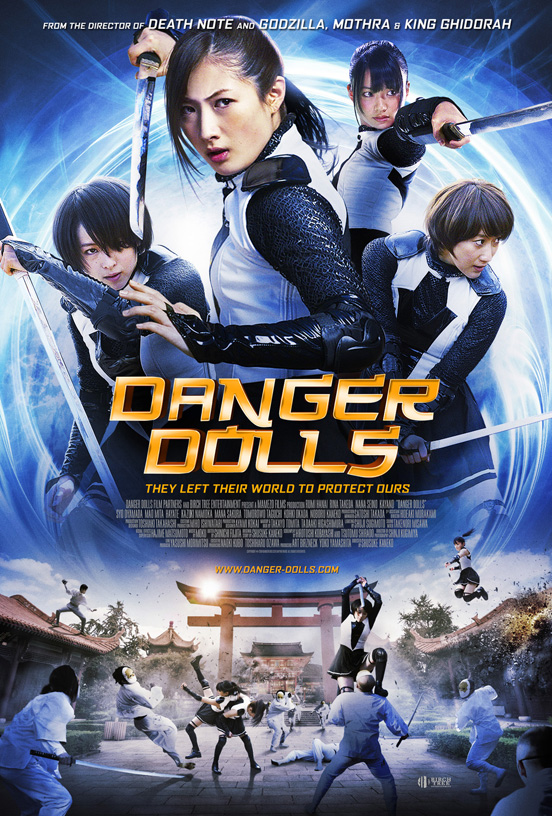
dangerdollsAn interesting alternate universe here, diverging at the end of World War II, where the horrific results of Hiroshima and Nagasaki triggered the world into abandoning, first, nuclear weapons and then eventually, all guns as well. In the present day, crime still exists, but it largely consists of people holding up banks with swords, for example. However, trouble lurks in this gun-free paradise, in the form of a parallel universe, which appears to have designs on ours, and is sending people through a wormhole, and replacing the ones on this side with the aim of establishing a bridgehead. Countering this threat are the titular quartet, led by Arisa (Hanai), who have the martial-arts skills to counter these “filthy invaders”, and can also see the blue glow which identifies natives from another dimension.

After successfully destroying five political figures who had taken the place of their counterparts on this side, things get more complex, with the next mission being to infiltrate a country retreat belonging to that political party, a venue recently visited by all five dimensional visitors. It’s decided by their boss that the girls will go under cover as an all-girl group of pop stars – the i.Dolls – using a tour as disguise for their activities, on the basis no-one will pay attention to a bunch of idol singers. Yeah. Not perhaps the soundest decision making ever, that. Exploring the ground, they find what looks like the innocent gateway to a Shinto shrine, only to discover it is actually cover for the wormhole. Confusing matters further, the parallel version of Arisa comes through from the other side where it turns out that she and the other three – hey, what are the odds? – actually are members of an all-girl group. This Arisa discovers that things are not quite as cut and dried as they seem, and that even their own origins may be other than they believe.

It’s likely a case where less plot would be more – and fewer Danger Dolls would probably be a better idea too. For as is, beyond Arisa and Ray (Takeda), there’s precious little characterization to be found for Miki and Mari, whose sole purpose for existing seems to be to justify the idol singer thing, because a singing duo would seem a bit crap. The action sequences are spottily impressive. It’s clear Takeda is head and shoulders above the others in terms of ability, though Hanai has her moments, and there are some nice moves. The most spectacular of these are apparently inspired by lucha libre, leaving me suitably impressed, and the lack of doubling and wire-work was also quite laudable. However, the need to slice up the screen time between four protagonists does leave the battles feeling choppy, and it’s only once the herd is thinned at the end – I’ll say no more – that proceedings achieve the necessary fluidity. There’s no doubt Takeda still has star potential; as with her earlier movies, however, this vehicle for her talent falls short of its main ingredient.

Dir: Shûsuke Kaneko
Star: Rumi Hanai, Rina Takeda, Kayano Masuyama, Nana Seino

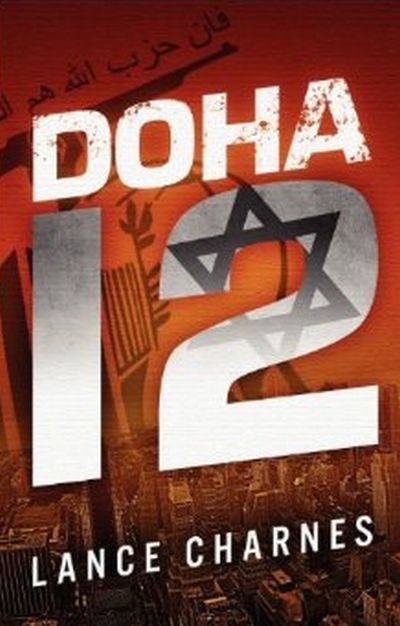
Doha 12, by Lance Charnes

Literary rating: ★★★★★
Kick-butt quotient: ☆☆☆

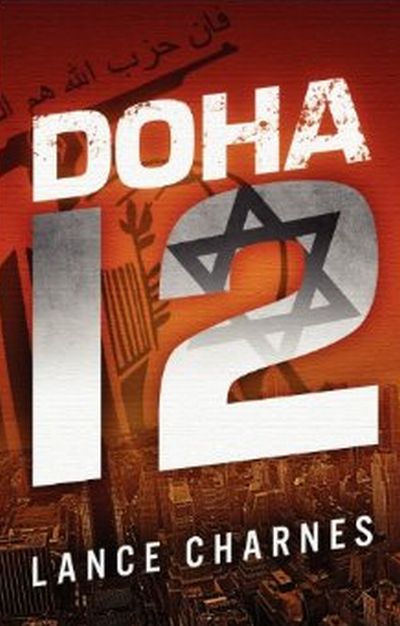
doha12First-time author Lance Charnes and I are Goodreads friends; but I bought my copy of this book, rather than getting it as a gift, and my rating wasn’t influenced by the friendship –it was earned, and would have been even if I’d never heard of the author before reading it. This is an exceptionally assured, polished, powerful and insightful work of fiction; at least one other reviewer has stated that it’s hard to believe this is a first novel, and I have to concur.

A former Air Force intelligence officer with training in terrorism incident response, Charnes sets his plot against the background of the real-life polarized and violent international conflicts in the Middle East. As our story opens, a hit squad working for Mossad, Israel’s intelligence agency, has just recently assassinated a high Hezbollah official (along with an unfortunate prostitute whom they just regard as insignificant collateral damage) in Doha, Qatar. They made it look like a drug overdose, but their hand in the matter has been detected, and the IDs they used identified. But these IDs weren’t their own; they stole them from twelve Jews living in Europe and the U.S. The Hezbollah higher-ups know these people to be innocent –but for their own twisted reasons, send out a hit squad of their own to murder them anyway. (And if that fails, there’s a back-up plan: suicide bombings designed to kill hundreds or thousands.) Our hero and heroine here, Brooklyn bookstore manager Jake and Philadelphia legal secretary Miriam, are two people on the hit list. Luckily for them, they’re also both former members of the Israeli military, with the kind of training that’s apt to come in handy here. (And it doesn’t hurt that Jake’s uncle is an inspector in the NYPD.)

A fair amount of action adventure fiction is open to the charge of having rather shallow characters, and often a simplistic world-view that eschews any kind of ethical complexity in favor of a mindless “us against them” fantasy. Those charges, however, won’t stick here. All the important characters here –“guilty” or “innocent,” Jewish or Moslem, Mossad or Hezbollah– are rounded, three-dimensional, and come across as people, not as cartoons. Yes, some may be sympathetic and some may be villains (and not all of either are on one side!); but we can see that the heroes have flaws, and understand what makes the villains tick.

To be sure, our protagonists don’t deserve to die, and our antagonists here are trying to kill them; so yes, that’s a basic line in the sand that shapes our sympathies. And the author doesn’t deliver an analysis of the whole complex Middle East situation, with a breakdown of the grievances of each side. But within the framework of the storyline, it’s made clear that both the Israeli government and its Arab adversaries have innocent blood on their hands, that individuals of both groups are prey to the temptation to dehumanize the other so they can justify anything they want to do them, and that neither hit squad’s superiors are playing by genuinely ethical rules. As we go along, we’re brought face-to-face with ethical conundrums that may not have easy answers.

If you believe you’re morally justified in fighting great injustice, and you want to do it by ethical means that spare the innocent, what exactly DO you do when you’re stuck with co-belligerents who have no such scruples? Do the ends ever justify the means? What balance do you –should you– strike between the claims of blood vengeance and the recognition that hate can hurt you more than it does the hated? Does torture become morally okay if it’s intended to get information that saves an innocent? (And will it really deliver the results we assume it will? Is lying in a police cover-up acceptable if it spares good people from unjust punishment? Is suicide ever the right thing to do? Charnes doesn’t preach, or suggest answers; he just makes readers grapple with the questions. And in the best tradition of Western literature, characters on both sides here also have to grapple with ethical questions –and may come up with answers that they didn’t expect, and that force them to grow or make sacrifices. As action-adventure fans know, this genre at its best is concerned with these kinds of questions as much as any other type of literature is; and the extreme stakes involved give the questions more force and immediacy than they may have in some other genres!

Charnes’ background shows in his obvious knowledge of intelligence procedures, weaponry, and terrorist tactics. This is an exceptionally realistic novel, and an extremely gripping one. Short chapters, each headed by location and date/time, succeed each other rapidly in setting a quick, driving pace (if I’d had unlimited time to read, I could have finished this a lot quicker than I did, because I’d have read almost non-stop!), and the author’s skill in shifting viewpoints from Character(s) A in place X to Character(s) B in place Y –often at a cliff-hanger moment!– ratchets suspense up to nail-biting intensity in places, especially near the end. Good use is made of New York City and Philadelphia geography, by a writer who’s clearly familiar with both locations.

Action scenes are done very well, and both male and female characters are full participants as equals in that area. Of special interest to fans of this site, we have not one but two formidable action ladies; both Miriam and Mossad agent Kelila are tough, gun-packing women, well trained in the techniques of lethal force and without any qualms about using it. (Readers can safely assume that their training is apt to be put to use!) The body count is high; we have a lot of violence here. It isn’t gratuitous, and we don’t have to wallow through excessive gory description; but not everybody who dies has it coming, and this can include developed characters you’ve come to like and care about. In places, this can be painful.

I have a few minor quibbles with character’s actions at times, as not being as smart as I’d expect from them; but these didn’t bother me much overall. This was a quality read from the get-go, and if it had been published by Big Publishing, I believe it would have been a best seller! Hopefully, even in today’s glutted market stacked against independent authors, more and more readers will recognize it for the gem it is. For my part, I’m greatly looking forward to reading the author’s second novel, South.

Note: There’s no explicit sex here, and only one instance of implied premarital (but not casual) sex. A fair amount of bad language (including the f-word in several places) is used by some characters, for the most part in high-stress situations. My impression is that the author employs it for purposes of realism, not for shock value.

Author: Lance Charnes
Publisher: Self-published, available through Amazon, both for Kindle and as a printed book.

A version of this review previously appeared on Goodreads.

Did You Say Chicks?, edited by Esther Friesner

Literary rating: ★★★★
Kick-butt quotient: ☆

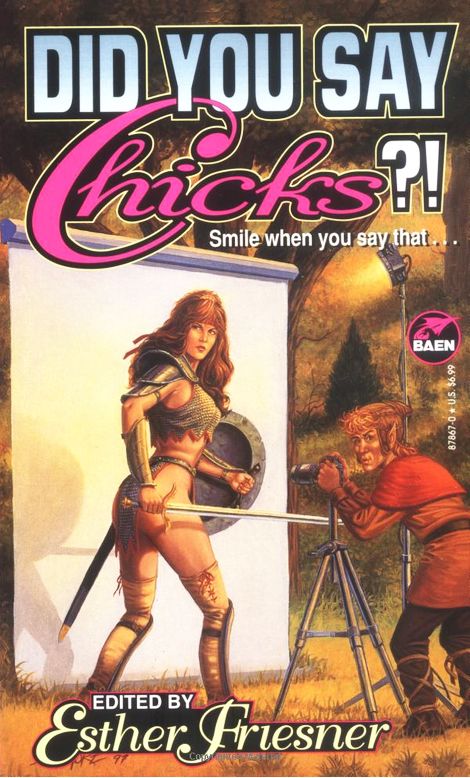
didyousaychicksPublished in 1998, this is the second of several installments in editor Friesner’s series of original-story anthologies featuring strong, mostly warrior women in (mostly) a sword-and-sorcery fantasy milieu. Marion Zimmer Bradley’s older, long-running Sword and Sorceress series is the closest counterpart, but the stories Friesner selects are much more often on the humorous side, and relatively lighter on actual violence –the protagonists here can handle themselves well in a fight, but tend in practice to triumph more by the use of intelligence, or to be able to find common ground with potential opponents where that’s possible. (Lethal violence is more apt to be mentioned, if at all, as an event that happened before the action in the particular story.) Many of my comments in my review of the first collection, Chicks in Chainmail, are relevant here, and my overall enjoyment was similar. (I rated both books at four stars.)

There are 19 stories here, written by 23 authors (three are two-person collaborations); as she did the first time, Friesner herself contributes a story, in addition to her role as editor. Eleven of these, including Harry Turtledove, Elizabeth Moon, Elizabeth Ann Scarborough, and Margaret Ball, also contributed to the 1995 first collection. Among the authors new to the series (and to me) here are Barbara Hambly, Sarah Zettel and S. M. Stirling. (Short biocritical endnotes are provided for all of the authors.) Besides her story, Friesner also prefaces the book with a dedicatory poem to Lucy Lawless, star of the then still-running Xena, Warrior Princess TV show. In keeping with the tone of most of the stories, her poetic style is more Ogden Nash than Dante, and she doesn’t take herself too seriously (after the poem, she appends a quote from Dr. Johnson, “Bad doggerel. No biscuit!”) –but there’s an underlying seriousness of equalitarian feminist message as well. (The final selection, Adam-Troy Castro’s “Yes, We Did Say Chicks!” is a similarly tongue-in-cheek flash fiction, but it’s cute!)

Not all of the stories are actual sword-and-sorcery, or fantasy. One of the two strictly serious ones, Turtledove’s “La Difference,” is a science-fiction yarn set on the Jovian moon Io, as a male-female pair of scientists trek across a dangerous and unforgiving alien terrain as they flee from enemy soldiers bent on slaughtering them. (This is also one where the female doesn’t singlehandedly save the day; she and her male partner work as a very good team.) Laura Anne Gilman’s “Don’t You Want to Be Beautiful?” is set in our own all-too-familiar world, where females are pressured by advertising and culture to fixate on their appearance and spend vast sums on products that supposedly enhance it; and it isn’t clear if the surreal aspects of the story are really happening or are the protagonist’s hallucinations. (This is one of a few stories that women readers will probably relate to more easily than men will.) Slue-Foot Sue, the heroine of Laura Frankos’ contribution, is the bride of Pecos Bill in the American tall-tale tradition, of which this story is definitely a continuation (though it’s also one of two stories that feature Baba Yaga, the witch figure from Russian folklore). And while the story is fantasy, the title character of Doranna Durgin’s “A Bitch in Time” isn’t a woman, but a female dog –albeit one who’s trained to detect and guard against magic.

My favorite story here is Hambly’s “A Night With the Girls,” the other strictly serious tale in the group. This features her female warrior series character, Starhawk, here on an adventure without her male companion Sun Wolf; I’d heard of these two before, but never read in that fictional corpus. (I’m definitely going to remedy that in the future!) Both Moon and Ball bring back their protagonists from their stories in the first book for another outing here, to good effect. The protagonist of Lawrence Watt-Evans’ “Keeping Up Appearances” is a professional hired assassin, who approaches her chosen line of work pretty matter-of-factly, without noticeable moral qualms. But she’s also capable of genuine love and loyalty, especially towards her business partner and common-law husband, with whom she hopes to one day settle down and retire.

So when she returns from a trip to find that he’s unilaterally accepted a contract on a powerful wizard and, while trying to scout the job by himself, gotten turned into a hamster, we can sympathize with her distress, and hope she can reverse the situation. (Can she? Sorry, no spoilers here!) If you’ve read Beowulf and want to know what really happened to Grendel, check out Friesner’s “A Big Hand for the Little Lady.” And Steven Piziks’ “A Quiet Knight’s Reading” is another tale that’s close to my heart (you’ll see why if you read it!). At the other end of the spectrum, two stories I didn’t especially care for were Scarborough’s “The Attack of the Avenging Virgins” and Mark Bourne’s “Like No Business I Know.” The former story, among other things, delivers an essentially sound message, but in a story so message driven that it’s more of a tract, and with an annoyingly “PC” vibe.

As with the original book, bad language is absent or minimal in most stories. Bourne’s is the exception, with quite a bit of it, including religious profanity and one use of the f-word. Sexual content is more noticeable in this volume, with unmarried sex acts (not explicit) in a couple of selections, rape of males by females in another, and a lesbian/bisexual theme thrown into another one as a surprise. “Oh Sweet Goodnight!” is the most frankly erotic story, with its focus on the heroine’s sex life; but the male-female author team treats sexual situations realistically rather than salaciously, and the ultimate message here isn’t as far from traditional morality as some might expect. (This is also a story where magic is absent; Fern’s a sword-toting guardswoman in a low-tech society, but she could just as easily be a divorced single mom in modern America, making a living as a cop or security guard –and modern readers will find her easy to relate to on that basis.)

Editor: Esther Friesner
Publisher: Baen, available through Amazon, currently only as a printed book

A version of this review previously appeared on Goodreads.

Death Shadow

★★★
“Stylized beyond belief.”

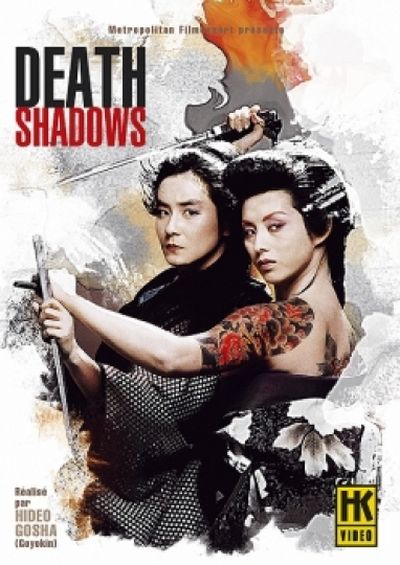
deathshadowsWhile made in 1986, you’ll frequently find yourself thinking this could be from a decade or two earlier, though to be honest, the style in this samurai-revenge-crime-whatever film is as all over the place as the plot. Some of that works well. Having the heroine’s sword turn into a ribbon, which she then twirls artistically, is more successful than it sounds. However, the multiple breaks for little disco-dance sequences, involving dry ice and flashing lights… Not so much. The set-up is great. Three condemned men are recruited, Nikita-style, to become shadow agents, working for the government. One of them manages to have a wife and a daughter, but has to leave them for their own safety.

Ten years later, he’s working a case when he meets his daughter, Ocho (Ishihara) employed by the man he’s investigating, Denzo. The end results is, the case blowing up, the death of both he and Denzo, and Ocho’s recruitment by his boss as a replacement. She can avenge her father by getting the evidence that will bring down the whole syndicate, in particular, a fake license hidden in the sash of a kimono. Unfortunately, this sash is now evidence in a murder investigation, and is in the hands of the police. And Denzo’s mistress, Oren (Natsuki), is out for her own revenge, on the woman she blames for his death.

Plenty of scope here, certainly. Unfortunately, the potential is frittered away after that blistering first twenty minutes, becoming bogged down in a welter of male characters who tend to look the same, act the same and sound the same. It’s a constant stream of corruption, lies and deceit that becomes quite wearing: the yakuza are corrupt, the cops are corrupt, even the local priests are corrupt, their grave-robbing antics being what kicks the quest for the kimono sash off. But it’s all too meandering, and Gosha [who also directed The Yakuza Wives] seems to be much more in love with these subsidiary characters than they deserve. Ocho and Oren are fine – the latter, in particular, is a memorably slimy creature, who is not as weak as she appears. There just isn’t enough of them.

Occasional moments here do work: mostly, when the two female leads have not been shunted off to one side, making way for macho grunting by top-knotted sword-wielders. I don’t have a problem with films like this, that take a different approach to familiar material. However, style alone isn’t enough, and what’s left here is infuriatingly flawed. There’s the basis of a great storyline, and a pair of superb central characters; that’s a foundation many movies would kill for, and on which Gosha could have built. Rarely have I seen such solid ground wasted as badly as occurs in this film.

Dir: Hideo Gosha
Star: Mariko Ishihara, Mari Natsuki, Masanori Sera, Takuzô Kawatani
a.k.a. Jitterna. There’s also some question over whether it’s Shadow or Shadows. The IMDb goes for the former, the DVD sleeve the latter.

Deliverance Creek

★★★½
“Once in a Lifetime.”

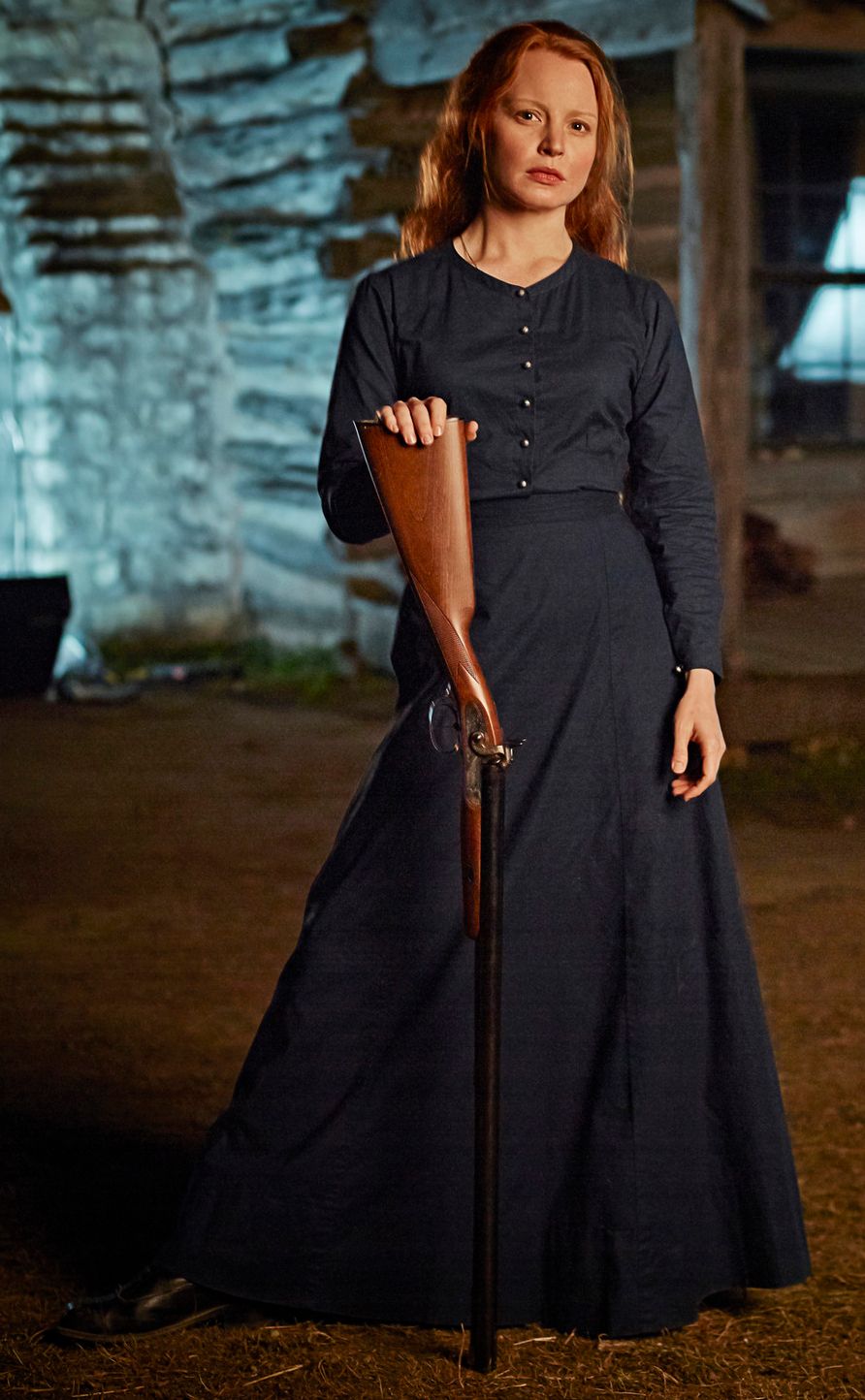
deliveranceThere’s one thing it’s vitally important to understand before watching this. It’s not a stand-alone Western movie. This is what’s called a “backdoor pilot”: something aired as if it were a discrete entity, with the aim of gauging audience reaction to see if it gets picked up. This matters, because it explains the film’s otherwise inexplicable failure to resolve… Well, just about any of the plot threads it constructs during its 90 minutes. If you expect closure, you’re going to be massively disappointed, and there are other aspects which are similarly out of place, such as Skeet Ultich as a local saloon pimp, who serves absolutely no purpose. However, if you take this for what it is – an introduction to the setting, characters and situations – it’s actually more than serviceable, especially since it’s a product of Lifetime, whose output tends to the bland in the same way as vanilla pudding. Thanks largely to Ambrose, this rises above that, and leaves me definitely interested in seeing more.

She plays Belle Barlow, struggling to keep things going on her farm as the Civil War grinds on; her husband was fighting for the Confederates, but has not been heard from in forever. Things aren’t made easier by the neighbours, the Crawfords, who own the local bank and the loan on which Belle is falling behind. Her sister, Hattie, is also involved in helping the underground railroad, the network which smuggled escaped slaves to freedom: Belle has mixed feelings about this, but finds herself hosting one such refugee as her “slave”, Kessie. Meanwhile, a bunch of renegade soldiers, led by Belle’s brother Jasper (Backus), arrive on the farm, intending to knock off a delivery of army gold that will be held temporarily in the bank. Initially opposed to this, Belle’s opinion is changed after a tragic accident, for which she blames the Crawfords, and it turns out Kessie holds the key (literally) to pulling off a successful robbery.

I can’t stress this enough: do not go in, expecting any one of these threads to reach a satisfactory conclusion. It’s the journey which you need to enjoy instead, because the destination is never reached. Fortunately, I was forewarned, and so didn’t suffer the same sense of “Is that it?” as some reviewers. Instead, I was able to appreciate a heroine that’s a good deal more complex than many, and the film also does a good job in portraying the murky nature of the Civil War, where people from the same town (or even family) would sometimes be on different sides. I particularly liked Belle’s little rant in regard to the Crawfords:

I want revenge too. But a bullet for each of them while they sleep is little comfort. I want them to suffer, as I have suffered. I want them to feel what it’s like to have everything they love stripped away from them, piece by piece.

That speech does a really good job of setting up her character’s direction for the rest of the movie, and providing credible motivation. As yet, I haven’t heard of any series following and that’s a pity, because this has potential and I’d like to know where it might have gone. While it’s obviously much easier to write a film where you don’t have to worry about the ending, don’t let the attached name of Nicholas Sparks (The Notebook, and other sappy romances) put you off, for this is better than many TV movies, and definitely better than almost all Lifetime ones.

Dir: Jon Amiel
Star: Lauren Ambrose, Wes Ramsey, Christopher Backus, Riley Smith

Duelist

★★★
“A triumph of style over content”

DuelistposterNamsoon (Ha) is a hard as nails detective in medieval Korea. While working undercover at a market on a counterfeiting case, she encounters a masked man (Kang), and battles him before he vanishes, though not before she manages to cut away a fragment of his mask revealing his ‘Sad Eyes’ – the name by which he is known for the rest of the film. What is his tie to the forged money? And why has be been seen going into the house of a powerful government Minister Song (Song)? Namsoon and her mentor, Ahn (Ahn) investigate, though the closer they get to the truth, the more perilous things become, not least because she begins to fall for Sad Eyes, especially after infiltrating Song’s mansion as a courtesan – a task for which she is singularly unsuited. After a public incident, while Ahn has to fire Namsoon from the police force, this is merely a ruse, allowing her to go after the final piece of evidence they need to raid Song’s mansion and bring down his operation.

Rarely have I seen a more beautifully-shot film. Truly, this picture is as pretty as a… er, picture. The cinematography is top-notch, offering a sumptuous feast of visuals that mixes styles and techniques to great effect, and freeing the movie from bothering with banal chores like dialogue for extended periods. Unfortunately, neither the story nor the characters are a match for the look and feel, leaving the viewer largely to admire the film, rather than being engaged by or liking it. As I recall, the director’s previous film, Nowhere to Hide, had much the same issue, pitting two (male, there) adversaries against each other, in a rain-drenched landscape that was emotionally distant – but, boy, did it look good. Here, the action is extremely stylized, resembling a modern dance routine more than a fight in some cases, or even, as one character puts it, “It was like they were making love under the moonlight.” I also sense there are creative anachronisms at work: did they even have cops, never mind lady ones, at this time? However, the biggest weakness is likely the sudden way Namsoon falls for Sad Eyes; she doesn’t seem at all like the kind of person who would do that, and since this supposed relationship is at the film’s emotional heart, it’s a flaw that may explain why this feels so uninvolving.

Under other circumstances, this could well be a fatal flaw, yet there’s still enough for your enjoyment in the eye candy department to make this worth watching, even at a fairly long 111 minutes. One senses that Lee is much more interested in the technical aspects of cinema, rather than the emotional one of connecting with the audience. I can appreciate that side, certainly, yet for a film to be truly successful, there needs to be some yin to go along with the yang, or what results will seems frustratingly incomplete.

Dir: Lee Myung-se
Star: Ha Ji-won, Kang Dong-won, Ahn Sung-ki, Song Young-chang

Deep Gold

★★½
“Sea minus.”

deep goldI love reading IMDb reviews where half are “totally brilliant film-making!” [obviously by people related to the production, who have generally reviewed nothing else] and half are “worst movie ever!” More than half the votes here are either 10’s or 1’s: of course, the truth lies in the middle. This is proficient, with occasional aspirations to competence, along with some nice production values and scenery, yet founders mostly on a bad script, partly on a misguided belief that filming underwater is interesting, in and by itself. That probably hasn’t been true since Jacques-Yves Cousteau hung up his Undersea World snorkel at the start of the eighties. Maybe these sequences worked better in 3D, as originally shot?

It’s the story of two sisters, Amy (Pham) and Jess (Ong): the former is a free-diving champion, but the latter refuses to go into the sea [there are reasons for this, explained in flashback; they are, however, irrelevant. Of course, her hydrophobia is an obvious foreshadow of the movie’s climax]. Amy’s boyfriend is in the Air Force, but vanishes along with his plane, transporting a cargo of gold back to Manilla. The Air Force suspect he and Amy may have staged the disappearance to solve their financial problems, and so the sisters head for where reports indicate the aircraft went down. Which isn’t anywhere near where the search is taking place. Hmm. There, they team up with a local businesswoman (Prudent), and also travel journalist, Benny Simpson (director Gleissner pulling double-duty), only to find they are not the only people interested in recovering the golden treasure.

I’m not the only person to have reviewed this and been reminded of the work of Andy Sidaris, with which it shares a tropical location and actresses cast more for their looks than their variable thespian abilities. This does have a glossier sheen; on the other hand, if you’re hoping for any nudity, look elsewhere. I think the main problem is the old “acting in your second language” issue, which appears to be the case for most of the cast. Pham has to do most of the heavy lifting, and nails only about one line in three, with others sounding more as if they are delivered through phonetic translation. When things are in motion and SCUBA-free, the film fares rather better. The action scenes are decently staged, the pick likely being Amy getting chased around a library by a slew of thugs, though the final ship-board encounter is nicely done as well. However, embarrassing sloppiness counters this, such an abduction scene where it looks like the same henchman climbs into the car twice, once in the back and once in the front, while Amy’s hands mysteriously get bound, albeit with the sort of constraint she can literally shake off.

It works mostly as a very nice promotional piece for the local tourist board, and if you’re looking for something pleasant looking and possessing absolutely no depth, you could do a lot worse. However, the more you look at this in detail, the more you will likely find yourself going, “Hang on…”, and that’s even before a final credits sequence where the actual local mayor reveals some kinda important storyline information. It’s just another part of a plot which strains even my credulity, and leaves the movie, if not sunk, certainly holed below the waterline.

Dir: Michael Gleissner
Star: Bebe Pham, Jaymee Ong, Michael Gleissner, Laury Prudent

Deaf Mute Heroine

★★★½
“Silent but deadly.”

deafmuteheroineThe physically disabled hero has long been a staple of martial arts, to the extent that is is sometimes referred to, tongue-in-cheek, as “cripsploitation”. The One-armed Boxer, The Crippled Masters, Zatoichi – it’s a genre that survives more recently than you may think, with Mat Fraser, recently seen in American Horror Story: Freak Show, starring in 2009’s Kung Fu Flid. While this is rarer for heroines, they are not immune, with Japan giving us the Crimson Bat series, reviewed elsewhere on this site. This is another entry, Wong playing the titular heroine, Ya Ba, who is unable to speak or hear, but can still fight a mean battle, assisted by reflective wristbands that let her see who’s sneaking up from behind, in lieu of hearing them.

She comes into possession of a set of pearls, taking them off some robbers with extreme prejudice. However, this brings down the wrath of Miss Liu (Huang), leader of her own gang, and whose brother was one of the robbers. While her first attempt to kill Ya is unsuccessful, Lui’s poisoned flying daggers do injure her. Ya is found and nursed back to health by kindly cloth-dyer Yang Shun (Ching); romance blossoms, and the pair marry, with Ya figuratively hanging up her wristbands;  she actually puts them away in a box. That’s relevant, because her husband ends up entrapped into responsibility for a friend’s gambling debt by Liu, and she demands he steal Ya’s wristbands as payback. That opens the way for Liu and about five billion henchmen (count may be approximate) to launch their attack. But that’s not the only threat she faces, since lurking in the wings is another talented master, with a previously relationship to Ya and who was left with a nasty facial scar for his pains.

The fights are good. Really good. As in, the final battle between Ya and Lui (below) may be the best of the era I’ve seen between two women – like most of the action here, it’s fast, hard-hitting and imaginative, weakened only by some unsubtle wirework. The film is also bloodily messy, to a somewhat surprising extent, and both Wong and Huang make for highly-effective characters, the latter making up for the former’s silence.  However, the movie grinds to a halt in the middle, as the focus shifts off Ya to her husband, who is both a great deal less interesting and almost unlikeable. The film is also hampered by poor availability: while the version I watched was as close to complete as possible, that required a combination from three different sources, including one print dubbed into German(!) and another which was sub-VHS quality with a large logo in one corner. That helps leave this short of getting our “seal of approval,” but if a good copy ever becomes available, we might re-visit it. For as I said to Chris, what’s not to love about a wife who never says a word?

Y’know, our couch really isn’t so bad, when you get used to it. :)

Dir: Wu Ma
Star: Sally Wong (a.k.a. Helen Ma), Shirley Huang, Ching Tang, Wu Ma