Subtitled “A grimdark fantasy,” if you are expecting this to be packed full of sex and violence, as a result… Well, you might be a little disappointed. While the lead character, Calixta Harlow Carlyle, is an “Exotic” – a highly-trained prostitute – she doesn’t seem to do all that much… um, prostiuting. We’re about half-way through before she goes to bed with anyone. The violence isn’t particularly brutal or copious either. It is, I guess, somewhat dark, and certainly not a young adult book. But anyone who watched (or read) Game of Thrones will not exactly require the services of a fainting couch to get through this.
Calixta ends up dying, trying to protect one of the girls in the brothel she runs. However, that’s just the start, because the powers that be in the afterlife inform our heroine she’s actually a Vanqusher. These are people with magical talents who act as guardians against the forces of evil, currently massing as they prepare to take over the world. Vanquishers are supposed to have guides from birth, who train them. But Calixta never had that benefit, instead being sold into slavery and trained as an Exotic. She’s sent back to life – much to the shock of her employees – and told to find the other three Vanquishers. But the evil Jadro wants to ensure Calixtra dies permanently, before she can come into her true abilities, and stand against him.
She’s forced into going on the run, with three friends who are even less suited to survival. This involves an escape through the sewers which is about the nastiest sequence in the book (straying uncomfortably close to fetish for my tastes), although they are then rescued by Dreyden, another Vanquisher. Together, they go on a quest to awaken another of their kind, Calixta learning how to control the battle-mage skills she has been given, which allow her to summon and manipulate the element of fire, both offensively and for protection. This talent is very much a work in progress, hence the lower score for action – Dreyden likely does more of the heavy lifting in that department. I suspect she may improve in future installments.
There are several points where the writing does come off as somewhat clunky, and points at which it feels like characters are saying things which are more needed for the plot than anything else. It did also feel that things were unfolding at a leisurely pace: this is approaching four hundred page long, and by the end, we’re not particularly far on from where we were. There’s a lot of travel. However, it is an interesting pantheon, with virtues like Justice, Wisdom and Hope taking human form under a deity they call “Father”. It has occasional moments of genuine emotion too, such as in regard to Calixta’s unborn child, which proved surprisingly poignant. I suspect it’ll end up being fairly straightforward good vs. evil, and there’s nothing wrong with that.
Author: Omayra Vélez Publisher: Self-published, available through Amazon, both as a paperback and an e-book Book 1 of 4 in the Vanquishers of Alhambra series.
★★½
“In space, no-one can hear you roll your eyes.”
The major impact of watching this was largely to remind me of what incredible films Alien and Aliens are. It’s clear director Berdejo and writer Julien Deladrière think so too (the company who made this is called Nostromo Pictures: enough said). But they are just not up to the task of assembling something which can stand up to any comparison. Admittedly, it’s a largely thankless job. They are far from the first to fail at this, and not the worst either. However, I would lay most of the blame on Deladrière, because it’s the script which had me looking for the nearest airlock. The basic shape is fine. A mining colony on a hostile planet, populated by families, comes under attack from unstoppable monsters. Yeah: like I said, this should be largely familiar.
It’s in colouring between these lines that everything falls apart. First, Olivia (Mauleón) is burdened with a clunky back story. Two decades earlier, as a young child, she had to listen as her parents were killed by what’s insinuated to be the same creatures. Now, she’s all commitment averse, not least because she’s coming to the end of her 15-year contract with the mining company, and is looking forward to retiring back to Earth. This is a disappointment to her boyfriend and his daughter, Mera. Consequently, when the aliens attack, Olivia does things by the book from her position in the titular location, even at the cost of colonists’ lives.
This callous indifference horrifies her colleague, Arlo (Casas), even after his refusal to go by the same book, trying to save his parents, leads to more and unnecessary deaths. But if you are already predicting that she will learn the value of heroic sacrifice and go to great personal risk to save non-biological daughter Newt, sorry, Mena… Yeah, I guess that would technically be a spoiler, but it’s so obvious this is where the story is going, I do not feel it truly qualifies. That’s the main issue here, a script which possesses absolutely no ability to surprise the viewer. Except, perhaps, in Olivia’s remarkable ability to survive multiple encounters with monsters who snuff out everyone else’s lives in a couple of seconds.
The start is actually decent, and generates surprising tension considering it’s largely Olivia and Arlo watching dots, representing both humans and ETs, move around on their monitors. While neither we nor they initially see the attackers (yeah, I would expect such an advanced facility to have full CCTV too), the audio is chilling enough to make the point. The aliens are never fully revealed – there seems to be some kind of cloaking tech involved, Predator style – but what you can glimpse is decent enough. It’s just the increasing sense of deja vu, especially after Olivia leaves the control room. From then on, the sense of claustrophobia it generated evaporates, to be replaced by the heroine’s increasing indestructability.
Dir: Luiso Berdejo Star: Loreto Mauleón, Óscar Casas, Alexandra Masangkay, Junio Valverde
Inspired by Jim’s impressive research and writing on all things Joan of Arc, this is my attempt to try out something similar concerning Martha Jane Canary (or Cannary, since the spelling seems to constantly change, depending on who is writing about her) – better known as Calamity Jane. This is NOT intended to be about the real person, who lived from around 1856 until 1903, but its topic is the Western myth she has become. I won’t delve into her real history. A short biography can be found at the beginning of my review on the animated series The Legend of Calamity Jane but occasionally I will refer to certain aspects of her real life in the reviews here, too.
She herself worked quite a bit on her own legend, by inventing stories about herself. Dime novel writers and reporters helped, so much that it has almost become impossible to separate the real person from the fictional character she became. Over the course of over a century, Calamity Jane has constantly inspired film makers, authors and artists to create their own interpretation of her.
The idea of a cross-dressing woman with a rifle and a whip, breaking the rule book for women, drinking, going her own way and experiencing adventures in the world of men and what we now call the “Wild West”, attracts a lot of people who can impose their own wishes, dreams, desires, hopes and fears on that colorful character. Calamity Jane can be almost everything for everyone.
May the dedicated reader find his own preferred version of Calamity Jane in the many different stories cited below!
Films
Wild Bill and Calamity Jane in the Days of ’75 and ’76 (1915)
Dir: The Hart Brothers
It seems that this obscure film is the first to feature Calamity Jane at all. I could not find it online, just a 4 1/2 minutes snippet about it on YouTube, so no star-ranking here. A.L. Johnson stars as Wild Bill and Freeda Hartzell Romine as Jane Cassidy aka Calamity Jane. I’ve no idea why her family name of Cannary (or Canary) was changed here to Cassidy. The movie is said to be 70 minutes long and obviously is one of the earliest film productions of Nebraska (though the filmmakers themselves were from Omaha, the movie was produced for the “Black Hills Feature Film Company”).
The story has been described as Wild Bill and Jack McCall being in a love triangle with Calamity Jane. It is also said that Calamity Jane frequently wears “skirts rather than buckskins” in the movie. I have the feeling that this here is more about Bill (who shows a white-clothed and skirted Jane in the first scene how to shoot) than about her. General Custer is also part of the character ensemble. However, the film is of historical value, since genuine Sioux Native Americans from the Pine Ridge Reservation as well as soldiers from Fort Robinson, were cast as extras. It also includes some nice shots of how Nebraska looked in 1915, which is a real glimpse into the past.
Caught (1931) Dir: Edward Sloman
Again, all I could find was an 11-minute snippet on YouTube, so no star-ranking here. Let’s begin with a summary, directly from the IMDb: “Calamity Jane is a tough and rowdy woman in the old West who owns a saloon and gambling joint (and runs a cattle rustling operation as a sideline). One day she hires a pretty but naive young woman to work as a saloon girl, and finds that the girl is bringing out the maternal instincts she never knew she had. Those instincts are put to the test when a US army cavalry troop arrives to clean up the town and the girl and the young lieutenant in charge of the troop fall in love, and Calamity Jane may know something about the lieutenant that the girl doesn’t.”
So much for that: the whole movie is just 68 minutes long. Louise Dresser plays the charismatic heroine here but appears more like an overweight middle-aged brothel madam with a heart of gold. In the snippet we see her protect a young girl from being abused by a saloon guest, and walking around in a woman’s dress. That is very far away from how Calamity Jane is usually portrayed on film – young and beautiful. But, ironically, it might be closer to the real person, going by photos of Martha Jane Cannary, and the claim the historical Calamity Jane once worked for a time as a prostitute. Oh, and there is no Wild Bill here, so I guess this movie does not try to couple Calamity with him.
The Plainsman (1936)
★★★½
Dir: Cecil B. DeMille
The real beginning of Calamity Jane movies is a mixed bag in my opinion, though directed by the great Cecil B. DeMille (The Ten Commandments). The story feels less like a cohesive whole, and more like a string of separate episodes, intended to bring together historic characters such as Lincoln, General Custer, Bill Cody (a.k.a. Buffalo Bill), Wild Bill Hickok and, last but not least, Calamity Jane. Most of these people never met in real life – though, points for honesty, the intro already points that out. (Side-note: watching the intro text might give you an idea where George Lucas stole the idea for his intros to his Star Wars movies).
The main focus is here on Bill Hickok (Gary Cooper), a man of honor but also a notorious gunslinger. He drags his old but newly-wed friend Bill Cody, into helping him deliver munition for 48 army soldiers who are endangered by a thousand native Americans. By today’s standards, this movie might be considered racist, as it ticks more or less all the boxes of clichés concerning native Americans. Not least – and how could it be any different – they are played by white actors and speak in what sounds for me like a made-up language. Particularly questionable, I feel, is a scene where native warriors surround Calamity inside a house and the light slowly darkens, suggesting a possible gang rape.
But to discuss Calamity Jane, played by blonde Jean Arthur: while she looks cool in the male Western garb Jane traditionally wears (except when, as so often – here, too – there is a scene where she is convinced to put on a dress), she didn’t quite convince me. Hickok is not on good terms with her here, it being suggested she slept with almost every assistant and post station manager. Honestly, this was not very believable when watching petite, childlike Arthur, who doesn’t seem to be the promiscuous type. Wild Bill is hurt by this, and when the movie is not showing us native Americans, treacherous weapon suppliers or exploring the friendship between the two Bills, she seems to be running constantly behind him like a lovesick teen girl. There’s no denial; this portrayal of Jane feels a bit of a fake.
Cooper plays it cool to the hilt so much, he sometimes comes across as arrogant. Arthur’s Calamity Jane too often appears immature – not helped by her voice sounding like a duck. A big deal is made of the fact that in order to save Hickok from being burned alive, she tells the warriors where extra munitions can be found. In the end, when it seems Hickok grew weary of so much killing, a happy ending seems possible for them – alas, history wants otherwise. I don’t want to sound too negative, but it feels a bit of a hodgepodge. Don’t misunderstand: it is indeed an entertaining classic Western, with a message that violence can always only bear more violence. But I really wished the characters would not have been so over the top. I also wanted a more wholesome relationship between the two main characters (most of the time Hickok treats Jane condescendingly) and a stronger cooler Calamity. But a nice beginning it is.
Young Bill Hickok (1940)
★★★ Dir: Joseph Kane
Young Bill Hickok is a relatively short (just over 50 minutes) early Western, with Roy Rogers. And, yes: he does sing. If the story is nothing extraordinary I felt adequately entertained, considering how old the movie is. In the Civil War, the North wants the war to end, therefore a special gold delivery has to be brought to… ah… some place… I guess? Young Bill Hickok is given the confidence to carry out the dangerous task, with a gang called “the Overland Riders” likely to rob the transport. He sets his transport up as a decoy, while in reality the gold is transported by close friends Gabby Whitaker (George “Gabby” Hayes, an absolute regular in many classic Westerns) and Calamity Jane (Sally Payne). Unfortunately for all, Hickok’s fiance, Louise (Julie Bishop) confides that secret to the villain of the piece, Towers. He then robs the right transport, and frames Hickok, who has to flee and prove his innocence.
Yes, sure: the story won’t win any Oscars. The important thing for me was: I was amused. There is nothing extraordinary here, as mentioned. You get horse chases, an annoyed and worried fiance, one-dimensional villains and so on. But the whole thing is so nicely uncomplicated, innocently done and told as only a classic Western can be. I have to say I didn’t expect much more. Sally Payne comes over as a normal, sympathetic young girl in Western garb, who is also allowed to shoot, given her nickname by her Uncle Gabby. I greatly preferred her “normalcy” to the overdone, constantly crying character Jean Arthur tried to sell me. This Jane is also constantly in the movie, a contrary to so many films where she is present in a couple of scenes. Her dance scene on the saloon table is very funny, too!
My verdict: Very watchable!
Badlands of Dakota (1941)
★★★ Director: Alfred E. Green
I wondered if it would be appropriate to call this movie a Western: for much of the time, it plays more like a love story with broken promises and heartaches. However, you also have saloons, card gamblers, horse chases and (fake) native Americans. The usual suspects are once again prominent too: General Custer, Wild Bill Hickok (Richard Dix), Calamity Jane, of course and Deadwood. But the main story is a love story gone wrong. Bob Holliday asks his brother Jimmy (Robert Stack, who’d go on to be Elliott Ness in television’s The Untouchables) to look after his fiancee, Anne (Ann Rutherford), and accompany her to a wedding in Deadwood. Unfortunately, Jimmy falls in love with Ann and they marry. When Bob finds out, he is furious and plots his revenge: He recommends his brother to become new Sheriff of Deadwood and tries everything to discredit him and driving Jimmy out of town.
In the midst of all this heartache is Calamity Jane. This time, not in love with Bill Hickok but the somewhat chubby Bob, so her heart still gets broken. It ends with her shooting Bob in order to save Jimmy from him. This film would probably be quite forgettable. Except there is enough action and a surprising amount of humor, mostly delivered by supporting characters who sometimes made me really laugh hysterically due to their – intentional – stupidity. The 80 minutes went by very quickly, and I can’t say, I wasn’t entertained. The quality of the entertainment is a different matter…
With regard to Jane (Frances Farmer), this film fares much better than the Cooper-Arthur one. Yes, it’s obviously difficult to get the love story out of a story with Calamity Jane – see also: almost all other entries here. But the blonde, attractive Farmer appears more believable in this role than Jean Arthur. This Calamity is described as a frontier-woman who worked as a scout for General Custer, doesn’t seem to be a criminal and walks with confidence into the saloon to get a beer. It is very funny when a heartbroken Jane forces the male band at gunpoint to continue playing music, though they would all rather go home. She does lose a bit of my esteem, when Jimmy and Anne arrive. Mistakenly thinking Anne is here to marry Bob, she goes straight to Anne and tells her to leave the town on the next stage. Still, this Calamity is a step in the right direction, albeit with a long way to go.
The Paleface (1948)
★★★★
Dir: Norman Z. McLeod
Jim already wrote a review on this Bob Hope comedy Western, which succeeds mostly through the antics of Mr. Hope – as well as Jane Russell’s cool, sexy and take-no-prisoners Calamity. The whole thing is a very, very funny romp and politically so incorrect that it couldn’t be produced today. In one scene In-… ah… native Americans attack a log cabin in the woods where Hope is defending the people inside – or at least thinks he is the one shooting the warriors. When the Bureau of Indian Affairs comes along and sees a whole pile of dead people, he shouts out, “It’s not my fault, they started it!” Yes, the humour of the 1940s is definitely not ours anymore.
That said, the movie in general is a lot of fun. I felt as if it was a James Bond film – well, if Bond movies had been around in the 1940s, featured Jane Russell as Bond and were disguised as a Western. Her task is to find out who is delivering fire guns to the wild warriors, and she has to go undercover. Also this is the first time we get a Calamity Jane Western in colour. The audience liked it well enough that a sequel, Son of Paleface, was produced 4 years later, though Jane Russell played a different character there. She would also portray a similar character in Montana Belle (1952).
Calamity Jane and Sam Bass (1949) ★★★
Dir: George Sherman
While her name appears first, the main protagonist in this Western is Sam Bass (Howard Duff). Bass, a real-life person, was a train robber but here is depicted in a mainly positive light. He is a cowboy who knows horses and hopes to earn a living to marry store owner, Katherine Egan (Dorothy Hart). But as he is a newcomer in town, he is regarded sceptically by her brother, the town’s sheriff. He wins a horse-racing bet with money lent by the sheriff, but as this seems to prove his unreliable, no-good character he loses his job on the sheriff’s ranch. A couple of bad decisions, a betrayal and the mean murder of his horse later, and his fate is doomed. The road to hell is paved with good intentions, as the saying goes!
So what we have here is a morality tale: don’t gamble, folks, and earn your living by hard work. More interesting for the Calamity Jane fan here, is Hollywood actress Yvonne de Carlo who could be found in a number of historical movies around the time. Her brunette Jane has very little similarity to the way the character is usually depicted. She is no criminal – well, not in the beginning, the sympathetic character of Sam drags everyone down with him – but a successful horse racer. As Sam helps her in the beginning she is attracted to him, just like Katherine. Sam is depicted as a victim of circumstances, but I’m not quite on his side. He must take some responsibility for the tragedy he experiences, since not only is he naive, but thinks the fact others don’t play by the rules, gives him permission to do so, too.
While Mrs. de Carlo is very attractive, this is a very tame Jane: She doesn’t curse, shoot or crack a whip. She is mainly defined by being dressed in the usual male garb and speaks to men as an equal. She certainly doesn’t have an overbearing sheriff brother at home, who decides who would be good for her. But then, she questions Sam’s wish for a farm and family life, telling him they could go and win every horse race there is. So, what’s my verdict? The movie is essentially a film noir in colour, dressed as a Western – albeit maybe not as melodramatic as others. Of special interest are some well-known names in the cast: a very young Lloyd Bridges, Hitchcock villain Norman Lloyd (Saboteur) and the gangster in two James Bond movies, Marc Lawrence (Diamonds are Forever and The Man with the Golden Gun). But if you want a typical Calamity Jane portrayal, look elsewhere – the one here is “in name only”.
The Texan Meets Calamity Jane (1950)
★★★ Dir: Ande Lamb
There might be some confusion over this little known Western, since it was re-released in 1952 as Calamity Jane meets the Texan. This appears to be less than a B-movie, with a limited budget, no big-name actors, produced, written and directed by the same man. Calamity Jane (Evelyn Ankers) still mourns the death of good friend Wild Bill years earlier. He left her his saloon, but scheming Matt Baker has found Bill’s last living relative, Miss Mullen (played by Grace Lee Whitney, later known as Janice Rand in Star Trek) and wants to buy that saloon from her, as there is no proof that Jane inherited the saloon rightfully from Bill. Miss Mullen sends lawyer Ellion to Deadwood City to investigate the matter where he is immediately met by Jane and her older sidekick Colorado.
Evelyn Ankers was a B-movie actress who could be seen in The Wolfman (1941) next to Lon Chaney; Sherlock Holmes and the Voice of Terror with Basil Rathbone; a Tarzan movie and a couple of others. This is no exception: not great art and no great Western either. But it is the usual standard Western fare which at the time was almost produced on a conveyor-belt. That said, it is as good or bad as any other average Western of that time. You can get some entertainment value: it’s just plain okay, but not much more. While Mrs. Ankers does the job, her Calamity Jane hardly leaves any impression, and doesn’t really deserve that name. She could just have been named Abigail Jones for that matter.
Calamity Jane (1953) ★★★★ Dir: David Butler
This is probably the most famous movie featuring Calamity. Which is kind of odd, considering that this happens to be a musical and she is played here by Doris Day. Although it’s understandable why Day called this her favorite movie. Here she is allowed to behave as un-ladylike as she wants, very often with hilarious results. She nevertheless stays cute, despite portraying Calamity as a bit of a klutz who has no idea how a woman should behave or how to get a man. It is a very strange entry indeed in the CJ-filmography. From a modern perspective, there is a recognizable queer undertone running through the movie. Early on, there’s a female impersonator singing on stage; Wild Bill (played by Howard Keel) loses a bet and must appear dressed as a squaw; and not least, Day singing the famous song Secret Love, with a subtext that at the time, probably only lesbian audience members might have been able to read.
But it’s all in good fun – and most fun of all, is to admire the multi-talented Day here as she sings, dances, rides, shoots and emotes. I was especially impressed by the physical flexibility she demonstrates on multiple occasions, and she was also a born comedian. At the same time, this is a product of more prudish times: It’s constantly suggested that Calamity would be a real catch if she would learn to wear ladies’ dresses, use perfume and behave more like a lady. She does that – but honestly, I didn’t agree with the movie’s attitude. I like my Calamity more as one who breaks the traditional female rule-book. But it should be noted, the musical became so beloved over time, it still gets revived for theatres nowadays.
Bonus points: She cracks her famous whip. All in all, this musical provides a jolly good time and is nothing more than classic movie entertainment. If you like this one, I would also recommend to you the 1950s musical Annie Get Your Gun, about famous sharp-shooter Annie Oakley.
Calamity Jane (1963)
★★★★
Dir: Ernie Flatt
Ten years after the Doris Day-movie, CBS produced this remake, a TV movie which can be watched on YouTube. It’s marvellous to find such a little gem from the “Stone Age” of TV. Of course, every moment shows it didn’t have the budget of the 1953 movie: It’s in black and white, and happens on a theatre stage with a live audience, whose reaction you can hear – they obviously had a blast. The sound is as primitive as you would expect for such a production, and there is a lengthy advertisement for sponsor Lipton Tea at the beginning, as well as some later commercial interruptions. None of which makes this version any less enjoyable.
Indeed, I would say that this Jane, depicted here by Carol Burnett and reprising a role she had played on stage, feels more tomboyish than the previous version. Doris Day never could quite escape her essential “sweet-heartiness”, quite probably part of her core identity. Burnett has comedic timing on her side and gives Jane a wonderful, playful and cocky attitude. On the other hand, probably due to a lack of means, training and money, she can never fully display the acrobatic flexibility Day showed, though this production does its best to replicate it. Burnett is supported by a satisfying, but not really exciting, Wild Bill Hickok, played by Art Lund, who comes across as a cheaper version of John Wayne.
The songs are regrettably shortened here which reduces the runtime of the movie by around 15 minutes, compared to the Day version. It makes this more of a comedy than a musical, and while I would always prefer the colorful, large-scale cinematic version, I like this a lot. I may be in the minority, but I preferred Carol Burnett’s funny tomboy to Day’s emoting love klutz.
The Raiders (1963)
★★★
Director: Herschel Daugherty
After the Civil War, Texan farmers repeatedly lose their livestock during a cattle trail to gangsters and Indians, and want train companies to build a line to Texas. After their demand is rejected, the desperate landowners, under the leadership of ex-colonel John G. McElroy (Brian Keith) start to attack army deliveries and camps to get their grievance heard. This results in Wild Bill Hickok (Robert Culp) and Buffalo Bill Cody (Jim McMillan) having to intervene, to prevent something that could trigger another war.
This was definitely made for a middling budget, and with underwhelming camerawork and staging: the camera positions and actors often appear fixed and immobile, unless they are riding on their horses. But it is a good, original story and provides a satisfying Western. To a large degree, this is due to the interaction and chemistry between the aforementioned actors. The friendship between Hickok and Cody works especially well, with Cody on the side of the raiders while Hickok is bound by his obligations to the military. In the end, they are able to prevent an escalation between the stubborn generals on both sides.
Calamity Jane is played by red-haired Judi Meredith who works as a supplier to the army, with her wagon. Meredith is quite attractive (I seem to write that for every CJ actress!), but the way Jane gets treated here, is probably the worst I have seen and would definitely be counted as sexist by today’s standards. Actually, it might seem like that by the standards of the day. It starts with a scene where three middle-aged men grab her “just for fun” and try to force her to the saloon to… have breakfast with them? Bill Cody has to help, and when he mentions that she is good friends with Hickok they finally relent. Later she is mocked by McElroy and his man, shortly before they burn her wagon. Nobody takes her seriously, an attitude no other Jane experiences: even Doris Day was able to make people respect her. It doesn’t reflect well on Jane, with lines like, “Yes, it’s easy for you to attack a weak and helpless woman!” Really, whoever wrote this had a problem with the idea of a strong woman and felt he had to undermine the character constantly.
Last but not least, Bill Cody tells her if she really wants to attract Bill Hickok’s attention (the man she claims to be attracted to, although nothing is made of it, since the film concentrates on the raiders and their conflict with the army), she should stop dressing like a man and wear a skirt. To make matters worse, he actually steals her whip. At least her last words in the movie are, “If he wants me, he has to love me the way I am!” I second that emotion, but the way Calamity Jane is treated in this movie is humiliating, and the worst in any movie so far. As just western entertainment, the movie is enjoyable; with respect to Calamity Jane, it’s no glorious chapter.
Seven Hours of Gunfire (1965)
★★
Director: Joaquin Luis Romero Marchent
This movie is confusing, a typical German-Italian-Spanish co-production of the mid-60s, and stylistically is best described as a below-average, third-class, German western of that time. Originally titled Aventuras del Oeste (Adventures of the West), in Germany it went under two different titles: The Last Bullet Hits the Best and more prominently as Buffalo Bill – His Greatest Adventure. The IMDb speaks of Buffalo Bill and Wild Bill Hickok, but they can’t be found in the German dub. Buffalo Bill here goes by Bill Hogan, called “the quick knife” by the Comanche, and is played under an alias (Clyde Rogers) by Rik van Nutter, better known as Felix Leiter in Thunderball. Wild Bill is named here Gunn Barrett, and played by Austrian actor Adrian Hoven. He had quite a run of German movies in the 50s and 60s, until he became a director focusing on horror and erotic movies. It’s strange to hear Wild Bill speak with an Austrian accent. But then I’m forgetting that Schwarzenegger would become an American action hero icon!
The story itself is hardly worth telling. Supplied by weapons trader Wilson, the Comanches attack what appears to be German settlers. To my surprise, some speak with a Saxony accent, one being referred to as Mr. May. This is a in-joke referencing German novelist Karl May who wrote many of the books local Westerns of the 60s were based on. Of course, the three heroes try to prevent the attack – mostly unsuccessfully, I must say – leading to the expected shoot-out in which Gunn Barrett gets killed. Constantly changing voice-overs don’t help, while even more confusing is that two different characters in the German version are spoken by the same dubbing artist, who also provided the German voice of Clint Eastwood.
Calamity Jane is played here by Italian (!) actress Gloria Milland – obviously a nom de plume, one of several in the opening credits, right, Clyde? She is only in three scenes. In two, she shouts at Barrett because he is constantly drunk; in the last she supports him in the big shoot-out and holds Barrett when he gets killed. No big tragedy unfolds: she has nothing important to do here and doesn’t matter for the story at all. All in all, this western is a disappointment. It feels incredibly made-up on the spot, the story moves along without any momentum or suspense, and moments intended to be funny, feel kind of painful. It’s very average and forgettable, though I still find this more entertaining than the Bridges-Wild Bill movie.
The Plainsman (1966)
★★★
Dir: David Lowell Rich
Basically a remake of the 1936 Cecil B. DeMille movie of the same name, though it feels different – as you’d expect, the vibe of the 60s is very different. While filmed in beautiful colour, the whole affair looks somehow smaller. Where the original had an epic sweep, this feels like a compressed version of it. De Mille’s felt episodic, like a big mosaic, here you can feel the conscious effort to make it into one streamlined story. It more or less works, I’d say – at the same time, I don’t know if it makes the story better. There are some interesting changes: the tribe of native warriors is being incited by “Crazy Knife” (Henry Silva) while Black Kettle is trying to keep his people in line. General Custer (Leslie Nielsen) who featured prominently in the original, only appears at the end here to acquit both Buffalo Bill (Guy Stockwell) and Wild Bill Hickok (Don Murray) of the accusations of Lieutenant Stiles (Bradford Dillman), who would love to see a clash with the natives escalate.
Calamity is played by Abby Dalton. She is blond, naturally good-looking and wears eyeliner like Judi Meredith. Yes, she is in love with Buffalo Bill, but doesn’t appear as childish as Jean Arthur, though is overly emotional and occasionally inappropriately weepy. Bill still wipes her kisses off, but the near-hatred Gary Cooper displayed has been replaced with something more like indignation. Most of the time, the two work well together. The scene from the original where Jane puts on a skirt is here, but it is the first time in these films she speaks of her past: “I was born in a saloon and I had to take care of myself from age 10.”
We know that at least the latter was true for the real Calamity. She has ideas about men’s reactions to and behavior with women, which made me smile a bit because there is some truth to it. Also, this movie suggests a happy ending for her, as she is sitting together with her man on the same carriage box at the end. Interestingly, in the German dub she was voiced by the same actress who dubbed her in the two movies directly above, a prominent voice actor at the time, who voiced Marilyn Monroe, Brigitte Bardot, Diana Rigg and Honor Blackman.
In a way, an era ends here, because the classic American Western was slowly dying. The character of Calamity Jane would disappear from movies and series, as far as I know, for almost 20 years, before she would eventually re-appear in movies that tried to portray her in a more realistic way.
Calamity Jane (1984)
★★★★½
Director: James Goldstone
This TV movie has Jane Alexander, who also co-produced the film, in the main role. While it again has the likely fictional love story between Calamity and Hickok (Frederick Forrest), it is a much more realistic portrayal of Jane, as well as her relationship, then we have seen before. Calamity is saved by Hickok, they begin an affair after she has nursed him and are married by two drunk priests in the desert. They separate as Hickok doesn’t want Calamity “drawn along with him” when going to work in Buffalo Bill’s Wild West show. She bears his child which is adopted by a British couple, the O’Neills (David Hemmings plays Colonel O’Neill). She hears that Hickok has married, but he is shot before she can speak to him, although his murder is barely a sideline here. Later she meets her daughter again, though does not reveal her relationship.
I was most impressed by Alexander’s Calamity Jane. She is absolutely convincing, playing her as a grown-up woman, far from the girlish portrayals we have seen before. She is attractive, but not “sexy” in the usual sense and also not fetishized as has often happened in the past. Yes, she is very much in love with Hickok, but has insecurities concerning her attractiveness (a theme also dealt with in Buffalo Girls) when she dresses up as what Hickok calls a “made-up harlot”, to convince him that she is feminine, too. She shouldn’t have bothered: Jane Alexander is absolutely believable as a tough woman who dresses as a man for man’s work, such as driving a coach. She has the “tomboy thing” figured out, but it never feels like a stunt, and she is always believable as a female character who must stand on her own since no one provides for her. I especially love Alexander’s slightly husky voice, which at times reminded me of Jodie Foster’s, only louder and less melodic. Calamity goes through the emotional wringer but given she experiences losing her half-legal husband and daughter, this is more than understandable.
Not too many people might know this one: it seems only to be available in Poland and Australia on DVD. Yet it is a good drama, almost a precursor to Buffalo Girls, though better in my opinion. And while neither young nor what you would typically call sexy, Alexander’s Calamity Jane might be the most realistic portrayal I’ve seen of the character, and also does not overdo the negatives. Indeed, there is a good chance I might call her Calamity Jane my personal favourite.
Tall Tale: The Unbelievable Adventures of Pecos Bill (1994)
★★★
Dir: Jeremiah Chechik
According to Wikipedia, a tall taleis “a story with unbelievable elements, related as if it were true and factual.” It is a literary genre I don’t think exists the same way in Europe – except maybe the famous tales of Baron Munchausen. This Disney production is the story of Daniel (Nick Stahl, years away from teen John Connor) who works hard on the farm of his father (Stephen Lang, years away from grizzled old Avatar villain Quaritch) in 1905. The farmers face evil industrialist J. P. Stiles (Scott Glenn, years away from Daredevil‘s mentor Stick) who wants their land. The two main perspectives – living off your own hard work or selling out to big industry – are opposed, and when Daniel’s father is shot by Stiles’ men, Daniel escapes. He falls asleep in a boat and meets tall tale heroes Pecos Bill (Patrick Swayze), Paul Bunyan (Oliver Platt) and John Henry (Roger Aaron Brown). Reality and fiction get tangled while Daniel is on the run.
This is the kind of adventure movie for the whole family Disney liked to produce during the 90s. In retrospect these were so much more enjoyable than those the studio produces today, because they felt more natural. As a family adventure film I can wholeheartedly recommend it. There is beautiful production design, a gorgeous colour palette and the epic music of Randy Edelman. However for Calamity Jane fans this is only of peripheral interest. Jane (played by Catherine O’Hara – Kevin’s mum from Home Alone!) is barely in the movie. She enters a saloon brawl and is very upset at Pecos Bill who obviously left her some time ago. She expresses her anger with adequate shooting skills, but vanishes as quickly from the movie as she has appeared in it.
Buffalo Girls (1995)
★★★
Dir: Rod Hardy
[Jim’s review is available here] Based on the book of the same name by Larry McMurtry, this epic two-part TV series was showered with Prime Time Emmy and Golden Globe Award nominations and boasts a remarkable cast of stars: Anjelica Huston as Calamity Jane, Sam Elliott as Wild Bill Hickok, Melanie Griffith, Gabriel Byrne, Peter Coyote as Buffalo Bill, Jack Palance, Floyd Red Crow Westerman (who made a real career out of his role in Dances with Wolves) and Liev Schreiber. The film portrays the last days of the “Wild West” but does so in a charming way; while it’s a drama, it never feels overly dramatic or tragic. I personally would call it “light drama”. We get full, natural colours and not everything looks dark, grey or nightmarish as many films do today, when the director wants it to look “realistic”.
Anjelica Huston looks a good deal younger than her age of 44 at the time. I do have a problem with her Calamity: she is just too cute and nice. Yes, the male western garb is here – obviously to protect her, because once she puts on a dress, everyone wants to dance with her. At one point she is allowed to use her signature whip. But she never escapes her natural femininity, which counteracts the aim of portraying the ultimate tomboy. Huston plays Jane like a schoolgirl in the body of a grown-up woman, who has a crush on the coolest boy on school, Wild Bill. It leads to a baby, Calamity’s daughter that she gives up for adoption. A large subplot is the relationship of Calamity’s best friend, the prostitute Dora (Griffith) and her boy friend Ted Blue (Byrne). Jane later goes with Buffalo Bill’s Wild West Circus to England, because she wants to see her daughter again, and there is a shooting bet with Annie Oakley.
This is an average story, one that wouldn’t have needed to be told in form of a Western. While Elliott is always great, he’s still miles away from the cynical and world-weary trail leader he recently played in 1883. You could have told the same story as a modern-day drama and, except for the battle between Custer and the native warriors, all you would have to change are the clothes. That’s somehow disappointing. I would like to see a Calamity who curses, fights, uses her whip and guns frequently – though she does shoot down a chandelier in a British pub – and gets involved in adventures. I guess what I want is some kind of female Indiana Jones, and that’s not the case here.
We get to see the life that she might have led in reality, according to the sparse details we know about her life. While nice, and admirable, it’s not really exciting. There are no real action scenes in the story, and the whole thing feels like a toned-down drama. It may sound very much as if I’m rejecting this mini series: I don’t. I do like it – it’s just not what I expect to see when someone says “Calamity Jane”. But of the two realistic Westerns in 1995 which involved her this is definitely, and by far, the better and the one I recommend. You do get a full 2½ hours with Calamity Jane as the main protagonist. There are not many movies about which you can say that.
Wild Bill (1995)
★★
Dir: Walter Hill
I don’t like this movie at all, and I think 2 stars is very generous. It has nothing to do with the fact there are a number of Walter Hill films I don’t like, or that Calamity Jane is hardly in the movie. I simply think this movie is not well-told, and is boring. It doesn’t work for me either as a Western, a biopic or a good movie in general. It’s not the fault of the movie stars who are all well-known for their competence. I mean, we have Jeff Bridges as Wild Bill Hickok, plus Ellen Barkin, Diane Lane, John Hurt, Keith Carradine, Bruce Dern, David Arquette and Christina Applegate. I also found the production design very fitting. So, who is responsible for the mess?
My vote goes to Hill, who wrote it as an adaptation of a book and a theatre play. Either the literary template was not very good or Hill wasn’t able to filter a good cinematic yarn out of it. I don’t know, and I don’t really care. The story of the Wild West legend is told with Hickok originally working as a U.S. Marshall, but getting involved in more and more violent conflicts. His life takes a slow down-turn, so much so that everyone in the room fears they might be the next one he kills. This tragedy includes sickness, an opium habit and a destroyed relationship.
Calamity Jane is played by Ellen Barkin, but has only a minor role in the film. It’s sad, thinking of what could have been with an actress like Barkin who once mesmerized in Sea of Love. Her character here seems to be mainly turned on by Wild Bill, and they indeed have sex on the poker table in the saloon – but she is not the woman he loves. Jane has the traditional outfit but as is becoming a trend, I expect more from my Calamity Janes. There might be people who look at this movie as some kind of failed masterpiece, or maybe a forerunner for Deadwood . But, honestly, I don’t recommend this movie. It’s boring, overlong and perforated with flashbacks. Simply, not good story-telling.
The Legend of Calamity Jane (1997)
★★★½
Producing studios: Canal+ and the WB
I already wrote a review on this Canadian animation show. It is just 13 episodes long and depicts Jane as a true-blue hero who serves justice in the old West, accompanied by sidekick Joe Presto, and her horse Dakota. The show was definitely written for a teen audience but can be enjoyed by grown-ups, too. It’s a lot of fun, features some nice action scenes for a 90s animated series and has enough diverse plots to not get boring. I certainly enjoyed it quite a bit.
Lucky Luke (2009)
★ Dir: James Huth
Lucky Luke is a famous Belgian comic book series by artist Morris (born as Maurice de Bevere, 1923-2001), partly co-written by Réné Goscinny (1926 – 1977), who is best known for his work on the Asterix comics. Luke began in 1946 and is among the most beloved comics in Europe. It’s therefore unsurprising that people have tried to adapt the comics into live-action movies, as well as some animated series . This was not the first – there were a couple of films with Terence Hill as Lucky in the early 90s, and a later one with German actor Til Schweiger – but hopefully, may be the last.
The comics are indeed very, very funny – or were, when Morris was drawing and Goscinny writing, I don’t know how they are today. But it seems difficult to transfer this kind of oddball humour, coupled with slapstick and situation comedy, into live-action. The attempts so far have been absolutely terrible, and shouldn’t have been that bad. But it would need a certain understanding of how the humour in the comics works. While the animated versions more or less work, the live-action creators seem to have no feeling for subtlety, nuance or basic understanding of what the humor is. If you want an example of how it’s done right, I refer you to Spielberg’s adaptation of TinTin.
Anyway, what does Calamity Jane have to do with this? Well, Lucky Luke (Jean Dujardin from The Artist) is a lonesome cowboy, very far from home, who is usually called to help solve difficult tasks or bring criminals back to prison: in most cases, this means the Dalton brothers. But he also meets famous people of his time, such as Mark Twain, Sarah Bernhardt and Jack London, as well as the many desperadoes and gunslingers of the old West. He has met Calamity Jane at least three times in the comics by now: the version there is a inelegant redhead who curses a lot, shoots quickly but has a heart of gold. It only seemed logical she would appear in a movie, especially considering the comic universe is short of interesting women, with the whole “lonesome cowboy” thing.
I once owned a collection of over 50 Lucky Luke comic books, but as far as I can judge, the story has no similarity to any I read. Calamity Jane pops up in the middle of the story, out of nowhere and except for demonstrating incredible strength (she has some muscular arms) and her overdone behaviour, contributes little to an otherwise forgettable film. She is played by Sylvie Testud, I think making her the first French actress to depict Jane. But there is little more to say. Avoid the movie and read some Lucky Luke comics instead – preferably the first one with Calamity. I believe an animated version of it can be found online, and will be discussed later.
A review by Jim can be found here – and might be longer than mine. I wholeheartedly agree with his 2-star rating. This is a low-budget production. Very low budget. Please don’t misunderstand: I’m not one of those who believe “bigger is always better”. Very often, it’s the opposite; in big-budget productions, the first thing that suffers is usually the coherence of the script. But I do need to be able to buy into the fantasy, and this just doesn’t have the resources needed to give me a basis for suspending my disbelief. The actors speak their lines clearly and for not being professionals do well enough and don’t trip over their words. Some are better than others but no one has to be ashamed of what they did. That said, I never really believed Erin R. Ryan, to be the legendary female scout. She looks like your average contemporary American cowgirl and neither her acting nor behaviour made me associate her with Calamity Jane.
The costume and prop departments don’t help, putting her in modern jeans and giving her weapons that look as new and fake as they come. Obviously, no one is surprised here to see a woman in trousers and everyone also seems to recognize Jane at first glance, without much excitement. Compare it with her entire film history and you realize there is a problem. In addition, the entire thing does not look very “western-y” to me, and seems to have been filmed in a park or a wood with plenty of lawn. It could have been filmed in front of my house, and it takes plenty of suspension of disbelief for me to make this work. There were some nice aerial shots I did like, and a score that consists of guitar with some occasional flute.
The whole story is simple: Wild Bill has been shot and Jane is out for revenge on those responsible. She meets plenty of evil men in the woods that she kills – indeed, this Jane has quite a body count – frees a religious woman and gets her horse stolen by a quack. Although most of the time she is just wandering through the woods, with not much riding here. Maybe the rent for the horse was too high for the entire shoot? There are cameos of Wild Bill (Joe Kidd) in her dreams; think of Sarah Connor dreaming of dead Kyle Reese in T2, telling her she doesn’t need to continue her quest, though she does anyway.
I don’t like to downvote this movie, because it was done with good intentions and that is more than some typical Hollywood blockbusters can claim. You get scenes you won’t see anywhere else, e. g. Jane lying in the grass between the flowers, telling her horse her life story. That said, the film’s big problem is the lack of satisfying production values, and it lacks momentum, suspense and climaxes. Look for the 2024 movie to see how it can be done better. Its budget might have been just a little higher than this; at least it could provide horses, a coach and a western town. All told, this is a barely sufficient yet also very, very average and unexciting production, resulting in a finally unsatisfying film. It falls below the level I expect in order to be entertained.
Calamity, a Childhood of Martha Jane Cannary (2020)
★★★★ Dir:Rémi Chayé
The story for this animated film is an interesting one: In 1863, the Cannary family – the father, his daughter Martha Jane (voiced by Salomé Boulven) and two smaller children – are part of a convoy to Oregon. Martha gets into a feud with young boy Ethan, but when one of the wheels of their cart breaks, and her father is hurt by a horse, Ethan has to take over driving. Humiliated by this, she tries to learn things outside what young girls are not supposed to know – throwing lassos, horse-riding and driving the cart. When the settlers meet a soldier named Samson, they realize they have gone the wrong way. She befriends the soldier, until he vanishes with some items stolen from the settlers. Martha leaves to retrieve the items and find the truth about Samson, which is the beginning of an exciting and dangerous adventure.
I saw it in French with Spanish subs, so hopefully have not missed any nuances. It seems to have been financed by a number of small companies and TV channels, and appears to be a French-Danish co-production. I liked it a lot, and it could easily be called Calamity – the early years. The story finds good, logical explanations why the girl turns out to be Calamity Jane. There are reasons why she wants to be able to ride and drive a cart, or why she cuts her hair and makes herself trousers. And it also points out that such behaviour was not only rare, but seen as highly inappropriate for women at that time. Martha Jane is not without flaws, her stubborn temperament repeatedly puts herself and others in situations that are dangerous. For example, while fighting with young thief Jonas, it nearly leads to them falling over a cliff, and kills one of the horses. In another situation, while trying to get a sample in a cave for Madame Moustache (who was a real person), she first loses the rope that holds her, than her light. Luckily, she is able to find her way back.
This movie also plays with the cross-dressing aspect that very often comes into play with the character. First, she looks more like a boy, with trousers and short cut hair, and those who meet her think she is one. Then she has to dress as a girl to get into the camp of a general who is not on good terms with her, and finally she dresses up as a soldier to avoid being discovered. The look on Jonas face at the end when she gives him a kiss, is hilarious! Overall, this is an enjoyable movie that can be watched by boys and girls. But as a grown-up I felt that the time and living conditions of settlers in that era were captured in a very realistic, believable fashion. Not everyone was nice to you in the Old West. Well… actually, no one was. Jane has to learn and by doing so, she gets the recognition of the people around her. That’s good advice for anyone. The movie also has a very fitting western score by Florencia di Concilio.
I have issues with the visual presentation. It has rightfully been praised, winning the Cristal Award for a feature at the Annecy International Animation Film Festival, and a lot of work clearly went into this. Yet I found the characters rather simplistic. It’s definitely not comparable to Studio Ghibli, or a Disney movie when they were still doing 2-cel animation. It leaves objects and characters lacking a defining outline, meaning the characters are only separated from their environment by a different colour. It might be a stylistic decision but left me with a feeling the animation was “unfinished”. It’s just a matter of taste. Despite being a new original take on the Calamity Jane character, the movie’s distribution doesn’t seem widespread. While it had regular screenings in France, the Benelux countries, Denmark, Japan, Spain and Portugal, to my knowledge it had no cinematic release in Germany, Britain or the US – a pity because the film is really good.
Calamity Jane (2024)
★★★★
Dir: Terry Miles
A review of this movie by Jim is available here. Made for the streaming TV service Tubi, this low-budgeted western won’t win any awards – yet I nevertheless gave it 4 stars. Why? Simple, it really surprised me how entertaining it was. I absolutely didn’t expect it, but what I’ve always thought was proven again. Smaller productions can satisfy me so much more than a over-budgeted, Hollywood, wannabe blockbuster simply by using their production value efficiently, and telling their stories in a well-considered manner. It leads to a very pleasing viewing experience – at least for me. None of the actors are really well-known. The most famous might be Emily Bett Rickards who plays – a nice change – a redhaired Calamity Jane, and Stephen Amell who gets just a couple of scenes as Wild Bill (before he gets shot as usual). Both can be seen in CW show Green Arrow, but I don’t think that will entice anyone to watch this western here.
The story of this obviously Canadian production (all the main actors seem to be from there) can be quickly told. Despite having saved Deputy Sheriff Mason (Tim Rozon) Calamity is imprisoned. When her other half Wild Bill is shot by Jack McCall (who according to historical records did kill Hickok) and the cell inmates break out, Calamity goes after McCall to take revenge. She is pursued by Mason who also believes she killed Sheriff Griggs. Jane is being helped by an undertaker, not knowing she is headed directly towards the whole McCall family. Of course, the story is as fictional as any of the other ones – but it works.
Rickards is an interesting choice for our heroine. She is so small and slim-built that, when dressed in the usual western garb, if it wasn’t for that long, red mane of hair, she could easily appear androgynish – at least from a distance. She plays Jane as an intelligent, no-nonsense and courageous Western protagonist, who obviously has something on her conscience. I found her absolutely believable. Also, the character is never fetishized like many other Janes, nor stigmatized for wearing men’s clothes. It seems natural for her – but then, today no-one would see anything strange in that. It was different in the 1950s and 60s, when a woman could cause serious problems by questioning the status quo, simply due to her choice of clothes.
Therefore it shouldn’t surprise you that this also gives us a female bartender, breaking the unwritten rule that bartenders in Westerns had to be male, and a McCall sister who is a sadistic killer, very well-played by Priscilla Faia. I liked this cast and the story but perhaps most importantly, this is the first film with Calamity Jane that gives her some action scenes. This was usually left to the men, with the exception of the animated Legend of Calamity Jane. All in all, this is solid entertainment. The movie’s budget can’t have been very high but the actors are competent, the production design acceptable, the costumes appropriate and the direction and technical side feels alright. A chair doesn’t have to be made of ebony, the important thing is, you can sit on it.
TV episodes and series
While never given her own TV show, with the exception of the animated series mentioned above, Calamity Jane played a role in a number of TV Westerns. While the most well-known is Deadwood, she was also featured in episodes of other TV shows. Here is what I think about them:
Colt .45: Calamity (1959; season 3, episode 10)
★★★
Titular hero Christopher Colt (Wayde Preston) accompanies a stagecoach to Deadwood, providing medical aid to manage a smallpox epidemic. With him are passengers Jud Bowlus whose daughter lives there, and doctor Ellen McGraw. After an Indian attack they need a new coachman and Calamity offers her services. Colt isn’t willing to employ her at first, but when she whips off his hat, it’s obviously enough to convince him. At the next post, they must take cover, as the Indians have killed the station manager and will attack again. They are joined by some “prospectors”, who turn out to be robbers after the vaccine, so they could sell it to the citizens of Deadwood. Having had their weapons taken away, Calamity has to distract them with her whip, allowing Colt to beat up the hoodlums. They arrive safely in Deadwood City and everyone has cake. Okay, I made up the cake part!
An absolutely acceptable TV episode, which feels meant to be a miniature version of John Ford’s famous Stagecoach (1939), starring John Wayne – only with D-television budget. But that’s okay. Calamity is played by Dody Heath and I had some early issues with her. First, this actress is quite petite which makes her look less convincing. While the size issue might apply to other actresses here, it’s especially obvious when she stands next to the larger Preston. Also, in her first appearance, she seems more insolent brat than tough tomboy. Her acting does improve over the 25-minute episode, and she was acceptable for me by the end.
But, once again, the screenwriters couldn’t help themselves: In her second scene she asks Colt if he is married, and when Bowlus asks what is wrong with her, she wonders whether it would help if she wore a skirt and knew how to cook. Obviously, we went from first meeting to the “our relationship” talk in a heartbeat. But there is an interesting reversal at the end. It’s Ellen who shoots one of the last thieves, and Calamity decides she wants to stay in Deadwood and help Ellen take care of the infected. While these women are very different, they are able to learn from each other. I find this a more interesting ending than the usual “Calamity has to become a real lady” trope.
Bonanza: Calamity over the Comstock (1963; episode 141)
★★★
Little Joe is way over his head when circumstances force him to take care of young Calamity Jane. She falls in love with him and wants him to take her to a ball. Unfortunately, Calamity’s former friend, Doc Holliday, is in town too, and is mighty jealous. Like the series in general, this is harmless, enjoyable fluff. Stefanie Powers (years before starring in Hart to Hart with Robert Wagner) plays Jane’s tomboyishness with tangible joy. When she appears with a dirty, smeared face, cursing the horses, she is very convincing. The not very believable running gag, is that all the men here are unable to see she is a girl, because… men’s clothes, daa!! And of course, she will wear a beautiful ballgown as that is obviously what all tomboys really want! It’s a nice little episode. I just wonder what made Doc Holliday hook up with her, since in reality the two never met.
Death Valley Days: A Calamity called Jane (1966; season 1, episode 13)
★★★
Introduced by Western movie star Robert Taylor, this “true story of the West” tells how Calamity Jane joins the Wild West show of… Wild Bill Hickok? I can only presume the screenwriter got Wild Bill and Buffalo Bill mixed up. It’s not a positive outlook on their relationship, Wild Bill taking strong issue with Jane’s behavior and shouting. He also tells her if she is a woman she should dress like one, or she will never appeal to a man. Her straight answer is, she always has hated men. When she tells their mutual friend Charlie about Bill’s complaints, he decides sharply that she must have fallen in love with Bill.
Yeah, sure. That’s the only reason a woman would ever get angry when a man criticizes her outlook and personality (sarcasm off). So, she does what Calamity Janes usually do: puts on a dress. Unfortunately, Charlie and Bill aren’t in favor of that either, because the people in their show want to see Calamity Jane, not some normal woman in a skirt. This poor Calamity, already unsure of her female attire (and probably, her identity) suffers a second humiliation, storming out of the bar while Wild Bill joins a poker game. We all know how it will end: this Calamity Jane will get her heart broken a third time in this 25-minute episode.
I think my feelings about this story and its terrible attitudes from the Stone Age should be clear from the above. That said, the actress Fay Spain definitely looks less cute than the usual Janes, and does a good job. This Jane is loud, gets drunk and shows off, but hides a more vulnerable side and even sheds tears. It may be the only time I’ve seen a Jane weep, unless Doris Day did? This makes it watchable. But honestly: this Jane is better off without both Wild Bill and “good friend” Charlie too.
Lucky Luke: Calamity Jane (1983)
★★★
Lucky Luke went from comic to animated series in 1983: other animated shows would follow. This one was more or less a 1:1 adaptation of the comic books, the story following the Calamity Jane story in the comic. Lucky Luke, the cowboy who draws quicker than his shadow, meets Calamity Jane. In El Plomo, she wins an arm-wrestling match against the gorilla-like Baby Sam and therefore the saloon where she wants to become an honest member of society. This is much to the chagrin of the previous owner August Oyster. He has hidden stolen army rifles under the cellar, which he is selling to the Apache tribe, and also expects a new delivery of weapons and whiskey for them.
This episode is definitely fun, with a running gag about uneatable cookies that Calamity bakes, and a coach (resembling Hollywood star David Niven) hired to train Calamity to behave like a lady. I would recommend the comic book, for the simple reason that the 25-minute limit of these episodes requires cuts to the comic story. Also, the comic is much funnier, although Jane is amusing here. She is quick to shoot, and a bit of a show-off, but a good friend with a heart of gold. This might be why she would pop up in later comic books of the series. She and Luke simply make very good pals.
Deadwood (2004-06, additional TV movie 2019)
★★★ Producer: David Milch
Having seen only season one of the three, I can judge just it. This highly praised HBO show recounts the beginnings of notorious Wild West city Deadwood, before the territory came under the guidance of the government in Washington, and how “problems” were solved there before there was official law. Calamity Jane is clearly not a main character, though has a not unimportant supporting role. The show mainly focuses on saloon and bordello owner Al Swearengen (Ian McShane), a character who really lived and – at least in the show – was responsible for many crimes, murders and shady dealings in that city. There’s also Seth Bullock (Timothy Olyphant) who became the first sheriff there.
Played by Robin Weigert, this may be the most realistic, yet most depressing version of Jane. She is constantly drunk, swears a lot, is dirty, hangs on the coattails of Wild Bill Hickok (Keith Carradine). But she is just his friend, and no more, going against the traditional idea she and Bill were a couple. She seems full of fear, though at least in the first season, it is never stated what haunts her. The feeling is that Jane harbours scars from her past – maybe her upbringing? She says herself she is no good at all, and shocked by Wild Bill’s murder. But Jane helps as a nurse when a smallpox epidemic breaks out in Deadwood.
This is definitely not the great heroine which earlier films portrayed. Far from pretty, this is not someone you’d want to go out with. Maybe that’s why the film makers gave her a lesbian relationship with Joannie Stubbs (Kim Dickens) later on? Overall, the show is recommendable, serving as a more realistic and gritty portrayal of the Old West. but my feeling was that the first 12-episode season lost steam, and ran out of ideas that could sustain it in the second half. Of course, seasons two + three, plus the made-for-TV movie, may offer more highlights. But that will be up to you to find out, if you are interested!
Documentary
Calamity Jane: Wild West Legend (2014)
★★★★★
Dir: Gregory Monro
This 80-minute French documentary from 2014 ran on the Franco-German culture channel ARTE, a channel well-known for quality docs. I recommend this one, though there may be others from the US I don’t know about, which are just as good. Old photographs, footage from old Westerns, newly directed scenes and interviews with historians and biographers of the old West (among them Richard Etulain, see below), form a vivid, realistic picture of the conditions in that era and life at that time.
Certain things were constants in Jane’s life. She was almost always on the move. Due to her lack of education, which may explain her lack of manners, she took any job she could get. She was a laundry washer, nurse, prostitute, scout and babysitter, worked for the army and later sold her biography as a pamphlet. Though the big money was made off her, by dime novel writers and journalists. When Jane had money she spent it on alcohol. Her constant drunkenness could have been a factor in why she was unable to have a lasting relationship. She clearly tried, becoming pregnant from one of at least two known marriages. But her husband was physically abusive, and it didn’t last. While her daughter was with Jane at least into her teenage years, her mother saw she was taken into a better home. Jane was definitely restless: her behavior and alcoholism may have helped lead to her early death, at an age of around 47.
One amusing tidbit. The love story almost everyone believes, between her and Wild Bill, is likely nothing but fiction. According to sources, she did know Wild Bill for a few weeks. But he was not really fond of Jane, because she was constantly begging him to share from his private barrel of whiskey. I guess a romantic, idealized love story sells better than the truth of a constantly drunk, homeless female hobo.
Biographies
There are many biographies of Martha Jane Cannary on the market. I have the feeling most aren’t too good: few facts about her life are known, while there are a lot of stories made up about her. But one I think is useful is Richard W. Etulain’s The Life and Legends of Calamity Jane. Etulain is a professor of history and was director of the Center for the American West at the University of New Mexico. But more importantly he writes about the old West and the personalities of its time. The book seems to be well-researched. Etulain separates fact from fiction where possible and also goes deeply into the popular perception and the cultural reinvention of Mrs. Cannary, and how our perspective of her has repeatedly changed over time, depending on the cultural zeitgeist. The book also contains some photos of her, I recommend this for those interested, though it is quite expensive.
There is another small book, titled The letters of Calamity Jane to her daughter. The origin of its content is dubious, and no one can verify if the letters are indeed from Martha Jane Canary or someone else. In them, the author writes to her daughter about how she grew up and lived, about her different jobs, etc. According to some, Calamity Jane couldn’t read and write but this is addressed in one letter and said to be a lie. The letters were reportedly found in a box of her daughter’s. I don’t know: it’s very convenient, isn’t it? But having read it, my impression is that whoever wrote it knew the living conditions in the old West very well, in addition to many facts about Mrs. Canary’s life. If it is not from her, it’s convincingly written. Though I admit, the idea of a daughter receiving letters from her wild-living mother is a wonderful idea to draw in potentially interested female readers.
Books and comics
Calamity became a famous character in print, when she was made a supporting character in the Deadwood Dick dime novels of the 1870s. Since she first captured the attention of an audience there, a slew of books featuring her have come out, ranging from a realistic portrayal to utter fantasy. The classic quality novel might be Larry McMurtry’s Buffalo Girls, whose movie adaptation was covered earlier.
If your desire for quality reading is not as high, the books of J. T. Edson can be considered. Edson was a British dog trainer for the army, who fell in love with Westerns and became a writer, churning out an enormous number of books from the 1950’s through until the early 2000s, most of them in that genre. He had many different heroes, one of whom was Calamity Jane, writing 13 books with her as the main character.
According to his readers, he was very entertaining in his early books but Edson’s later work lost his spark. Of course, he invented his own Wild West scenarios, so one shouldn’t expect realistic depictions – less than you would expect from a John Wayne movie. The author himself admitted that he never sat on a horse in his life. Today, his books can mostly be found second-hand or in old book shops. However, a couple of years ago, some of his Calamity Jane books were re-published under new titles. Some are now also available as e-books.
Not surprisingly, she has also appeared in comics and graphic novels. For some reason unknown to me, the French especially seem to love her in comic book form, as I am aware of at least 5 different books with her from there. It’s possible the Lucky Luke stories by Morris may have generated interest in her in Europe. For many, including myself, it was their first contact with the character.
Conclusion
So, we come to the end of this little overview on Calamity Jane-related Westerns. I learned a lot over the course of it. For example, the majority of film-makers can’t resist inventing a love story between her and Wild Bill, or dressing her up in a skirt, at least for a couple of scenes. Obviously, the latter is to calm audiences and let them know she would be a good housewife if circumstances only would let her. For, you see, she wears male attire only because she has to work in a man’s world, and has no husband yet. Or that for whatever reason, she has been played by an astonishing number of blonde actresses, despite the real Calamity being a brunette. Or that those who play her on the screen have typically been young, very attractive and even sexy while the real person… Well, if you see any photos of the original, such as the one here, you might spot a difference or two!
This odyssey through film via Calamity, also helps to appreciate the changing attitudes to “girls with guns” over a period of more than a century. In that time, she has transformed from the damsel in distress who is treated with some kind of contempt by Gary Cooper, to an independent woman who takes revenge for her murdered lover. The character has gone through quite a remarkable evolution over the years, reflecting the changes in society during that time, and it’s something which should be appreciated.
I wonder: will we see Calamity Jane again? And if so, where might it be, and in what form will she appear?
Only time will tell…
[Below is a YouTube playlist of various trailers and clips from some of the films discussed here]
The title above is the one by which it appeared on Tubi, though everywhere else calls it Aggression. I guess both are appropriate, in different ways. Neither shed a great deal of light on proceedings here. Then again, you could argue, the film itself is largely deficient in the area of enlightenment too. It takes place in rural France, where Sarah (Nicklin) has been reunited with her sister Marie (Duchez), after twelve years living in England. The circumstances are not happy, the visit being the result of their father’s death. However, there appears to be a dark past surrounding the circumstances of Sarah’s departure. Meanwhile, Marie is mute, although this does not play into the scenario which unfolds.
After a chunk of small-scale family drama, things kick off with a home invasion staged by Chris (Torriani) and his colleague (Jacquet), who doesn’t seem to have a name. As is common in these cases, one of the criminals is “nice”, while the other is a psycho. And similarly, Marie is timid, and inclined to run, while Sarah is… not. I probably don’t want to say much more, even if simply by not saying more, I am in fact… saying more. Let’s just add, the original title becomes considerably more relevant. That, alone, would be something we’ve seen before in the home invasion genre. However, it’s just the start, because things go entirely off the deep end, in terms of motivation especially.
Just do not expect anything orbiting in the same solar system of a coherent explanation. The only other review of this I could find (in French) called this a giallo. After a first half where I was very hard-pushed to spot the similarity, I can see where that’s coming from. It has the same air of unfiltered madness, as well as suddenly switching to a lurid colour scheme, which makes as much sense as the plot i.e. none at all. One second, a scene will be lit in neon blue; the next shot, taking place in the same location, will be mint green. You could say this is a striking and brave choice of artistic palette. Or you could say it’s pretentious bollocks. I’d not argue either way.
It is, I suspect, the first Lovecraftian home-invasion movie. Admittedly, after watching it, you may well understand why this is the case. I did like Nicklin, who has been seen here previously in Sister Wrath, and does the best she can in terms of selling the insanity inherent in the script. I could potentially have enjoyed the madness, had it bothered at least to attempt an explanation. Instead, the lack of anything close comes over as lazy film-making. I do appreciate a good swerve, and this undeniably ends up somewhere very different from what I was expecting. However, when you unexpectedly pull the rug out from under your audience, you need also to provide somewhere for them to land.
Dir: Rick Jacquet Star: Sarah Nicklin, Marie Duchez, Cédric Torriani, Rick Jacquet
a.k.a. Aggression
We return to the prolific well of Jeff Profitt, last seen here with Keisha Takes the Block. And by prolific, I mean that the IMDb lists now fewer than thirteen upcoming projects he is slated to direct. Fortunately for my backlog, most of these do not appear to be candidates for the site: I do confess some curiosity as to what Trap House Pizza is about. Anyway, both Choppa and Keisha are among the six features he directed in 2023, a number he exceeded last year. Quality is clearly subsidiary to quantity, and this has much the same problems as the last film we covered here, In particular, it’s mostly talk and not enough action.
You have three friends: Leah (Robinson), Jada (Alysha) and Shanice (Collins), all of whom are out of work and seeking a way to make money. Leah literally stumbles across a cache of weapons belonging to gun dealer Ricky (Profitt), and convinces him to let her sell his merch in the ‘hood. For the “Choppas” of the title are Kalashnikov AK-47’s, the weapon of choice for the discerning gang-banger. After the initial sale goes well, Leah gets a bigger order, and has to ask for the guns on credit. Which is a problem, first when Leah’s buyer delays paying for the weapons, and then Shanice’s boyfriend Ray discovers what she’s doing, and decides he wants in on the action. That eventually leads to the only bit of AK action this provides.
The skeleton of a decent movie is present here. It’s possible to read the above synopsis and see how it could be done in an exciting manner. For instance, tensions escalate among the group as the lure of the profits from their new, illegal, but hopefully temporary business, drags them over to the dark side, when the trio only wanted to make a living. It’s a classic tale of the slippery slope into criminality, with the net of the authorities closing inexorably around the participants. Unfortunately, the resources here do not allow for anything like that. It’s telling that the women are buying just three (3) guns at a time, and there are absolutely no cops to be found here at all.
Meanwhile, the script is strictly of the Point A to Point B variety, without real energy. The trio of lead actresses are okay: there are a few scenes where you can believe they genuinely are friends. The main problem on the performance side is Profitt himself, who is a contender for the world’s least convincing gun-runner. Used cars? Perhaps. Cellphones? Certainly. But now illegal firearms. He’s also very white, and I speak as someone whose skin colour is legally classified as “transparent.” If they’d made him an Aryan Nation type… that would have been a wrinkle. That, however, would be too much like hard work for a film which seems to be uninterested in anything except the path of least resistance to an underwhelming ending.
Dir: Jeff Profitt Star: Tuckeya Robinson, Jasmine Alysha, Chanel Collins, Jeff Profitt
Printed directly from the finest template of sports movie tropes, this is less a script than a bullet list of plot points you’ve seen a thousand times before. Struggling single mom (check) Paula Taymore (Gilsig) had to give up a promising ice hockey career to take care of her son (check). A bar argument leads to a challenge match against a local men’s team (check). Paula has to assemble a women’s side (check), from a ragtag group (check), including an ex-convict (check), sassy Black girl (check) and a witch (check). Can she overcome adversity and local prejudice (check), find love with hunky single dad Steve Cooper (Priestley, and check) and triumph in the big game? (BIG BOLD CHECK, LARGE FONT).
It’s not just the storyline that comes out like a prepackaged frozen dinner, the style and approach to the content is equally safe, competent and, ultimately, bland. That means training montages, a soundtrack of bland country and pseudo-inspirational pop/rock, and attempts to yank on audience’s emotional heartstrings which could not be more blatantly obvious. Yet there are reasons these things have become overused stereotypes: it’s because they are effective. You may know, with absolute certainty, the women’s team are going to fight back after falling 4-1 down. This doesn’t make it any less heartwarming when it happens, and this is effective enough as undemanding cinematic comfort food. It’s the kind of movie you curl up on the couch with, clutching a cup of hot chocolate, some Sunday afternoon.
What’s odd is that there are moments where it does have the opportunity to break away from the obvious. For example, there’s a plot thread where one of the women absconds with the hard-raised team funds. However, this is discarded almost as soon as it has begun, with no actual resolution. In its place suddenly appears, out of nowhere, the fact that the goalkeeper is throwing the game for gambling purposes. Still, nothing a few stern words from Paula can’t sort out, amIrite? There’s no effort at all put in on the side of their opponents, who might as well be a pack of skating Neanderthals. Their idea of wit is putting a camera in the women’s locker-room, an element that has not aged well, to put it mildly.
The performances are likely better than the material deserves. Kidder, as Paula’s mom, manages to be heartfelt without coming over as insincere or sacchariney, and Gilsig has her moments, mostly when struggling to balance her family responsibilities with her own hopes and goals. Of the supporting cast, Marquis comes off best, making a strong impression as acidic goth Felicity Carelli, though singer Michie Mee seems thoroughly out of place. Whoever thought it made sense to have her rap the Canadian national anthem, probably has found themselves on an RCMP watch-list. You may not need to know anything about hockey to watch this. However, you won’t learn anything about it either.
Dir: Kari Skogland Star: Jessalyn Gilsig, Margot Kidder, Jason Priestley, Juliette Marquis
a.k.a. Hockey Mom or Anyone’s Game
Surprising to see a rough, occasionally nasty slice of rape-revenge was funded by the British government, through the National Lottery scheme. Not that I’m complaining: it’s preferable to period nonsense or kitchen-sink dramsa depicting inner-city life. But I would not typically have expected something as unrepentantly exploitative to get money from such a source. The film kicks off when Alice (Anderson) and her boy toy, Adam (Dyer) are on the way home from a party. A road rage incident leads to him being savagely assaulted, and her being gang-raped, leaving both of them severely traumatized by their experience. Interestingly, it’s Alice who is the one most intent on finding the perpetrators and taking revenge.
Turns out her recently deceased father was a soldier, who taught her not to turn the other cheek, and left her a weapon with which she can carry out her vengeance. This makes her considerably more interesting a character than Adam, who now mopes around smoking weed and suffering from erectile dysfunction. Alice locates one of the attackers, Heffer (Calf), and sets her plan in motion. However, things become increasingly complicated, first with the presence of his daughter, and the discovery that his participation in Alice’s sexual assault was not as purely predatory as it seemed at the time. She begins to understand that retribution can be messy; on the other hand, Adam is becoming more gung-ho about the process, and refuses to back down from his revenge.
I guess these two sides of the coin, and their contrast, are key to the film’s message, though the sudden way in which it ends might leave you wondering if there’s any genuine message intended at all. Maybe it was all the fulfillment of some weird, albeit understandable, Gillian Anderson fetish for writer-director Reed (there are a couple of scenes which lean towards that interpretation). She is certainly the best thing about this, and her journey from predatory cougar through to literally predatory cougar would have been worth following. Dyer continuing to get roles remains a mystery, not least because he was at least five years older than his supposed 23-year-old character here, and can’t exactly make up the deficit in acting ability.
“Do you know what they did after they finished with me? They laughed.” That’s Alice’s chilling explanation of why she’s so hell-bent on making Heffer and his colleagues pay. While I did appreciate the way the rapists were neither your stereotypical yokels nor yoofs, being middle-class and middle-aged, it’s really only when Anderson is on screen that this movie shows credible signs of life, Anderson again proving that she is considerably more than Dana Scully. Even here though, the film manages to fumble things in a final act which feels a severe cop-out, albeit after we are treated to the site of Alice sticking a gun where a gun is not normally expected to go. Take that mental image with you, the next time you buy a lottery ticket.
Dir: Dan Reed Star: Gillian Anderson, Danny Dyer, Anthony Calf, Adam Rayner
a.k.a. Straightheads
Sheesh, they’ll adapt anything into a movie these days. Hey, I guess if Clue, Battleship and Ouija can become films, why not Cand… Yeah, to be clear I am joking. Do not, for the love of God, mistake this as about the quest for King Kandy. Though I am amused the Wikipedia page for the game specifically says, not to be confused with this film. For it’s actually about truck-stop hookers being stalked by a murderous psychopath. Which could, I admit, probably be adapted into a pretty decent board-game. The central character is Remy (Luccardi), an escapee from a religious cult, who finds herself stranded at the truck-stop, and befriended by Sadie (Quartin) and the other “lot lizards” there.
Remy eventually becomes part of the “team,” also including gay-for-pay Levi (Campbell), who service the truckers who pass through the high-altitude location – as well as local sheriff Rex (Baldwin). It’s a tough life, with violence a risk they face on an everyday basis, such as when a trucker shows up in a toilet stall with his throat slit, or someone decides Levi is a bit of rough. However, things escalate considerably, because the problem is: you can take the girl out of the cult, but you can’t take the cult out of the girl. After getting a visit from another member, Remy decides, as she puts it, “We must cleanse the world before we can cleanse ourselves of it.”
No prizes for guessing what that means, as if the poster doesn’t make it abundantly clear. Swab manages to do a decent job of straddling the exploitational and the thoughtful. This certainly doesn’t stint on the nudity, from the first scene which sees Sadie riding her client like she was trying to start a fire, through one of the girls taunting the cult leader by opening her legs in front of him. It’s pretty damn gory as well. But it’s not just mindless sex and violence. For instance, it would be easy for Swab to paint the victims as… well, just victims, but they’re depicted as there, and doing this work, of their own choice and free will.
I did feel that the shift from religious advocate to prostitute to spree killer for Remy was a bit abrupt. A little more time for the transition might have helped, or perhaps making her more clearly dedicated to her lethal cause from the get-go. Yet the way things turn out, perhaps indicate that was the case all along. Credit to Swab for not pulling punches either, with things continuing to escalate and the body count continuing to mount until, literally, the final shot. Hardly anyone here gets out alive, and I was left wondering if the religious fundamentalists had won. There’s a lot of films while look to recreate the bygone grindhouse era. This seeks to look forward instead, and is likely all the better for it.
Dir: John Swab Star: Olivia Luccardi, Sam Quartin, Owen Campbell, William Baldwin
[This review previously appeared on Film Blitz]
Make no mistake, this is a cheap and tawdry excuse to show nekkid women, which may well leave you with a more cynical view of human nature. But if you’re going to watch a cheap and tawdry excuse to show nekkid women… You could probably do a lot worse. The main area in which this punches above its weight is in the script, which has had some thought put into it. The viewer may actually leave the film knowing more about Nevada gaming regulations than they did going in: nekkid women and genuinely informative. I did not see that coming. It also has a final twist which will make you rethink much of what has happened.
It takes place in Las Vegas (though the less glitzy resort of Laughlin stands in for Sin City at certain points). Sleazy strip-club and casino owner Barry (Mauro) needs four of his ladies to make a good impression on his business partners, but the evening ends with one woman, Jennifer (Joiner), alleging he raped her. Due to lack of physical evidence, the cops won’t take action, but Jennifer’s friends, led by Amber (Martinez), swear to take revenge, and cook up a scheme that will relieve Barry’s casino of a good chunk of cash. The aim is more than simple larceny, but also to drop him in hot water with the gaming authorities, who require casinos have enough on hand to cover winning payouts.
Doing so requires them to bring on board a friendly blackjack dealer, Scribe (Franke), and also use their womanly wiles to ensure everything goes to plan. That’s what I meant about human nature, because every man here can be easily manipulated to do anything, with the promise of a little action. This is absolutely required by the plot, in order for the heist to work. And every woman is perfectly willing to do the manipulating. By the end, you could argue the case that nobody here, even Jennifer, should be classified as a nice person. And I write as someone who, in my youth, was not unfamiliar with strip-clubs, and so is under no illusions about the illusion, if you see what I mean.
Still, if none of the characters were likeable, the mechanics of the heist managed to keep me interested, along with the way Barry is kept out of touch and unable to deliver the needed funds. He then ends up trying to take revenge on the girl-gang, and it’s that what proves his ultimate downfall. There’s a lovely montage at the end, showing everybody getting laid… ending with Barry in jail, also getting laid. I genuinely LOL’d at that. The women are undeniably easy on the eye, particularly Irina Voronina as the club’s top earner, Paradise. Really, its clear the makers have kept their ambitions here restrained and, I suspect, on those terms, it should be considered a success. Clearly nonsense, yet was I not entertained? Yes: yes, I was.
Dir: Christopher Robin Hood Star: Amylia Joiner, Dean Mauro, Ilsa Martinez, Jay Anthony Franke
Cross another country off the map: Guatemala, in this case. I should probably start by explaining the title. The “cadejo” is a dog-like spirit from local folklore, which comes in two varieties. The black (negro) one is malicious, appearing to and trying to kill travellers, while the white (blanco) is benevolent. According to Wikipedia, it “protects people, including drunks, vagabonds, and people with grudges from all evil. Emphasis added, because now and again in this, there appears to be one watching over the grudgeful heroine here, Sarita (K. Martínez). She is on the hunt for her sister, Bea (P. Martínez – maybe they’re real sisters?), who vanishes one night, after the siblings have an argument at a local nightclub.
Sarita had just discovered Bea had been seeing a gang-banger, Andrés (Rodriguez), who worked on the weekend there as a barman. She goes to his home town where he operates, and infiltrates the gang, seeking to find out what happened to Bea. Gaining their trust is not easy: she has to act as bait, luring a rival of the group’s boss into a hotel for an assassination attempt. She then discovers Bea may have been abducted by another gang operating in the area, and volunteers for a more active role in the next murder. What price is she willing to pay, in order to discover the truth about Bea’s fate, and make those responsible pay for their involvement?
The common theme here is everyone underestimating Sarita, and how far she will go to achieve her aims. The most obvious culprit is the first target, who sees in her only a fresh whore to bed. It’s a superbly tense sequence, beginning with an extended single shot of her arriving at and exploring the club where the target is located. It then becomes increasingly fraught as he first wants to take her home rather than the designated hotel – and it turns out he has a room there already. You’ll find yourself holding your breath as Sarita has to improvise: what she may lack in experience, she makes up for in quick thinking. And, by the end, in her utter ruthlessness, again underestimated by her victim.
At 126 minutes, it could perhaps use some tightening. However, it’s rarely boring, simply as a depiction of existence at the bottom of society, where life is disposable. As Andrés’s friend Damian (López) says to Sarita, if any of them die, “Nobody will care. We don’t matter to anyone. They’ll all be very happy we’re dead.” Lerner used a lot of non-professional actors, some of whom had first-hand experience of gang life, and the resulting authenticity powers the film through the choppier waters it sometimes encounters. I would recommend not investing too much in Bea’s fate, since the specifics are never detailed. Yet it isn’t the point. This is Sarita’s story, and by the end, she’s far from the brave innocent we met at the beginning.




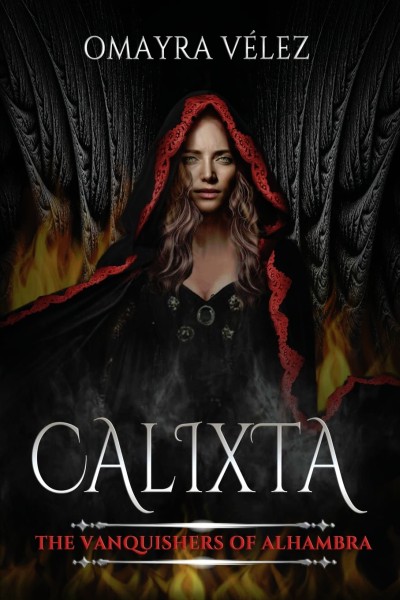 Subtitled “A grimdark fantasy,” if you are expecting this to be packed full of sex and violence, as a result… Well, you might be a little disappointed. While the lead character, Calixta Harlow Carlyle, is an “Exotic” – a highly-trained prostitute – she doesn’t seem to do all that much… um, prostiuting. We’re about half-way through before she goes to bed with anyone. The violence isn’t particularly brutal or copious either. It is, I guess, somewhat dark, and certainly not a young adult book. But anyone who watched (or read) Game of Thrones will not exactly require the services of a fainting couch to get through this.
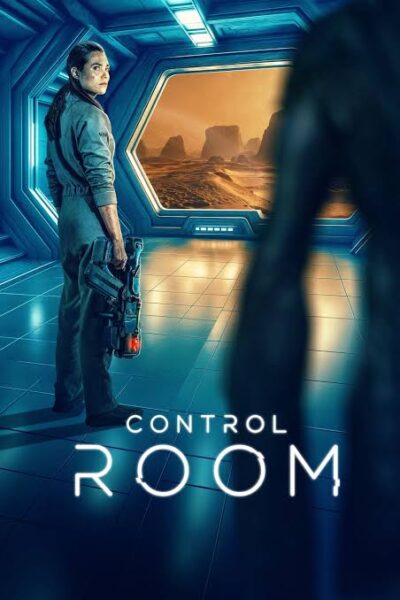 The major impact of watching this was largely to remind me of what incredible films Alien and Aliens are. It’s clear director Berdejo and writer Julien Deladrière think so too (the company who made this is called Nostromo Pictures: enough said). But they are just not up to the task of assembling something which can stand up to any comparison. Admittedly, it’s a largely thankless job. They are far from the first to fail at this, and not the worst either. However, I would lay most of the blame on Deladrière, because it’s the script which had me looking for the nearest airlock. The basic shape is fine. A mining colony on a hostile planet, populated by families, comes under attack from unstoppable monsters. Yeah: like I said, this should be largely familiar.
 Inspired by Jim’s impressive research and writing on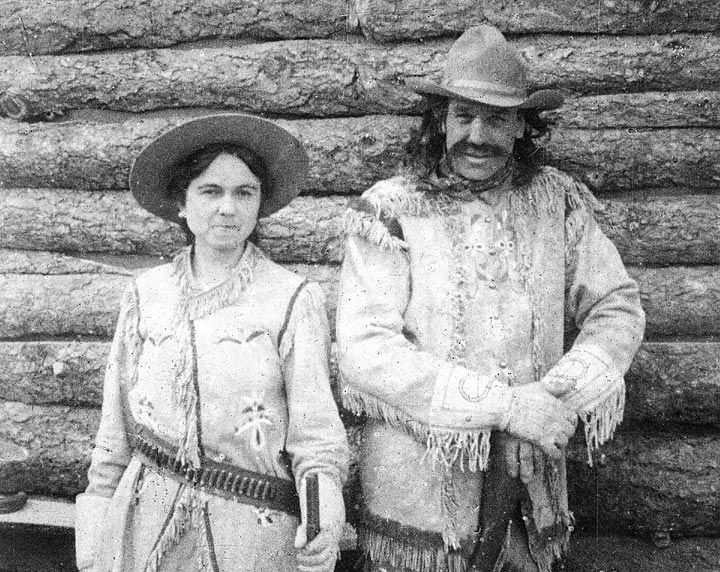
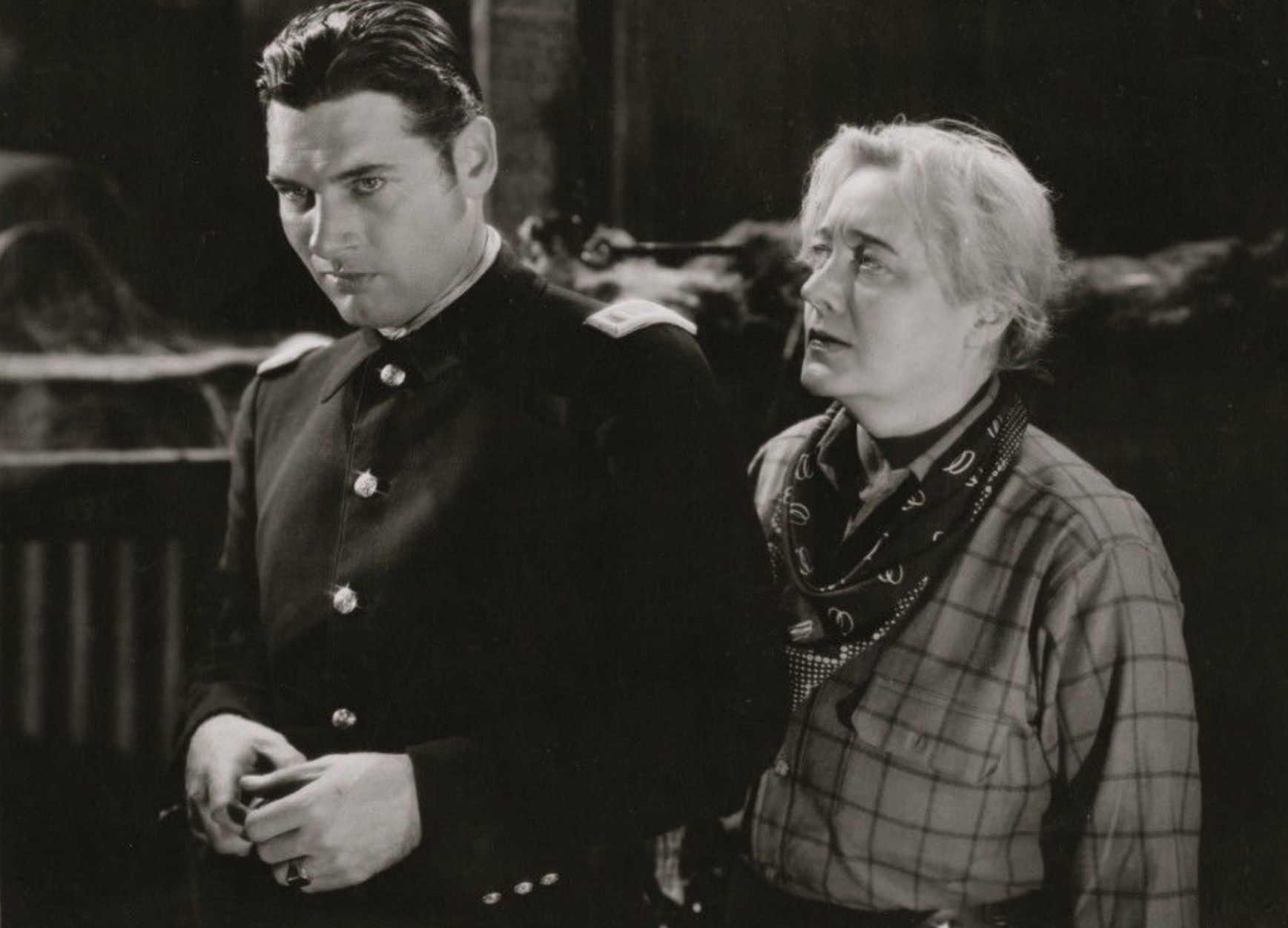
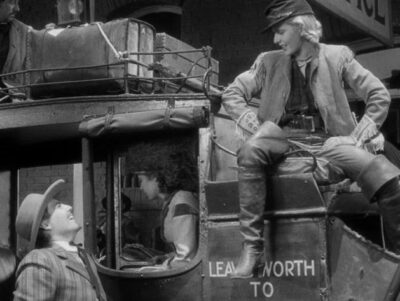 But to discuss Calamity Jane, played by blonde Jean Arthur: while she looks cool in the male Western garb Jane traditionally wears (except when, as so often – here, too – there is a scene where she is convinced to put on a dress), she didn’t quite convince me. Hickok is not on good terms with her here, it being suggested she slept with almost every assistant and post station manager. Honestly, this was not very believable when watching petite, childlike Arthur, who doesn’t seem to be the promiscuous type. Wild Bill is hurt by this, and when the movie is not showing us native Americans, treacherous weapon suppliers or exploring the friendship between the two Bills, she seems to be running constantly behind him like a lovesick teen girl. There’s no denial; this portrayal of Jane feels a bit of a fake.
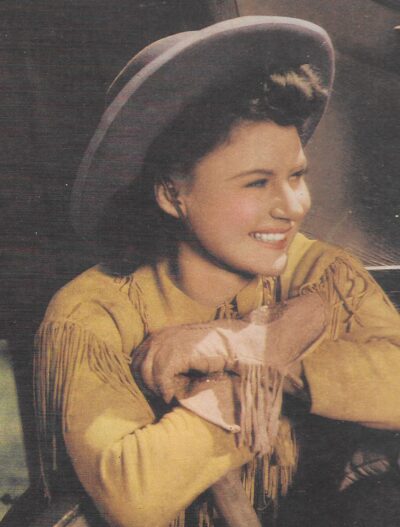 Young Bill Hickok is a relatively short (just over 50 minutes) early Western, with Roy Rogers. And, yes: he does sing. If the story is nothing extraordinary I felt adequately entertained, considering how old the movie is. In the Civil War, the North wants the war to end, therefore a special gold delivery has to be brought to… ah… some place… I guess? Young Bill Hickok is given the confidence to carry out the dangerous task, with a gang called “the Overland Riders” likely to rob the transport. He sets his transport up as a decoy, while in reality the gold is transported by close friends Gabby Whitaker (George “Gabby” Hayes, an absolute regular in many classic Westerns) and Calamity Jane (Sally Payne). Unfortunately for all, Hickok’s fiance, Louise (Julie Bishop) confides that secret to the villain of the piece, Towers. He then robs the right transport, and frames Hickok, who has to flee and prove his innocence.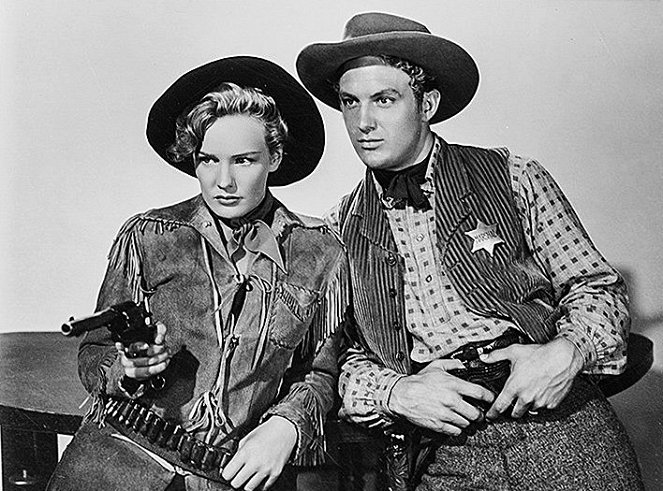
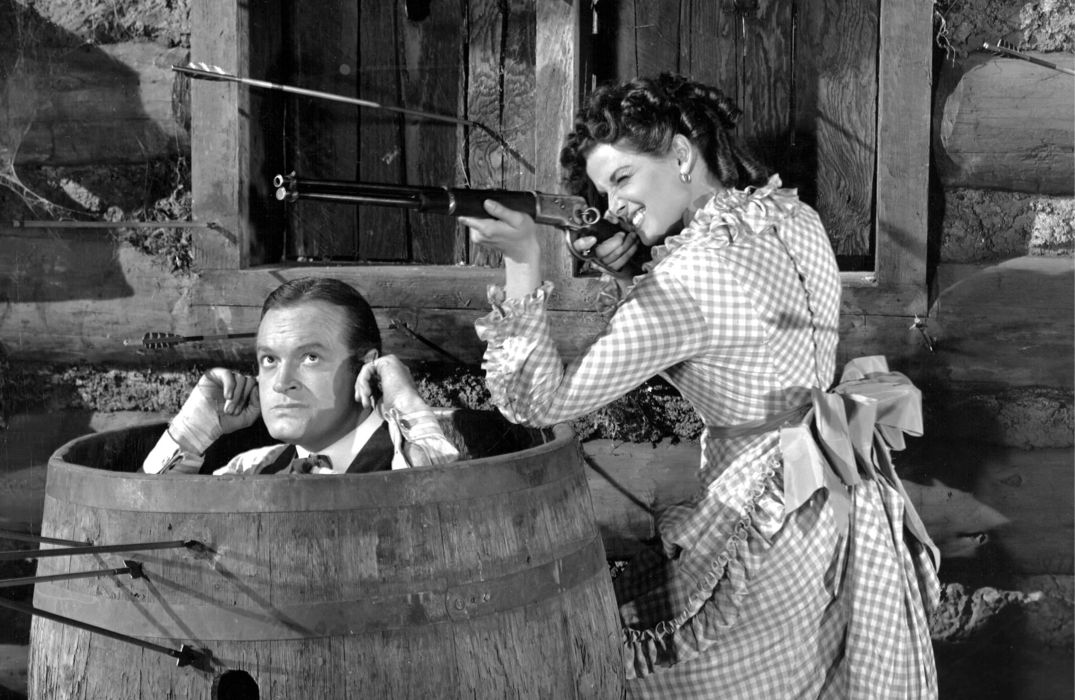
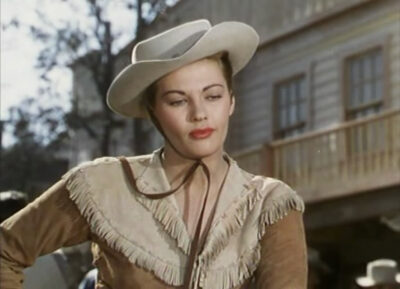 So what we have here is a morality tale: don’t gamble, folks, and earn your living by hard work. More interesting for the Calamity Jane fan here, is Hollywood actress Yvonne de Carlo who could be found in a number of historical movies around the time. Her brunette Jane has very little similarity to the way the character is usually depicted. She is no criminal – well, not in the beginning, the sympathetic character of Sam drags everyone down with him – but a successful horse racer. As Sam helps her in the beginning she is attracted to him, just like Katherine. Sam is depicted as a victim of circumstances, but I’m not quite on his side. He must take some responsibility for the tragedy he experiences, since not only is he naive, but thinks the fact others don’t play by the rules, gives him permission to do so, too.
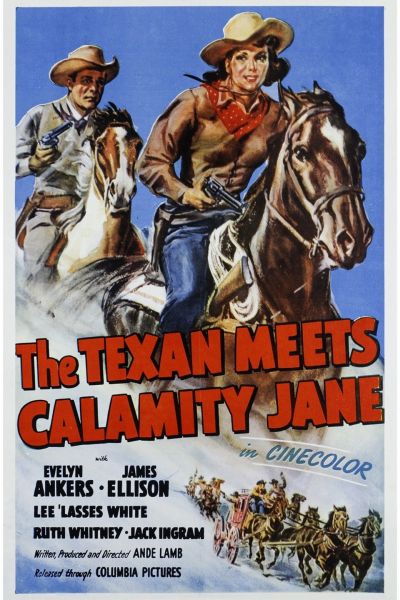 The Texan Meets Calamity Jane (1950)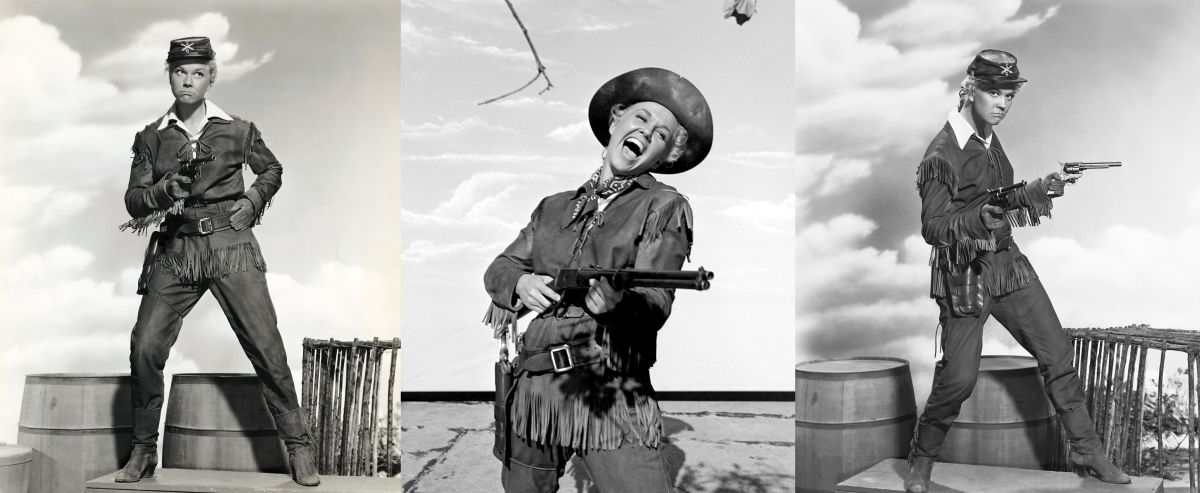
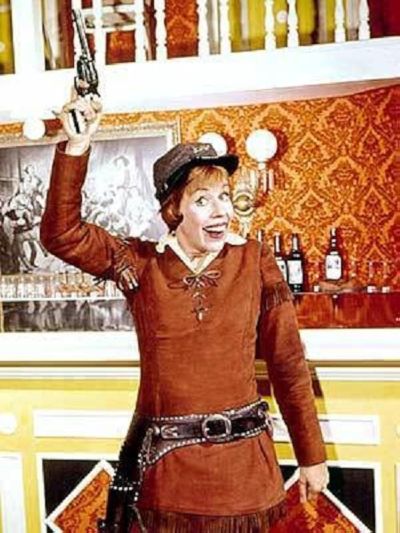 Ten years after the Doris Day-movie, CBS produced this remake, a TV movie which can be watched
 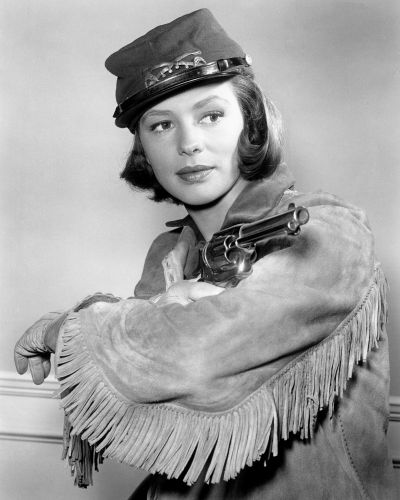 This was definitely made for a middling budget, and with underwhelming camerawork and staging: the camera positions and actors often appear fixed and immobile, unless they are riding on their horses. But it is a good, original story and provides a satisfying Western. To a large degree, this is due to the interaction and chemistry between the aforementioned actors. The friendship between Hickok and Cody works especially well, with Cody on the side of the raiders while Hickok is bound by his obligations to the military. In the end, they are able to prevent an escalation between the stubborn generals on both sides.
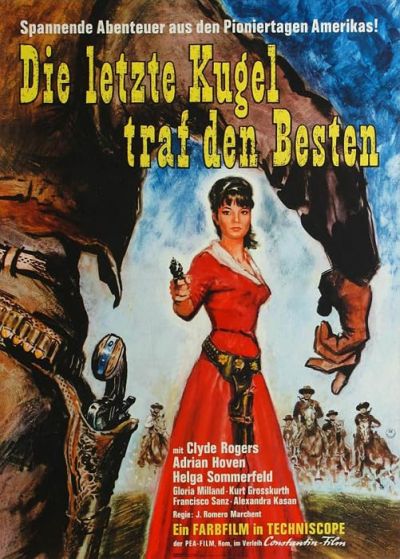 This movie is confusing, a typical German-Italian-Spanish co-production of the mid-60s, and stylistically is best described as a below-average, third-class, German western of that time. Originally titled Aventuras del Oeste (Adventures of the West), in Germany it went under two different titles: The Last Bullet Hits the Best and more prominently as Buffalo Bill – His Greatest Adventure. The IMDb speaks of Buffalo Bill and Wild Bill Hickok, but they can’t be found in the German dub. Buffalo Bill here goes by Bill Hogan, called “the quick knife” by the Comanche, and is played under an alias (Clyde Rogers) by Rik van Nutter, better known as Felix Leiter in Thunderball. Wild Bill is named here Gunn Barrett, and played by Austrian actor Adrian Hoven. He had quite a run of German movies in the 50s and 60s, until he became a director focusing on horror and erotic movies. It’s strange to hear Wild Bill speak with an Austrian accent. But then I’m forgetting that Schwarzenegger would become an American action hero icon!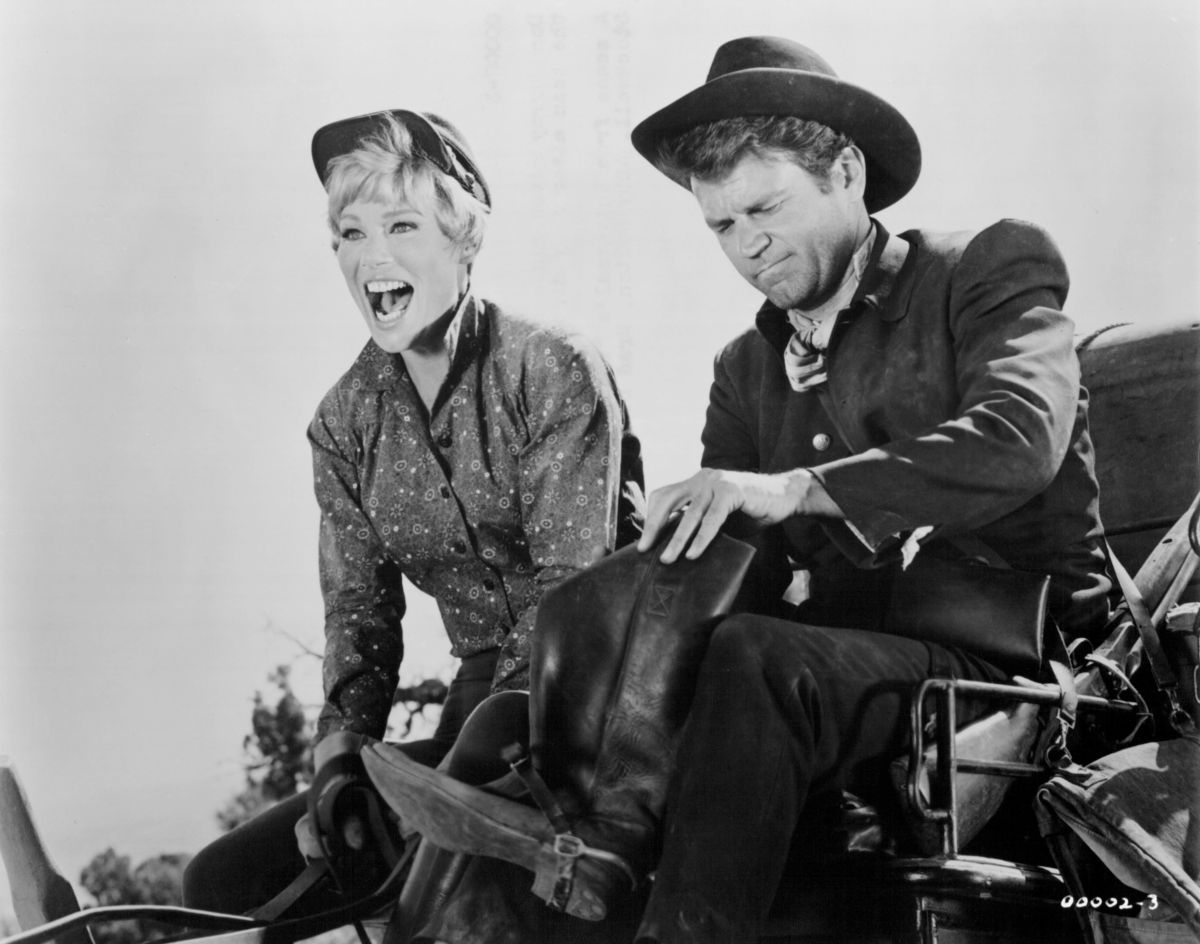
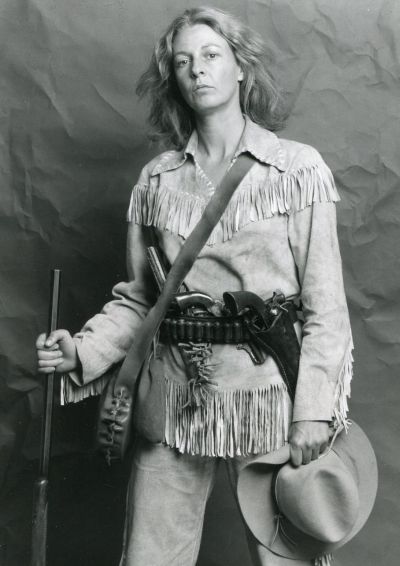 This TV movie has Jane Alexander, who also co-produced the film, in the main role. While it again has the likely fictional love story between Calamity and Hickok (Frederick Forrest), it is a much more realistic portrayal of Jane, as well as her relationship, then we have seen before. Calamity is saved by Hickok, they begin an affair after she has nursed him and are married by two drunk priests in the desert. They separate as Hickok doesn’t want Calamity “drawn along with him” when going to work in Buffalo Bill’s Wild West show. She bears his child which is adopted by a British couple, the O’Neills (David Hemmings plays Colonel O’Neill). She hears that Hickok has married, but he is shot before she can speak to him, although his murder is barely a sideline here. Later she meets her daughter again, though does not reveal her relationship.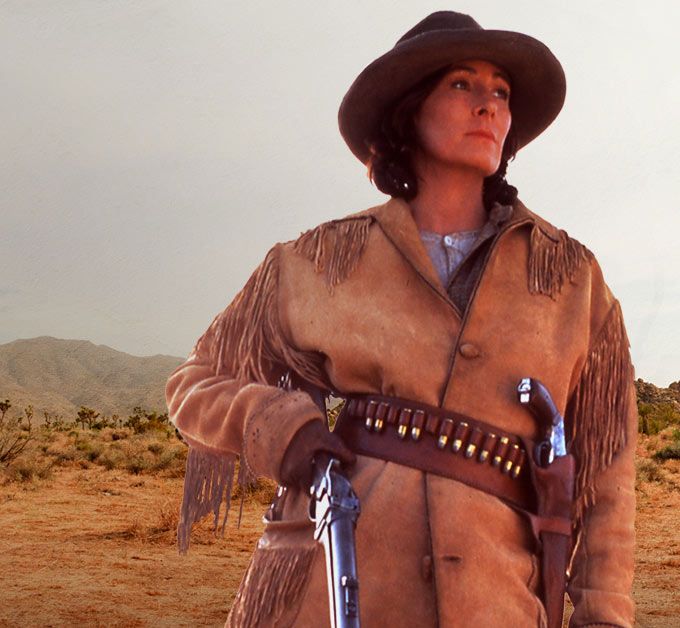
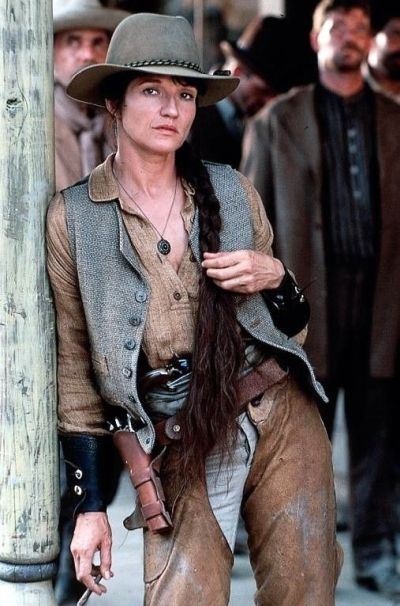 I don’t like this movie at all, and I think 2 stars is very generous. It has nothing to do with the fact there are a number of Walter Hill films I don’t like, or that Calamity Jane is hardly in the movie. I simply think this movie is not well-told, and is boring. It doesn’t work for me either as a Western, a biopic or a good movie in general. It’s not the fault of the movie stars who are all well-known for their competence. I mean, we have Jeff Bridges as Wild Bill Hickok, plus Ellen Barkin, Diane Lane, John Hurt, Keith Carradine, Bruce Dern, David Arquette and Christina Applegate. I also found the production design very fitting. So, who is responsible for the mess?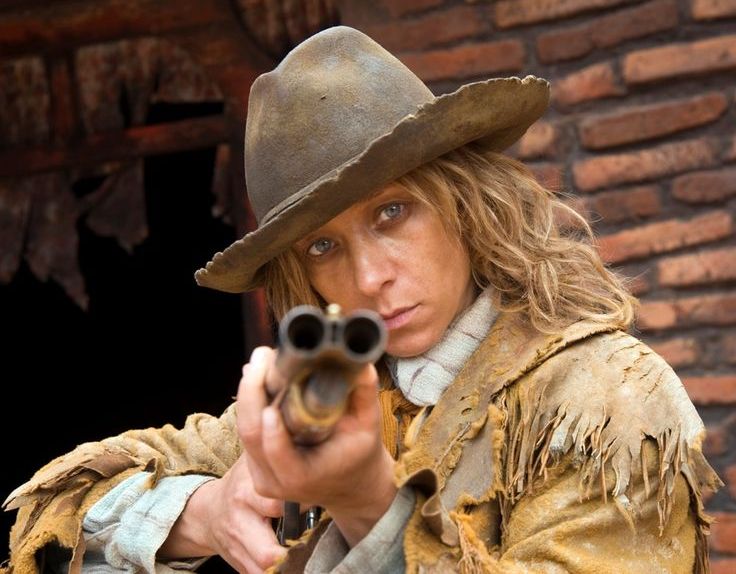
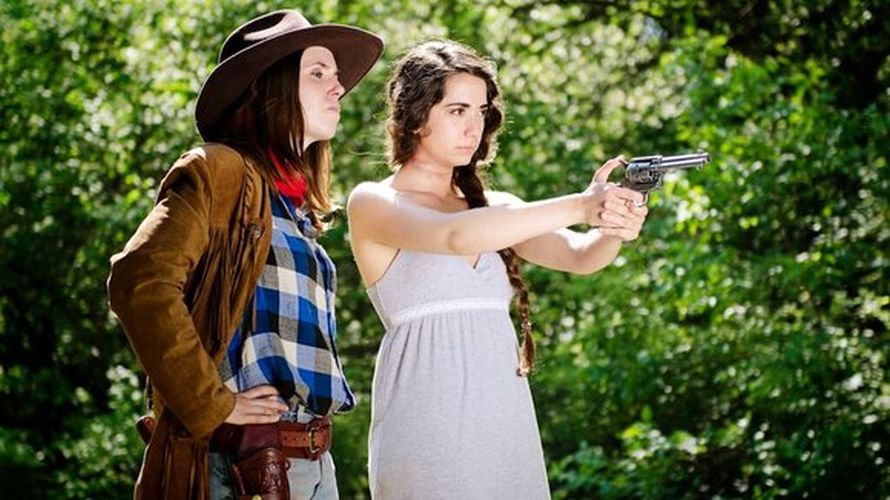
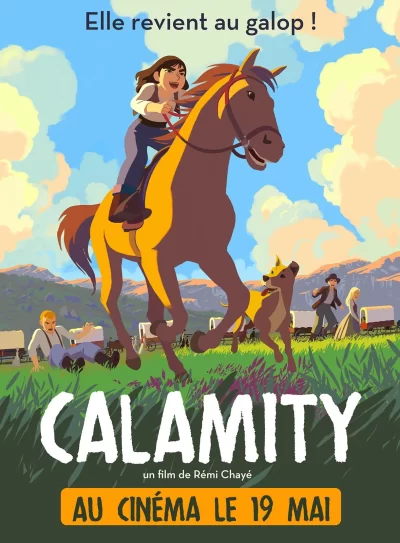 The story for this animated film is an interesting one: In 1863, the Cannary family – the father, his daughter Martha Jane (voiced by Salomé Boulven) and two smaller children – are part of a convoy to Oregon. Martha gets into a feud with young boy Ethan, but when one of the wheels of their cart breaks, and her father is hurt by a horse, Ethan has to take over driving. Humiliated by this, she tries to learn things outside what young girls are not supposed to know – throwing lassos, horse-riding and driving the cart. When the settlers meet a soldier named Samson, they realize they have gone the wrong way. She befriends the soldier, until he vanishes with some items stolen from the settlers. Martha leaves to retrieve the items and find the truth about Samson, which is the beginning of an exciting and dangerous adventure.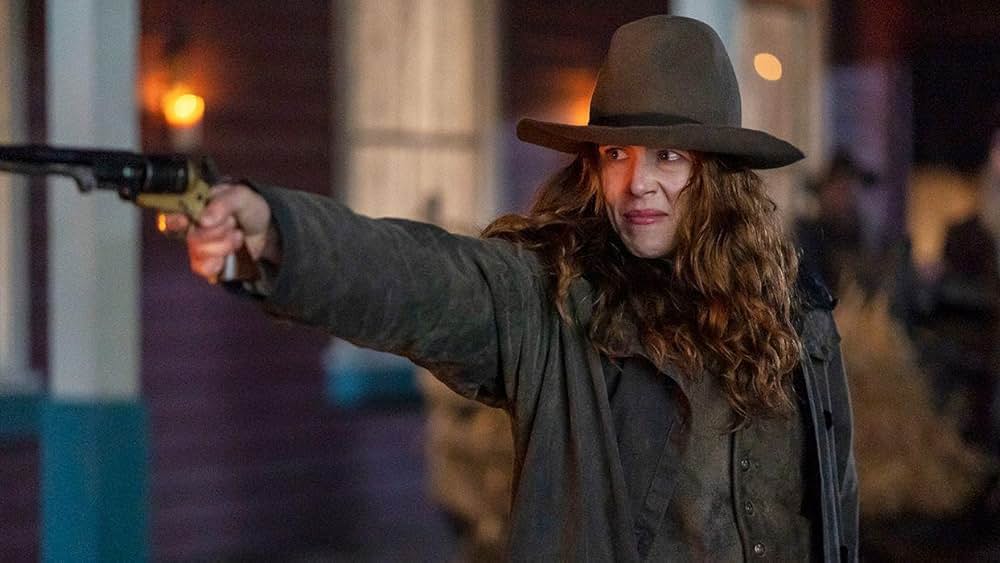
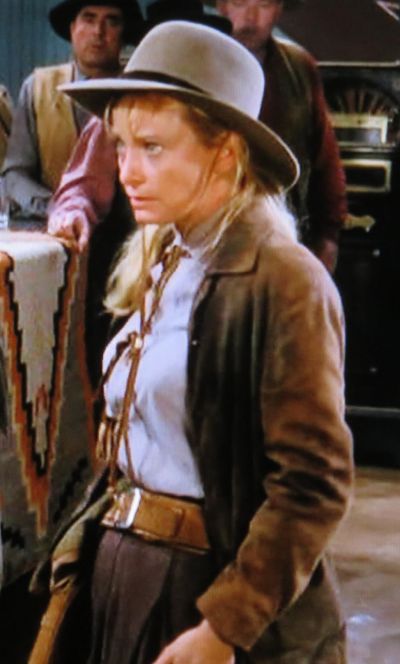 Introduced by Western movie star Robert Taylor, this “true story of the West” tells how Calamity Jane joins the Wild West show of… Wild Bill Hickok? I can only presume the screenwriter got Wild Bill and Buffalo Bill mixed up. It’s not a positive outlook on their relationship, Wild Bill taking strong issue with Jane’s behavior and shouting. He also tells her if she is a woman she should dress like one, or she will never appeal to a man. Her straight answer is, she always has hated men. When she tells their mutual friend Charlie about Bill’s complaints, he decides sharply that she must have fallen in love with Bill.
 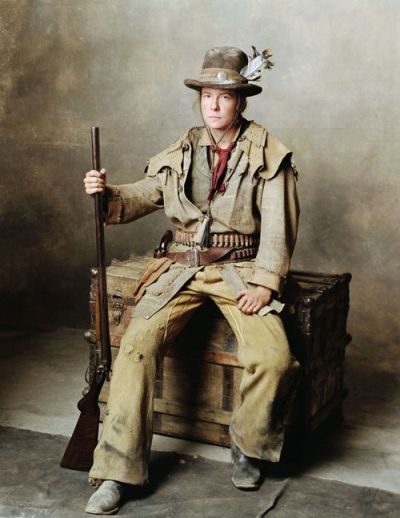 Having seen only season one of the three, I can judge just it. This highly praised HBO show recounts the beginnings of notorious Wild West city Deadwood, before the territory came under the guidance of the government in Washington, and how “problems” were solved there before there was official law. Calamity Jane is clearly not a main character, though has a not unimportant supporting role. The show mainly focuses on saloon and bordello owner Al Swearengen (Ian McShane), a character who really lived and – at least in the show – was responsible for many crimes, murders and shady dealings in that city. There’s also Seth Bullock (Timothy Olyphant) who became the first sheriff there.
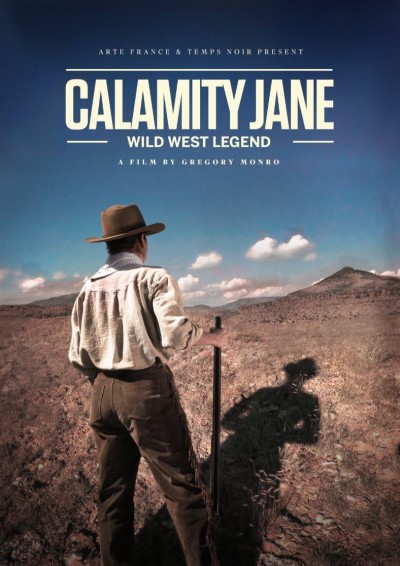 This 80-minute French documentary from 2014 ran on the Franco-German culture channel ARTE, a channel well-known for quality docs. I recommend this one, though there may be others from the US I don’t know about, which are just as good. Old photographs, footage from old Westerns, newly directed scenes and interviews with historians and biographers of the old West (among them Richard Etulain, see below), form a vivid, realistic picture of the conditions in that era and life at that time.
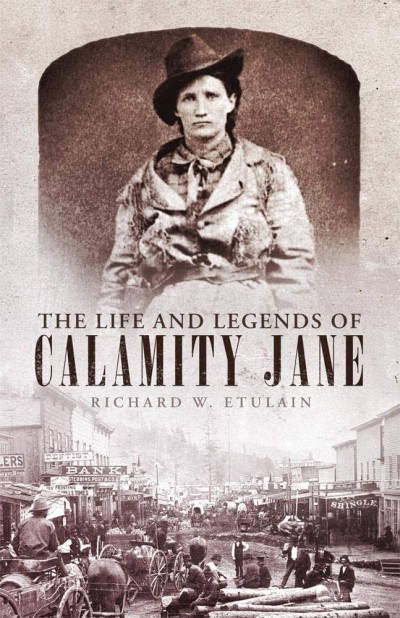 Biographies
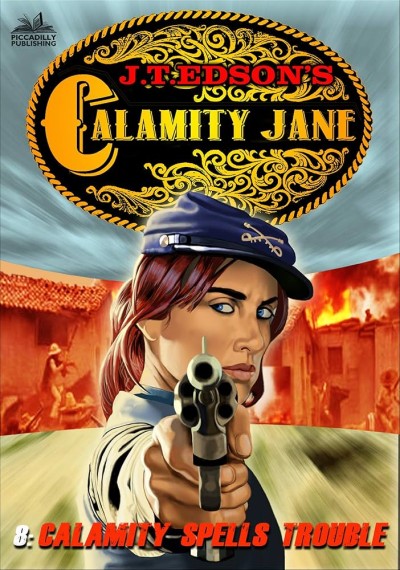 Calamity became a famous character in print, when she was made a supporting character in the Deadwood Dick dime novels of the 1870s. Since she first captured the attention of an audience there, a slew of books featuring her have come out, ranging from a realistic portrayal to utter fantasy. The classic quality novel might be Larry McMurtry’s Buffalo Girls, whose movie adaptation was covered earlier.
 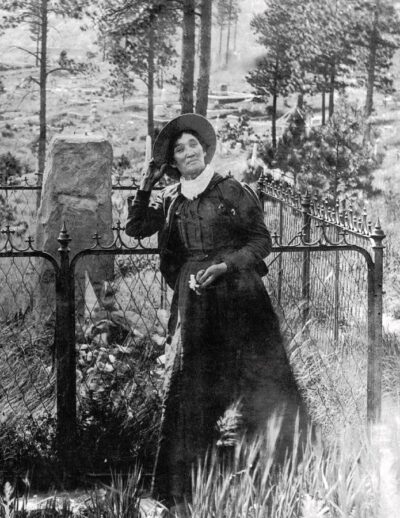 So, we come to the end of this little overview on Calamity Jane-related Westerns. I learned a lot over the course of it. For example, the majority of film-makers can’t resist inventing a love story between her and Wild Bill, or dressing her up in a skirt, at least for a couple of scenes. Obviously, the latter is to calm audiences and let them know she would be a good housewife if circumstances only would let her. For, you see, she wears male attire only because she has to work in a man’s world, and has no husband yet. Or that for whatever reason, she has been played by an astonishing number of blonde actresses, despite the real Calamity being a brunette. Or that those who play her on the screen have typically been young, very attractive and even sexy while the real person… Well, if you see any photos of the original, such as the one here, you might spot a difference or two!
 The title above is the one by which it appeared on Tubi, though everywhere else calls it Aggression. I guess both are appropriate, in different ways. Neither shed a great deal of light on proceedings here. Then again, you could argue, the film itself is largely deficient in the area of enlightenment too. It takes place in rural France, where Sarah (Nicklin) has been reunited with her sister Marie (Duchez), after twelve years living in England. The circumstances are not happy, the visit being the result of their father’s death. However, there appears to be a dark past surrounding the circumstances of Sarah’s departure. Meanwhile, Marie is mute, although this does not play into the scenario which unfolds.
  We return to the prolific well of Jeff Profitt, last seen here with
  Printed directly from the finest template of sports movie tropes, this is less a script than a bullet list of plot points you’ve seen a thousand times before. Struggling single mom (check) Paula Taymore (Gilsig) had to give up a promising ice hockey career to take care of her son (check). A bar argument leads to a challenge match against a local men’s team (check). Paula has to assemble a women’s side (check), from a ragtag group (check), including an ex-convict (check), sassy Black girl (check) and a witch (check). Can she overcome adversity and local prejudice (check), find love with hunky single dad Steve Cooper (Priestley, and check) and triumph in the big game? (BIG BOLD CHECK, LARGE FONT).
 I guess these two sides of the coin, and their contrast, are key to the film’s message, though the sudden way in which it ends might leave you wondering if there’s any genuine message intended at all. Maybe it was all the fulfillment of some weird, albeit understandable, Gillian Anderson fetish for writer-director Reed (there are a couple of scenes which lean towards that interpretation). She is certainly the best thing about this, and her journey from predatory cougar through to
  Sheesh, they’ll adapt anything into a movie these days. Hey, I guess if Clue, Battleship and Ouija can become films, why not Cand… Yeah, to be clear I am joking. Do not, for the love of God, mistake this as about the quest for King Kandy. Though I am amused the Wikipedia page for the game specifically says, not to be confused with this film. For it’s actually about truck-stop hookers being stalked by a murderous psychopath. Which could, I admit, probably be adapted into a pretty decent board-game. The central character is Remy (Luccardi), an escapee from a religious cult, who finds herself stranded at the truck-stop, and befriended by Sadie (Quartin) and the other “lot lizards” there.
 Remy eventually becomes part of the “team,” also including gay-for-pay Levi (Campbell), who service the truckers who pass through the high-altitude location – as well as local sheriff Rex (Baldwin). It’s a tough life, with violence a risk they face on an everyday basis, such as when a trucker shows up in a toilet stall with his throat slit, or someone decides Levi is a bit of rough. However, things escalate considerably, because the problem is: you can take the girl out of the cult, but you can’t take the cult out of the girl. After getting a visit from another member, Remy decides, as she puts it, “We must cleanse the world before we can cleanse ourselves of it.”
 Make no mistake, this is a cheap and tawdry excuse to show nekkid women, which may well leave you with a more cynical view of human nature. But if you’re going to watch a cheap and tawdry excuse to show nekkid women… You could probably do a lot worse. The main area in which this punches above its weight is in the script, which has had some thought put into it. The viewer may actually leave the film knowing more about Nevada gaming regulations than they did going in: nekkid women
  Cross another country off the map: Guatemala, in this case. I should probably start by explaining the title. The “cadejo” is a dog-like spirit from local folklore, which comes in two varieties. The black (negro) one is malicious, appearing to and trying to kill travellers, while the white (blanco) is benevolent. According to Wikipedia, it “protects people, including drunks, vagabonds, and people with grudges from all evil. Emphasis added, because now and again in this, there appears to be one watching over the grudgeful heroine here, Sarita (K. Martínez). She is on the hunt for her sister, Bea (P. Martínez – maybe they’re real sisters?), who vanishes one night, after the siblings have an argument at a local nightclub.