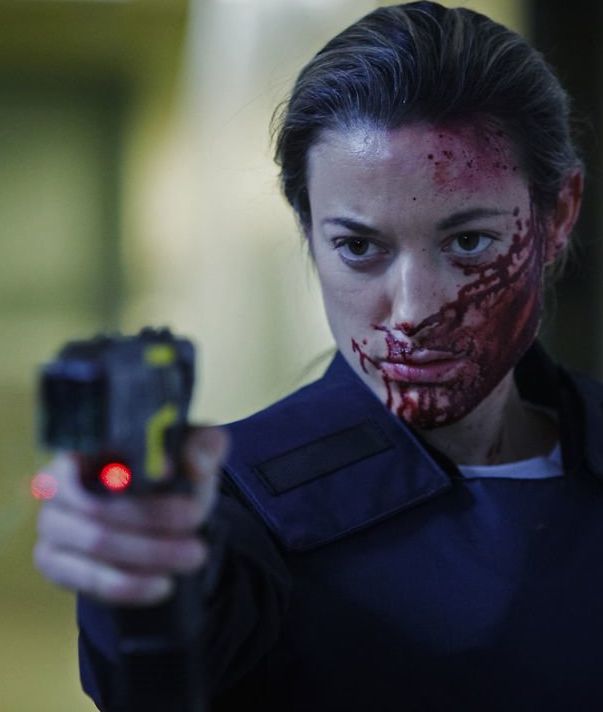
Cop Francis Jane (Palmer) is assigned to guard jewel thief Eddie Cordero (Robbins), who was shot while being captured, and is now cuffed to his bed in an all but deserted wing of a local hospital. What should be a tedious task turns out to be far from it, as his former colleagues, led by crew leader Louis Holland (MacDonald) show up. They are eager both to discover the location of the stolen goods, and extract revenge for the death of one member, which they blame on Cordero, but which he swears was the act of a corrupt cop. The resulting assault leads to an uneasy alliance between policewoman and criminal, as they try to avoid his former colleagues. But is Cordero as easy-going and affable as he seems? Or does he have a hidden agenda of his own?
The film was basically the result of the producer having access to a deserted hospital, and getting a script written to fit the location. That’s not necessarily a bad idea, but it’s just one aspect of a storyline that requires too much suspension of disbelief. Another is the inordinate number of occasions one character or another is knocked unconscious by someone else, for exactly the amount of time necessary to the plot. Or, perhaps most obviously of all (at the risk of a spoiler), getting your hand sawn off by an untrained civilian not only does not lead to major blood loss, here, it’s the kind of injury you pretty much shake off, and which is little more than a minor inconvenience the rest of the way. Now, I guess there’s some precedent (127 Hours showed dismemberment can be non-lethal), but combined with the other issues, it’s a combo-breaker fatality as far as this story is concerned.
The characters deserve better. There’s a nice dynamic between Jane and Cordero, the latter frequently needling the cop that they’re not so different, and MacDonald makes for a fine villain, capable of conveying threat with a look or a few words. Lapeyre is obviously going for Reservoir Dogs, with a story that’s less about a crime and more about back-stabbing treachery in its aftermath, building to a confrontation in an operating theatre, with one participant strapped to the table, about to undergo the film’s second bout of impromptu surgery. But it never captures anything like the same sense of grit, playing more like a nasty, bloody cartoon. About all it’s missing is a few falling anvils and a pair of Acme rocket-powered roller-skates.
Dir: Jason Lapeyre Star: Zoie Palmer, Ryan Robbins, William MacDonald, Sergio Di Zio
While twice as long as the first series, at 12 episodes rather than six, I can’t say it’s actually any better. Indeed, I think the dilution of the main element which was so much fun the first time round – the relationship between the two, disparate hitwomen, Roxie (Osment) and Veronica (Chriqui) – leaves this season less entertaining. Yes, it’s bigger and more exotic: but it feels spread thinner, to the detriment of the core aspects. The story takes up shortly after the events of the first series, with V+R in the Caribbean, waiting to get their share of the money from Eileen (Missi Pyle) and Mother (Gershon). But instead, an assassination squad is sent to get them, kicking off a reunion with Veronica’s “parents”, a deranged killer who thinks Roxie is his dead wife, a rogue CIA operative who sends Frank Barnes (Arquette) after Mother, and so on. It builds to a climax where Veronica, previously injected with a lethal nanobot virus that’s about to go off, takes part in an underground death match at a cockfighting arena, to prove her love for the deranged killer. I shit you not.
It’s nice everyone from the first season apparently wanted to come back. But it wasn’t necessarily in the show’s best interests, especially with all the other angles being thrown in. Eileen, in particular, is entirely superfluous, adding nothing to the plot but occupying an inordinate amount of screen-time, which could have been better used, say, on better developing the thread of Veronica’s background. Much the same goes for Barnes, who is shoe-horned back into the plot, through frankly implausible circumstances because… I dunno, because Arquette fancied a vacation in Puerto Rico? It’s a shame, because some of the other stuff is potentially interesting. Discovering Veronica was brought up, almost from birth, to be a trained killer (perhaps inspired by Naked Weapon), was an intriguing concept, and I’d like to have seen more of that, rather than Eileen’s party girl antics. The most interesting new character of note is Mathilda, the last pupil at Veronica’s alma mater, who looks not unlike Uma Thurman, though the name would appear a nod to Leon. She provides a quiet, but no less-lethal, counterpoint to Roxie’s mania, and allows for a few Charlie’s Angels-esque riffs.
The action remains plentiful, as Roxie and Veronica are tasked with bringing down a local drug-lord, as well as dealing with the killer on their trail, and it’s a show that’s easy to binge watch [you can do so at Crackle.com, and it’s probably better there than through a device like Apple TV, which inflicts unskippable commercials, that get very old the tenth time you see them]. I’m sure everyone had a fabulous time making this; however, for me, it didn’t capture overall the same spirit, of not giving a damn, that made the first such an enjoyable surprise. It probably comes over as more self-indulgent than anything else – but still kicks ass harder than just about any other action heroine show this year.
Dir: Paul Leyden Star: Emmanuelle Chriqui, Emily Osment, David Arquette, Gina Gershon
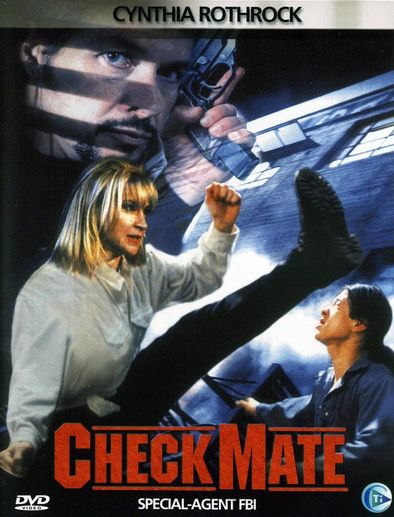
You know a film is rare when the IMDB is using a photo from a completely different movie with the same name to illustrate it – at least, unless Cynthia Rothrock has had a sex-change, got a tan and changed her name to Lawrence Fishburne. I’ve gone for the Netherlands title here, because most of the copies floating around the usual sources seem to be from that. It reminds me a little bit of First Shot, which was also about psycho militia leader, Dutch Leonard (Nichols). seeking revenge on a federal agent, Kate Mason (Rothrock), whom he blames for the death of his brother. It’s FBI rather than Secret Service, and for obvious reasons, Rothrock is a good deal more hands-on than Hemingway. But that’s about the only advantage this offers, as it’s yet more evidence for the increasingly inalienable rule concerning Cynthia Rothrock films: the American ones suck. The fact that this one is not more easily available is perfectly understandable, because if I owned a distribution company, I wouldn’t release it if they were giving the rights away.
The main problem here is Nichols, who looks a bit like a low-rent version of Roddy Piper, and whose performance is so cringe-inducingly bad, you’ll be left yearning for Piper’s subtle, underplayed dramatic style. And I don’t even mean yearning for Piper in the classic They Live, but for the Piper who cut promos for the WWF, when his performance basically consisted of yelling a lot. On the plus side, Nichols does at least make an impression, and you will remember him, even if the impression is mostly, “Christ, this is terrible.” The rest of the film is almost completely forgettable: Cynthia does deliver her usual competence in the fight scenes, but there aren’t enough of them, and the garbage which flows between them is more than enough to drown out any positives. The problems start early, with the fake situation Leonard initially uses to draw out his target. Despite hostages and a large quantity of automatic weapons, the poverty-row budget means the federal presence at the siege reaches single figures. And this is after Ruby Ridge; we know this, because it’s explicitly referenced more than once. I’m guessing it inspired the whole “white rights’ militia” villain.
There’s a whole subsequent subplot involving a local judge, who is in cahoots with Dutch, and using the profits of their gun-running business to fund his gubernatorial campaign. It’s no more interesting than the main storyline, and every moment spent there is a moment wasted, since it could be used for better things, such as Cynthia Rothrock kicking some additional ass. Or simply removing it entirely and shorten the film, which would probably be even more welcome.
Dir: Nicholas Celozzi Star: Cynthia Rothrock, Stephen Nichols, Patrick Wayne, Alex Hyde-White
a.k.a. Deep Cover
★★★
“After the apocalypse, crop tops will fortunately not be in short supply.”
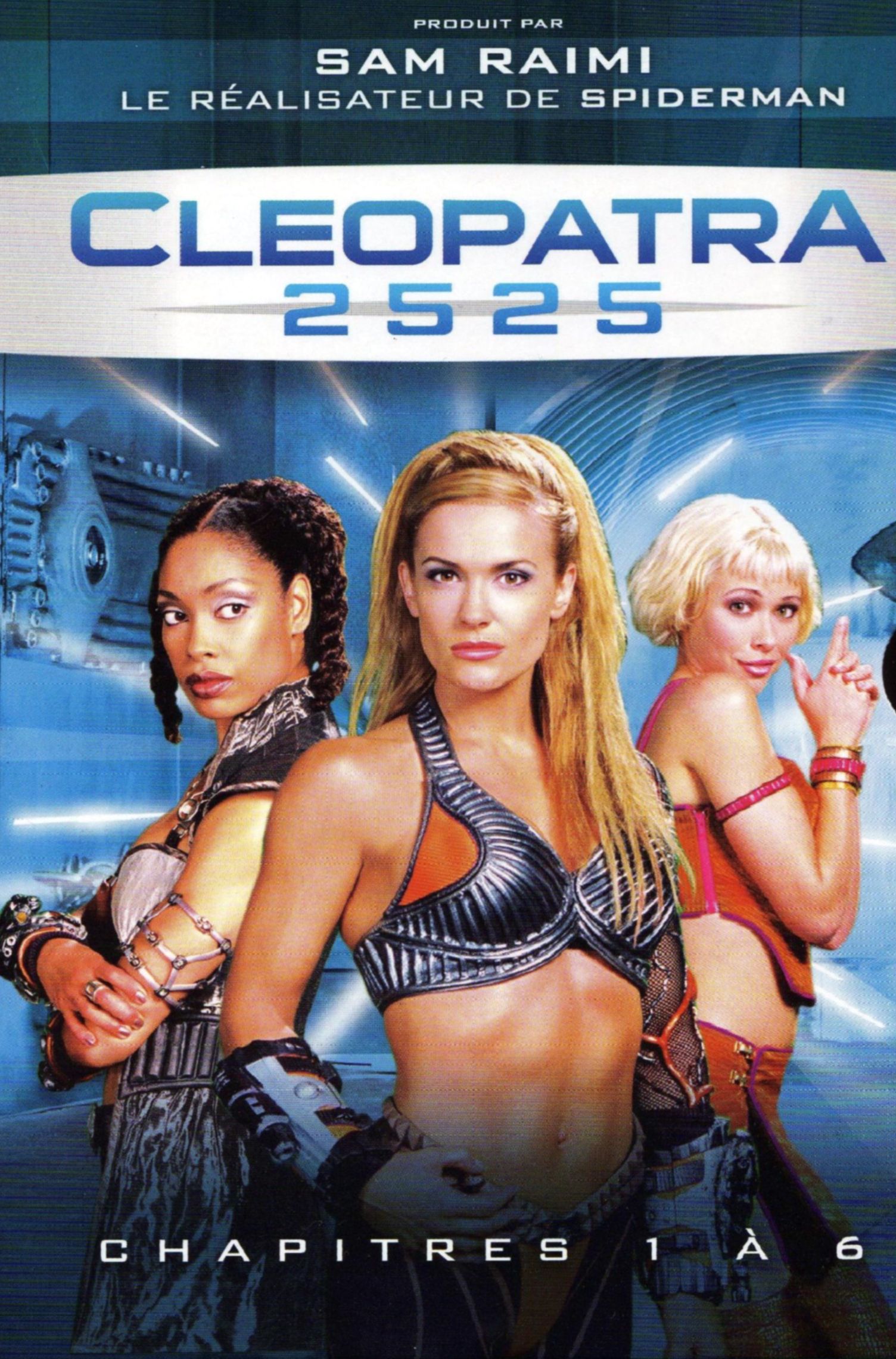
When Hercules: The Legendary Journeys ended its run in January 2000, producers Renaissance Pictures looked to replace it, but instead of going with another hour-long show to follow the hit Xena, took the unusual step of making two, 30-minute action series. This was a break from normal practice: half-hour comedies were standard, but for shows like these, it was a format which had not been seen since the seventies. The second was Jack of All Trades, starring Bruce Campbell as Jack Stiles, a wisecracking spy for the US at the turn of the 19th century. The first was radically different: a SF saga, set 500+ years into the future, when robots have driven humanity, literally, underground.
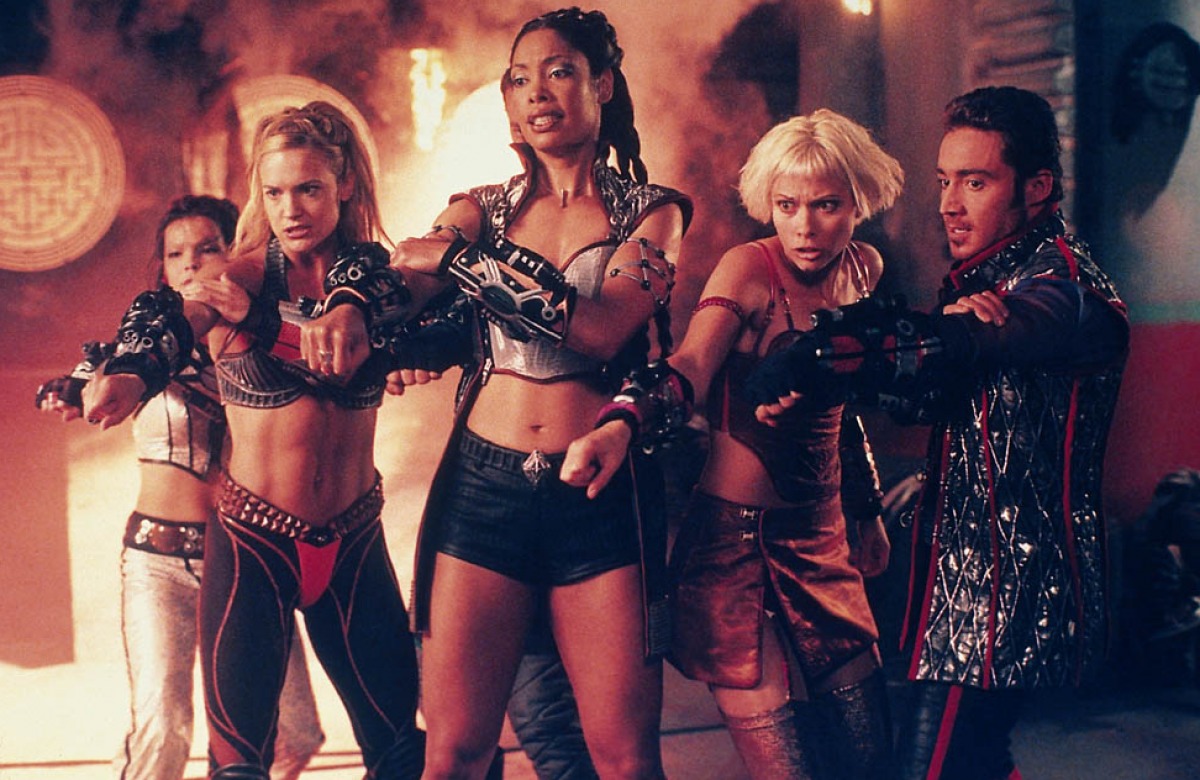
Waking up here is Cleopatra (Sky), a 21st-century exotic dancer who got frozen after a boob-job went wrong. She’s rescued by Hel (Torres, who’d go on to cult stardom in Firefly) and Sarge (Pratt), part of a team fighting the robots, which are known as ‘Baileys’, their human-imitating agents called ‘Betrayers,’ and dealing with the anarchic and dangerous life beneath the surface, guided by a voice in Hel’s head, that organizes the anti-Bailey resistance. [In the original pilot, that voice was Lucy Lawless, but she ended up being replaced by Elizabeth Hawthorne] Cleo gradually becomes part of the team, being the viewers’ voice in the dystopia of 26th-century life, while Hel and Sarge represent the brains and brawn of the team.
All three, however, were clearly selected as much for their visual appeal, and the 25th century is not short of beautiful people – it’s also quite warm, going by the ah, flimsy clothing worn by the trio. Cleo and her former profession fit right in. But taking any of this seriously would largely be doing the show a disservice, because it’s clear it doesn’t take itself seriously. There isn’t really time for that kind of thing, with each episode barely 20 minutes, excluding opening (theme song sung by Torres, a funked-up and lyrically altered version of Zager and Evans’ one-hit wonder, In the Year 2525) and closing credits. There isn’t much time for anything, in fact: both characterization and plotting remain about as scanty as the outfits. Hel is thoughtful but can be distant; Sarge likes shooting things first and asking questions later; Cleo, to be honest, is mostly irritating, coming over as both whiny and rather vacuous.
At least in the first series, the storylines don’t focus on the Baileys as much as I remembered. The heroic trio also find themselves taking on evil clown Creegan, against whom Hel has a personal grudge (for good reason), or psychic Raina, who can not just read your mind, but implant suggestions in it. The latter was a personal favourite villainess, played by Danielle Cormack, who is a veteran from Xena, having played Amazon Ephiny there. That’s true for much of the cast: Sky read for the part of Gabrielle, but also ended up playing another character, Amarice, while Pratt was Cyanne, the Queen of the Northern Amazons. Torres was on the show too, though not as an Amazon. Perhaps more confusingly though, she played Cleopatra – the Egyptian version, not the stripper one. There’s also a considerable overlap of directors who worked on both shows.
Cleopatra is generally more consistent in tone: that may not necessarily be a good thing, as one of the joys of Xena was seeing it swing from mass crucifixions to musical numbers. It does make Cleo less suitable for binge watching, because the episodes exhibit a certain sameness that grows somewhat repetitive after a while: three was about my personal limit, so not much more than an hour, before the titular heroine started to grate on my nerves. But in the show’s defense, it wasn’t created to be viewed like that, and in 20 minute chunks, generally manages to be energetic and action-packed entertainment. Outside of the Raina episodes mentioned earlier, I particularly enjoyed Run Cleo Run, a take on one of my most beloved films, Run Lola Run, that somehow manages to be even more hyperkinetic than the original – though with a less kick-ass soundtrack.
★★½
“Would it be churlish to point out they’re not real blondes?”
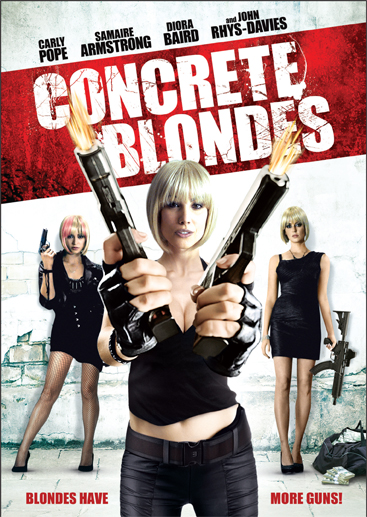
This is the story of three young women, sharing a house. There’s Kris (Pope), the sensible and apparently staid one, who works as a tax accountant; her flighty girlfriend Tara (Armstrong); and roommate Sammi (Baird). Tara and Sammi stumble into the aftermath of an apparent gangland shootout, exiting with a bag containing over $3 million in cash. The trio have very different ideas about what to do next, but Kris convinces them the best bet immediately, is to stash the bag in a lock-up, secured by three separate padlocks, with each holding one key, until they figure out if anyone is coming after the money. However, Sammi’s inability to keep her mouth shut proves disastrous, as her boyfriend is $50,000 in debt to local mob boss Kostas Jakobatos (Rhys-Davies), and sees an opportunity to clear the balance, and a lot more. Neither of the men have reckoned with Kris who, it turns out, is much more prepared for the situation than her two house-mates.
The approach to the storytelling feels undeniably Tarantinoesque: we’ll see a scene from one perspective, then crank the timeline back, and see what leads up to it, and the aftermath, from another character’s point of view. This is a mixed blessing. For some scenes, you do go “Ah-hah…” as light dawns; for others, it seems like a pointless exercise – compare and contrast Wild Things, where they saved all these aspects up until the very end, to much greater impact. The other problem is, the characters are not very likeable, particularly Tara and Sammi, who alternate between bitchy and whiny, neither of which are endearing. Kris fares much better, yet her back story is rather implausible and underplayed, in the sense that I’d have liked to hear about it in detail. In some ways, it might have make for a more interesting – and certainly, more original – tale than what we actually get, which is instead, largely a recycled selection of elements and styles from other films, such as Shallow Grave.
I should also point out that nothing matching the cover actually occurs, though by now, I’m quite used to films over-selling the “girls with guns” aspect, probably because of how successful it is. While I can’t honestly say I was bored by the proceedings as they unfolded here, my interest generally remained stuck somewhere in second gear. That may be suitable for pottering around town, but falls well short of adequate for hitting the highway and letting her rip.
Dir: Nicholas Kalikow Star: Carly Pope, Samaire Armstrong, Diora Baird, John Rhys-Davies
For years, an assassin known as “Jackal”, has eluded all efforts at capture, taking out targets before vanishing without trace. However, it seems that retirement is close, when a note is found, apparently left by the killer. This indicates that they are tired of the chase, and will be in a town’s low-rent hotel, waiting for the police. The cop (Han) who has been hunting Jackal is, understandably, wary and suspects a trick, but sets up a stakeout in the hotel to see what unfolds. However, already in one of the rooms there is K-Pop superstar Choi Hyun (Kim)., who had been hoping to hide out for a bit of peace and quite, only to be kidnapped by a rookie killer (Song), hired by his jilted lover. She’s apparently not very good at her job, especially after Choi convinces her he isn’t actually the star, but a celebrity lookalike. Meanwhile, a local cop (Oh) has been drafted in to help with the stakeout, and the hotel staff are proving rather less than helpful, treating the stakeout as a bonus cash-cow to be milked, rather than a chance to help the authorities.
For much of its running time, there is a great deal of sitting in hotel rooms, alternating with scenes of creeping about around corridors. The overall feel is more like a Korean take on British farce, and I sense a good deal of cultural stuff may fly over Western viewers’ heads – for instance, Kim actually is a K-Pop superstar, so issues like obsessed fans and record company executives with ulterior motives probably have particular resonance. It’s just too static to work, concentrating for spells on the burgeoning relationship between novice killer and her victim, then drifting off to the cops and their surveillance operation. What should be the key question – who is the Jackal, and what is their plan? – seems to be all but forgotten until the very end of the film. This is a shame, because this is both interesting and well-considered. Unfortunately, the overall impact is largely to make you wish it had shown up about an hour earlier, with the film developing forward from there with similar energy.
The performances aren’t bad, and there are occasional moments that are genuinely funny. For instance, the police disguise themselves as hotel cleaners so they can check rooms, only for the real employee to insist they actually do the cleaning. But these are only sporadic at best, and the script is generally so weak, in terms both of setting up the central storyline and executing it, that the final 10 minutes aren’t enough to salvage proceedings. You get the sense that a prequel, or a sequel, covering the Jackal’s exploits before or after this particular incident, would have been more interesting.
Dir: Bae Hyeong Jun Star: Song Ji Hyo, Kim Jaejoong, Han Sang Jin, Oh Dal-su
★★★★
“Girls, guns and cars. Well, one car, anyway…”
Crackle is the streaming content subsidiary of Sony – it has been around for a while, but we only became aware of it last December, when a new widget popped up on our Apple TV. Think of it as a little like an advert-supported version of Netflix; you can watch for free, whenever you want, but you have to “pay” by sitting through commercials (during which the FF option on your remote is disabled. Bastards!). The library of movies and shows offered is based around that studio’s library, and has a number of entries for action heroine fans. Bonus points, not just for having Run Lola Run, but in the subtitled version; they also have Ultraviolet: Code 044, the anime spin-off from Milla Jovovich’s action-horror film, though that is only available dubbed. We’ll get to that later, I imagine, but the first thing to leap out at us was this original series, about a pair of female assassins. It’s certainly not to be confused with the Samuel L. Jackson movie or Benjamin Brett show.
The two heroines are Veronica (Chriqui) and Roxie (Osment, straying far from her Hannah Montana roots). Both are hit-women, working for “Mother” (Gershon), but that’s about all they have in common: Veronica is serious and almost OCD about her work, while the much younger Roxie is a party animal who shoots first and asks questions… Well, almost never. Mother insists they work together on this case, much to both their chagrin. This particular mission involves the repossession of a classic car from its current thuggish owners. The car is then to be driven to Point B, without stopping for any reason. Naturally, that doesn’t quite work out, and they discover an autistic boy, unconscious in the trunk. Turns out, locked in his brain is the key to $57 million dollars. Mother wants him. His dad, currently serving 20 years, wants him. FBI agent Barnes (Arquette) wants him. His mother (Missi Pyle) wants him. Now, they all have to go through Veronica and Roxie to get him.
There are six episodes, but they’re barely 20 minutes each, discounting adverts, and by the time you remove the credits, and “previously/next time on Cleaners” sections, it’s basically a single feature. Maybe I’ll get round to editing it together in exactly that fashion. There’s a hint of Tarantino in the fast-paced dialogue, as the characters snark back and forth at each other – my favourite line was Roxie’s response, after Veronica had expounded on some topic: “Jesus! What did you have for breakfast? Wikipedia?” Leyden throws on large helpings of style, which is something of an acquired taste: in the first episode, it seemed more of a chore than a pleasure, but as the show wore on, he either restrained himself better or we grew used to it.
The episodic approach doesn’t leave much opportunity to pause for breath, each part having to fit in advancing the storyline, developing the characters and, typically, an action set-piece, involving guns or hand-to-hand combat. For instance, the first episode has Roxie tricking her way into the thugs’ house, and opening the back door so Veronica can join her for a full-out assault. It’s a structure which makes for a copious volume of action overall, and these are both well-shot and assembled – the art of editing fight sequences is something I think is often overlooked. It looks like Chriqui and Osment both handled more of their own work than I’d have expected, though credit should also go to Osment’s stunt double, Mandy Kowalski.
However, it’s the characters which engage the viewer and keep them coming back for more. The two leads have a nice chemistry, bouncing off each other, and there’s a real sense of development as the show progresses. Initially, the pairing feels like Grumpy Cat being forced to socialize with an energetic puppy, but they both come to appreciate the other’s strengths, and the marginal tolerance becomes more based on respect. It’s a similar dynamic to the one we saw in Violet & Daisy, almost a big/little sister relationship. I do have some doubts about the plotting, which has too many convenient coincidences to be convincing. For instance, I sense that any such series of events with the massive body-count depicted here, would get a lot more traction than the solitary FBI agent who appears to be on their trail. However, this never destroys the energetic, pulpy and B-movie feel which permeates proceedings, and by the time the sixth episode finished (in a hail of gunfire, naturally), we were sad to discover, that was all there was.
For now, anyway. Because, the good news is, another series has been commissioned, and started shooting in January, so will hopefully be out later this year. I say “hopefully,” since Sony abruptly shut down Crackle in the United Kingdom at the start of last month. Fingers crossed that this isn’t an indication of wider problems for the company, because this is definitely a show that deserves a wider audience. You can watch the show online at crackle.com; it was apparently also released on DVD through RedBox, but a quick search of Ebay failed to locate a single copy. [Plenty of the Jackson/Brett versions….]
Dir: Paul Leyden Star: Emmanuelle Chriqui, Emily Osment, David Arquette, Gina Gershon
I watched this purely on the strength of the sleeve, and wasn’t really expecting too much. Early on, that’s pretty much what I got: a mildly entertaining riff on things like Smokin’ Aces [which I never really liked to begin with]. A pair of Americans living in Eastern Europe, Anthony Hester (Mechlowicz) and Julian Simms (McAuley) set up a detective agency, and offer their services to find a missing woman, Catalina Rona (Vega). However, they don’t realize a lot of rather violent people are also after Cat, because she’s in possession of a hard drive containing some very incriminating footage of an American politician, on which everyone wants to get their hands. The trail bips around from the Balkans to Andorra, London, Luxembourg and probably other places I’ve forgotten, with Mechlowicz making little or no impact, and McAuley shamelessly aping the two Chris’s, Rock and Tucker, to rather too much impact.
Then McTeer shows up, and the film becomes unutterably wonderful the rest of the way.
Seriously: I don’t think I can remember a movie dragged up so much by a single performance. She plays Helen Bingham, an uber-polite, ultra-violent assassin who starts off on Cat’s tail, but is the victim of a double-cross herself, which turns out to be a very, very bad move for the perpetrators. While Bingham owes a clear debt to the other Helen – that’d be Mirren, in Red – the script gives this character much more room to blossom. The Oscar-nominated McTeer sinks her teeth into the role with gusto, not least in a hellacious brawl with Karel Roden, but every scene with her is a joy, such as her asking the victims of her work, “Do you need a moment?” before offing them. If you can imagine a cross between Mary Poppins and Anton Chigurh (and I appreciate, that’s not easy!), you’ll be in the right area.
There are other delights, not least Tony Curran as an extremely irritable rival Scottish hitman, who meets an extremely messy end. As a Scot, this kind of heavily stereotyped portrayal can be irritating – I’d happily stone Mike Myers to death for his crimes in the area – but Curran gets it right. [Besides, he’s allowed slack after his portrayal of Van Gogh in one of the most memorable of Doctor Who episodes] But the main improvement is that the focus of the film becomes Bingham, rather than Vanillaman and his annoying sidekick. It just goes to show that, even when a movie is clearly not to be taken seriously, as here, it can still be an enormous help when the characters do.
Dir: John Stockwell Star: Scott Mechlowicz, Alphonso McAuley, Paz Vega, Janet McTeer
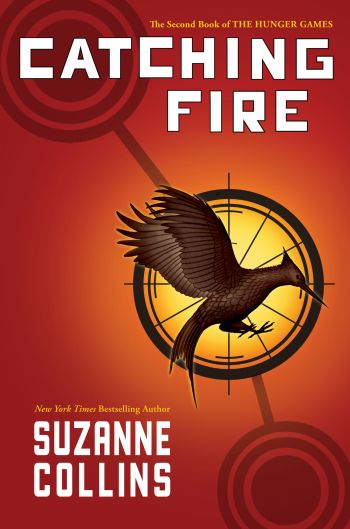
We rejoin heroine Katniss Everdeen in the second book of the trilogy, after her success in the 74th Hunger Games, where she out-lived the other contestants, in part through a fabricated love-affair with fellow District 12 tribute, Peeta. However, as well as her previous love, Gale, she now has to cope with life as a celebrity, beginning with a “Victory Tour” through the other districts. It soon becomes clear that not all is well, with her stand against the Panem government having fanned the flames of rebellion elsewhere. To demonstrate their power remains unshaken, the leaders announce the special, 75th Hunger Games will involve two previous winners from each district, meaning Peeta and Katniss are sent back in to a new, even more lethal environment, to take on other champions.
That this works better than its predecessor, is mostly due to the pacing department, which builds through a first-half of impending doom, and on to an upgraded Hunger Games, before dropping a bomb in its final paragraph. There’s more depth given to the Panem hierarchy than first time around, and the undercurrent of growing revolution is nicely depicted. The Twilight-esque love-triangle aspect, which bogged down the first book, is reined back, with Gale almost absent, though Katniss still has deal with her feelings for Peeta, whom she has sworn to protect at any cost. However, can she trust those with whom she is allied in the games, and whose motivations are less clear? It’s this angle which largely keeps you turning the pages, along with the arena, throwing one threat after another at her.
At its center is Everdeen, who remains an entirely admirable creation. She is loyal, brave and phenomenally-skilled with her bow, yet possesses enough doubts and flaws to keep her human, rather than becoming some kind of superheroine. Clearly, the first-person narrative does mean there’s not much sense of direct threat to Katniss’s survival; however, Collins has enough other cards in her hand, to leave you concerned as to what the emotional cost of that survival might be. Hopefully, the second film can capture the nuances and improve on its predecessor in the same way. For when that literary bomb was dropped on me at the end, I gave serious consideration to heading straight into the third book. Damn you, Suzanne Collins.
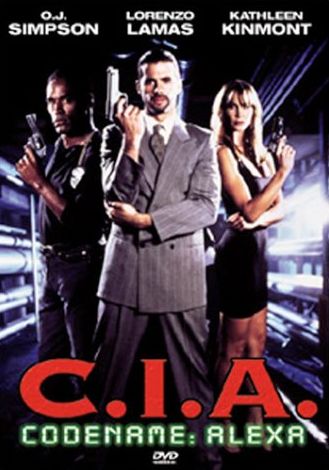
C.I.A. Code Name Alexa
★★
“Harkens back to a kinder, gentler era of domestic terrorism.”
A terrorist attack on a federal facility is interrupted by cops, and the leader is killed in a shootout. Bizarrely, a raid is then staged on the church where his funeral is being held, apparently with the aim of recovering the body. It’s led by Alexa (Kinmont), who is captured in the process, and interrogated by police detective Nick Murphy (Simpson) – at least, until CIA operative Mark Graver (Lamas) swoops in and claims her. Turns out this is all part of a plot by evil genius Victor Mahler (Cord) to acquire a computer chip which will give him enormous power, because of its ability to control weapon systems. Unfortunately, Mahler has diplomatic privileges, so normal methods won’t work. But if Mark can turn Alexa – using her daughter as leverage – maybe she can take care of Cord.
There are moments when this threatens to break out of the direct-to-video mediocrity to which it aspires, but not enough of them. To be honest, what happened to Simpson a couple of years later, was probably fortunate for the film’s producers, giving the film a certain notoriety it doesn’t deserve. I did like the cynicism of Graver, and his boss (Pam Dixon) has a disregard for the societal niceties which rings true. Kinmont, at the time the third of Lamas’s five wives to date, is sadly underused, however. There’s one sequence, where she stages a solo raid on Cord’s complex, that does a good job of showing her potential, but there’s too much time spent sitting round in federal detention.
The other problem is a plot which contains far too many elements requiring the suspension of disbelief. For instance, having recovered such a vital chip, would the government really allow it back in the hands of the person who was trying to steal it, purely so she can swap it with a terrorist for her daughter? I don’t think so. It all builds to a massive battle in the belly of Los Angeles Airport, which harkens back to a kinder, gentler era of domestic terrorism, when airport security apparently consisted of one rent-a-cop and a guy asking “Hey! What are you doing down here?” Ah, such innocent days.
Dir: Joseph Merhi Star: Lorenzo Lamas, Kathleen Kinmont, O.J. Simpson, Alex Cord
C.I.A II: Target Alexa
★★★
“Learning to fly a helicopter? It’svastly over-rated….”
The following year, Kinmont and Lamas teamed up again, this time with Lamas also behind the camera, making his directorial debut – keeping it in the family, Kinmont also helped come up with the story. Mind you, the pair would separate on Veterans’ Day 1993, and eventually divorce, which lends the scene depicting their two characters bickering before a mission, a certain eerie poignancy. It begins with Alexa (Kinmont) having abandoned the CIA and run off to a life training horses with her daughter. But an unfortunate involvement in an armed robbery means that her only way out is back in to the agency, where Graver (Lamas) needs her to infiltrate the camp of Franz Kluge (Savage), a mercenary who has acquired the chip at the heart of another weapons guidance system. Sheesh, US government: you really need to take more care with these things. Oh, and Kluge is also the father of Alexa’s daughter.
There’s another terrorist, who needs the chip to make the components he stole operational. and Kluge’s leading minion is a henchwoman, Lana (Fetrick), who is unimpressed when his old flame comes waltzing back into their camp. She can actually kick ass better than just about anyone else in the film – including Kluge’s other associates, as they find out when they try to take Alexa on. That, and the grocery-story robbery, are probably the best fights in the film, whetting the appetite nicely for the Lana-Alexa battle at the end. That is actually kinda disappointing, but is worth it, simply for Alexa’s comeback after Lana says, “You can run, but you can’t hide.” It’s probably the time where Kinmont comes closest to being the “next Schwarzenegger,” as claimed on the DVD sleeve.
The rest of the film is okay. It’s more entertaining than its predecessor, with the gyno-centric approach giving it much-needed originality, and Savage gives a quirkily off-centre performance, switching sides as opportunity requires. It builds to a ludicrous climax which sees Alexa clinging to the leg of Kluge’s helicopter as it takes off, clambering in, knocking him out and then, apparently, landing it safely on sheer instinct, because no-one in either film has mentioned her knowing how to fly one. That sums up the entire series: it’ll pass for entertainment, providing you don’t stare too hard at the details, because things will then fall apart on you.
Dir: Lorenzo Lamas Star: Kathleen Kinmont, Lorenzo Lamas, John Savage, Lori Fetrick



 Cop Francis Jane (Palmer) is assigned to guard jewel thief Eddie Cordero (Robbins), who was shot while being captured, and is now cuffed to his bed in an all but deserted wing of a local hospital. What should be a tedious task turns out to be far from it, as his former colleagues, led by crew leader Louis Holland (MacDonald) show up. They are eager both to discover the location of the stolen goods, and extract revenge for the death of one member, which they blame on Cordero, but which he swears was the act of a corrupt cop. The resulting assault leads to an uneasy alliance between policewoman and criminal, as they try to avoid his former colleagues. But is Cordero as easy-going and affable as he seems? Or does he have a hidden agenda of his own?
 While twice as long as the first series, at 12 episodes rather than six, I can’t say it’s actually any better. Indeed, I think the dilution of the main element which was so much fun the first time round – the relationship between the two, disparate hitwomen, Roxie (Osment) and Veronica (Chriqui) – leaves this season less entertaining. Yes, it’s bigger and more exotic: but it feels spread thinner, to the detriment of the core aspects. The story takes up shortly after the events of the first series, with V+R in the Caribbean, waiting to get their share of the money from Eileen (Missi Pyle) and Mother (Gershon). But instead, an assassination squad is sent to get them, kicking off a reunion with Veronica’s “parents”, a deranged killer who thinks Roxie is his dead wife, a rogue CIA operative who sends Frank Barnes (Arquette) after Mother, and so on. It builds to a climax where Veronica, previously injected with a lethal nanobot virus that’s about to go off, takes part in an underground death match at a cockfighting arena, to prove her love for the deranged killer. I shit you not.
 ★★★
★★★ All three, however, were clearly selected as much for their visual appeal, and the 25th century is not short of beautiful people – it’s also quite warm, going by the ah, flimsy clothing worn by the trio. Cleo and her former profession fit right in. But taking any of this seriously would largely be doing the show a disservice, because it’s clear it doesn’t take itself seriously. There isn’t really time for that kind of thing, with each episode barely 20 minutes, excluding opening (theme song sung by Torres, a funked-up and lyrically altered version of Zager and Evans’ one-hit wonder, In the Year 2525) and closing credits. There isn’t much time for anything, in fact: both characterization and plotting remain about as scanty as the outfits. Hel is thoughtful but can be distant; Sarge likes shooting things first and asking questions later; Cleo, to be honest, is mostly irritating, coming over as both whiny and rather vacuous.






 This is the story of three young women, sharing a house. There’s Kris (Pope), the sensible and apparently staid one, who works as a tax accountant; her flighty girlfriend Tara (Armstrong); and roommate Sammi (Baird). Tara and Sammi stumble into the aftermath of an apparent gangland shootout, exiting with a bag containing over $3 million in cash. The trio have very different ideas about what to do next, but Kris convinces them the best bet immediately, is to stash the bag in a lock-up, secured by three separate padlocks, with each holding one key, until they figure out if anyone is coming after the money. However, Sammi’s inability to keep her mouth shut proves disastrous, as her boyfriend is $50,000 in debt to local mob boss Kostas Jakobatos (Rhys-Davies), and sees an opportunity to clear the balance, and a lot more. Neither of the men have reckoned with Kris who, it turns out, is much more prepared for the situation than her two house-mates.
 For years, an assassin known as “Jackal”, has eluded all efforts at capture, taking out targets before vanishing without trace. However, it seems that retirement is close, when a note is found, apparently left by the killer. This indicates that they are tired of the chase, and will be in a town’s low-rent hotel, waiting for the police. The cop (Han) who has been hunting Jackal is, understandably, wary and suspects a trick, but sets up a stakeout in the hotel to see what unfolds. However, already in one of the rooms there is K-Pop superstar Choi Hyun (Kim)., who had been hoping to hide out for a bit of peace and quite, only to be kidnapped by a rookie killer (Song), hired by his jilted lover. She’s apparently not very good at her job, especially after Choi convinces her he isn’t actually the star, but a celebrity lookalike. Meanwhile, a local cop (Oh) has been drafted in to help with the stakeout, and the hotel staff are proving rather less than helpful, treating the stakeout as a bonus cash-cow to be milked, rather than a chance to help the authorities.
 ★★★★
★★★★ Crackle is the streaming content subsidiary of Sony – it has been around for a while, but we only became aware of it last December, when a new widget popped up on our Apple TV. Think of it as a little like an advert-supported version of Netflix; you can watch for free, whenever you want, but you have to “pay” by sitting through commercials (during which the FF option on your remote is disabled. Bastards!). The library of movies and shows offered is based around that studio’s library, and has a number of entries for action heroine fans. Bonus points, not just for having Run Lola Run, but in the subtitled version; they also have Ultraviolet: Code 044, the anime spin-off from Milla Jovovich’s action-horror film, though that is only available dubbed. We’ll get to that later, I imagine, but the first thing to leap out at us was this original series, about a pair of female assassins. It’s certainly not to be confused with the Samuel L. Jackson movie or Benjamin Brett show.
 There are six episodes, but they’re barely 20 minutes each, discounting adverts, and by the time you remove the credits, and “previously/next time on Cleaners” sections, it’s basically a single feature. Maybe I’ll get round to editing it together in exactly that fashion. There’s a hint of Tarantino in the fast-paced dialogue, as the characters snark back and forth at each other – my favourite line was Roxie’s response, after Veronica had expounded on some topic: “Jesus! What did you have for breakfast? Wikipedia?” Leyden throws on large helpings of style, which is something of an acquired taste: in the first episode, it seemed more of a chore than a pleasure, but as the show wore on, he either restrained himself better or we grew used to it.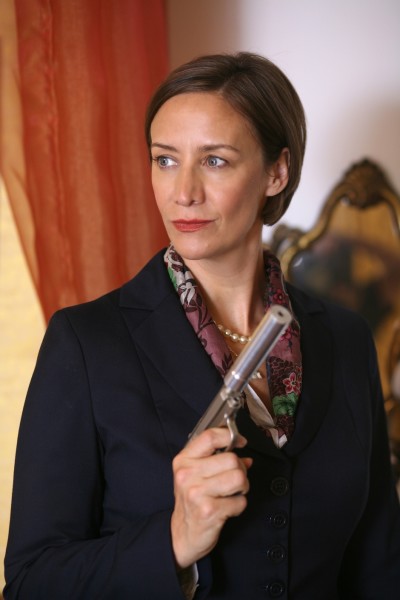
 I watched this purely on the strength of