Coral Hare, Atomic Agent, by Clive Lee
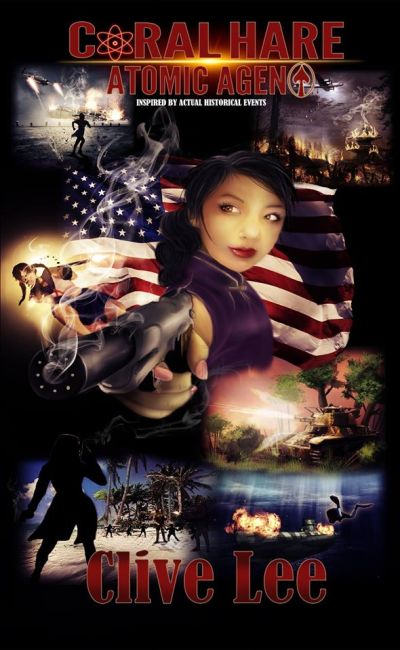 Full disclosure at the outset: the author, who’s a member of my Action Heroine Fans group on Goodreads, gifted me with a no-strings-attached free copy of this novel.
Most people who’ve read much at all about World War II are aware that Germany, as well as the U.S., had an active atom bomb development program. The information that Japan did too was only recently declassified. First novelist Lee draws on this new historical data to produce a riveting espionage-action thriller –and the adjective “high-octane,” for once, isn’t just hype!
After a blood-drenched prologue set in Tokyo in 1937, our story focuses on Mina Sakamoto, a Nisei (American-born offspring of Japanese immigrants to the U.S.), born and raised in Honolulu, who’s recently turned 14 at the time of Pearl Harbor. Largely Americanized and seeing herself as American, she’s the daughter of a medical doctor, who’s unofficially trained her to function as a practical nurse. She’s also good at languages (the Hawaii of that day was quite an ethnic melting-pot) and a bit of a tomboy, good at roller skating and rabbit hunting with a slingshot. This background is going to come in handy, because the events of Dec. 7, 1941 will propel her into becoming, before she’s 15, a full-fledged field agent of the OSS (Office of Strategic Services), the World War II-era forerunner of. the CIA. (“Coral Hare” is her coded radio call sign.) Out of 64 chapters, the last 50 focus on the spring and summer of 1945, when the now-17-year-old goes up against Japan’s A-bomb program.
The story arc is constructed well; the time devoted to Mina’s grueling OSS training provides the necessary believability for her transformation into a kick-butt warrior, and the intervening years between this and her climactic 1945 missions are handled very adeptly. Lee shows us some personal growth on Mina’s part, and her relationship with her mentor is nicely depicted. But I’d say that 80-90% of the book consists of either fighting action, in which absolutely no punches are pulled by the combatants or the author, or of horrific descriptions of the effects of bomb blasts, both conventional and atomic, on human beings. The mayhem is very graphic, gory and grisly; despite the teen protagonist, this is definitely not YA fiction (though some teens would like it). A lot of serious research to insure historical accuracy obviously went into this, and that’s a significant strong point of the novel; but Lee avoids the trap of shoe-horning all of his information into the tale via info-dumps. (He does use footnotes, which the reader can skip over or read. I found some of these quite educational; I wasn’t much interested in the military hardware specs, but serious World War II buffs might be.)
His prose style is clear and readable, with language and diction mostly handled capably, despite a few typos. (There are a few cases of incorrect sentence construction or misused words –a person can’t lie “prone on her back,” since “prone” means face-down, and Lee tends to confuse “flanking” with approaching from behind– and rare details that don’t ring true, such as Mina’s not being done with eating one hamburger when she’s been in a diner for two hours; but these aren’t big deals.) Several fascinating historical appendices make it clear how much real-life history (a LOT!) was incorporated into the narrative, as well as providing information on real-life Allied female spies in the war, and an honor roll of real Japanese-Americans who served in the OSS. Lee’s respect for the courage and sacrifice of the “Greatest Generation,” to whom the book is dedicated, is clearly evident, and commendable.
Even with a doctored birth certificate and some string-pulling, Mina’s age poses some credibility problems (the biggest one, which Lee mostly finesses, being parental consent for her going off in the first place). Despite this, Mina’s an unforgettable character, with an industrial-strength level of indomitable spirit and courage, and fighting prowess that’s second to none. Allowing for their differences in setting and weaponry, she actually has some similarities to Billy Wong’s epic-fantasy swordswoman protagonist Rose Agen in Iron Bloom: they’re both teens who’ve had to grow up quickly (but who yet retain some traces of the teen), both super-lethal fighters with massive kill counts, and both possessed of endurance and recuperative powers that amaze observers. But while Lee is by far the better stylist of the two, Wong has created a character who’s the more morally introspective. Rose is bothered by killing, even though she does a lot of it, and does so only to protect innocents from harm. Protection of the innocent plays into Mina’s motives, but she’s more driven by revenge, and if killing bothers her, she doesn’t show it; at times, she rather appears to enjoy inflicting mayhem. That makes her harder to like unreservedly –though I still did like her, and root for her.
 For me, the main weakness of the novel was a sense of missed opportunity for moral reflection. True, Mina’s trying to stop WMD’s from being built and deployed, which is certainly a commendable goal. She also doesn’t harm any civilians herself. But she knows about the Manhattan Project, which is a mirror image of the Japanese effort, and is present for the firebombing of Tokyo (shown left, and in which more civilians died than in both atom bomb attacks combined). We’re not told what, if anything, she thinks about any of this; the silence can suggest that she pretty much endorses an “us against them” ethic in which whatever “our side” does is okay, because OUR cause is just. For the time and place, of course, that attitude is realistic (for both sides), and Mina at least doesn’t have the racism that fueled a lot of that attitude.
But I missed the kind of grappling with the ethical issues that could have raised this into a five-point rating instead of four. (True, the graphic descriptions of human suffering from both atom and conventional bombs might inspire some of that grappling in some readers.) I’d also argue that by the summer of 1945, the Japanese could not have won the war even if they’d produced an operational A-bomb; and despite Lee’s historical research, I doubt that the OSS ever used torture to interrogate prisoners. (We know that the Axis powers did, and probably the Soviets, too –they used it to extract “confessions” in the Stalinist purge trials a few years earlier– but besides the ethical issues, I think U.S. intelligence realized how unreliable it is as a source of honest information.)
For all that, this book does what it does very well; it’s an unabashedly pulpy, edge-of-the-seat thrill ride through hell and back, with a take-no-prisoners heroine who’s in a new mortal jeopardy every time you turn around. (And remember, this isn’t a series book; there’s no guarantee that our gal’s going to make it home!) If you’re an “action junkie,” you’ll get your fix here, and then some. This would have real possibilities for a movie adaptation (which would definitely be R-rated for violence), and if one is ever made, it’s going on my to-watch list!
Note: There is a notable amount of bad language here, mostly of the d, h, and s-word type, but also some profanity, and eight uses of the f-word. (That’s arguably realistic for the speech of U.S. soldiers; less so for the speech of Japanese-language speakers, before the U.S. Occupation.) However, there’s no sex (except for a rape scene, which isn’t graphically described). It’s noted in passing that Mina wants to marry and have kids someday; but right now, she has other priorities besides boys. (Like staying alive!)
Author: Clive Lee
Publisher: Self-published, available through Amazon, both for Kindle and as a printed book.
Official website
A version of this review previously appeared on Goodreads.




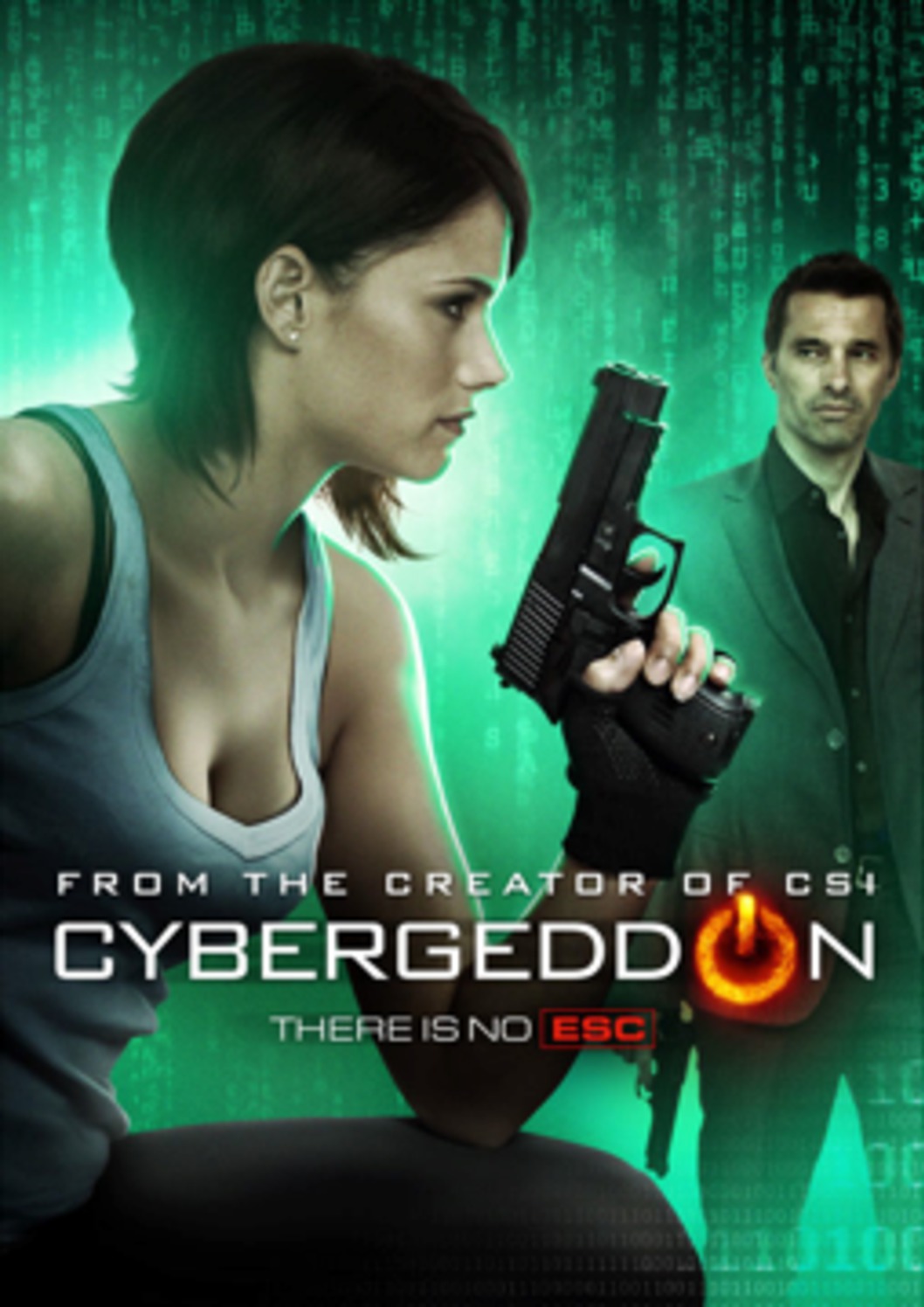 Computer security is part of my day-job, so I’m always amused by Hollywood’s efforts to depict it, particularly in thrillers. For the truth, which also creates the main problem with the entire “hacker” sub-genre, is that it may sound enthralling, but watching someone else type is among the most tedious things imaginable. While the effects may be very significant, the journey to get there is, frankly, dull as ditch-water. Any realistic cinematic depiction of cyberterrorism would be worse than watching paint dry. It would be more like listening to a description, of someone else playing a video-game, about watching paint dry. Here, the makers try to jazz things up by depicting cyberspace as a 3D network made up of data panels, sliding around each other like a virtual Rubik’s cube, with bad data showing red. Despite dropping buzzwords like “Stuxnet” to show the writers know what they’re talking about – or, at least, have read Wikipedia – that isn’t enough.
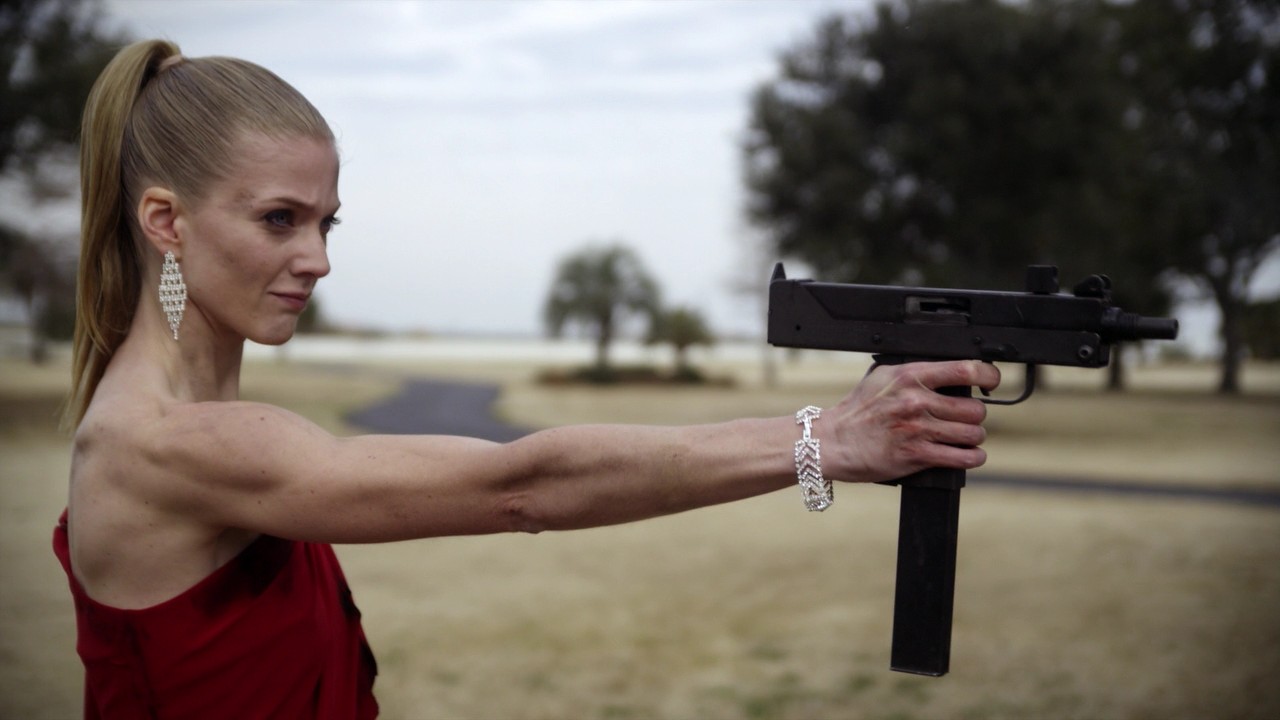
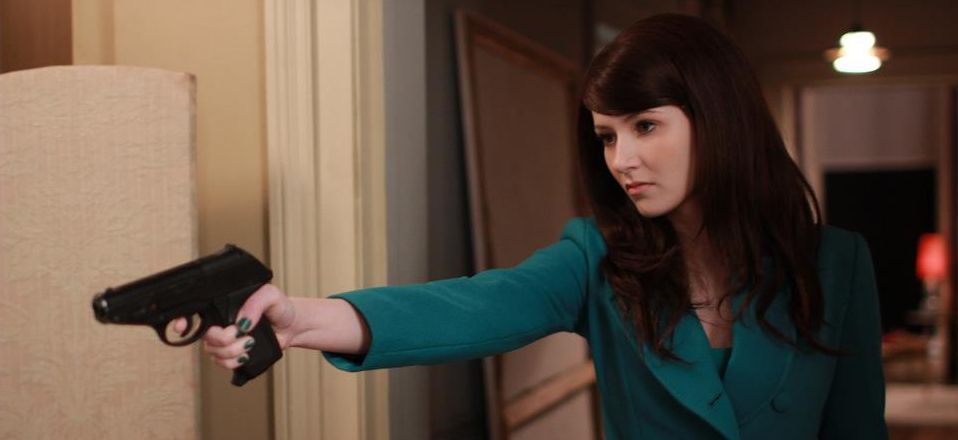
 I don’t review movies without subtitles very often. This would be a good reason why. I knew very little about this going in: there’s no IMDB entry, no other reviews appear to exist, and virtually the only Google hits are the range of more or dubious sites from which you can download the movie. Subtitles? Don’t make me laugh. That no-one has done so indicates one of two things: no-one was interested enough to do so, or it’s difficult to subtitle a movie with one hand, if you know what I mean, and I think you do. Either way, it leaves me in a difficult spot: any or all of what follows may be wildly inaccurate. However, the chances of anyone ever correcting me are likely slim, so what the hell…