



★★★
“Not exactly family viewing, yet energetic in a dumbly fun way. Lana Clarkson, RIP…”
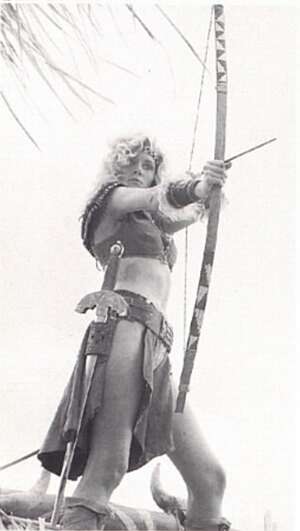 With the untimely death of Lana Clarkson (legal advisers suggested we not use “murder by a crazed record producer”), this takes on a certain poignant quality, especially when she uses lines like, “I’ll be no man’s slave and no man’s whore.” Clarkson pioneered sword-swinging feminism well before Xena, and while no-one is going to mistake this for high art, it gallops along at a fine pace – lasting barely 70 minutes, it could hardly do otherwise.
Clarkson plays Amathea, whose wedding day is rudely interrupted when her village is burned and groom (Zagarino) captured into gladiatorial slavery. She sets out to rescue him, along with sidekick Estrild (Shea, who’d go on to direct Poison Ivy), and traumatised sister Taramis (Dunlap). Sneaking into the villain’s city, she teams up with the local rebels and convinces the gladiators they have a chance at freedom. They also get get caught and tortured. A lot. Chuck in numerous rape scenes and you wonder what audience it’s aimed at. But the heroines are better than you might expect; despite some 80’s hair, there are some convincing bits of action, in particular a fight by a river. Amathea’s method of convincing the torturer to free her is also unique in cinematic history, as far as I’m aware (if I’m wrong, please, let me wallow in my ignorance).
Producer Corman continues his ability to find cheap talent, though the “destined for greater glory” name is heard and not seen – the music comes from Christopher Young, who’d go on to score films such as The Shipping News. James Horner’s Battle Beyond the Stars work also crops up, but when you write for Corman, you expect this kind of thing.
Dir: Hector Olivera
Star: Lana Clarkson, Katt Shea, Dawn Dunlap, Frank Zagarino
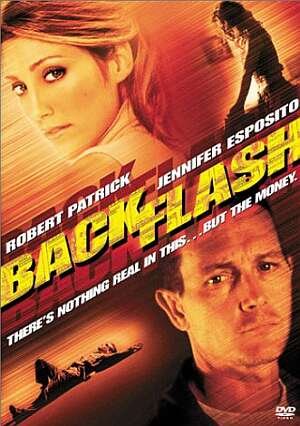 Harley (Esposito) comes out of prison, and links up with timorous video store owner Ray (Patrick), who must impersonate her boyfriend in order to collect $2m stashed in a safe-deposit box. The cash was swindled from mob money-shuffler Gin (Meaney) – understandably he’s keen to get it back before his boss notices. You will not be surprised to hear that hardly anyone in this film is quite what they seem.
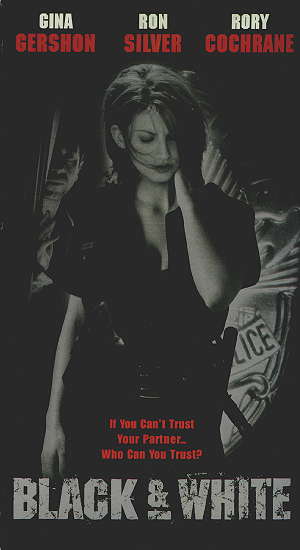 Gina Gershon showed previous action heroine potential in Face Off; here, she moves a little further up that line with an effective whodunnit in which she plays a thoroughly unconventional homicide cop with a shady past. Cochrane is her rookie partner, who begins to suspect she may be the serial killer who is taking out the local garbage. There’s almost inevitably a sense of disappointment in twisty thriller like this one; when the film-makers reveal the real culprit, the viewer tends to feel let down. Black suffers less from this than most, though still requires some suspension of disbelief. The script, by the director and (one assumes, his brother) Leon Zeltser, crackles along nicely, with convincing dialogue and good pacing, revealing information at just the right rate to keep the audience guessing.
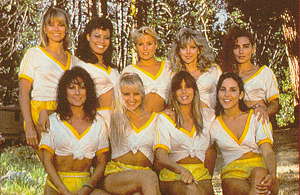 I guess Blood Sport was already taken? It’s softball beauties vs. rednecks after: a) the visiting ladies thump the home side 17-2, b) the team owner has to extract his fee at gunpoint, and c) the gals resist – forceably – the crude advances of the locals. Before you can say, “duelling banjos”, they’re being pursued through the woods, and picked off one by one.
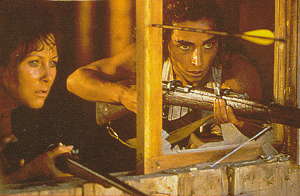 Playing Babe, daughter of team owner Ross Hagen, Laura Albert is about the only one of the girls to make any impression as a character; she’d go on to become a stuntwoman, working on the like of Starship Troopers. The rest of her colleagues take showers, get assaulted (a sequence verging on the nastily gratuitous), die, turn psycho and take revenge, all without exhibiting any significant personality traits. Quite an achievement in itself. Another one of those movies which will put you off going to rural, Southern parts of America.
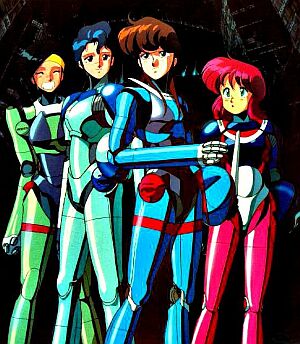 Worthy of note as one of the first pieces of anime made available to an English-speaking audience, (not long after its original 1985 Japanese release), BGC is set in 2032, when Tokyo has been rebuilt, post-earthquake. The Genom corporation are fiddling with Boomers, biomechanical robots of immense strength but with a nasty tendency to run amok. Standing guard are a mysterious team, the Knight Sabers, with their own technological strengths, who alternate between merc work and more altruistic concerns.
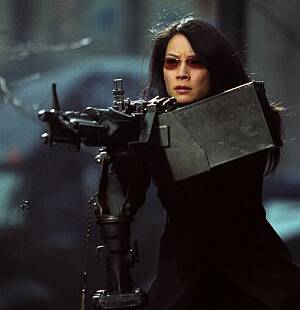 Despite the title, this movie rarely pits Ecks (Banderas) vs. Sever (Liu). The two spend more of the film teamed, up taking on the evil duo (Henry and Park) who killed Sever’s family and have kidnapped Ecks’ son – perhaps a spoiler, but anyone who didn’t see that one coming, was probably run over on the way to the cinema.
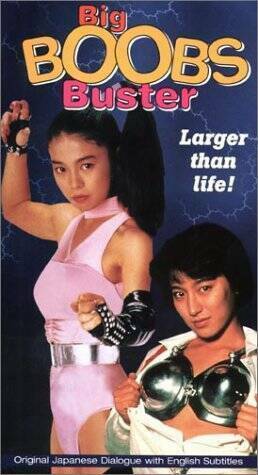 As you can probably surmise from the title, this is most emphatically
  Season Six was in trouble from the start, with the titular heroine (literally) dead and buried. Bringing Buffy back from beyond was a problem always likely to perplex, because once you start resurrecting characters, nothing is a threat any more. Although this was handled moderately well, the show really started to fall apart after the musical episode. This demonstrated one thing beyond all reasonable doubt – why the cast are actors. From then on, most of the stories seemed to have been cribbed from daytime soaps. Buffy has sex with Spike, feels bad about it, then does it again. Xander and Anya’s on-off-off-on-off wedding and relationship. Willow and Tara were no more solidly committed, and the clumsy “magic=drugs” story arc was the sort of thing I’d expect to see on Charmed. In addition, the main bad guys for 90% of the series were a trio of geeks, minor bit players from previous episodes, who were about as threatening as flies, albeit rather more annoying.
 This teeters infuriatingly close to greatness, but eventually succumbs to mediocrity because of a tendency to juvenile smuttiness, that fatally weakens what is, at heart, an intriguing story and setting. The Warriors are a special police group – mostly female, with one token (lecherous) man – sent in to sort out nasty cases. The main thread in the four episodes here, is a virtual drug which can turn the consumer into a mind-controlled killer – or, presumably, anything else desired.
 Women-in-prison is not a genre greatly within our remit, since they’re often just an excuse for a bit of soft-core masochism. There are occasional exceptions, however, and this is one, with its origins as a network TV show forcing restraint of the more exploitative aspects, as well as permitting the characters to develop more fully than in a movie.