 ★★★★
★★★★
“Play it again, Pam…”
 When I picked up this DVD, I could hear Chris rolling her eyes at me. And during the first five minutes of the movie – which consists of virtually nothing but Pam on a swing, getting sprayed with a fire-hose, silicone on display – this eye-rolling escalated to the point where I swear I could hear them whirring like the reels on a slot-machine. But by the end, even she had to admit that being a titty-fest – and there’s hardly a scene here without cleavage – doesn’t necessarily make this a bad movie…
For this is nowhere near as bad as its Gigli-like reputation would have you believe. Okay, for $18m, you might expect a bit more than a post-Mad Max setting, and you would certainly expect more from your screenwriter than a blatant steal from Casablanca – Ilene Chaiken should be drummed out of the WGA for claiming a story credit here. But this is an adaptation of a comic-book, starring Pamela Anderson (Lee, as she was then known): what do you expect? I venture to suggest that, if I was 15, this would probably be the greatest story ever told.

Barb Wire runs a club called the Hammerhead in Steel Harbour, one of the last bastions of freedom in 2017 America, where a civil war is ongoing. She funds the club by catching bail-jumpers and rescuing kidnap victims (inevitably, posing as a stripper or hooker), and has to deal with all sides to keep the venue open. But when her former lover Axel (Morrison) turns up, with his new wife, who desperately needs out, her position on the fence suddenly becomes untenable, and she has to choose which side she’s really on.
For those who know Casablanca, almost every element appears in that Bogart classic:
| Element |
Casablanca |
Barb Wire |
| Setting |
Casablanca |
Steel Harbor |
| Era |
World War Two |
Second American Civil War |
| Enemy |
Nazis |
Congressional Directorate |
| Hero |
Rick Blaine |
Barb Wire |
| [A cynical expatriate who owns a bar and plays both sides] |
| Former lover |
Ilsa |
Axel |
| Now wedded to |
Victor Laszlo |
Cora D |
| Who needs… |
Exit visas |
Contact lenses |
| [Which let the bearer escape to safety] |
| Location |
Rick’s Bar |
The Hammerhead |
| Head Waiter |
Carl |
Curly |
| Chief Villain |
Major Strasser |
Colonel Pryzer |
| Top Cop |
Louis Renault |
Alexander Willis |
| Slimy dealer |
Guillermo Ugarte |
Schmitz |
| Mr. Big |
Signor Ferrari |
Big Fatso |
About the only new facet is Barb’s blind brother (Noseworthy) – it’s a shame he doesn’t play the piano, though he does act as Barb’s conscience. This concept, turning one of the most beloved Hollywood films of all time into a post-apocalyptic cheesecake-fest, is worth the price of admission alone, simply for its surrealness and sheer audacity. What next? Britney Spears as the lead in a remake of It’s a Wonderful Life?
 While one might question Pam’s acting talents, she is backed by a sterling cast of character actors: Steve Railsback, Xander Berkeley, Clint Howard, Udo Kier and Temuera Morrison. Each one hits the mark in their role, delivering lines with the correct level of enthusiasm. Kier, as usual, steals the show (his presence definitely helped soothe Chris’s eye-rolling), though Berkeley’s sleazy cop is perhaps the biggest surprise, especially if you’re only familiar with him as Jack Bauer’s boss in the first two seasons of 24.
Credit should also go to Debbie Evans, Anderson’s stunt double, since it’s fairly obvious that Anderson, while having an undeniable presence (albeit a presence severely diluted whenever she opens her mouth for more than a one-liner – not that this ever stopped Van Damme, Stallone, or even Governor Arnie), is not doing her own stunts. Despite this, the action in the movie is well above-average, with some really cool explosions and fights, notably Axel’s battle a long way off the ground.
Certainly, Barb’s psychotic opposition to being called “babe” seems somewhat hypocritical given how she dresses. And really, despite the, ahem, “inspiration”, the plotting is a lot less fluid than you’d hope, with scenes that come out of and/or go nowhere. Just keep an eye on the contact lenses – alternatively, a familiarity with Casablanca will help you keep things straight and ignore the irrelevant threads.
 I admit, you could argue the entire story is irrelevant, and this is nothing more than an indefensible cocktail of eroticized violence. But those who live in such a moral vacuum as to require Hollywood to fill in the gaps, have got much bigger problems than Pamela Anderson’s breasts. If you can get past the first five minutes (which even I will say seem a lot longer), there’s no denying the effort expended here – albeit mostly on sex and violence, aimed at the lizard section of the viewer’s brain.
Yet curiously, actual sex doesn’t seem to take place in this universe at all, having apparently been replaced by tight-fitting costumes: claiming it’s a comment on life in a post-AIDS world is likely more credit than it deserves. Still, probably not a date movie (except in our house!), for this is trash, with hardly a thought in its vapid little head or 17-inch waist, and no agenda worth mentioning. Film doesn’t always need to be great art, any more than music; reprising the Britney motif, Barb Wire is equivalent to something like Hit Me Baby One More Time.
Perhaps the best comment comes from the Screen It website of parental reviews: “Topics to talk about – none”. There are times when this is a glowing recommendation for a movie, and at those times (probably a late weekend night, with a well-stocked fridge), Barb Wire fits the bill admirably.
Dir: David Hogan
Star: Pamela Anderson, Steve Railsback, Temuera Morrison, Jack Noseworthy



 The marketeers screwed up: aimed at teenage girls, our daughter refused to see it, on the grounds – Hollywood, please note – that their bikini tops and bottoms didn’t match in the poster… Anyway: Anne Marie (Bosworth) sees her ticket to stardom in a surf competition on Hawaii’s North Shore. But she has to come to terms with waves bigger than she’s ever faced before; a rebellious kid sister (Boorem); a dreadful job as a hotel maid; and, inevitably, the guy who wants to spend quality time with her on dry land (Davis), while her friend Eden (Rodriguez) tries to keep her focussed on surfing.
 Bandits started as a hugely popular short – confusingly, titled Episode 7 – on Atomfilms.com. Its success led Grasse to churn out a number of extremely loosely-connected ‘sequels’ (also on this DVD), as well as 50-minute feature (sold separately) The Bikini Bandits Experience, featuring the late Dee Dee Ramone and Corey Feldman. The basic idea is grand, and is established in the original short, where bikini-clad, gun-toting babes rob a convenience store (which stocks some beautifully surreal imaginary products, not the least of which is ‘Beef Flaps’), kidnap a clerk, and lasciviously kill him. It is politically incorrect on almost every conceivable level, and on its own, is an undeniable guilty pleasure of the highest level.
 Not the Billy Bob Thornton/Bruce Willis vehicle of the same name, this German film is several years older. Four girls, in the titular prison band, seize the chance to escape when playing at a police function. With freedom comes unexpected fame, thanks to a tape sent to an unscrupulous record company executive. There is plenty of potential for a Natural Born Killers-style hack at the media, manafactured celebrity: the Bandits could go after the exec for exploiting them, he could encourage the cops to shoot the fugitives and increase sales, etc. Von Garnier largely avoids this, in favour of unsuccessful chick-flick emoting, and a slightly surreal approach, like a long-format pop video. Add an irrelevant subplot in which the Bandits take a hostage, play with him for a bit, then dump him, and it’s clear the script is embarrassingly weak.
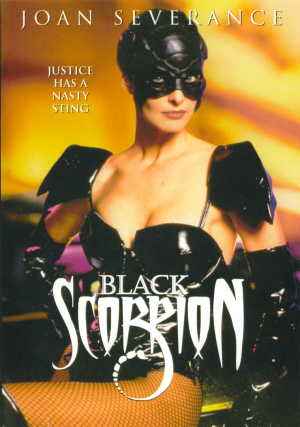 Roger Corman is a man without shame – and that’s in no way intended as an insult. He simply utilises any resource to the best of its ability, as is shown by the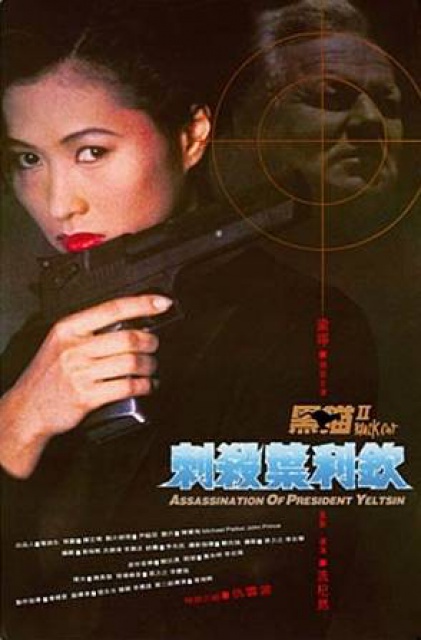
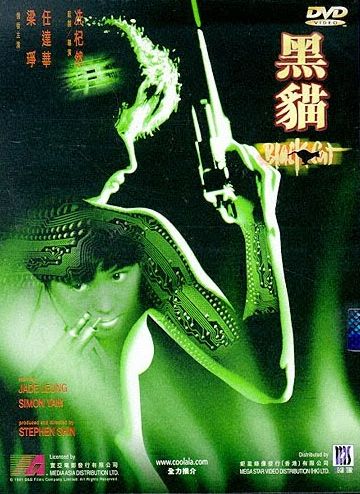
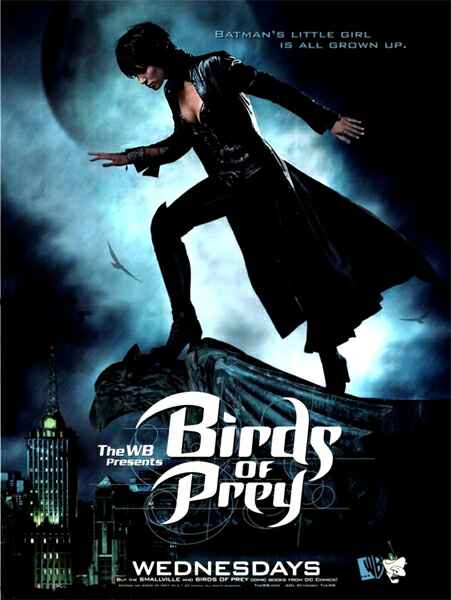 2002 should have been a great time to start a TV series based on a popular comic book – the biggest box-office hit that year was Spiderman, and with a host of other high-profile movies in the pipeline, comics had their highest profile in a long time. So what happened? Why was the show cancelled before Christmas, limping lamely along to the conclusion of its 13-episode run, the finale sacrificed against American Idol and The Bachelorette?


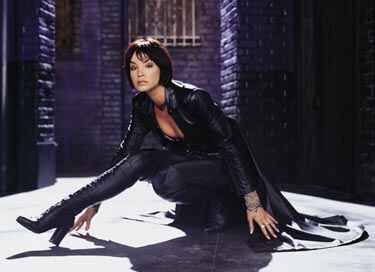 The show was at its best playing with the conventions of superhero TV; I particularly remember a discussion over secret identities and whether you could have one without a mask. But the same episode also featured – like the WWE, just without the chocolate pudding – a fight club where evil men watched as women fought. Given part of the appeal of the series itself was exactly this, it was shooting the audience in the foot, and illustrates the apparent schizophrenia of the show.
 Don’t believe the running time: listed at 83 minutes on the DVD sleeve, this is actually under 50, a nasty piece of marketing to make you think you’re getting a full-length movie. Not sure whether an extra 25 minutes would help or harm here: there is certainly room for development, but equally, there is an awful lot of slack which seems designed only to show off whizzy digital animation. Saya is a vampire. She’s also a killer, tasked by…well, it’s never quite made clear
 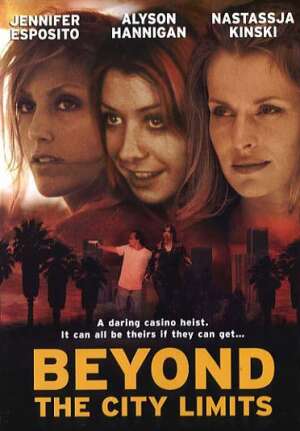 “It was a nightmare to shoot: the producer and director were constantly fighting… It was completely unorganised. Alexis [Denisof] was also in it and he and I would go into each other’s trailers and go, “We’ve made a huge mistake, this is the worst thing ever!” It just went terribly, terribly wrong.” So says Hannigan: wouldn’t say it was