 ★★★★
★★★★
“Smack my bitch up.”
 There are some films which I like, and where if you don’t agree with me, you are an idiot – such as Shaun of the Dead. However, there are movies where I can see, understand and accept why people dislike them, even if I may strongly disagree. Bitch Slap would be one of the latter. Looking at the the IMDb ballot results, the top number of voters have given it one out of ten. However, the next-most have given it 10/10. Between them, those two extremes represent more than 40% of the total votes. Much the same thing – albeit to a somewhat less rabidly-partisan degree – happened here in GwG Towers.
 Chris has a certain firmness of opinion. When she has made up her mind about something, it’s pretty hard to get her to change it. She will purse her lips, fold her arms and stick to her guns. You could argue whether this strong will is a character quality or a flaw, but it certainly led to her early exit from Bitch Slap. Here’s an approximate timeline of the comments from the seat on the couch next to me:
- 5 minutes: “Would you rather watch this alone?”
- 5:30 minutes: “Are you sure you wouldn’t rather watch this alone?
- 10 minutes: “Is this a porno?”
- 20 minutes: “Could this get any more stereotypical?”
It was not long after this – I think it was when the lesbian canoodling started – she suddenly remembered she had a vitally-important task to perform elsewhere. Judging by the sounds emanating from our office, that task appeared to involve Facebook poker.
Of course, to me, complaining about the film being stereotypical is missing the point. It’s supposed to be a frothy melange of cliches, thrown into the cinematic melting-pot and the heat turned up to ‘High’. The opening credit sequence, with its clips of “bad girls” such as Tura Satana and Christina Lindberg, gives you some idea of what to expect, and it hardly pauses thereafter, growing increasingly more breathlessly frenetic. Not often have I seen a movie suffering from a more chronic case of Attention Deficit Hyperactivity Diso… Ooh, look! Shiny, pretty things!
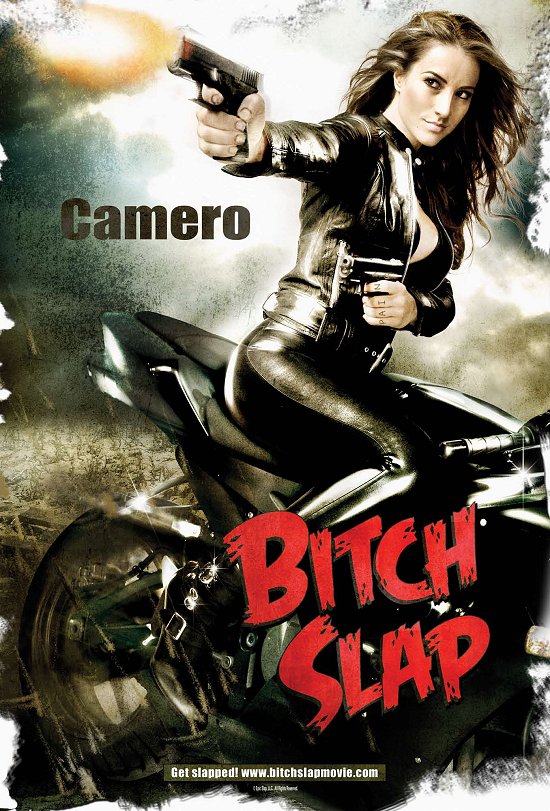
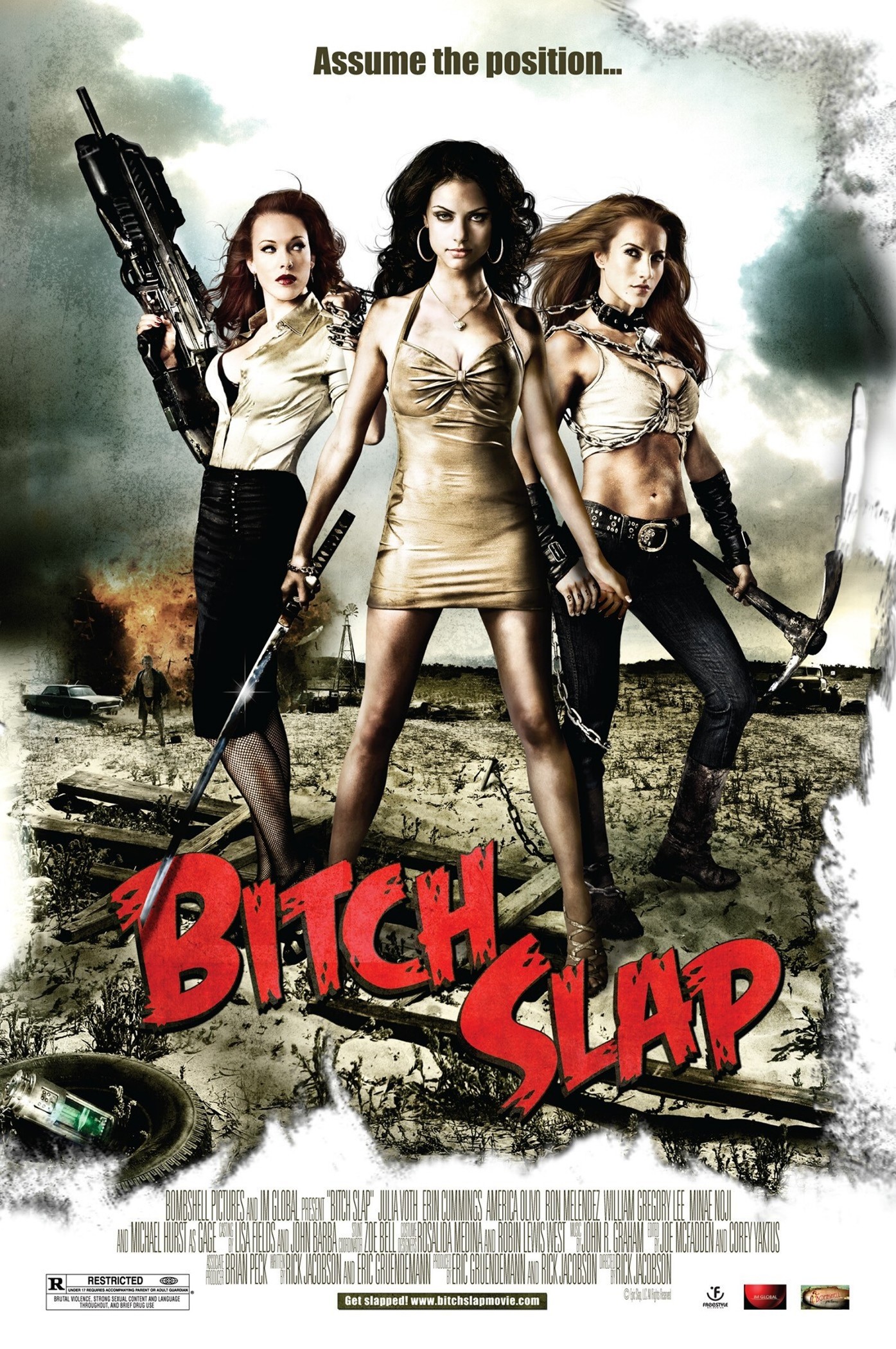
Speaking of which, it centers on three women, with about as divergent personalities as it’s possible to imagine. There’s Hel (Cummings), a con-artist with a secret identity; the psychotic Camero (Olivio), who starts off the movie insane, yet somehow manages to get even more loopy as things progress; and, finally, Trixie (Voth), the “innocent” one, whom you’re not quite sure about. The heroic trio end up out in the desert, with Gage (Hurst) tied up in their trunk, seeking… Well, part of the plot revolves around that issue, so I’ll leave that out of the summary. From there, the story of how they reached that point is told in flashback, and event also unfold moving forward, as they try to locate their obscure object of desire before the infamous, deadly “Pinky” shows up.
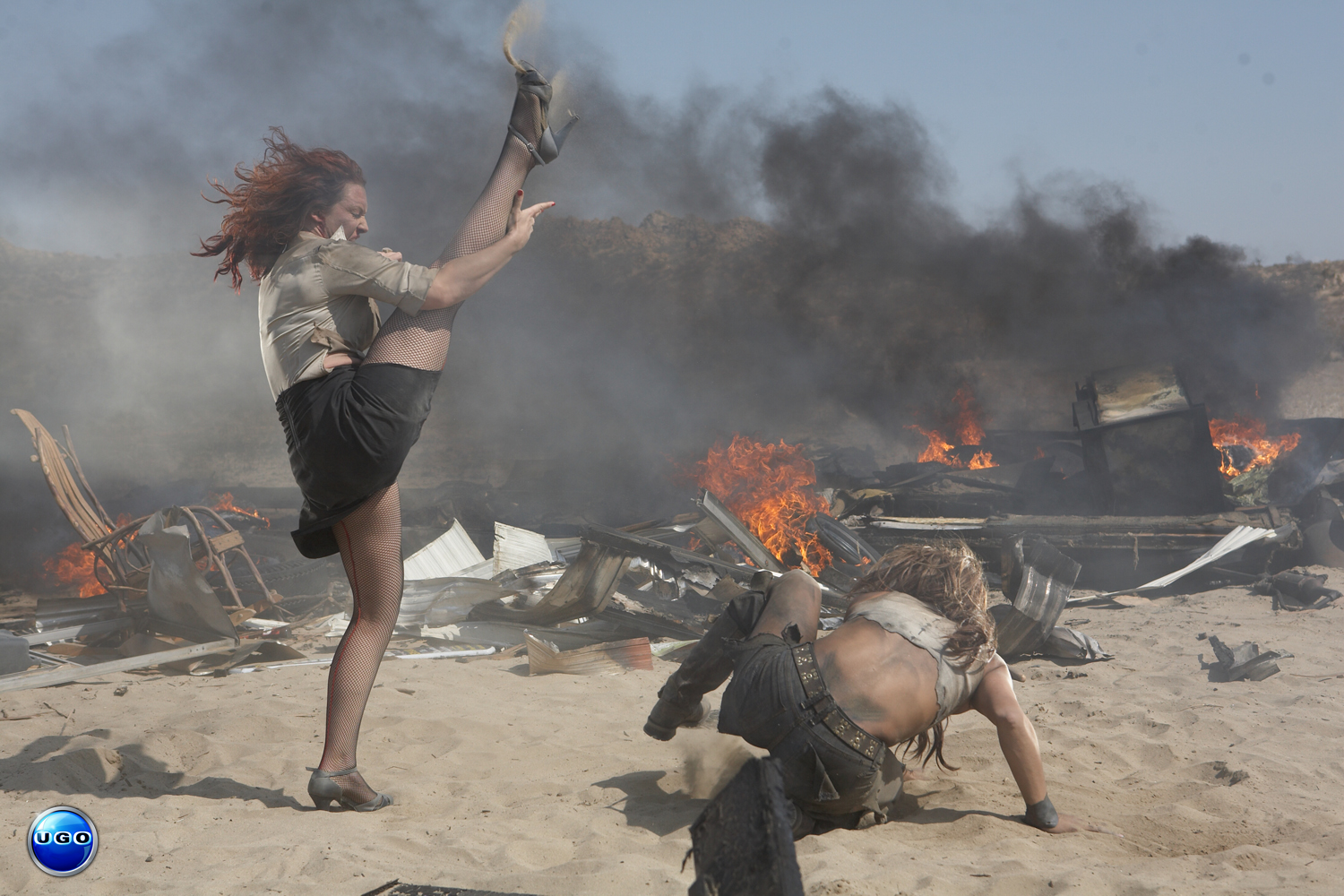
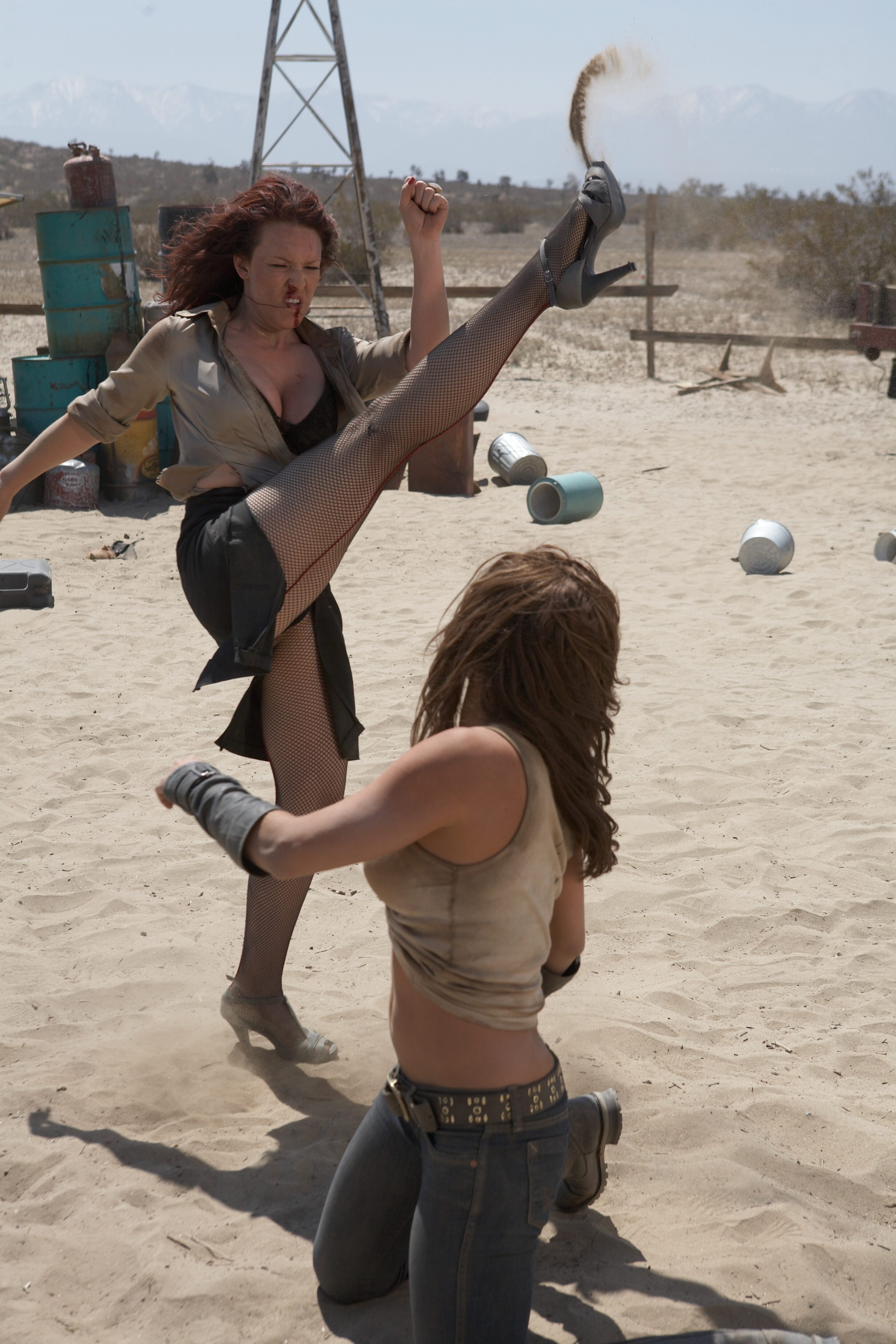
Of course, it’s not as simple as that. Others are after the same prize, such as Hot Wire and his GoGo Yubari clone (Japanese, schoolgirl, killer yo-yo), Kinki (Minae Noji). There’s also a good deal of tension, sexual and otherwise, between the three heroines: are any of them quite what they seem? I imagine my usage of the phrase “secret identity” above might have given some of the game away there. It hardly counts as a spoiler either, to say that it all ends (eventually) in a brawl between Camaro and Hel, in the middle of a desolate wasteland, which has become steadily more wasted and bullet-ridden over the course of the movie.
The Laydeez of Bitch Slap
Director Jacobson certainly has a solid pedigree in the action-heroine world, at least at the televisual end of the spectrum. His resume includes episodes of La Femme Nikita, Cleopatra 2525, Xena: Warrior Princess and She Spies, a good number of which have a similarly self-parodying approach to their subject matter as seen here. However, while the excess is somewhat greater, this only really extends to some potty-mouth lines and digital blood. Despite all the tension and canoodling mentioned earlier, Cummings shows a lot more skin for Jaconson as the hero’s wife in Spartacus: Blood and Sand. If you’re going for camp excess, as appears to be the case, you need to be a good deal more…well, excessive.
 The main weak link is the leads, who don’t have the chops – physical or acting – to pull this off. I to wonder whether it might have been a good deal better if stunt co-ordinator Zoe Bell, Lucy Lawless and Renee O’Connor had been the stars of the film, rather than merely cameos. They have all previously shown the necessary combination of martial ability and screen presence necessary for the parts here. Not that the actresses here are “bad”: however, when you’re spitting out Satana-esque lines like, “Ram this in your clambake, bitch cake!” you’d better have the F-sized volume of charismatic fire-power to pull them off, and they fall short of the level needed for this to achieve classic status (Olivo probably comes closest to the necessary level of conviction, spitting our her dialogue with a perpetual sneer).
Having got those criticisms out of the way, the rest of the film is very solid entertainment – providing, as noted above, you can get your brain lined-up with what it’s trying to do (and if you can’t, which is understandable, it’s basically unsalvageable). Alcohol will probably help the neurons go in the correct direction, as will an encyclopaedic knowledge of pop culture, and tolerance for trash at an industrial concentration. The litmus test is probably the slow-motion water-fight which breaks out among the three laydeez early on: if you greet that with a smirk of guilty pleasure (as charged, m’lud), rather than, oh, bailing for the Facebook poker lobby, you’ll probably be fine.
Jacobsen also does a good job with the visual style, providing a perfect match for the lurid, frenetic approach of the script and character. There’s a lot of green screen work, which lends proceeding a hyperreal feeling, and the pace means that there’s hardly a dull moment. Not sure the storyline makes a great deal of sense, I admit, and it feels as overstuffed as a giant bean burrito (you know the kind, the ones you regret buying about one-third of the way through, but just can’t stop yourself from finishing). The fractured plotline has been compared to Tarantino, but personally, there’s a good deal less annoying self-indulgence than Quentin usually inflicts on the audience: for example, Camero doesn’t bring things to a grinding halt, just to witter on about comic-books.
All told, it’s refreshing to see something which is so avowedly politically-incorrect, and proud of it. The film is at its best when wallowing in the gutter, unashamedly down and dirty, and with a broad grin upon its face – credit to all those involved for having the guts not give a damn about the nay-sayers and one-voters. It’s not going to trouble the more-evolved areas of your brain very much, and will tug on the heartstrings even less, but for the times when you don’t want anything more than the cinematic equivalent of a one-night stand, this will certainly do the job perfectly well. Certainly the most full-on, and arguably the best, of the genre to come out of Hollywood in the past five years.
Dir: Rick Jacobson
Star: Julia Voth, America Olivo, Erin Cummings, Michael Hurst




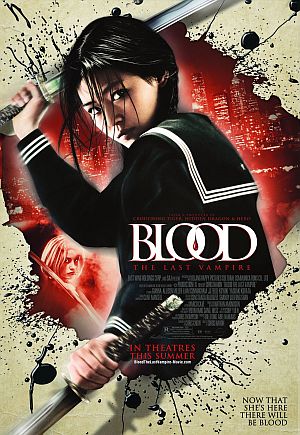 The animated version was one of the first reviews I wrote for the site, and I didn’t like it much – the fifty-minute running time allowed for hardly any development of scenario or characters at all. The feature fares a good bit better in these departments, though suffers from some horrendous editing styles and a couple of monsters which appear to have strayed in from a Playstation game (and I am not talking Playstation 3 here, either). The basic plot is retained. Saya (Gianna) is a half-demon with a grudge, intent on taking out Onigen (Koyuki), the one responsible for the death of her father. Working under the loose guidance of The Council, she is inserted into a school on an American air-force base in 1970 Japan. American girl Alice (Miller) has been added; Saya rescues her, and the two end up on the run, pursued both by Onigen and more regular forces.
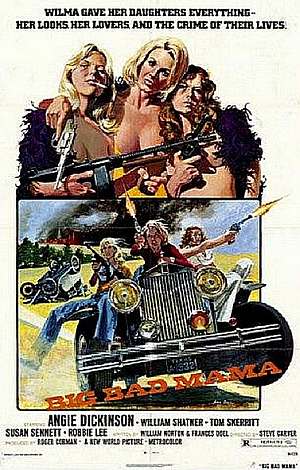 With B-movie entrepreneur Roger Corman getting honoured at the Oscars earlier this month, it seems appropriate to pop on one of his classic productions, starring Dickinson, who was just about to become a star in one of the first shows with a female law-enforcement lead, Police Woman. The truth is, however, that this doesn’t have much more to offer beyond Dickinson: while she holds the film together with her steely resolve, and proves that sexy doesn’t stop at 40, the rest of it offers nothing as substantial. It’s a basic enough plot: she plays Wilma McClatchie, a single mom bringing up her two teenage daughters in Depression-era rural America. They fall into a life of crime, in part because they happen to be trying to cash a fraudulent check in a bank when it gets robbed by Fred Diller (Skerritt). They also team up with gentleman con-artist William Baxter (Shatner), but things go awry when they pull of their last big heist, kidnapping the daughter of a millionaire.

















 Shirow has certainly done his fair share of anime works that are regarded as classics – his best-known creation is probably Appleseed. This is from relatively early in his career; indeed, coming out in 1991 made it one of the first anime to be ‘properly’ distributed in the West [and, by that, I mean subtitled and not cut down for a child audience]. It centers on the titular pair of military androids, who are released after their transport craft goes down in the middle of a forest. The army cordon off the area, which draws the attention of Sybel (Sakakibara), a reporter, unwilling to let anything stand in the way of her story. She witnesses a hellacious fire-fight in which one ‘droid is destroyed, while the other escapes, and discovers the goal for the android is to kill the inventor’s young grand-daughter, Ferris. As the only person who knows the current location of the daughter, it’s up to her to save the child.
 Look, I speak as one of the few people on the planet who found the original Bloodrayne other than unwatchable dreck. So when I say that the sequel is a soporific, poorly-constructed, badly-executed waste of time and effort for all concerned, including the viewer – for God’s sake, listen to me. There is simply no rhyme or reason present here, right from the setting which goes from Middle Ages Europe to the Wild West without any credible explanation. Billy the Kids (Ward) is a vampire, kidnapping the local kids, in some kind of half-baked plot device that makes no sense, involving him waiting for the railroad to reach town, to spread his curse. I guess going to a town that already
  Erica (Foster) has a very comfortable life: nice job as a radio host, imminent marriage to a doctor. This is suddenly destroyed in minutes, when she and her fiance (Andrews) are brutally attacked: he is killed, and she is left a nervous wreck, who sees a threat in every shadow on the city streets. A move to Kansas, while probably better for all concerned, would not be so cinematically or narratively interesting: instead, she buys a black-market gun for protection. A chance encounter on the subway unleashes her inner Bernhard Goetz and before you know it, she’s sweeping the scum off the streets, up to and including the crime lord whom even Detective Mercer (Howard) cannot touch, while simultaneously documenting the city’s reaction to her exploits on the airwaves. This brings her into contact with Mercer, since he is also investigating the vigilante slayings; his suspicions in this area gradually turn towards his new friend.
 If you thought the novel was a quick read, I got through Biohazards during lunch, and that’s only with 30 minutes. Still, being a comic-book, we must cut it some slack, though I can’t say I find action (and there’s a
  Coincidentally, a year after the first collection, I find the time to read volume two; this contains two stories rather than two-and-a-fragment, but weighs in at about forty pages or so longer. Same price though, I am pleased to note… The first, Legion, takes our FBI agent and her semi-vampiric colleagues off to the post-flood city of New Orleans where a demonic force has been unleashed, which is capable of transferring its presence from one body to another. Hmmm…sounds not unlike Fallen, perhaps? That aside, I did enjoy this one thoroughly: the pace is good and, if the eventual destination of the entity is not perhaps a surprise (it’s quite close to the pair, shall we say), it makes for some great set-pieces. The best of these involves a church where the possessed victim is resting up, which results in a hellacious battle that’s genuinely exciting. The story elements are tidied up nicely too, leaving this a self-contained and effective tale.
 Debate raged over this one. Chris reckons lead actress Shimamura was, at some point, a man. I’m not quite so convinced, but the mere thought certainly gave the sex scenes here an added edge of creepiness. Given the lengthy such sequence which occurs about five minutes in, I feared this was going to be no more than an itty-bitty titty-fest. Fortunately, after getting that out of his system, director Ikeda (Evil Dead Trap) settles down and delivers a gritty bit of nastiness, occasionally teetering on the edge of sadistic.