

Crawl

★★★★
“The shark was otherwise engaged, torturing Blake Lively…”
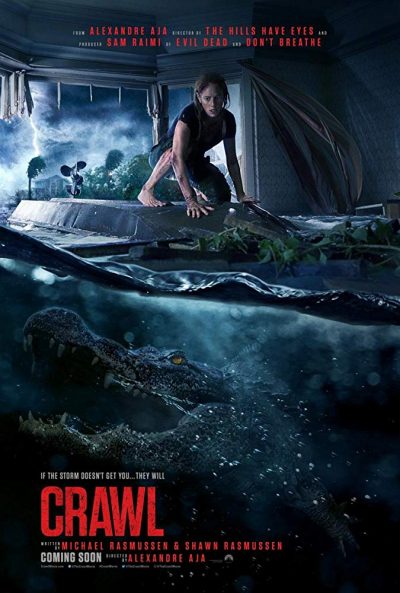
I have to say, I’m neither an expert on that strange sub-genre of “animal horror,” nor am I a particular fan of it. I’m mainly looking for a movie that can give me a suspenseful time in the cinemas. This is becoming more and more difficult. Partly because in by my time of live, I have has seen quite a lot of movies, of all sorts; but also because I feel modern film makers have forgotten how to create real suspense and a feeling of slowly rising and constant terror in movies.

Mostly we are left with nonsensical pictures of man-killing animals that seem to have supernatural abilities. Usually it’s played for laughs because of all the silliness that comes with these kind of movies. That’s a pity. Sure, as a cinema-goer you can’t expect the greatness of classics like Hitchcock’s The Birds (1963) or Spielberg’s Jaws (1975) an ymore. But is it really that difficult? Create a modicum of interest for the main characters; introduce the predator; put the future victims in an isolated spot with the animals; and play with the ambiguity of the question as to whether said territory is safe at the moment – or not! That’s not rocket science, folks!

But for that you have to take the movie and the characters of your story seriously and the timing of every scene is essential: You’ve got to know where you set up your “beats”. How long can you ratchet up suspense before you’ve got to deliver? Where do you put the shocks, without which you can’t do a good horror movie? Do you put in a little bit of humor and to what degree? When is it time to give some relief to the audience, e. g. with character or relationship moments which seem obligatory background for these kind of stories? Whom do you kill? Whom do you have survive? And should you kill off the family dog or not? 😉

Alexandre Aja is a French film-maker who has got to show his talents across very different horror movies. His great High Tension, a psycho-thriller produced by Luc Besson, was followed by a The Hills Have Eyes remake, the good but not great Kiefer Sutherland vehicle Mirrors and later the (consciously) ridiculous Piranha 3-D. After a good start, in recent years it seemed as if he had lost “it” a bit. So, the offer from producer Sam Raimi to film an original story by Michael and Shawn Rasmussen came at the right time.

While the script has a few humorous moments (if you’re looking for them), it plays its story straight and Aja also focuses on creating genuine suspense and danger. Yet he also delivers in the important categories of shock and gore – something not really that evident from the trailers. That makes sense: you won’t show your climaxes in a trailer of an action movie. I’ve to say my expectations were pretty low when going into the movie. As a fan you know the score, so can a film still get you? To my surprise and delight, this was not only able to do that but also surpassed my expectations by far. But let’s start with some background info on what I want in such a movie.

Though you never expect a character study, I’m always happy if the characters get enough backstory or character traits, that they don’t appear as totally bland, two-dimensional audience stand-ins. That’s definitively true for Crawl‘s main actors Kaya Scodelario and Barry Pepper. Neither had that much luck with past roles: Scodelario, I remember from the Maze Runner movies but hardly seemed to register anywhere else much. I think I saw Pepper last with a supporting villain role in the True Grit remake (2010). I also need predators I like and respect. Some animals won’t really work for me, e. g. bears are simply too sympathetic. But for my money reptiles of all sizes always deliver the goods. And I’ve got an enormous respect for crocodiles or alligators.
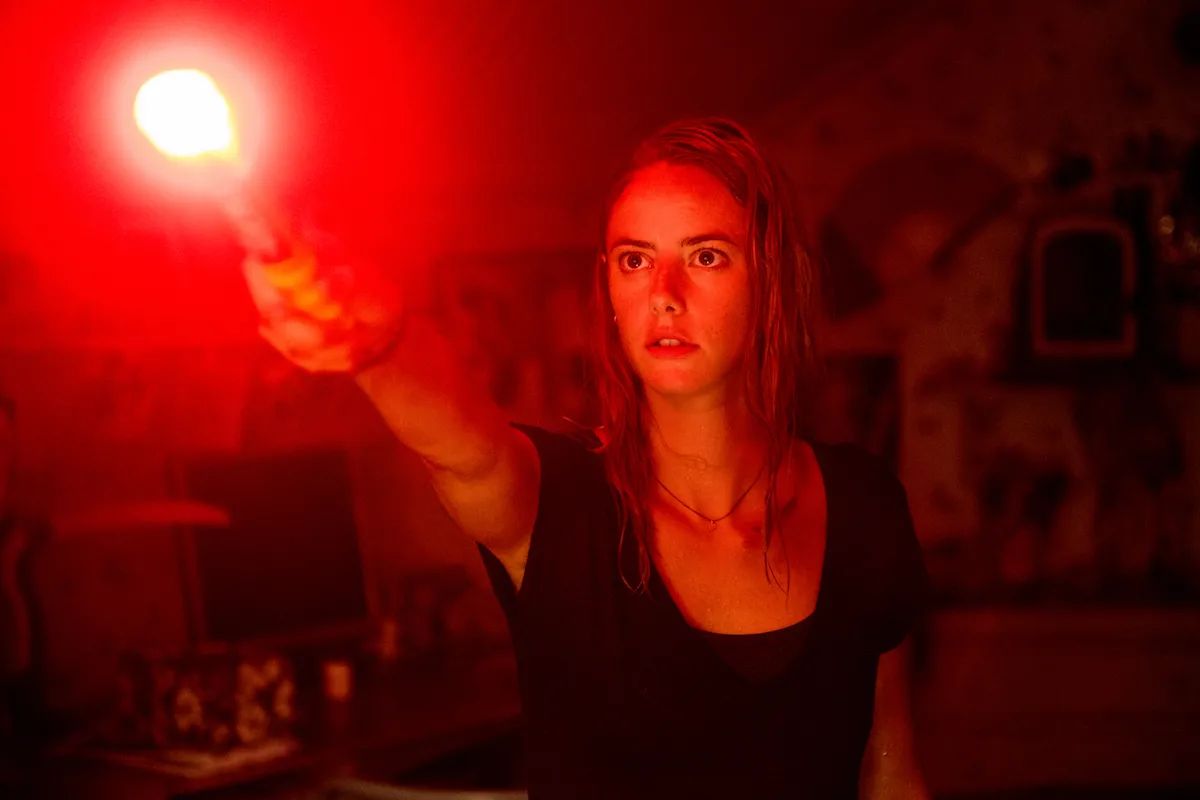
Next, the simple but effective story in a nutshell. Florida, hurricane time. Swimmer Haley Keller (Scodelario), who just failed in a swimming competition, receives a phone call from her sister She’s worried because she couldn’t reach their dad. Neither sister has had much contact with him, since their mother and father divorced; he was Haley’s former trainer, leaving their relationship no on the best of terms. The streets are beiing closed due to the dangers of the approaching hurricane and the rising water levels.

After finding her father’s house abandoned, save for his dog, Haley drives on to their former family house which he was renovating. Following the sound of a radio, she descends into the derelict cellar where she finds Dave, her wounded father (Pepper), who tells her that two alligators have entered the cellar through the drain. While they have some sanctuary in the cellar, they have to make an escape, due to the rising water that is coming up through openings in the cellar floor…

This may sound maybe a bit dry (pun not intended). But, believe me, the screenwriters and Aja have used every trick in the book to push and pull us, the audience, emotionally through our seats, in the same way the alligators push and pull the two likable yet imperfect protagonists through their surroundings. I was very pleasantly surprised about the high level of suspense and tension here. But also how the important ingredients mentioned above were perfectly blended together. The movie really creates suspense and grisly anticipation – yet also doesn’t forget that audiences need moments of relaxation so they can breathe a little, before the next furious attack or moment of extreme danger arrive. It’s a very well-written and executed entertainment, showcasing a kind of story-telling we don’t see much any more.

That said, the movie doesn’t reinvent the wheel. I personally wouldn’t be surprised if the Rasmussens saw two other recent animal horror movies with female leads: Burning Bright (2010) told the story of a young woman, locked together with her autistic brother in a house with a wild tiger by her evil uncle during a hurricane. And, of course The Shallows (2016, is it really already that long ago? It feels as if I saw the film just a couple of weeks ago…), which showed us Blake Lively on a rock in the rising water off an unknown beach while a blood-thirsty shark circles. As a matter of fact, both of these movies would make for a good triple-bill with this. And once Crawl comes out on DVD, it will find its place directly next to them on my shelves!
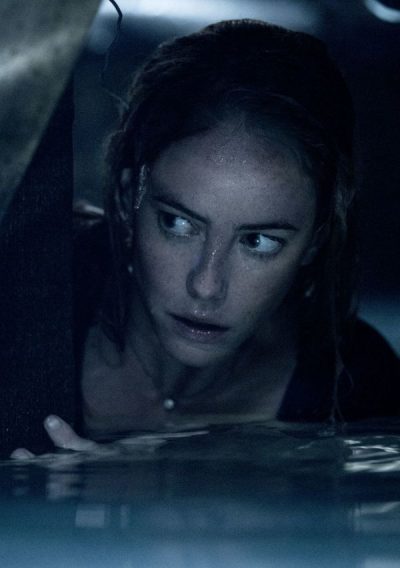
What is it about all those young women fighting predators with large pointy teeth? I’m no psycho-analyst but I guess it has something to do with the re-integration of certain character traits into the female psyche. Whatever these may be. I do remember an early trailer when The Shallows came out that had a voice-over of what sounded like a life coach trainer, encouraging the Blake Lively character. I wonder if the idea of the father who trained his daughter to extraordinary achievements was inspired by that trailer?

Actually, this movie goes a different way from some recent action-heroine movies, that looked to discredit father figures or put them in a negative light. Haley may have felt betrayed by her parents divorce and her father “abandoning” her. Yet during the course of the story, she finds out that her parents were not as happy as she thought and that her dad, who always loved her and believed in her, is just a normal guy. [Though I must credit him for absolutely convincing me how every household needs a utility belt for hand tools!] Having to survive and fight for what is left of her family, with the support of her father makes Haley overcome her own anxieties, through facing more than one deadly situation. Certainly, crawling through the drain by which the reptiles came into the house evokes quite distressing birth trauma… That’s a very positive message. After so many negative portrayals of father figures and “family values”, I found this a highly sympathetic and, for 2019, unusually traditional depiction.

But it only has to work – and it does that very well. We are not immediately tossed into shock-infested seas, there’s a nice build-up, so when the gators appear they evoke the desired audience reaction.Haley and her father have enough back story that you are on their side and want them to survive, while at the same time worrying if they will make it. Despite being just that just 90 minutes, the movie is full of ideas of how the imprisoned father-daughter couple could get help from outside (which leads to an unpleasant looter-reptile encounter) or escape the cellar and the house. It really plays with giving you hope, just to take it away again. One of my favourite moments is when Haley and Dave make it to an escape boat outside, when the levees break and a wave of water throws them back into their house – only one floor higher. Well-timed elements of humor, such as Haley’s reaction when normal house spiders fall on her face, help make for very satisfying entertainment.

A fascinating side-fact is that the movie was shot in Belgrade, Serbia, which doubles for Florida perfectly. And a little “tidbit”: Scodelario’s and Pepper’s family name in the movie is “Keller”. For German cinema-goers that’s extremely funny as “Keller” is the German word for “cellar”. But one last question: will the dog survive? Watch the movie to find out! It gets four well-earned stars from me. Your mileage may vary, but honestly I think it’s on the same level as The Shallows, which also scored highly with me. So, if you enjoyed that, this should be right up your (flooded) street.

Dir: Alexandre Aja
Star:  Kaya Scodelario, Barry Pepper
Kiss Kiss

★★½
“Weaponized strippers. What could go wrong?”

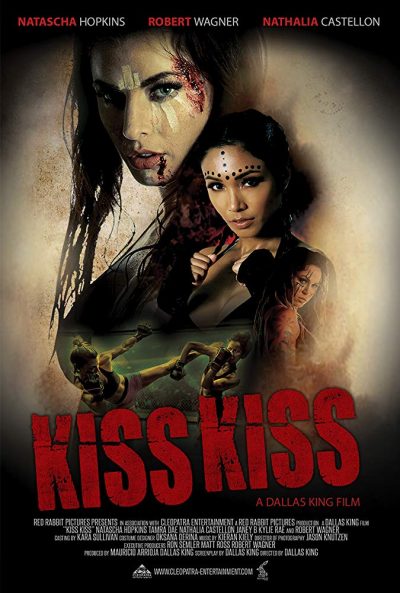
Four exotic dancers go on a trip to vineyard, courtesy of a customer at their club. However, they get more than they bargained for, falling unconscious and waking up to find themselves test subject in a scientific experiment run by Gibson (Wagner – no, not that one). He is attempting to convince the military-industrial complex to invest in his project to create “super soldiers”. To this end, he has a serum which vastly enhances both aggression and compliance, and has invited Senator Graham (Farino) to witness a test, under carefully controlled laboratory conditions. Oh, who am I trying to kid: he actually just shoots up the strippers with the serum and makes them fight to their deaths. In sports bikinis. And face-paint. In subdued yet artistic lighting. Because science! And that’s how government funding works!

It’s every bit as silly as it sounds. Unfortunately, it’s probably not as entertaining. It’s as if the editors of Maxim rented a copy of Raze, and decided to do an unofficial remake for their target demographic. They just forgot to bring along any of the significant players, leading to a result which is more pale imitation than loving homage. Even beyond the color filters, King does shoot proceedings with a good deal of style, and certainly no excess of slow-motion. Though he mixes this up with over-kinetic editing, e.g. showing the same punch landing from multiple different angles in quick succession. This can, however, only go so far in covering up that the fights are no more than average.

It’s never clear quite why the protagonists have to be strippers. Even during the opening scenes, where we see them “at work,” they don’t actually show any significant skin, and it’s weird having them called each other by stage names, like Kiss (Hopkins) and Promise (Castellon). I will admit that I knew some dancers back in my youth, and they never used the fake names outside. It may backfire, in that these pseudonyms repress the feeling these are real people, and I certainly didn’t feel any significant connection to the victims. Instead, it feels for much of the time like you are watching video-game: a well-rendered one, it has to be admitted, though one where the cut scenes go on considerably longer than normal.

To that end, I did quite enjoy Wagner, who chews the scenery to good, “mad scientist” effect. His performance reaches the point that the silly trappings (I mean, do we really need an electric fence around the ring?) begin to make weirdly flamboyant sense. You can even believe his scientific research establishment has a whole team of hair and make-up artists, to ensure the test subjects never have a lock or lick of mascara out of place, despite repeatedly brawling each other in the dirt. But in the end, it’s all just too daft. 35 years ago, it would, however, have made an excellent Duran Duran video.

Dir: Dallas King
Star: Natascha Hopkins, Robert Wagner, Nathalia Castellon, Julia Farino

Manikarnika: The Queen of Jhansi

★★★½
“Show me the Mani”

The movie opens with a particularly elaborate disclaimer, admitting that “certain cinematic liberties have been sought,” and that “this film does not claim historical authenticity.” Probably wise: Indians take their national heroes very seriously; just last year, another historical epic, Padmaavat, sparked months of protests, up to and including buses being set on fire. This seems to have largely (but not entirely) escaped such a fate, and likely deservedly. It certainly does little to disrespect the woman, the myth or the legend of Manikarnik, the woman who would become Queen Lakshmibai, and lead a revolt against the British who occupied India in the mid-19th century.

It definitely does adjust things – most notably skipping over the whole “child marriage” thing, which was a key element of Jhansi Ki Rani and The Tiger and the Flame. In this case, Manikarnika (Ranaut) is already fully-grown when she catches the eye of the king of Jhansi, eventually becoming his queen. Thereafter, it goes through her becoming a widow, eviction by the British, rebellion and eventual death in battle, albeit with only a moderate degree of historical accuracy. For, undeniably, there are a fair number of those “certain cinematic liberties,” especially in terms of events being staged and timed for dramatic impact. I’m willing to cut them some slack, since a lot of the results are highly effective.

Curiously, there’s a lot of style adopted from Wonder Woman here, in particular the use of super slow-mo during the action scenes. But it also carries a significant amount of heart: perhaps due to the lead actress also being the co-director? Ranaut knocks it out of the park in some scenes, such as when she’s facing off against villainous British officer Captain Gordon (Edward Sonnenblick, who played a similar role in Jhansi Ki Rani). There are a lot of lines which could come over as cheesy, such as, “This throne doesn’t make me a Queen. It’s the love and faith of Jhansi’s people which does.” But the lead actress delivers them with such conviction, even this Brit was left wanting to stand up and cheer, as a subsequent forced departure from her palace turns into a torch-lit procession of support.

After her bad-ass credentials are established with her shooting a tiger, the first half doesn’t have much action to its name, though is never dull. And this is more than made up for by a rousing second-half filled with impressive battles, though the overall impact is severely hurt by some really poor CGI, such as cannons which fire with zero recoil, and breezes which affect only our heroine, not the grass in which she is supposedly standing. The lack of supporting characters is notable: her husband Gangadhar (Sengupta) was most notable to our eyes, for the Indo-mullet hairstyle he wore. On the British side, Gordon is replaced half-way through by Sir Hugh Rose, to no particular purpose.

However, this is probably the most beautiful film I’ve seen this year; it looks like a Ridley Scott film, and there’s little higher praise than that in my mind. Between that and Ranaut’s intense performance, there’s enough reason to see this, and overcome any problems.

Dir: Kangana Ranaut and Radha Krishna Jagarlamudi
Star: Kangana Ranaut, Atul Kulkarni, Jisshu Sengupta, Vaibhav Tatwawaadi

Anna

★★★★
“Luc Besson’s Greatest Hits”

Before getting to the film, we probably have to address the elephant in the room: the rape accusations against Luc Besson. Though police investigations have finished, with the allegations unproven, they definitely have damaged Besson’s reputation. While in Europe, the basic rule remains “Innocent until proven guilty”, in Hollywood a mere accusation in a newspaper headline or online can potentially destroy a man’s career these days. And while some people are guilty of the crimes of which they were accused, I personally strongly doubt that the small, overweight, apparently introverted Frenchman is a serial rapist.
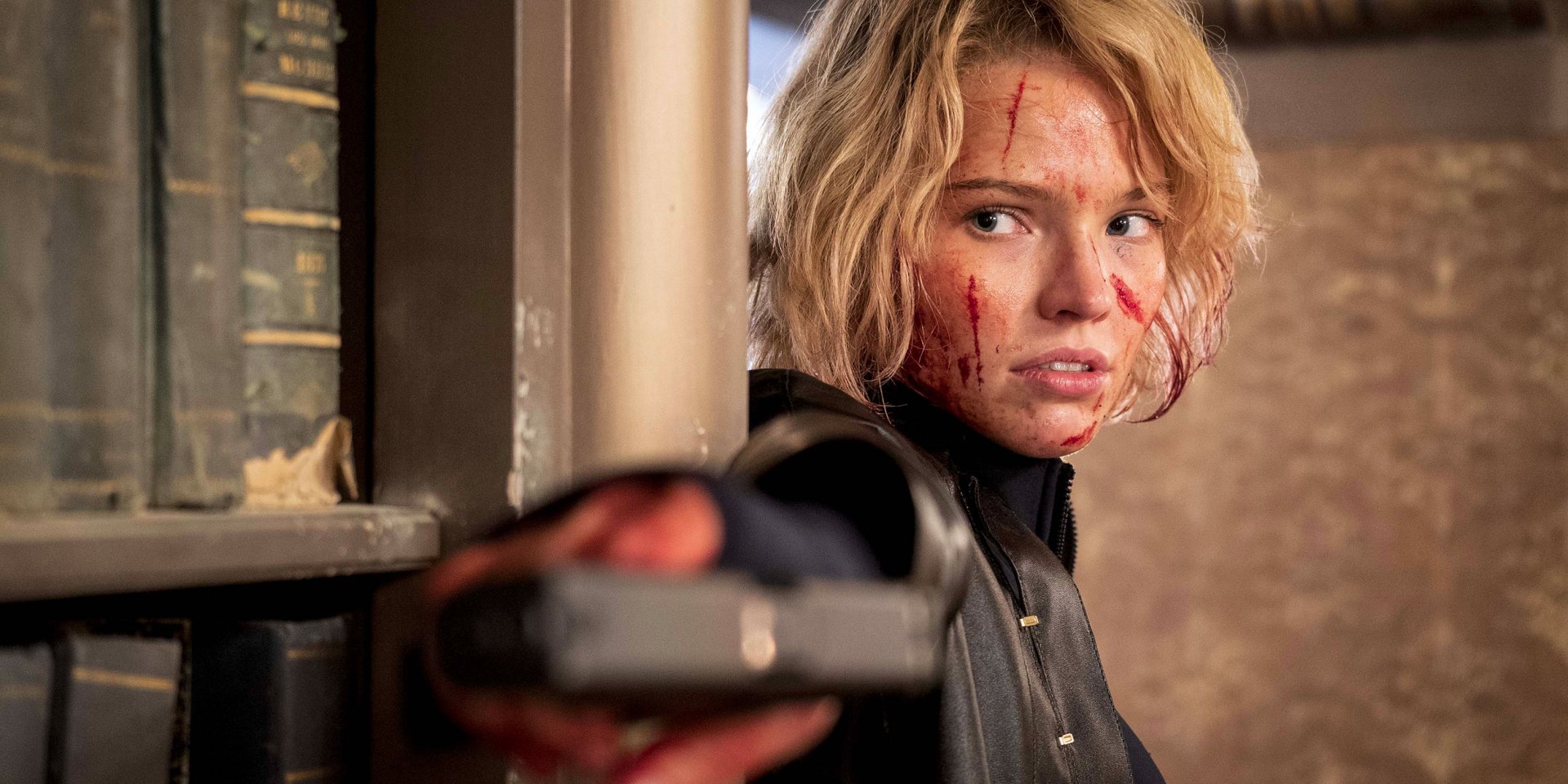
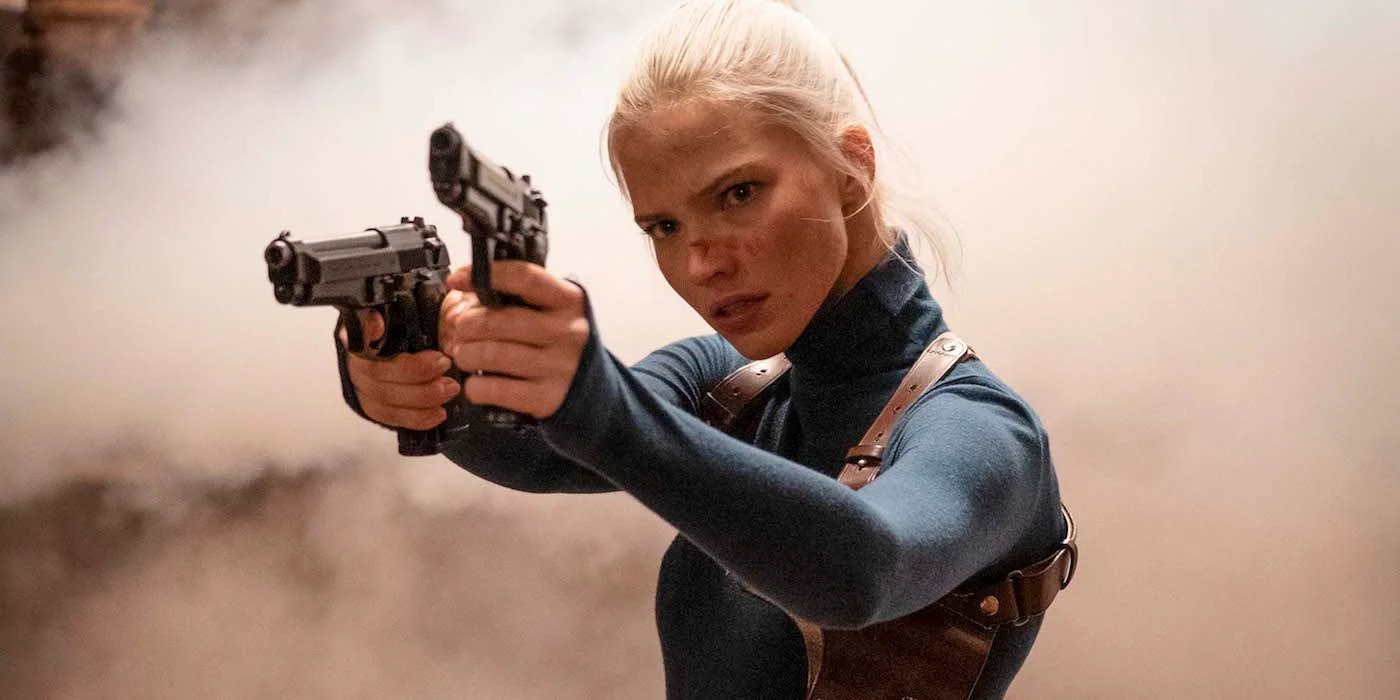
Honestly, if I go by what I heard about countless actors and directors working in Hollywood today, I probably wouldn’t be able to watch any movie. The logical thing for me is to separate a creator and what you know about them (or perhaps, think you know) from their work. Beethoven is said to have been a terrible, unsympathetic misogynist but his music is great. Klaus Kinski was one of the most controversial actors of the 20th century, with a reputation for unpleasantness at best; yet there is no doubt of his acting genius that shines through almost any movie he made in his life.

Right now though, a whiff of suspicion, and you are already dead to Hollywood. Besson might be slightly safer, as he is not part of the business there, and lives in Europe. But I wonder if the allegations may have led to some kind of semi-sabotage by his distributor in the US. For hardly any cinemagoer seemed to have known about his new movie, Anna. Even though I was told the film got some TV spots on cable channels and a trailer in cinemas, it seemed marketing was seriously toned down, and the movie rushed out of cinemas shortly after release.

[Note from Jim. I can confirm this. We were on holiday in Scotland when it came out. By the time we returned to Arizona and got over the jet-lag, it was basically gone. Anna opened in 2,114 screens. Three weeks later, it was on… 92. I still haven’t seen it, which is why I was glad Dieter stepped in with a review]

There seems almost to be some kind of unspoken agreement just to bury this movie quietly. Heck, even here in Germany the film wasn’t advertised apart, from the online trailer. I definitely didn’t see a trailer for it at the cinema, or big posters for it anywhere. If I had not consciously looked out for this movie, due to being a fan of Luc Bessons work over the last 36 years, I probably wouldn’t even have known about it.

But to put things in a more objective perspective: over his entire career Besson has had only two real successes in the US: One was Leon (1994), which made Jean Reno a big star and started the career of Nathalie Portman; the other was Lucy (2014), the break-through film for Scarlett Johannson, now the highest-paid actress in Hollywood. Heck, even now-loved cult movie The Fifth Element (1997) (originally supposed to be a two-parter!) was considered a flop in America at the time of release. What has always been Besson’s bread and butter is the rest of the world. Though in the beginning he had some detractors in his own country for a style which was seen as “Americanized” and “not really French enough”.

Nevertheless, it seems kind of strange when looking at the box-office numbers of Besson’s movies in the last few years. Lucy was an international success, that in the US alone made $126 million, while Anna closed with takings of under $8 million.  It’s easy to create conspiracy theories looking at these numbers. But in between came Valerian and the City of the 1000 Planets (2017). Despite being the most expensive European movie ever, with a budget of about $178 million, took a disappointing $41 million in the US (though made its costs back in the rest of the world). And yes, some of his movies never were commercial successes – regardless of their quality – such as Adele Blanc-Sec (2010), The Lady (2011) or the sequels to his Arthur and the Invisibles animated movie.

Why do I mention all of the above? I guess, because I think that Anna may be a turning point in Besson’s career – perhaps more than you may think. Valerian seemed to have cost his French Eurocorp studio money, despite pre-sales and – according to Besson – only a small financial investment by Eurocorp itself. It seems that about two-thirds of the company are now in the hands of foreign investors, and they don’t want Besson to continue in the chairman’s seat of his own company. With Valerian under-performing, and Anna a theatrical flop despite a modest budget (reportedly around $35 million), we could be looking at the last big movie of Luc Besson.

Sure, he has always shown that he can make effective and very good movies with small budgets such as his debut movie, The Last Battle (1983) or Angel-A (2005). Indeed, maybe the quality of his movies increases, as his budget decreases. But the big question is if the 60-year old director really wants to start again from the ground up, especially given his age. He’s not the youthful punk he started as. In Europe (or at least France) he is what Spielberg might have been in mid-90s Hollywood. But then Spielberg grew up and matured; can Besson do that? Does he even want to? I also think you can compare him with contemporary James Cameron, a famous director who now mostly has others direct his productions. Certainly, I don’t think Besson has to prove anything to anyone, anymore.

With all that said, how is Anna? Answer: surprisingly good. I went into this movie not expecting much at all (going from the quasi non-existent marketing). Yes, it’s true, it’s not one of the “greats” of Besson, and he also doesn’t re-invent the genre wheel with this. If you have seen his classic Nikita (1990) which has been exploited by Hollywood ad infinitum, and her spiritual successors Atomic Blonde (2017) and Red Sparrow (2018), you know the story. And knowing these kind of movies, you’ll be familiar with a story arc, you can figure out from the very beginning.

But then, I don’t hear anyone complaining about the 1000th Marvel movie following the same paths of its superhero predecessors. In the end, the question is how the cook combines the ingredients to bake his cake. And this cake tastes good – but definitely not great. While the DNA of Nikita is everywhere, it never reaches the fine and poetic quality of that movie. It feels like a modernized remake, with Besson obviously having seen Sparrow and Blonde too, and saying to himself: “I can do better!”

And I think, subjectively, he mainly succeeds. Red Sparrow was a very heavy, slow-burning spy movie without what I would really call action scenes. Atomic Blonde had impressive action choreography, which Besson definitely tried to top here – up to the individual viewer, whether or not he succeeded. But Blonde also had, at least for me, a strange, difficult to figure-out ending, and characters which were all cool, to the point of emotionless. My feeling is that Besson took the best elements of all these movies – the intrigue of Sparrow; the action of Blonde – and combined it with his own style.

What I always notice when watching one of his movies, is that Besson can be an incredibly visual director if he wants. He knows how to do great mise-en-scéne, how to give his movies a lot of kinetic energy. The scenes are not too long, but also not so short you can’t invest yourself into them emotionally. He inserts moments of genuinely funny humor and sometimes almost kitschy emotional scenes, that are a component of his own unique style – and, unfortunately, usually not to be found in American action movies. And when he gets playful, the editing and the music of his “house composer”, Eric Serra (Nikita, Leon, The Fifth Element, and many others), join each other in a perfect marriage that’s just incredible fun to watch.

Do I sound too enthusiastic? I don’t think so. Besson is an excellent director. This doesn’t exclude him from creating flawed movies or average scripts; yet even his failures are – at least for me – still more satisfying and interesting than an average “successful” conveyor-belt Hollywood movie. He is an almost classic storyteller, telling his very own stories, depending on what he focuses his current interest on in the moment. One quality I think I haven’t seen mentioned anywhere, is his ability to lead actors. All of the performances here, including Evans, Murphy and Mirren are very good. But the one that really impressed me is supermodel-turned-actress Sasha Luss, who previously played a smaller role as an alien in Valerian.
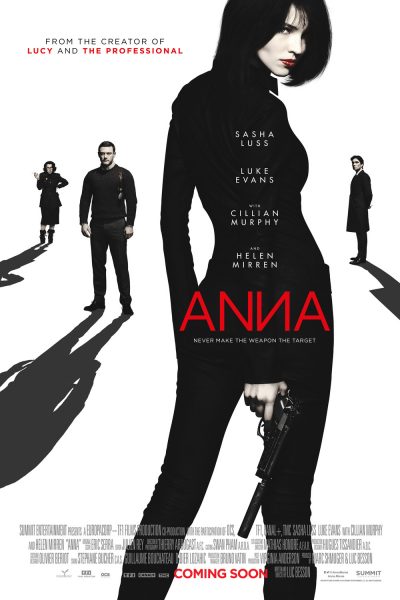
She’s not perfect: Luss playing a poor Moscow-wife selling “matroshkas” on the market, can’t disguise what a beauty she is. Compare that to Anne Parillaud’s ugly punk-girl-duckling in Nikita who only turns into a beautiful swan later in the movie. Still, Luss comes across as very charismatic, believable as a model (not a stretch!) and seductress, as well as a murderous killer for the KGB. Honestly, I was really impressed: for me, she gives a better performance than the enigmatic but also somewhat bland Jennifer Lawrence in Red Sparrow.

But then a talent of Besson is being able to insert some “emotionality” into his characters. This adds just enough to make them appear more believable than many similar characters in Hollywood movies. Here, he even manages to make Helen Mirren’s role, playing a cold-hearted merciless KGB trainer and mentor of Anna, comparable to Lotte Lenya in From Russia with Love and Charlotte Rampling in Red Sparrow, into an oddly likable character.

What seemed a problem for some cinema-goers was the non-linear storytelling of the movie. The film jumps a couple of years ahead, a few months back, another year forward and so on, allowing it to surprise the audience with some unexpected revelations. I personally had no problems with that – but some people don’t like to use their brains at all when watching a movie. Their loss. :) Where I’d say Besson fails is in what I call the “model photo shooting scenes”. Here, he overdoes it so much, to the point you wonder if he intended to make a satire about haute couture. These scenes come across as exaggerated and almost cringe-worthy. Fortunately, they don’t occupy too much of the film’s running-time.

The basic story is of a trained secret agent who works for one side, becomes a double agent, then is essentially only working to get back their personal liberty, and isn’t a new one. This plot goes back at least as far as Triple Cross (1966), a WWII-spy movie from Bond director Terence Young, with Christopher Plummer, Romy Schneider, Gert Fröbe and many others. The comparisons to Nikita really write themselves. There are many similarities to the movie that, 29 years ago, more or less signified Besson’s breakthrough out of arthouse cineaste circles. Despite this, they are different, probably due to a different contemporary zeitgeist, which made the movie an interesting viewing experience for me.

Gone is the girl who never had a choice, as Anna originally applied to work for the KGB by herself – though ends in a situation where she can’t quit. This makes for a different dynamic to Parillaud in Nikita, although I also don’t really buy the emotional and psychological interest in being a killer for the state here. Nikita was a desperate girl, slowly breaking apart through having to follow the orders of her handler while wanting a normal life with her boyfriend. Anna comes across as a hard professional: she is not just Nikita but also “Victor, nettoyeur” in one person, andcomes off as remarkably cold-blooded.

In one scene, a not unsympathetic, shy Russian who is an illegal arms trader confesses his love for her; she kills him in the moment she has the relevant information. Then there is that scene in a restaurant, which makes the similar scene in Nikita look like a Disney movie in comparison. Anna leaves a room full of bloody corpses behind her; the word “overkill” sprang immediately into my mind! A normal “relationship” with her girlfriend seems possible; but Anna hardly seems to care for her, since said friend is mainly a cover. At the same time she has passionate sex with Evans and Murphy, and calls them her family. But is this just another deception? You never know if she cares for anyone at all, or if she is just manipulating everyone around her emotionally and sexually, for use later in her intricate plan.
That may be the weakest point in Anna’s character. She is just bigger than life, out-fighting, out-manipulating, out-smarting and out-sexing anyone. Somehow, Nikita seemed much more grounded in reality, and more believable because of that human character. Anna is purely professional, always ahead of the game, even when you think: “Well, now she is done!” You wonder why she needs all these complicated components of her plan, when she seems quite capable off killing off half an army of KGB-employees [And you definitely don’t want to play chess with her!]

Other aspects: It’s nice to have actual Russians speaking real Russian in a movie. I had a hard time when watching Red Sparrow with all these Hollywood actors speaking English with Russian accents. It just sounded fake. The solution here is much better: You have Russian actors speaking Russian, maybe the main actors say a thing or two in Russian, then you change to the “normal” language. I didn’t feel that it broke the illusion, since it was well enough established that the characters were Russian. Kudos also to Alexander Petrov, who plays Anna’s original Russian criminal “boy-friend”, Piotr, an especially unsympathetic human being. It’s an important and effective role, letting the film establish a feeling of reality before it shifts into the more fantastic spy genre we know and love. John le Carré it ain’t!

Some production credits stood out for me. Shanna Besson, one of Luc’s daughters did the stills photography for the movie, and his wife Virginie Besson-Silla seems to have been involved in some capacity. Responsible for the car stunts is David Julienne, who has worked for some Besson productions already in the past. I suspect he is related to Remy Julienne, the famous driver responsible for all the great car chases in the Bond movies of the 80s and also some Jean-Paul Belmondo films. [There was a major issue between Remy and Europacorp, after a stunt went wrong during the filming of Taxi 2]  As mentioned, the music of Eric Serra, is as remarkable as ever, and I had a big smile on my face when in one specific scene he directly referenced a melody from his own Nikita soundtrack. I notice and appreciate little things like that.

Visually the film is – as can be expected from a Besson movie – stunning and top-notch. There are some beautiful shots of cities and once again Besson reminds us why people love Paris so much. Unlike so many modern secret agent and action movies, Anna leaves you with a real sense Besson and crew jetted around half the world to capture as many beautiful images as possible for this movie. The end titles included thank-yous to the cities of Moscow, Belgrade, Guadalupe, Milan and – of course – the studios of Paris. 

Unfortunately, Anna is a commercial flop right now. Sure, the film is less than subtle, and Nikita stays unchallenged as a genre icon. We might have seen this kind of story a bit too often recently – and probably will again next year when Marvel’s Black Widow comes out. But among the modern entries in the genre, it is easily one of the best. Besson doesn’t quite reach the quality of his formative years as a director, and I doubt he ever will. But as typical genre fare, even if exaggerated in the depiction of its female main character, this is solid entertainment, and should be enjoyed as such.

I just hope this isn’t Besson’s last movie, since he is still better than most of those trying to walk in his footsteps. We’ll see!

Dir: Luc Besson
Star: Sasha Luss, Luke Evans, Cillian Murphy, Helen Mirren

Furie

★★★
“Hell hath no furie…”

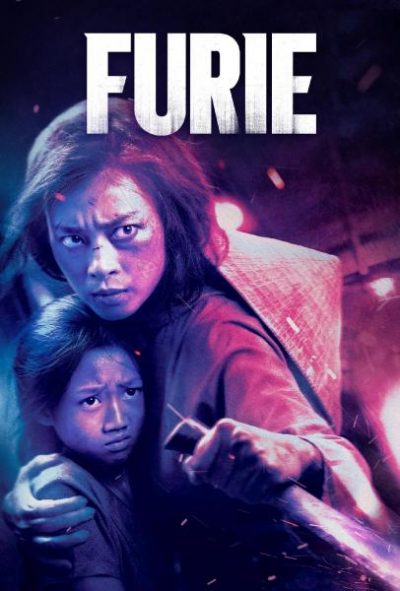
We’ve seen Ngo, the star here, previously on this site in Clash and The Rebel, though in both of those, she was the film’s co-star, along with Johnny Nguyen. [What I hadn’t realised, is she was also in The Last Jedi, albeit briefly, playing the sister of Rose Tico, as well as Netflix movie Bright] Here, she’s the focus of the film, which makes for an improvement from the action-heroine point of view, even if the story is rather generic.
She plays Hai Phuong, a former gangster, who had to leave Saigon after an unfortunate arson incident, and is now working as a debt-collector for a rural loan-shark. Her little daughter, Mai (Vy), dreams of them going legit, running a fish-farm, and Hai is about to pawn her precious ear-rings to realize this ambition, when Mai is snatched from a local market and taken back to Saigon. Hai naturally follows, and discovers her daughter was taken by an organ-trafficking ring. The cops have been investigating, but lead officer Luong (Nhien) hasn’t been able to get enough evidence to act against them. He’s more than happy to let Hai bust the gang wide open, along with its brutal female leader, Thanh Soi (Hoa).

It’s probably a little slicker than her previous Vietnamese vehicles, and I’m not sure that’s necessarily a good thing. The fight choreography, cinematography and editing teeter dangerously near to the Hollywood style, rather than the more “old-school” approach taken before. I prefer the latter, being more amazed by physical talent, than cinematic sleight of hand. Not that Ngo is entirely deficient in skills, it’s just a lot harder to be sure here. To be honest, Hoa probably comes over as more impressive in that area, though we don’t really see enough in terms of performance to be able to assess her skills in the acting department. But it’s interesting to see a martial arts film where the both the protagonist and lead antagonist are both women: you don’t see that often.

Despite the familiarity of the plot – virtually every review compares it to Taken, except with a mother instead of a father – the movie keeps things moving at a brisk pace, although the cop character is almost entirely superfluous, at least until the end. That’s an aspect which I felt could have been handled better, with the heroine suddenly getting a bit white-knighted, after surviving through everything to that point on her own abilities. However, it’s overall a good character arc, with Hai simply trying to do the best for her daughter, only to find that life is reluctant to allow that, and keeps putting obstacles in her way. A solid and effective enough slice of action, I just wish it had possessed more local flavour; if there was ever a case where a film can perhaps be said to be too polished, this might be it.

Dir: Lê Văn Kiệt
Star: Veronica Ngo, Cát Vy, Phan Thanh Nhiên, Trần Thanh Hoa

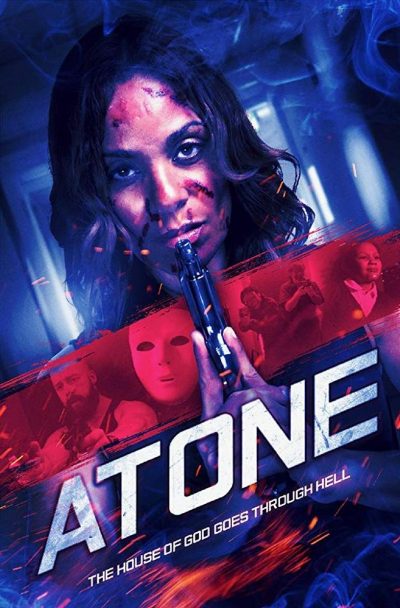
Atone

★★
“atone: make amends or reparation.”

I mention the above for two reasons. Firstly, because Chris wondered why the film was called “At One”. Secondly, because when it finished, I turned to her and said those four little words which mean so much: “I can only apologize…” Yes, to use it in a sentence, I’ll be atoning for picking to watch this low-rent “Die Hard in a church” offering, for some time to come. [Though the following night, I had to sit through her choice of Justice League: paid back in full, I’d say…] There were a couple of aspects here that weren’t terrible; unfortunately, the overall execution was painfully close to… well, god awful seems the appropriate term here.

Laura Bishop (Fleming) is a former soldier, struggling to adapt back to civilian life. Through her father, she gets a job as a security guard in a local megachurch which is about to open. And what are the odds, she hasn’t even been able to complete new employee orientation before a group of terrorists, led by White (Short) storm into the building and take the employees, in particular Reverend Mark Shaw (Rusler), hostage. Worse still, Laura’s little daughter is also in the building, so she has to find and take care of the moppet, as well as fending off the terrorists.

This seems to be teetering on the edge of being a faith-based action-heroine pic, which is a rate, although not quite unique entity – The Trail comes to mind. These aspects are not too badly-handled: despite the setting, they’re mostly played fairly light, and I actually found the motivation of the chief villain quite refreshing. I say this to make it clear that I’m not slagging this off for its beliefs. Especially not when there are plenty of other, perfectly credible reasons to slag it off. The entire subplot involving her daughter, for example, makes no sense, and she just kinda wanders out of an emergency exit, largely forgotten thereafter. There’s also the bizarre “street fight club” of which Laura is a member, which forms the opening scene, and is never mentioned again.

It feels as if, for every step forward this takes, there are two back. Farrelly, better known as WWE’s Sheamus, shows up as one of the bad guys, and crosses himself every time he kills someone, which is the kind of endearing quirk that works. He and the heroine have a decent bathroom brawl. But then there are amateur digital effects, poor continuity and no sense at all of escalation, as well as villains who fall astonishingly short of even basic competence. The explanation about why Lauren has her PTSD, is held back until the very end, far too late for the viewer to care one whit. It’s all a jumbled, and worse, largely boring mess. They say the devil has all the best tunes. On the basis of this, he can likely also lay claim to the best girls-with-guns films as well.

Dir: Wes Miller
Star: Jaqueline Fleming, Robert Rusler, Columbus Short, Stephen Farrelly

Maria

★★★½
“Jean Wick.”

Proof that a lack of originality is not necessarily a bar to being an entertaining movie, this pulls together elements from all over the place, but probably most notably, The Long Kiss Goodnight and John Wick. You have the “former assassin now leading an idyllic family life, until her past catches up with her” of the former. And the “Oh, they’re surely not going to kill tha… Hoo-boy. The hero/ine is going to be VERY angry with them” of the latter, among other elements.
In this case, we have Maria (Reyes), formerly Black Rose assassin Lily, who is now married with a young daughter, until a chance encounter with ex-colleage Kaleb (Padilla). He is still highly miffed at her betrayal, and sets his minions on her – and, worse still, her family. Maria takes the fight to Kaleb with the assistance of her mentor, Greg (Lazaro, probably the best performance in the film); he helped her escape by faking her death, yet still has ties to her old employers. Meanwhile, the chaos resulting from their actions do not impress Kaleb’s boss, Ricardo de la Vega (Webb, looking like the Filipino version of Alan Ford, Bricktop in Snatch), who turns to Kaleb’s brother, the even more vicious – and, worse, considerably more competent – Victor.

Like John Wick, the generally straightforward nature of this works in its favour. There’s not much standing between Maria and kicking ass, with frequent bursts of solid action. Sonny Sison also choreographed the other recent Filipino action heroine film on Netflix, BuyBust, and it has a similarly gritty feel. The hotel run by Greg also is more than a little reminiscent of a similar establishment for assassins from John Wick 2. Though there’s an odd bit where Kaleb’s right-hand woman goes there, looking for Maria, beats up a few people and… just leaves? We’ll let them off with a warning, since they do later have a rather nice brawl, wearing high-heels, in a night-club bathroom.

Reyes is an actress who learned fighting, rather than the other way round. Yet, she looks the part, and Lopez throws in some stylistic flourishes, such as shooting from overhead, which keep things interesting. Overall, this teeters on the edge of achieving our seal of approval, but a couple of things leave it fractionally short. The first is the unconscionable failure of Kaleb, Victor or Ricardo de La Vega at any point to say, “How do you solve a problem like Maria?” I mean, the line positively writes itself. The other issue is an ending, which is way too open, pointing directly towards Maria 2 in a way I haven’t seen since the end of Kill Bill: Volume One. And that was, of course, originally intended as a single entity. There is a slight degree of closure, yet is largely unsatisfying: more like finishing a level of a game than defeating the final boss. If there ends up never being a sequel, I’m going to be annoyed…

Dir: Pedring Lopez
Star: Cristine Reyes, Ivan Padilla, Freddie Webb, Ronnie Lazaro

Killing Eve: Season Two

★★★
“Sophomore slump.”

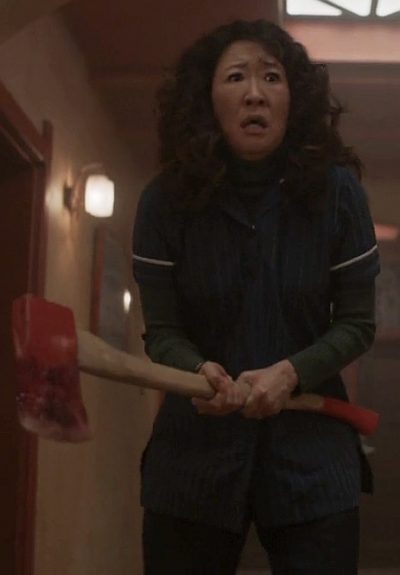
[Warning: this piece will contain significant spoilers for the show. READ ON AT YOUR OWN RISK!] It was always going to be difficult, if not impossible, for the second series of Killing Eve to match the brilliance of the first. That had ended with mousy MI-5 desk jockey Eve (Oh) stabbing ruthless assassin Villanelle (Connor), as they lay on a bed – platonically, but you could cut the sexual tension with a knife. Where would things go from there? The answer, unfortunately, is nowhere particularly much, except for some thoroughly unconvincing plot twists, such as Villanelle going to work for MI-5. Hello? Did everyone forget her cold-blooded murders of agents Bill Pargrave and Frank Haleton in season one? Let’s just pretend she’s one of us, and send her off on a mission without so much as a background check, m’kay?
This is, of course, an attempt to keep the relationship Eve and Villanelle going, bringing them into a close proximity to each other, where that sexual tension can continue to boil, albeit at the cost of plausibility, Not that it was ever the show’s strong suit to begin with. This is significantly less interesting than the cat-and-mouse game between the two of the first series, and frankly, too often borders on poorly-written fan fiction. A main thread seems to be how Eve is slowly becoming more like Villanelle, drifting from thoughts of murder into an actual killing – “With an axe!”, the hitwoman gleefully recounts. [Adding a second meaning to the show’s title, moving her from object to subject. Or is it the other way round? Whatever…] But we also seem to see Villanelle becoming more human. For someone who isn’t supposed to be able to experience human feelings, she certainly appears a pretty damn emotional psychopath.

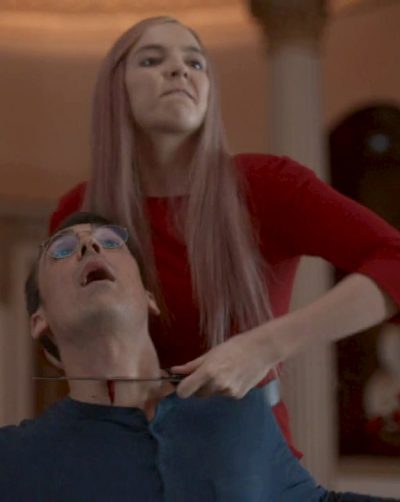
You can all but ignore the silly plots, such as a convoluted effort to bring down a high-tech entrepreneur selling an uber-Google to the highest bidder, who – wouldn’t you know it? – turns out to be a serial killer himself. Or the marital relationship of Eve and husband Niko: now that both sides have been unfaithful, it should have been buried. Or the brief introduction of another, equally talented female assassin, which is disposed of so quickly, it’s possible I may have made up the entire thing. What keeps the show going, and allows this to remain surprisingly watchable given the weak writing, are the extraordinary performances of the two leads. A contrast in acting styles, between Comer’s flamboyance and Oh’s internal anguish, it proves that both can be equally effective. And there are sequences which still work brilliantly, such as Villanelle’s dalliance with private wet work, stringing up and butchering an unfaithful husband in a window in Amsterdam’s red-light district, like some kind of twisted performance art.

After becoming an under-the-radar hit the first time, the second set of episodes seems to have left a lot of people unsatisfied, for a variety of reason. And the ratings reflect this. Having managed the almost unprecedented feat of increasing almost every week the first time round, this season saw fewer viewers for every part after the debut, than the equivalent in series one. Maybe renewing it the day after that opening episode was a mistake? The final scene of this series ends in a mirror image of its predecessor, Villanelle shooting Eve in a fit of pique after she responds to Villanelle’s declaration of love with “You don’t know what that is,” and walks away. Of course, the renewal and critical acclaim basically make it certain Eve isn’t dead. So it’s less a case of “What will happen?”, than “What cheat will the writers use to get out of the corner into which they’ve painted themselves?” I’m going with a bullet-proof vest.
It’s a shame, since the second volume in the novels went in a very different direction, put the pieces together in far superior fashion and reached the end with a genuine cliff-hanger. Hopefully the third season separates its two leads and gets back to what the show did well, letting each performance shine on its own terms, rather than trying to force oil and water together, to the benefit only of fan ‘shippers. In the penultimate scene of the last episode, Eve  and Villanelle are stumbling through a maze of underground passages below Rome, trying to find their way out of the darkness. Unfortunately, that turned out to an entirely appropriate metaphor for the problems of the second season as a whole.

Showrunner: Emerald Fennell
Star: Sandra Oh, Jodie Comer, Fiona Shaw, Henry Lloyd-Hughes

Fighting With My Family

★★★½
“The fall gal.”

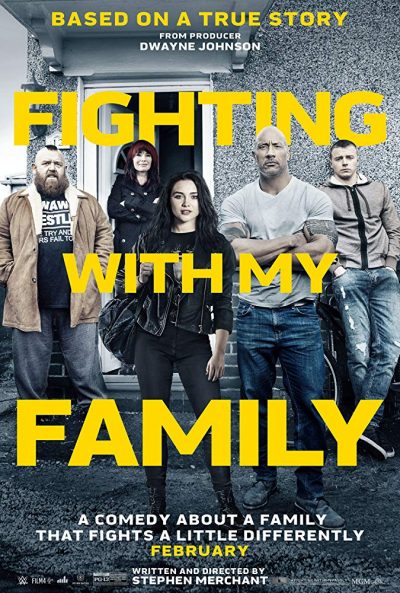
This biopic of WWE Women’s Champion Paige, a.k.a. Saraya Knight from the English seaside town of Norwich, gets a lot of things right about professional wrestling. In particular, it strikes a good balance between the various aspects – positive and negative – of the sports entertainment business. Over the past twenty years, Chris and I have been intermittently involved with the independent end of the wrestling scene, like Knight and her family, and this captures the low-rent showbiz aspects beautifully. Yet it doesn’t shortchange the seductive – almost addictive – appeal of performance for a responsive crowd, or the potential escape from a drab life it offers someone like Saraya/Paige.
This was inspired by a documentary of the same name, which covered everything up to her successful tryout with WWE, but not much thereafter. To be honest, that’s probably the most entertaining section, being a thoroughly amusing series of escapades, populated by quirky and amusing characters, inhabiting the low-rent world at the bottom of the wrestling pyramid. Not the least of these are her parents, plaved by Frost and, surprisingly, Lena Headey. It’s… strange seeing Cersei Lannister putting people into a headlock. [Fun fact: I saw Saraya’s Mum wrestle at the Fairfield Halls in Croydon, back in the late nineties – even if they mis-spelled her name on the flyer!]

Once she goes over to the United States, it becomes a rather more predictable “fish out of water” story, with the dark, somewhat sullen Paige a radical departure from the other wannabe Divas, who all align more with the three T’s required by WWE at the time: teeth, tan and tits. The highlight in this phase is Vaughn’s performance as acerbic (and fictional) coach Hutch Morgan, who pulls no punches in his quest to winnow out the chaff for the benefit of his employer. For Paige, that transition is about becoming comfortable in her own skin, and repairing the relationship with her brother (Lowden), who also wanted – arguably, even more than Saraya – to reach the WWE, but was not offered a spot. To no-one’s surprise (even if you don’t know the story, this sticks to the well-worn path of the underdog sports film), she does so, and the film ends as she makes her debut, the night after Wrestlemania in New Orleans.

In terms of happy endings, that’s probably for the best. For injury forced Paige’s eventual retirement in April 2018, at the age of just 25, after barely two years of active competition and four in total. Not mentioned by the film, it’s a salutary reminder: a pro wrestler’s career is hard, and can be short. This is certainly a story which has been dramatized for cinematic purposes, probably inevitably. Yet the basic thread is intact – and, more importantly, the spirit of the people who inspired it is honoured. Having it directed by Merchant, previously best known as Ricky Gervais’s sidekick, proves a masterstroke. In his able hands, and helped by a winning performance from Pugh, the hackneyed material proves more than tolerable.

Dir: Stephen Merchant
Star: Florence Pugh, Jack Lowden, Vince Vaughn, Nick Frost

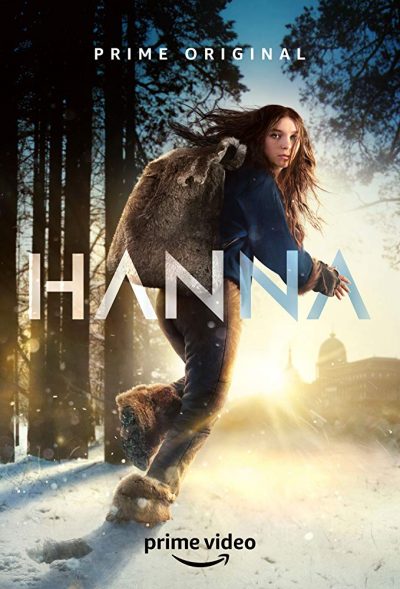
Hanna (TV series)

★★½
“More is less.”

I was quite surprised to hear about Amazon taking up Joe Wright’s 2011 movie of the same name, and turning it into a TV series. There didn’t seem to be an enormous amount of point: the film was perfectly self-contained as it was, and didn’t appear to need expansion. Having now watched the eight 50-minute episodes from the first season… I’m still not sure of the point.

The first three are more or less a stretched-out version of the original movie, beginning with Hanna (Creed-Miles) and her adoptive father Erik Heller (Kinnaman) living completely off the grid in the middle of a European forest. They are re-located by the CIA black operation which had attempted to turn Hanna into a super-soldier, under the control of Marissa Wiegler (Enos – amusing to see her and Kinnaman on opposite sides, since they were partners on the American remake of The Killing), and from which Erick had freed her. Hanna is kidnapped, and taken to a secure facility, though escapes and has to make her way across Europe, solo, in order to be re-united with her father.

So far, so adequate, though the knock-off Chemical Brothers electro-noodly score served mostly to remind me of how good the original was, and we could certainly have used more of Hanna in action. It’s in the middle section that this completely loses its way. If you’ve seen the film, you’ll know on her trans-continental journey, the heroine is befriended by a British family and their daughter, Sophie (Barretto). Here after they part ways, Hanna takes a detour to Britain, hangs out with Sophie, and spends the middle episodes being a teenager, with all the annoying brattiness that entails. Was there anyone who wanted to see this? Certainly not me, and this very nearly went into the “Did not finish” pile as a result, because it’s extremely annoying.

The series does somewhat redeem itself over the final couple of episodes. We discover that the project from which Hanna was spawned, is still operating – and this comes as much of a shock to Marissa as anyone. Hanna and Erik head towards the complex which houses it, with the aim of liberating all the other proto-Hannas, pursued both by Wiegler and the combined forces of the military-industrial complex. However, not everyone necessarily wants to be rescued… The series ends on an open note, and Amazon recently announced there will be a second season. To be honest, you couls get caught up by skipping the first six episodes entirely, and just watching the movie, then parts 7-8.

The series does fill in much more of Hanna’s back-story, in particular how she became part of the project, and I also did like the way Wiegler’s position shifts over the course of the show. It will be interesting to see where she goes in the next season, since her position is now little less precarious than Hanna’s [and as we see at one point, Marissa has some skills of her own!]. On that basis, I’m not prepared to write this off yet, since it will now have to find fresh earth to till. Hopefully Farr does a better job there with original ideas, than of transforming his own work for the small screen.

Creator: David Farr
Star: Esme Creed-Miles, Joel Kinnaman, Mireille Enos, Rhianne Barreto