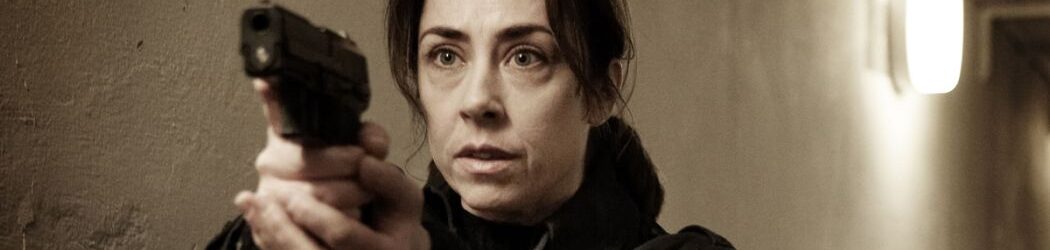

Blood Soaked

★★
“Zombie Women of the S.S.”
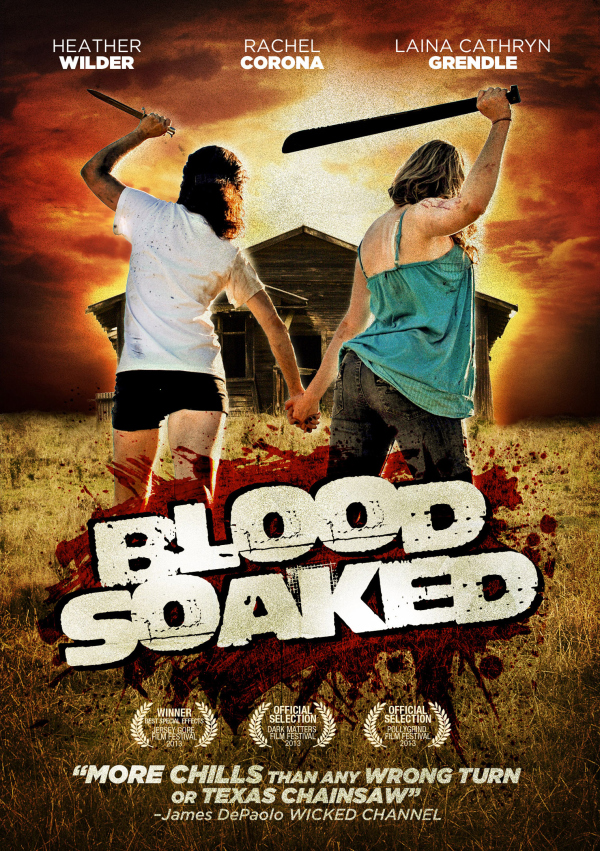
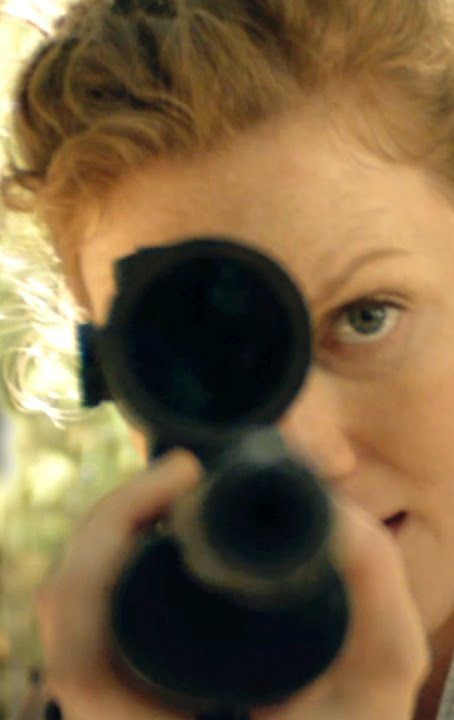
bloodsoakedIt’s nice to see a horror movie which has women on both sides: not just the “final girl” trope, but as the entirely deranged pair of antagonists. This is equality at work, folks! In this case, the villains are sisters Sadie (Grendle) and Katie (Derryberry), who were apparently left orphaned by the unexpected death of their father who was… Well, if I’d to guess, I’d say he was trying to continue the work of Nazi scientists, with the aim of creating an army of undead slaves through the use of a resurrection serum, who can then be used to bring about the Fourth Reich. I’m kinda assuming this, from the use of copious public-domain Nazi footage during the opening credits, and the swastikas hanging around their desert bunker. Meanwhile, peppy student Piper (Wilder) is starting at college, and before long is exploring her sexuality with fellow student, Ashley (Corona). The pair head out into the desert, but a roadside encounter with our psycho sisters kicks off the horror part of proceedings, with Piper in particular being stalked, captured and dragged into the Naziettes lair where even worse things await.

There are two main problems here: one stylistic, and the other an issue of pacing. The former is the decision to switch into high-contrast black and white, when it first becomes clear to Piper, the trouble she’s in. While it certainly adds impact to the that moment, the film-makers apparently forgot to flip the switch back on their camcorder, and any impact is lost. You give your film a title like Blood Soaked, and we expect to see… well, blood. Here, however, it might as well be chocolate sauce, as used by Alfred Hitchcock in Psycho. That’s when you can see it at all, as the high-contrast mentioned tends to wash everything into the two ends of the spectrum: all or nothing.

Equally problematic, is the film taking too long to get to a point where it is even attempting to justify the title. It barely runs an hour between opening and the end credits rolling, which should be an incentive to get cracking and have things moving on at a fast pace. We do not need to see Piper showing up to college with her mom. We do not need to see Piper and Ashley meeting and building their relationship. We do not care. I’d have been a lot more interested to see what Sadie and Katie were up to over the decade after their father died, though quite how such a pair of certifiable loony tunes were able, not just to survive but flourish, escapes me. In the end, it commits the single, unforgivable sin of both original grindhouse cinema and modern films which attempt to reproduce its philosophy: it’s mostly dull. By the time the mayhem eventually showed, I was already trying to figure out if I could do household chores, while leaving this on in the background. Never a good sign…

Dir: Peter Grendle
Star: Heather Wilder, Rachel Corona, Hayley Derryberry, Laina Grendle
Free Fall

★½
“It’s like Die Hard! Except, in a skyscraper!” Wait, what?

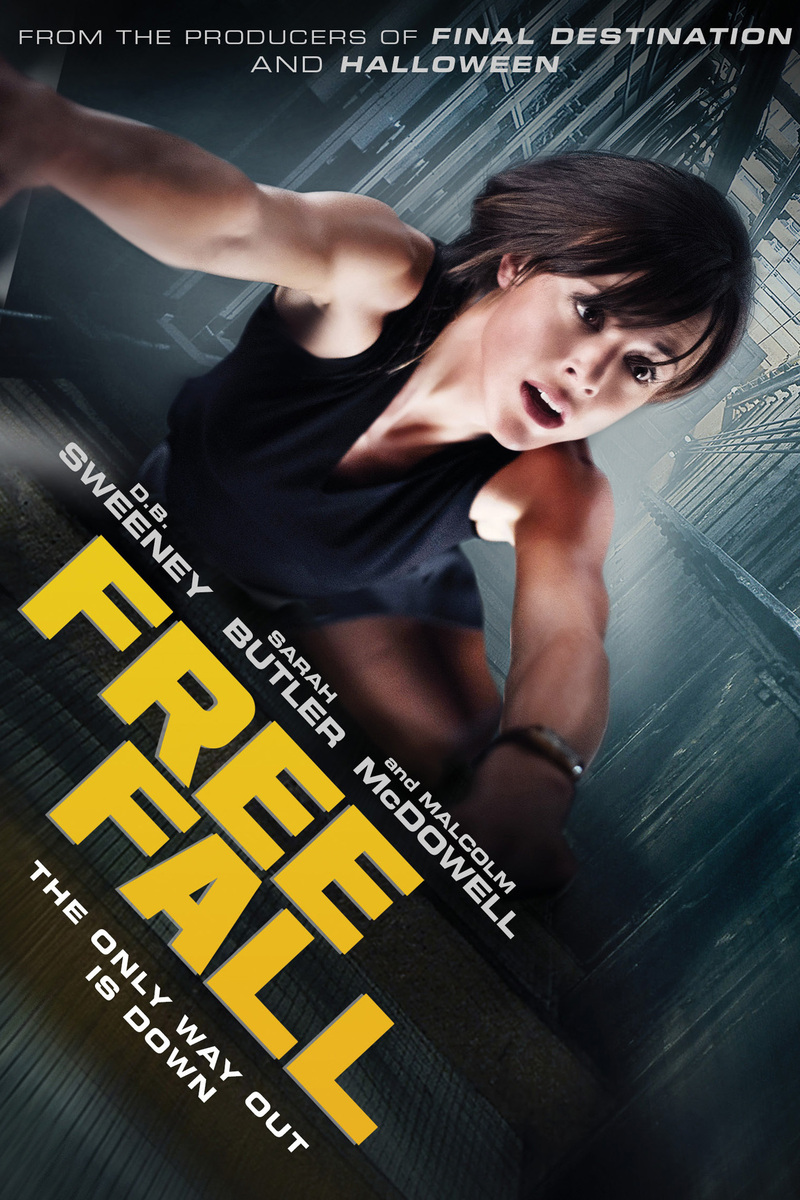
free fallI’ve no problem with Die Hard clones, because the original is a brilliant concept, beautifully executed: it’s one of my all-time top movies, of any genre. This certainly isn’t the first effort to try and port this into the action heroine genre, but it may well be the worst. And that’s quite some effort, considering previous attempts include one starring Anna Nicole Smith. It’s less star Butler’s fault, than a script which staggers from cliché to idiocy, and sloppily amateur execution, apparent in captions that spell “allegations” with one L and refer to something called the “Securities Exchange Commission.” Jane Porter (Butler) is an up and coming executive with Gault Capital, whose world is shattered when her manager apparently jumps to his death from the top of their building. I say, “apparently,” because it’s entirely unsurprising when Jane finds a USB stick and, in blatant violation of every security protocol, slaps it into the side of her work PC [the company I work for, just had a training course on precisely why this is a Very Bad Idea]. Ooh, look: her manager had found evidence of financial irregularity! Who can Jane turn to? And why not wait until she’s the only person in the building?

Which I could have forgiven had this been the springboard to some Die Hard-esque action, and the film certainly foreshadows this, with the first time we see Jane, she’s pounding away on a punch-bag. Except the script then has her spend the meat of the movie’s running-time stuck in an elevator, while the hitman (Sweeney) sent to to “tidy up” the mess, tries to figure out how to get at her. If there’s one thing duller than being stuck in an elevator, it’s watching someone else be stuck in an elevator. I’m surprised I have to state this, but the makers of this are apparently under the impression that it’s actually the height of tension. Boy, are they mistaken there. The potential inherent in the office location and a battle of wits between a smart heroine and a lethal adversary is instead frittered away in scenes spent, for example, watching the latter looking for a key to open the elevator door. I kid you not, and stand corrected: there seem to be a number of things duller than being stuck in an elevator, and this film is intent on showing them all to me.

Even the makers seem to realize this was a misstep suddenly generating another character out of thin air, an elevator repair man, about whom we are given no reason to care beyond a painfully obvious scene establishing his family. He then gets to fight the bad guy for a bit, while the supposed heroine stands around inside the elevator. While she does eventually get to go toe-to-toe with him – and isn’t a bad little battle – it’s far too late, and comes well after the point where doctors would have given up on this patient and turned its body over to the family. Both the title and tagline are good summaries of viewer interest.

Dir: Malek Akkad
Star: Sarah Butler, D.B. Sweeney, Ian Gomez, Malcolm McDowell

Preservation

★★★
“Why we don’t camp: Reason #134.”

preservationIt was supposed to be a nice weekend of camping for husband and wife, Wit (Schmidt) and Mike (Staton), perhaps allowing them to rekindle a spark which has become lost in Mike’s career, though Wit is trying to pluck up the courage to tell him she’s pregnant. Hopes of either are derailed, when their trip becomes a three-way, as they are joined by Mike’s brother, Sean (Schreiber), recently discharged from the Army under circumstances that he won’t talk about. Unfazed by discovering the camp ground that’s their destination is closed, they proceed, Wit learning the ropes of hunting from the two brothers. But the next morning, the three wake up to find themselves stripped of all supplies, down to their shoes, and with a black X written on each of their foreheads. It’s clear somebody – or somebodies – is out to get them, and Wit is going to have to dig very deep and find a way to overcome her civilized sensibilities if she is to make it out alive.

It’s a fairly straightforward survival horror, pitting (mostly) Wit against a trio of masked adversaries, who communicate solely through their mobile phones, also using them to record their kills, in what appears to be a none-too subtle jab at modern culture. Though it is, at least, refreshing to see a modern genre entry which does not include a scene of a character looking at their film and sighing, “No signal…” The transition of Wit, from a vegan who is unable to take an animal’s life – albeit one that’s a trained trauma nurse, and so not exactly fazed by the sight of blood – into a ruthless killing machine, prepared to do anything necessary to survive, is well-managed, with Schmidt, best known for her role in Boardwalk Empire, making for a solid heroine.

Less effectively handled are the relationships between her and the two men, to the extent that neither are necessary to the movie at all. They’re disposed of with relatively little effort, arguably leaving the first half of the film as a waste of time. Nothing much comes, for example, of Sean’s apparently blossoming PTSD, nor do we find out the reason for his discharge. Additionally, early on, it does seem like the attackers have a supernatural aspect, as shown in their ability to absorb punishment and keep on coming, as well as whisking the trio’s tents away without even waking them. Yet this turns out clearly not to be the case, leaving these earlier instances of invulnerability unexplained, and there are too many echoes of another movie with similar themes, Eden Lake. The film is a great deal better when it’s just Wit against the wildlings, and when it reaches there, it’s actually impressively brutal. Just a shame it takes longer than it should to find its footing.

Dir: Christopher Denham
Star: Wrenn Schmidt, Pablo Schreiber, Aaron Staton, Cody Saintgnue

Let Us Prey

★★★★
“The devil’s in the details.”

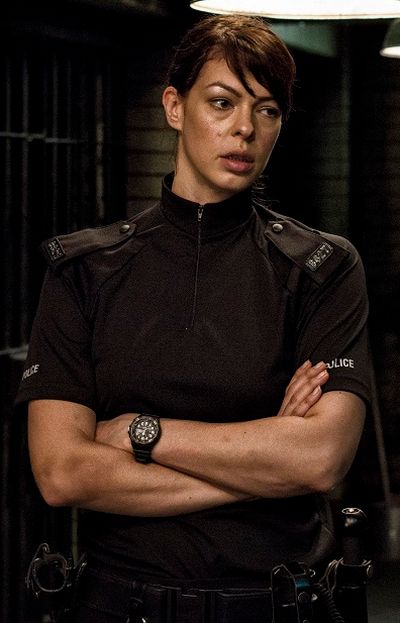
letuspreyI’m not religious, but I do enjoy a good religious movie. Say what you like about the Bible, it has some great stories, and inspiration for a ton of others [some day, I want to see the Book of Revelations filmed by Paul Verhoeven]. This certainly falls into the latter camp, but the small cast and claustrophobic settings work for it very well. On the way to take up a new post at a police station in a small Scottish town, Rachel (McIntosh) witnesses a pedestrian being hit by a joy-riding teenager, though the victim is nowhere to be found. Taking the perp to the station, the victim (Cunningham), known only as “Six” (after his eventual cell number), is located and brought to the station: but the doctor brought in to check his wounds tries to kill him. It becomes clear that Six knows a lot more, not just about Rachel, but her new boss Sergeant MacReady (Russell), and the other inhabitants of the station, on both sides of the bars. That’s dangerous knowledge, since some of those are definitely not intended for public consumption. Rachel, whose secret involved hurt done to rather than by her, has to figure out Six’s agenda – Devil? Angel? Bit of both? – to survive the night.

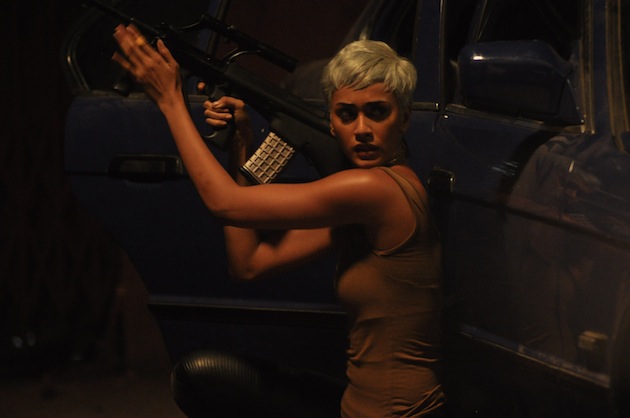
Right from the opening credits, depicting Six against a variety of ominous backgrounds, the creep factor here is severely amped up, and it keeps increasing the rest of the way – just when you think it’s reached its peak, O’Malley turns the screw another notch. It also benefit from very good performances. Cunningham has been a house-approved actor since Dog Soldiers, and exudes presence even when quite, as he is particularly in the early going, while McIntosh was striking in an equally disturbing film, The Woman, and brings much the same sense of physicality to her character here. The director has said one of the inspirations was the original Assault on Precinct 13, and I can see that; however, in a psychological sense, it felt almost like a psychological version of another John Carpenter film, The Thing, with people’s “inner monsters” bursting out to wreak havoc on those unfortunate enough to be around them. There are a couple of embarrassing mis-steps: at one point, for example, a character carefully and ostentatiously removes his glasses, only for them immediately to re-appear on his face! That kind of sloppy mistake is disappointing, and could easily have been avoided.

We also wondered why no-one makes much effort to call in external help, be that from another station or emergency service. For a while, I was thinking it was going to reveal that all the participants were dead already, which would have been a tough act to pull off. Does it end up going that way? I couldn’t possibly comment. But if they ever decided to make a sequel, we’d love to see it.  We watched this the same day as Jurassic World, and both my wife and I think this was the better movie.

Dir: Brian O’Malley
Star: Pollyanna McIntosh, Liam Cunningham, Douglas Russell

Mary Kom

★★★
“Firsts of fury…”

marykomThis was far from our first traditionally “Bollywood” film, but was the first such with what could be described as an action heroine. Traditionally, the women in Bollywood films are relegated to love interests for the square-jawed heroes. Not that this necessarily makes for a bad film [far from it, some are enormously entertaining], just that they don’t fall within the remit of our coverage here. This one squarely does, although also succumbs to many of the clichés of plucky underdog sports stories, shamelessly manipulating what was already an impressive story, purely to tug on the cinematic heart-strings.

The heroine is Mangte Chungeijang Kom (Chopra), the tomboyish daughter of a poor rice-farmer (Das), whose quick temper has got her into trouble more than once. Her parents try to deflect this energy into sports, but when she stumbles into a gym run by the stern coach Narjit Singh (Thapa), she realizes that’s her true calling, and begins training there with the knowledge of her mother, but not her father. When he finds out, he gives Mary an ultimatum: boxing or her family. Guess how that goes. She becomes world champion in her weight class, but then gives up the sport for marriage and to start a family. However, unable to settle down, her husband (Kumaar) convinces Mary to make a comeback, something rarely seen after becoming a mother. She’ll face obstacles, not just from her opponents, but also from her own body, the sport’s administrators and the distraction of a child’s health issues.

Wisely, Kumar avoids the traditional staged musical numbers, instead incorporating the songs which are almost de rigeur for Bollywood, into things such as multiple training montages. Some are more effective than others, and as noted, it does tend to fall into the trap of shallow stereotypes too often. I’m not sure about Chopra, who certainly is nowhere near as well-muscled as the poster would have you believe, and the fights themselves are a bit of a mixed bag. However, Chopra’s acting talents are certainly up to the task, and if the final reel is factually dubious, Kumar throws everything but the kitchen sink into its depiction and, much like Mary herself, pulls off an unlikely victory – albeit by a split decision on points. With a central character that’s not only a woman, but one from an area of India barely regarded as part of the country, credit is certainly due for pushing the boundaries of popular Indian cinema. It’s just a shame there was no such sense of adventure with the well-worn storyline.

Dir: Omung Kumar
Star: Priyanka Chopra, Darshan Kumaar, Sunil Thapa, Robin Das

Guardian

guardian★★★½
“A coherent plot. It’s vastly over-rated…”

How you react to a film isn’t always a logical exercise. I’m a great proponent of “guilty pleasure” films: movies that, by objective standards, are generally not very good, yet still manage to be, on one level or another, thoroughly entertaining. Barb Wire is one: as soon as you realize it’s a post-apocalyptic sci-fi version of Casablanca, it’s totally awesome. Add this Indonesian movie to the same pile: it contains many things which, on their own, I loathe; yet here, for whatever reason, the whole ends up being a great deal more entertaining that you’d expect from the sum of its woeful parts.

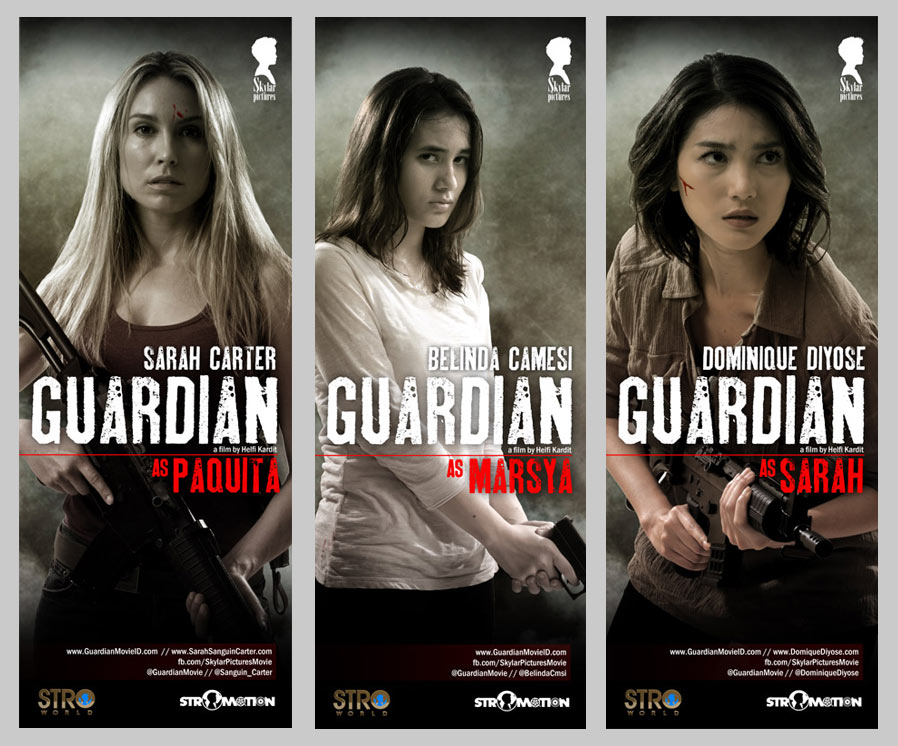
Let’s start with that plot. Which is certainly a great deal more than the film does. Seriously: it takes 50 minutes for anything approaching a meaningful plot element to show up. It opens with a man driving home, being ambushed and stabbed to death. His wife and young daughter find him. Fast-forward ten years, and some thugs attack the house with what may be the longest single burst of automatic weaponry in cinema history, followed up, for no particular reason, by two rounds from a rocket launcher. Cue mother Sarah (Diyose) and pouty teenage daughter Marsya (Camesi) going on the run: Mom has clearly been anticipating this for a while, and has a hideout, stash of weapons and martial arts training. Turns out, there are two factions at play here: the one seeking to kill the family is led by corrupt cop Captain Roy (Fernandez), while playing defense is Paquita (Carter, best known for her role in Falling Skies), who… Well, you will find out eventually. Just don’t hold your breath.

guardian2.jogFor before you reach that point, there follows alternating scenes of ludicrous excessive gun-battles, and Marsya whining “What’s going on? Make it stop? I said, WHAT’S GOING ON? I want an ice-cream!” [I may have imagined the last, I’m not sure] Normally, this kind of thing would be incredibly grating. But let’s face it, she’s basically echoing what the audience is thinking, so it’s okay.  Throw in Kardit’s style of action, which consists of jerking the camera back and forth while simultaneously zooming in and out, and you’ve got the recipe for a headache-inducing exercise, about as far from fellow Indonesian flick The Raid as possible [seriously, if you haven’t seen The Raid, go do so now. It’s the best action movie of the past decade. You can thank me later.].

And yet… If you can handle the fact that the ratio of bullets to reloading scenes is several hundred to one, cope with not knowing what the hell is going on for half the movie, and tolerate characters that are basically a procession of shallow genre tropes, you’ll have fun. Against the odds, I did: there’s at least four women here with no qualms about kicking ass in industrial quantities, and both Divose and Carter bring the necessary intensity to their roles [there’s one awesome shot where Paquita is chasing after a car on foot and is just screaming at it]. There’s a chunk at the end where all three leading ladies are simultaneously fighting for their lives, and that’s a good deal more progressive than you’d get to see in most Western films. For all its many, copious flaws, I was kept entertained – as much by the daft insanity on view, as in spite of it. In the right hands, this could have been awesome: Kardit clearly is not those hands, yet it’s still more fun than I expected.

Dir: Helfi Kardit
Star: Dominique Diyose, Belinda Camesi, Sarah Carter, Nino Fernandez

Cat Run 2

★★½
“Time for this cat to be put out.”

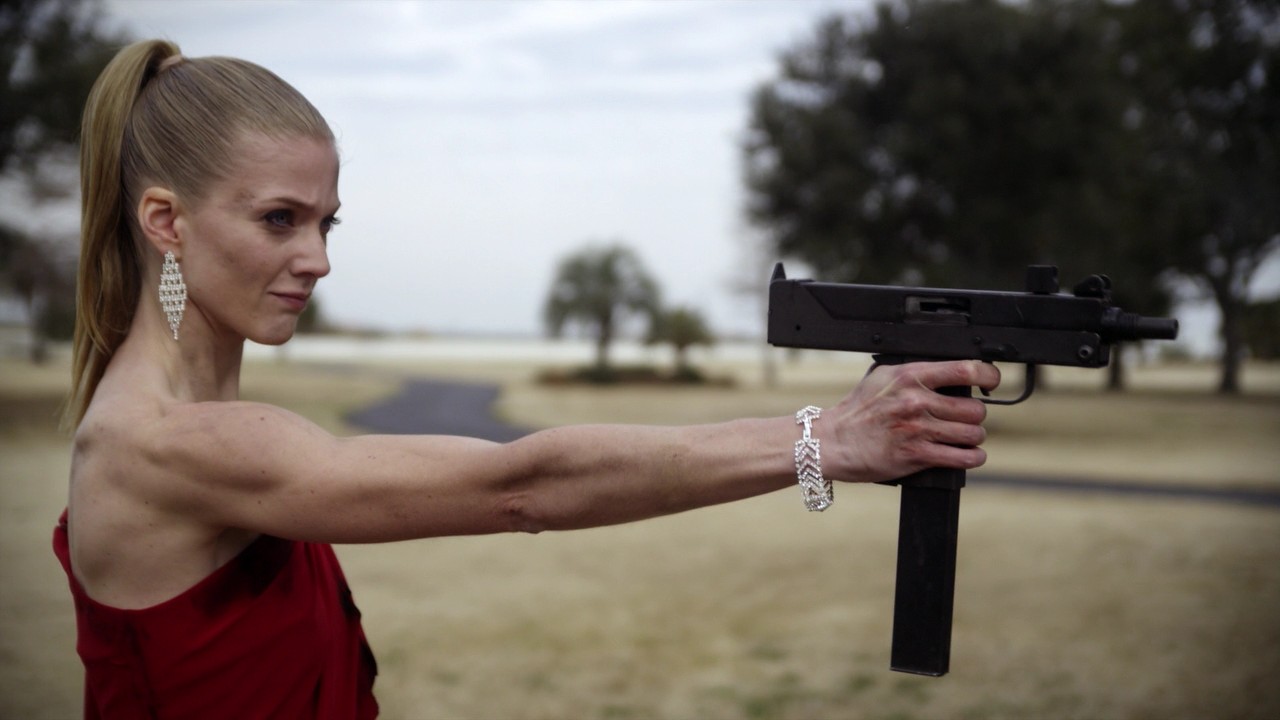
The original Cat Run was an unexpected pleasure, lifted far above its expected delivery of slick, vapid entertainment by Janet McTeer’s wonderful turn as polite hitwoman Helen Bingham. The sequel lacks McTeer and it’s no surprise that this time, it is no more than slick, vapid entertainment. Leads Anthony (Mechlowicz) and Julian (McAuley) are back, still dabbling in private eye work, and end up in New Orleans after Julian’s cousin, a soldier, is involved in a strange incident at an army research base. Two hookers, brought in for the pleasure of the officers, turn out to be on a mission to steal secret blueprints: one is gunned down, but the other, Tatiana (Zoli) escapes, and a cover-up is instigated by the military. The more our heroes dig, the worse things get, as they attract the attention of the criminal cartel behind Tatiana, led by Hannah Wollcroft (Branch).

catrun2Unfortunately, the makers retained the most irritating part of the original – the two main characters, who remain as blandly irritating as they were previously, delivering the sort of witty banter between friends which only occurs in movies like this. To little or no purpose, they also lob in a meandering, weak subplot about Anthony opening a restaurant and needing to find his inner soul in order to win a televised cooking contest. I’d rather have had more sequences of naked, cybernetically-enhanced Eastern European assassins kicking ass: while your mileage may vary, I suspect I’m not alone there. Zoli does her best, yet is certainly well short of McTeer, even if the script tries to give her the same kind of character arc, and the story does provide her character with a spot more background then usual. Then, at the end, for some reason the script decides it wants to be Iron Man. I’m sure there’s a world in which that story decision made sense.

Still, there are moments which work, such as the the sequence where Tatiana has to take on a ninja posse while simultaneously distracting a guy she picked up speed-dating. It’s clear Stockwell has seen far too many badly-dubbed kung-fu flicks, and I’m right alongside him there. When it isn’t trying too hard, and the film is content to be that slick, vapid entertainment I mentioned, it’s fair enough, with some well-staged action such as a hovercraft chase through the bayou, and a solid sense of atmosphere and location, not present in the original. However, the absence of McTeer leaves a gaping hole, and helps explain why this is a significant step down in almost all other ways.

Dir: John Stockwell
Star: Scott Mechlowicz, Alphonso McAuley, Winter Ave Zoli, Vanessa Branch

Fair Play

★★★
“Czech out those legs…”

fairplayTeenage sprinter Anna (Bárdos) is on the edge of making the Olympics with the Czech national team, but still needs to meet the qualifying time. She’s being brought up by her mother, Irena (Geislerová), a former tennis prodigy, now reduced to working as a cleaning lady – in part because of the defection for the West of her husband. Irena also secretly transcribes underground documents for a dissident, Marek. Coach Bohdan (Luknár) pushes Anna hard to reach her maximum potential, and gives her “Stromba”, a substance that helps her performance, but screws up her health. She stops taking it, believing it to be an illegal steroid: when her coach finds out, he enlists Irena’s help to inject her daughter surreptitiously, saying it’s the only way Anna will make the squad. Reluctantly, Irena agrees, unwilling to see her daughter lose out in the same way she did. But as the authorities close in on Marek, the two women become pawns in a political game, with their common Olympic dream now used as leverage against them.

This makes an interesting companion piece to Goldengirl, with both films telling a similar story about female runners in the early eighties, whose family and mentors are prepared to go to any lengths to achieve success at the Olympics. Goldengirl unfolded in the lead-up to 1980’s Moscow Games, but subsequent history rendered it obsolete, as America boycotted them. Fair Play shows things from the other side of the Iron Curtain, in the lead-up to the 1984 Los Angeles games – which the Eastern Bloc similarly spurned. The benefit of time allows the film to incorporate this history into an ironic postscript for its narrative and, while less SF-oriented than its American cousin, the attitudes of both heroines, and the approach of their supporting cast, have a surprising amount in common. The main difference here is, the doping regime is state-sanctioned; in Goldengirl, it’s free-market forces driving the “win at any costs” mentality.

The piece makes a pointed connection between Anna and Irena’s situations, both coming under pressure to compromise their personal morality for personal gain – one sporting, the other judicial. It’s this stand which represents the true heroism to be found here, though the script struggles to escape from the obvious clichés of Soviet Bloc culture. The other main weakness is the actual athletics, which never give the impression of anyone moving at more than an energetic jog, while the thread involving Anna’s relationship with a boy doesn’t go anywhere of significance at all. In the final analysis, it’s a worthy enough effort, if rather too earnest to be wholly successful. You can see why it became the official Czech entry for this year’s Academy Awards – and equally as much, why the Academy then decided it wasn’t worthy of making the final nominees.

Dir: Andrea Sedláčková
Star: Judit Bárdos, Roman Luknár, Anna Geislerová, Ondrej Novák

Deliverance Creek

★★★½
“Once in a Lifetime.”

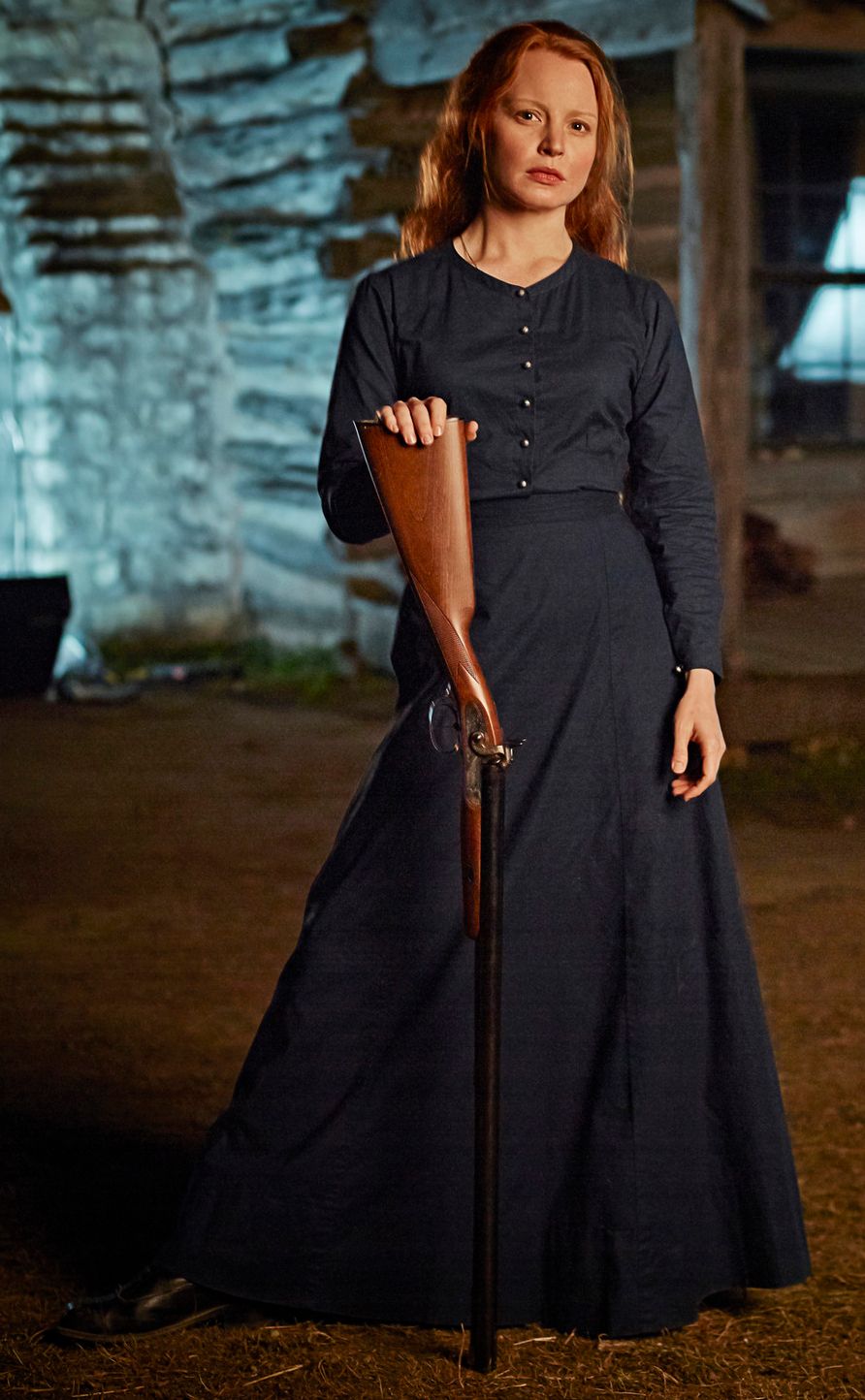
deliveranceThere’s one thing it’s vitally important to understand before watching this. It’s not a stand-alone Western movie. This is what’s called a “backdoor pilot”: something aired as if it were a discrete entity, with the aim of gauging audience reaction to see if it gets picked up. This matters, because it explains the film’s otherwise inexplicable failure to resolve… Well, just about any of the plot threads it constructs during its 90 minutes. If you expect closure, you’re going to be massively disappointed, and there are other aspects which are similarly out of place, such as Skeet Ultich as a local saloon pimp, who serves absolutely no purpose. However, if you take this for what it is – an introduction to the setting, characters and situations – it’s actually more than serviceable, especially since it’s a product of Lifetime, whose output tends to the bland in the same way as vanilla pudding. Thanks largely to Ambrose, this rises above that, and leaves me definitely interested in seeing more.

She plays Belle Barlow, struggling to keep things going on her farm as the Civil War grinds on; her husband was fighting for the Confederates, but has not been heard from in forever. Things aren’t made easier by the neighbours, the Crawfords, who own the local bank and the loan on which Belle is falling behind. Her sister, Hattie, is also involved in helping the underground railroad, the network which smuggled escaped slaves to freedom: Belle has mixed feelings about this, but finds herself hosting one such refugee as her “slave”, Kessie. Meanwhile, a bunch of renegade soldiers, led by Belle’s brother Jasper (Backus), arrive on the farm, intending to knock off a delivery of army gold that will be held temporarily in the bank. Initially opposed to this, Belle’s opinion is changed after a tragic accident, for which she blames the Crawfords, and it turns out Kessie holds the key (literally) to pulling off a successful robbery.

I can’t stress this enough: do not go in, expecting any one of these threads to reach a satisfactory conclusion. It’s the journey which you need to enjoy instead, because the destination is never reached. Fortunately, I was forewarned, and so didn’t suffer the same sense of “Is that it?” as some reviewers. Instead, I was able to appreciate a heroine that’s a good deal more complex than many, and the film also does a good job in portraying the murky nature of the Civil War, where people from the same town (or even family) would sometimes be on different sides. I particularly liked Belle’s little rant in regard to the Crawfords:

I want revenge too. But a bullet for each of them while they sleep is little comfort. I want them to suffer, as I have suffered. I want them to feel what it’s like to have everything they love stripped away from them, piece by piece.

That speech does a really good job of setting up her character’s direction for the rest of the movie, and providing credible motivation. As yet, I haven’t heard of any series following and that’s a pity, because this has potential and I’d like to know where it might have gone. While it’s obviously much easier to write a film where you don’t have to worry about the ending, don’t let the attached name of Nicholas Sparks (The Notebook, and other sappy romances) put you off, for this is better than many TV movies, and definitely better than almost all Lifetime ones.

Dir: Jon Amiel
Star: Lauren Ambrose, Wes Ramsey, Christopher Backus, Riley Smith

Girl’s Blood

★★★
“All over the bloody place.”

girls blood2I’m very confused, at to who is the target audience here. It’s part earnest drama about serious social issues, including gender identity and spousal abuse. But it also depicts a hardcore underground fight-club, “Girl’s Blood” in which women battle it out for the gratification of spectators. However, don’t expect a Japanese version of Raze, for while the fights are well-staged [Sakamoto has a good track record, most recently having done 009-1: The End of the Beginning], it has all the class of WWE’s Divas division and amateur night at your local strip-club, combined. For it panders shamelessly to every sexist stereotype imaginable, from sexy nurse through sexy schoolgirl to sexy idol singer. And don’t even get me started on the mud wrestling, filmed with such prurient camerawork, I was genuinely embarrassed for the participants. Then there’s copious and lengthy lesbian sex scenes, which appear to have strayed in from another genre altogether, albeit filmed with a good deal more style and bigger budgets than usual for such fare.

The central character is Satsuki (Haga), the club’s best fighter, but who is estranged from her family and refuses to change with the other girls. Her position as top dog is challenged by the arrival of Chinatsu (Tada), well-versed in MMA techniques. After the two have become close, personal friends, if you know what I mean, and I think you do, it turns out that she’s working without the knowledge of her abusive husband (Hideo) , a karate master who is unimpressed by the unsanctioned nature of these bouts. He abducts Chinatsu and brainwashes her back into submission; worse, still, he threatens to have Girl’s Blood closed down. There’s only one way to settle things: that old chestnut of a school-vs-school battle, in which his top three students will face off against Satsuki two of her colleagues: if they win, Girl’s Blood becomes official, but if they lose, they will have to disband forever [because, apparently, this is how sanctioning martial-arts works in Japan]. You will be unsurprised to hear this contest all comes down to the final match, which sees Satsuki facing off against Chinatsu.

I watched the Director’s Cut version which runs 128 minutes, and wonder if this is perhaps part of the problem; maybe the regular edition has a better consistency of tone or genre. Personally, I dug the action (and, fortunately, there’s no shortage), was disinterested in the drama, and gave severe consideration to fast-forwarding through the soft-core porn, while giving thanks under my breath that my wife was out. Not that she minds: however, the stream of sarcastic comments which would surely have resulted, might well have sunk what chance the film had of any serious evaluation. I’d be hard-pushed to argue with her in this case. While this could truly be described as a film with something for everyone, there are equally significant elements which will be of no interest – or even actively off-putting – for just about anybody. If the creators had made their minds up what they wanted this to be, the end result would likely have been stronger.

Dir: Koichi Sakamoto
Star: Yuria Haga, Asami Tada, Ayame Misaki, Sakaki Hideo
a.k.a. Aka X Pinku