
★★
“American Psychette.”
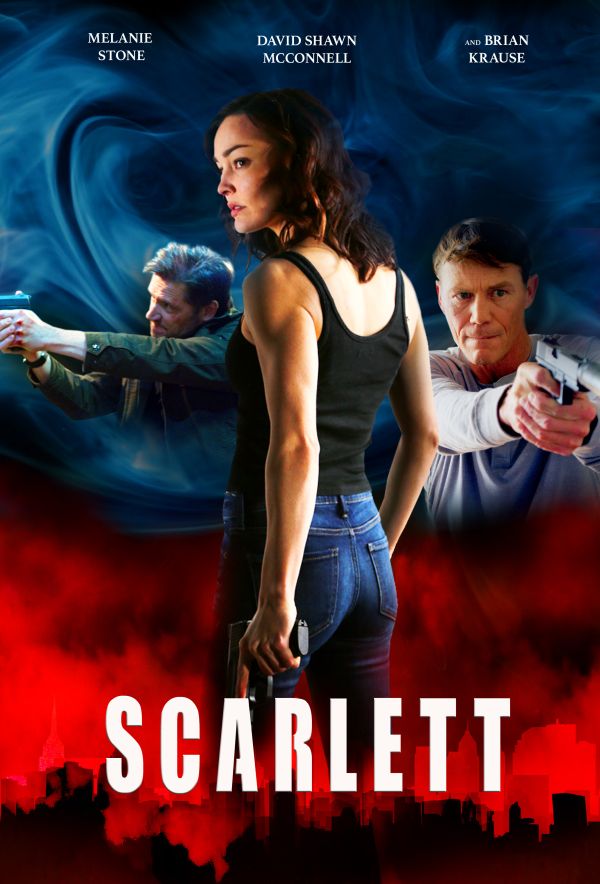
 I wanted to like this considerably more than I actually did. The idea of a supremely self-aware female serial killer – not just comfortable in her psychoses, someone who actively revels in them? Colour me intrigued. Throw in any amount of eighties tunes, super-lush production design and photography, and this should have been right up my neon-lit alley. Yet, it very much runs out of steam. When perhaps the most memorable joke is an argument over the difference between a couch and a sofa… Yeah, there are some significant structural problems which need to have been addressed.
The “heroine” (quotes used ironically) is hedge fund manager Catherine Black (Linton, also the writer), who has risen to the top with ferocious aggression. She has embraced her psychopathy, and in her beautifully appointed mansion, has multiple freezers full of dismembered bodies. Her next intended victim is Tyler Jones (Westwick), a con-man who is posing as an intended house-sitter. However, for the first time, Catherine finds herself unable to go through with her habitual slaughter, instead making an unexpected connection to the thief. Even after he absconds with one of her cars and a slew of her jewellery, part of her is still willing to forgive Tyler his trespasses, and brings him back by threatening to expose his previous crimes to the authorities. Yet will these new feelings of humanity and kindness be enough to overcome Catherine’s deep-seated and long-standing urges towards murder and cannibalism?
It appears this is Linton’s debut as both writer and director, and seems she bit off a bit more than she can chew. I think, in particular, it’s the script which is the issue. Crammed full of breaking the fourth wall and other advanced techniques, there’s no denying its ambition; unfortunately, Linton as writer doesn’t appear up to the task. Instead, she tries to run before she can walk, never managing to establish Catherine as a complex character. Indeed, it never puts enough effort into establishing her even as a murderous psychopath, until well after the point at which she has fallen for Tyler. That’s another problem, because the film doesn’t provide sufficient justification for thus: there’s precious little given to the audience that make us think, “I get what she sees in him,” rendering all that follows contrived and unconvincing.
While I certainly appreciated the nostalgic soundtrack, it does seem an odd choice given the contemporary setting – Linton was aged two when Blue Monday was originally released. Perhaps an older actress, such as a Naomi Watts or Catherine Zeta-Jones, would have been a better fit? But I guess, when you have decided you are going to be an actress, director and writer, and can find financing for it, then it’s full steam ahead. If much credit is due to her for seizing the opportunity, and there’s enough here to suggest a vision, it’s definitely too unpolished. She would likely be better off focusing on one area, rather than attempting to become a Jill of all trades.
Dir: Louise Linton
Star: Louise Linton, Ed Westwick, Shuya Chang, Tyler Barnes
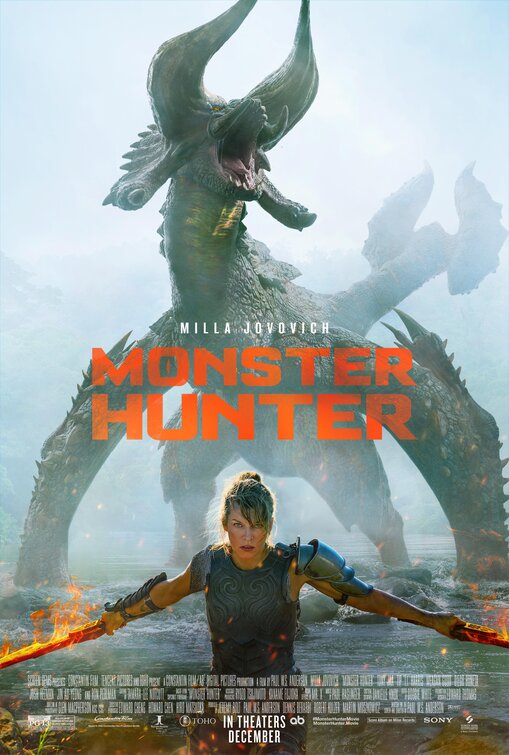
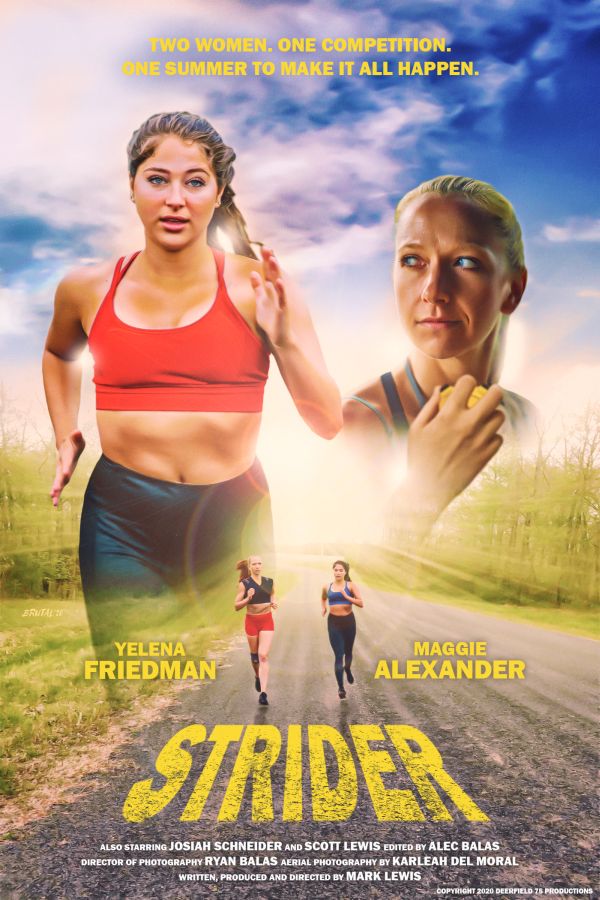
 For most films. I’ve usually got a fairly good idea of what is likely to be the final review grade, inside about 30 minutes. It may drift half a star up or down, but it’s relatively rare for there to be more variation than that. This would be one such case, which started off as underwhelming, went through a brief surge of “Oh, yeah – I get it!” in the middle, before returning to the mediocrity from whence it came. At various points, this could have been anywhere between ★½ and (although briefly) ★★★★. Well done, I guess?
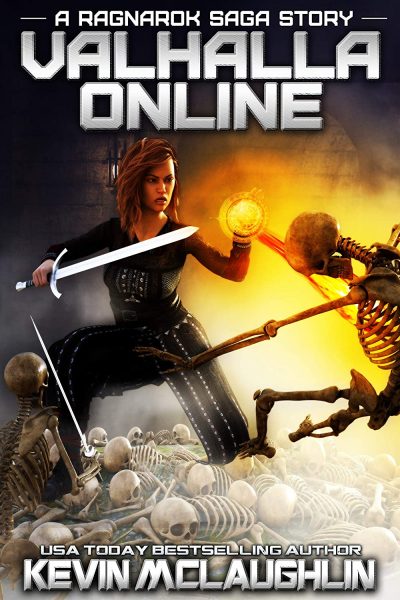 I could have sworn this isn’t the first entry in the LitRPG genre I’d reviewed, but I’m damned if I can find the previous one. So, just to be safe, I’m going to explain what LitRPG is: apologies if this is unnecessary! Basically, it takes the structure of role-playing games (RPGs) – things like character levels, ability scores, etc – and applies them onto a story structure. Obviously, the overlap between RPGs and books has been a long one: Dungeons & Dragons is heavily influenced by the work of Tolkein. But it has been mostly one-way traffic. The LitRPG genre sends things back the other way, producing novels that adopt the practices of the games.
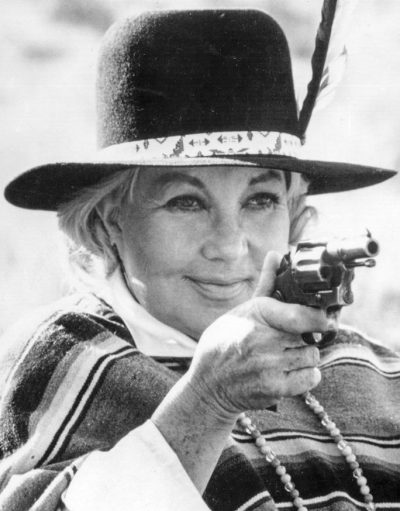 This upper-tier B-movie, produced by Julie Corman, is notable for a handful of reasons. It includes not one but two Oscar winners. Director Demme would go on to receive one for Silence of the Lambs, and star Leachman had already won for her performance in The Last Picture Show. There’s also a small role here for Sally Kirkland, who’d be nominated for an Academy Award down the road. And perhaps most trivia-worthy are the presences in uncredited roles, of Bill Paxton and Dennis Quaid – both making their screen debuts.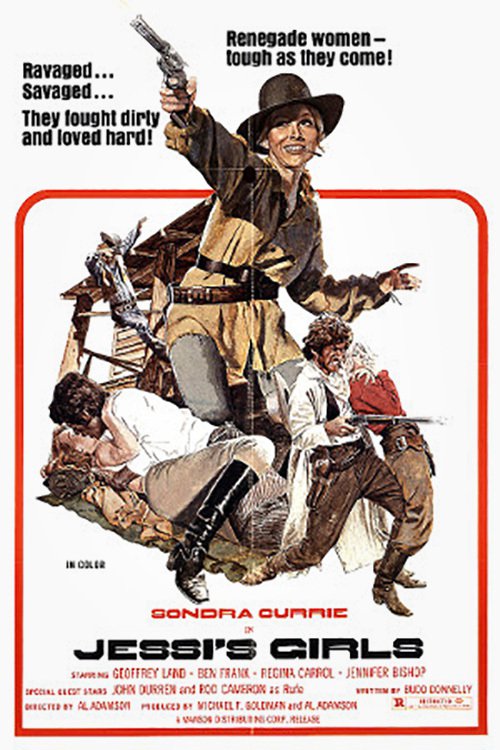
 It’s about the year 1880, and Jessica Hartwell (Currie) is heading out West in a wagon with her preacher husband. They encounter the gang of Frank Brock (Frank); they repeatedly rape Jessica, before shooting her husband fatally, and leaving her for dead. She survives, returning to health with the help of prospector Rufe, who sports an unfortunate, obviously fake beard, yet also teaches the young woman how to shoot. For Jessi has vengeance on her mind, and to assist her in this path, she liberates three other women from the custody of Sheriff Clay (Lund). There’s outlaw Rachel (Jennifer Bishop); saloon girl Claire (Regina Carrol); and Indian Kana (the not-exactly Indian Stern), who had been a part of Frank’s gang until he abandoned her.

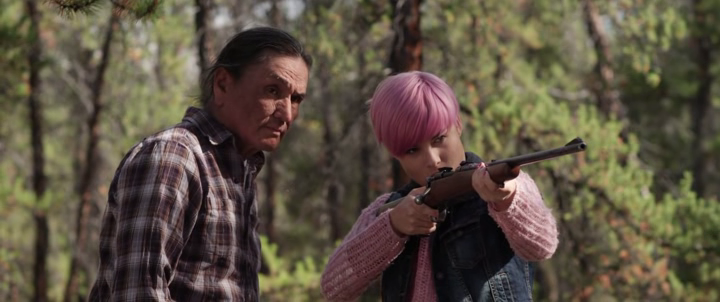 While certainly more relaxed that many of the films we cover here, this makes it in on the strength of its heroine’s character arc. That belongs to Lia (Jacobs), a teenage girl in the Northwest Territories of Canada, who is being raised by her father. When he has to go off for work, she gets sent north of the Arctic Circle to live with her grandmother (Jerome) for the nightless summer. She hates the rural life, and runs away, stealing a boat in the hope of reaching Dawson City, the nearest big town – not realizing it would be four weeks journey. She falls overboard after her boat breaks down, and is lucky to be rescued by Alfred (Howard), a hunter from the local Gwich’in tribe. As they cross the remote wilderness, she begins to appreciate it, bonding with the thoroughly down-to-earth Alfred and learning from him – wolves hate the smell of tobacco, apparently. But when an accident befalls her guide, Lia is going to have to dig into her own resources.