



 ★★★
★★★
“Have you backed-up today?”
My knowledge about Czechoslovakian movies is quite limited. Mainly the wonderful films, such as Three Wishes for Cinderella or Saxana – The girl on a Broomstick, and TV series (Arabela or The Visitors) made for children there in the seventies and eighties. Things have changed since these times: Czechoslovakia doesn’t even exist since 1992, when it split into two separate countries, the Czech Republic and Slovakia. So this is a Czech movie, not a Czechoslovakian one. Though the famous Barrandov Studios where many of the classic movies were filmed, and in recent times some big Western productions too, remains in operation.
Still, this film feels of another time and another kind. I came across it during a period when nothing of interest to me seemed to come out of Hollywood. I was just looking for something entertaining, that didn’t insult my intelligence – you see the problem. Imagine my surprise when that ‘something’ turned out to be an East European Science Fiction movie – the second such, after recent Serbian film, A. I. Rising. Maybe I should recalibrate my sensors towards those countries? Because against my expectations, this turned out to be a first-class Science Fiction movie, with decent production values that could stand beside any Hollywood production. Indeed, someone in the Amazon reviews wondered how long it will be until Hollywood will remake it. [The remake of Danish film Speak No Evil is in cinemas right now, and as usual is not as good as the original]
The place is Prague and the time is 2041. Technology has advanced somewhat: while cars still drive on the ground, holographic displays are available in personal households. But one thing has changed considerably. People who get killed, or die in an accident, can be brought back to life. The catch: according to the law, in order for that to be possible, you have to have saved your memories digitally. The last memory – the so-called “restore point” – must not be older than 48 hours. Of course, such new and controversial technology faces resistance from part of the population; a terrorist group called River of Life fights against the introduction of the new tech.
Emma Trochinovska (Mohylová) is a young police investigator, who lost her husband due to him not having “backed-up” in time. She is on the trail of a River of Life terrorist, who commits suicide before she can capture him. She is greatly surprised when, a short time later, the supposedly dead inventor of restore technology, David Kurlstat (Hádek), gets in touch with her. He wants to find out who was responsible for the death of his wife, who had an affair with the terrorist and died after him. A number of problems arise. His last restore point is much further back than the usual two days. Indeed, he has no memory of the last six months. Europol agent Mansfield (Neužil) intends to protect the interests of the public, while the increasing influence of the Institute of Restoration is just as much a pain in the neck to Trochinovska as the terrorist, who isn’t really dead.
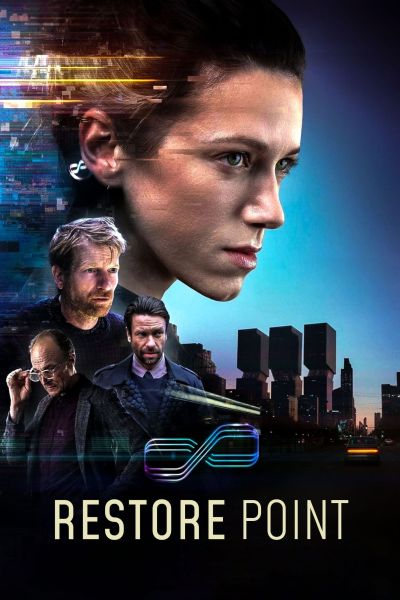 The above sounds a bit confusing. It may be at first glance, with a large number of characters with different interests popping up in the story. But once you have bought into the SF premise, things are actually not that complicated. What we have here is a crime thriller with cops, agents, terrorists and big money companies. It all leads to a well thought-out and very satisfying action-mystery, where for a long time you can’t be sure who is behind it all and why. Hint: it’s not who you may think. The solution was – at least for me – quite a surprise.
On a technical level, as mentioned, this is as good as, or maybe even a bit better than, your usual Hollywood Science Fiction movie, with the production filmed in the Czech Republic, Slovakia and Poland. While I know no one at all among the actors, they are all fine and give good, convincing performances. I especially liked main actress Mohylová fighting, running, shooting and investigating, without becoming a Mary Sue or losing her femininity and humanity. Her character has flaws and is not omnipotent, as is often the case with Western heroines. She did remind me of Katheryn Winnick from Vikings. But the other actors were also very well-cast for their respective roles. The film has a good, effective soundtrack with Debussy’s Clair de Lune as a recurring motive.
Outside of the Czech Republic, the movie has mostly been seen at festivals, and hasn’t had a theatrical release yet which is a pity. It won a number of awards or was nominated at festivals, and deserves a wider release, but even here in Germany it only came out on DVD. Reviews have compared it to Blade Runner and Minority Report: I tend to disagree there. This movie is far from the very futuristic, super-bleak, almost apocalyptic setting in Blade Runner (one of the most overrated SF films ever for me), showing a world just one or two steps away, and a future that is indeed imaginable. Nor is it the action-chase Minority Report provided. I guess the comparison is because Restore Point is what Science Fiction originally was, before star warriors and space fleets took over the genre on the big screen: a careful “what if”-exploration of a possible future.
It may be counted as cerebral today but in its essence it is what “real” Science Fiction is, without the fantasy aspects that have dominated the genre for the last 50 years or so. If I had to compare it to another movie, it might be Christopher Nolan’s Memento. While providing enough action to satisfy the casual audience looking for a quick SF fix, the movie works on a deeper level too. What is the value of our life is if we lose our memories? This leads to some strangely ironic, almost absurd results. So, yes, it’s a movie that can make you think. But you can also just let yourself be entertained by it. That works too.
Dir: Robert Hloz
Star: Andrea Mohylová, Matej Hádek, Milan Ondrík, Václav Neuzil
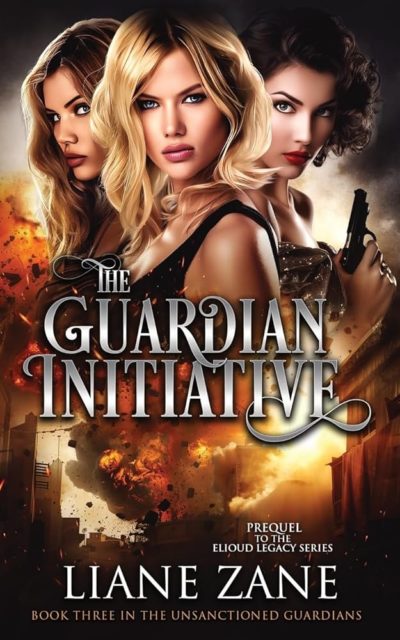 About a year has elapsed since the events of the previous book. CIA agent Olivia Markham landed on her feet sufficiently, after the events in that one, to preserve her career with the Company; but since then, at her request, she’s been moved to a desk job. For most of the interim, she’s been in charge of an agency safehouse in Montenegro, which fronts as a free clinic for the town’s numerous foreign refugees, run by an NGO that’s not aware of the CIA connection. (The clinic work is real; when she was recruited by the agency in the first book, Olivia was a college pre-med student, and she has EMT certification.) She’s also fallen in love with a French medical doctor at the local hospital; the two are living together, and will get engaged in the first chapter. But …she’s about to cross paths with an Islamic terrorist mastermind from the previous book. Meanwhile, Italian spy Stasia Fiore is still investigating the theft of a Predator drone from the Italian military; and Capt. Beta Czerna is soon to be approached by a desperate woman who needs help in rescuing her sister from the clutches of a Polish crime lord who’s into sex trafficking (among other villainous things). Circumstances are about to converge these plot strands, and bring all three ladies together for a violent, high-stakes thrill ride.
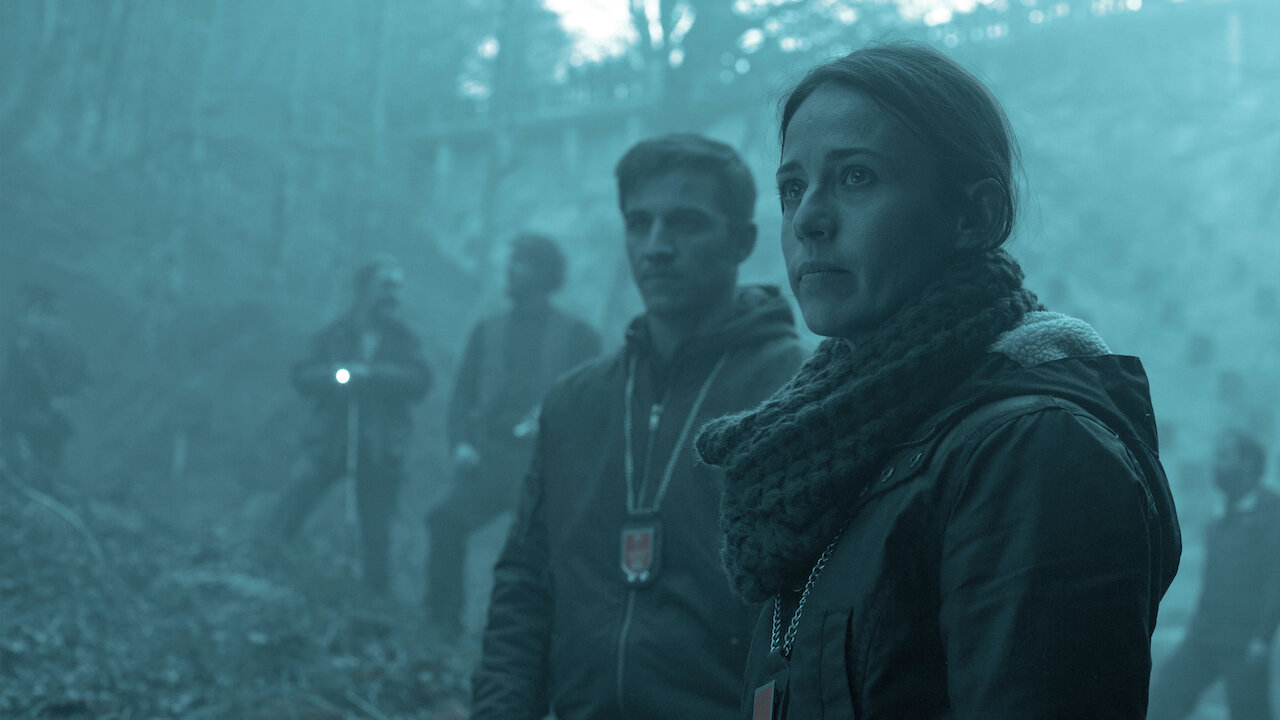 The Baztan trilogy consists of three movies, based on the novels by Dolores Redondo. The setting for these is a small area in the Basque country of Spain, not far from the border with France. Much like the small-town English villages such as Miss Marple’s St. Mary Mead, or Death in Paradise‘s Honoré, the murder rate in this charming and picturesque area appears to rival that of a South American war-zone. I guess you can describe the series as Español negro, being a Mediterranean-based version of Nordic noir. Like those, you have a detective with a troubled past, a history that frequently seeps into her current life, They are investigating crimes resulting from what’s unquestionably the darker side of human nature, and the results are uncomfortably close to home.
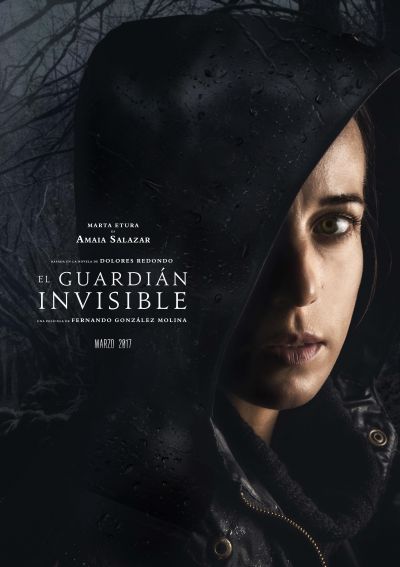 I’ve traveled a fair bit around Spain and Mediterranean Europe in my time, and the weather was never as unremittingly
 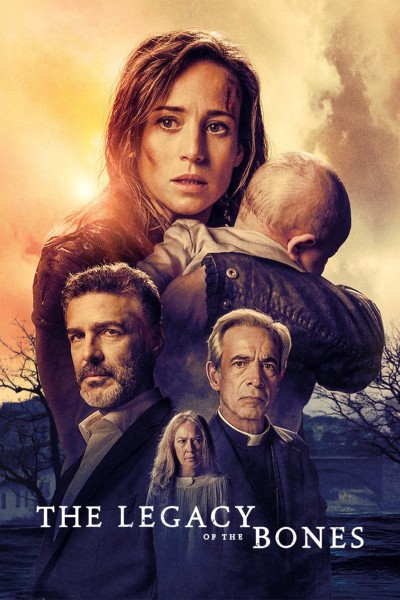 We jump ahead about a year for the second installment. Amaia Salazar (Etura) has now had the baby she announced she was expecting during the first film, and is adjusting to the need for balance between her career and motherhood, with her husband, James. After completing her maternity leave, she returns to work, and is put on a case of church desecration with cult undertones, at the request of the enigmatic Fr. Sarasola (Arias). This is tied to the Cagots, a historically persecuted group native to the region. Simultaneously, there is an ongoing string of murderers committing suicide, each leaving behind a one-word message: “Tartalo”. It’s a reference to a baby-eating giant from Basque mythology, and seems to be linked to the cave of remains found in the previous film.
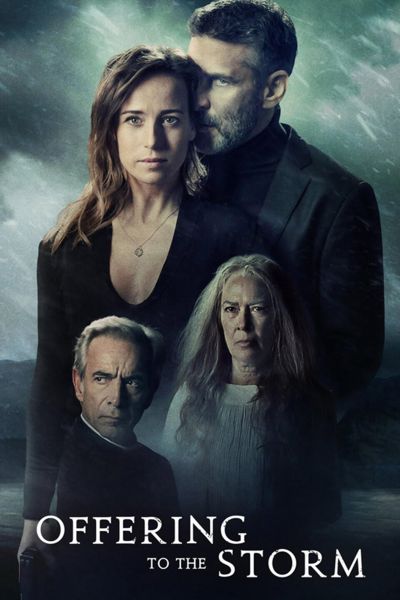 Oh, dear. I think it’s probably been a very long while since I’ve been so underwhelmed by the finale of a trilogy. All the pieces were in place, after the first two entries, for a grandstand finish to the series. But the script basically fumbles things in every conceivable way, pushing to the front elements that you really don’t care about, while all but discarding things that seemed of crucial importance. There is an effort to tie everything together, with the various crimes from its predecessors being linked into an occult conspiracy in which members of a Satanic circle sacrifice baby girls, and receive worldly power in exchange. This aspect is okay, Amaia having to go up against a group whose power is embedded at the highest levels of local society. The creepiest element is perhaps that the sacrifices seem to
 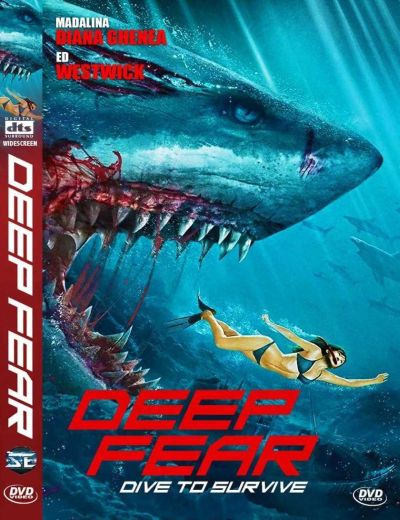 Naomi (Ghenea) is sailing a schooner single-handed in the Caribbean, returning it from Antigua to Grenada so it’ll be ready for a charter customer to take out. Her boyfriend, Jackson (Westwick) has already gone ahead to prepare things there. But a squall diverts Naomi off course, and she then stumbles across boat wreckage to which Maria (Gómez) and Jose (Coppet) are desperately clinging. They tell her there’s still a survivor trapped on the sea bottom, and Naomi dives down to rescue Tomas from his watery tomb. However, on returning to the surface with him, she gets a nasty surprise and finds her work is not over. For the survivors were also transporting 200 kg of cocaine.
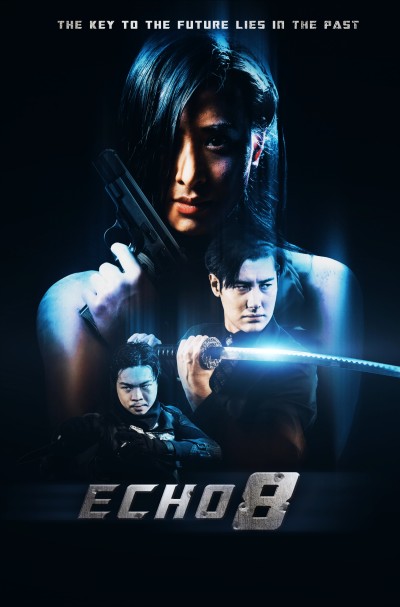 This bills itself as “Australia’s first female-led independent action movie”. Seems a bit of a stretch, considering how many films we’ve reviewed from Down Under previously, such as
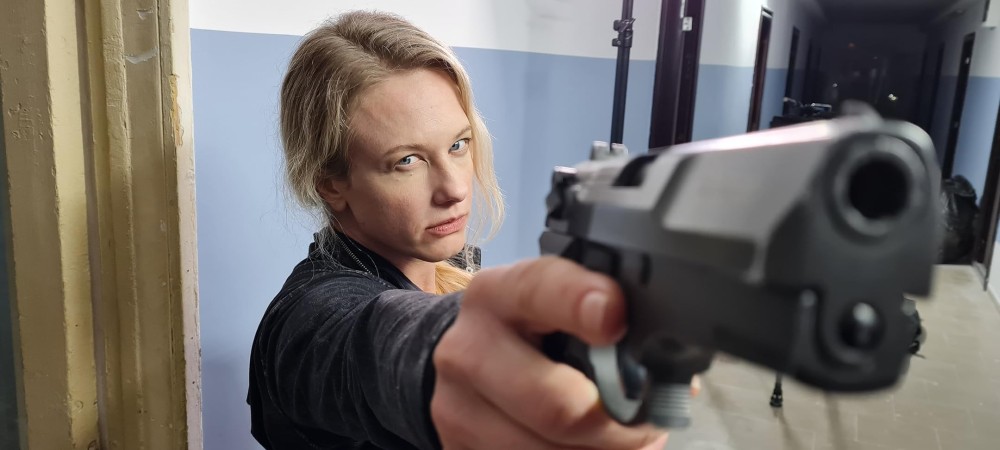
 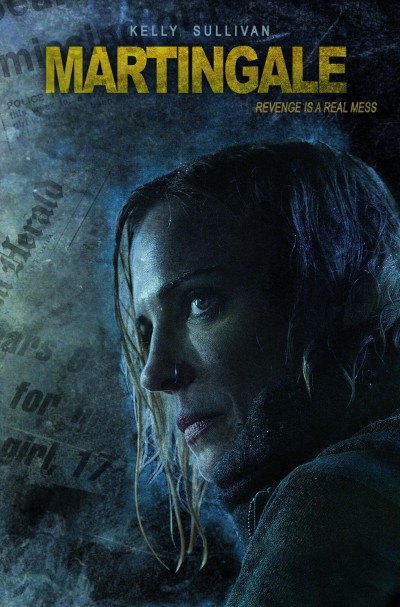 It’s probably symptomatic of… something, that the film’s title is never explained. With the main character working in a casino, I presume it’s a reference to the Martingale betting system, where you basically double your bet after every loss. It guarantees a profit – unless you hit such a long losing streak you run out of money entirely. Its relevance here is uncertain, and I doubt most viewers would know what a martingale is either. But then, the film is very good at not explaining stuff. Another example would be, what the scam is supposed to be with Andi (Sullivan) collecting left-behind cash-out casino slips and handing them to a collaborator, Whit (Melikhov). These are for trivial amounts, so why bother?
 ★★
★★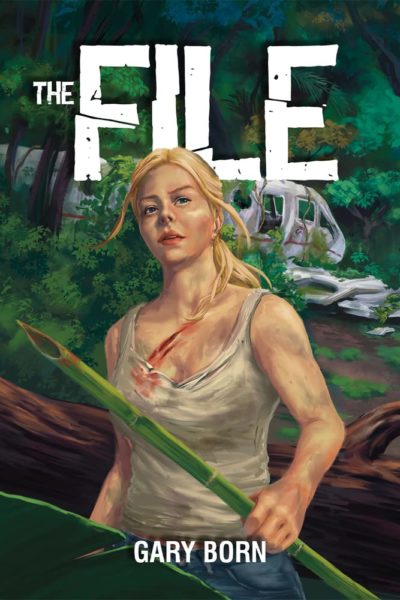 Not many novels come with a ringing endorsement from a former director of the CIA, but Gina Haspel calls this “A thoroughly enjoyable, engrossing thriller.” Argue with her, and she’ll send you an exploding cigar, or something. While it certainly isn’t bad, the rating above reflects its likely moderate appeal for readers here. A general audience might be more impressed, especially with regard to the second half, where the heroine becomes more of a passenger. Things begin at the very end of World War II with a flight out of Berlin carrying documents intended to secure the future of the Reich. It doesn’t reach its destination, crashing in the depths of the African jungle.
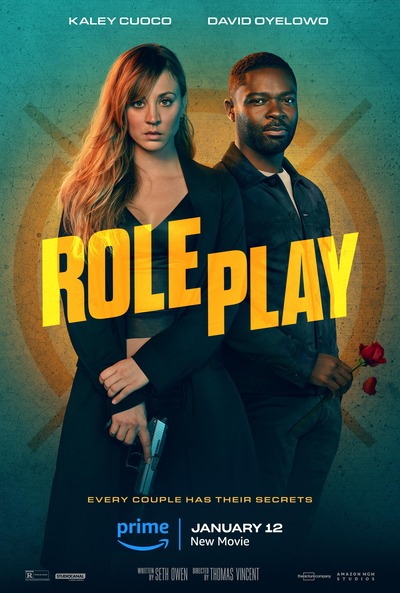 If a little light on the action front, this probably makes up for it in heart. On surface, the Brackett family are largely like any other. Sure, mom Emma (Cuoco) spends a lot of time out of town on business. But she loves husband Dave (Oyelowo) and her two kids, even if she’s a little unfocused, forgetting their anniversary. The problem is, as we know from the start, that Emma is a hitwoman, who used to work for an organization called Sovereign, before turning freelance. They’re still after her. And that’s where the problems start, as on a make-up anniversary date at a hotel, she’s spotted by Bob Kellerman (Nighy), another freelancer, interested in collecting the reward on Emma’s head.
 To be one hundred percent clear, the best thing about this is the rather arresting poster. A far better film than what we have here, would struggle to live up to it. Instead, we have a classic example of vanity cinema, where one man decides to write, direct and play a major part in his own movie. The over-ambition here is palpable, to an often accidentally amusing degree. Perhaps most obviously, a pair of “car chases” – and I use the quotes deliberately – which unfold at a stately 15-20 mph, involving a muscle car on which the production clearly could not afford a single scratch on the paint. They’d have been better off not bothering.