



★★
“Just deserts”
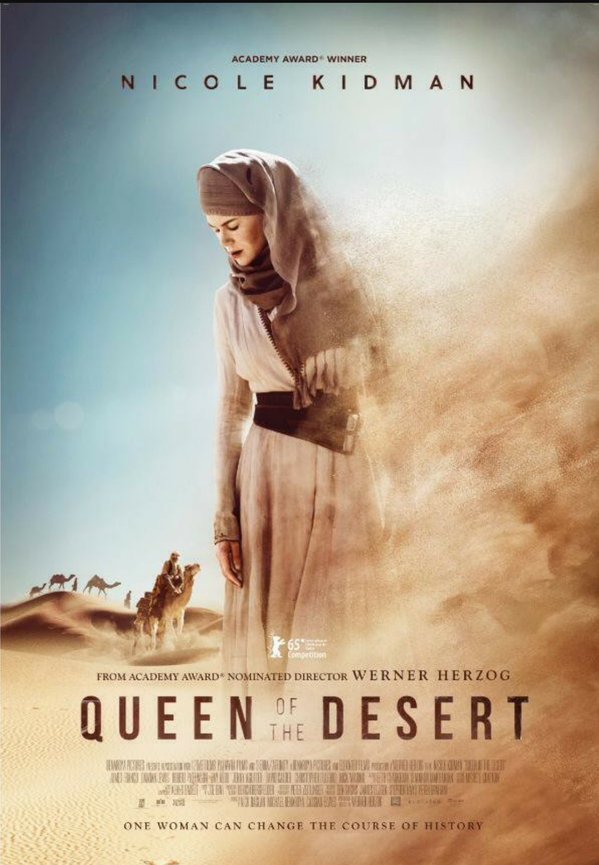 Eccentric explorers with strong personalities facing the challenge of the wilderness is hardly uncharted territory for Herzog. Most famously, his pair of incendiary collaborations with fellow German, Klaus Kinski, Fitzcarraldo and Aguirre, Wrath of God are both classics, so I had high hopes for this biopic about Gertrude Bell, who was, according to her Wikipedia page, “an English writer, traveller, political officer, administrator, spy and archaeologist,” operating in the Middle East during and after the first World War.
Daughter of an English baronet, she found the aristocratic English life stifling, and want to Teheran where her uncle was a diplomat. She fell in love with the region and its people, and spent almost the entire rest of her life there. It was a time of turmoil, as the ruling Ottoman Empire was collapsing, with other Western empires, including the British, seeking to take over the territory. In that setting, Bell’s expert knowledge of the region was invaluable, and she became an intelligence asset, working alongside T.E. Lawrence (Pattinson). better known as Lawrence of Arabia. But her personal life was more troubled; her father refused permission to marry her first love (Franco), who then committed suicide. After a long lay-off from love, she begins a relationship with soldier Charles Doughty-Wylie (Lewis) – who is already married.
Herzog’s work is at its best when he invests fully in it, such as Fitzcarraldo, where he told the story of a man who dragged a steam-boat over a mountain (for rubber plantation purposes), by actually dragging a steam-boat over a mountain – watch the documentary, Burden of Dreams, for more on this, and the psychological toll the whole production took on the director. Here, you don’t get any sense of personal cost; it’s probably the most slick and Hollywood film Herzog has ever made, and that takes away more than it adds. Kidman is decent enough, yet her depiction is likely too restrained. It peaks very early, with Bell’s barely-suppressed, seething hatred for the suitors who come to woo her in England, and there are not many occasions after, where you get any sense of emotion. The desert landscapes are impressive [not the first time Herzog has been there either; see his post-war documentary on the Kuwaiti oil fields, Lessons of Darkness], yet there’s only so often you can watch Bell riding across them while a vaguely epic score swells behind her, before the impact diminishes.
All told, you probably get a better insight into Bell’s life from reading the Wikipedia page mentioned earlier. The obituary quoted there is likely a better testament to its subject, than the two hours of scenic desert landscapes and unresolved sexual tension we get here:
No woman in recent time has combined her qualities – her taste for arduous and dangerous adventure with her scientific interest and knowledge, her competence in archaeology and art, her distinguished literary gift, her sympathy for all sorts and condition of men, her political insight and appreciation of human values, her masculine vigour, hard common sense and practical efficiency – all tempered by feminine charm and a most romantic spirit.
Dir: Werner Herzon
Star: Nicole Kidman, Damian Lewis, James Franco, Robert Pattinson
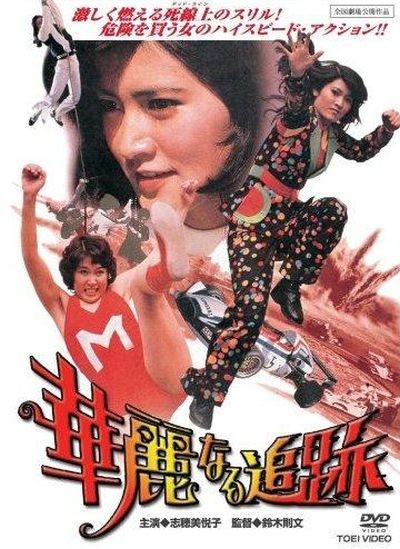 Shinobu Yashiro (Shiomi) is nationally known as a race-car ace, but also moonlights as an undercover agent for Japanese law enforcement. That’s motivated by a desire to track down those responsible for the death of her father; he was a ship’s captain, convicted of smuggling drugs, who “committed suicide” in prison, though Shinobu thinks he was framed by the real perpetrator. She gets a possible lead, in the shape of Henry Nagatani and starts tracking him down, with the help of the brother and sister who run her fan-club (!) out of a florist’s shop (!!). Using a wide range of disguises, from a businessman through an old wonan to a nun and a Cambodian diplomat, Shinobu gets closer to the core of the conspiracy, and the man responsible, Onozawa (Ishibashi) though the cost on those she knows proves heavy indeed.


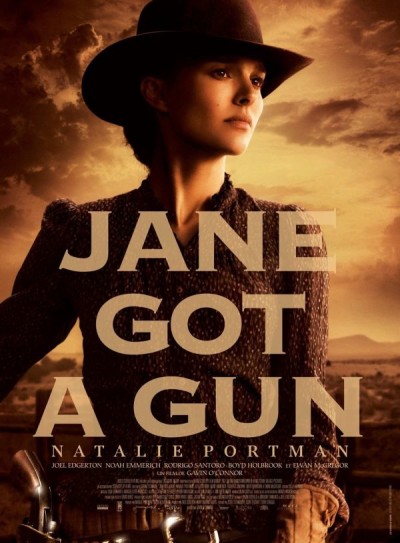 There have been no shortage of revisionist spins on the Western over the last few years, looking to drag the genre into the 21st century after it seemed all but dead. Just in the last four months, I’ve seen Bone Tomahawk, The Hateful Eight and The Salvation, and while their approaches have been radically different – as have the degree of their success – they are, at least, trying to bring something new to the party. Jane Got a Gun? Not so much, to the point that viewers may feel the urge to check they haven’t fallen through some kind of wormhole, back to the era of Bonanza and The Virginian.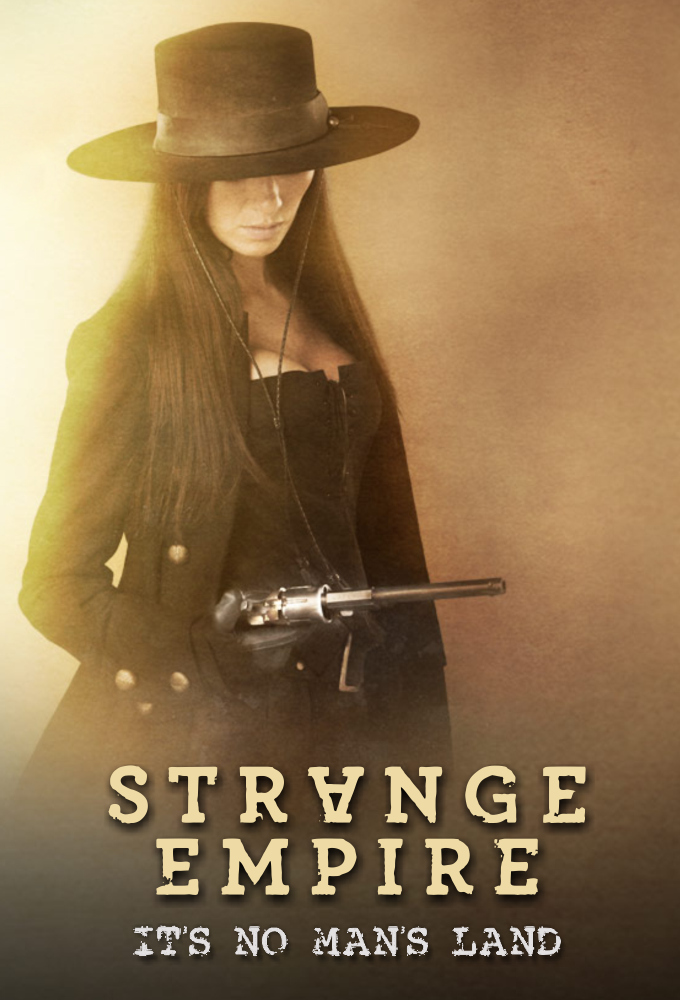
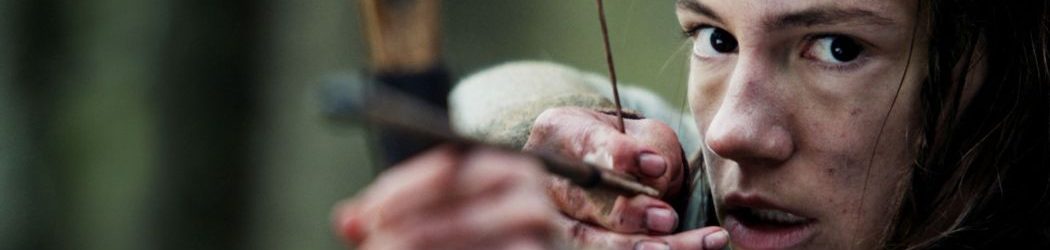
 This Canadian TV series ran for 13 episodes, but was not renewed at the end of the first series, leaving the double shock which occurred at the end of the final episode, with no hope of resolution. That’s a shame, since there was a lot to like about its grubby portrayal of 1869 life, just north of the border between Canada and Montana. It begins when a wagon train of settlers, passing near the mining settlement of Janestown, is attacked and almost all the men are killed or driven away, leaving the women to fend for themselves. In particular, there is Kat Loving (Gee), a half-Indian sharpshooter who seeks the truth about her husband’s fate, and Rebecca Blithely (Farman), a female medical researcher, something almost unheard of at the time. But they are up against John Slotter (Poole), who runs Janestown as his own personal fiefdom, and whose wife Isabelle (Jones) is a match for the new arrivals in terms of her wits, and likely surpasses them when it comes to crafting of intrigues.