
Atone

★★
“atone: make amends or reparation.”

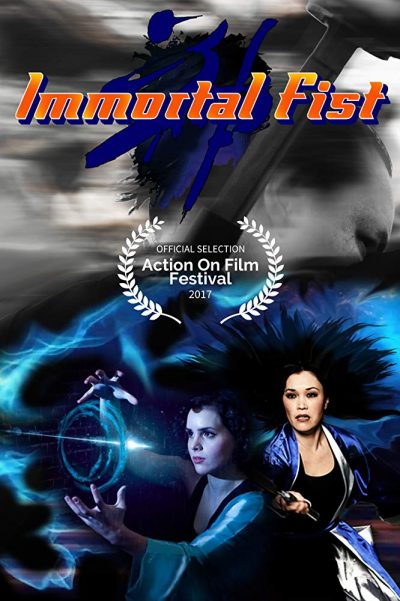
I mention the above for two reasons. Firstly, because Chris wondered why the film was called “At One”. Secondly, because when it finished, I turned to her and said those four little words which mean so much: “I can only apologize…” Yes, to use it in a sentence, I’ll be atoning for picking to watch this low-rent “Die Hard in a church” offering, for some time to come. [Though the following night, I had to sit through her choice of Justice League: paid back in full, I’d say…] There were a couple of aspects here that weren’t terrible; unfortunately, the overall execution was painfully close to… well, god awful seems the appropriate term here.

Laura Bishop (Fleming) is a former soldier, struggling to adapt back to civilian life. Through her father, she gets a job as a security guard in a local megachurch which is about to open. And what are the odds, she hasn’t even been able to complete new employee orientation before a group of terrorists, led by White (Short) storm into the building and take the employees, in particular Reverend Mark Shaw (Rusler), hostage. Worse still, Laura’s little daughter is also in the building, so she has to find and take care of the moppet, as well as fending off the terrorists.

This seems to be teetering on the edge of being a faith-based action-heroine pic, which is a rate, although not quite unique entity – The Trail comes to mind. These aspects are not too badly-handled: despite the setting, they’re mostly played fairly light, and I actually found the motivation of the chief villain quite refreshing. I say this to make it clear that I’m not slagging this off for its beliefs. Especially not when there are plenty of other, perfectly credible reasons to slag it off. The entire subplot involving her daughter, for example, makes no sense, and she just kinda wanders out of an emergency exit, largely forgotten thereafter. There’s also the bizarre “street fight club” of which Laura is a member, which forms the opening scene, and is never mentioned again.

It feels as if, for every step forward this takes, there are two back. Farrelly, better known as WWE’s Sheamus, shows up as one of the bad guys, and crosses himself every time he kills someone, which is the kind of endearing quirk that works. He and the heroine have a decent bathroom brawl. But then there are amateur digital effects, poor continuity and no sense at all of escalation, as well as villains who fall astonishingly short of even basic competence. The explanation about why Lauren has her PTSD, is held back until the very end, far too late for the viewer to care one whit. It’s all a jumbled, and worse, largely boring mess. They say the devil has all the best tunes. On the basis of this, he can likely also lay claim to the best girls-with-guns films as well.

Dir: Wes Miller
Star: Jaqueline Fleming, Robert Rusler, Columbus Short, Stephen Farrelly

Ameera

★★
“Explanations. They’re VASTLY over-rated…”

I should probably have learned from my first experience with Ms. Hu: the thoroughly mediocre jungle ensemble piece which was Angel Warriors. For her latest film, she moves from being merely one of a number of interchangeable pieces into the lead, and proves singularly underwhelming for that role. Though in her defense, this could have starred someone with far more charisma, martial arts ability and acting talent, and it would still not have been very good. For all its flaws, Warriors did at least have a fairly coherent plot. This, not so much. For example, it’s a full hour and ten minutes in before we discover what the villain’s Big Plan actually entails. To that point, we know it’s called Operation Hurricane, and little else. Why, pray tell, should we care about the bad guys achieving their goal, when we have no idea what it is?

Things aren’t much better on the heroine’s side. We first meet Ameera (Hu) as she takes part in a gun-battle against ill-defined opponents for ill-defined reason, on behalf of the ill-defined organization for whom she works. This goes wrong, she gets suspended, and the organization subsequently vanishes for the great bulk of the movie, so who cares? However, it turns out her mother has been kidnapped by the villains, in order to get their hands on the products of some research which was being carried out by her dad. It’s up to Ameera and her boyfriend, Jason (Hsu), to ensure they don’t get it, and stop Operation Hurricane – whatever it may be. Though before you can care, you will first have to stop snorting derisively at pseudo-science babble like a virus being “enabled with an isotope nanometers.”

I do have to say, it looks nice, with some very crisp cinematography, and was not a cheap production in terms of locations, sets and cast. This, in no way, excuses the shockingly ropey CGI effects, or the way the action is staged, so you get to see little more than the participants waving their limbs at each other. There is quite a nice car-chase round some winding mountain roads, with Jason on a motorbike chasing after the truck insude which Ameera is dangling. Again, the photography is lovely, until it’s spoiled, first by Jason’s Magazine of Infinite Ammunition, and then the MS Paint-like explosion after a car goes over the edge.

Any technical shortcomings, however, pale in comparison to a script that is spectacularly reluctant to give the viewer any meaningful information, short of having its fingernails pulled out. Both characters and plot elements show up without explanation, and you’re left trying to figure out who or what they are, and why you should give a damn. Long before the climax, where Ameera is suddenly and inexplicably re-united with the organization that suspended her, an indeterminate amount of time ago, you’ll have abandoned any hope of this being any more than incoherent if well-shot nonsense.

Dir: Xiao Xu
Star: Melrose Hu, Ambrose Hsu, Andrew Lin, Bryan Leung

Forgotten Gods by S. T. Branton

Literary rating: ★★★½
Kick-butt quotient: ☆☆☆

Vic Stratton is a woman on a mission. She’s seeking out Rocco Durant, the New York mobster who was responsible for the deaths of her parents five years ago. With the cops unable to do much, she turns vigilante, and is finally on the brink of taking her vengeance when…Well, things get cosmically weird: specifically, “something both large and seemingly on fire blotted out the whole skyline across the river with its brightness.” She ends up fishing a man out of the river, who was carrying a glowing sword which makes fast work of Durant’s henchmen. Turns out, the man, Marcus, is a former Roman legionary: centuries ago, he became a guard in Carcerum, a realm to which a selection of unpleasant deities were banished by King Kronin.

Now, Kronin is dead, killed by his oldest ally, Lorcan, and Marcus needs to find a hero, worthy of carrying the Gladius Solis, the only weapon capable of keeping the gods in check. However, they are beginning to make their presence felt on Earth, and Vic isn’t the only person to have made a new friend following their dockside encounter. Durant has become an underling to Lorcan, and has picked up some disturbing new talents and character traits. For Lorcan is planning to put together an army of the undead, and is using Durant and his contacts to further that end, creating a “vampire factory.” Durant is vampire #1.

I enjoyed this. It doesn’t hold any surprises in terms of where the first volume ends – the cover pretty much gives that away! But the ‘odd couple’ relationship pairing of Vic and Marcus works well, and is occasionally surprisingly poignant. Vic’s original misgivings seem justified, when Marcus is unable to grasp the concept of an “actor”, but the two end up needing each other more than it initially seems. He needs her as a guide through the very different modern world. While as well as learning the art of fighting, she needs him to break opens the scar-tissue of deep cynicism, with which she has increasingly been affected since her parents were killed.

I’d call this first volume mostly set-up, and it’s only at the end where Vic comes into her own. In particular, she kicks into high gear when she has to rescue Marcus from a truly hellish situation in the vampire factory. The resulting sequence, involving a pit of vampires in production, is messy, to put it mildly. It demonstrates Vic’s take no prisoners attitude: she has had that since the beginning, and when combined with Marcus’s training and the Gladius Solis, eventually make for a powerful heroine. The journey there is entertaining though, and this was very much one I “watched” as much as read, the story playing out in my mental cinema. [The ‘gangster turned vampire’ aspect reminded me of Innocent Blood] Further volumes in the series have been marked for potential purchase.

Author: S. T. Branton
Publisher: LMBPN Publishing, available through Amazon, both as a paperback and an e-book
Book 1 of 4 in the Forgotten Gods series.

Pink Thief

★★½
“Pink only on the outside”

Lan Hsiao-Tieh (Lu) is one of four illegal immigrants to Hong Kong, who manage to escape from the human traffickers bringing them to the colony – albeit after Lan has been raped by one. She and her friends just about manage to eke out a living on the edge of society, which treats them very unkindly in comparison to legal residents: for example, working as a coolie, they get only a fraction of the wages. As a result, they’re forced into criminal activity. One of the victims of the resultant pick-pocketing is the feared Chief Detective Lu (Lui), who tracks down the gang and makes them an offer: go undercover and help in his investigation of a Triad gang called the Eagles, in exchange for legal status. Lan is doubtful – until she realizes that one of the targets is the man who raped her. With the assistance of training from a retired thief, Lan is inserted as the moll of the gang’s leader, Hao (Tien Feng).

The film leaves a lot of potential on the table. The retired thief angle, for example, is nicely set up: the immigrants initially think he’s a doddering old fool, except that’s just his cover. However, the training through which they go through is never particularly useful once Lan goes on her mission. There’s also an unevenness of tone. It wants to be a sympathetic and serious portrayal of the plight of illegal immigrants in Hong Kong. But the impact of this is rather undone by, for example, the scene where the wife of Lan’s squeeze confronts her. For the pair end up rolling around in a hot-tub, stripped down to their lingerie. While I’m not complaining, it does appear to have strayed in from another film. The same can be said for the soundtrack: I read that it borrows liberally from Planet of the Apes, and I could swear I heard some Rick Wakeman in there as well.

It all rolls along without anything in the way of surprises, until Lan finds out the time and date when a big deal is going down. This sets up Detective Lu with the chance to bust them in the act – and, naturally, gives our lead the change for revenge on her rapist. This is remarkably formulaic, and there’s hardly anything that makes it stand out from the competition. It’s neither serious enough to merit actual consideration as art, nor trashy enough to be a Cat III classic. Despite the promise of the cover, it’s more tacky than sleazy, in its shots of the heroine’s cleavage, never rising past PG-13 level, with even the sexual assault done “tastefully”. I only watched this three days ago, yet it made so little impression, I had to put it on again for the purposes of this review. And I am still struggling to reach our standard five hundred words.

Dir: Yueh Chien-Feng
Star: Lu Hsiao-Fen, Richard Cui Shou-Ping, Lui Ming

Sheba, Baby

★★★
“Neither claim on the top left of the poster are accurate.”

After the success of Coffy and Foxy Brown, Pam Grier continued her career with this not dissimilar blaxploitation flick, albeit one of a more restrained approach. Indeed, this received a ‘PG’ rating at the time of its release in April 1975, something modern ears would likely find shocking, considering the copious use of certain racial epithets deployed here. She plays private detective Sheba Shayne, who returns to her home town of Louisville from Chicago, after getting a telegram from her father’s business partner, Brick Williams (Stoker). He warns that her father (Challenger) is taking on some rough customers who are trying to force him into selling his company. Sheba, naturally, is having none of it, and when the police refuse to do much, starts working her way up the food-chain of scumbags, to the apex predator of The Man, who in this incarnation is Shark (Merrifield).

There’s not much here which could be described as particularly new or exciting. Indeed, I almost passed on the movie entirely, thinking I’d already seen it, but it appears I was confusing this with Friday Foster. That’s the thing about Grier’s career: she received only limited opportunities to break out from the ghetto of blaxploitation, and to some degree, her output is much of a muchness. Though at this point, there were precious few other areas of English-speaking media which allowed women to kick butt in the way she did. We were still in the era before Charlie’s Angels and Wonder Woman, albeit just – WW started the November after Sheba came out, and CA the following year.

For now, Grier was ploughing her own furrow in the vanguard of action heroines, and despite the generic nature of this offering (it was the final movie of Pam’s contract with American International Pictures), still represents okay value for money. It does gloss over the fact that Sheba’s Dad is little more than a kinder, gentler loan-shark, operating what appears to be a payday finance company, of the kind often described as “predatory” these days. It’s not even clear quite why Shark is so keen to take over the business. Fortunately, before becoming a Chicago PI, seems Sheba was a local cop. She still has some of the connections from that time – as a bonus, without having to worry about niceties like ‘due process’ or ‘police brutality’.

Even with the relatively low-key sex ‘n’ violence allowed by the PG rating [which would be “almost none” and “light”, compared to Grier’s previous offerings], it’s still fun to watch her in action. The highlight is likely her encounter with a “street entrepreneur” wearing a suit which looks more like an optical illusion. After he runs off, rather than answer her questions, she simply gets into the back of his pimpmobile and waits for him to return. It builds toward her sneaking onto Shark’s boat, jumping off it, sneaking back on, getting caught, escaping, and eventually chasing him through the Southern bayou on a jetski. It seems to have strayed in from Live and Let Die, and the cops seem remarkably unfazed by Sheba behaving in a manner more befitting Moby Dick, shall we say.

As noted at the top, this falls short of Grier’s best work, though is still better than Foster. It’s workmanlike, rather than impressive, and the restraint necessary for the certificate probably works against it. The words “family-friendly” and “blaxploitation” are clearly better off kept apart from each other, I suspect.

Dir: William Girdler
Star: Pam Grier, Austin Stoker, Rudy Challenger, Dick Merrifield

Johnnie Mae Gibson: FBI

★★
“Not-so fair cop”

This 1986 TV movie was the first film made about an FBI agent while they were still active. Gibson was the fifth black female agent in the bureau’s history: she broke new ground by being the first such assigned to the Fugitive Matters department in the Miami branch, and was also the first to reach a supervisory level within the FBI. That would, however, be well after the story told in this film. It covers how she came to join the FBI, and her first major undercover operation, taking down a gun-running ring operated by ex-NFL star, Adam Prentice (Lawson). However, Gibson starts to find the lines between real-life and undercover work blurring, and begins feeling genuine affection for her target. This doesn’t sit well with her partner, TC (Rollins). If it sounds all very by the numbers… It is.

No less stereotypical are the other black men in Gibson’s life. Most notable are her sternly disciplinarian father, who thrashes Johnnie after she accepts a Thanksgiving gift on a surplus turkey from some white folks, and Marvin (Young), the husband she meets at college. The latter is thoroughly unimpressed when she announces – in a staggeringly clunky fashion, showing up in full uniform – that’s she going to join the police force. You can imagine his reaction to her becoming an FBI agent, and his perpetual whining is perhaps the film’s most annoying aspect. Though it has to be said, when it comes to caring for their daughter, Gibson is very much the absent mother.

All the background stuff is bounced over so quickly as to be little more than a parade of cliches. Yeah, we get it: she had to overcome some obstacles. Though based on the evidence here, racism wasn’t really one of them, and the way sexism is depicted has some flaws, for example when a fellow trainee at Quantico kicks her ass repeatedly in hand-to-hand training. For this begs an obvious question: would a criminal in the field go easy on an FBI agent trying to arrest them, because they were a woman? Of course not. From that viewpoint, this incident was actually less sexism than a reality check. It could have been welcomed as such, showing Johnnie she needs to use her brain rather than brawn, rather than a simplistic message of The Man Keeping A Woman Down (literally).

The undercover case is not much better in this department, trotting out the usual tropes before suddenly exploding into a gun-battle at the end, which even Gibson, in interviews at the time it was shown, noted was entirely fictional. The TV movie seems particularly guilty of trying to cram too much in, and would have been better served by focusing either on its subject’s journey to becoming an agent, or on her work thereafter. By attempting to cover both, it succeeds in covering neither adequately. While the subject is undeniably worthy, I can’t say that this treatment feels as if it does her justice.

Dir: Bill Duke
Star: Lynn Whitfield, William Allen Young, Howard Rollins, Richard Lawson

Maria

★★★½
“Jean Wick.”

Proof that a lack of originality is not necessarily a bar to being an entertaining movie, this pulls together elements from all over the place, but probably most notably, The Long Kiss Goodnight and John Wick. You have the “former assassin now leading an idyllic family life, until her past catches up with her” of the former. And the “Oh, they’re surely not going to kill tha… Hoo-boy. The hero/ine is going to be VERY angry with them” of the latter, among other elements.

In this case, we have Maria (Reyes), formerly Black Rose assassin Lily, who is now married with a young daughter, until a chance encounter with ex-colleage Kaleb (Padilla). He is still highly miffed at her betrayal, and sets his minions on her – and, worse still, her family. Maria takes the fight to Kaleb with the assistance of her mentor, Greg (Lazaro, probably the best performance in the film); he helped her escape by faking her death, yet still has ties to her old employers. Meanwhile, the chaos resulting from their actions do not impress Kaleb’s boss, Ricardo de la Vega (Webb, looking like the Filipino version of Alan Ford, Bricktop in Snatch), who turns to Kaleb’s brother, the even more vicious – and, worse, considerably more competent – Victor.

Like John Wick, the generally straightforward nature of this works in its favour. There’s not much standing between Maria and kicking ass, with frequent bursts of solid action. Sonny Sison also choreographed the other recent Filipino action heroine film on Netflix, BuyBust, and it has a similarly gritty feel. The hotel run by Greg also is more than a little reminiscent of a similar establishment for assassins from John Wick 2. Though there’s an odd bit where Kaleb’s right-hand woman goes there, looking for Maria, beats up a few people and… just leaves? We’ll let them off with a warning, since they do later have a rather nice brawl, wearing high-heels, in a night-club bathroom.

Reyes is an actress who learned fighting, rather than the other way round. Yet, she looks the part, and Lopez throws in some stylistic flourishes, such as shooting from overhead, which keep things interesting. Overall, this teeters on the edge of achieving our seal of approval, but a couple of things leave it fractionally short. The first is the unconscionable failure of Kaleb, Victor or Ricardo de La Vega at any point to say, “How do you solve a problem like Maria?” I mean, the line positively writes itself. The other issue is an ending, which is way too open, pointing directly towards Maria 2 in a way I haven’t seen since the end of Kill Bill: Volume One. And that was, of course, originally intended as a single entity. There is a slight degree of closure, yet is largely unsatisfying: more like finishing a level of a game than defeating the final boss. If there ends up never being a sequel, I’m going to be annoyed…

Dir: Pedring Lopez
Star: Cristine Reyes, Ivan Padilla, Freddie Webb, Ronnie Lazaro

Element 42, by Seeley James

Literary rating: ★★★★½
Kick-butt quotient: ☆☆☆

Earlier this year, because he knew that I’d greatly liked the two previous Sabel Security novels, my Goodreads friend Seeley James gifted me with the e-book editions of all of the remaining five. This was just an act of friendly generosity, with no actual request for reviews; but I’m glad to treat them as review copies, and (as always) to review them fairly on their merits. This book’s merits earn it very high marks, which came as no surprise to me!

Unlike some series, this one really should be read in order; you need the background of the first two to fully understand the characters and premise, and the previous experiences that shape their situation and relationships. (My reviews of the previous books, also provide background for this review, and a lot of the earlier comments would also apply here.) Here, Pia and her team of veteran agents stumble onto a scheme that clearly involves unethical biological research on natives in the jungles of Borneo. What else it ultimately involves –well, that would be telling, but plumbing the full depth of what’s going on will have our gallant band of heroes/heroines (where gender is concerned, Seeley’s an equal-opportunity writer!) facing danger and death on three different continents, with LOTS of lives, and maybe the future of mankind, at stake.  It’s worth noting that, while Pia earns her three-star kick-butt quotient here, we have at least three action-capable ladies among our characters here (one of whom is much more lethal than Pia is), and another one who grows unto the role.

Like the previous book, this one interweaves two narrative strands, one in third person and one in the first-person voice of Sabel Security agent Jacob Stearne. Also like the previous one, its premise builds a fictional narrative on the real-life realities of actual geopolitical problems and a world ruled by elitist corporations and governments that are almost totally devoid of any ethic except self-centered utilitarianism, and in the grip of a hubris that’s willing and eager to play God. (No, we don’t have any concrete evidence that anybody’s planning a scheme like the one depicted here –but at the same time, it’s a pretty plausible guess that there are plenty of people in high places who at least contemplate it, or would if they calculated they could pull it off.) Of the three books I’ve read to date, this one has the most action, with an almost manic pace, and the highest body count. We also have some more revelation of what makes Pia tick psychologically, and a hint of more revelations to come about the murder of her birth parents when she was five years old. (She’s operating to a big extent in vigilante mode here, but for me that’s not necessarily a negative thing; the book will force readers to consider how they feel about that, and my personal opinion of it is that it can be morally justified at times.)

The plotting is complex, and the chapters tend to end on cliffhanger notes, only to switch back and forth between equally precarious narrative strands. Seeley knows a great deal about high-tech surveillance equipment, weaponry, etc., and makes liberal use of what he knows here; but the reader doesn’t have to share that knowledge –we can just accept that things work the way he says they do, and go with the flow. If one had unlimited time to read, this would be a quick read; it took me nearly two months to finish only because I read it irregularly here and there in electronic format. (I’d have blazed through it a lot faster in paper format, and would have read it in one sitting if I could have!) No spoilers, but the ending was particularly good.

My reaction to the read wasn’t without a few quibbles. Although I sometimes got lost in plot details and couldn’t remember a connection, etc., I think that was mostly because of the piecemeal way I had to read the book over a span of weeks, not due to deficiencies in the narration. Mostly, I could follow the action sequences (not always; they’d be clearer in movie format, and this would be a great subject for movie adaptation!). But on at least three occasions, characters with their hands tied behind their backs reverse that by, apparently, jumping backwards through their own arms. I don’t believe this is physically possible, no matter how athletic the person is; and even if it was, I think it would result in two dislocated shoulders. Seeley also tends to forget details from previous books. It was established in the first two books that persons shot with Sabel Security tranquilizer darts need to be injected with an antidote to prevent possible allergic reactions (if I correctly recall the explanation); that requirement disappears here. Jacob specifically mentioned in the previous book that fellow agent Carla was married; here he tells us specifically that he never knew anything about her marital status, and it’s made clear that she’s single.

Bad language is probably within the limits of realism, and there’s no explicit sex (though, Jacob being Jacob, we’re not terribly surprised in the opening scene when he’s rousted out of bed, and is sharing it with a recently-met woman). But the revelation, at one point, of past messed-up sexual escapades and inter-relationships among some of the characters (not Pia) is so off-putting it inspires eye rolling. (However, while I recently dropped another series because I discovered that the author wants us to believe his protagonist really has conversations with animals, I don’t believe Seeley really wants us to believe Jacob has actual conversations only he can hear with the Roman god Mercury. IMO, we should understand this simply as a hallucinogenic coping mechanism when he’s not on his meds, and the “warnings” from that source as really deriving from a sixth sense and highly-keen natural senses and instincts. I could be wrong, though….)

Regardless of quibbles, though, I really liked the book and continue to really like the series. I’m invested in it for the long haul, though It’ll be autumn before I’m able to get to the next book. But I’ll be champing at the bit!

Author: Seeley James
Publisher: Machined Media, available through Amazon, both for Kindle and as a printed book.
A version of this review previously appeared on Goodreads.

Killing Eve: Season Two

★★★
“Sophomore slump.”

[Warning: this piece will contain significant spoilers for the show. READ ON AT YOUR OWN RISK!] It was always going to be difficult, if not impossible, for the second series of Killing Eve to match the brilliance of the first. That had ended with mousy MI-5 desk jockey Eve (Oh) stabbing ruthless assassin Villanelle (Connor), as they lay on a bed – platonically, but you could cut the sexual tension with a knife. Where would things go from there? The answer, unfortunately, is nowhere particularly much, except for some thoroughly unconvincing plot twists, such as Villanelle going to work for MI-5. Hello? Did everyone forget her cold-blooded murders of agents Bill Pargrave and Frank Haleton in season one? Let’s just pretend she’s one of us, and send her off on a mission without so much as a background check, m’kay?

This is, of course, an attempt to keep the relationship Eve and Villanelle going, bringing them into a close proximity to each other, where that sexual tension can continue to boil, albeit at the cost of plausibility, Not that it was ever the show’s strong suit to begin with. This is significantly less interesting than the cat-and-mouse game between the two of the first series, and frankly, too often borders on poorly-written fan fiction. A main thread seems to be how Eve is slowly becoming more like Villanelle, drifting from thoughts of murder into an actual killing – “With an axe!”, the hitwoman gleefully recounts. [Adding a second meaning to the show’s title, moving her from object to subject. Or is it the other way round? Whatever…] But we also seem to see Villanelle becoming more human. For someone who isn’t supposed to be able to experience human feelings, she certainly appears a pretty damn emotional psychopath.

You can all but ignore the silly plots, such as a convoluted effort to bring down a high-tech entrepreneur selling an uber-Google to the highest bidder, who – wouldn’t you know it? – turns out to be a serial killer himself. Or the marital relationship of Eve and husband Niko: now that both sides have been unfaithful, it should have been buried. Or the brief introduction of another, equally talented female assassin, which is disposed of so quickly, it’s possible I may have made up the entire thing. What keeps the show going, and allows this to remain surprisingly watchable given the weak writing, are the extraordinary performances of the two leads. A contrast in acting styles, between Comer’s flamboyance and Oh’s internal anguish, it proves that both can be equally effective. And there are sequences which still work brilliantly, such as Villanelle’s dalliance with private wet work, stringing up and butchering an unfaithful husband in a window in Amsterdam’s red-light district, like some kind of twisted performance art.

After becoming an under-the-radar hit the first time, the second set of episodes seems to have left a lot of people unsatisfied, for a variety of reason. And the ratings reflect this. Having managed the almost unprecedented feat of increasing almost every week the first time round, this season saw fewer viewers for every part after the debut, than the equivalent in series one. Maybe renewing it the day after that opening episode was a mistake? The final scene of this series ends in a mirror image of its predecessor, Villanelle shooting Eve in a fit of pique after she responds to Villanelle’s declaration of love with “You don’t know what that is,” and walks away. Of course, the renewal and critical acclaim basically make it certain Eve isn’t dead. So it’s less a case of “What will happen?”, than “What cheat will the writers use to get out of the corner into which they’ve painted themselves?” I’m going with a bullet-proof vest.

It’s a shame, since the second volume in the novels went in a very different direction, put the pieces together in far superior fashion and reached the end with a genuine cliff-hanger. Hopefully the third season separates its two leads and gets back to what the show did well, letting each performance shine on its own terms, rather than trying to force oil and water together, to the benefit only of fan ‘shippers. In the penultimate scene of the last episode, Eve  and Villanelle are stumbling through a maze of underground passages below Rome, trying to find their way out of the darkness. Unfortunately, that turned out to an entirely appropriate metaphor for the problems of the second season as a whole.

Showrunner: Emerald Fennell
Star: Sandra Oh, Jodie Comer, Fiona Shaw, Henry Lloyd-Hughes

Blind Woman’s Curse

★★★
“The girls with the dragon tattoo”

Akemi Tachibana (Kaji) is second in command of her yakuza gang. During a battle with another group, she accidentally blinds Aiko Gouda (Tokuda), the sister of an enemy – an incident Akemi believes leaves her cursed, after a black cat laps up the blood spilled as a result. Following three years in jail, she returns to find the clan on the verge of war against their rivals, the Dobashi group. Various members of the Tachibanas are turning up dead, and with their tattoos flayed off. Turns out that Gouda has joined the Dobashi gang, with the aim of extracting vengeance on the woman who took her sight, even though Akemi has borne the guilt of that event ever since. 

When it concentrates on their relationship, the film is really good, with both actresses commanding the screen with an impressive presence. This leads to a final confrontation which certainly feels like it may have been an influence on the one at the end of Kill Bill, Volume One, between the Bride and O-Ren. What’s particularly outstanding is the surprising way in which it is resolved: based on everything you’ve seen to that point, you’d be forgiven for betting, odds-on, that there will be an oce-lot of arterial spray. There isn’t – though I’ll say not much more than that. It’s a strangely effective moment, like a Western where the two gunslingers eventually face off at high noon… and decide to go for a pint instead.

What’s considerably less effective is the stuff around the edges, much of which is silly – or, perhaps, played a great deal better on the page than the screen. For example, Akemi’s female minions each have part of a dragon tattooed on their back, so when they expose their shoulders and line up, it forms the entire thing. Which sounds really cool, but ends up looking more like a samurai version of the Human Centipede. There’s also the member of the enemy clan who goes around wearing a scarlet loin-cloth. It’s difficult to take someone as a threat, when they’ve apparently forgotten to put their pants on. In its defense, this is apparently played for comedy purposes, because he smells. Yeah. About that…

This illustrates the film’s main weakness, an apparent desire to be all things to all viewers. I’m not if the audience in 1970’s Japan was crying out for comedy-horror-yakuza-swordplay films, because that’s what they get here, and the various elements vary too much in quality and fail to mesh together at all. When it concentrates on what it does well – and that’s the relationship between the two female leads – it’s very good. You can easily see why Kaji, making her debut under that name here, would go on to stardom. Given how effectively they play off each other, it’s something of a surprise Tokuda didn’t follow suit, though she did go on to become (briefly) the last of writer Henry Miller’s five wives.

Dir: Teruo Ishii
Star: Meiko Kaji, Hoki Tokuda, Makoto Sako, Hideo Sunazuka