



★★★
“Nastiness, strong-style.”
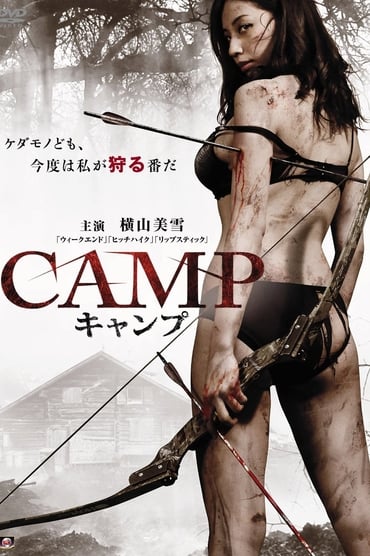 Kozue (Yokoyama) and her younger sister Akane (Momomiya) are driving through the countryside when their car breaks down, near a closed camp-ground. Closed – but, unfortunately for them, not deserted. The well-mannered young man whom they first encounter turns out to be a lure, who brings the two women into the grasp of a pack of psychopaths. The nicknames these weirdos have, largely sum up the extreme peril of the situation for the siblings: Hypo, Pyro, Copro, Necro and Thanatos. It turns out they were all pals during an enforced stay in a nearby mental hospital. When that shut down suddenly (in a way explained later on), they opted to hang around, forming some kind of sexually-deviant collective. Kozue and Akane pretty much represent a theme-park for these perverts.
What follows is pretty tough to watch. And regular readers will know I’m hard to rock, having about 35 years of watching “video nasties” under my belt. This, though… It goes beyond the simple unpleasantness of say, I Spit on Your Grave, perhaps due to the sick inventiveness here. I mean, effectively vacuum-sealing a victim inside one of those giant plastic bags, typically used for storing bedding, and watching her suffocate? Then there’s the bit where Pyro lives up to his name – likely the scene where I questioned most quite why I was watching this. For one of our mantras here, is that when it comes to rape-revenge films, we are considerably more interested in the revenge than the rape. Which is why the original ISoYG isn’t here, but the reboot entries area.
This certainly teeters on the edge of the same exclusion, despite Kozue’s sterling efforts to draw the assailants’ attention to her and away from Akane. There’s a subplot which helps to explain the frosty relationship between the sisters, dating back to an incident involving them and Akane’s then-boyfriend. Eventually, Thanatos (Kawatsure), who seems considerably less enthusiastic about the depravity than the others, helps Kozue make a break for it. She then meets a former nurse from the facility (Ayana), who explains the history behind the posse of perverts. Although she has been trying to take them down, success has eluded her until now, when Kozue’s arrival might give her the added help necessary.
And this is where the movie does just about deliver the adequate level of revenge necessary to qualify here. For the two women team up to ensure no-one else has to suffer the same atrocities as Kosue and Akane. But even this is not as unequivocal as it could be, for the avengers are unable to agree on how Thanatos should be treated. Is it a case of, as my mother used to say, if you fly with the crows, you’ll be shot with the crows? Or do his actions perhaps indicate a salvageable slice of humanity, not deserving of the same penalties as his associates? A thoughtful movie would probably have done a better job of examining these moral issues. The target here is considerably more visceral, no argument. Yet even a low blow like this can still pack a punch.
Dir: Ainosuke Shibata
Star: Miyuki Yokoyama, Peach Momomiya, Hiroaki Kawatsure, Rei Ayana
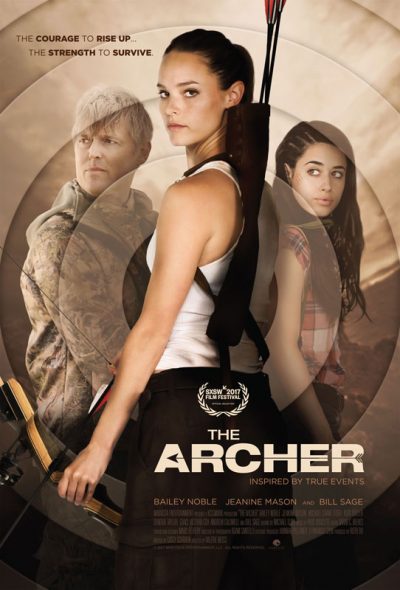 Lauren Pierce (Noble) is an expert archer, leading her high-school team. However, after she rescues a friend from sexual harassment, she finds herself on the wrong side of justice, and is sent to “Paradise Trails”, an incongruously-named juvenile detention facility, where harsh discipline and indefinitely extended sentences are the order of the day. And wouldn’t you know it, the place is run by a former Olympic archer – Bob Patrice (Sage) and his creepy son, Michael (Terry). It’s not long before Lauren is plotting an unofficial departure, along with new friend Becky (Mason), who knows the truth about what’s going on behind the scenes. When they get evidence proving it during their exit, they become the hunted as Bob and Michael will go to any lengths to stop the truth from getting out.
 This dates back from 2005, before Carano was a household name in the world of mixed martial arts, or a somewhat successful actress. At this point, she was only involved in the sport of muay thai, which as it’s name suggests, is a martial art originating in Thailand. She was one of five girls training in Las Vegas under Toddy – a nickname given because the teacher’s real name of Thohsaphol Sitiwatjana was too unpronounceable to Westerners! The goal of both Toddy and his students was a trip to Thailand to take on the best local practitioners of the sport. This “documentary” covers both their training and the visit itself, climaxing with Carano’s battle against the Thai champion.
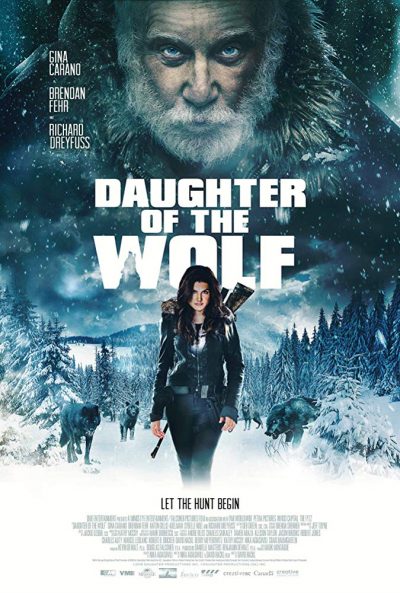 The cinematic goodwill Carano accumulated as the result of her electric debut in
 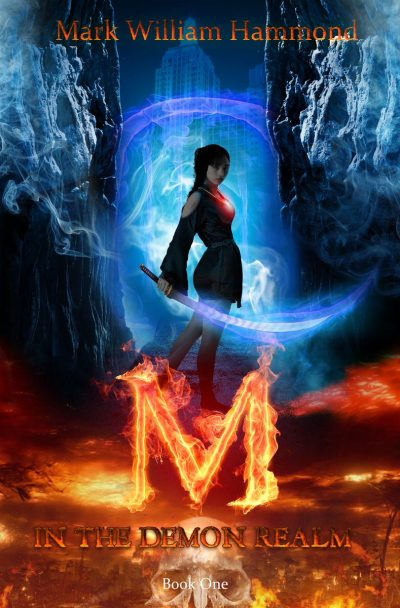 I feel a little uncertain about reviewing this, since it’s basically two-thirds of a single novel. Or maybe two connected novellas. Oddly, the three entries get longer as they go, starting at 110 pages, increasing to 160 for the second and finishing off at around 210. I’ve been waiting for the third and final part to show up on special offer for a while, but it hasn’t happened. The first two parts were somewhat intriguing, just not enough to convince me to pay full price. So I finally decided to publish and be damned. Wait and see its cost drop the week after this goes live…
 I should probably start by providing some background the film omits – likely because the intended Indian audience were well aware of it. In 2012, a notorious gang-rape took place in Delhi, the victim subsequently dying. Of the six attackers, four were sentenced to death and one committed suicide in prison – but the sixth, being a juvenile, could only receive a maximum sentence of three years. This loophole appalled many, including two journalists depicted in this film, Jyothi (Nivedhitha) and Divya (Karagada), who begin a campaign to revise the law.
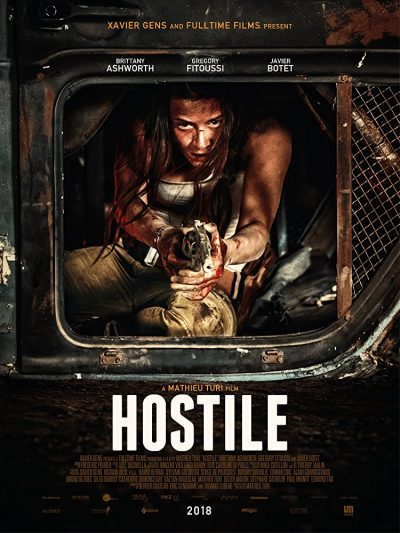 After an un-specified global apocalypse, humanity is reduced to small bands of scattered survivors, who have to try and scratch out survival, while avoiding the attacks of “reapers”, mutated creatures which stalk the landscape, especially after dark. One of those survivors is Juliette (Ashworth), who is on a foraging mission in the desert when an accident throws her off the road, and leaves her with a badly-broken leg. She has to wait for help to arrive, fending off the reaper (Botet) which is prowling the area, with whatever she can find to hand. As she does so, she thinks about life before the apocalypse, where she escaped drug addiction with the help of her boyfriend, gallery owner Jack (Fitoussi) – only for happiness to be fleeting, and taken away from her when multiple tragedies strike.
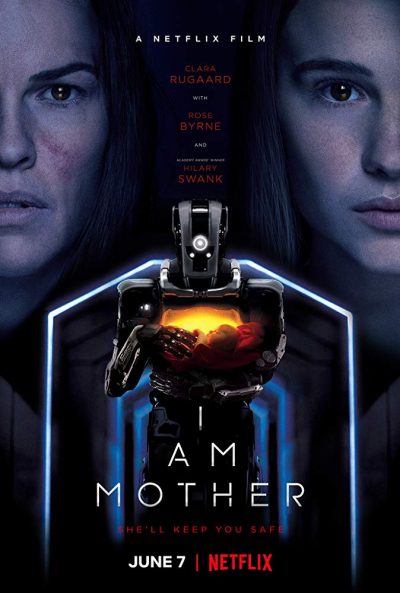 After an extinction-event has turned Earth uninhabitable, an underground “ark” holds thousands of human embryos, overseen by a robotic Mother (voiced by Byrne, performed by Hawker). One embryo is brought to fruition, becoming Daughter (Rugaard, resembling a young Jennifer Garner), who grows up into a young woman, educated by Mother to believe she’s alone on the planet. But she begins to doubt what Mother tells her, and these doubts are confirmed when another, older woman (Swank) shows up. Let in by Daughter, she tells tales of humanity outside struggling for survival against robot killers. Everything Daughter has been told is a lie. Or is the new arrival telling the whole truth either?
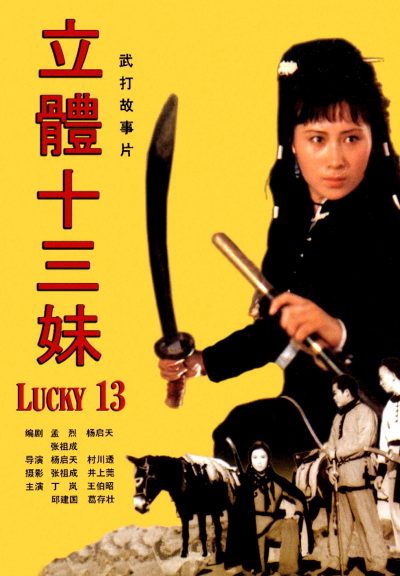 Despite a mangled title, what you have here is a straightforward tale of vengeance – and its attempts to diverge from that narrative are when the film is at its least interesting. Evil general Ji Xian Tang kills the parents of Ho Yu Fung (Ding): well, I suppose technically he only kills her father, her mother committing suicide by the corpse. In some remarkably unsubtle foreshadowing, Yu Fung is told, “This broadsword is our family heirloom. Our hope for vengeance is in your hands.” Given this, it’s no surprise she escapes with the help of a brave sacrifice from a servant, and becomes the pupil of a kung-fu master.
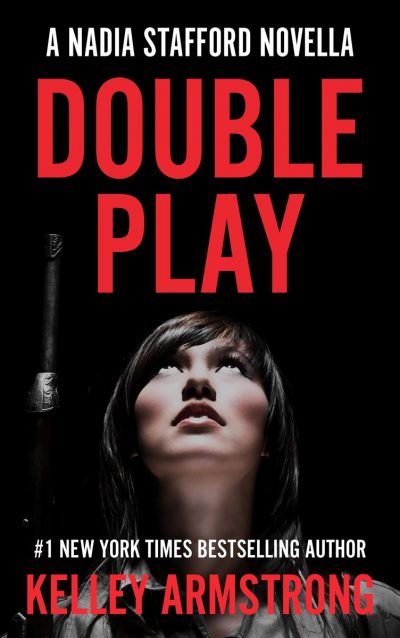 Some years ago, my Goodreads friend Mary J.L. gave the original novel of the author’s Nadia Stafford trilogy a favorable review, and that put it on my radar. As a rule, I don’t read novels that are only published in electronic format (it does have a audio version, but I don’t listen to audio books either), but I do read short e-stories; electronic publishing provides a forum for those works which no longer exists in print, what with the demise of general-circulation magazines. This tale, as a novella, occupies a middle ground, but commercially novellas are in much the same boat as short stories –a single one wouldn’t sell very well in print format. So I felt it was fair to treat it the same way, and thought it would be a good way to check out the series for myself.