Owen and Noraya Smith are twins, in a world where such siblings are looked upon as cursed. Brought up as charcoal burners, they leave their village so Nora can avoid an arranged and unwanted marriage, and have the forture – whether good- or ill- remains to be decided – quickly to encounter the party of Prince Basham. He is scouring the country in search of a magical artifact called the Living Blade, which will grants its wielder great power. Assisting him is the half-wight Telen Diaz, a pilgrim/fighter. Owen joins the party, hoping to become a pilgrim himself; Nora decides to return home, but that option is removed from her as the village has been taken over by bandits. Fortunately, Diaz has followed her and is able to lend assistance when necessary. Nora eventually becomes his student in the fighting arts, and they all head to the temple/brothel of Shinar where the immortal seer Suranna can provide insight to the blade’s location. But the cost of her information is perilously high, since she has plans for both Nora and Diaz.
I believe this is what’s called “grimdark” fantasy fiction, which is basically as it sounds: in its simplest terms, think Game of Thrones rather than Lord of the Rings. I’ve no problem with the resulting “mature” content. Much of it here does seem necessary to the plot, though the concept of a vast, hidden city in the middle of nowhere that’s a gigantic, all-encompassing pleasure palace does pose certain logistical queries. There was also something slightly creepy about teenage Nora increasingly crushing hard on eighty-seven-year old Diaz – even if half-wights, like half-elves, age very well. I have a couple of other nitpicks. An almost entirely untrained Nora is capable of going all ninja and taking out an entire platoon of brigands. And there’s an assault on the city that comes out of nowhere, and whose purpose and participants both seem ill-defined.
With the negatives out of the way, on the positive side, I really liked Nora. She has a very sharp character arc over the course of the novel, but always seems to have been a bit of a bad-ass, even as a charcoal burner. It’s clear there’s a very significant future in front of her, and I sense she and Suranna will end up facing off down the road. I appreciated the way the heroine largely doesn’t care about the Living Blade; such apathy is pleasantly refreshing, though I suspect that opinion is going to change before long. Whitecastle has a good eye for world-building as well, giving the reader enough of an impression, without getting bogged down in too many details. It appears future volumes may concentrate more on Diaz. As I found him about the least interesting of the major characters, that will stop me shelling out for more. Still, as a one-off this made for an entertaining enough read, though I felt the first half, before they arrived at Shinar, was stronger and more interesting.
Author: Timandra Whitecastle Publisher: Amazon Digital Services, available through Amazon, both as a paperback and an e-book
1 of 3 in the Living Blade series.
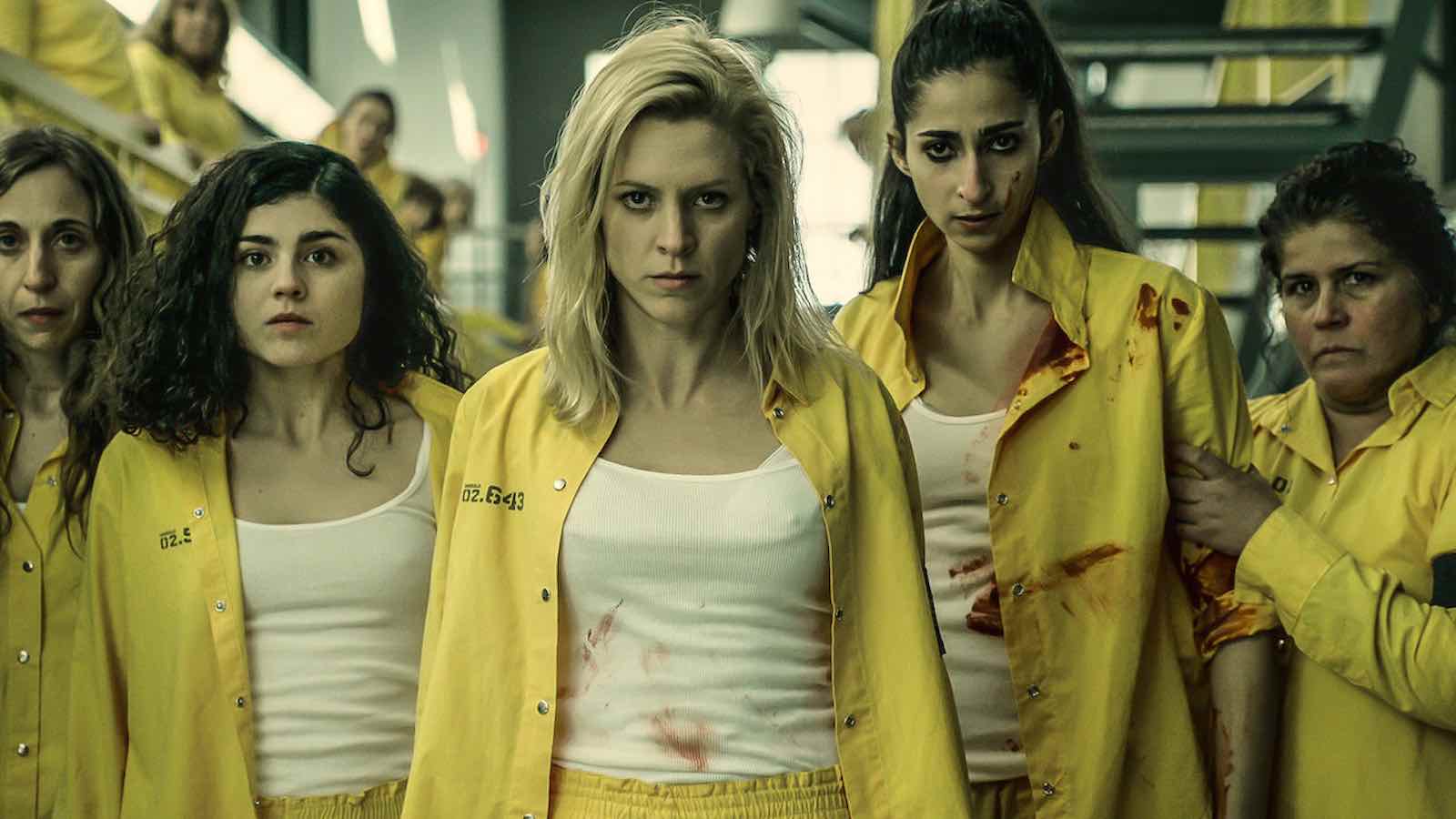
While this Spanish series started off back in 2015, it perhaps suffers through not having been watched until recently – in the wake of shows like Wentworth and The Yard. There are too many elements which left me feeling “Hang on: haven’t I seen that somewhere before?” For instance, the thread where a motherly inmate gets Alzheimer’s and pleads with her cell-mates to kill her before it destroys her mind entirely? Liz Birdsworth, in seasons six and seven of Wentworth. So, I guess your opinion on this may vary, depending on your familiarity with the genre. Also like Wentworth, the main protagonist is someone who is not a hardened criminal – but ends up becoming one, over the course of the show.
In this case, that is Macarena Ferreiro (Civantos). She gets seven years after becoming the patsy for her boss’s fraud. She stumbles across the location of a robbery haul, which brings her into conflict with… Well, just about everyone, but the key persona is Zulema Zahir (Lobato), the top dog of the prison. The five seasons (40 episodes in total) revolve around their love-hate relationship, though as usual, there are a good number of side stories and supporting characters, on both sides of the bars. Again, some of these may feel rather familiar, with the show going through the usual tropes of power struggles, warders good and bad, and criminal activities. It’s solid enough (and offers more nudity than the other shows, if that’s of interest!), just all too familiar at this point.
The show was originally cancelled after the second series, but after a significant pause was then revived for a third and fourth season. That delay required significant cast changes, due to the cast having moved on – Civantos’s other commitments meant Macarena became a secondary character. They also had to “transfer” to a new prison, as their existing sets had been taken over by another show (Money Heist, also on Netflix). But the real weirdness begins after the end of Season 4, which has an air of absolute finality to it. But, wait! There’s more! For Vis a vis: El oasis, followed. Set a decade later, Macarena and Zulema have teamed up, to become an armed robbery duo.
They recruit some of their old pals to pull off the dreaded ‘one last heist’, robbing the wedding of a cartel boss’s daughter. Needless to say, it goes about as well as ‘one last heists’ always do. Initially, it feels a bit like an unwanted supplement. But it ends up as probably the most relevant to this site, with the women holed up in a motel, in the middle of the desert, and under siege by the boss’s army. By going outside the prison walls, this offers most scope for genuine invention, and it’s likely why I felt this to be the strongest season. I just wish I hadn’t had to go through four series of generic prison drama to reach it.
Created by: Iván Escobar, Esther Martínez Lobato, Álex Pina, Daniel Écija Star: Maggie Civantos, Najwa Nimri, Carlos Hipólito, Roberto Enríquez
a.k.a. Vis A Vis (Face to Face)
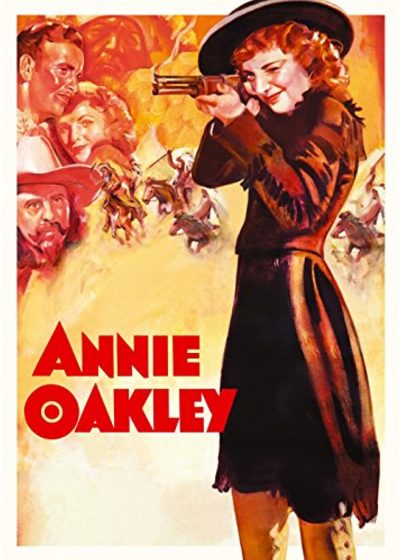
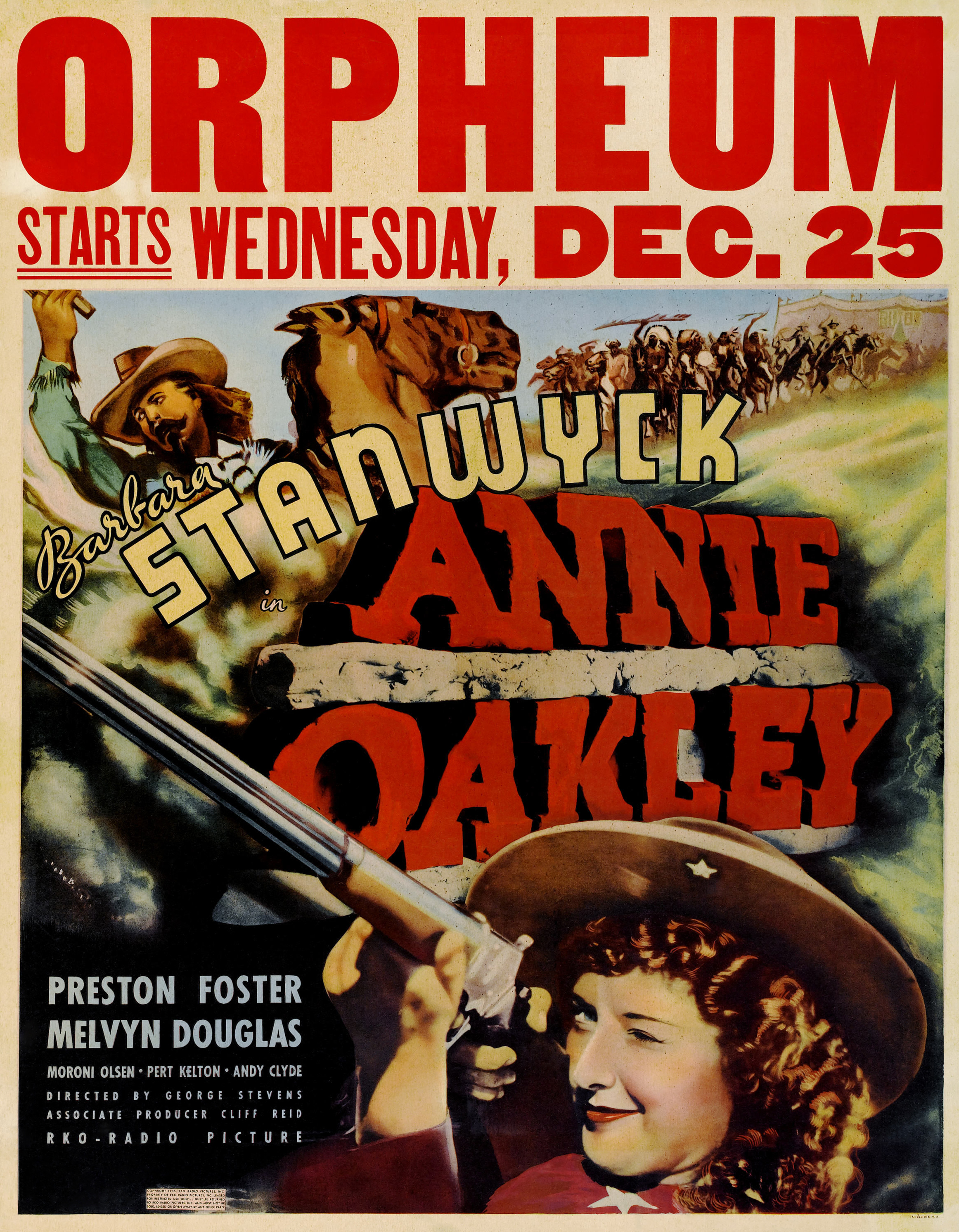
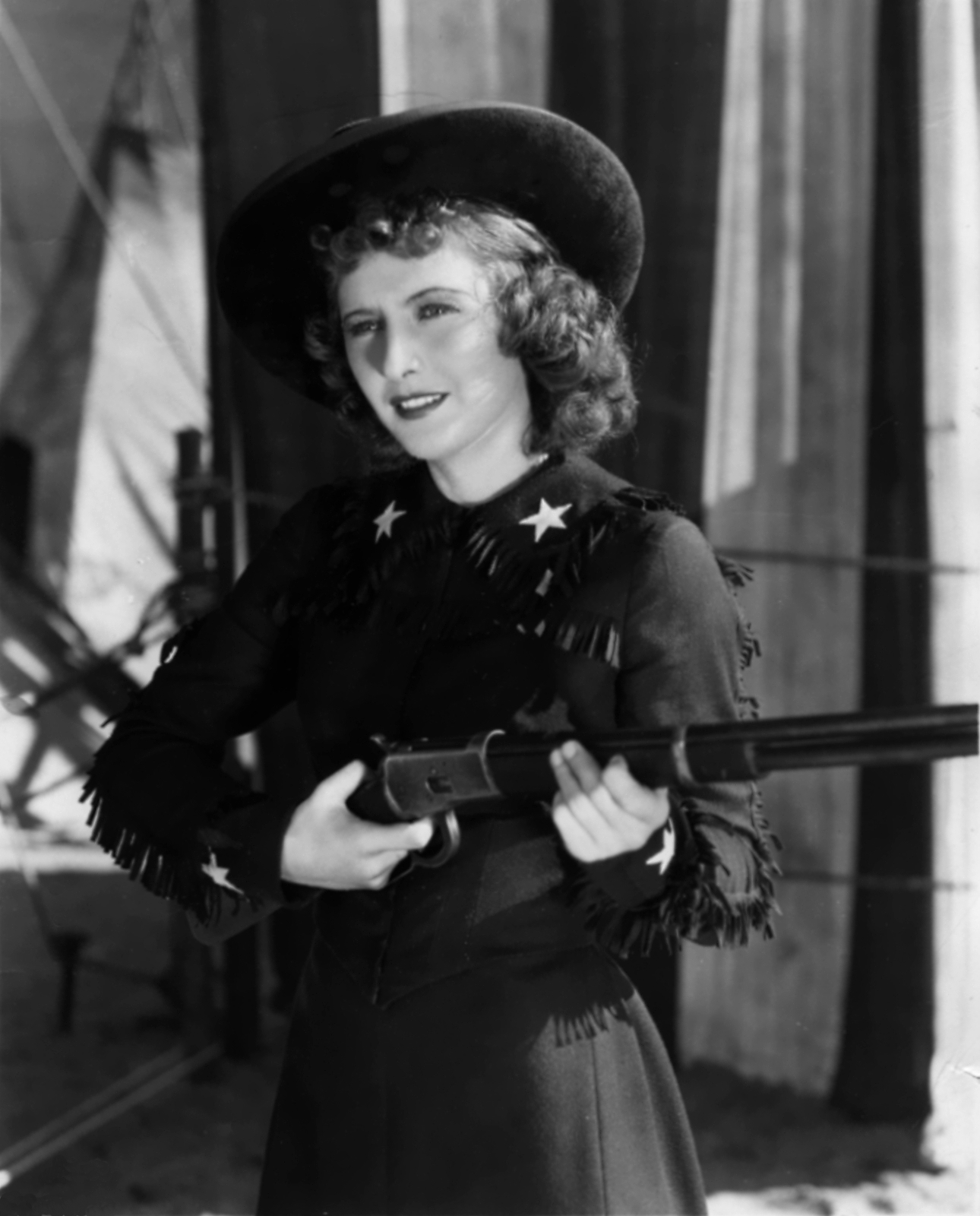
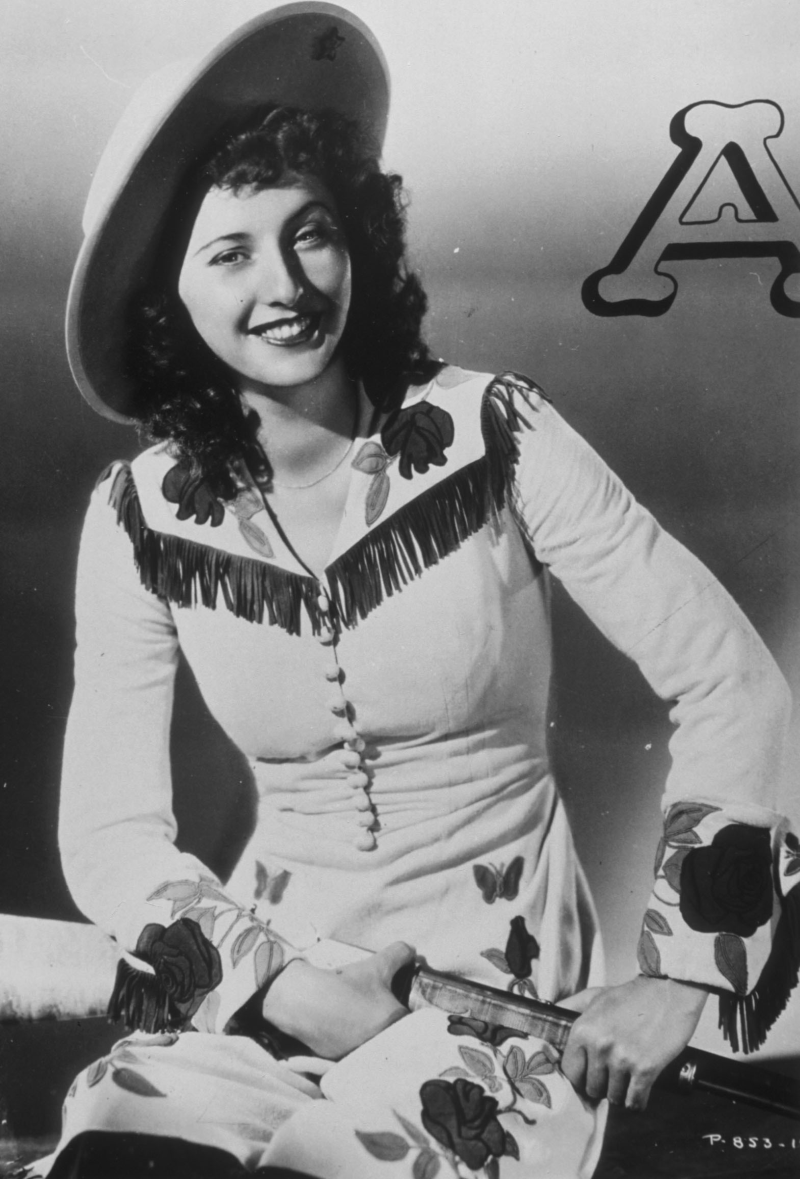
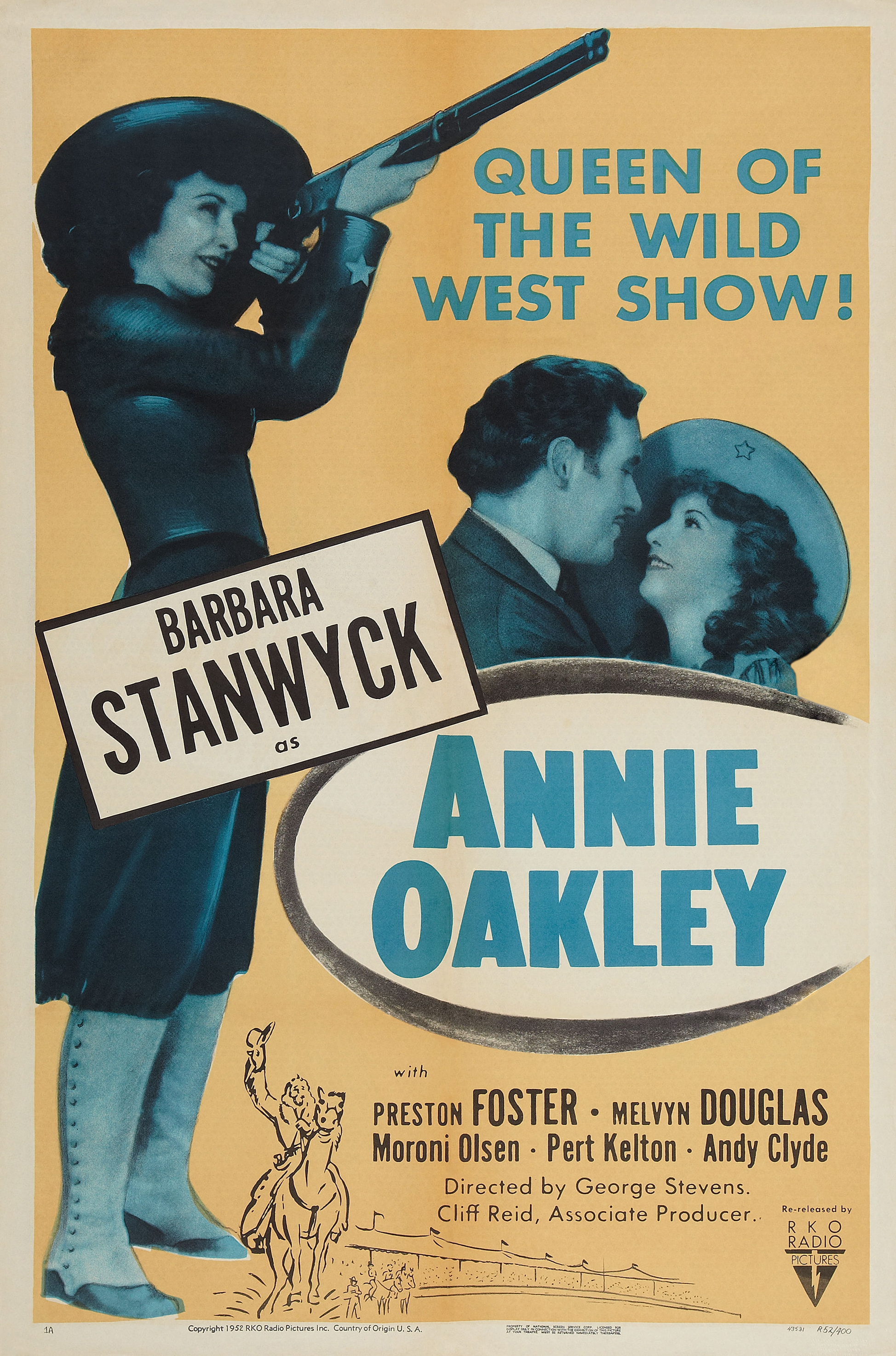
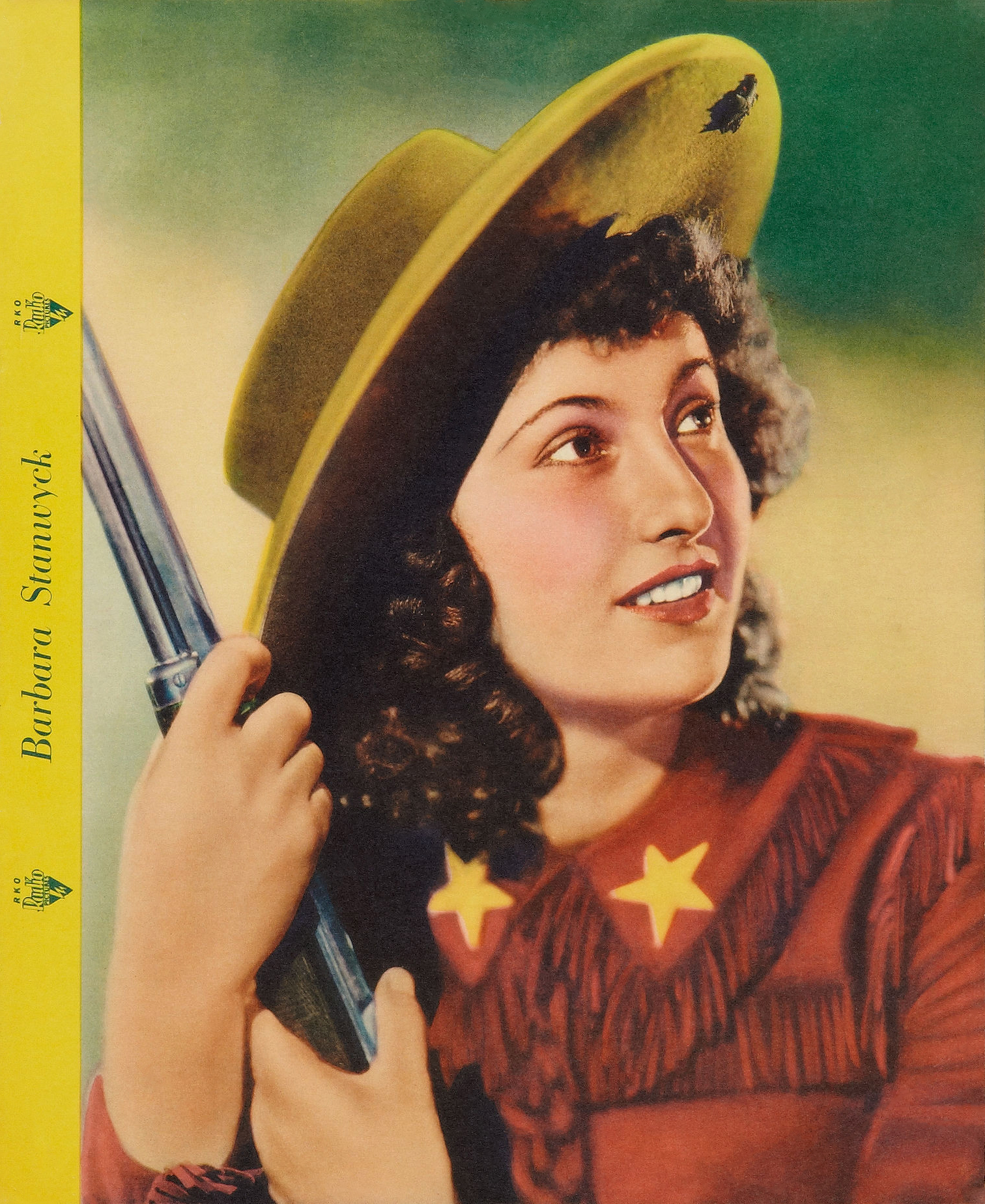
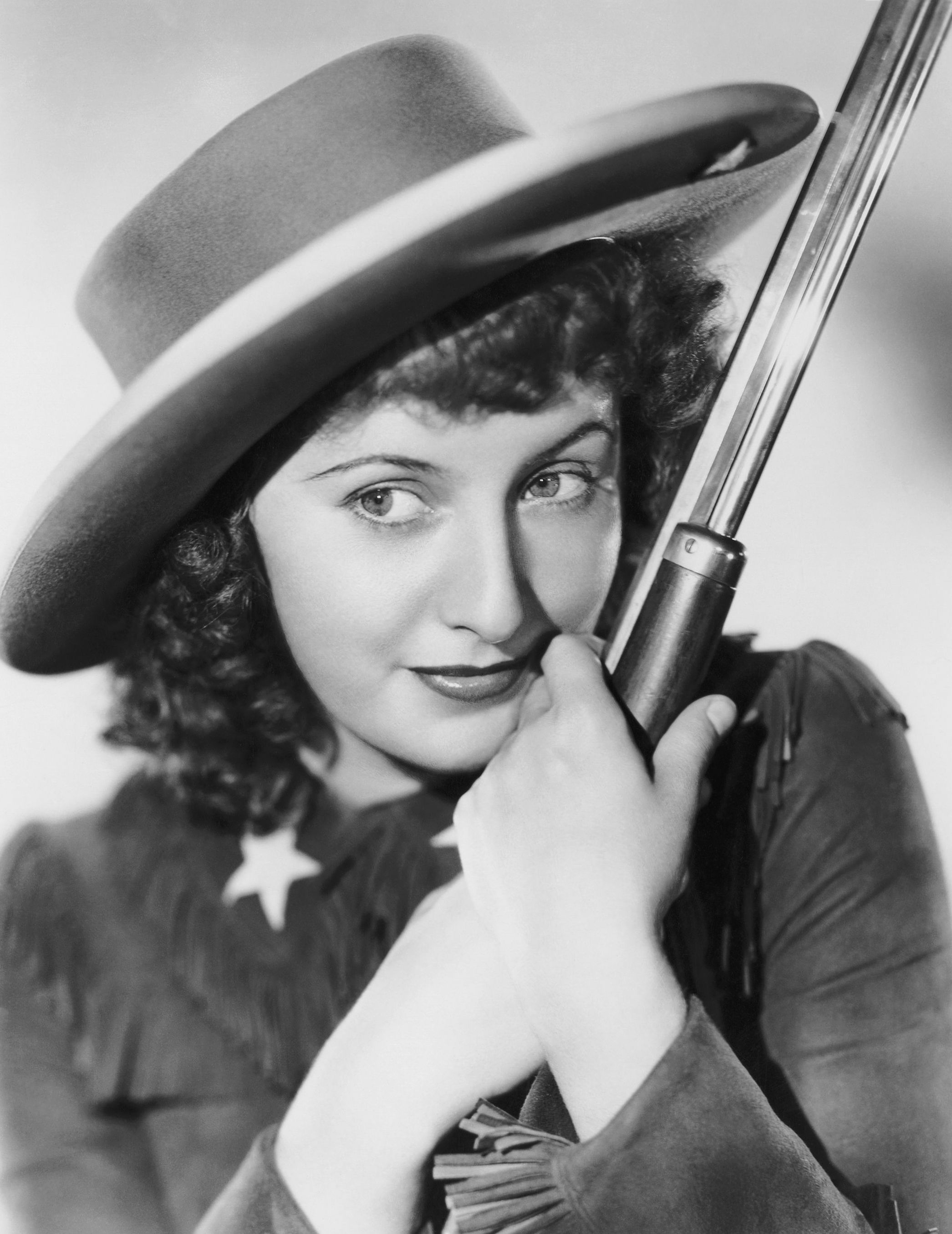
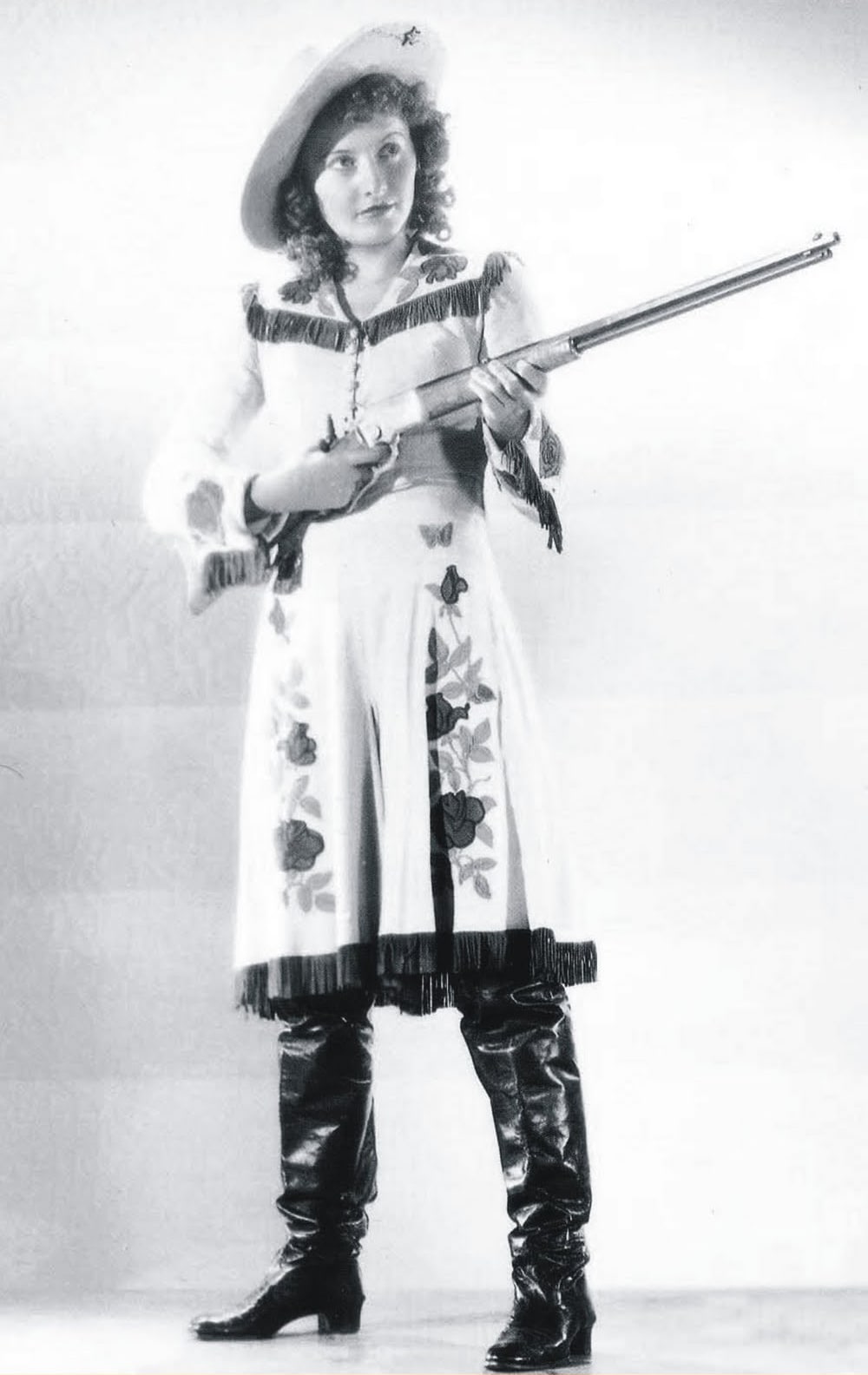
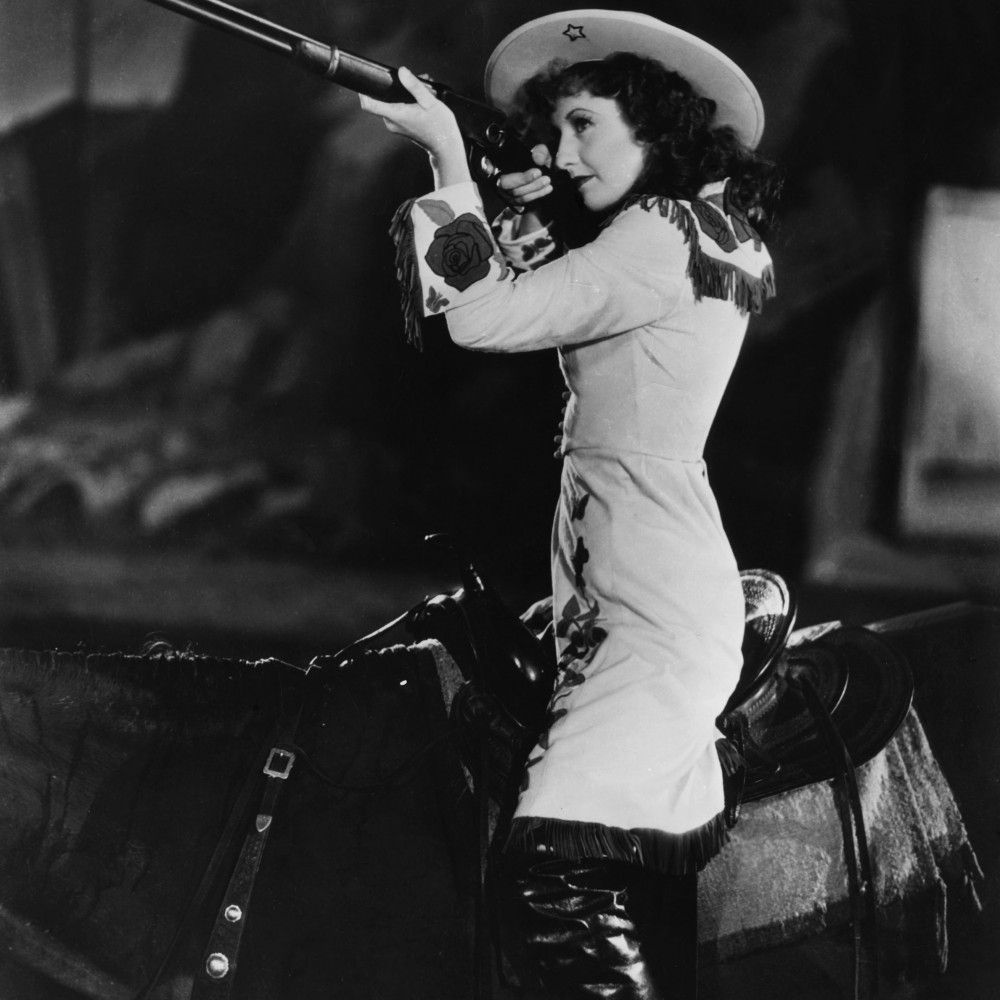
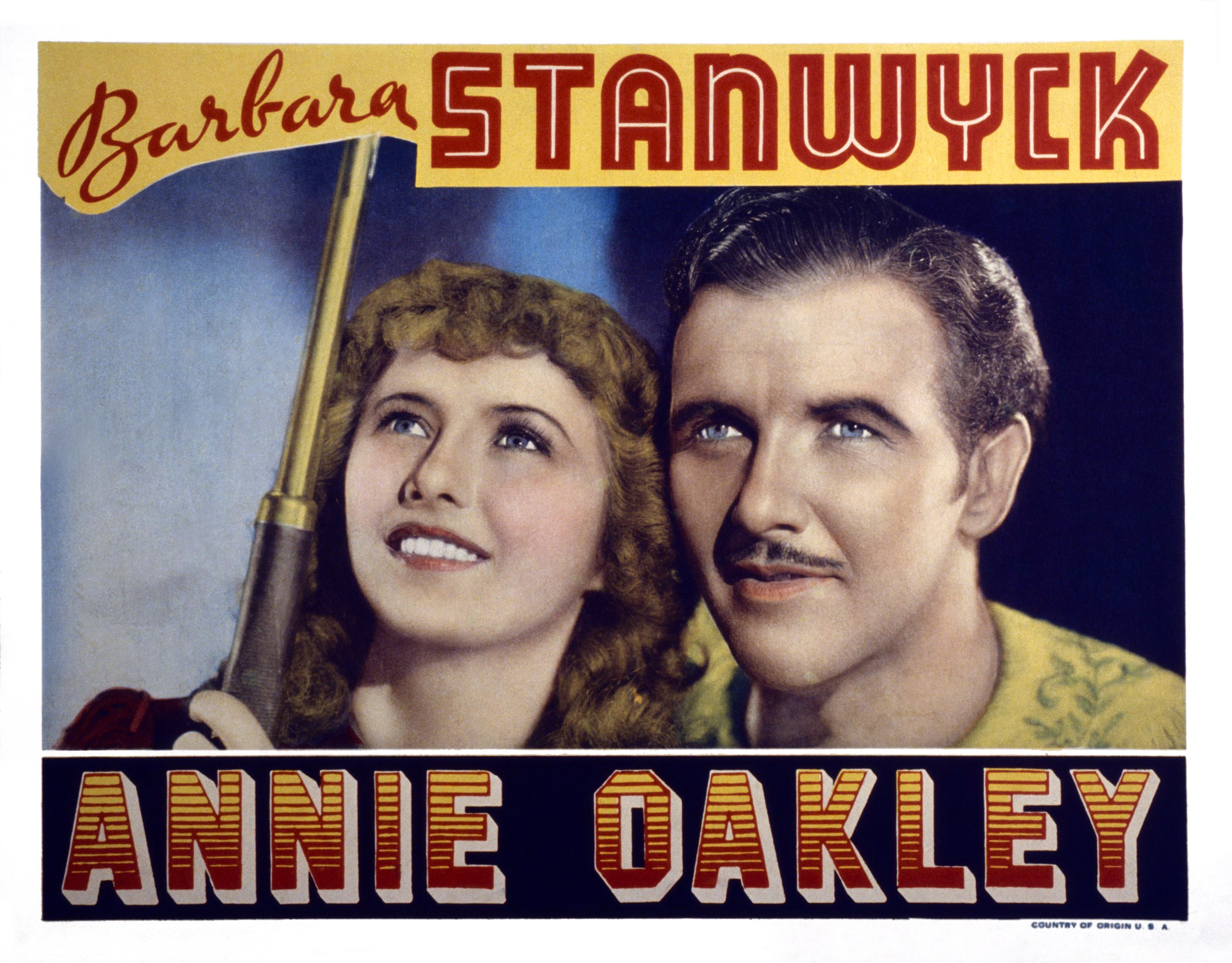
While not exactly an accurate retelling of the life of noted sure-shot Annie Oakley, this is breezily entertaining. Indeed, you can make a case for this being one of the earliest “girls with guns” films to come out in the talking pictures era. There’s no denying Oakley (Stanwyck) qualifies here. The first time we see her, she’d delivering a load of game birds – all shot through the head to avoid damaging the flesh – to her wholesaler. When barnstorming sharpshooter Toby Walker (Foster) blows into town, Annie ends up in a match with him, which she ends up throwing, due in part to her crush on him. She still gets a job alongside Walker, in the Wild West show run by the renowned ‘Buffalo Bill’ Cody (Olsen) and his partner, Jeff Hogarth (Douglas). But Annie and Toby’s relationship fractures after he accidentally shoots her in the hand, while concealing an injury affecting his sight.
This hits the ground running, and roughly the first third plays decades ahead of its time. Don’t forget, this was made only fifteen years after women were granted the right to vote across the entire United States. Its depiction of a strong, perfectly independent woman as personified by Stanwyck is great – there’s also Walker’s former “friend,” Vera Delmar (Perl Kelton). When sternly warned the saloon she’s about to enter is no place for a lady, she breezily replies, “Oh, I’m no lady.” I’m quite impressed this was able to get through, given the rigid imposition of the strict Hays Code, beginning the previous year, with its goal “that vulgarity and suggestiveness may be eliminated.”
Almost inevitably, it can’t maintain this pace. There’s too much footage of the Wild West Show, which seems to consist largely of people on horses milling around the arena. I guess people were easily satisfied in those days. Meanwhile, the romance between Oakley and Walker (an entirely artificial construction, with Walker never existing as an actual person), fails to be convincing. Somewhat more interesting is the portrayal of Chief Sitting Bull, the Native American warrior who also became part of Wild Bill’s show. While depicted largely for comic relief – witness the scene where he turns out the gas lights in his bedroom by shooting at them – he is played by a genuine Indian, Chief Thunder Bird, which is considerably more progressive than some movies. He is also instrumental in Annie and Toby’s reconciliation.
Stanwyck does an excellent job of depicting the heroine, portraying her as someone absolutely confident in her own talents. I’d like to have seen more development of her character: as is, the one we see delivering quail at the start of the film, is almost identical to the one we see making up with Toby in its final shot. Sadly, the subject didn’t live to see her life immortalized in film, having died nine years before this was released. I think she’d probably have been quite pleased with her depiction.
Dir: George Stevens Star: Barbara Stanwyck, Preston Foster, Melvyn Douglas, Moroni Olsen
“I would like to see every woman know how to handle guns, as naturally as they know how to handle babies.”
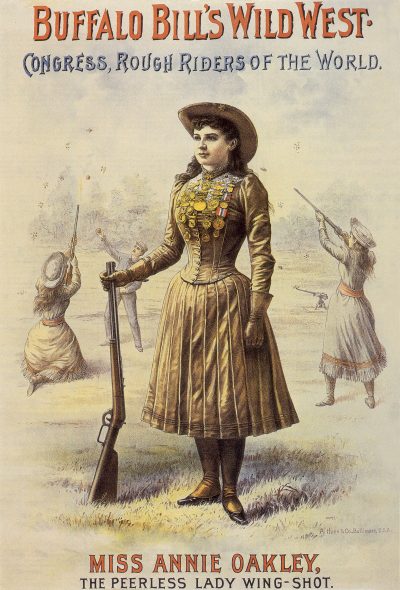
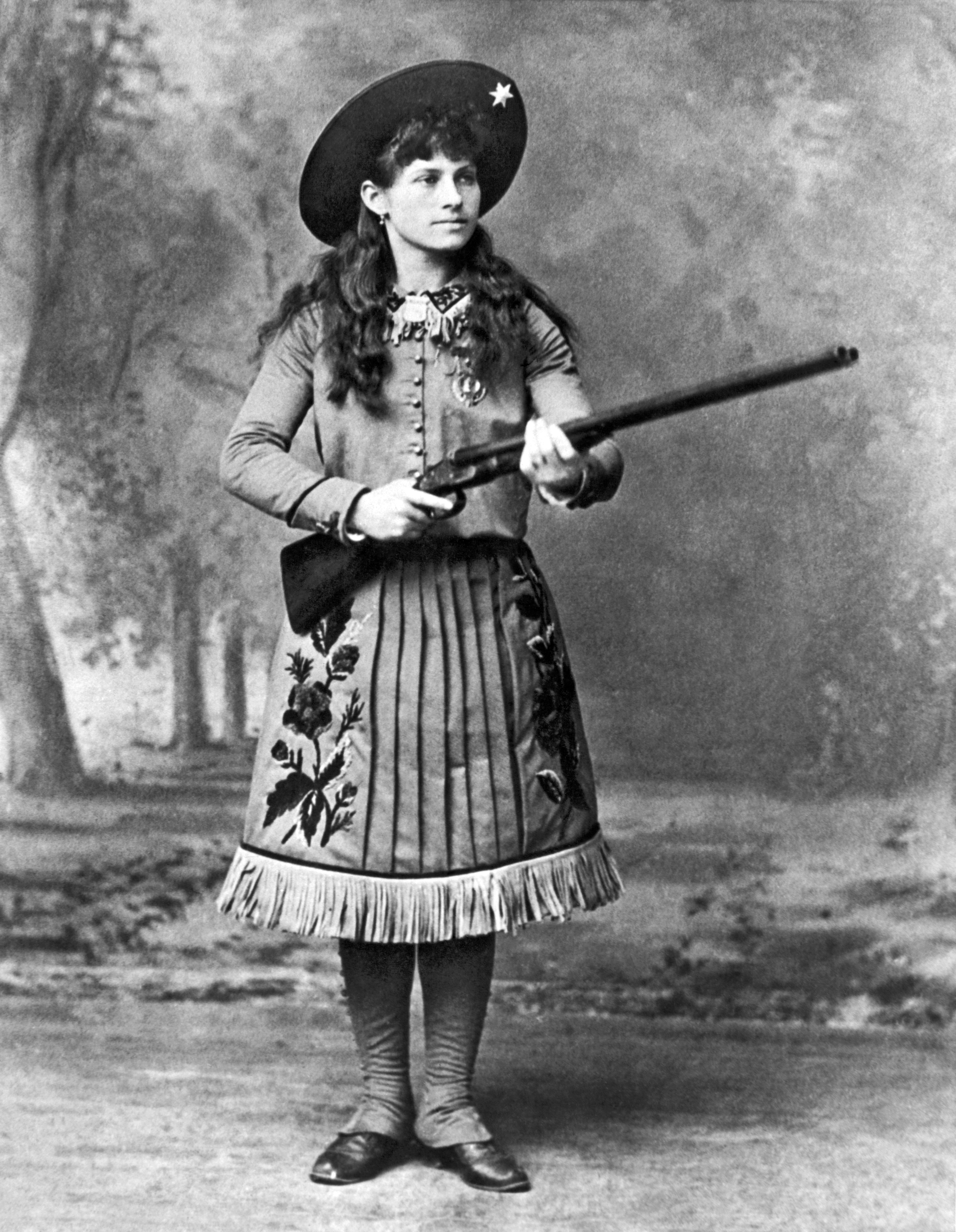
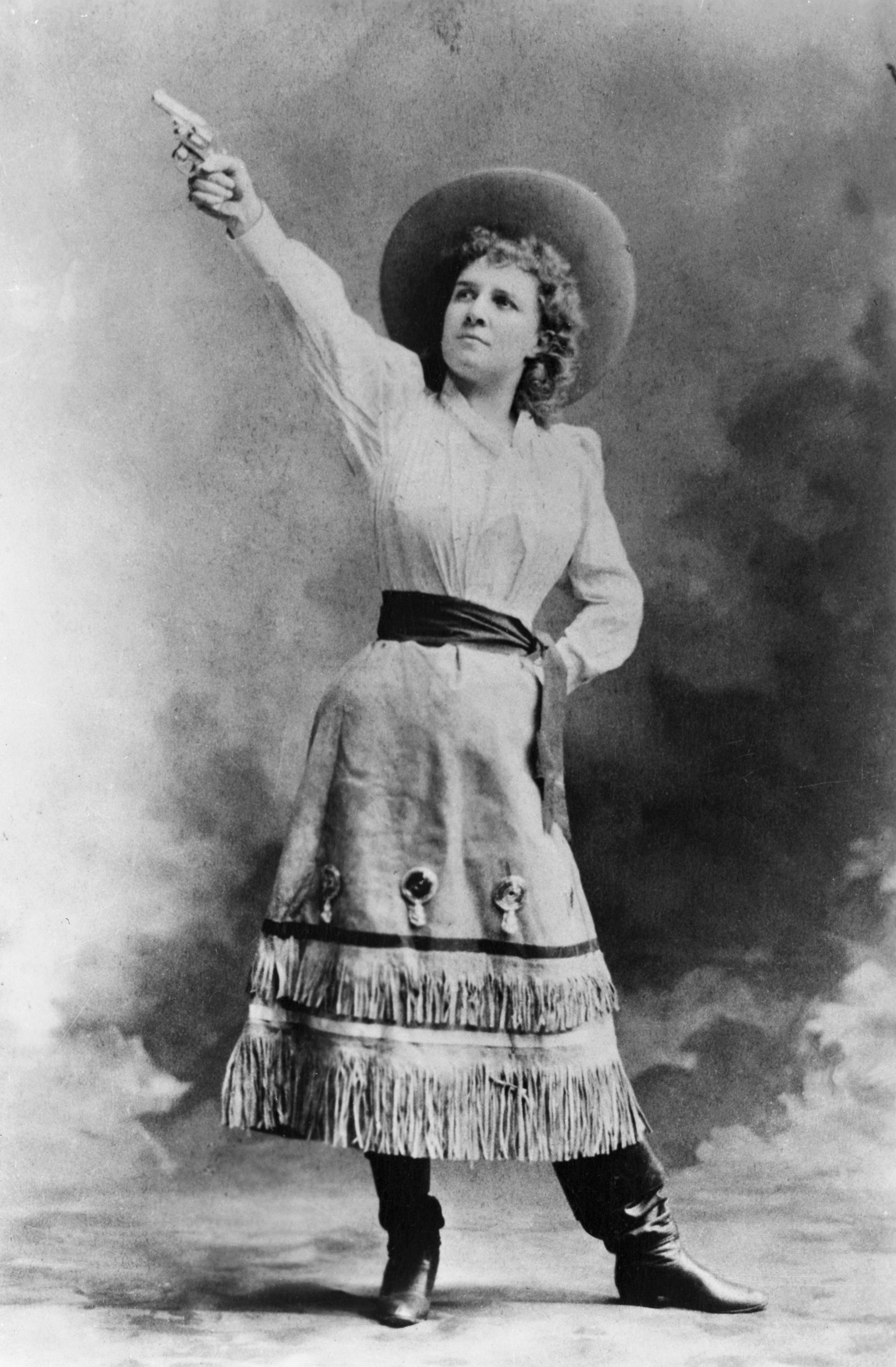
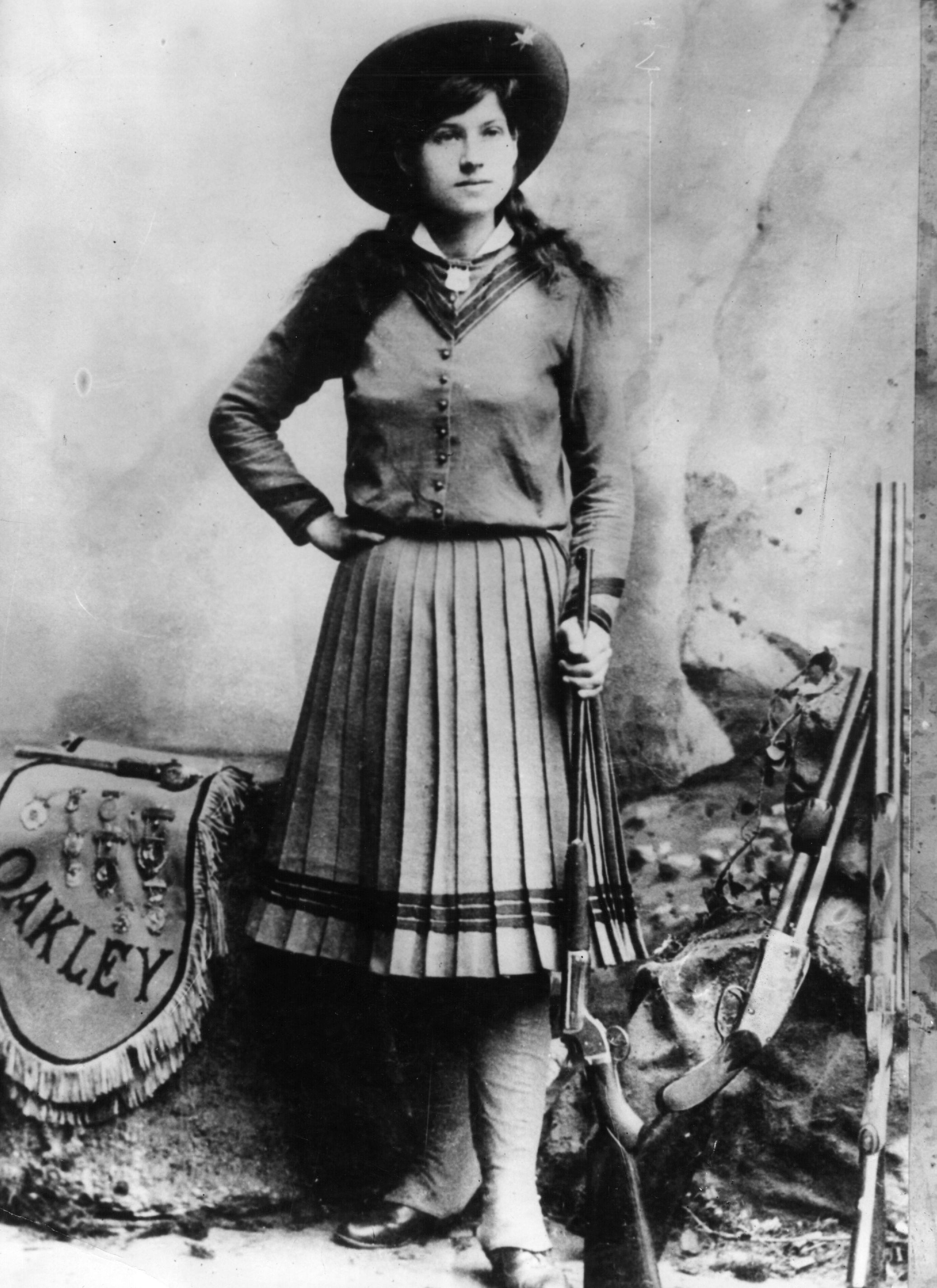
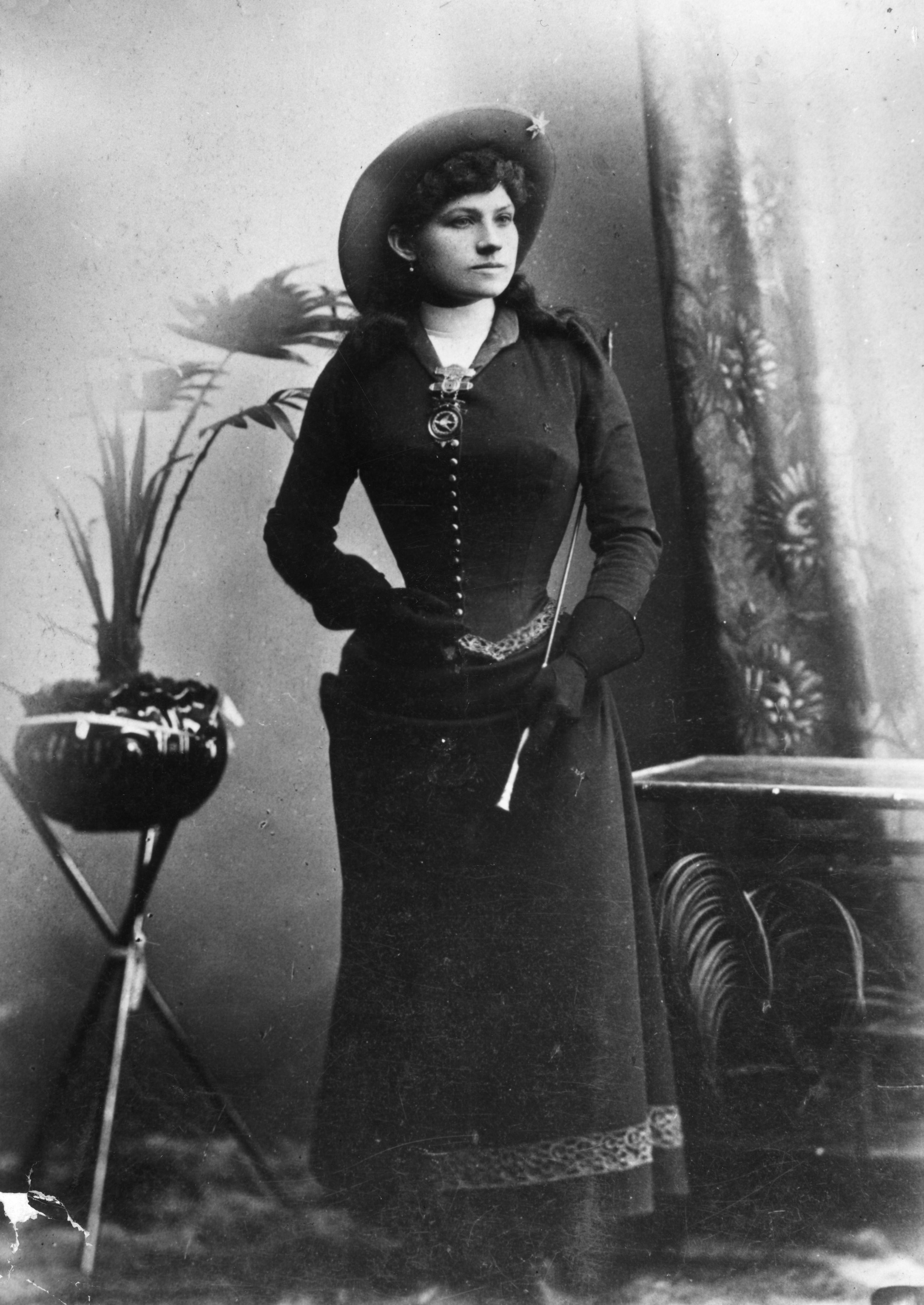
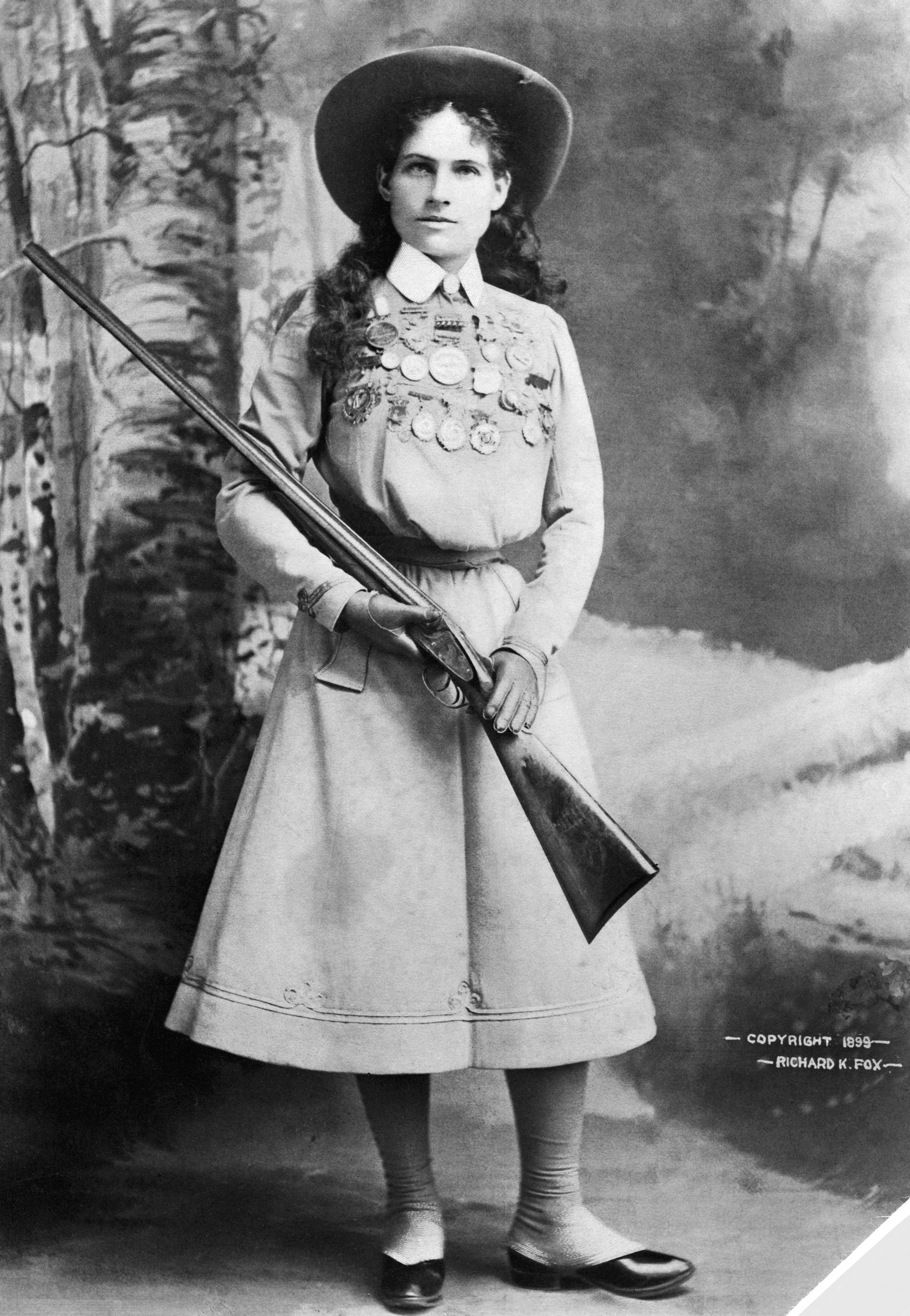
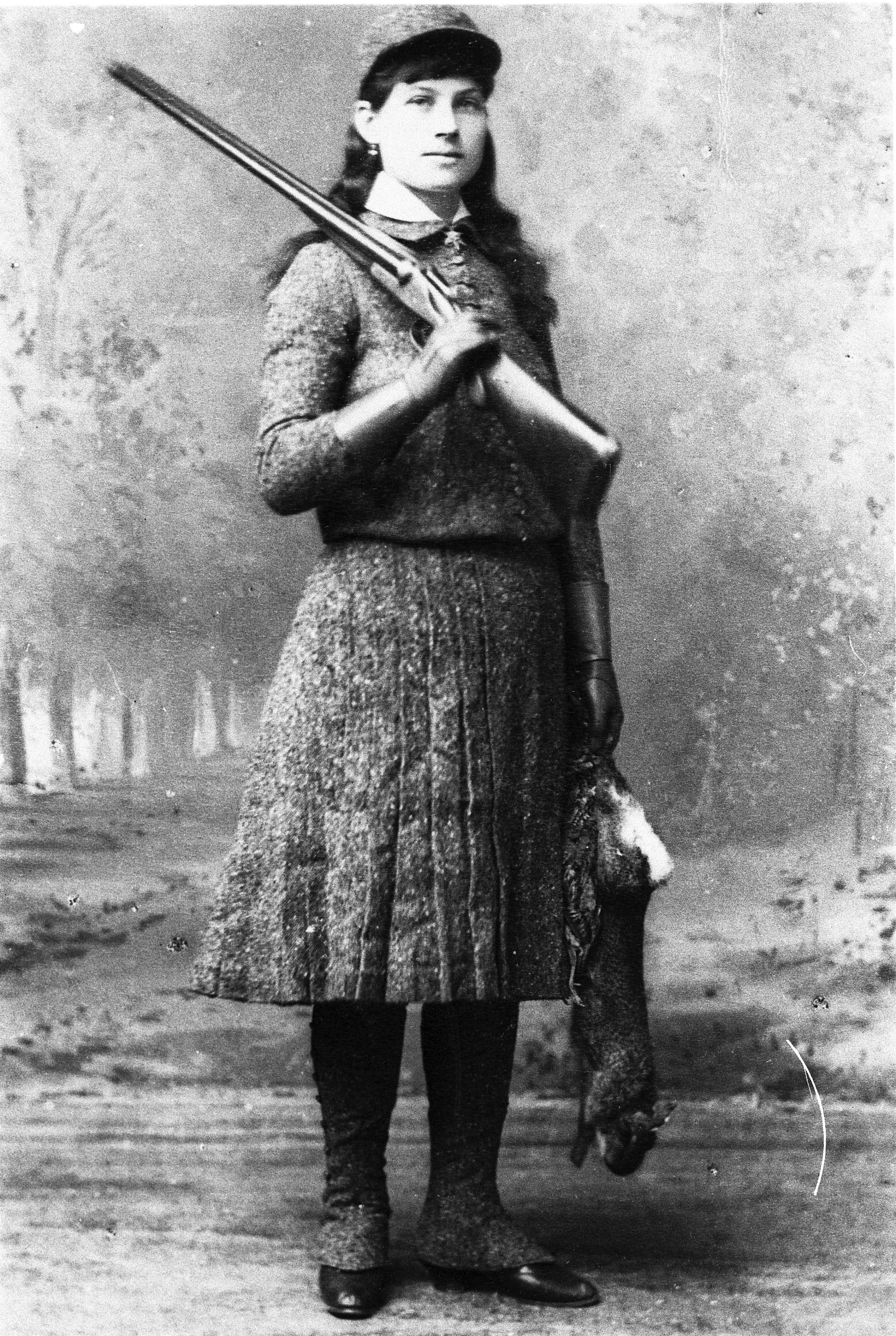
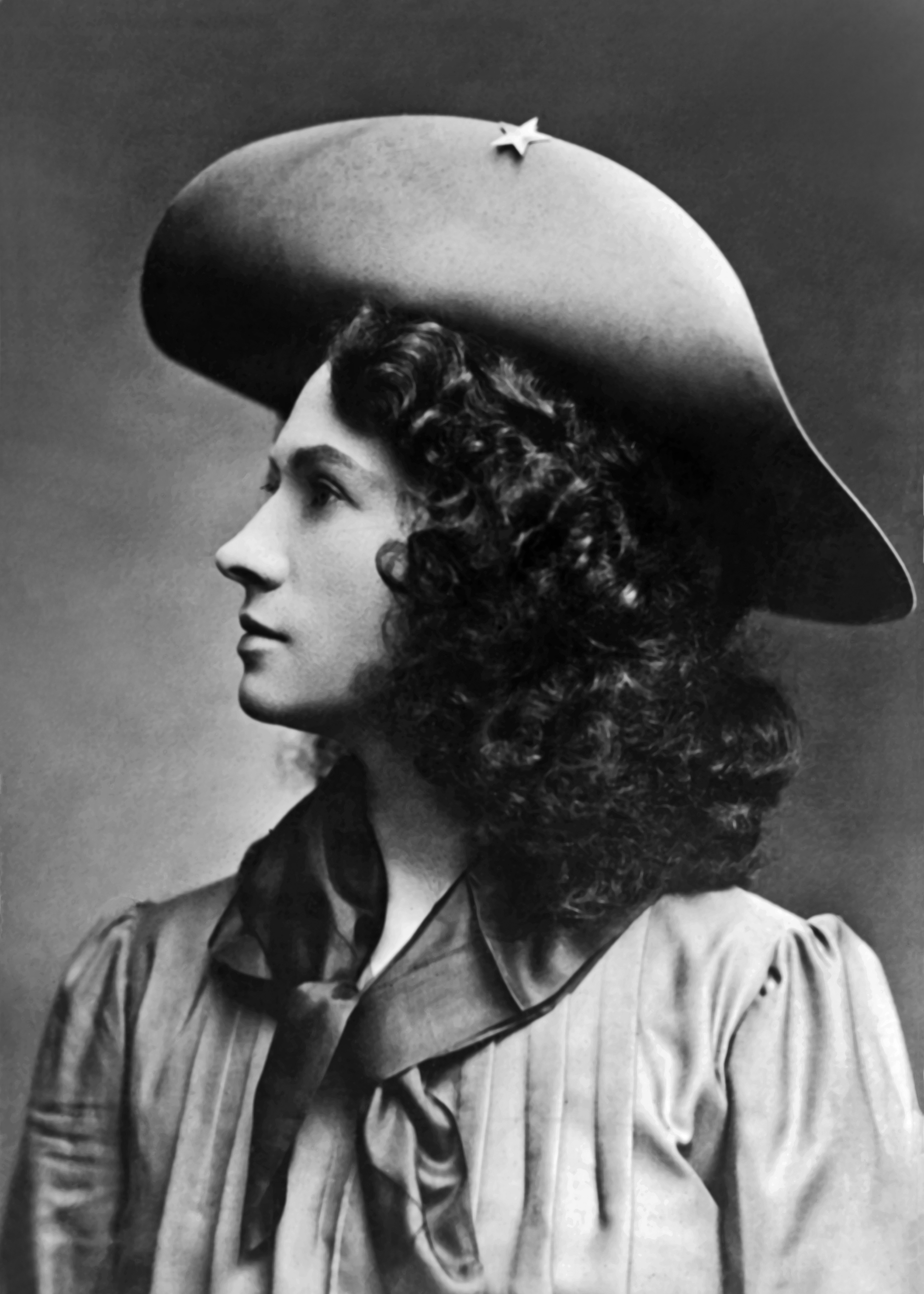
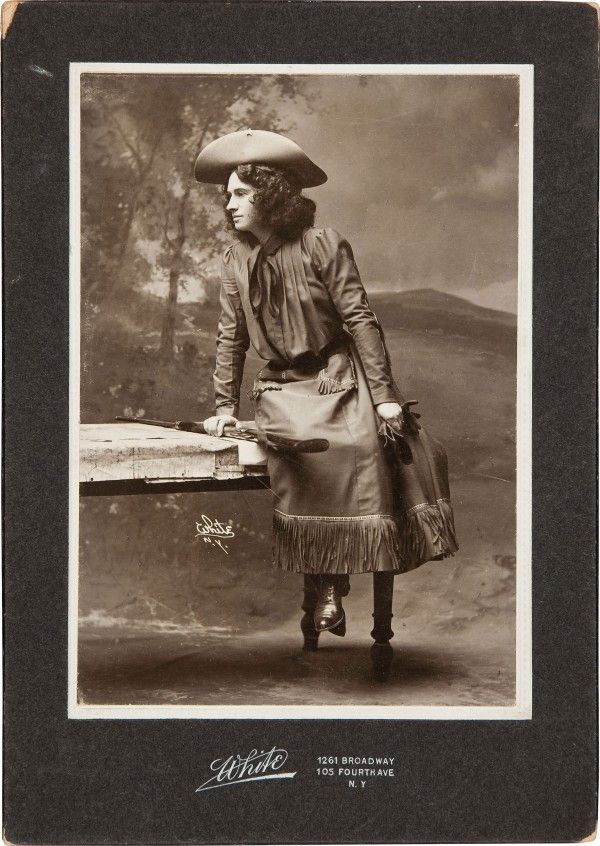
This article was largely inspired by the grainy, less than thirty second film clip above. It shows Wild West heroine Annie Oakley in action, filmed by none other than Thomas Edison on November 1, 1894 in his ‘Black Maria’ facility, one of the earliest films made at the world’s first film production studio. It’s weird to watch something made by one icon of American culture, and featuring another. It feels like seeing a photograph of Robin Hood, taken by Leonardo da Vinci, and is a reminder that Annie Oakley was a real person, not a mythical creation of Hollywood or the dime novelists. While the title here may be hyperbolic – obviously, there were other women to have picked up firearms before her – she was likely the first to achieve worldwide fame through her skill with a gun. As such, she certainly deserves a place in the action heroine Hall of Fame.
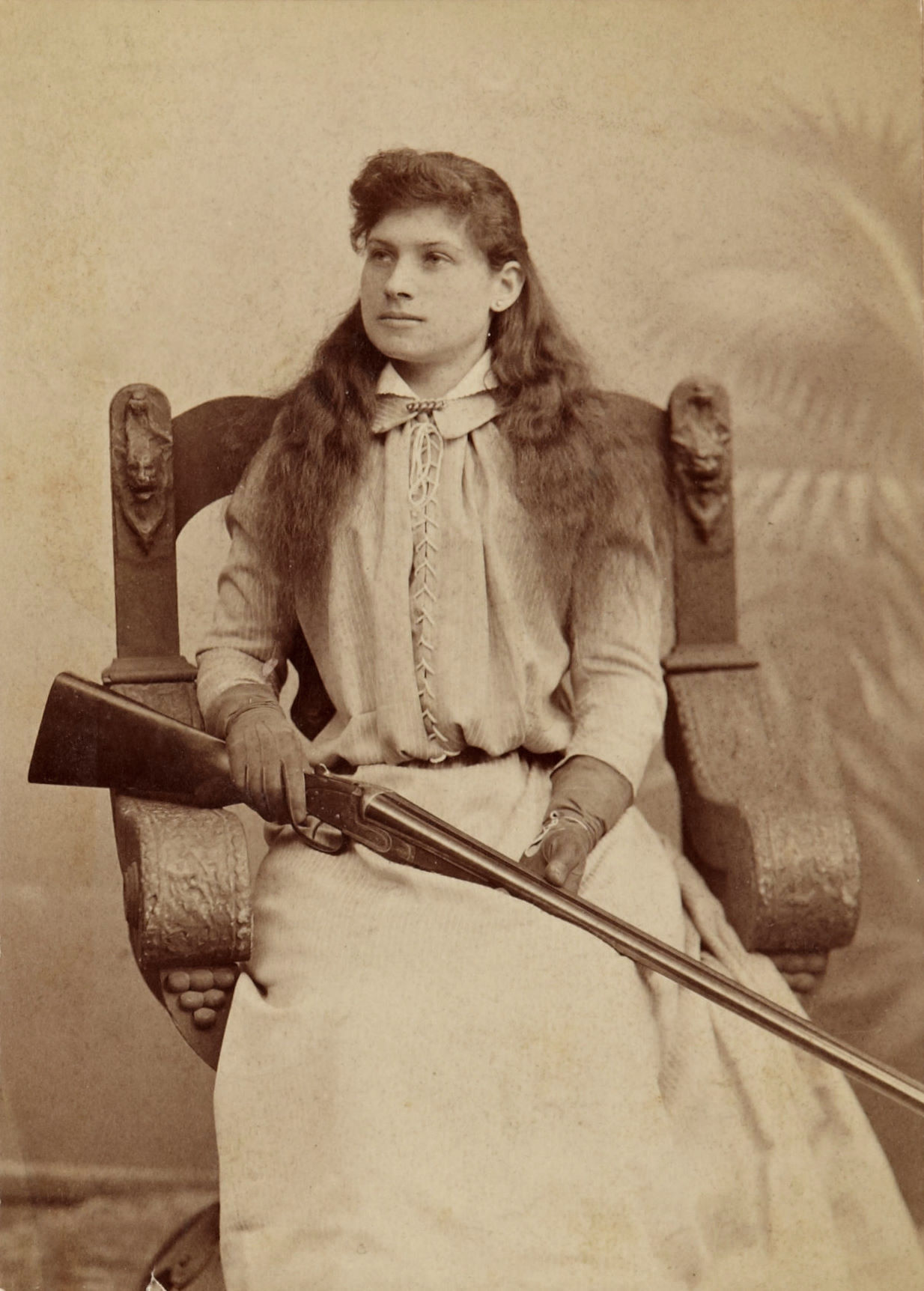
Born Phoebe Ann Mosey in 1860, she seems to have had a pretty crappy childhood. Her father died when she was five, and Annie became a ward of Darke County, Ohio, in 1870. From there, she was fostered out to a family, who apparently treated her as little more than a slave. She ran away from them a couple of years later, eventually returning to live with her mother, who had remarried, at age 15. But by this point, she was already well-versed in guns, having been hunting with them since she was eight. Her skill with them gradually became known through the region, and led to the shooting match against Frank Butler which propelled her towards greater fame, and a career as a professional markswoman.
There’s some uncertainty about when this took place. Some sources say 1875, while others prefer 1881. The details seem fairly well-established. Frank Butler, part of a travelling show, visited Cincinnati, and laid a bet with a local hotel owner that he could beat any local shooter. The hotelier brought in Annie as his champion, and she won, when Butler missed his 25th shot. He may have lost the wager, but he didn’t come away empty-handed, as Butler married Annie in 1882. They began performing together, with Annie taking the stage name of Oakley, and three years later the married couple both became part of Buffalo Bill’s Wild West production [it never included the word “show” in its title], which had begun touring America in 1883.
Performances typically opened with a parade of horse and riders from many nations, including the military and Indians. It proceeded through a series of re-enactments, such as of the Pony Express or an attack on a wagon train, and also included displays of skills related to life on the frontier, including trick riding, roping and marksmanship. While Oakley was the best-known woman to take part in the shows, she wasn’t the only one. In 1886, another trick shooter, Lillian Smith, also joined Buffalo Bill while still a teenager, and by most accounts, there was a fractious relationship between the two, with them having markedly different personalities and styles. Another Western icon, Calamity Jane, began appearing as a storyteller in 1893. Records indicate that Buffalo Bill paid the women the same as their male equivalents, though Oakley earned more than anyone save Bill himself.
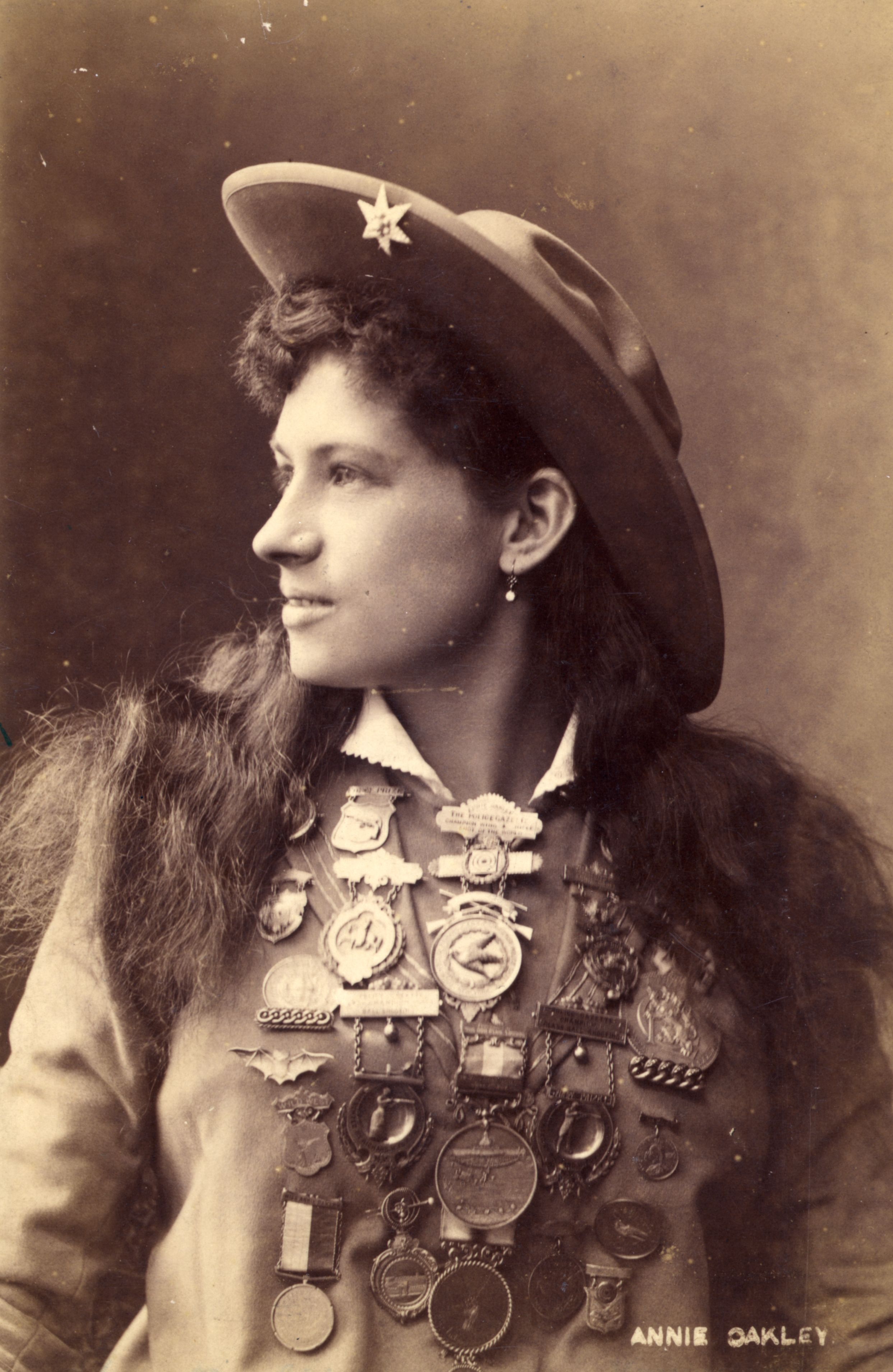
It was as part of his show that Oakley’s fame achieved its peak, and not just in the United States. She was part of the company which toured Europe on multiple occasions from 1887 on, performing for many of the fabled “crowned heads of Europe,” including Queen Victoria and King Umberto I of Italy. In 1890, she reportedly used Germany’s Kaiser Friedrich Wilhelm II as an assistant for one of her stunts, shooting the end off a cigar he held, a trick she usually performed on her husband. Europe might have been rather different, if Annie’s skills had not been up to the task. For Kaiser Wilhem was one of the more aggressive leaders whose subsequent actions helped trigger World War I, making Oakley’s prowess very much one of the “what if” moments in the continent’s history.
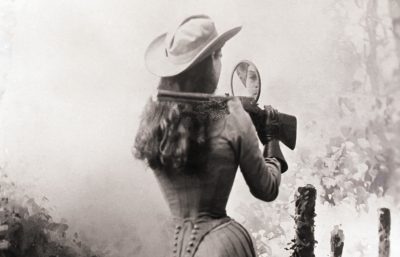
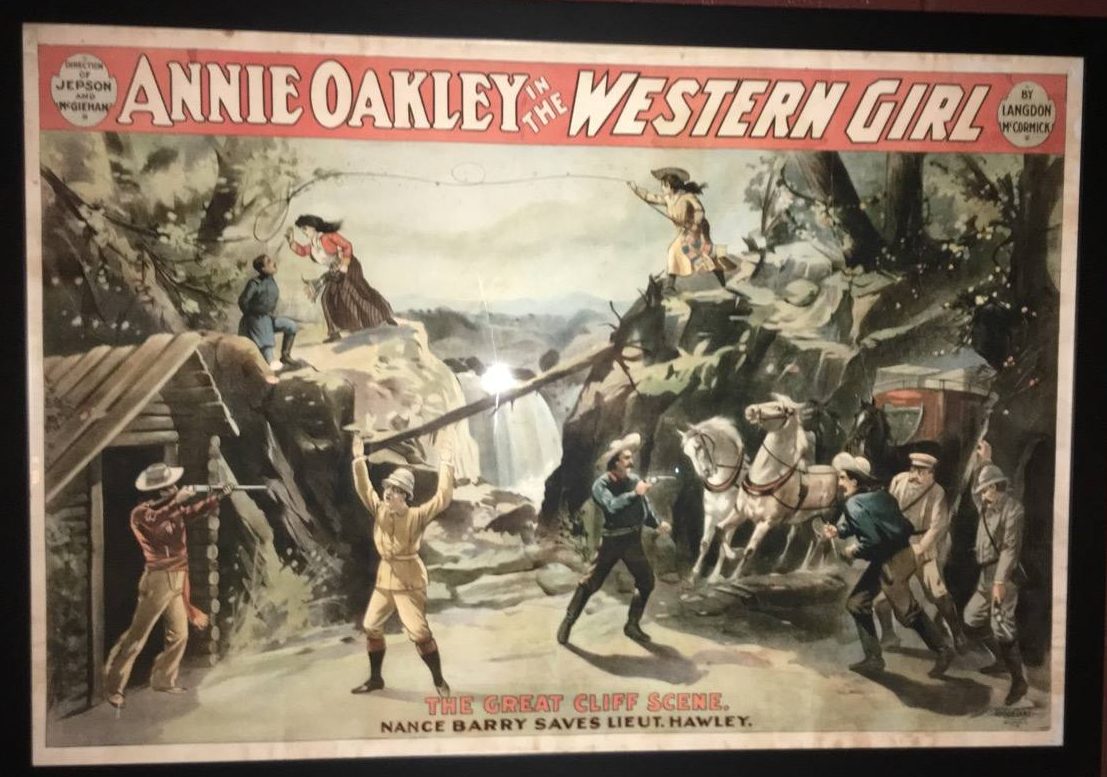
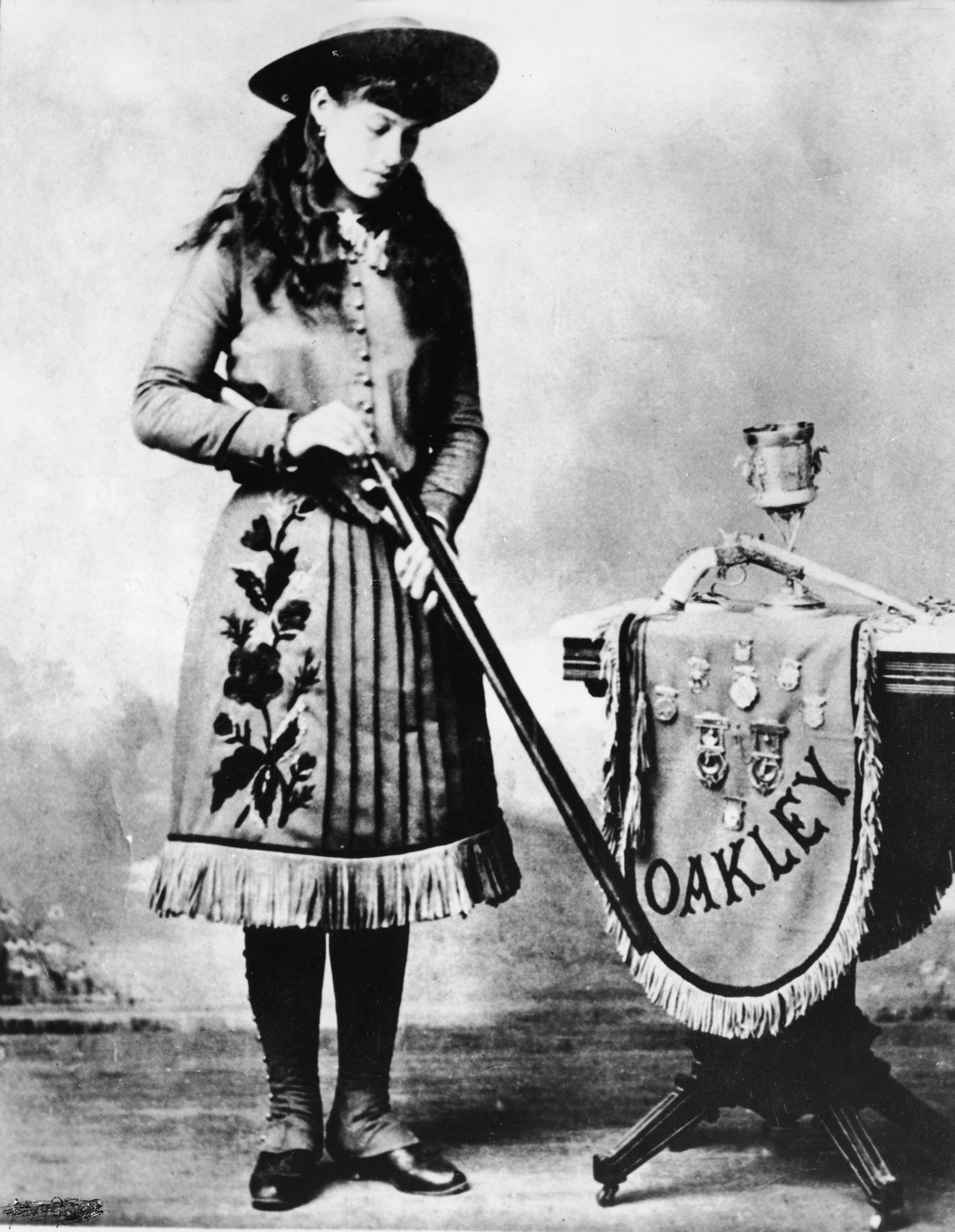
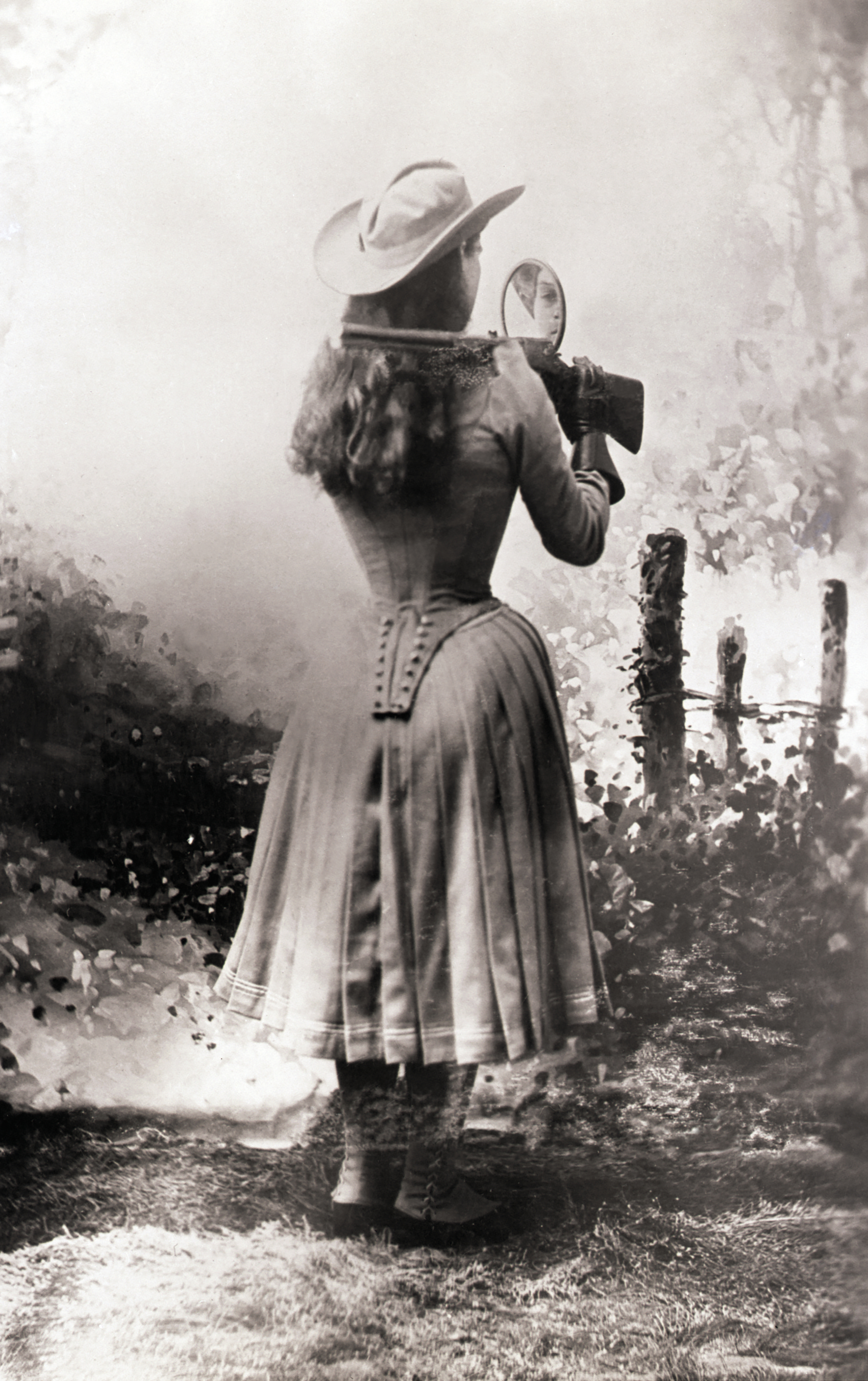
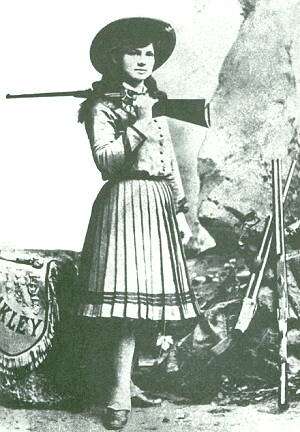
Her other stunts, if perhaps slightly less risky to the target, were little if any less impressive. She could find her target while facing away from it, sighting her gun backwards over her shoulder, using a mirror (left), or even the blade of a knife. She could also hit the edge of a playing card at thirty paces, or dimes tossed in the air. Her partner could throw four glass balls up, while Annie wasn’t even holding her rifle. Before they landed, she could pick up the gun and shoot them down. But in 1901, she was injured in a train accident, which left her needing multiple operations on her spine. The after-effects forced her into retiring from Bill’s company, though she still performed, starring in a stage play written especially for her by Langdon McCormick, The Western Girl. In it, her character Nance Barry saves the hero and wins his heart. It couldn’t possibly be any other way.
Annie’s life was hardly less interesting after her time with Buffalo Bill. In 1904, she took on press magnate Randolph Hearst, after two of his Chicago newspapers published a story headlined, “Famous Woman Crack Shot Steals to Secure Cocaine.” Turns out, the criminal was actually a burlesque performer who used the stage name “Any Oakley”. Hearst refused to retract the story, so Oakley ended up suing no less than 55 newspapers for libel, over the next six years. She won all but one of the cases, though the legal fees involved meant she ended up losing money, as she redeemed her good name.
She was far ahead of her time on the topic of women in combat. In April 1898, with the Spanish-American war about to break out, she wrote to the then-President, William McKinley, as follows:
Dear Sir, I for one feel confident that your good judgment will carry America safely through without war. But in case of such an event I am ready to place a company of fifty lady sharpshooters at your disposal. Every one of them will be an American and as they will furnish their own Arms and Ammunition will be little if any expense to the government.
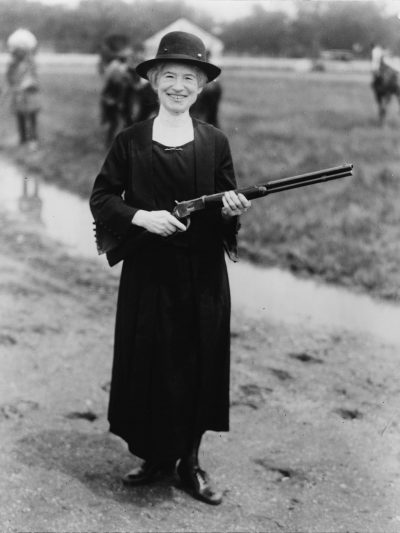
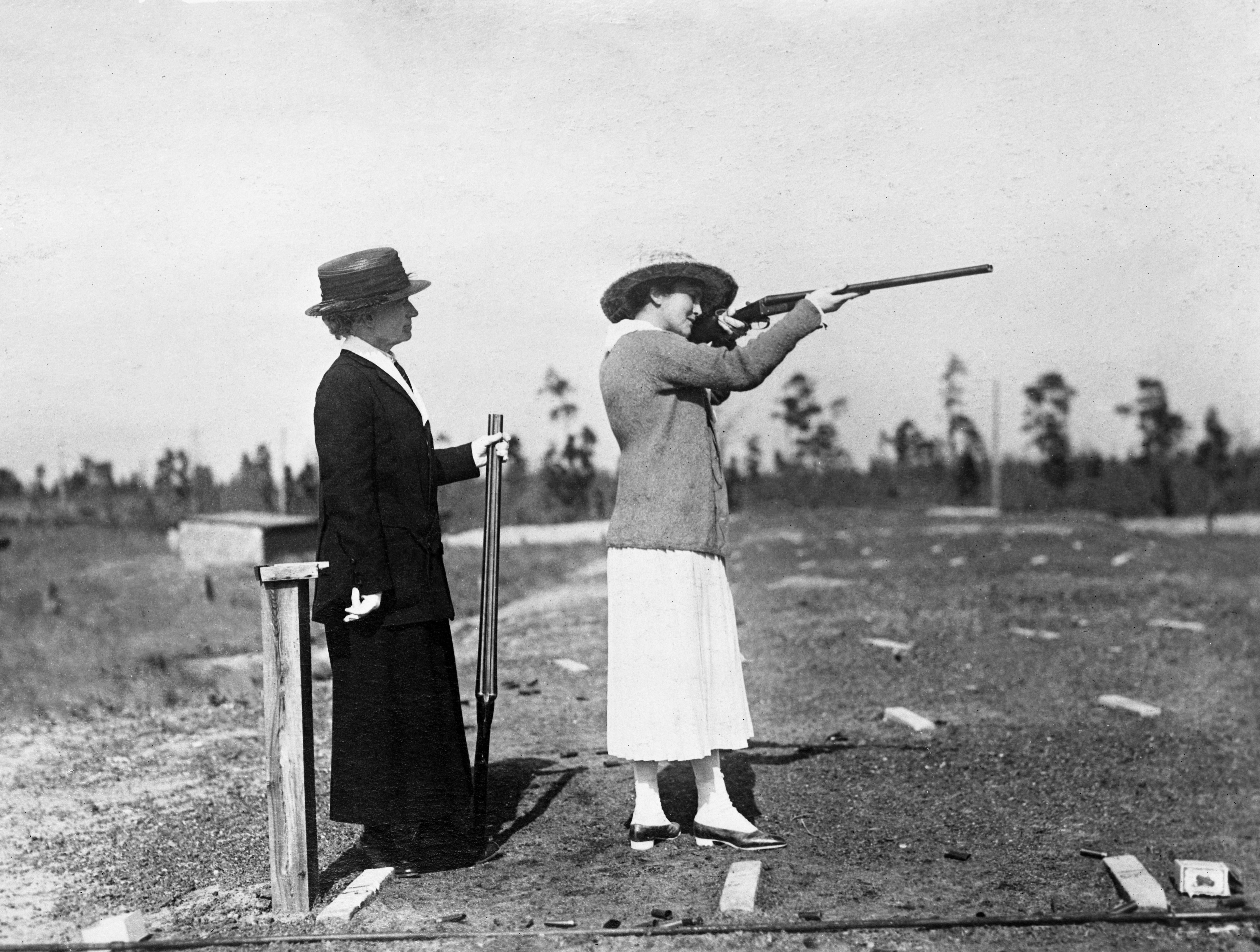
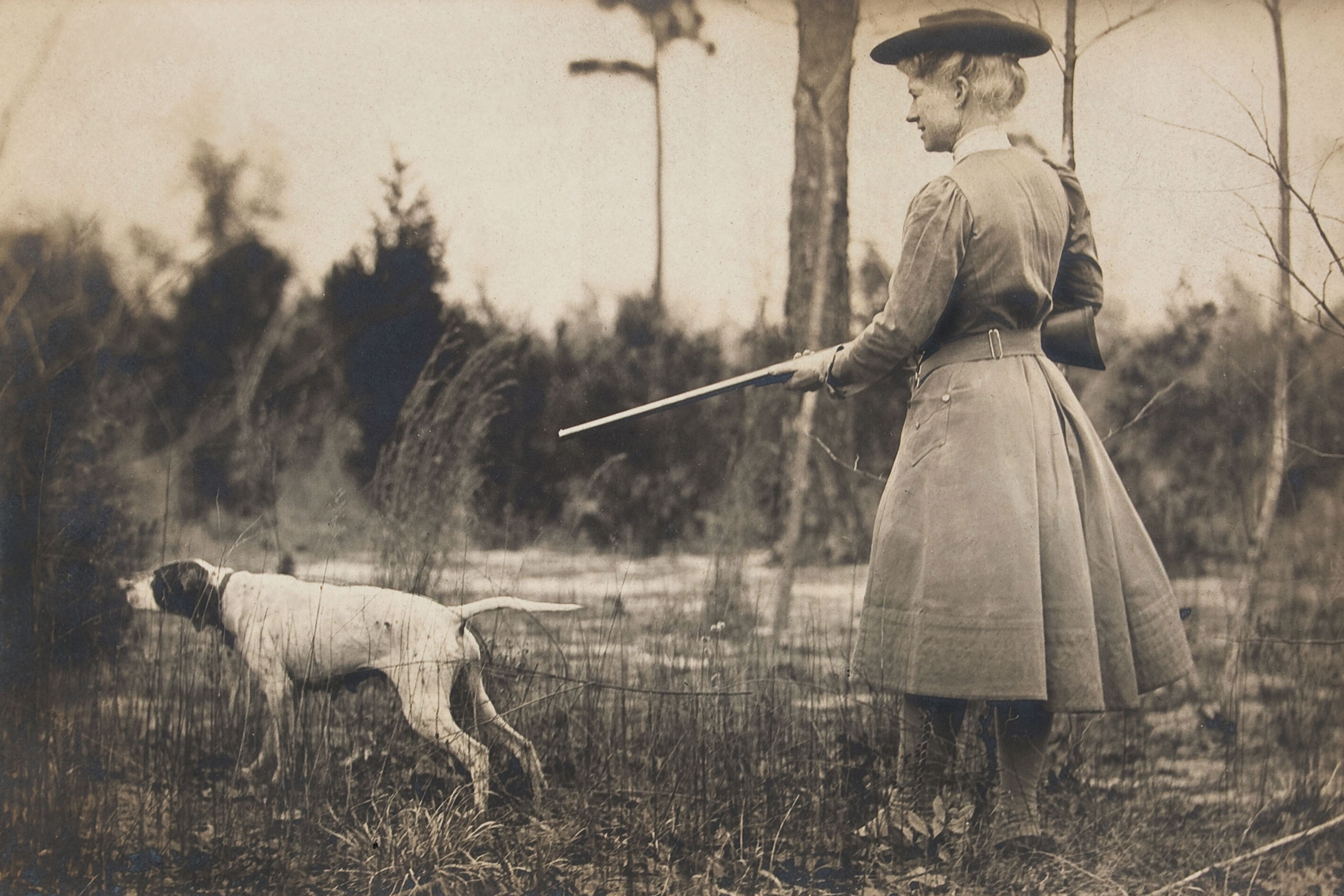
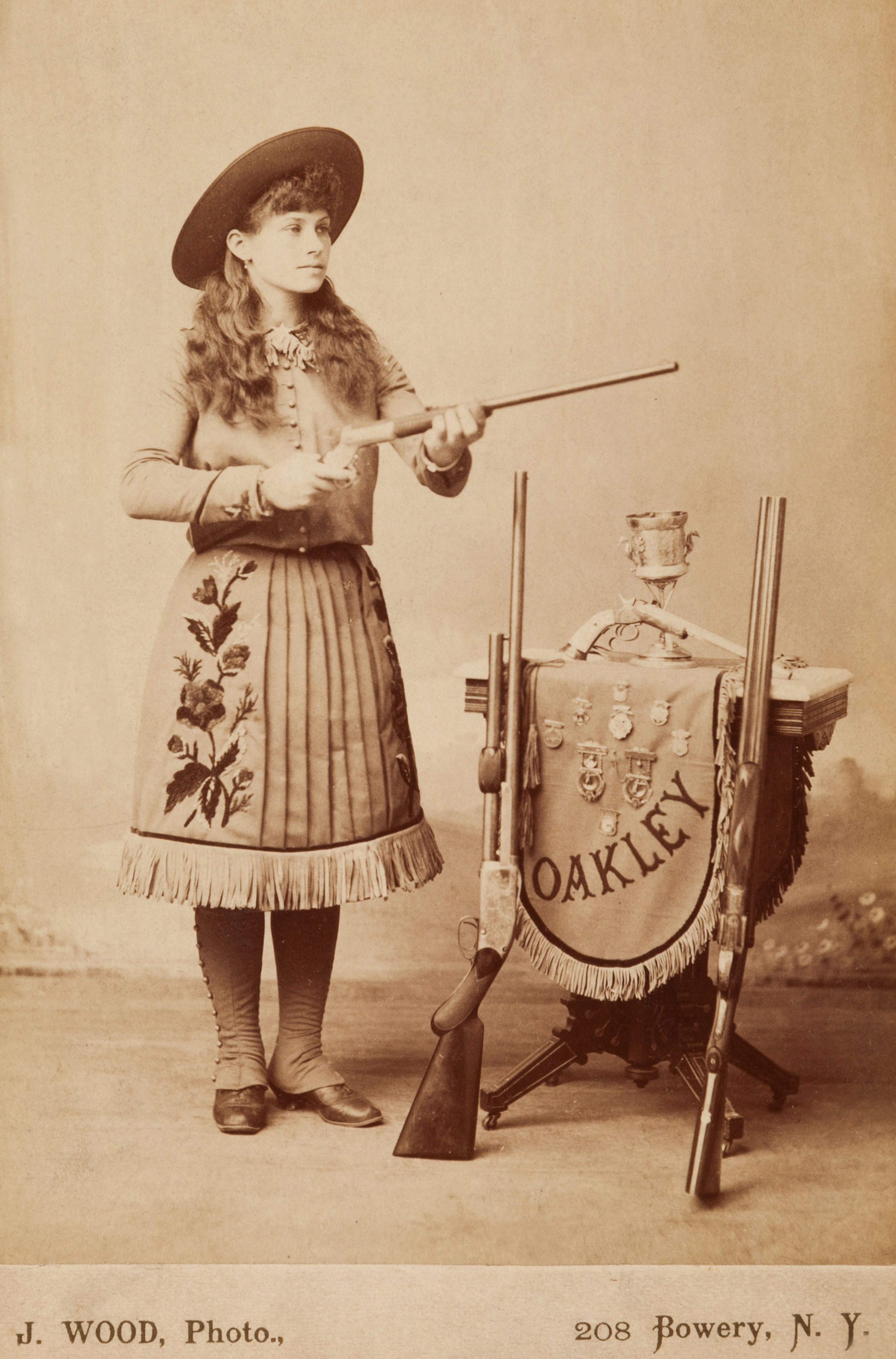
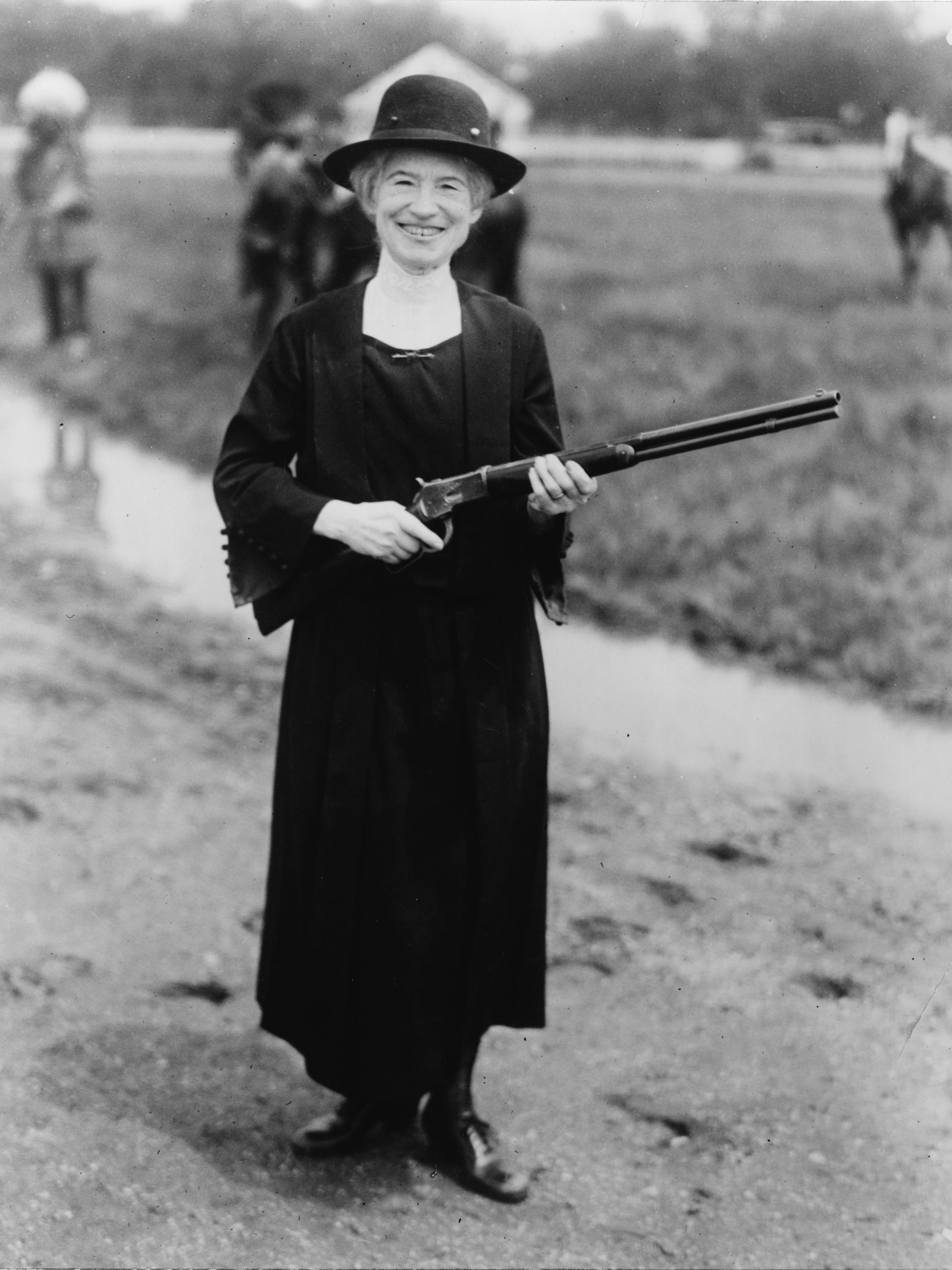
Her offer was, sadly, declined, despite the clearly positive economics. In terms of sharp-shooting, it would have been very interesting to see what Oakley might have done in a war situation. I like to think she might have surpassed sniper Lyudmila Pavlichenko’s mark of 309 victims from World War II. Certainly, her skills didn’t desert Annie with age. At the age of 62, in a North Carolina shooting contest, she hit 100 clay targets in a row from a distance of 16 yards. As the photograph (right) shows, she was clearly still enjoying the sport well into her sunset year.
However, she died of pernicious anemia in 1926, at the age of 66. Her husband, Frank Butler passed away just 18 days later, with some reports saying he simply stopped eating after her death, apparently losing the will to live. But what Oakley represents lives on, not least in a host of books, movies and TV series in which she appeared, portrayed by actresses from Barbara Stanwyck to Geraldine Chaplin and Jamie Lee Curtis. The cultural fascination for her endures. In 2012, an auction of items owned by Oakley brought in over half a million dollars: a shotgun used on the 1887 European tour went for $143,400 and even her stetson hat reached $17,925.
Annie arguably stands as the first woman to make a career as a professional action heroine. Her legend will survive – and deservedly so.
Annie Oakley (film)
By Jim McLennan
★★★
“Annie Gets Her Gun.”
While not exactly an accurate retelling of the life of noted sure-shot Annie Oakley, this is breezily entertaining. Indeed, you can make a case for this being one of the earliest “girls with guns” films to come out in the talking pictures era. There’s no denying Oakley (Stanwyck) qualifies here. The first time we see her, she’d delivering a load of game birds – all shot through the head to avoid damaging the flesh – to her wholesaler. When barnstorming sharpshooter Toby Walker (Foster) blows into town, Annie ends up in a match with him, which she ends up throwing, due in part to her crush on him. She still gets a job alongside Walker, in the Wild West show run by the renowned ‘Buffalo Bill’ Cody (Olsen) and his partner, Jeff Hogarth (Douglas). But Annie and Toby’s relationship fractures after he accidentally shoots her in the hand, while concealing an injury affecting his sight.
This hits the ground running, and roughly the first third plays decades ahead of its time. Don’t forget, this was made only fifteen years after women were granted the right to vote across the entire United States. Its depiction of a strong, perfectly independent woman as personified by Stanwyck is great – there’s also Walker’s former “friend,” Vera Delmar (Perl Kelton). When sternly warned the saloon she’s about to enter is no place for a lady, she breezily replies, “Oh, I’m no lady.” I’m quite impressed this was able to get through, given the rigid imposition of the strict Hays Code, beginning the previous year, with its goal “that vulgarity and suggestiveness may be eliminated.”
Almost inevitably, it can’t maintain this pace. There’s too much footage of the Wild West Show, which seems to consist largely of people on horses milling around the arena. I guess people were easily satisfied in those days. Meanwhile, the romance between Oakley and Walker (an entirely artificial construction, with Walker never existing as an actual person), fails to be convincing. Somewhat more interesting is the portrayal of Chief Sitting Bull, the Native American warrior who also became part of Wild Bill’s show. While depicted largely for comic relief – witness the scene where he turns out the gas lights in his bedroom by shooting at them – he is played by a genuine Indian, Chief Thunder Bird, which is considerably more progressive than some movies. He is also instrumental in Annie and Toby’s reconciliation.
Stanwyck does an excellent job of depicting the heroine, portraying her as someone absolutely confident in her own talents. I’d like to have seen more development of her character: as is, the one we see delivering quail at the start of the film, is almost identical to the one we see making up with Toby in its final shot. Sadly, the subject didn’t live to see her life immortalized in film, having died nine years before this was released. I think she’d probably have been quite pleased with her depiction.
Dir: George Stevens Star: Barbara Stanwyck, Preston Foster, Melvyn Douglas, Moroni Olsen
Annie Oakley of the Wild West, by Walter Havighurst
By Jim McLennan
★★
“An appetiser rather than a main course, that diverts from the topic far too often.”
Annie Oakley was one of the earliest “girls with guns”. In her role as a sharpshooter, performing with the likes of Buffalo Bill’s Wild West show, she travelled the globe, appearing in front of Presidents, Kings and Emperors. She shot a cigarette held by the future Kaiser Wilhelm of Germany (accuracy later deplored by American newspapers, after the nations went to war in 1917). At 90 feet, she could shoot a dime tossed in midair, or hit the edge of a playing card, then add five or six more holes as it fluttered to the ground. In seventeen years and 170,000 miles of travel, she only missed four shows, and even in her sixties, could still take down a hundred clay pigeons in a row.
So why is this book unsatisfactory? Largely because much of it isn’t actually about her. Originally written in 1954, Havighurst uses Oakley as a key to write about…well, everything else connected to her, and you’ll find half a dozen pages passing without any mention of its supposed subject. The author goes off the track with alarming frequency: Buffalo Bill, a.k.a. William Cody, is the main beneficiary, and someone unschooled in the topic will learn almost as much about him as Oakley. There are some effective moments, particularly when Havighurst depicting the loving relationship between Annie and her husband, Frank Butler, whom she met while outshooting him in Cincinnati. Married for over fifty years, they died less than three weeks apart. But such passages are few and far between; the actual Oakley-related content of the book is disappointing, though I’m now keen to track down a better work on the topic.
By: Walter Havighurst Publisher: Castle Books [$8.98 from HalfPrice Books]
Annie Oakley (TV series)
By Jim McLennan
★★★
“One of the first TV action heroines; for 50 years old, better than you might expect.”
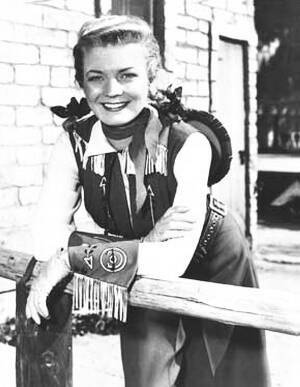
This TV series was Gene Autry’s idea; he wanted to give little girls a western star of their own, and created a show based on the character of Oakley, the most famous sharpshooter of all time. In his version, she lives in Diablo with her brother Tagg (Hawkins) and keeps the town safe along with deputy Lofty Craig (Johnson) – the sheriff, Annie’s uncle Luke, was somehow very rarely around… It ran for 81 episodes from January 1954 to February 1957; two DVDs, with five first season stories on each, have been released by Platinum – you can get the box set of both for $5.99, which is a steal.
Given its age, it’s no surprise that this is certainly a little hokey, but is by no means unwatchable. The writers cram a lot into each 25-minute episode, and Oakley is a sharp-witted heroine, in most ways years ahead of the usual portrayal of women (though still afraid of mice!) – she’d probably be a better deputy than Lofty! It certainly helped that Davis, a mere 5’2″, was a skilled rider herself, and did most of her own stunts. However, this being a 50’s TV show, there are limits. Annie never kills anyone, preferring to shoot the gun from their hand, while fisticuffs are left to Lofty, though at least one ep (Annie and the Lily Maid) has an unexpected mini-catfight.
Perhaps the best episode on the DVDs is Justice Guns, where an ex-marshal with failing sight seeks revenge on the man who shot his brother. Annie has to try and solve the situation, and while you know she will survive, the lawman’s fate is much less certain as the four o’clock shootout approaches. In a series that is, even I will admit, often sugary and predictable, this has genuine tension, and that’s something which five decades haven’t changed one bit.
A promising idea has its concept snuffed out by shaky execution and even worse writing. Sam (Rogers) is a former solder and now single mother. When her child falls sick, Sam heads for the chemist’s for medicine. She never gets there, being abducted in a van and rendered unconscious. She wakes in a large warehouse-like facility in the middle of nowhere, which turns out to be a military production facility. She’s not the only woman there, and finds that an invisible adversary, using advanced tech to cloak his presence, is taking advantage of the weekend to turn the place into a stalker’s amusement park. However, Sam’s background perhaps gives her a very particular set of skills, unavailable to the other victims.
I’m generally fairly oblivious to script-holes: Chris is considerably better at spotting them. But here, even I could see the glaring flaws. This is supposedly a cutting-edge military facility, yet the security is so bad, a child can literally get in. The motivation for the villain is poorly drawn, and it’s never explained how the lowly caretaker – for that’s what he is – manages to get to use all of his wonderful toys. Do the army also let soldiers take tanks off to drive around on the weekend? But it’s not as if the film has any confidence in him as a bad guy, for even after Sam has managed to avoid his threat, she then has to handle a military drone. Just one – for like I say, security is pretty bad. And it can easily be taken out with a conveniently to hand brick. If we ever go to war, I swear, we are screwed…
If the film had made much of Sam’s background, supposedly in the engineers’ corps, that might have helped. Watching her MacGyver her way against her opponent, using the plentiful material at hand could have been fun. But that would have required thought, something largely absent from the script. There are few points at which we are ever convinced of her military background, and the scenes where she is “fighting” her invisible opponent, all too often reminded me of the Monty Python sketch about self-wrestling. It’s a shame, as Rogers is by no means terrible otherwise, and is quite empathetic.
The same cannot be said for the ending, however. It’s understandable that the writer-director felt the need to tack something on, after the considerably underwhelming confrontation with the drone. What he delivers is the ultra-cliched finale where someone isn’t who they seem to be, but turns out to be the killer. No, those are not a pair of fidget spinners, they are my eyes rolling at this “twist”. At least he has the good grace not to stretch this out, bringing things to a ending that is brisk to the extreme. It’s clear the budget on this was limited, and I forgive it that. The lazy plotting is considerably harder to forgive.
Dir: Justin Edgar Star: Rebecca Rogers, Nathalie Buscombe, Ian Sharp, Laurence Saunders
We reviewed Hellcat’s Revenge last year, and I’m pleased to report this is a small but palpable improvement from Kabasinski. Most of the players from its predecessor return, notably biker queen Cat (Neeld), who quickly finds herself framed and locked up in prison. There’s a target on Cat’s back, courtesy of rival gang leader, Rosie (Hamblin), who has formed an unholy alliance with the warden, and slips easily in and out of jail to manage her business, through a basement tunnel. She has driven both Cat’s gang, the Hellcats, and that of her lover, Snake (Kabasinski) off the streets, with the latter supposedly killed. That’s not the case – cue “I thought you were dead” comments to Snake, which I feel have to be an Escape From New York homage – and we soon learn, down is not out. For the tunnel out of jail goes both ways, and can also be Cat’s escape route, allowing her and Snake to take on Rosie and her crew.
It’s nice this largely addressed the issues I had with the first one. For instance, the lack of motorcycles isn’t a problem here, since this time round, it’s more a women-in-prison film – not many bikes in the slammer. And when pursuing the WiP path, it’s a good slice of fun, even if not much more than the usual tropes from the genre e.g. evil warden, sadistic guards, laundry-room brawls, etc. I particularly liked the turn of Dutch (who was in part one, playing a different character) as long-term inmate Vegas. Also: approaching seventy, if the IMDb is to be believed, and still doing a shower scene? Mad props. Hamblin, too, simply looks like a scary prison inmate, all piercings and face tattoos. In a film like this, that’s half the battle, and there’s no shortage of the requisite attitude and jailbird posturing to be found across the female characters.
The film is less impressive on the outside, not least because in the middle, Cat ends up becoming a supporting character in her own film, with Snake taking over. This isn’t as much fun, coming off as more like a low-rent episode of a Sons of Anarchy wannabe [and I speak as a fan of that show], with Snake carving a lone furrow there. I couldn’t help wishing they’d just stuck within the closed confines of those prison walls, where things appeared to be moving along quite nicely, thank you for asking. Things do perk up again once Cat is busted out of jail, and we get the expected face-off between Cat, Snake and their allies against Rosie and her minions. As in the first film, the limited resources do limit the scope of the action, though there’s a “bullet through the head” effect which was a good effort. It’s all slightly more polished this time, and that progression is what you want to see from any low-budget film-maker. Here’s to the next film being Cat III… :)
Dir: Len Kabasinski Star: Lisa Neeld, Donna Hamblin, Deborah Dutch, Len Kabasinski
Kitamura is one of the few people to have made two films given our seal of approval: Azumi and Sky High. Throw in the amazing (just not heroine oriented) Versus, plus Godzilla: Final Wars, and there’s a case that in the first half of the 2000’s, he was the best director working in the action genre. But since moving to America, his star has largely faded. This may be the most lacklustre to date, a shameless Die Hard knock-off, which adds nothing except a series of cliches, courtesy of the godawful screenplay by Lior Chefetz and Joe Swanson.
These begin with its heroine, Ali Gorsky (Rose), a Troubled Ex-soldierTM, suffering from PTSD. She has returned to New York, and through a relative, gets a job as a doorman at an apartment building undergoing renovation. It turns out the husband (Evans) of her late sister lives in the building: cue the Family DramaTM. Over Easter weekend, the place is taken over by the villains, under the leadership of Cultured EurovillainTM, Victor Dubois (Reno). He’s after hundreds of millions of dollars of paintings, hidden inside the walls of an apartment, because… Best not ask. And what are the odds? It’s her brother-in-law’s apartment. Fortunately, she’s out getting mint sauce (no, really) when the bad guys come to call. So Ali can spend the next hour, scurrying round the building, picking off the thieves and trying to rescue her family, while exchanging not very witty banter, about zodiac signs and the like.
The problems with the script here are multiple, such as its blatant foreshadowing. Things like the building’s secret passages are dumped in there so blatantly, they might as well be preceded with an intertitle, “THIS WILL BE IMPORTANT LATER.” What’s good, isn’t original – and what’s original isn’t any good. The use of PTSD here is simply a crutch, for no real purpose: we never believe it’s a genuine malady. Meanwhile, there’s Rose, who has done supporting work in other action franchises e.g. John Wick and Resident Evil, but proves incapable of carrying a movie herself. Firstly, she makes for an extremely unconvincing soldier, looking as if she might blow away in a moderate breeze. More damningly, she seems to have just the one expression, a combination of concern and annoyance. While not inappropriate, given the circumstances, it certainly outstays its welcome.
All of which would have tolerable, had the action been up to snuff. By and large, it isn’t, with only very occasional moments of the inventiveness which made Versus such a joy. It doesn’t help that most of the film takes place in half-darkness, leaving the viewer to peer into the gloom and try to figure out what’s going on. I guess this is just about watchable, if you’re in an entirely undemanding mood. However, I keep watching Kitamura movies in the hopes of him recapturing his former glories, and I keep being severely disappointed.
This is the second book from Cooper here, after Outsystem, and has some of the same characters. Initially, it seemed to have a shot at being considerably better, with a first half which was impressive. Unfortunately, it couldn’t sustain this, and ended up dropping back to a similar level and for similar reasons. If you’re interested in SF which is so hard, you could use it to cut glass, this is for you. But I’m not typically a fan of books which need to include a twenty-page appendix of “Terms and Technology” at the back. Especially when half of them don’t help much, e.g. “A CriEn module is a device which taps into the base energy of the universe, also known as zero-point, or vacuum energy” – glad that’s cleared up. And some of the rest are superfluous: any fan of SF won’t need to be told what “FTL” travel is.
In this world, that faster-than-light breakthrough allowed humanity to occupy a swathe of the galaxy, but the resulting wars triggered a dark age from which we are now only just recovering, in the ninth millennium. Sera is a transporter-for-hire, who’ll move anything, anywhere for the right price. But when one commission brings down unexpected heat, she cracks open the package, and is startled to find it contains Tanis Richards. She was a colonist from Earth, whose ship set off over five thousand years ago and is only now reaching its destination. While events overtook them, her ship, the Intrepid – its construction was the subject of Outsystem – carries long-lost technology, on which everyone, from pirates to stellar alliances, wants to get their hands.
One such pirate, Rebecca, kidnaps Sera, seeking to swap her for Tanis and access to her tech. But both Sera and her crew, helped by the colonist, are made of sterner stuff. Through this section is when the book is at its best, combining interesting characters with a conflict which is taking place on a personal level. All seems lost for Sera and her trusty AI, when she’s secreted away in Rebecca’s headquarters, hidden in the depths of dark space, outside our normal universe. Yet, through grit and determination, she manages to return to her allies, then prepares to take the fight to Rebecca, as well as reunite Tanis with her crew. It’s a very good, gripping read. Unfortunately, after that is where things go a bit pear-shaped.
For once everyone arrives at the star-system of Bollam’s World, the hard SF elements really kick in, as if Cooper wanted to make up for the time lost earlier. It becomes more like watching a gigantic game of three-dimensional chess, with vessels of various kinds moving around and firing weapons at each other, for lengthy sections. Rather than technology enhancing the human elements in the story, it threatens to overwhelm the characters entirely, and even a (not exactly surprising) revelation about Sera’s origins couldn’t stop this from becoming laborious by the end. Quite a few typos, such as a reference to a “grizzly task” when no actual bears were involved, don’t help matters. I’ll not be going further in this series.
Author: M.D. Cooper Publisher: The Wooden Pen Press, available through Amazon, both as a paperback and an e-book Book 1 of 13 in the Orion War series.
It’s interesting to compare this with the recently reviewed Ride Like a Girl. Both are sports movies based on real events, and neither really do much story-wise, except trot out the standard tropes for the genre about overcoming obstacles on the way to triumph. Yet this succeeds somewhat better, likely because of the unusual central concept. Two Indian grandmothers, unable even to read, take up competitive shooting in their sixties, and end up becoming national heroines as a result. Tell me you’re not intrigued by that.
Chandro and Prakashi Tomar (Pednekar and Pannu) are part of a large extended family in Uttar Pradash. In this world, women do much of the work, while the men lounge around. If the film is to be believed, smoking hookah pipes and demanding snacks are their main occupations, viewing the woman as machines for pumping out babies. But things change when a local doctor (Singh) opens a shooting range. One of their grand-daughters goes along for a lesson, and the grannies – who initially attend for moral support – discover a natural talent for the sport. However, the family’s patriarch, Rattan Singh Tomar (Jha), would never permit them to travel to competitions, so deception needs to be carried out. But as the contests get bigger, so do the lies.
While the story does span several decades, it concentrates mostly on the characters in their later years, which makes it a little odd that the producers cast a pair of thirty-something actresses for the lead roles. Presumably the idea was that it was easier to make them up to be older, rather than making sixty-five year olds look thirty. I can’t say it always works. Indeed, there are points where they look closer to the Beatdown Biddies from GLOW than genuine senior citizens. At 146 minutes, it goes on too long as well. The makers could have significantly reined in the montage sequences, and the likely inevitable musical numbers add nothing to proceedings either, at least to this Westerner’s eyes. [I will admit, I’m not the intended audience there]
Despite this, is still manages to work, and the running time isn’t as much of a problem as I feared it would be when I started. It is one heck of an eye-opener to see what life in rural India is like, especially for women, and quite puts all our #FirstWorldProblems in perspective. There’s a calm dignity about the two heroines which is effective, and it’s easy to see how that temperament transfers to their sport, even in the face of initial heckling by unconvinced audience members and opponents. It’s also about the first GWG film I’ve seen which looks at the purely sporting aspects of firearms – one of the few fields in which men and women can compete on an equal footing. The Indian title translates as “Bull’s-eye”; while I’d not claim the film scores to that degree, it hits its targets at least as often as it misses.




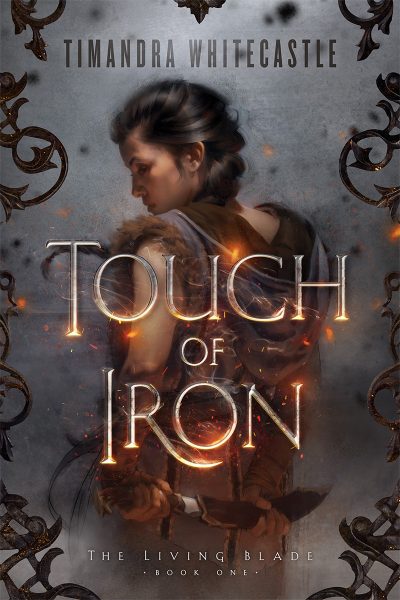 Owen and Noraya Smith are twins, in a world where such siblings are looked upon as cursed. Brought up as charcoal burners, they leave their village so Nora can avoid an arranged and unwanted marriage, and have the forture – whether good- or ill- remains to be decided – quickly to encounter the party of Prince Basham. He is scouring the country in search of a magical artifact called the Living Blade, which will grants its wielder great power. Assisting him is the half-wight Telen Diaz, a pilgrim/fighter. Owen joins the party, hoping to become a pilgrim himself; Nora decides to return home, but that option is removed from her as the village has been taken over by bandits. Fortunately, Diaz has followed her and is able to lend assistance when necessary. Nora eventually becomes his student in the fighting arts, and they all head to the temple/brothel of Shinar where the immortal seer Suranna can provide insight to the blade’s location. But the cost of her information is perilously high, since she has plans for both Nora and Diaz.
 ★★★
★★★ While not exactly an accurate retelling of the life of noted sure-shot Annie Oakley, this is breezily entertaining. Indeed, you can make a case for this being one of the earliest “girls with guns” films to come out in the talking pictures era. There’s no denying Oakley (Stanwyck) qualifies here. The first time we see her, she’d delivering a load of game birds – all shot through the head to avoid damaging the flesh – to her wholesaler. When barnstorming sharpshooter Toby Walker (Foster) blows into town, Annie ends up in a match with him, which she ends up throwing, due in part to her crush on him. She still gets a job alongside Walker, in the Wild West show run by the renowned ‘Buffalo Bill’ Cody (Olsen) and his partner, Jeff Hogarth (Douglas). But Annie and Toby’s relationship fractures after he accidentally shoots her in the hand, while concealing an injury affecting his sight.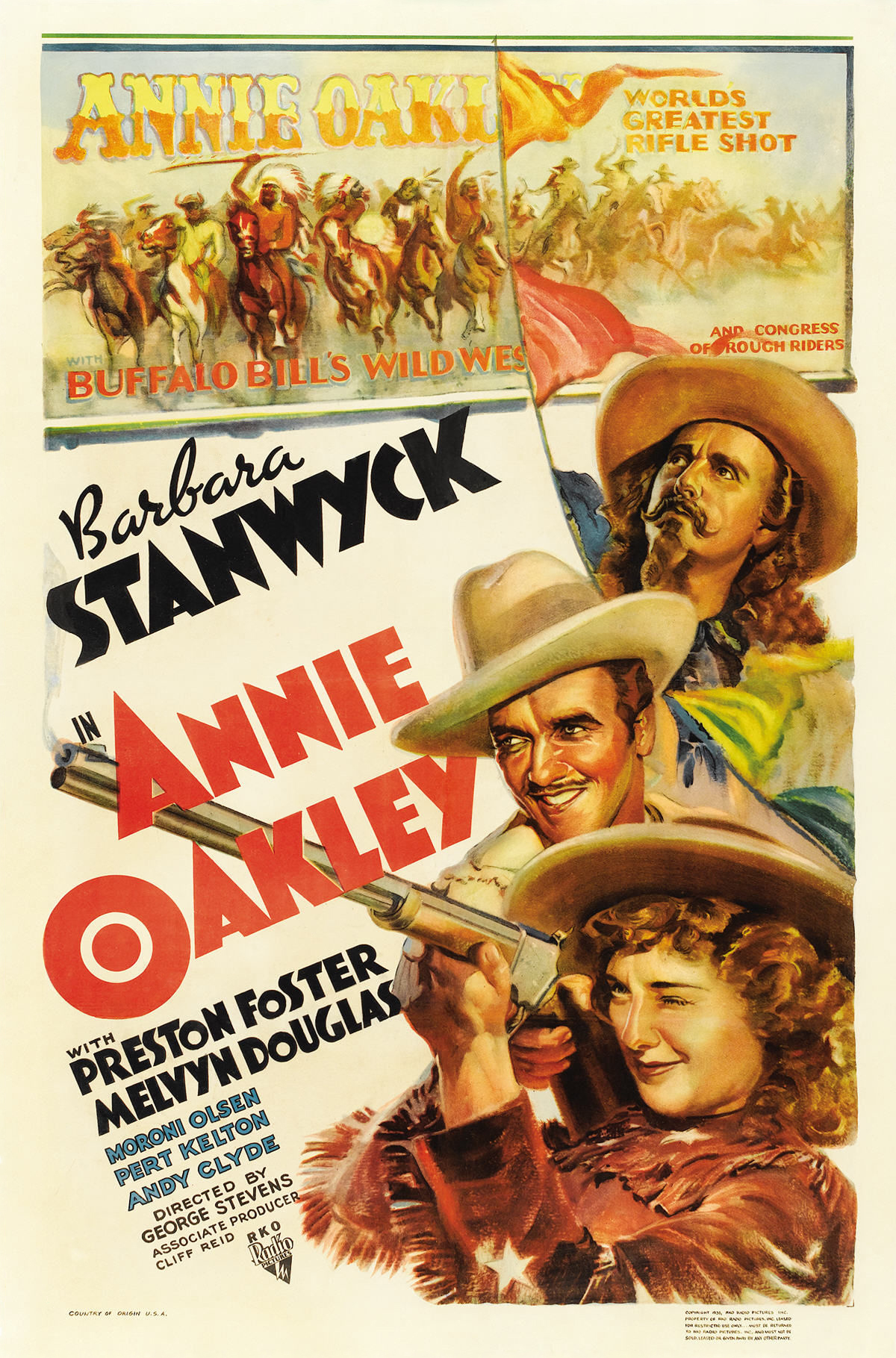
 She was far ahead of her time on the topic of women in combat. In April 1898, with the Spanish-American war about to break out, she wrote to the then-President, William McKinley, as follows: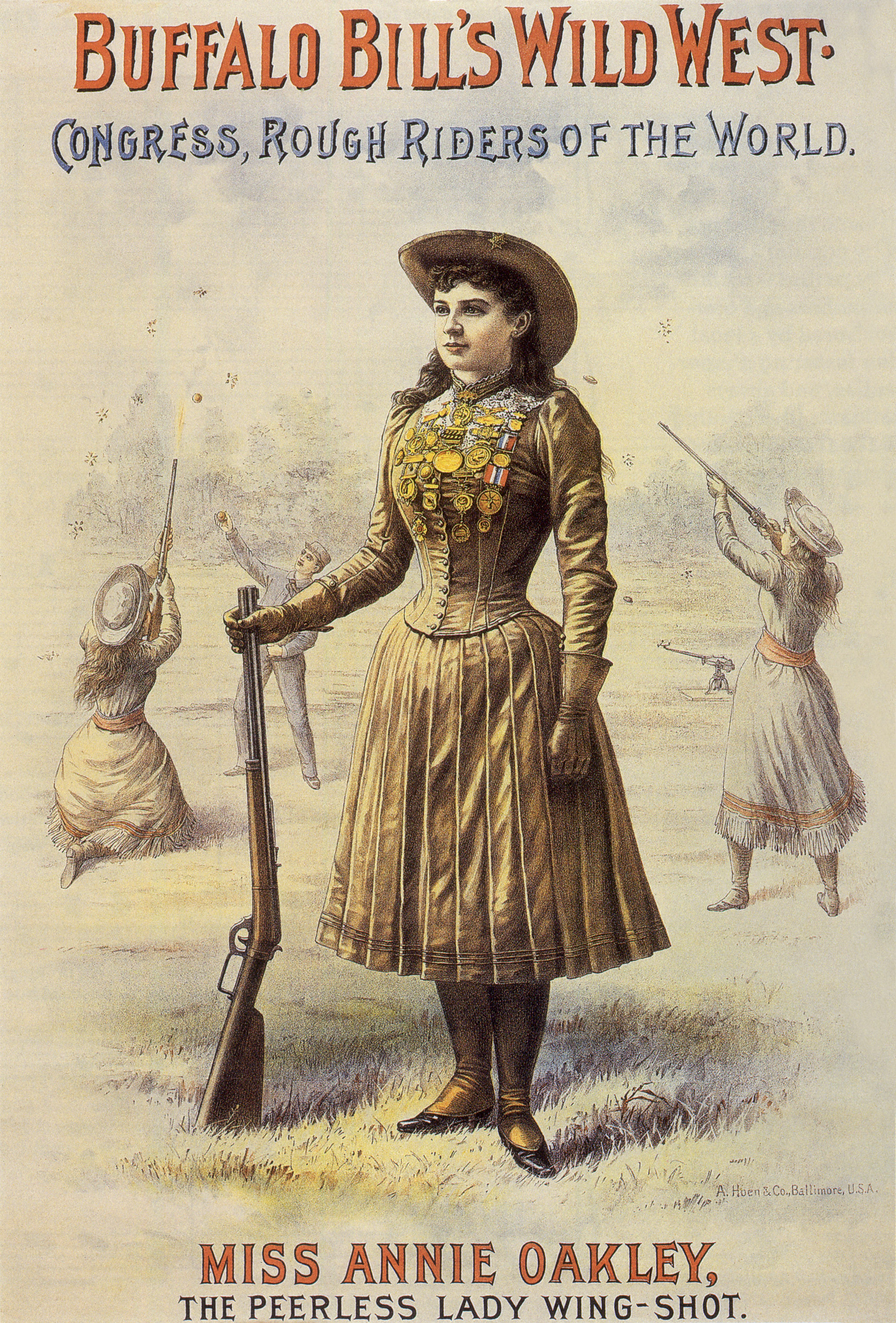
 Annie Oakley was one of the earliest “girls with guns”. In her role as a sharpshooter, performing with the likes of Buffalo Bill’s Wild West show, she travelled the globe, appearing in front of Presidents, Kings and Emperors. She shot a cigarette held by the future Kaiser Wilhelm of Germany (accuracy later deplored by American newspapers, after the nations went to war in 1917). At 90 feet, she could shoot a dime tossed in midair, or hit the
  This TV series was Gene Autry’s idea; he wanted to give little girls a western star of their own, and created a show based on the character of Oakley, the most famous sharpshooter of all time. In his version, she lives in Diablo with her brother Tagg (Hawkins) and keeps the town safe along with deputy Lofty Craig (Johnson) – the sheriff, Annie’s uncle Luke, was somehow very rarely around… It ran for 81 episodes from January 1954 to February 1957; two DVDs, with five first season stories on each, have been released by Platinum – you can get the box set of both for $5.99, which is a steal.
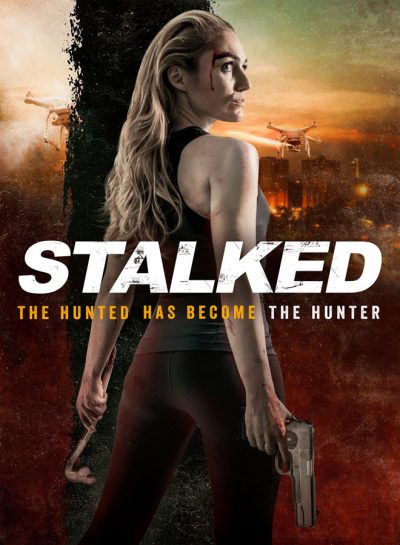 A promising idea has its concept snuffed out by shaky execution and even worse writing. Sam (Rogers) is a former solder and now single mother. When her child falls sick, Sam heads for the chemist’s for medicine. She never gets there, being abducted in a van and rendered unconscious. She wakes in a large warehouse-like facility in the middle of nowhere, which turns out to be a military production facility. She’s not the only woman there, and finds that an invisible adversary, using advanced tech to cloak his presence, is taking advantage of the weekend to turn the place into a stalker’s amusement park. However, Sam’s background perhaps gives her a very particular set of skills, unavailable to the other victims.
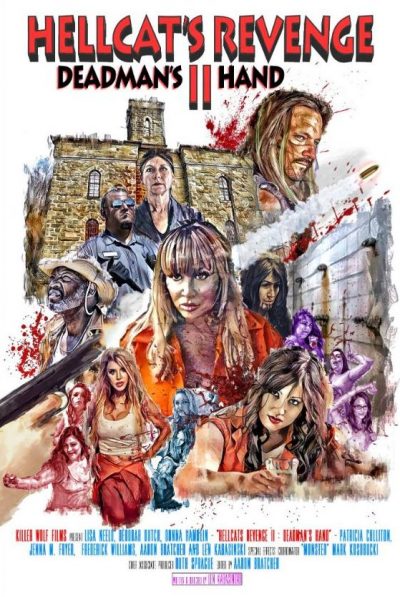 We reviewed
  Kitamura is one of the few people to have made two films given our seal of approval:
  This is the second book from Cooper here, after
 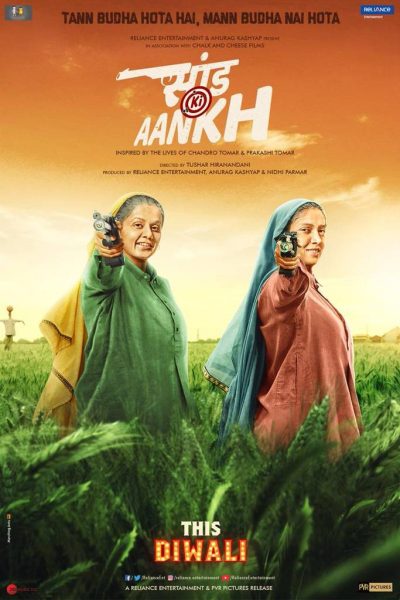 It’s interesting to compare this with the recently reviewed