



★★★★
“Assault on Precinct 1.”
 After a year which has been filled with disappointments and films which have failed to generate much reaction beyond a mild “Meh,” it’s nice to see one which certainly surpasses expectations. Indeed, with about two months left to go in 2023, this would certainly be a finalist for GWG Film of the Year, were there to be such an award, and potentially could walk away with that hypothetical trophy. It’s the kind of movie which, even when you know exactly what’s about to happen, still delivers in a way that can generate an undeniable reaction. Considering my expectations going in were not much more than the made-for-TV level – this being a BET channel exclusive – it surpassed those greatly.
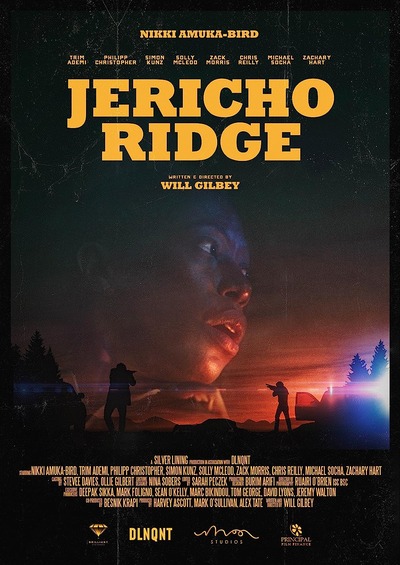 The heroine is Tabby Temple (Amuka-Bird), a deputy in a small, rural North Washington town (albeit one entirely faked in Kosovo!). She is just heading back to work following an extended lay-off due to a broken ankle. The reason for this injury is not immediately clear. Nor is the reason why she is no longer a chief deputy, but it appears to be something to do with her troubled teenage son, Monty (Morris). She returns to find the police station in some turmoil, due to a burglary the previous night, while an investigation is also under way regarding the murder of a local drug dealer. Sheriff Eddie Reynolds (Kunz) goes out to visit a suspect, leaving Tabby behind, to guard domestic abuse prisoner Earl Macready (Socha), and await the arrival of a locksmith to install new station locks.
It’s here things go very badly wrong, with Tabby discovering there is apparently something in the station that a certain party is prepared to go to any lengths to obtain, with the burglary being just the first step in that process. She finds herself under siege, and severely out-gunned, the station’s armoury having been stripped almost bare. Local help is… not going to help, shall we say, and the state variety won’t get there for some time, leaving Tabby to try and survive until they do. The unexpected arrival of Monty during a lull in proceedings, only heightens the stakes, and also forces mother and son to confront the truth about their fractured relationship, and how it became that way.
But this is not s touchy-feely emotional drama, to put it mildly. Once it gets going, this is a relentless assault, which sees Tabby go from a quiet, almost passive observer, into a fully-fledged warrior queen. Amuka-Bird is quite excellent in both parts of that dual role, being entirely plausible as both devoted mother and unstoppable force. And she needs to be, because the villains are just as brutal in their approach. The film also does well with passing out the necessary information to the audience, doing so in its own time, despite a couple of scenes which do feel rather too obviously expositional. In general though, this does a great deal without the need for stars or big production values. Story, performance and crisp execution are all on point instead, and the results are all the better for it.
Dir: Will Gilbey
Star: Nikki Amuka-Bird, Zack Morris, Simon Kunz, Michael Socha
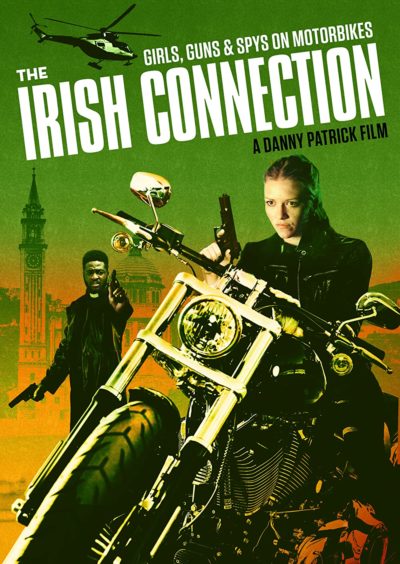 At times this feels more like a fancy dress party than a film. People dressed up as nuns. People dressed up as clowns. People dressed as priests. This probably isn’t surprising, considering that it feels like Patrick is cosplaying as a film-maker. There’s little or no evidence to indicate he knows how to construct a coherent or interesting narrative. Instead, he proceeds by simply dropping in scenes which, I gueaa, are supposed to be “amusing”, without rhyme or reason. I called Aureille the heroine above, though there’s precious little to make her so. I presumed she is supposed to be the “good guy”, because there are no other credible candidates for that role, so she earns it by default.
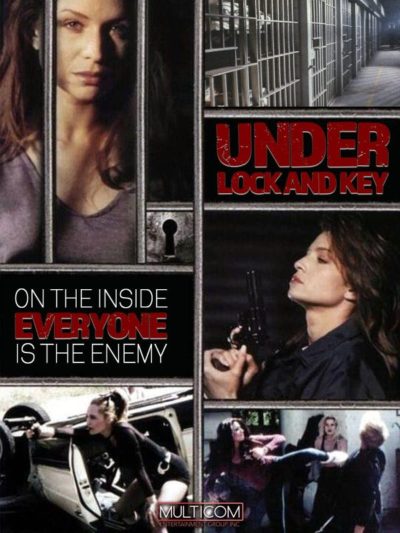 I can’t recall seeing an action heroine movie with
  While technically solid, and occasionally looking quite good, this may be the laziest scripting I have seen in a movie for a long time. I feel I may have lost actual IQ points through the process of watching it, such is the degree of stupidity which this provides. The heroine is Mina (Black-D’Elia), a college student whose life is upended when she and her little sister narrowly escape a home invasion by Arab terrorists, in which both her parents are killed. She’s rescued by intelligence agent Olivia (Leonard), who tells her she’s the only heir of an Afghani warlord, Khalid (Arditti). Her mother betrayed him, and had to change her identity: he finally caught up with the family, and wants his daughter back.
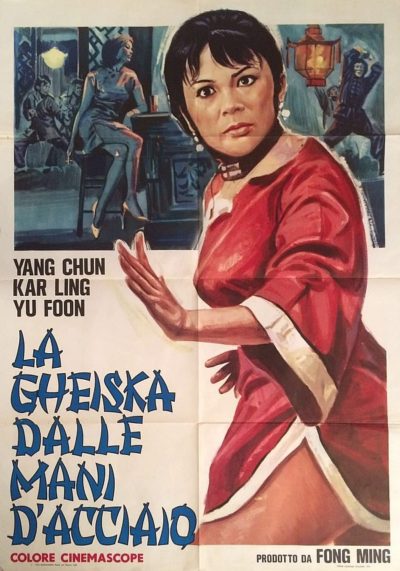 I’m just going to begin by quoting the opening credit titles. Spelling, grammar and punctuation as received. “At the early stage of Republic of China, Yuan Hsi Hai wanted to rebel the democratic government & be the king. But there were 300,000 soldiers at Yuan Wan under the command of General Tsai obstructed his desire, so he cheated General Tsai to Peking & confined his movements. So Yuan who lived in Chu Jen Hall could fulfil his ambition but…” I reproduce this because, to a large extent, that’s everything I’ve got in terms of the over-arching plot here. It’s all about Tsai (Kwan) getting out of the city, in order to lead his troops and, presumably, frustrate Yuan’s dictatorial ambitions.
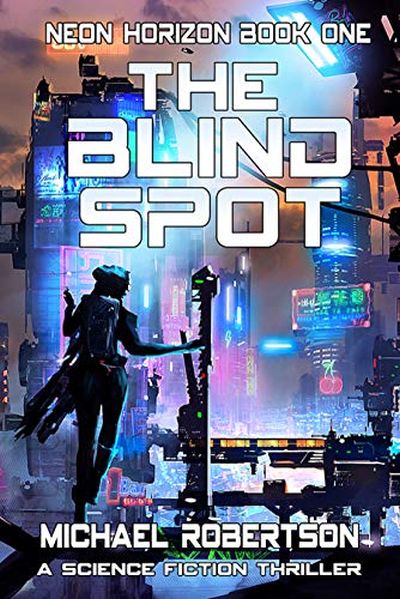 On the surface, Scala City is an idyllic, hi-tech world of prosperity, peace and morality, albeit at the cost of omnipresent surveillance of its residents. But there’s a dirty little secret. The Blind Spot is an area where surveillance is barred, and where the citizens of Scala City go to blow off their sordid steam. Its residents have cybernetically enhanced bodies, something rejected by Scala City, and a zero-tolerance policy for any kind of monitoring. It’s run by Wrench, who has kept his daughter Marcie Hugo under strict control since the death of her mother. However, like all teenagers, the 16-year-old Marcie is seeking to spread her wings, and has been making covert excursions into Scala City, with the aim of moving there some day soon.
 Buffalo police officer Megan (Sadeghian) is a highly-skilled cop, but has a crisis of confidence after being involved in the accidental shooting of a colleague. To help get her out of that mindset, partner Jeremy (Johnson) invites Megan on a weekend camping getaway in upstate New York, along with another couple. This goes horribly wrong, after they stumble across the summary execution of a drug-dealer by the local sheriff, Preacher (Kennedy) and his death squad. The four campers are now a problem for Preacher, so he seals off the area, and unleashes a slew of hunters, putting a ten thousand dollar bounty on the head of each target. Of course, you don’t have to be psychic to see it won’t be easy, courtesy of Megan.
 ★★★
★★★ There are quite a lot of familiar faces for this one. There’s the long-running relationship between Teresa and Russian mobster, Oleg Yosikov (Gil). This is somewhat reflected in the love triangle of her daughter, now very much her own young woman. Sofia has to decide between Oleg’s son, Fedor, and street-kid Mateo Mena. He rescues Sofia from a sticky situation, and those who want to use Sofia to force her mother into compliance with their wishes. There’s also faithful sidekick Batman, who has been with Teresa since the beginning. On the other side, as well as her ex-husband, whose power is now grown to such an extents as to be a real threat, there’s long-running DEA nemesis Ernie Palermo. He brought Teresa in, and is very keen for her to serve the rest of her eighty-five year prison sentence.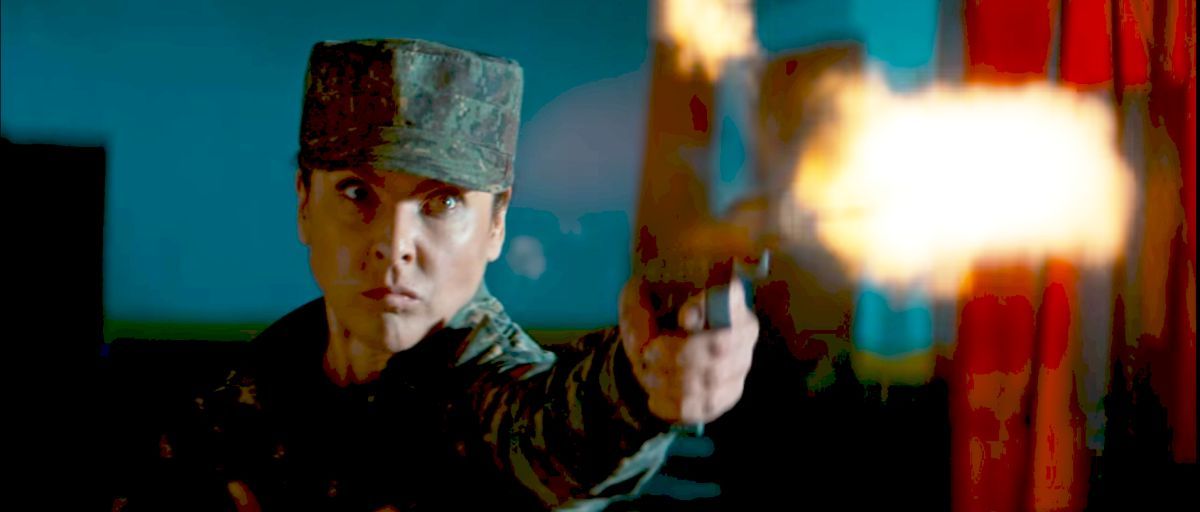
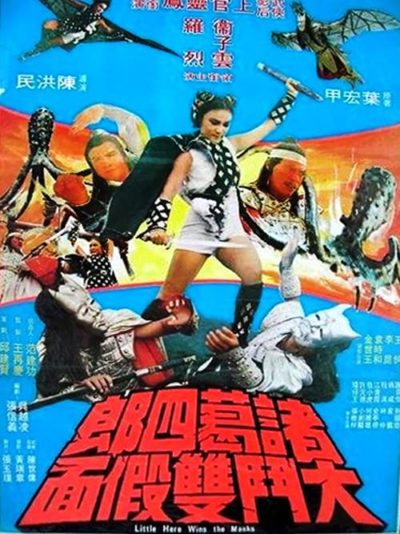 Although almost a decade earlier than Lin Hsiao Lan’s slew of fantasy kung-fu flicks, this shares a lot of the same elements – not least an approach to narrative coherence best described as “informal.” This starts at the beginning, where we don’t even get introduced to the participants, before the martial arts breaks out. As we learn a little later, it turns out this pits Chu-Kwok Su-Lan (Shang-Kuan) against three members of the Devil’s Gang, in defense of her two, largely useless sidekicks. This is just the first of numerous encounters between our hero – yes, it’s
  Okay, I will admit that this strained credibility on a number of occasions, to the point that buttons were popping off its shirt. But I don’t think the makers were exactly going for gritty realism, and the bottom line is: I enjoyed this a lot. Certainly, more so than
  Turns out, Erin has a past, and the publicity resulting from her impromptu heroism brings it to visit. She finds herself embroiled in murder, organized crime and police corruption, as well as more normal familial drama, such as neighbourhood jealousy and whiny pre-teen nonsense. One of the seven 45-minute episodes is entirely in flashback (unexpected Jamie Bamber!), explaining the reason she changed her identity and moved to Spain, as well as why those from her history are keen to catch up with her. Even the spectacularly unobservant Jordi begins to realize that his other half is not quite as claimed. Her original explanation of a relapse into alcoholism doesn’t exactly explain all the sudden absences, injuries and unusual behaviour Erin is now exhibiting, as she tries to manage the escalating situation.