




★★★½
“High school rivalries turn murderous; one fabulous character makes this worth a rent.”
 This predates both Jawbreaker and Teaching Mrs. Tingle, and thanks to being a cheap, indie film, manages to out-do them both. No studio to enforce post-Columbine political correctness here: the fight is on to be declared Prom Queen at Oak Hill High, located in the heart of Kansas. And when I say “fight”, I mean it – going head to head are Terra (Kelly) and Cherry (Balderson), but running interference is a sideplot involving the kidnap and murder of the principal. Though since his idea of fun involves molesting his students, he largely deserves it. This all builds to a murderous finale at Prom Night, at which bullets fly and flags burn.
Seeing Balderson in the credits, and realising she was a relative of the director – sister, actually – had us fearing Godfather III-style nepotism. But Balderson (bottom left) is actually the best thing in the film, lifting every scene in which she appears with venom, attitude and lines like, “I’m not insane – I’m an artist!”, as she chews up the opposition and spits them out in her wake. The rest of the cast aren’t even close to being in the same league, the most startling thing being Dreiling’s resemblance to Juliette Lewis. Without Cherry the film positively drags its feet, and the whole ‘principal’ subplot never catches light.
 There is still a bunch of stuff to like: the cheerleaders practicing obscene chants; Terra’s inability to walk in heels; the Xena-like swoosh every time Cherry turns her head; spats over yearbook photos, etc. and if the film had stayed focused on the hell of high-school, it might have been more effective. As is, you’ve got one fabulous character and performance, and the rest is variably effective satire.
[The UK title is I’ve Been Watching You 2: Prom Night. Which is strange, since I’ve Been Watching You itself retitled the David DeCoteau vampire-frat-boys-in-underwear romp, The Brotherhood. The two movies have absolutely nothing in common.]
Dir: Steve Balderson
Star: Jennifer Dreiling, Brooke Balderson, Amy Kelly, Summer Makovkin
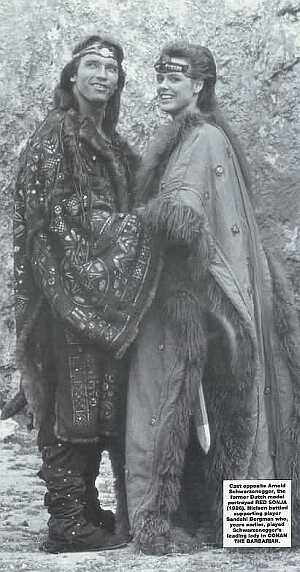 No, really. The milliner on this production deserves an Oscar, simply for providing the most amazing range of headgear I’ve ever seen. Everyone seems to have a different selection of pointy things to choose from; this civilization may have limited technology, but it’s clearly not short of hat-shops.
 Odds are you won’t see the key twist here coming, but on the other hand, it renders the preceding hour almost redundant. This sums up the entire film: as an exercise in technical style, few directors are as good at camerawork as De Palma, yet little here withstands scrutiny, despite an abundance of smoke, mirrors and Romijn-Stamos. She plays Laure, a jewel thief who cons her partners out of $10m in diamonds, then is lucky enough to fall into another identity. Seven years later, they get out of jail, still miffed, and she’s now married to the American ambassador. When paparazzi Bardo (Banderas) exposes her identity, she instigates a complex plan to play her various problems off against each other.
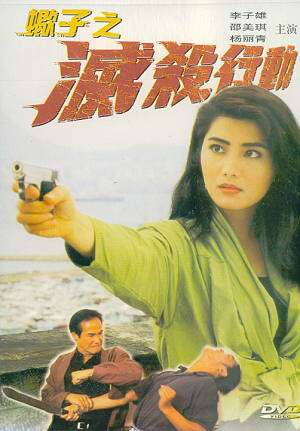 Look at the picture. Note the complete lack of an English language title; I’ve heard of directors taking their name off a movie, but never the film’s name. Also notice the undeniable presence of Cynthia Khan: she is in the film for the first three minutes (in a scene lifted from Nikita), then vanishes without plausible explanation. It’s almost as if she quit the movie after one day, being replaced by Shaw, but they kept the footage shot of her.
 Much like the first, bondage fans would probably mark this a grade, possibly one and a half, higher given the amazing length of time the heroine spends tied to racks and other torture devices – or just tied in general. Not that this, per se, makes it a bad movie. No, the severely limited budget (the population of the land where this takes place appears to be about 1/10th that of San Marino) and clunky acting take care of that…
 One interesting subplot is Ankaris’s daughter (Tijerina), a genuinely creepy teen with a disturbing interest in methods of torture. She has a crush on Amathea’s love interest and evokes the spirit of her dead mother to help her out. This angle adds a welcome depth, to a story that otherwise is largely what you would expect. The fighting is largely woeful: one participant holds their sword up while the other bangs their weapon off it. Yet, it’s never dull and Clarkson makes a good heroine, independent and feisty from the opening scene.
 This is an odd little film; heroine Angel (Walden – by some reports now a ski-lift attendant) is an assassin, ordered to take out the leaders of a white slavery ring. After the first killing, she finds solace in the arms of a random guy, and you
  Paul plays Philadelphia detective Laura Underwood; while investigating a string of deaths in which men have fallen from buildings, she discovers they are all her high-school classmates. Someone is clearly delivering payback for old misdemeanours. That someone would be Vicky (Johnson); the film is upfront about this, and indeed, there’s very little that isn’t out in the open. We know the who and the why, which leaves the film short on suspense. Paul is hardly credible playing a cop either, and Hall as her ex-fiance Brian is simply irritating.
 Okay, pardon me if I’m confused. What the IMDB says is the plot for Metropolitan Police Branch 82 is actually Tokyo Blue: Case 1. However, there are multiple parts to the series, and I
  Cat opted not to follow in the footsteps of her father, shampoo magnate Vidal, preferring instead to win various karate titles (allegedly) before moving into movies. Between two parts of the Blood Fist series, she popped over to the Philippines, and made this one for Roger Corman, under the gaze of familiar GWG director Santiago (TNT Jackson, etc.). She plays an LA cop, who comes to Manilla to investigate her sister’s death – she was killed after photographing a political assassination. And, hey, whaddya know? She was also taking part in a karate tournament… I trust I need not extend the plot synopsis any further.
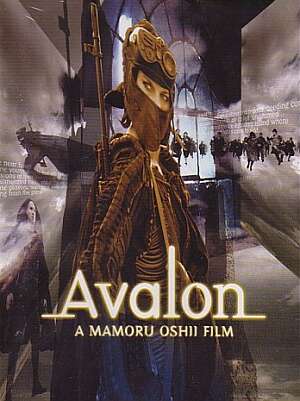 While this is live-action, Oshii is best known for his anime work, such as Ghost in the Shell. That also had an action heroine, great visual style and lost its way in philosophical navel-gazing. There, it was the nature of self – here, it’s the nature of reality. Set in Poland, which may be a first for a Japanese film, the heroine, Ash (Foremniak), is addicted to an illegal computer game called Avalon. When she hears about the existence of a special level in it, she’ll stop at nothing to find the entrance. But, for her, the line between life and pastime is becoming more and more blurred…