



★★★½
“The ghostess with the mostest.”
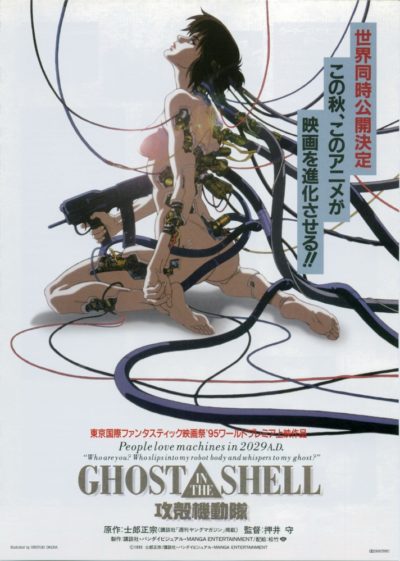 Renowned for its influence on just about every subsequent cyberpunk entity, from The Matrix to Westworld, this also remains one of the classic anime movies, more than two decades after its release. The main problem though, is the translation of a densely-packed and heavily notated manga series by Masamune Shirow, into an 82-minute action feature. You’re left with something forced to cram the philosophical aspects into a couple of indigestible lumps – an approach certainly also adopted by the Wachowski Brothers.
It’s set in a future Japan where cyborg enhancements have become the norm, to the point where some people are beginning to question what’s left of their own humanity (the “ghosts” in the hardened artificial “shells”). Among them is Major Motoko Kusanagi (Tanaka), an assault-team leader in Section 9, a federal public security agency. They are attempting to track down the Puppet Master, a notorious hacker, who uses an automated facility to create an entirely artificial body. Section 9 discover that the truth about the Puppet Master’s origins is closer than is comfortable, stemming from the actions of another government department and “Project 2501”. But what, if anything, does this say about the Puppet Master’s goals?
It’s a rather uneven mix of high-paced action sequences and more leisurely scenes. Each work well on their own (helped immeasurably by Kenji Kawai’s score), yet fall short of combining into a thoroughly cohesive whole. The Major might be rather over-fond of waxing philosophical, as shown in the following monologue, during a down-time conversation with her less-enhanced colleague, Batou (Ōtsuka), which feels more like the sort of thing I heard out of my fellow students – typically, the damn philosophy ones – at university, late on Saturday nights after the bar had closed.
Just as there are many parts needed to make a human a human, there’s a remarkable number of things needed to make an individual what they are. A face to distinguish yourself from others. A voice you aren’t aware of yourself. The hand you see when you awaken. The memories of childhood, the feelings for the future. That’s not all. There’s the expanse of the data net my cyberbrain can access. All of that goes into making me what I am. Giving rise to a consciousness that I call ‘me’. And simultaneously confining “me” within set limits.
While certainly a good summary of the movie’s main theme, it’s the kind of thing best explored in a longer, more leisurely format such as the TV series which were to follow. Here, this kind of rumination seems a bit forced. More effective than the chat is the action. Kusanagi’s talents and ability to take damage make for some glorious set pieces, such as her fight with one of the Puppet Master’s host bodies, and a battle against a tank, possessing vastly superior fire-power. The look of the film is just glorious as well, combing traditional cel animation and computer graphics to an effect rarely, if ever, matched. There was an “enhanced” version which came out in 2008, with upgraded CGI; yet after two minutes, I switched back to the original, where the combination feels more seamless. It’s certainly preferable to much modern anime – I’d rather have something try too hard to be smart, as here, than not try hard enough.
Dir: Mamoru Oshii
Star (voice): Atsuko Tanaka, Akio Ōtsuka, Iemasa Kayumi, Kōichi Yamadera
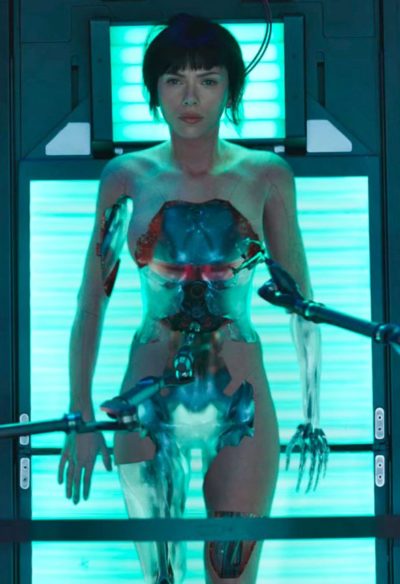 There will be a lot of Ghost in the Shell coming up this week on the site. Beginning on Monday, we’ll be reviewing the various animated incarnations of the universe, taking us through to next weekend, when we’ll be covering its entire world on Saturday, and then the new movie with Scarlet Johansson will be reviewed on Sunday. Hey, that’s the biggest action-heroine film since, certainly, the end of the Hunger Games franchise, and it’s a creation which has been hugely influential on SF since the manga version first came out in 1989. It’s amazing how accurate its prediction of the future, where everyone and everything is connected and interfaced, has proven – considering that at the time of its original release, the Internet was in its absolute infancy.
 Like much horror, the rape-revenge genre is one which overlaps with, rather than being wholly encompassed by, the action-heroine field. Some entries qualify: the awesome glory which is Ms. 45 being the most obvious example. But others appear to focus more on the rape than the revenge, and are far less interesting as a result. Such was the case for the first two entries in this series – and, indeed, the 1978 grindhouse classic which it rebooted. Here, however, in an interesting twist we bypass the assault entirely. This starts instead with the victim in the earlier movies (Butler) having adopted a new identity, that of Angela, and attending both one-on-one therapy as well as group sessions.
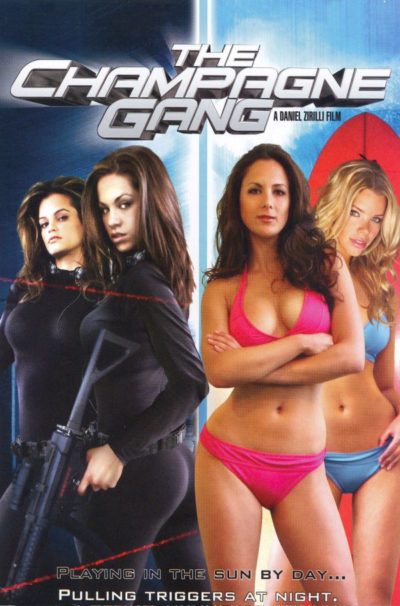 Under the leadership of Bliss (Toups), whose father is serving an extended stretch in jail, four young women stage a series of convenience-store burglaries in the San Diego area, before moving up to larger schemes. This brings them to the attention of local crime-boss, Cal Wertlieb, who makes them an offer they can’t refuse. He’ll train them to carry out more lucrative jobs, by cracking safes, which will give them access to cash and other easily fungible loot, in exchange for a cut of the proceeds – and their absolute silence in the event of them ever being caught by the authorities.
 The results of bringing female MMA fighters to the screen have been a bit mixed, shall we say. Gina Carano has looked decent in her films, but Ronda Rousey’s performances have been roundly criticized, and her Mile 22 project appears dead in the water. The performance by the recently retired from MMA Miesha Tate, which is likely the film’s major selling-point, rates… somewhere in the middle. She doesn’t disgrace herself – but that may be partly because there is no shortage of other weaknesses to criticize here. Tate is convincing in her role – yet since she’s playing a mixed martial-artist, it’s hardly proof of any acting ability. But I guess, everyone has to start somewhere, and a thinly-disguised version of yourself is a good place to begin.
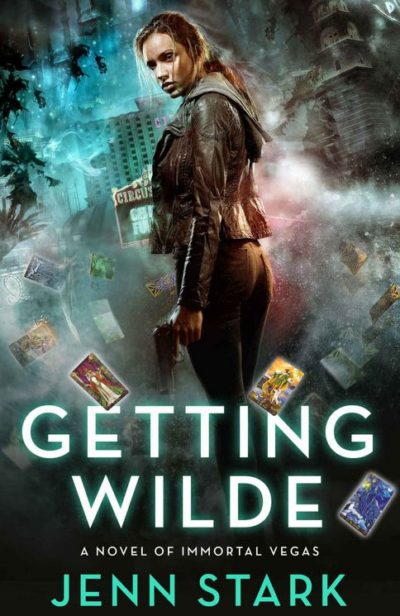 I initially thought I had a fairly good handle on where the first book in the Immortal Vegas series (currently at six entries, plus a prequel) was going, with a Lara Croft-esque lead, who specializes in locating and recovering ancient artifacts. You can also throw in fragments of The Da Vinci Code, since she is hired to retrieve a relic from the secret basement beneath the Vatican, and is going up against a cult of religious, Catholic fanatics. But it somehow ends up taking a sharp right-turn, ending up in a version of Las Vegas where, just out of phase with the casinos and hotels, lurks a hidden dimension of other venues, populated by…
 There’s something admirable about a film entirely cast with and directed by women, especially in such a generally male-dominated genre as horror. Unfortunately, all this effort really goes to prove, is that the fairer sex are every bit as capable of turning out uninteresting crap as any man. An ill-conceived cross between The Descent and The Blair Witch Project, this has four old school friends reuniting, along with the workmate of one of them, who tags along because… Well, as with so much in the movie, for no particularly good reason. There’s friction between the friends, from the moment Nancy (Bernadette) shows up four hours late, forcing their departure to be pushed back.
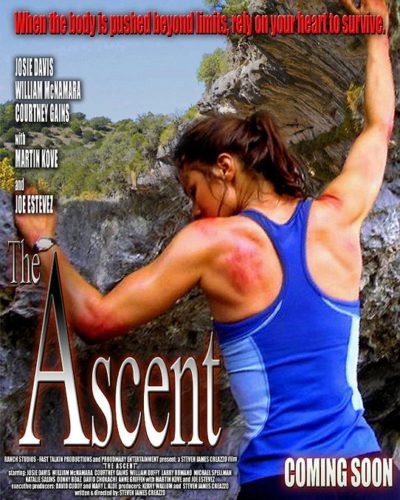 One year ago, the boyfriend of Emily Wilks (Davis) vanished, along with the mountaineering party he was taking on an ascent of the notoriously lethal Devil’s Peak summit. Emily is no mean climber herself, and still works as a trail guide on the mountain. But the group who have booked her services on this day have another motive: finding the legendary stash of gold they believe is hidden on the mountain, which they believe Emily knows the location. Unable to convince them it’s just a myth, she’s forced to lead the gang through the wilderness. Fortunately, it has many,
 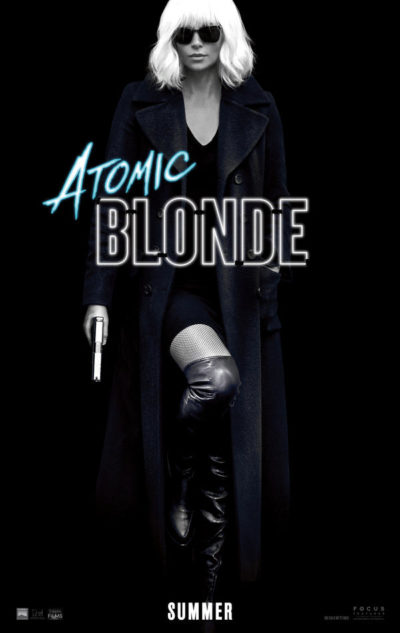 Charlize Theron has been an interesting character and action-heroine contender since 2004’s
 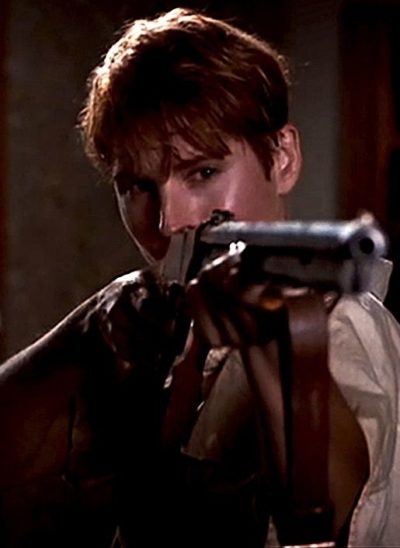 Important to note the year here, because the original Night of the Living Dead, for all its massive influence (without it, there’d be no The Walking Dead or World War Z) was very, very far from an action heroine film. Though it started off focusing on its female lead, Barbara, after she reaches sanctuary in the farmhouse, she spends virtually the rest of the movie in a near-catatonic state, and the film switches focus to Ben, who becomes the film’s hero. The change for this remake is one of a number of alterations, which are likely both necessary and helpful: when you are redoing a film widely regarded as a classic, you’d better bring something new to the party. That’s something largely forgotten by many horror remakes.