



★
“Beta, in the other sense of the word.”
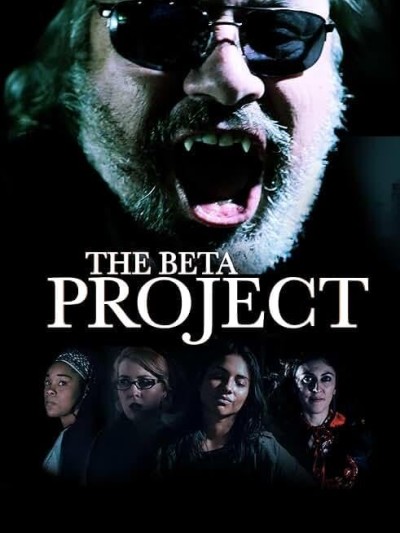 I usually strive to find something nice to say about most low-budget action heroine films. Maybe the soundtrack is cool. Or there’s one performance which stands out. But for this one, I’m really struggling. The good here more or less begins and ends with the synopsis, which is also why it’s here: “Four women are recruited into an organization that hunts the supernatural.” Mauser does appear to be on board with our field, and we’ve covered a couple of his films before, most recently the fairly decent Lady Lawman. While flawed, you could overlook the shortcomings if you squinted somewhat. This, however, is a clear step back, and was a real struggle to get through.
In the scenario that unfolds here, there is indeed an unnamed organization, run by Rose (Nash). The supernatural in question is… Well, it’s basically vampires, and in particular the legendary Lilith (co-director Berkshire). She is supposed to have died centuries ago, but the group discover this is not the case. The decision is made to recruit four women to take on Lilith (who is not the hairy dude shown on the poster). Why does it have to be women, you may be asking. Good question. Pity it’s one the film is completely uninterested in answering. Not that it matters, because the group never really ends up getting recruited either. Instead, there’s just smuggler AJ (Rodriguez), who gets paired with the organization’s accountant (!) and… Well, not very much, either. They go rescue one of AJ’s pals. That’s just about it.
What we have here feels like it could, and should, have been taken care of inside the first ten minutes, instead of playing out at feature length, like a pilot movie for a TV series that nobody wants to watch. It’s full of interminable scenes which deserve to have died a death on the cutting-room floor, like the introduction of AJ and pals, sitting around a restaurant. Or the training scene where AJ and accountant get whacked with sticks a couple of times. The latter is actually pointed out by the characters as useless, in a way that I can only presume was intended to be funny. Guess what? It isn’t, in the slightest.
This is in part because there’s no real difference between the stick-whacking and the “genuine” action scenes, which are utterly limp and unconvincing. When killed, the vampires “explode” in a shower of sparks, in a way done considerably better by the Buffy TV show, approaching thirty years ago. The performances are generally unconvincing too: Berkshire comes out okay, which may explain why she ends up also playing another recruit, Joy, in addition to the villainess. I kept expecting them to be sisters or something, but… Nope. Like so much else here, it was thoroughly pointless. All the goodwill Mauser picked up for the “can do” attitude of his previous films has been wasted; he’s now on my “approach with caution” list.
Dir: Brett William Mauser and Dane Berkshire
Star: Cristina Cruz Rodríguez, Dane Berkshire, Katrina Nash, Brett Mauser
 Watching this one, I had a
  This kinda teetered on the edge of inclusion or not, for about 90% of the movie. The heroine is quite passive, and the action is largely handled by others. It’s still solidly entertaining, and is definitely upper-tier as Die Hard knockoffs go. But it didn’t have a sufficient action heroine quotient… until the very end. There, she finally gets her act together, and takes the fight to her opponents. Was it enough? I was still on the fence, until one bravura shot convinced me. It doesn’t necessarily make logical sense, sure. However, it was just so damn cool, I had no option but to stamp its card and allow the movie entrance through these hallowed portals.
 I think, if you’re going to try and recreate the eighties, it might help if you were there. I was. Co-writer/director Tabet? Not so much. She seems repeatedly to confuse the look and feel of the decade with the seventies. The repeated needle-drop of Sweet song “Fox on the Run” – actually released in 1974 – is the most blatant example. It explains why the results are a bit of a mess. A well-intentioned mess, to be fair, and you can usually see what they are aiming for. However, throwing a character in solely so they can refer to eighties films like Commando and Cobra, is painfully clunky, and is a more accurate reflection of the approach in which this indulges.
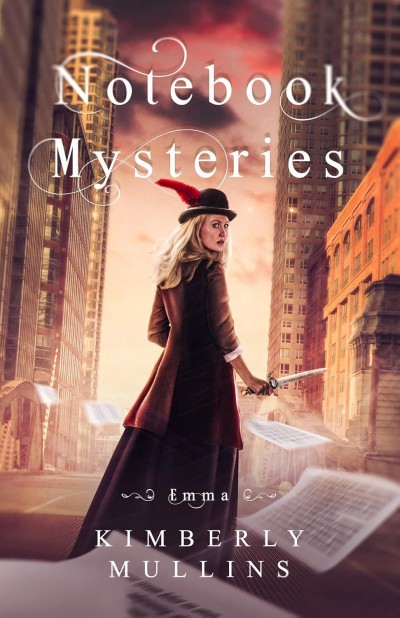 This begins with the Great Chicago Fire, an 1871 conflagration which killed around three hundred people. One of those is the mother of Emma Evans, and ten years later she’s a bright, inquisitive 16-year-old. She works part-time in the family bakery her mother previously ran, and also helps our her civil engineer father, but is also learning more… unusual skills, such as escapology and self-defense. These come in handy, as when she’s out carrying out deliveries with her friends Tony and Tim, Emma’s observational skills allow her to notice suspicious behaviour. When she has gathered enough evidence, she can then pass matters on to the appropriate authorities.
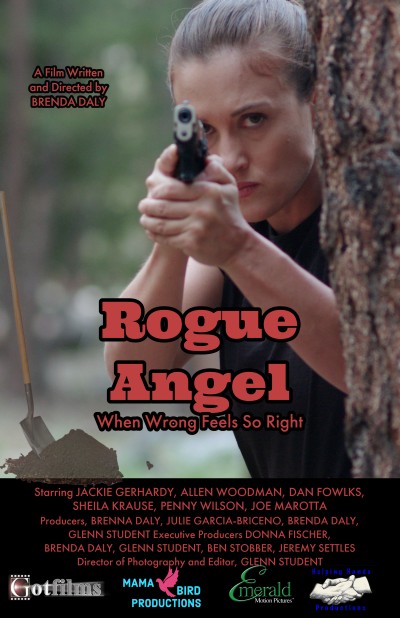 There is certainly something laudable taking on the challenge of making a feature film in seven days, and on a budget of seven thousand dollars. Doing so, and coming out the far end with anything remotely watchable, requires discipline and commitment. However, it also comes with certain penalties. The end consumer isn’t going to care about any of those constraints. They’re going to look at the screen and see takes which are “good enough,” rather than good, and particularly among the supporting cast, performances by people selected more for availability than talent. I tend to suggest it might be better to put the time and resources into making the
  I think it was the start of the closing credits where I realized why I disliked this so intensely. The film describes itself as, “A Flick by Adam ‘Ace’ Silva.” There’s hardly a part of that which does not make me cringe. Having the nickname “Ace” is one thing: it should only apply if you’re a sixties test-pilot. But putting it in your film is… yeah. Then there’s calling your movie a “flick”. No. Just no. It’s an attitude which, in hindsight, infuses the entire production. But what do you expect, when Silva didn’t just direct it. He also wrote it, edited it, did the cinematography and composed the music. All one hundred and eleven minutes of it.
  I guess some credit is due here for going against type, at least. Molly Reese (Stack) is not your typical vigilante. She’s actually a doctor who works in an emergency room, and suffers a debilitating mental blow when her husband and daughter are both killed in an accident. She subsequently goes to a very dark place psychologically, telling her therapist she has thoughts about killing people. This is particularly unfortunate, after she is unable to save a local mob-boss, and his gang decide she is to blame. For Molly gets to put all those murderous impulses into action, under the guise of self-defense, and then proceeds to take the fight to the gangsters, all the while becoming increasingly unstable.
  Despite coming in as a “Tubi Original” – a badge which has previously been as much