




★★★
“Edgar Wallace meets Russ Meyer”
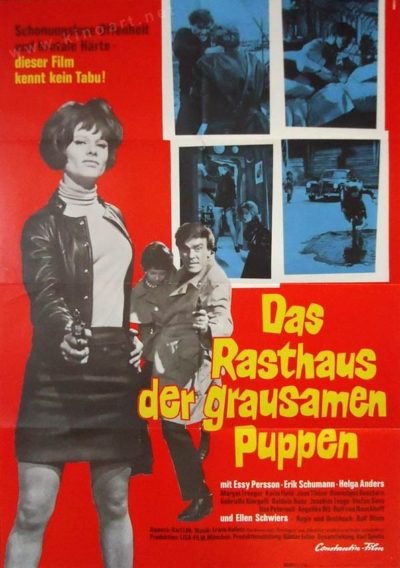 I’m usually not a too big fan of trash movies, because a lot of them are not so much trashy, as they are boring. Nevertheless, I’m always in for a good, entertaining bit of trash, as long as I don’t find it too excessive. There is no doubt that German movie history is full of it: just think of all those Schoolgirl- and Housewife-Report films of the 1970’s. Though most of these movies can be ignored, since very often, they are just no fun at all.
Not so this jewel, stumbled upon when going through the extensive selection of German Amazon Prime. Made during a time when German movie entertainment found itself at a crossroads, with “Papas Kino” (Dad’s cinema) still running in cinemas, but the new German cinema not having arrived yet, some strange movies found their way on the big screen. 1967 was a year when German Edgar Wallace movies (having been made in colour for about two years) were still finding audiences before the students’ revolts, yet movies in general outside the countrt, became kind of “wilder”. A little bit more erotic titillation found its way in, but the wave of German softcore comedies hadn’t started yet. This movie therefore falls in this very narrow time frame between “older” and “newer” German film styles, which makes it very difficult to define. Though, let me have a try!
The story: Bob (Schumann) and Betty (Persson) try to break into a jewelry store. Unfortunately, the robbery goes wrong, and when trying to escape, Bob kills a policeman with his car. He escapes, leaving the unconscious Betty to pay the price, and she is sent to prison. There, terrible conditions rule. Girls are mistreated in order to keep them in line. Some girls have turned – you’ll be shocked! – to lesbianism. And the female chief warden, with the remarkable name of Francis Nipple (!!), wants to force Betty to have sex with her. Betty instead takes her chance, killing Nipple and breaking out with 4 other girls.
They flee into the Scottish Highlands (though this was filmed in Trieste, Italy), where Bob now works as a waiter in an inn. Betty’s idea is to kidnap the psychologically deranged wife (Trooger) of rich factory owner Oland, blackmail him, get to the coast with the money, and head abroad for a happy life with Bob. Unfortunately, Bob has a taste for one of Betty’s pals. Meanwhile, the factory owner has an affair with his female assistant and is already figuring out how to get rid of his wife. You can probably imagine, things don’t go as planned and… well, go a bit haywire!
Inn is one of the weirdest and trashiest movies from Germany I’ve seen in some time. Part of the fun is, you see a movie that basically comes across as the mad love-child offspring of a typical black and white, Edgar Wallace “krimi“, and something close to Russ Meyer’s Faster, Pussycat! Kill! Kill! – what a crazy genre mix! The weirdest thing is: it is wholeheartedly entertaining, though you can never take it seriously for a single moment. It comes off as wanting to be cool but not really being able to. This is in contrast to Faster, Pussycat!, which is very cool and embraces its trashiness. This constantly tries, but cannot escape that it is, in the end, a German movie. When local film makers tried to “rebuild” successful foreign recipes such as spaghetti Westerns or the Hammer Horror movies, the results always left an impression of amateur dabbling.
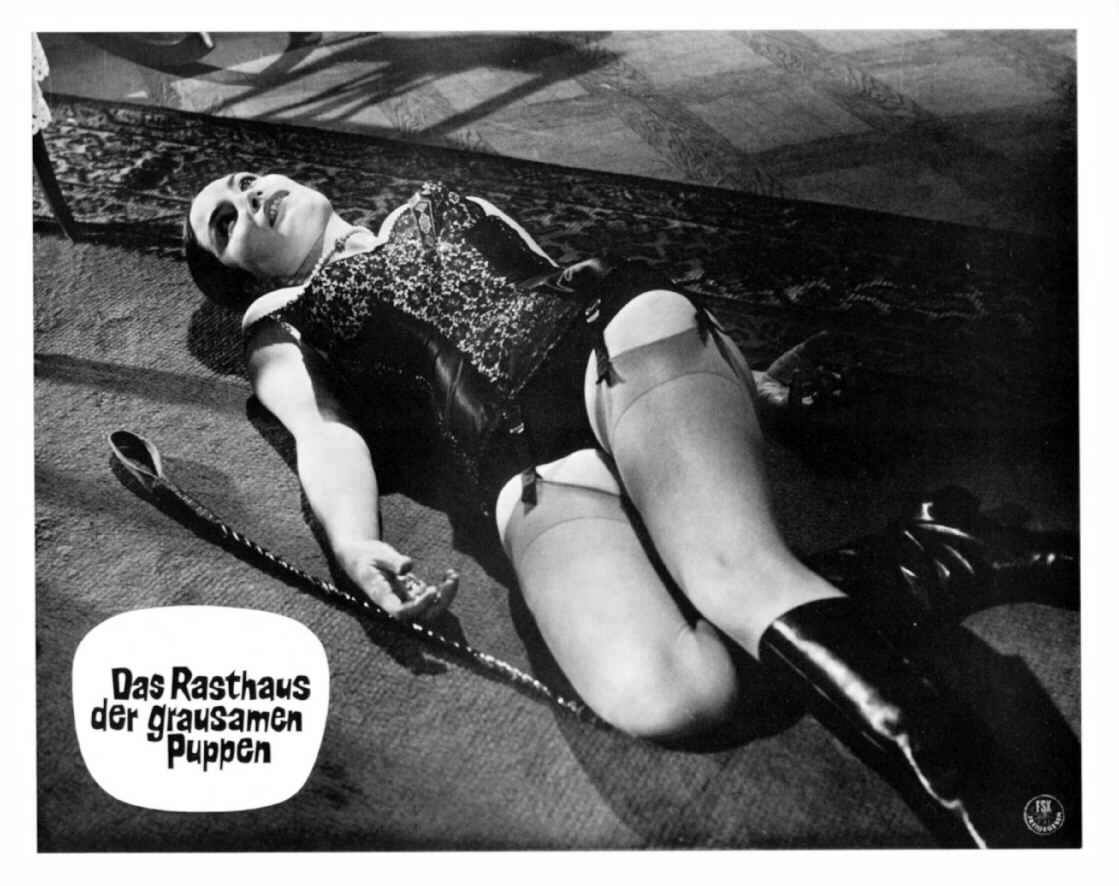
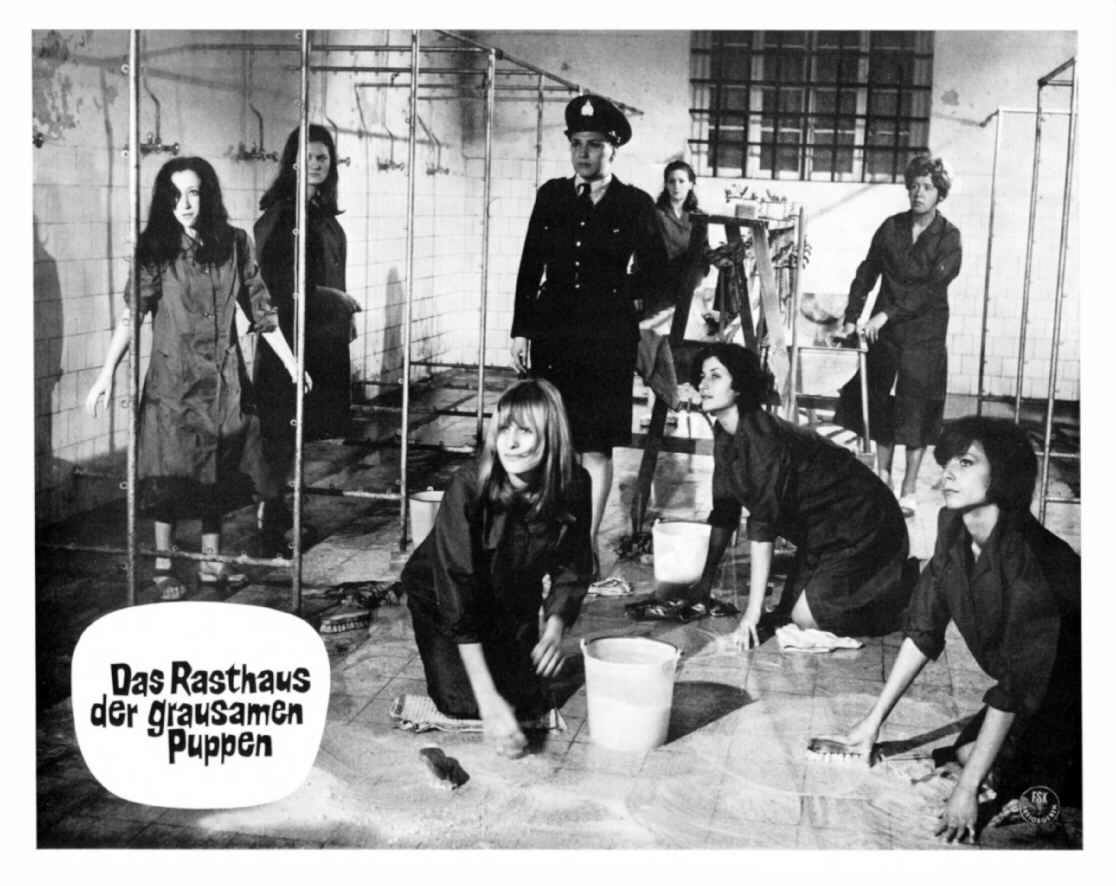 The setting and style – production design, costumes, cars – reminded me strongly of the Edgar Wallace movies. At the same time, you see women appearing as erotically as they could without ever being nude. Add to that the typical wooden acting of an Edgar Wallace movie, and you have an involuntary comedy of the highest order. I was screaming my head off because I found it hilariously stupid, especially when some of the actors tried to be “very emotional” and over-acted, without being able to be convincing. Also, I had to laugh at Betty killing off nearly everyone who has the misfortune to be in her line of fire. She is very trigger-happy and has a tendency to shoot first and ask questions… never.
Moments where Betty or other girls seemed to question their acts occasionally made me wonder. Was this movie meant at some point to be a serious crime drama about how social circumstances ruin young women’s lives? But then another nonsensical scene shows up. For example, an innocent witness discovering the dead inn-keeper, running up the stairs, screaming for help (as in an Edgar Wallace movie), screaming more when she met another of the girls, then while shouting “Don’t kill me! I want to live!”, falling out of a window. As they say, “Hilarity ensues…”
You won’t find great German “stars” in this movie. Erik Schumann (Bob) mainly reached my attention by being the German voice of Hollywood star Louis Jourdan, and Margot Trooger was better known for roles in … Edgar Wallace movies, as well as Pippi Longstocking and other Astrid Lindgren series/movies. I don’t know any of the other actors in this German-Italian co-production. The director Rolf Olsen was a very busy Austrian director who seemed to have directed everything that came his way, although not often with well-known German stars.
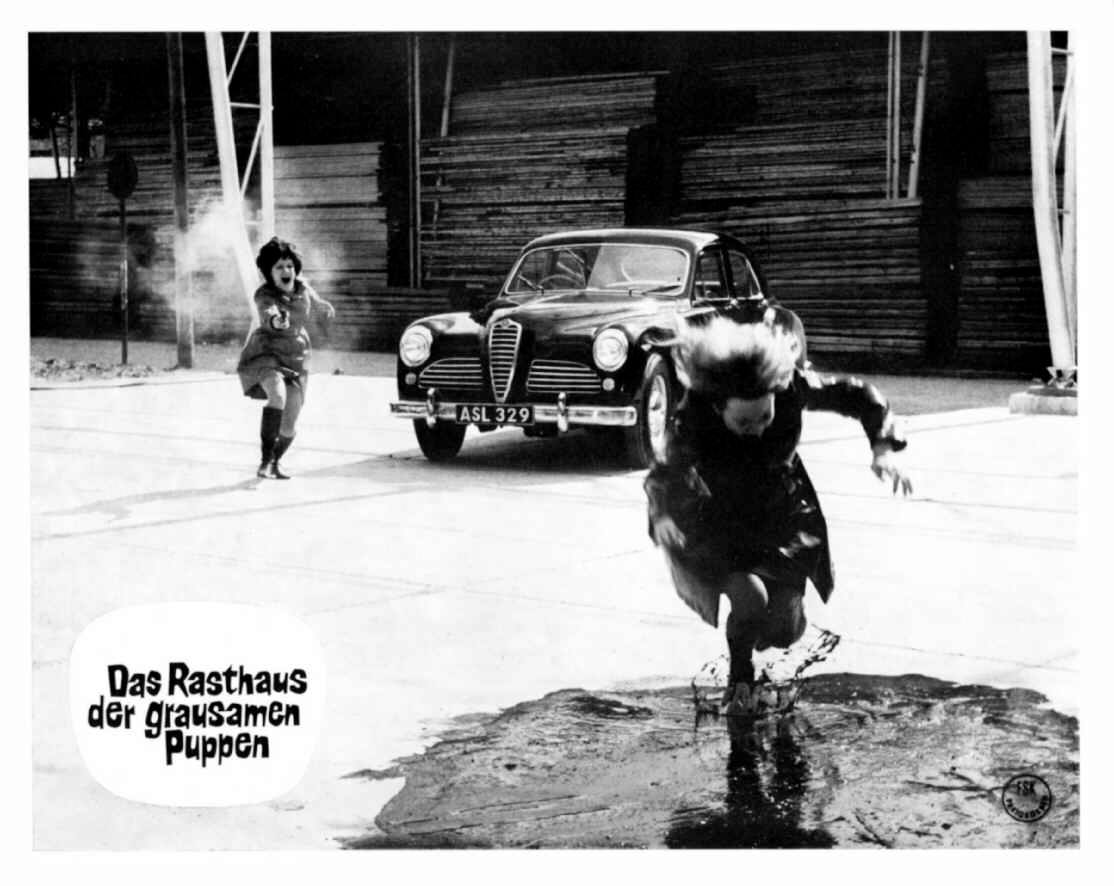 No, this is to be taken as seriously as long-running German TV series Hinter Gittern (Behind Bars), about a women prison. Which means: not at all! I always thought this genre came into existence in America in the 70s, having seen movies such as Black Mama, White Mama. Jonathan Demme, who would later direct Silence of the Lambs, also contributed to it with Caged Heat. It obviously is older than I imagined, but then I’m no expert on this subgenre! [Jim adds: The women-in-prison film as we know it goes back to 1950 with Caged, starring Eleanor Parker and Agnes Moorehead. I think the earliest we’ve reviewed here was 1955’s Betrayed Women.]
It seems the movie may have originally been longer. The version available today has a running time of 85 minutes, but the original cut is said to have had a running time of 96 minutes. It seems that the German film censorship organization, FSK (Freiwillige Selbstkontrolle = Voluntary Self Control) must have cut the movie extensively at the time. The trailer indicates that a water torture scene in the prison, the attempt by the female prison warden to force herself on Betty and the death of the inn-keeper have been cut. There is also a short clip in the trailer, which seems to indicate some of the five girls meet a bloody end in the inn; again, this is not shown in the version I saw. Instead, that seems to indicate two of them got away, as they never appeared in the movie again.
It’s a strange movie, attempting to marry the old with the new. But while I wonder if director Rolf Olsen might have seen and been inspired by Meyer’s Pussycat, I’m quite sure that this movie was seen by and inspired some Edgar Wallace directors. For the role of the sadistic prison warden would appear again in – you guessed it! – a 1968 Edgar Wallace movie, Der Gorilla von Soho (US title: “Gorilla Gang”),taking care of girls in a prison! Finally, the German title of this 1967 movie is Das Rasthaus der grausamen Puppen. “Rasthaus” being the German word for what the translation program tells me in English is “roadhouse; highway restaurant (am.)”. So I’m not quite sure “inn” is the right word for “Rasthaus”. The title for the dubbed American version was The Devil’s Girls, by the way.
Dir: Rolf Olsen
Star: Essy Persson, Helga Anders, Erik Schumann, Margot Trooger
a.k.a. Das Rasthaus der grausamen Puppen
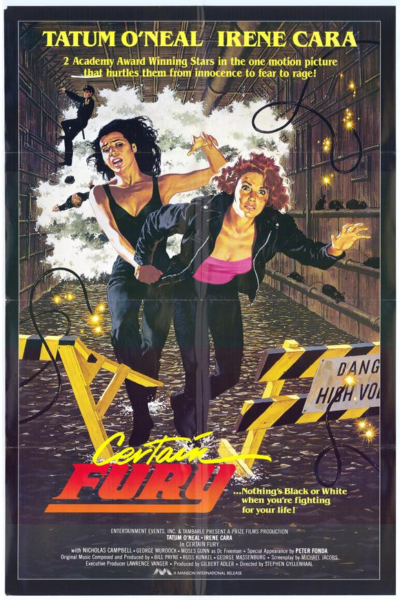 Child actors have a difficult challenge facing them when the reach adulthood. They are not the sweet kids anymore that everyone loves and wants to cuddle with. They can’t rely on the cuteness factor anymore that made them once so successful. That can lead to tragedy. How many former kid stars became drug addicts or committed suicide because they couldn’t return to that time anymore, when in a way the world was theirs? Others were smart enough to leave film business behind them and start a new career e. g. Shirley Temple. But a few of them are indeed lucky. they stay calm amidst all the thunderstorms of early successes and puberty, manage to stay relevant to audiences and even find a new footing and grown-up roles, that cement their careers as everlasting film stars. Actresses like Sophie Marceau or Jodie Foster come to mind.
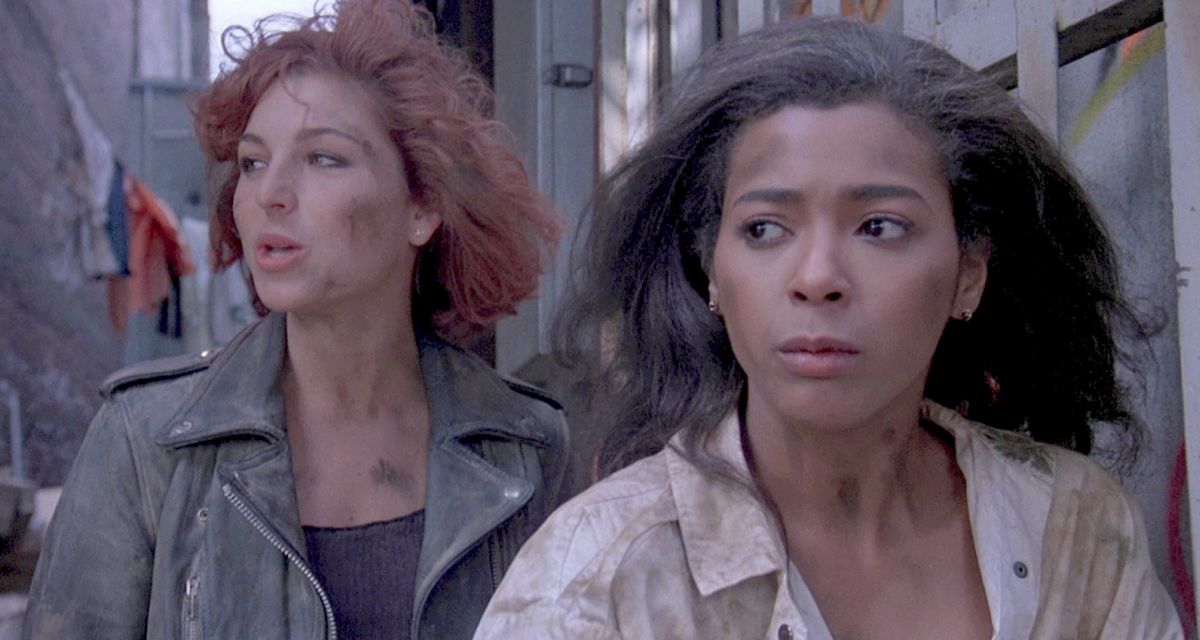 Scarlet tries her best to get help from another former lover, the arrogant, rich, criminal Rodney, who turns out to be played by Peter Fonda. Did he ever get an Oscar for one of his movies? I don’t think so. [Jim: no, just nominated for Ulee’s Gold] It’s so strange because he’s the most well-known actor in this movie. But he likes her as lttle as her other ex, and cuts her cheek with a knife. She just returns right on time to escape with Tracey before Rodney’s men arrive to get her after he made a deal with the police. Scarlet has taken some of Sniffer’s drugs and manage to sell them in what looks like a giant derelict house in the slums. It
 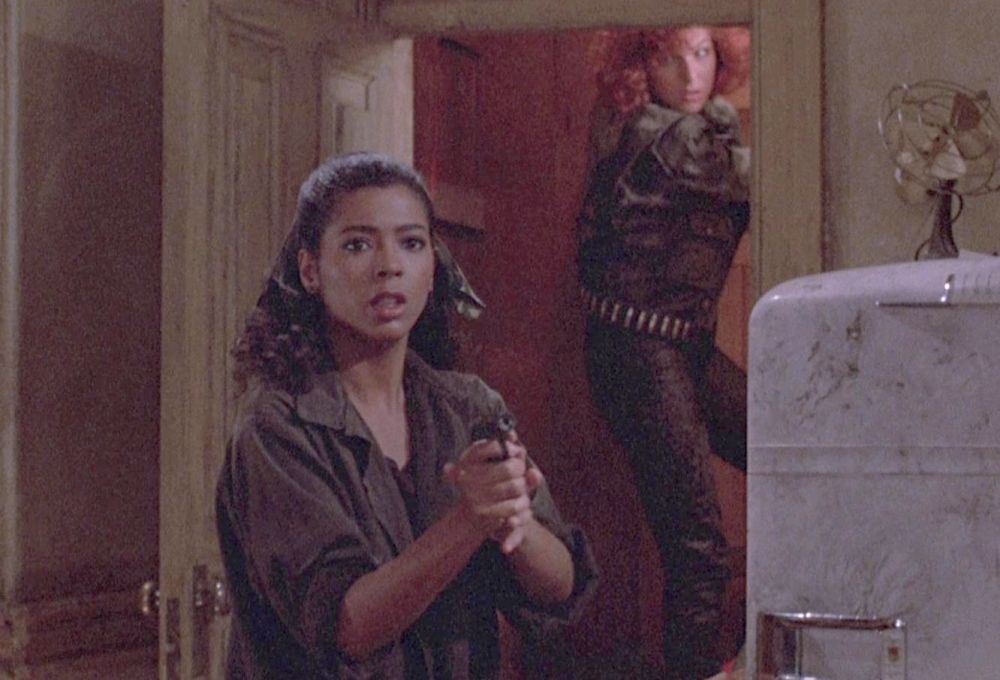 I note also obvious similarities to the Stanley Kramer-classic The Defiant Ones (1958) with Tony Curtis and Sidney Poitier. Scarlet is not nice and understanding, she is street-wise, prone to anger and absolutely insulting. Heck, she even drops the N-word to Tracey. So the inspiration is arguably there. And who knows, maybe it wasn’t an accident that a year after this movie, The Defiant Ones got an update in a 1986 television movie with Robert Urich and Carl Weathers (also a very watchable movie). [Jim: there’s also




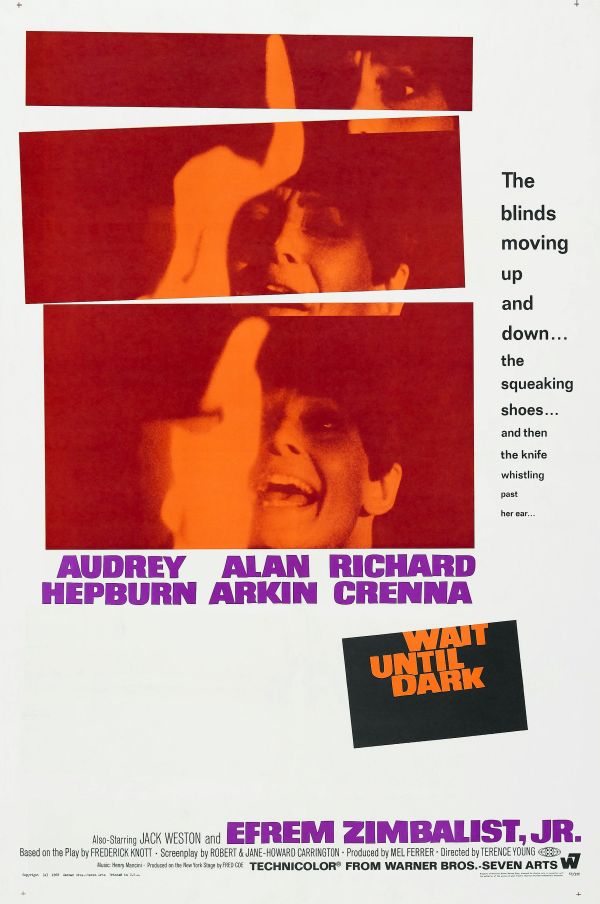
 I’m quite serious about the above. In 1959, Hitchcock’s classic psycho-thriller, which gave an entire genre its name, showed a normal, self-confident woman falling prey to a psychotic serial killer, while John Carpenter’s Halloween, also now a classic, had its heroine fighting off menace Michael Myers. In between these two iconic movies, there is not much that is worth mentioning. Some final girls in Italian gialli maybe managed to survive, I guess – but there’s nothing in big screen thrillers that the average Joe or Jane would be able to name. Except… This movie, in which blind heroine Susy Hendrix (Hepburn) is able to see through the ruses of three gangsters, fight them off, and even win in a final confrontation against evil-as-evil-can-be psycho Mr. Roat (a very young Arkin – gosh, this guy is now 86 at the time of writing).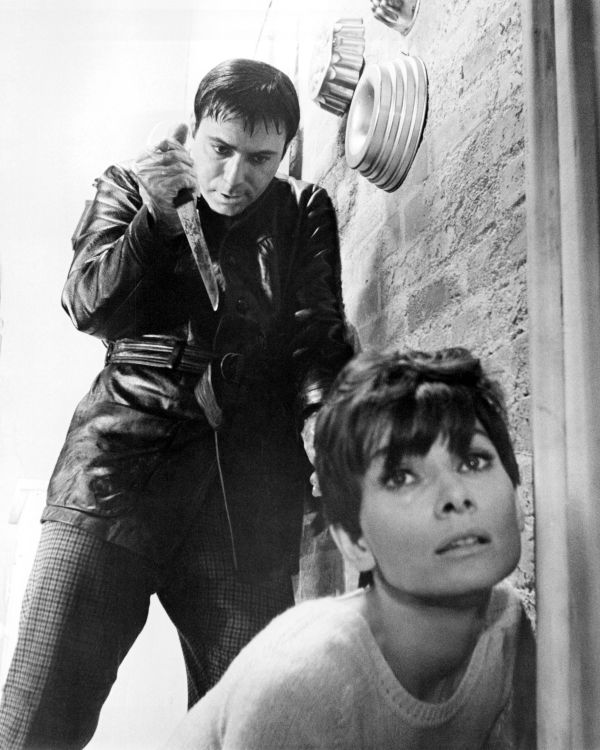
 ★★★½
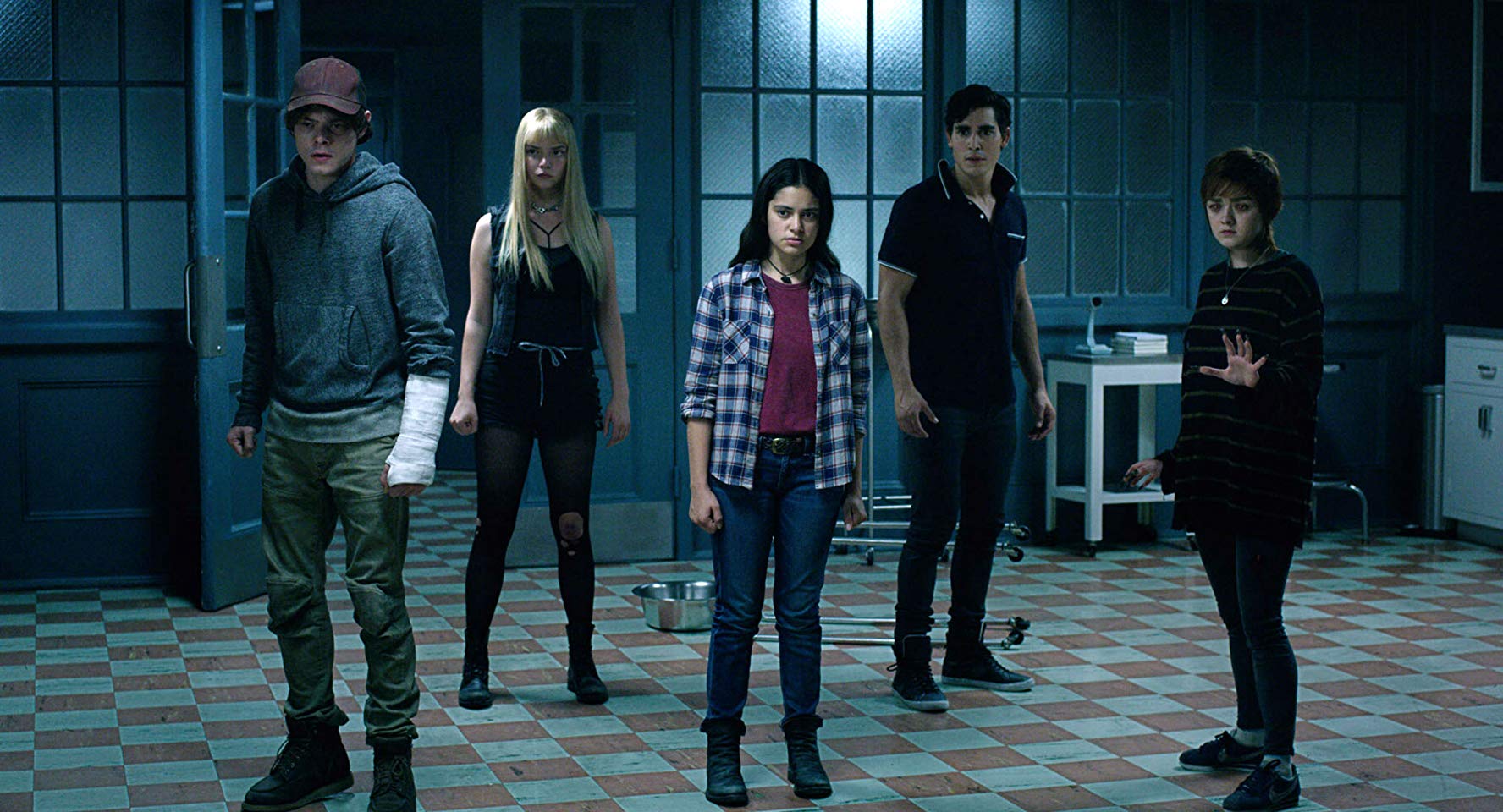
★★★½ It seems to me that cinemagoers are tired of always seeing movies following the same old formula they have been watching, repeated again and again. That you can be successful by being different is proven by movies like Deadpool or Venom. The New Mutants tries to do something similar, but unfortunately, the caravan has moved on. After It and Netflix’s Stranger Things, the concept of the movie is nowhere near as original as it might have been a few years ago.
 The first half of the (fortunately not-too-long) movie – I really, really hate the lengthy running time of blockbuster movies today – focuses on the five misfits, their pasts and their relationship building. The second is when the action and the CGI comes into play, though is more restrained than you may be used to in these movies. The New Mutants really feels like the intimate stage-play of X-Men films. The main inspirations, apart from those already mentioned, seem to be the psychological drama Girl, Interrupted (1999) with Winona Ryder and Angelina Jolie, as well as Buffy the Vampire Slayer – the latter is watched by the mutants a couple of times, and seems to correspond with things we see later. But, while I said that the new movie is more psychological, don’t think it’s deep, beyond “Well, I’ve got these superpowers, didn’t know how to control them, killed some people and now I’m kind of a wreck.”
 For one reason or another, in the last few years Great Britain has become the place to go for medium-budget action thrillers. Examples include the Pierce Brosnan-Milla Jovovich-actioner
 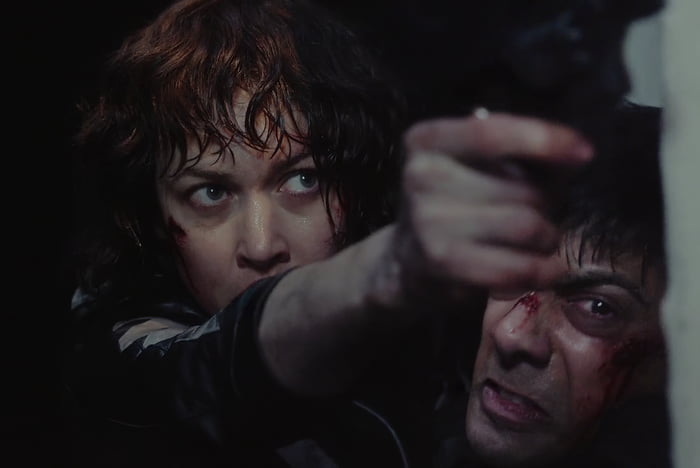 If Kurylenko’s character never reveals her name, at least some backstory is given as to why she is such a badass fighter. She used to be an Ukrainian soldier, part of a special forces battalion in Syria. After the death of her brother, she deserted and went to ground, taking menial jobs like this one. So for once we’ve got an explanation, as to why a smaller woman can take on big men who are professional killers. The fact that she is not just throwing them over her shoulder to the wall – like, let’s say, Angelina Jolie in
  I have to start off with an important confession: I am not a gamer. I’ve never really been one. I might have played… two computer games in my entire life: “Tomb Raider 2” and “No-one Lives Forever 2”. That very special thing computer gamers experience when in front of the consoles? I’ve never felt it, it never got me. But then, I was born in the mid-70s, and this could be the territory of another generation. So maybe I’m not even qualified to evaluate a movie which was based on a computer game. On the other hand, I’m not reviewing a game here, but a film – and I think I know a fair bit about them! Hopefully, I get the details right.
 The story was smarter than I thought it would be, having ordered the used DVD to a low price, and knowing virtually nothing about the “Dragon Age” universe. To be honest, I
  You know the story: A team of experts in a closed contained space, having to deal with ugly monsters and struggling to survive. The blue-print of this variation on Agatha Christie’s And Then There Were None (better known as: Ten Little Indians) was obviously the classic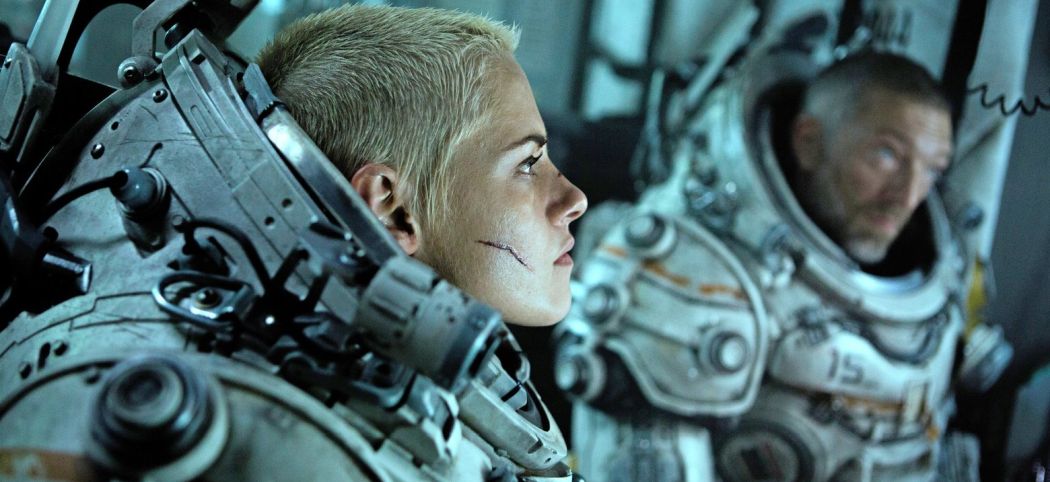
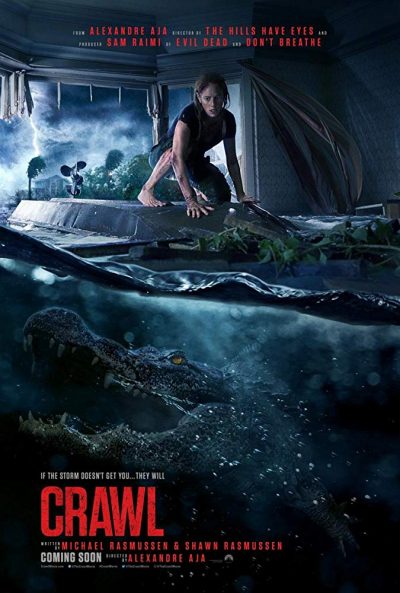
 Next, the simple but effective story in a nutshell. Florida, hurricane time. Swimmer Haley Keller (Scodelario), who just failed in a swimming competition, receives a phone call from her sister She’s worried because she couldn’t reach their dad. Neither sister has had much contact with him, since their mother and father divorced; he was Haley’s former trainer, leaving their relationship no on the best of terms. The streets are beiing closed due to the dangers of the approaching hurricane and the rising water levels.
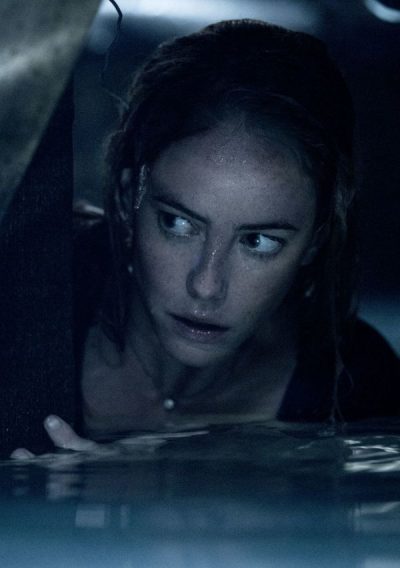 What is it about all those young women fighting predators with large pointy teeth? I’m no psycho-analyst but I guess it has something to do with the re-integration of certain character traits into the female psyche. Whatever these may be. I do remember an early trailer when The Shallows came out that had a voice-over of what sounded like a life coach trainer, encouraging the Blake Lively character. I wonder if the idea of the father who trained his daughter to extraordinary achievements was inspired by that trailer?