When the reboot (you hardly can call this just a remake) of She-Ra and the Princesses of Power – and please note the plural form! – was released by Netflix in 2018, it immediately drew fierce criticism. The main issue was re-designing the classic character of heroine She-Ra as well as others. The original animated series ran from 1985-87, and featured very feminine-looking characters. You could call them the feminine ideal: large in size, fit, attractive and yet still more realistic than the musclebound hero from mother series He-Man and the Masters of the Universe, of which She-Ra was a spin-off.
Though it has to be said: those characters then looked very much alike, as if the same model was used for almost all of them. In the new show, which ran for 5 seasons between 2018-20, the characters look more like prepubescent teenagers, and it was one of the things old fans took issue with. She-Ra and her allies were once an ideal of what a young girl might hope to look like as a grown-up, similarly to Barbie. The reimagined version stresses more diversity in body-shape. The character of Glimmer is more rounded – arguably a bit over-weight – which drew ire, too. But these characters also look more androgynous, essentially eliminating the feminine ideal. We seem to live in a time when female characters aren’t allowed to look stereotypically female, though there seems no such problem with heroes e. g. Hugh Jackman in Deadpool & Wolverine.
The show was soon called “woke”, but this is only justified, in that it fits the usual Netflix inclusion rules. So, the character of Bow, the archer, is black and has two fathers; there are indications some characters have relationships with people of their own sex; there is a lizard person whom we are informed online is transgender; then there is heroine She-Ra, who at the very end of the series (similar to The Legend of Korra), enters a relationship with her constant frenemy, Catra. I personally didn’t mind, though it may have something to do with me never caring for She-Ra in the 80s. It makes a difference if you create an original character like Korra, or take a preexisting character and change them drastically. I would have a beef, too, if let’s say James Bond in his next incarnation would be declared homosexual.
Though woke? Is it woke? Well… not in the sense I normally understand the word. For me, it means an agenda is being pushed. I can’t really say I see this here, unless the agenda is to stress that people exist who are not hetero-normative. Which… is true? The focus is on the story; we don’t get characters demonstrating against being sexually or politically repressed by the evil patriarchy, or talking about the problems of their gender orientation in modern society. This is no more woke than The Dragon Prince, another popular Netflix show. Part of the attention is probably due to creator ND Stevenson, who has stated he is – according to Wikipedia – “nonbinary, transmasculine and bigender,” as well as having bipolar disorder and ADHD. Well, whatever it is, is reflected in Stevenson’s work, in She-Ra as well as Netflix animated movie Nimona, based on his graphic novel.
But what is the story?
The core is the same. Adora, a human girl, has been raised as a soldier by the Horde, an alien race ruled by the evil Hordak, who is at war with the inhabitants of the planet Etheria. When Adora finds the magical sword of power that makes her She-Ra, Princess of Power, she learns the Horde aren’t the good guys. She swaps sides to fight them, with the support of several princesses living on Etheria, who all have special powers. However, there is no mention here of Prince Adam (a.k.a. He-Man), Adora’s brother, separated from her at birth when she was kidnapped by the Horde. This fits the modern animated He-Man series released by Netflix in 2021, which was in a totally different drawing style – its characters wouldn’t have matched. And as far as I know – someone correct me, if I’m wrong here – Adora’s childhood was not part of the original story. I’m also unaware she shared a sisterly childhood bond with Catra, a humanoid with cat-like features, in the Horde.
For it’s here where the new show differs from the old stories. And is all the better for it, as the relationships of the characters inform the story of the new series and are essentially the core of it. As Adora leaves the Horde, she puts herself essentially in opposition to Catra. Like her, Catra has been a childhood protégé of Shadow Weaver, a mysterious woman with magical powers and loyal servant of Hordak. Shadow Weaver has raised the two girls but has always been lying to them and treating Catra badly compared to Adora. This plants the seed of a competitive relationship between the two girls. There are definitely shades of Avatar – The Last Airbender in this.
Catra sees Adora’s defection as a personal betrayal, which leads her to fight against Adora more and more. At the same time, it becomes clear that Catra cares – in her own twisted way – for Adora. Her actions are, in some way, a logical result of her upbringing by Shadow Weaver, who later in the proceedings will turn to Adora’s side, too. In the end, Catra is on Adora’s side, declaring her love, which finishes the story.
The series got a lot of praise for inclusivity and character reinvention and has a quite enthusiastic fan-base. Though I don’t see anything here, I hadn’t seen before somewhere else, especially in the Avatar series, as mentioned. It’s not surprising a show like Sailor Moon and the style of Miyazaki films (though I fail to recognize the latter in the show), were cited as influences. The fan-base here, which may mainly consist of “non-heterosexual oriented” young people is definitely not the same fan-base as the original series. So if the intent was to enlarge interest in the franchise in general, I guess one could say: Mission accomplished!
On the other hand, it’s clear this new spin on an old title has split fandom – or, rather, created a second fandom. This is not necessarily a good thing. It can result in embittered online wars and open hostility between members of different fan groups, both claiming ownership of “their story” and how it should be portrayed or interpreted. It’s not the only case. See franchises like Star Wars (George Lucas’ or the Disney version?) and Star Trek (“old Trek” vs. “new Trek”?). If you are as old as I am, you may even remember a time, long before Internet and personal computer communication existed, when people argued over if Kirk or Picard was the better captain, or Sean or Roger the better Bond. Change, it seems, always creates controversies. Therefore, the new show – as good as it is – has created a problem for the franchise that won’t be solved in a foreseeable future.
The plot is interesting and captivating, depicting a cycle of childhood abuse that repeats itself later, with Catra attacking Adora and others – just as she was mistreated and psychologically manipulated by Shadow Weaver when she was a young child. It gave the characters a depth you probably wouldn’t have expected, from a reboot of an old animated show – one that itself was just a spin-off of another show, made more than 30 years ago. But that’s the thing, isn’t it? We always expect “our” franchises to continue year after year, decade after decade, telling us the same stories without changing. But the world constantly changes, and you can’t expect series and franchises not to reflect that in some way. It’s especially true, if we talk about series lasting more than a generation.
What I also liked here very much, were the action scenes. When Catra was being evil-sarcastic to Adora it did remind me a bit of Shego being mean to Kim Possible, or Callisto toying with Xena (another… princess…). But it also has to be said that the show needed some time to get going, had some episodes that felt like fillers, and while characters like She-Ra, Catra, Shadow Weaver, Entrapta, Scorpia or Hordak were mostly written interestingly, others felt a bit bland, underdeveloped and interchangeable. Though it might be a given, if you have so many characters in one show. It is true, the show didn’t break new ground, though I didn’t expect it to. These reboots typically repackage an already existing product, despite presenting it to the audience as something entirely new. Is so much praise justified for a show that essentially is recycled? Just because the main characters come out as lesbians at the end?
Additionally, it has been pointed out that the redemption of Catra is more than just a bit questionable. [Though she isn’t the main villain of the show: it’s still Hordak, who in the original show was also the mentor of He-Man’s archenemy Skeletor.] She has attacked and tried to kill Adora several times and went so far as wanting to destroy the entire world, rather than see Adora succeed in her goals. That’s pretty bad, and one wonders how such a character can just be forgiven. Admittedly, Etheria might have a different legislation and jurisdiction than planet Earth! But someone put it quite well: “Catra is a war criminal. Why is she not being treated as one?”
In the end the show is indeed comparable to Sailor Moon – it’s all in the name and power of love and forgiveness. Who wants to question logic here? For all its perceived “controversial” elements and flaws, the show is good entertainment, which is where my main focus always lies. Netflix’s streaming rival, Amazon, announced a while ago they wanted to do a live-action She-Ra series (recent news reports suggest it may be He-Man’s turn next). This caused something of an uproar among the fans of the Netflix show, obviously fearing She-Ra may become straight again! It’s history repeating, similar to the reactions of original series fans when they first saw the Netflix show. Though if indeed that She-Ra show is produced, its story-telling will have to match the quality of this one.
But it seems you can never make everyone happy at the same time!
Creator: ND Stevenson Star (voice) : Aimee Carrero, AJ Michalka, Karen Fukuhara, Marcus Scribner
Martha Jane Cannary Burke, a.k.a. “Calamity Jane” (1852-1903) was a lot of things. But most of all she was the inventor of her own legend. By the end of the 19th century, dime novels based off her alleged adventures already sold very well. Unfortunately, the foul-mouthed and constantly drunk former frontier woman could never benefit financially from her reputation, with which others earned good money. She died early, though already perceived as a legend of the “old West”. To divide which of the many stories told about her are true, and which are not, is a job for the historians, not mine. For a character who definitely provided a “fill in the gaps” hero’s template, it’s no surprise Calamity Jane soon became a mythic legend of the “Wild West”, combined with other illustrious characters of that time such as “Wild Bill” Hickok, Wyatt Earp, Doc Holliday, Billy the Kid and many others.
On the big screen, she has been portrayed by Jane Russell (The Paleface), Jean Arthur in The Plainsman, Doris Day in the beloved musical Calamity Jane, Angelica Huston (Buffalo Girls) and Ellen Barkin in Wild Bill (next to Jeff Bridges). On the small screen she could be seen, amongst others, in an episode of Bonanza, played by Stephanie Powers, and 3 seasons of Deadwood where Robin Weigert played a more modern and realistic version of her. As the Calamity Jane character is so prominent, and separate from the real person she once was, in a way similar to Robin Hood, the Musketeers, or Matthias Kohlhaas in Europe, it seemed only a matter of time until she would also find her way into an animated version of herself, which this series presents.
The Legend of Calamity Jane was a short-lived animated show that came out in 1997, a co-production of French TV channel Canal+ and The WB in America. The intent was to create something similar to the successful animated Batman show. Originally scheduled for 13 episodes, after just three weeks, the series vanished from the TV guides. While obviously not successful enough in the US, the full series ran as a dubbed version in several other countries. Over time, maybe partly due to not being available, the show developed a cult following.
Originally, Jennifer Jason Leigh was chosen to play Calamity, but for unknown reasons was replaced by Barbara Scarf, who does a good and satisfying job. Though remembering the roles Leigh played, and her subsequent role as an evil criminal in Tarantino’s western The Hateful Eight, one wonders how her Calamity Jane would have sounded. But then Calamity is a true blue hero here, so maybe Leigh wouldn’t really have fit this version of the character.
The show itself takes place around 1876 and is great fun. Calamity Jane is an adult, red-haired and green-eyed woman, with a whip that regularly comes in handy for dangerous situations. She is serious-minded and on the side of the law, meaning whenever help is needed, she will be there. She has a horse called Dakota and drinks milk (hey, what do you expect – it’s made for kids!). Always on her side is old Joe Presto (Welker) who can best be described as her comic sidekick, though sometimes comes across a bit simple-minded. Also, I sometimes had problems understanding his mumbling, though you get used to it. Of course, when you tell the story of Calamity Jane, Wild Bill Hickok is never far away. In real life she claimed that they were a couple in Deadwood. though according to historians, this could easily be another made-up story, as she was famous for doing. In this show, he helps her from time to time and is voiced by Clancy Brown (the Kurgan from Highlander).
The stories are one-offs, concluding at the end of each week, and Calamity usually has to deal with villains or other problems. For example, in the first episode, she prevents a war between the Comanches and the army; in another one she brokers peace between a racist settler and the Blackfoot tribe. Some villains can be quite nasty, although I don’t recall her killing any of them. But others are less confrontational. In one story, she meets her long-lost father, and in another, she has to deal with a young girl who has run away from home, and wants to become like her.
Overall, the stories are entertaining and different enough, so they never fall into a pattern or get boring. Of course, what I liked especially was action scenes which were above what you might expect from a show at the end of the 90s. There really was no reason why the show failed to find an audience in the US. It definitely could have stood alongside Batman, and I personally think there would have been a place for both, as each were their own thing. Fortunately, the series has now been made available on DVD and Blu-Ray. Here’s hoping Calamity will find many new fans.
Dir: Pascal Morelli Star (voice): Barbara Scaff, Frank Welker, Clancy Brown, Michael Horse
Catwoman: Hunted is a 2022 DC animated movie. Here is a little confession: Catwoman alone never worked for me. In combination with Batman, there is that special chemistry, a feeling that makes the character work but alone? Nope! Neither in the comics with her solo title, nor in a movie solely focused on her (Catwoman with Halle Berry still makes me tremble… but not in a good way!) does this character function for me. A burglar dressed in a cat-suit? No, actually that comes across for me as old-fashioned (do thieves that climb up houses still exist, today?). Strangely, whenever the character appears on the screen contrasted with Batman, it works.
Anyway, it doesn’t stop people from trying to give the most famous Cat-orientated character of the DC universe further solo adventures. In this movie, Selina Kyle appears in classical dress at some kind of cosplay event. Everyone is dressed either as a DC hero or villain: she is next to Batman villain Black Mask in her classic 1940s costume, only to later switch into her modern sexy suit and steal a diamond. Unfortunately, she is discovered and hunted by the Leviathan crime syndicate that set up the party. The diamond was Black Mask’s entry fee to the society. Catwoman is saved by Batwoman who kind of forces her to do… well, what? Kind of spying on Leviathan. Once again being discovered – for a thief she is really not that successful – she and Batwoman must face several opponents…
What sounds as if it could be an interesting story, turned out to be a very disappointing movie. I had to watch it twice because even though the film is a short 78 minutes, I almost fell asleep. The introduction to the story feels clumsily handled, scenes are overlong, and after we know where the story wants to go, the movie basically is a constant follow-up of fight scenes of Catwoman and Batwoman against a range of well-known and lesser known DC villains. These include Cheshire, Nosferata (one I had never heard of before, and I used to read DC comics quite regularly in my youth), Solomon Grundy and the Cheetah herself, Barbara Minerva who is Leviathan’s chairwoman, though Talia al Gul is managing everything from the shadows.
It feels as if someone threw as many characters, mainly female ones, into the script as possible, perhaps to hide the fact that Batman isn’t in the picture. But they don’t necessarily have the knowledge how these characters usually act. That may be partly the fault of director Shinsuke Terasawa (Wikipedia lists the movie as a Japanese-American production; maybe Warner’s wanted to save money?) but the script also has structure problems. What I’d call act one wasn’t finished until half the film’s running time was over. And the script doesn’t develop any further from this point on. You’re left to wonder what the big plan was, or what Catwoman was supposed to do, but this question is never answered. The remainder is a bunch of fight scenes, heaped on each other until this is finally over.
The script is by Greg Wiseman, whom I personally admire for his wonderful, unfortunately underrated, Disney animated classic series Gargoyles from the late 90s. He also was involved in animated series such as The Spectacular Spider-Man and Young Justice, a series that also has its fans, despite flying under the radar. But here he seems missing the right feel for the established DC heroes and villains.
Take the Catwoman of this film for example. We all know how this character should be played, though there are different interpretations of the character on the big screen over the years. This Catwoman comes across as downright awkward and arrogant to the hilt. We know of Catwoman’s erotic flirtations with Batman, but here she is “in heat” the whole time which just feels wrong. I know how it sounds but this Catwoman feels… well… oversexualized. And just because she has a thing for Batman doesn’t mean you just can switch this behaviour to Batwoman. Yes, we know Batwoman is nowadays a lesbian, since this side-character from the Batman comics of the 50s was resurrected in modern times. But that doesn’t mean that she must almost be seduced by Catwoman. Then Catwoman drops the ball again, as if the whole point of the scene was just about showing us how incredibly irresistible she is to everyone. Thank you very much, female self-esteem!
More than this – and difficult even for me, who usually accepts some very unbelievable things in story-telling – this Catwoman seems almost to have superpowers. I have no problem having her, teamed with Batwoman, fighting the assassin Cheshire, against whose poison she had earlier taken an antidote, or Nosferata, who reminded me of a female version of classic character Man-Bat. But the two fighting and beating 50+ assassins of the League of Shadows? No. Just no. Sometimes it borders on the ridiculous. When Catwoman shoves a bundle of explosives in Solomon Grundy’s mouth and tells us: “That’s all folks!”, I wondered who had the marvellously stupid and tonally deaf idea of referencing Porky Pig in a DC movie! It just feels tonally wrong.
Another ill-fitting decision is the score by Yutaka Yamada. Don’t get me wrong. His music will probably please you if you like jazz, but for a DC action movie it’s just the wrong choice. What almost – but only almost – saves the movie is the final chase when Barbara Minerva turns into an oversized version of her Cheetah personality and goes after Catwoman. For the first time in this movie you have the feeling Catwoman is in real danger. But this is too little too late. It can’t compensate for all the mistakes that had been made in the movie before.
Don’t take the above too hard; someone unaccustomed to DC or Batman comics might actually enjoy this. For me, someone who knows and loves the characters, it felt like a gigantic misstep by the creative team who made this film. And I still can’t help the feeling that it would have been a much better movie if Batman had been the main character, having to deal with an opposing Catwoman. The best thing here was a 40-minute extra on my Blu-Ray, about the history of Catwoman in comics, TV and movies. That was really interesting. The main feature… not so much!
Dir: Shinsuke Terasawa Star (voice): Elizabeth Gillies, Stephanie Beatriz, Kirby Howell-Baptiste, Zehra Fazal
★★★
“Everything that goes up, must come down again.”
Note: Watching season 1 or at least reading Jim’s review of it is highly recommended. Spoilers will follow!
I never played the MOBA (multiplayer online battle arena) video game League of Legends. But I guess this was the case for many people, when they discovered the first season of the animated series based on it in 2021 on Netflix, and were surprised by its great quality. For Arcane – League of Legends was a show long in the making. That it finally came to fruition is probably mainly due to the persistence of producers Christian Linke and Alex Yee. The whole project had many creative problems to overcome, not least the indifference of Hollywood, where Riot first tried, unsuccessfully, to find a partner for a possible translation of their stories into a film version. It would probably never have seen the light of day if they hadn’t employed producer and writer Amanda Overton. She was able to see the dramatic potential of Riot’s fictive world Runeterra and take the needed steps for this to become a story.
The whole project was something absolutely new for all involved, because animated clips for games are not the same as an animated series. It spent a long time in development – production for the first season took seven years. Success could not be guaranteed, therefore needing another three for the second season to go into production without finished scripts for every episode, according to Variety. This resulted in a total budget of $250 million for the entire series. The first season cost $80m to produce; the second, $100m; the rest went into marketing the first season. This means every episode cost $13.9 million, the highest budget per episode of any animated series ever.
Given that, it’s no surprise to hear the rumoured three further seasons are not happening. However, the producers say that was just an inside joke: it was always intended for the story of the twin cities Piltover and Zaun to be finished with the second season. At least, it’s what they claim. Watching the rushed events play out in season 2, with new, underdeveloped characters being introduced and old characters sometimes behaving inconsistently, and not necessarily in line with the way they were presented in season 1, make doubts about such statements absolutely justified.
In any case, here we go again! While normal watchers and fans had to wait 3 years for Arcane‘s second part. Season 2 continues its story immediately after the big bang, which we don’t get to see here, caused by Zaunite and gangster protégée Jinx, previously known as Powder. We get to discover which council members died and survived. That question seemed the most important one for many people, maybe only topped by the unresolved relationship issue between Jinx’s sister Vi and Piltoverian enforcer Caitlyn. Surprisingly, only half perished but Caitlyn’s mother, Cassandra, bit the dust, a potential catalyst for a revenge arc. But then, from the very beginning on, Arcane has followed much more complex storylines than your average Hollywood blockbuster.
For this show, it means what would be enough for your average action movie or TV series, is just the beginning. It’s what I think makes the series above average in general. It always gives more than you asked for, and at the same time surprises you with sudden twists, unexpected developments, plus nuanced characterizations and relationships that escape standard black-and-white. Well, at least the first season did.
Characters are flawed, not just good or evil. They try their best, or at least react in a way that is human and understandable. Yes, the road to hell is paved with good intentions. Sometimes your effort to do good is exactly what leads to society’s downfall. That theme was prominent in season 1; for season 2, it’s also about how the actions and intentions of different people can clash with each other. Also, Riot and its creative team seek to put things on their head, with unforeseen developments for their characters. Viktor becomes a kind of helpful messiah in Zaun; Jinx teams up with her former gangster-stepfather’s loyal lieutenant Sevika, with whom she was at odds before, and young girl, Isha; Jinx becoming the poster girl for what seems to be Arcane’s prepared re-enactment of the French revolution; and Caitlyn is de facto declared sole ruler by Ambessa Medarda. A fallout between Caitlyn and Vi puts their developing love story on ice and drives Vi into nasty underground fights. There’s a lot happening here and a lot to unpack, too; no review can cover it all, so I won’t even try.
The dreamlike quality of the animation is still overwhelmingly beautiful. Though in some scenes and moments, you may feel you already know French animation studio Fortiche’s shtick. Anything repeated can hardly retain a feeling of originality, though it still may look beautiful. Once again, the musical score is fine and offers something for everyone. When music and visuals come together, they very often make a fine combination, reminding me of MTV music videos of my youth.
Unfortunately, the songs are usually at the beginning of each episode. I preferred it the way season 1 did it – we didn’t know when a song would pop up. It could be the beginning, middle or the end of an episode, so it was a nice surprise. Also, while the previous season had around eleven songs, here there might be twice as many. After a while, the constant interruptions of the story for another music sequence can start to feel quite a bit distracting if not outright annoying.
Is this season better or worse than season 1? It depends on what is important for you. What I liked very much of the first season, was it being character-focused and psychologically deeper than you would normally expect from your average entertainment product. Also, the realistic depiction of characters and their conflicts with each other made me buy into the more fantastic elements of the story. I got the strong impression that, in contrast to many Hollywood creators today, those in charge had actually read books on screenwriting and building dramatic conflicts, as well as believable characters.
Season 2 is different: focus appears to be elsewhere. It seems there is so much the writers feel the need to tell, and by wanting to introduce more of the game’s lore, it sometimes becomes too much for its own good. There are many new developments, arcs, characters, etc. Don’t get me wrong: characters are still likable, but they and their developing relationships had much more time to breath in the previous season. Here, things seemed to go a bit too quickly, and I couldn’t escape the impression characters were sometimes turning 180° within minutes. Very often events or explanations are kind of summarized in montages with music put underneath. Of course, you can do that. But you shouldn’t do it all the time.
A clear minus point in my book: things that felt logically had to happen based on season 1, are discarded in favor of other story decisions out of nowhere. You can say while the first season was character-orientated, the second wants to bring in boatloads of lore. Didn’t Jinx kill Sevika’s boss Silco just a day ago? And now they are teaming up? Really? A kiss finally confirms the love between Caitlyn and Vi, which can be probably counted as pure fan service for the lesbian community. But then there is a breakup a few minutes later, and Caitlyn, who was introduced as a shy and sexually unaware person in season 1, is shown in bed with fellow officer, Maddie Nolan. That’s a new character, and we don’t get any explanation why and how they became a couple. Where did that come from? How convenient it happened between episode 3 and 4, which saw another time-skip of unknown length.
The same is true for the revolution of Zaun against Piltover. It seemed to be just about to break out but is skipped over, too. Suddenly we have a Zaun held in check by Ambessa’s Noxian troops. I guess it relieved the animators from the burden of drawing extensive large battle scenes here between Enforcers, Zaunites and Noxian soldiers. All we get is a small demonstration led by Sevika, that’s immediately put down. Nor are we given an explanation why Jayce thinks that the Hexcore could save Viktor – how badly was he injured? While we can assume why Viktor leaves his friendship with Jayce behind, he never really states a specific reason.
Why should the council accept Caitlyn as a new member, given she is only the daughter of Cassandra? Are political positions inherited in Piltover? If so, I’m not astonished the twin cities are having so many problems. Ambessa makes Caitlyn de facto commanding officer of the city and Caitlyn takes that position, only to backpedal an episode later. Why? If you want to tell an Emperor Anakin story, do so. But then go the full mile and show me her devastating actions, as well as the resulting impact. What is a story decision worth when you have no intention to make something out of it, and reverse it a couple of episodes later? It’s like starting to tell a story, then suddenly deciding against it.
Other things didn’t make sense, as if the writers lost track of their own story. How come Ambessa knows Vi? She is virtually a total stranger to her. How does she know Vi and Caitlyn were close? And why should she be glad when Caitlyn fakes the capture of Vi, since she has little or no meaning for her? I do get that Linke & co. are in favor of “show don’t tell”, and prefer visuals and the intelligence of the audience to deduce things, instead of showering them in spoken info-dumps. But these things don’t appear logical anymore and demand explanations that are not given here. As someone who doesn’t know the game, I also had quite some problems understanding what was happening with the Hexcore, especially at the end.
Caitlyn in particular has a lot to answer for: she changes so often this season, that she could be called the poster child for inconsistent character writing. It’s as if the makers were preparing certain things, then didn’t want to follow through or got scared of their own boldness. Where is the bloody revolution, the big civil war that loomed all over season one, and whose ending seemed to be so unavoidable? I have to shake my head in disbelief at the storytellers, obviously preparing a love story between two main characters, only to chicken out for want of not having them come together too early, meaning they bond physically just shortly before the finale. Unfortunately, when said scene finally happens, it feels very much “too little, too late”. [Did they really do it on the floor of a dirty prison cell, while the climactic battle was simultaneously brewing outside?]
It should be noted that the series is not a Netflix product; Netflix was just offered the show as a distributor. Riot Games, its creator, financed the series themselves and had French animation studio Fortiche produce it. It might explain why the usual “propaganda” we see in a lot of Netflix-productions is less obviously present in this. This show mainly abandons lectures in favour of its narrative. Though it’s fair to stress the story is focused on strong, powerful women. Male characters appear either as weak and emasculated (Viktor, Salo, Heimerdinger, Caitlyn’s father), negatively portrayed (Silco, Singed, Marcus, Finn, Smeech), non-intimidating boyfriend material (Jayce, Ekko) or – and this becomes almost a dead horse – dead/absent father figures (Silco, Vander and Marcus).
If you are an imposing strong man, here it is usually as a supporting character without any agency of his own (such as “The Scowler”, Loris or Riktus, Ambessa’s muscular right-hand man). If you had told this story a few years ago, Jayce and Caitlyn would have become an adored couple – an idea the first season seemed to toy with for a moment, then quickly discarded. But as we live in ‘enlightened times’, the show sees the sensitive Jayce being seduced by powerful black leader Mel Medarda, and Caitlyn is revealed as a lesbian.
Disappointingly, the expected big final fight between Vi and Jinx is not to be found here: instead, they get along again after a bit of a brawl. Jinx the psycho? She seems quite normal again, after playing surrogate mother to the mute Isha for a couple of episodes. That’s far from any normal psychological reality. The screenwriters aren’t even above shamelessly milking nostalgia by giving us a flashback to Vander, Silco and the mother of Vi and Jinx sitting in “The Last Draw” – in a way it’s even repeated later again. Cheap, cheap, cheap!
Certain developments feel hasty, rushed and insufficiently explained. If I didn’t look it up, I’d have no idea about the meaning of the Black Rose. Maybe the Ambessa novel coming out next year might make things clearer? Fans may know what this is about; but it’s not how you present a story to people who have no prior knowledge of the game’s lore. By doing things like this you essentially exclude them from the show. I will say, it becomes better in later episodes. Episode 7 function as some kind of alternative universe story, that works as a stand-alone. Episode 8 finally gives us information we could have used earlier, when the characters have some much needed discussions with each other. Unfortunately, the last episode opts for a finale akin to a typical Tolkien adaptation by Peter Jackson, with what appears to be the villain from Avengers 2: The Age of Ultron, and partly falls prey to esoteric mumbo-jumbo.
Also, newly introduced characters such as Isha, Loris or Mattie are never developed. What can we really say about them? What is the sense of introducing an admittedly cute little girl into the story, having her do or say little of significance, only to kill her off a few episodes later? Yeah, I know, it has shock value when a child dies. But “kill the cutie” is one of the cheapest cliches. I did not expect the makers would fall to the level of George R. R. Martin, after the screenwriting skills they demonstrated in season one. [But there might be a simple explanation: I read that four of the screenwriters in season one were not part of the writing committee for season two.] For me these things indicate a rushed, not thought through screenwriting process. Obviously having “only” three years for the second season, compared to seven for the first, led to a tangible loss of quality in the careful construction of scripts and characters.
The first season’s story built up, with logical progression, and you could quickly identify with the characters’ psyches and what drove them. Don’t get me wrong, the show is still very good and entertaining, but would have been much better served if this edition had more time to breath and been spread over two or maybe even three seasons, instead of just one. Too often you feel that there are scenes or needed explanatory dialogues missing, as if they had to be cut or were never written. Consequently, while I would easily have given season one 4 stars, season two lands with only 3.
Also, there is a slight change in style. While it’s still a drama, this season seems to skew a bit more horror-orientated. Body modification (see Viktor) plays a role here, as well as the frightening abilities of the “Hexcore”, which seems to develop like a living organism. We get enforcers hunting Jinx with gas into the deep mines, and unscrupulous scientist Singed creating Warwick, a kind of werewolf-ian monster, predicted by some LoL fans after seeing the last scene of season 1. The show as a whole gets more fantastic, compared to the more retro-SF leanings of the first season.
That said, the story arcs started three years ago are brought to an end, and that doesn’t necessarily mean a happy end for all. You have to deal with the new developments, regardless if you might have wished the show to develop in a different direction. The series is still the best in its specific genre – I guess that would be animated steampunk fantasy? – and market segment, though potential new competitors like Blue Eye Samurai are lurking around the corner.
Piltover looks very much Art Deco to me while Zaun is influenced by the style of Art Nouveau. I sometimes feel the twin cities remind me of a fantastic, retro-version of Paris at the beginning of the 20th century. Or maybe a bit earlier, around 1870 and the Belle Epoque – which makes sense, considering animation studio Fortiche has its headquarters in Paris. There is a clear commitment of Fortiche to artistry; there is hardly a frame that is not incredibly beautiful or fascinating. You could easily cover your whole living room wall with pictures of the show. Any complaints I have, are not about them: they did their work. They already are working on animated movie Penelope of Sparta (about Odysseus’ wife in Greek mythology). If it has half of the technical quality of Arcane, consider my ticket bought!
I liked season 2 but I didn’t love it. The action is still great, as are the visuals, in combination with a captivating soundtrack. You still care for the characters – though sometimes you just want to slap them right and left in the face, to get them to their senses or make up their minds. The show is complex and deals with modern but also timeless themes underneath its entertaining facade such as social injustice, the advantages and dangers of new technologies (if you want you can read “Hextech” as a metaphor for nuclear energy, environment endangering industrial processes in general, weapons of mass destruction, body modification or politics that are lead by economical interests only), and the corruption and ignorance that power creates.
But there are also psychological and social themes of conflict: emotion versus intellect, safety versus liberty, preservation of the status quo versus progress by destruction of the existing system. These are best represented in sisters, Jinx and Vi, whose already shaky patchwork family has been torn into pieces by these battles. Yet it also shaped them, and put them on a collision course against each other. Or so it seemed, since the final confrontation is between Jayce and Viktor, while Jinx is given an unnecessarily bland, sacrificial death to save her sister – although the creators hint at the end that she may have survived. You could argue the character’s potential has been entirely wasted in the attempt to reshape her into a more positive protagonist in season two. I repeat: it feels absolutely weird. Looking at the titles of the first season I always expected the final fight to be between Jinx and Vi, and it feels like another broken storytelling promise.
A minor complaint I have is, all these problems are shown, but a real solution isn’t offered for them. Yes, there are many good-hearted people here. who want the best for everyone, all fighting on different fronts, But in the end these eternal conflicts that mankind has suffered from since its existence are not really solvable. It’s kind of a downer when it comes to this original, very ambitious story. So, is season 2 what The Last Jedi was to The Force Awakens? Naah. It’s more what The Matrix sequels were to the first Matrix. Less a major disappointment than an unnecessary continuation of a perfect original. Honestly, I could have done without all the new fantastic elements and story arcs. I just wanted to see the resolution of the story the first season promised me.
Expectations set by the first season were maybe too high, but could have been at least partly fulfilled. The first gave us some kind of Greek tragedy in a fashionable modern dress, this feels more like just another fantasy show, with added modern “diversity”. The end of season one, though an open one, felt logical and justified. In a way, we could imagine the results of the final action and it didn’t really demand a sequel. The ending here feels kind of average and is unsatisfying as storytelling, perhaps partly due to already preparing another new show, probably set in Noxus. While still an entertaining series, the sad thing is that might be it for the time being.
While further TV and movie projects are planned, it appears the TV and film department of Riot has been disbanded and the team members moved to other departments in the studio, according to media reports. With a $3 million license fee per episode from Netflix and another $3 million from a Chinese distributor, do the math yourself. The show will not really be profitable, despite its popularity, though it may try to recover some costs from merchandise, the release of season one on Blu-Ray this year, selling skins for their game. But it has been reported, the best they can hope for is to break even, which is not a recommendable business model, understandably. Therefore, I’m quite astonished to hear producer Christian Linke talking about another project already in preparation since last year.
Personally speaking, it would be a shame if this is the last story we see from the League of Legends universe outside of the game. The screenwriters and producers would just have to be given enough time to develop something of a similar dramatic quality to season one. Focus on characters, not so much on lore. One story at a time is enough; we don’t have to know them all immediately. But who knows? Maybe one day it might come back due to popular demand, and because someone puts enough money on the table. Films of yesteryear (like right now: Gladiator) get sequels decades later, and TV shows I last saw when I was a hopeful 30-something return all the time. Why shouldn’t that be possible for this series, too?
Creators: Christian Linke and Alex Yee Star (voice):Hailee Steinfeld, Ella Purnell, Kevin Alejandro, Katie Leung
Before Supergirl: Woman of Tomorrow arrives on our screens in 2026, starring Milly Alcock from House of the Dragon in the title role, I thought, it would be a good time to revisit the original Supergirl movie, which was released in the United States forty years ago this month. So what isSupergirl? A campy trash/cult classic? A fine, forgotten superhero movie? A guilty pleasure? A lame forgettable flop of the 80s? Hopefully, after reading this review you’ll be able to make your own, well-informed judgment!
Originally, the character of Superman’s cousin was supposed to appear in Superman III, but after a new script was written, the character was moved to her own movie. Alexander and Ilya Salkind, the producers who had given Superman life on the big screen in form of Christopher Reeve, probably thought they might score as big with Supergirl as they had with the first two Superman movies. Unfortunately, when Superman III came out in 1983 it was heavily criticized, and fell well below financial expectations, which caused Warner Brothers to give distribution rights to the Salkinds, who would sell it to Tri-Star.
It may not have been the best move, for it seems the film got little marketing (though did get a royal premiere in Britain), and was also sharply edited down. It’s a bit difficult to be certain how many versions of the film exist, but three are well-known: 1) The theatrical cut that runs a bit over 90 minutes. 2) The international version, also called “European theatrical”, though that did not come out in German cinemas. 3) The so-called director’s cut of 138 minutes, which is overly long, especially by 80’s standards. Nowadays, you’re happy when a big movie doesn’t exceed the 2-½ hour mark. How times have changed!
The box-office also ended far, far below expectations and resulted in the Salkinds selling their rights to make any further Superman-related movies. Which is… kind of regrettable, I think, because this movie is not half as bad as it is usually made out to be. I’ll go into its obvious flaws later. But what is the story about? Introducing Supergirl to the film world was not so easy. After all, we had all seen Superman’s home world Krypton blow up in the original movie. But the film actually followed, without really explaining how scientists did it, the original comics which introduced Supergirl in 1959. Argo City, home of Kara Zor-El’s (Slater), was saved from the catastrophe that befell Krypton and in the film survived in “inner space”, whatever that might be – today we would probably call this another dimension.
Here, Kara lives with her parents, other families and scientist mentor Zaltar (Peter O’Toole). The parents are played by Mia Farrow and Simon Ward in cameos; obviously the producers wanted to give Supergirl the same support, with famous or well-known actors, as they did for the Man of Steel. After losing the Omegahedron, the power source of the city, Kara follows it via unexplained Kryptonian technology to our Earth to bring it back. Unfortunately, evil wanna-be witch, quack doctor and esoteric Selena (Dunaway) has taken it with plans to conquer the world. Their mutual interest in young gardener Ethan (Bochner) and Kara’s need to conceal her real identity, going by the alias of school girl Linda Lee, complicate matters further.
From that summary, you should be clued in to what the movie is. It’s a loose repackaging of the Superman story; though some aspects are different here, at the core it’s the same. Maybe this was one of the reasons why the movie failed to attract audiences. But the story and some characters chosen for it come with problems too. While Superman could still be seen as science fiction, Supergirl seems more like a fantasy movie. While Clark Kent’s continuous attempts to dupe Lois that he is Superman were used in the original two movies to wonderfully hilarious effect, this aspect doesn’t appear here at all.
Then again, how could it? Supergirl has just arrived on Earth, differently to Superman. Christopher Reeve’s Superman was originally heavily involved in the script but Reeve politely declined; maybe he didn’t want to play second fiddle to someone else? So the script was rewritten, with Superman on a “special mission” in another galaxy. Neither her room mate – who happens to be the younger sister of Lois Lane – nor Jimmy Olsen, the only character from the Superman movies to appear, know her, so there can be no “A-ha!” moment. Nor can love-struck gardener Ethan see that the brunette school girl he was just talking to, is also the blonde girl in the super-dress. Whoever wrote this should get a “D-” in basic logic. At least Superman changed totally in behavior and wore glasses when he played Clark Kent. Here, there is no believable excuse for it.
The film has other problems. One is a lot of unnecessary characters that are neither needed, nor add anything essential to the plot. It’s especially apparent with actors probably cast for their comedic talents. Peter Cook, often well-matched with Dudley Moore on stage and film, might be a good comedian but is totally unfunny here. The same goes for Brenda Vaccaro as Dunaway’s sidekick: compare her to Ned Beatty’s Otis, alongside Gene Hackman, and you’ll see how ineffective Vaccaro’s role is here. I’ve already mentioned Lucy Lane and Jimmy Olsen. Why are they here? What do they add to the story? Do they do anything that has an impact?
Trimming should have happened in the writing phase. If they would have eliminated, reduced or at least given these characters something of meaning to do in the plot, the movie might have been much better. Additionally, there is a side-plot of female bullies picking on Kara, seeming only to serve the purpose of showing that Kara has the same heat-vision as her cousin. Other strange decisions were made by the screenwriter, and slid past the producer and director. When Kara lands on Earth the first people she meets are two drunk, wannabe rapists who try to molest her. Hurray for feminism, I guess, as Kara shows them that a Kryptonian teen can defend herself. It’s an ill-fitting scene in a movie apparently intended to be family- and kid-friendly. Wonder Woman 1984 also had such a stupid, distracting scene. So either there is something I don’t understand, or film directors and screenwriters have not learned much over the four decades between the movies!
Also, the “love story” between Ethan and Kara is essentially a “non-love story”. His love for her is induced by Selena’s magical potion, who wants the man for herself. If the first person Ethan saw after waking up had been a cow, would he have fallen in love with a cow? The length of the movie was already criticized when it originally came out, even though it was shorter at the time. And the version that I knew from seeing the movie in the late eighties on German TV was even shorter. You can hardly expect a movie, of whatever quality, that has been edited down so much to still make much sense at all.
It’s no surprise O’Toole and Dunaway were nominated for Razzie Awards, though it’s not all their fault. Obviously, director Jeannot Szwarc had no problem with Dunaway going as campy as she wanted. It’s a pity because her role could have been convincing or even menacing, played straight. There is no doubt Dunaway, with a fine reputation of playing difficult characters, could have given a good, villainous performance. Heck, she already played a first class femme fatale in the Musketeer movies for the Salkinds in the 70’s. Of course when you go camp, you can hardly blame Dunaway for trying to repeat what Gene Hackman successfully did as Lex Luthor, But you have to be really funny, something that worked for the Hackman-Beatty pairing but not here.
O’Toole has only two significant scenes in the movie, at the beginning and the end. His performance in the first seems a bit uninspired and odd. I wouldn’t be surprised if he was drunk while doing it; the actor was famous for this, like Richard Burton or Oliver Reed. The second, where Zaltar seems to have given up all hope and sacrifices himself for Kara, is quite well done and touching. Although a strange decision was made in the German dubbing, where someone came up with the idea of casting the German voice of Clint Eastwood for him!
For all the negatives I have listed, there are quite a few positives, shining bright in this movie pursued by bad luck. Helen Slater probably gave the performance of her career. She is really, really good playing the female version of the true-blue hero, as well as the innocent-looking big-eyed teenager in Argo City, and her cute school girl role of Linda Lee. Slater was even nominated for a Saturn Award for her performance. If the film had been better – or at least financially successful – maybe she could have had a similar career to the one Christopher Reeve enjoyed due to his Superman role? Alas, it wasn’t to be…
The special effects of the film may look dated today – and they are. But considering all of it was before the advent of CGI, digital and computer effects, it’s impressive what could be achieved by in-camera-tricks, visual illusions, miniature and composite effects. Sure, a lot of effects could be simply generated on the computer today. But even a cardboard photo cut-out of Supergirl, drawn quickly out of the water, is astonishingly effective and can only be recognized for what it is today, due to DVDs and Blu-Rays. How do you show Supergirl almost torn to pieces by a monster in 1984? At that time all the filmmakers had were some distortion effects by a changed perspective – nevertheless, it works, and there are some very nice effects.
As kitschy as it seems, I personally loved the aerial ballet of Supergirl when she arrives. For the first time too, we get to see the Phantom Zone: it’s constantly mentioned in the Superman movies, but here it is actually a set in Britain’s Pinewood studios (used for many Bond movies), and must have been one helluva work to create. Selena’s traps and the shaking, fiery ground are impressive, as are her manipulations in the abandoned event park. My favourite effect might be Kara fighting an invisible monster which you only can recognize by its impact on the environment, e.g. giant footprints on the ground, breaking fences, etc. This seems directly inspired by the classic “ID” monster from Forbidden Planet.
All in all, the effects were as good as possible at the time, so shouldn’t be judged by today’s standards. The film in addition boasts great production design, luscious exterior shots, a well-timed tractor-on-the-loose action sequence, appropriate and good-looking costumes (especially for Dunaway), all of which are undeniable pluses. Then there is the – as always – great Jerry Goldsmith score which makes up more than half of the movie’s atmosphere. It’s especially impressive, considering I could hardly imagine anyone else being able to step in the shoes of John Williams, who scored the original Superman score.
Supergirl is still not a great comic book superhero movie. Nor a bad one: more somewhat mediocre, but kind of sympathetic. As mentioned, the movie had bad luck, being both too late and too early. Too late, as it seems audiences had started to grow tired of the whole Superman circus: within six years people had been exposed to four Superman-related movies. The “All-American” hero had become kind of passé with Schwarzenegger, Stallone and co. introducing the new, harder and gritty anti-hero who would dominate the screens for the next decade. Alternatively, you had more goofy heroes like Eddie Murphy in Beverly Hills Cop or the Ghostbusters. A simple, straightforward hero didn’t fit into this time anymore.
But the movie might have been too early as well. At that time, audiences were simply not interested in female comic book heroes as flops like Red Sonja, Sheena and Brenda Starr proved again and again. Even a further attempt in the early 2000s with Elektra, Catwoman and the like failed. It’s only recently that movies like Black Widow, Captain Marvel or Wonder Woman are really scoring big at the box-office. This was also before the “girl power” era. In the late 90s and early 2000s, with TV shows like Charmed, Buffy, Xena, Kim Possible and movies like The Craft, Mean Girls or Legally Blonde, a movie about a school girl fighting an evil, powerful witch could have scored big – but well… not in the 80s!
So… maybe “Supergirl” was just a bit ahead of its time. Judge for yourself. What about my interest in the movie? Well, I saw photos of it in film magazines, years after it was in cinemas. At that time the movie had not been shown on TV and my family had no VCR yet. All I had was some photos and my imagination to tell me what the movie might be about. For me the film belongs in the category of enjoyable fantasy movies of the 1980s together with fare like The Neverending Story or Highlander. That photo of young Helen Slater with her clenched fist, flying with the glowing sun in the background, still hangs on my wall! So I may be a bit biased concerning the film. But aren’t we all regarding our favourites?
Dir: Jeannot Szwarc Star: Helen Slater, Faye Dunaway, Hart Bochner, Peter Cook
My knowledge about Czechoslovakian movies is quite limited. Mainly the wonderful films, such as Three Wishes for Cinderella or Saxana – The girl on a Broomstick, and TV series (Arabela or The Visitors) made for children there in the seventies and eighties. Things have changed since these times: Czechoslovakia doesn’t even exist since 1992, when it split into two separate countries, the Czech Republic and Slovakia. So this is a Czech movie, not a Czechoslovakian one. Though the famous Barrandov Studios where many of the classic movies were filmed, and in recent times some big Western productions too, remains in operation.
Still, this film feels of another time and another kind. I came across it during a period when nothing of interest to me seemed to come out of Hollywood. I was just looking for something entertaining, that didn’t insult my intelligence – you see the problem. Imagine my surprise when that ‘something’ turned out to be an East European Science Fiction movie – the second such, after recent Serbian film, A. I. Rising. Maybe I should recalibrate my sensors towards those countries? Because against my expectations, this turned out to be a first-class Science Fiction movie, with decent production values that could stand beside any Hollywood production. Indeed, someone in the Amazon reviews wondered how long it will be until Hollywood will remake it. [The remake of Danish film Speak No Evil is in cinemas right now, and as usual is not as good as the original]
The place is Prague and the time is 2041. Technology has advanced somewhat: while cars still drive on the ground, holographic displays are available in personal households. But one thing has changed considerably. People who get killed, or die in an accident, can be brought back to life. The catch: according to the law, in order for that to be possible, you have to have saved your memories digitally. The last memory – the so-called “restore point” – must not be older than 48 hours. Of course, such new and controversial technology faces resistance from part of the population; a terrorist group called River of Life fights against the introduction of the new tech.
Emma Trochinovska (Mohylová) is a young police investigator, who lost her husband due to him not having “backed-up” in time. She is on the trail of a River of Life terrorist, who commits suicide before she can capture him. She is greatly surprised when, a short time later, the supposedly dead inventor of restore technology, David Kurlstat (Hádek), gets in touch with her. He wants to find out who was responsible for the death of his wife, who had an affair with the terrorist and died after him. A number of problems arise. His last restore point is much further back than the usual two days. Indeed, he has no memory of the last six months. Europol agent Mansfield (Neužil) intends to protect the interests of the public, while the increasing influence of the Institute of Restoration is just as much a pain in the neck to Trochinovska as the terrorist, who isn’t really dead.
The above sounds a bit confusing. It may be at first glance, with a large number of characters with different interests popping up in the story. But once you have bought into the SF premise, things are actually not that complicated. What we have here is a crime thriller with cops, agents, terrorists and big money companies. It all leads to a well thought-out and very satisfying action-mystery, where for a long time you can’t be sure who is behind it all and why. Hint: it’s not who you may think. The solution was – at least for me – quite a surprise.
On a technical level, as mentioned, this is as good as, or maybe even a bit better than, your usual Hollywood Science Fiction movie, with the production filmed in the Czech Republic, Slovakia and Poland. While I know no one at all among the actors, they are all fine and give good, convincing performances. I especially liked main actress Mohylová fighting, running, shooting and investigating, without becoming a Mary Sue or losing her femininity and humanity. Her character has flaws and is not omnipotent, as is often the case with Western heroines. She did remind me of Katheryn Winnick from Vikings. But the other actors were also very well-cast for their respective roles. The film has a good, effective soundtrack with Debussy’s Clair de Lune as a recurring motive.
Outside of the Czech Republic, the movie has mostly been seen at festivals, and hasn’t had a theatrical release yet which is a pity. It won a number of awards or was nominated at festivals, and deserves a wider release, but even here in Germany it only came out on DVD. Reviews have compared it to Blade Runner and Minority Report: I tend to disagree there. This movie is far from the very futuristic, super-bleak, almost apocalyptic setting in Blade Runner (one of the most overrated SF films ever for me), showing a world just one or two steps away, and a future that is indeed imaginable. Nor is it the action-chase Minority Report provided. I guess the comparison is because Restore Point is what Science Fiction originally was, before star warriors and space fleets took over the genre on the big screen: a careful “what if”-exploration of a possible future.
It may be counted as cerebral today but in its essence it is what “real” Science Fiction is, without the fantasy aspects that have dominated the genre for the last 50 years or so. If I had to compare it to another movie, it might be Christopher Nolan’s Memento. While providing enough action to satisfy the casual audience looking for a quick SF fix, the movie works on a deeper level too. What is the value of our life is if we lose our memories? This leads to some strangely ironic, almost absurd results. So, yes, it’s a movie that can make you think. But you can also just let yourself be entertained by it. That works too.
Dir: Robert Hloz Star: Andrea Mohylová, Matej Hádek, Milan Ondrík, Václav Neuzil
Reading all the vitriol that has been poured over this movie feels a bit like history repeating for me. I recently saw the same reaction to Madame Web and it was just as unjustified as here. What never ceases to astonish me, is how extreme critical assessments are nowadays: reviews seem to be without any kind of balancing the good and the bad. Every movie has its qualities and its weaknesses. I recently saw Alien: Romulus which I found to be pretty good but not without flaws, and many critics were able to see both aspects. Not so with Borderlands. While I wouldn’t call the film really good entertainment, the universal mauling it is receiving is undeserved. I’ve seen so much worse in my life – movies that hardly had any real plot or entertainment value – that in a way I feel I’ve got in a way to protect Borderlands from the unfair, over-the-top criticism. More about that later.
In a not deeply explained Science Fiction scenario. bounty hunter Lilith (Blanchett) is convinced to rescue the daughter of uber-nasty Atlas (Ramirez), Tiny Tina (Ariana Goldblatt), who had been abducted from a prison by soldier turned mercenary Roland (Hart). Atlas doesn’t care for his scientifically-created daughter at all, but Tiny Tina is believed to be the key to a secret cave containing some kind of “treasure” he may use for evil. The rescue party is joined by muscle-bound guardian Krieg (Florian Monteanu), the robot Claptrap (voiced by Jack Black) and weird scientist Tannis (Jamie Lee Curtis), who go on the search pursued by Atlas’ henchwoman Commander Knoxx (Janina Gavankar).
Let’s be clear about one thing: “Borderlands” is not really a good movie, and I will go into more detail on its many flaws shortly. But it also never pretends to be a serious SciFi epic: maybe this was exactly what “broke” it? I was oddly reminded of Tank Girl (1995), a movie that also toned down its spicier template and came along with some failed attempts of humor. On its original release, Tank Girl was also critically reviled, but has since managed to garner a small cult following. I wouldn’t be astonished if that could end up as the future fate of Borderlands, too, despite its many problems. Where to begin? Probably with the main lead. When the news came out that Cate Blanchett was cast as Lilith, fans of the video game on which Borderlands is based were in uproar. She was seen as too old to play the role, and the same went for Curtis, who is now in her sixties.
While that may have bothered the gamers, I had no problem with it at all. Admittedly, I have never played the games, so what do I know? But Cate Blanchett, who is in her mid-fifties, still looks fit and beautiful enough to play an action role – which is, at least for me, something I always wanted to see. I was quite disappointed when her villainous Hela in Thor: Ragnarok (2017) was side-lined in favor of Thor and Hulk battling it out on another planet. Her red hair here, incidentally reminded me of old dystopian SF movie Cherry 2000. Fans will always complain about how their heroes are portrayed. It’s an old story: Hugh Jackman was too large for Wolverine, Tom Cruise too small for Jack Reacher, I tend to file these under “Bond is not blond”: I don’t think these complaints should matter much, if the respective actor can fill out the role in question believably.
That said, maybe this kind of role isn’t really made for Blanchett, who comes across awkwardly as a female trigger-happy bounty hunter – it isn’t her age. It feels as if director Eli Roth may have told her to get into character as a strong, independent, tomboy, action heroine and walk around like John Wayne, always with one hip hanging below the other. It becomes quite distracting after a while, and you feel it is indeed just an outward pose, not stemming from inside. In other words, you feel Blanchett is pretending to be a tough woman, not really “being” her. It’s odd, given she is such an accomplished actress. Considering she received an Oscar nomination for her next movie Tár, (Borderlands was produced during the COVID era and held back a couple of years, which didn’t help opinion), I blame it on Roth’s failure to guide his actors.
Complaints were also directed at how the movie toned down the level of graphic gore and violence the games depicted, becoming a very “tame” affair. Indeed, one of the reasons the movie was delayed was the studio executives deciding, upon seeing Roth’s cut of the movie, that they had to re-work the movie. While this seems to have become almost standard in modern Hollywood (Marvel movies, anyone?), it is never a good sign in my opinion. If a movie script and style was agreed on before production – which you would expect to be the logical order- there should be no need to re-film scenes or film new ones. Yet this is exactly what happened with here, with the director for these new scenes being Tim Miller of Terminator: Dark Fate. So, essentially, it’s difficult to say to what degree the movie in cinemas is the movie Roth originally directed.
No one wants to be connected with an expensive flop. Original writer Craig Mazin (The Last of Us) had his name removed from the film’s credits, claiming he didn’t write the movie. Under Miller, a new screenwriter was brought in, and again, it’s difficult to say who is responsible for what. There’s an old proverb: “Too many cooks spoil the broth”. It seems to be exactly what happened here. You can’t really blame the studio for wanting to get the teenage audience. When I watched it on the day of release in my local cinema, six of the eight people in the audience were teens, plus me and a father accompanying his two sons. This seems to be aimed at the Guardians of the Galaxy audience, movies which have made a lot of money over the years.
But when you do a movie based on something, you could hardly make a bigger mistake than ignoring the wishes of the fan-base. Look where the Star Wars franchise stands now. You need to respect the template, otherwise the fans who made it successful in the first place, will be against you. It’s a lesson to be learned here. That said… the movie has other problems. It feels very fragmented, the characters going from one place to the next like… well… in a video game, daah! It never creates a feeling of any real palpable threat or danger, and if the heroes don’t feel concerned about their own fate, why should the audience? But for that, the characters have to be developed in the first place, since we are expected to invest time into them, right?
Instead, most of the time, these characters feel like cardboard cut-outs. Apart from Lilith no one gets any kind of backstory. There are one or two nuggets about Tiny Tina, Claptrap or Tannis and that’s it. It’s even worse with the male characters, I know literally nothing about Krieg or Roland. Who are they supposed to be? Where do they come from? Don’t get me wrong, I hardly need an extensive biography: a bit more than nothing would have been nice. Also, who are these different groups? What do they stand for? Why are they fighting? Against whom? It feels as if the filmmakers expect me to know all this before I go into the movie.
Well, does at least the humour work? I mean, it’s supposed to be some kind of SF slash Action slash Comedy, right?
Oh, boy. Another German figure of speech is, “Humour is when you laugh anyway”. That’s true: but this movie showers you in bad jokes and stupid “Look how hip my lingo is” phrases, and I laughed exactly twice in the entire movie. Most of these “wanna-be-hip-and-cool” lines fall absolutely flat. They are also fired at you so fast, as if someone was afraid the audience would get bored if a second was left before the answers, that you can hardly digest them. It’s like a stand-up comedian delivering punchlines without giving the audience time to “get it”, instead immediately rushing on to the next joke. As a result, even something that could be funny falls flat. That’s how the humor here is handled most of the time.
Unfortunately, the same is true for important story details. Essential facts and plot-points are thrown away in casual info dumps, so most of the time you hardly understand what is happening and why. Take, for example, Cate Blanchett arriving at her starting point. She gives you a summary in voice-over about what just happened in thirty seconds, and obviously one or more scenes were cut out, including an action scene. I can’t blame an audience for being bewildered and switching off here. Other strange script decisions pop up in the film on multiple occasions. For instance, when the adventurers escape in a quickly moving elevator, they are tossed out high in the air. They all land intact and unhurt, because Tiny Tina used teleportation skills she just discovered that very moment, and were never mentioned previously. Then she doesn’t use them in the finale, when they would have helped.
Or there’s the finale when it is revealed the key to the chamber isn’t who we expected. It seems that everyone, including the movie, wasted our time with that little brat! But that aside, the revelation, which should have been a big surprise, has no impact because we were never told what to expect when our gang reach their destination. No momentum was built towards the twist, and as a result, there is also no feeling of an earned pay-off. Things like poorly thought-out writing and direction that doesn’t give the characters… well, character, as well as the haphazard line delivery grind the movie down continuously. I can actually empathize with people rejecting this in its entirety. At the same time, to employ one last German figure of speech for today: “Leave the church in the village!”, meaning don’t exaggerate.
For, yes: Borderlands disappoints, whether or not you know the games. A simple comparison with James Gunn’s Guardians of the Galaxy movies or his second Suicide Squad shows you that so much more and better could have been possible. Instead of a good movie you get, as with Madame Web recently, a fairly mediocre one. But again: “fairly mediocre” is not the same as “utterly terrible”. That popular interest in action heroines seems to have largely evaporated, for a range of reasons, may be an additional factor in the clear financial failure of the movie. But I guess those in charge expected it would happen, going by the lack of marketing worth mentioning. Just compare the few interviews available online for this movie, with the huge marketing campaign that was launched for Deadpool & Wolverine.
So, what is good in this movie? Well, I like the production design, which is very nicely done. The colourful, outlandish costumes made me smile. The special effects are of a decent standard – no less, no more. I enjoyed the over-the-top action scenes. It was nice to see Gina Gershon again: long time, no see. The choice of songs seemed adequate, though they mostly pop up suddenly without reason. Most of the actors do good work, it’s not their fault the writing and directing failed them. I still like Hart, and think Goldblatt gives a very good performance, although I couldn’t stand her annoying “little brat” character. Curtis, while not having much to do, is still a pro. Only the strange stance and walk of Blanchett constantly derails what she is supposed to portray here. Both she and the hardly threatening Ramirez feel miscast.
Overall, you can enjoy the movie if you keep your expectations low. Very low. Still, this doesn’t make it the worst movie ever, maybe not even the worst of 2024. There are so many smaller, terrible movies no-one ever talks about. Everyone is always focused on the wannabe blockbuster releases, and so, here we are. I would still like to see Blanchett as a convincing action heroine in a better movie. Maybe she will be more successful in the upcoming Alpha Gangwhere she plays the leader of a gang of aliens who disguise themselves as 1950s bikers to invade the earth. All we can do is hope for the best.
Dir: Eli Roth Star: Cate Blanchett, Kevin Hart, Jack Black, Edgar Ramírez
A lot has happened in the Certain Scientific universe since the second season of Railgun. There had been an OVA movie, which I won’t review here; it is less a Mikoto Misaka story, than a team effort across the different shows, with Index, Railgun and Accelerator working together to solve a case that was too big for any one of them alone. Mother show Index had a third season, whose story played in Russia, introduced an evil Misaka clone called “Misaka Worst” and dealt with the prevention of World War III. The villain of Railgun‘s second season, Accelerator, had become an unlikely anti-hero, now working on the side of the angels – though still nasty in his usual way. He had gained a sidekick, in the form of an underage Misaka Mikoto clone. Finally, our heroines also got a third season.
All of this, except the OVA, happened within one year! Obviously, this big universe – dare I compare it now to the size of the Star Trek universe? – had attracted more and more interest and fans over the years, so creating studio J.C. Staff decided to come back and produce more. After all, the anime business is exactly that, a business, and like any other depends on its sales. With Kazuma Kamachi, the series creator, constantly tossing out new volumes there was no lack of new material. And after watching the new seasons, including the third season of Railgun, I can come to two main conclusions.
Firstly, I love this universe. I got so accustomed to it, its characters, their behaviour, the story-lines and so on, that I will always be here when new animated content for them comes out. Though I must confess, I have only made it through the end of the 7th volume of the Railgun manga. I haven’t much time on my hands, sorry! Secondly, while I love the anime series (and will always recommend the other shows to those who liked this), probably nothing will ever beat the “sisters arc” of Railgun – S. I’m sorry, but all the other story-arcs, as good as they may be, never come close to the emotional impact this specific story-line had on me.
That said, season T is still very good, manages to raise the stakes and is recommended entertainment, if you like this kind of anime show. Once again, new characters are being introduced, though quite a number of episodes were, to me, wasted on a story-arc that was not that interesting. It was a similar feeling I had when watching the “Febri story arc” of Railgun – S. In the end A Certain Scientific Railgun stays a mixed bag – although I would also say that about many shows, e. g. The X-Files. Naturally, your mileage may vary: you may like or love some aspects or episodes of a show and not be so interested in others, then someone else may see it totally differently. That said, let’s go in media res, shall we?
The first new arc deals with the “Daihasei” festival in Academy City – essentially a sports event, where the different schools compete with each other. Nice to look at, also very funny, but hardly life-threatening. Or so you may think in the beginning: these stories have a tendency to develop from harmless to world-endangering. For the kidnapping of one of the Misaka clones, as well as Saten investigating an urban legend, as she did in previous seasons, lead to something much bigger than anyone could have predicted. Newcomers to the series, include Shokuhou Misaki, another of those rare level 5-espers, who can control people and read their minds with the help of something that looks like a TV set. She seems to have a personal beef with Mikoto. Also new is Sogiita Gunha, whose special power is that “he has guts”; this may not sound much, yet he does some impressive things with it.
In the background, people are pulling strings, since obviously this event serves as a showcase for espers. The powers that be have realized, given the events of the previous two seasons, that espers aren’t as easily controlled and exploited as they hoped. As we know, Academy City is kind of a proving ground for these dark scientific forces. This all turns out to be a trap for our favourite railgun by evil scientist Gensei Kihara. This unscrupulous scientist seems to have been heavily involved in – or maybe even the catalyst for – the experiments that endangered the students of Academy City and our heroes in season one and two. But this is the first time he appears in person. With all his knowledge and abilities accumulated from his “test subjects” he is indeed a formidable threat.
His actions are directed against Mikoto, forcing her to become a “level 6”, something only one level 5-esper – presumably Accelerator – would be able to maintain in stable form. It would cause the person that Misaka Mikoto is, to dissolve and vanish – but not before blowing Academy City to kingdom come. Our heroine finds herself helpless, and in order to be saved needs all her friends. That’s one of the things I love about the show: it’s generally a team effort. Even when you have a story arc like Railgun S, when Mikoto thought she had to do it all alone, she realizes it is good to have a little help. Everybody contributes according to his or her abilities to the bigger whole. Okay, Accelerator is absent, but he was probably too busy starring in his own spin-off series, A Certain Scientific Accelerator. And they are all so damn noble:
Touma, who never hesitates to put his life on the line for everyone, but especially for Mikoto,
Kuroko, who comes out of her wheelchair to fight a dangerous hench-girl
Mitori Kouzaku, who can create some kind of “evil clay doll” versions of herself and works for Gensei Kihara
Kongou, who ends up in hospital for helping Mikoto, and has become a cool, noble character compared to the arrogant school princess who arrived in season one
Shohuko Misuki, who almost loses her life – though less for Mikoto than saving the entire city.
Sogiita, who is such a cool, sympathetic hero, giving all he can. If he starts to bleed… well, he realizes he “just has to put some more guts into it”!
What results is a “three-front war” with all those different protagonists fighting to prevent the Gensei Kihara’s mad-cap evil plan. Saving the world – and Misaka – is not a simple thing, and as seems to have become a tradition for the series, after such an almost “overkill” arc, the next story it delivers is inevitably less interesting. It can’t hope to compete with what has happened before, though I personally have made my peace with this. After all the excitement, you can use something to calm you down. Unfortunately, those episodes feel like a chore for me as they come across like lacklustre time fillers. Again: I guess you have to eat the vegetables, too, after you had your T-bone steak!
Time is spent on the “Dreamranker” Indian Poker game cards arc. When put on your forehead, these can make you relive the dream whoever made the card has dreamed before. While the concept itself is interesting, not enough is done with it. After having saved Mikoto from becoming a level 6, this is just “nice”, and a little bland. For example, an entire episode is wasted on Mikoto and another girl seeking a card that is said to be “the bust-upper” – that is supposed to do what the name suggests. Though, the story takes a curve (as it were!) with a mysterious girl Kuriby Ryouko making a human-looking machine to help her sick mother. It results in a clash not only between the girl and her machine, who wants to take over her life, but also Mikoto and a girl-gang called “Scavenger”. In the end it’s up for our favourite railgun again, to battle against the over-powerful android that threatens to destroy Academy City.
While the finale is again visually fulfilling and full of action, it can’t quite match up to the first story-arc. But then, Mikoto was more the victim of circumstances there, who had to be saved by her friends. In the second, it’s her fighting her own battles again. The last episode feels again like treading water after the big battle. So we get the usual “girly stuff” like villainesses undressing each other (face it, the show is not above the usual titillation!), girls lying in hospital, and the usual confusion with Kongou meeting one of the Misaka clones.
Overall, you leave the third season with a satisfied feeling of having had another good meal. You know what you came for, and you got it. I can’t watch the ending without being slightly touched, and feeling it was already a small miracle the show would come back after all those years. Now it’s over – or at least, in another hiatus until the powers that be decide the time is right for a fourth season. Until then, I agree with Mikoto and her friends, when the show’s catchphrase is delivered: “There never is a dull moment in this city!” And they’re right; there certainly never is!
Dir: Tatsuyuki Nagai and others Star (voice): Rina Satō, Satomi Arai, Aki Toyosaki, Kanae Itō
Have you ever had this experience? There is a series you see and the series is fine, okay, solid. But without you noticing, you connect with these characters subconsciously, on an emotional level. As you watch them regularly, you get accustomed to them (though they are totally fictional) and don’t realize it until something happens, and you suddenly feel how much you have gotten attached to them. It’s not a new experience for me. It happens from time to time, but not often enough I would call it a rule, every time I watch a new TV show. Usually, I just passively experience the respective episodes and don’t waste much thought on it, least of all any kind of emotional investment.
It’s strange – at one point, when you started watching movies and series, you felt a strong emotional connection to everything, but today, it seems mostly gone. This does not only has to do with becoming a grown-up and seeing a lot more, but maybe also filmmakers and storytellers having forgotten the art of getting you emotionally involved in their plots and characters. But I have to say: A Certain Scientific Railgun got me, despite initially thinking I didn’t care much at all for the series. The show had been a satisfying, quite well told combination of “Slice of Life”-episodes, with some action-filled SF-arcs.
While for some. these “SoL” eps were unnecessary annoying filler episodes, I didn’t mind them. They provided additional colour to the big picture. I also was well aware I might not be the target audience: the Index series is the one supposed to be for the boys. Also, I went in without any specific expectations, always an advantage. Principally, I liked what I had seen, so had no problems with paying for another season. While sometimes things were maybe a bit too kawai for me, and the antics of a character like Kuroko Shirai could get on one’s nerves, the series was overall well thought-out, put attention into the details, and I enjoyed the emotional dispositions of the four girls, who all had their own character.
The next season arrived and… was even better?! Sure, it’s a subjective opinion, but I personally think the emotional investment I already had in the show paid off. The new season (from 2013, three years after the first was released) seemed to start like its predecessor: The girls going to school, spending time in their company, Kuroko abusing Mikoto… same old, same old, one might say. If one likes a season of a show, a new season is like meeting some good old friends again after a while. Then, the story starts to develop slowly… First in tiny steps that are hardly remarkable. There is a special art in storytelling when you are able to build up a story-line from small events to a big pay-off, when something finally can come to fruition and blossoms in a big climax.
People like Hitchcock, or some of the best action directors, know how to do that, but today I think it is virtually secret knowledge. I would certainly not have expected to find it in a Japanese anime, where you can be happy if one’s intelligence simply isn’t being insulted too much! It begins relatively harmlessly. Somebody claims to have seen Mikoto Misaka (our title-giving “scientific railgun”, thanks to her coin trick), but Mikoto wasn’t there at all. Then it happens again which leads to the girls talking about having a doppelganger, and eventually to the very interesting question, which forms the premise of this season: “What would you do, if you had a clone?”
Another strange thing occurs. Somebody is leaving envelopes containing money in small, dark side-streets, leading to people going on their own treasure hunt, and Mikoto & Co. try to find out who’s doing that and why. The story constantly builds and you slowly realize that you are paying much more attention to the show then you ever did before. When Mikoto finally meets her doppleganger, it’s initially almost a shock. It leads to questions: who is the girl, why is she behaving so strangely, and where does she come from? Mikoto indeed has “sisters”. Actually, a lot of them. And these girls are part of an unethical and inhuman experiment.
The series really managed to grab me here totally, and part of it is due to the way the story is constructed, something I mentioned when reviewing the previous season. We grow attached to Misaka over time, and care for what she is going through emotionally. I don’t know what I would do if I met my clone, but I guess I would be quite angry about somebody stealing my identity and misusing my genetic map, which is something Misaka also feels. But there is something unexpected happening. While the Misaka clones appear a bit strange and speak about themselves in the third person, they are instantly likable and cute, it’s shattering to find out what kind of role they have to play in an on-going “experiment”. It was quite a shock, at least for me who came along with no idea of the evil hiding in the shadows (I’m not spoiling that here!).
Again, much of the effect of the series lies in its careful combination. On the one hand, you have cute school-girls doing harmless girly stuff: studying, social services, sitting in cafés, mocking each other, searching together (as happens in one episode) for a four-clover-leaf in a green field. Then, suddenly, a hole of darkness opens where very evil people do very evil things, with hardly any remorse or justification for their acts. The contrast makes this story shocking: in another darker show, it would have been your typical, average stuff. Here, I almost got the feeling I’d watched an anime written by the Brothers Grimm! While we have seen much worse, it’s the combination of different elements that makes this work so well.
Unfortunately, our protagonist makes the decision to play Batgirl and solve the problem alone, without her friends, which I found a bit questionable. The climax of the previous season had shown how effective these four girls are when working together, and this can also be seen at the beginning of this season. But I guess as the so-called “sister-story-arc” was also already featured, albeit briefly, in A Certain Magical Index, the writers here were bound to how events played out in that series. It doesn’t look good for our little railgun: She experiences fear, despair, helplessness and pain. It’s quite some time since I saw so many relatable and believable emotions in an animated character.
It’s always nice when a powerful character is “cut down to size”: it adds realism to any story. Fantasy and SF stories should have rules and powers should have limits. And 5-level esper Mikoto, who in the past was not above bragging about her incredible electro-talents, experiences these, physically as well as emotionally. We look differently at our protagonists when they are not the strongest kid on the block anymore. Here, we meet megalomanical, sadistic villain Accelerator, who is more than a match for Mikoto. But then, Misaka is not totally alone; for there is still Touma Kamijou, the protagonist of A Certain Magical Index, the boy who wanted to protect Misaka previously and whom she challenged to a power-fight. Maybe he can help?
There are interesting aspects here. Do super-powers make you susceptible to arrogance, because you start subconsciously to feel superior to everyone else? It’s something the powerless Saten worried about in the first season before meeting Mikoto. The character of Kongou, a level 4-esper is like that (though she becomes more sympathetic this season), as is another level 5-esper introduced at the beginning of this series. You calso remember the many, many times when Mikoto used her powers carelessly in the past. To paraphrase Francis Bacon’s famous sentence: if power corrupts, do then superpowers corrupt…um, superly?
It’s a thought, albeit never directly articulated here, and is definitely evoked when watching this story. We also get a brief look into Accelerator’s past: he has a reason why he does what he does. Once again, the show manages to give us some understanding as to the villains’ motives. It delivers a much more layered approach than just telling us, as so many stories across so many media do: this guy is bad, and has to go! It makes the show more well-rounded, the stories much more satisfying, characters more ambivalent and therefore – if I may use the word – realistic. Also, kudos to the writers of these stories for applying the laws of physics in a logical, and well-considered manner!
After this very well-built, suspenseful story arc, running from episode 2 until episode 16, I can understand why some felt the remainder of this season was a bit of a letdown. While we get another arc, the new one can’t quite compete with what happened before, though is decent on its own merits. For a while, we go back to small stories of the girls getting together and the usual jokes like e. Saten pulling up Uiharu’s skirt to embarrass her. Yes, that’s a thing. It’s alright by me. After you have clashed with the Big Bad, it’s absolutely fine to have another episode where your heroines are in a hurry to bring a cake to a meeting, where they drink tea and say goodbye to a friend who is moving away. It’s the “slice of life” aspect: if you are in for the meal, you have to eat the vegetables, too!
This season is not perfect; nor was the previous one. A possible flaw is it becomes almost a one-girl show with Mikoto on her own and her friends reduced to side characters e.g. Kuroko constantly worrying what is up with Mikoto and where her best friend spends her nights. Fortunately, this is corrected in the second story arc, dealing with Febri, a little girl who is the subject of an experiment herself. Mikoto finally learns she not only has good friends, but to take help when it’s offered. The power of friendship can even deal with very well-equipped forces of the dark and shady “underworld” in Academy City. These little lessons of morality integrated into the show, definitely leave a feel-good-feeling at the end.
Finally, we even learn about the motivations of some of the villains in the background. In a city where all those highly-enabled people are the focus of everyone’s attention, the “normal” people, regardless of how ingenious they may be or how hard they work, have hardly a chance of ever getting their spot in the limelight. Being constantly neglected can make you do very terrible things. But again: not everyone working on the side of the bad guys is necessarily an enemy and Mikoto gets her “Will Graham vs. Hannibal Lecter”-moment, so to speak! Once again the arc is well-built and develops the sensitive, emotional touches which make the show more than the usual action.
It ends in a very satisfying finale which sees almost everyone, including second-tier characters, join Mikoto’s final battle against the evil scientists’ group. There’s still a deadly satellite in orbit that could destroy Academy City unless Mikoto and Shirai get up there and blow it up in time. Shouldn’t be a problem for Mikoto, the city’s famous railgun, right? Watching this series felt for me a bit like seeing Kim Possible in an X-Files plot, spiced up with some great action from a Hollywood blockbuster. Though I could have done without the show’s main musical theme playing, once again, over the battle scenes during the finale. Here the producers really should have invested in some action music!
Some questions remain. What exactly will happen to the almost 10,000 “sisters” of Misaka? Are there other powers in the shadows we have not seen yet? Or is Academy City now free of big criminal-scientific organisations? Will Misaka get together with Touma? Probably not, since in his own series he has quite a harem of female followers. And what is with her obsession over that frog? Stay tuned, for J. C. Staff, the studio behind the show, also produced a third season, which came out a good seven years after this one. At least something good that came out of that terrible year! So, let’s continue…
Dir: Tatsuyuki Nagai and others Star (voice): Rina Satō, Satomi Arai, Aki Toyosaki, Kanae Itō
★★★
“Beware level 5-espers when they point their fingers at you!”
Have you ever noticed, when you are consciously looking for things that fall into a certain category, you find more and more of them? You may have seen it in action yourself after you discovered the “girls with guns” genre. Compare it to the time before you knew about it, how few movies/series there seemed to be there, and how much you realized were actually available after this site drew your attention to the specific genre. I have started to experience the same thing since I started to look into anime, and in particular the specific target of entries belonging to the GWG genre, that go beyond your usual Miyazaki-Ghibli production.
But then, anime seems like a bottomless pit; I recently saw a video by a German anime fan and publisher, who said there are thousands of anime being produced each year. For the year 2017 he spoke of 3,400 (!). I don’t know if that’s true: but considering, for example, how many Hong Kong martial arts movies I found when I really was looking for this specific kind of entertainment, I wouldn’t be surprised if it was true. Of course, he also admitted most of these anime series are garbage, get ignored and vanish as fast as they appeared. The Japanese manga and anime market is every bit as focused on turning an idea into a highly profitable product (including action figures, OVAs, soundtracks, etc.) as your average Hollywood franchise.
They may perhaps be even more calculated. The business is a highly competitive one, with studios opening and closing every year: they only stay in the business for as long as they produce successful series, and a lot of underpaid animators work free-lance. As enjoyable as this stuff can be, the production background is merciless. It’s maybe better to ignore it, especially as most of these series on DVD are just too expensive (though I never bought bootlegs, but if the Anglo-American territory offers a cheaper alternative, why should you buy over-priced German-dubbed volume boxes?).
But onto the subject of this review. This is a spin-off of another anime series, A Certain Scientific Index, which preceded Railgun. I’m not reviewing the original show, or its other spin-off, A Certain Scientific Accelerator, but would like to stress that while Index is a good show, Railgun is much better. All these series are based on the manga and light novels of author Kazuma Kamachi. He, obviously, is continuously working on his own fictional universe. There are so many volumes of the respective series out there, people on YouTube are making videos on what series to read/watch, and in which order, to get into it without having to consume everything that is on the market. The three seasons of the show I review here have alone already reached 69 episodes.
Index deals with a male character, Kamijou Touma, who has to solve problems of girls and other people, that are either of a magical or a supernatural (read: scientific) nature. Railgun puts a supporting character from Index, middle-school girl Misaka Mikoto, and her female friends to the center of the viewer’s attention. While Railgun might have been created to cater to a female audience, it may have become more popular for a general audience, similarly to how Xena overtook Hercules in popularity. Part of the reason may be Misaka Mikoto’s cuteness, for the Japanese love everything that is “kawaii”.
Misaka is an esper of the highest degree, level 5. And while she is one of only seven level-5 espers in Academy City, this is not as unusual as it may sound at first. For the whole city is filled with students that Charles Xavier would probably have called “extraordinarily gifted”! They are all learning to develop and use their abilities at school, though for what purpose I still have not found out; is there a job market for those kind of abilities? Still, given their powers it’s a very sensible thing to do, since otherwise the students might easily misuse their powers.
It’s understandable if this sounds a bit like your typical X-Men animated show from the late 90s. But those shows were primarily concerned with showcasing the abilities of these supernatural beings and adapting the most well-known comic book story-lines. Railgun is a bit different. Heck, it may not even really belong to the same genre as the X-Men, and very often puts its focus elsewhere. It may be the reason this series originally was of minor interest for many. While the girls from time to time show what they are capable of, the main narrative is telling nice little stories about the girls’ everyday life. Getting to know each other, their own little (or bigger) problems and oddities, going out in their spare time and… yeah… Occasionally solving some crimes and blowing things up!
This kind of tale is called “a slice of life story” and is its own genre in Japanese manga and anime. While we have that in the West too, I never noticed and probably would categorize this mainly as “drama”. But then this genre can obviously encompass more, as it is in part a social drama about girl friendships, part sitcom and (here) part superhero story. What to make out of this is, I think, up to individual taste. I can absolutely understand that, for many in the West, this kind of story is unusual; those expecting an ongoing superhero saga will likely be disappointed by this kind of storytelling. I personally found it charming and fresh, even though there certain elements did astonish me. The closest thing to this kind of show in the West might be something like Smallville.
The girl group here consists of the following. Misaka, who is able to control, and more importantly unleash an enormous amount of electricity. Her room partner, Kuroko, who is a teleporter and has a very painful-to-watch crush on Misaka. Uiharu, whose power is somewhat vague, but it is indicated that she can control the temperature of things. And finally, her best friend Saten, who surprisingly has no superpowers at all. Which actually comes in very handy at the end of the story, because sometimes having such a talent can be your Achilles heel.
Other characters include, Konori, a normal teen working for “Judgement”, kind of a social service which Kuroko and Uiharu also join. These teens maintain order on the streets, ranging from helping find a lost bag up to preventing innocent people being harassed or beaten up by outcast rowdies. Then there’s the school director who regularly seems to break Kuroko’s neck (or at least it sounds like it!), when she and Misaka use their powers on school property. The strange Doctor Kiyama who turns out to be the local legend known as “The Undresser”. This means she regularly takes her clothes off without any embarrassment, for minor reasons like it being too hot. No, I’m not making this up, I swear. It’s part of the story.
In the beginning Uiharu and Saten get to know Misaka who, much to the astonishment of Saten, isn’t arrogant at all, as most high-level espers seem to become. Misaka is a cool, sympathetic girl, constantly angered by… the affections of Kuroko, whose feelings for her are definitely more than platonic. It’s kind of shocking sometimes for me, when behavior we would probably label as bordering on sexual assault, is depicted in an animated show, largely targeted towards teen girls. But then this is anime and we all know it operates with different parameters from Western entertainment! Also, the show never takes itself too seriously. Except when it actually does, but more on that later.
Misaka sees through all Kuroko’s attempted manipulations and when Kuroko goes too far, you can expect Misaka to throw her (virtually) out or use her electro-powers on her. The pair remind me in their strange “dog-cat-relationship” of DC’s Harley Quinn and Poison Ivy, with the difference that the Japanese versions are the good gals! It’s just natural that hotheaded tomboy Misaka is the leader of the group. Though she mainly keeps her powers in check, she may from time to time break the rules, such as by duping the public vending machine or when hunting an evil-doer. You know something not so good is coming your way, when she tosses a coin with enormous power in your direction.
While she has a temper on the outside, she is a sweetheart on the inside, caring very much for her friends and the people around her, and is definitely in the process of learning to trust others and to open her heart. Her most beautiful moments are when she is emotionally touched and doesn’t know how to articulate what she feels. It grounds this over-powered character and makes her more human. Indeed this “over-poweredness” was the reason why Kazuma Kamachi originally wanted to make Kuroko the main character, but the publishers saw it differently. Mikoto is not perfect despite all of she is being able to and that makes her so relatable.
These powers are what gave her in the previous Index show the name of “Railgun”- in her words, “because even objects of a minor size can generate an enormous power when thrown with enough energy in one’s direction”. She also comes across Touma, the main character of Index, who embarrasses her when he tries to rescue her from the company of some teenage boys. Unfortunately for him, she takes his well-meant help as a personal insult, which leads her to constantly challenge him to a fight. Unfortunately for her, his special power is that the talents of others don’t really function when he holds up his hand. Hilarious scenes ensue.
It’s a good show in the GWG anime genre, though in my book no match to highlights such as Black Lagoon, Canaan or Mirai Nikki. If you are in the mood for something a bit different, that shouldn’t be taken too seriously, this might be something for you. It’s sometimes light as a feather, followed by solid SF action and intriguing plots, while still retaining its own certain charm. It may not sound like too much, but having recently watched the dense and sometimes difficult to understand Bakemonogatari, I actually enjoyed this much more.
The series consists of a nice mixture of stand-alone episodes and a very slowly building story-arc. I like that very much, as it gives time to build each of the characters, their relationships to each other and emotional connective moments for us, the audience. This kind of structure also did remind me a bit of the old X Files show with its single episodes, in contrast to today’s series, which tend to have a constantly developing story arc. You miss a few episodes and you’ve got problems catching up, and trying to understand what’s happening again.
That’s not the case with Railgun. The series initially takes its time, with the girls and their everyday life the focus of attention. Then, to my surprise, it moved to a bigger story with unethical experiments performed on helpless esper kids, and dark forces lurking in the background. It’s almost shocking, since the place we have been shown here mostly seemed sunny, funny and enjoyable. The biggest problems the girls ever faced, was how to deal with personal little insecurities. But where there’s light, there must be shadow, too! Local urban legends of a “level-upper”, a device said to improve or increase one’s esper abilities, make the rounds and while investigating these seem a harmless leisure activity for the girls, the outcome is much bigger than anyone could have foreseen in the beginning.
After a big climax it looks to go back to square one, and we return to small “what did XYZ today” stories. But then a new girl appears and so-called “poltergeist activities” happen around her, leading to another, much bigger challenge which also includes a twist. Not everyone you think must be put behind bars is evil; not everyone you trust is trustworthy; and sometimes the one with the least powers can be the savior of the day.
What I especially liked was that each of the girls is their own character and acts differently. They are not just bland copies of each other with only differing abilities. While I don’t think many people will ever get to know this series if they are not deep into anime, I especially enjoyed the way it structured its story. We in the West may have had our Kim Possible, the Japanese post-Sailor Moon have this. I liked it well enough to invest time and money in the second season, A Certain Scientific Railgun – S, which will also be reviewed here.
Dir: Tatsuyuki Nagai Star (voice): Rina Satō, Satomi Arai, Aki Toyosaki, Kanae Itō



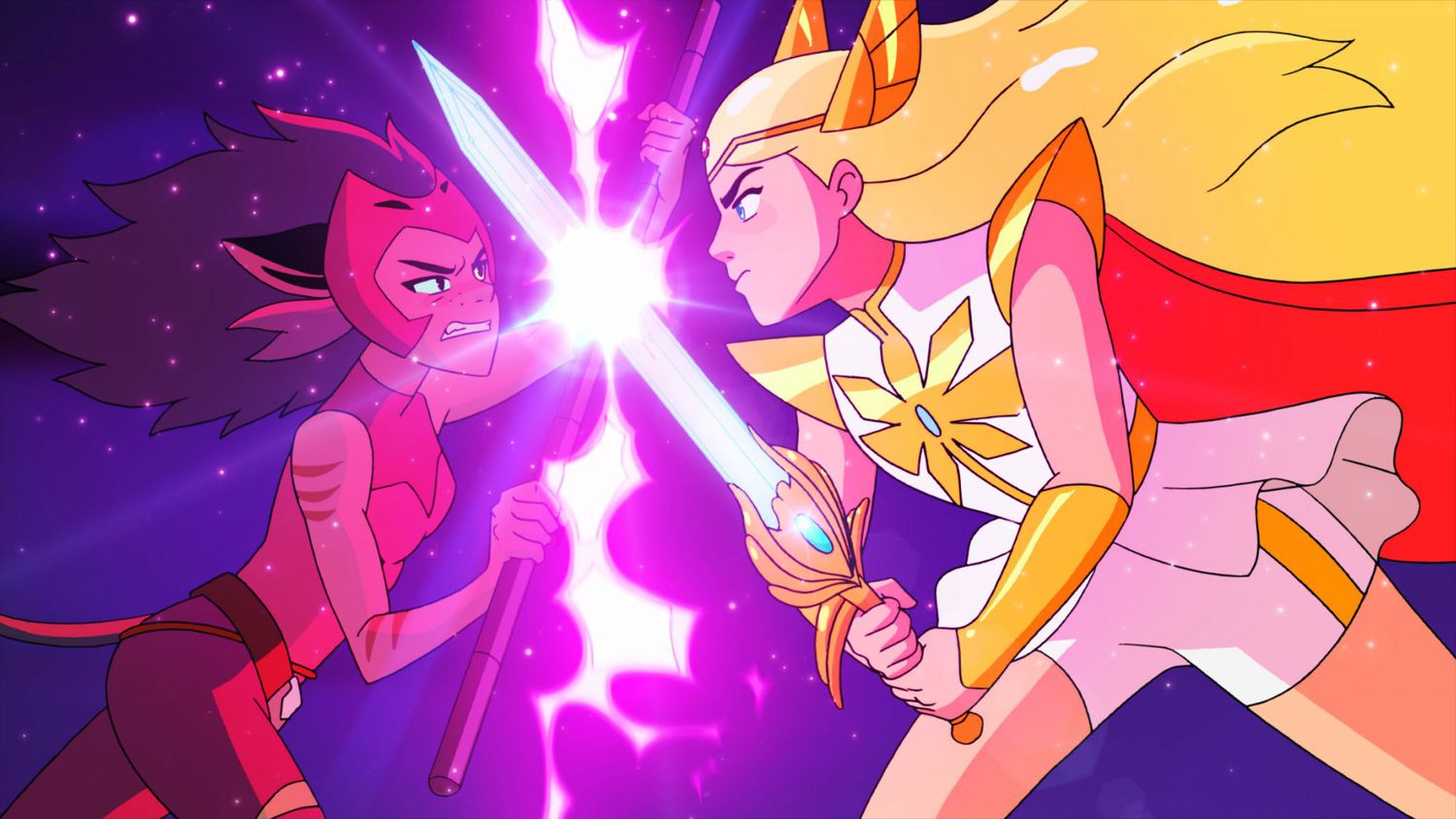 ★★★½
★★★½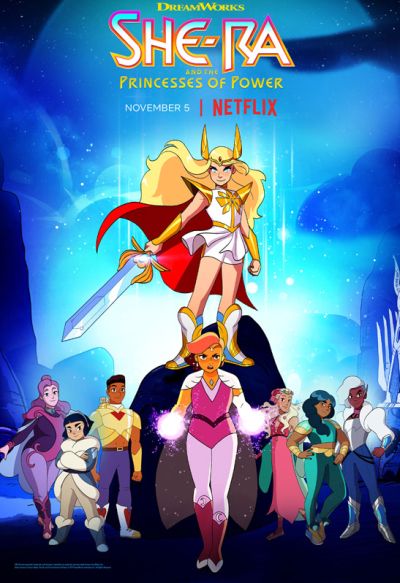 Though woke? Is it woke? Well… not in the sense I normally understand the word. For me, it means an agenda is being pushed. I can’t really say I see this here, unless the agenda is to stress that people exist who are not hetero-normative. Which… is true? The focus is on the story; we don’t get characters demonstrating against being sexually or politically repressed by the evil patriarchy, or talking about the problems of their gender orientation in modern society. This is no more woke than The Dragon Prince, another popular Netflix show. Part of the attention is probably due to creator ND Stevenson, who has stated he is – according to Wikipedia – “nonbinary, transmasculine and bigender,” as well as having bipolar disorder and ADHD. Well, whatever it is, is reflected in Stevenson’s work, in She-Ra as well as Netflix animated movie Nimona, based on his graphic novel.
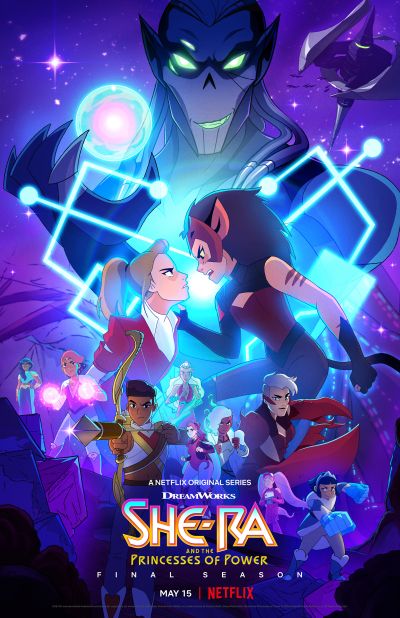 On the other hand, it’s clear this new spin on an old title has split fandom – or, rather, created a second fandom. This is not necessarily a good thing. It can result in embittered online wars and open hostility between members of different fan groups, both claiming ownership of “their story” and how it should be portrayed or interpreted. It’s not the only case. See franchises like Star Wars (George Lucas’ or the Disney version?) and Star Trek (“old Trek” vs. “new Trek”?). If you are as old as I am, you may even remember a time, long before Internet and personal computer communication existed, when people argued over if Kirk or Picard was the better captain, or Sean or Roger the better Bond. Change, it seems, always creates controversies. Therefore, the new show – as good as it is – has created a problem for the franchise that won’t be solved in a foreseeable future.
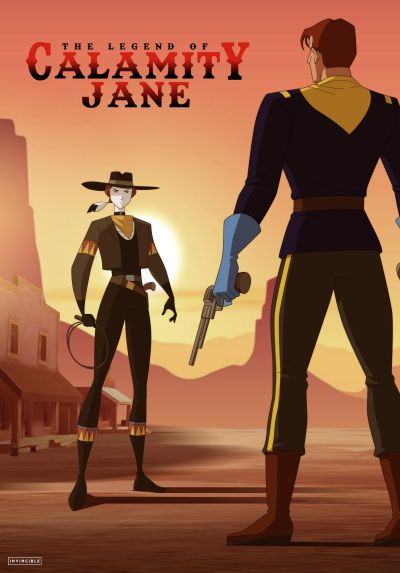 Martha Jane Cannary Burke, a.k.a. “Calamity Jane” (1852-1903) was a lot of things. But most of all she was the inventor of her own legend. By the end of the 19th century, dime novels based off her alleged adventures already sold very well. Unfortunately, the foul-mouthed and constantly drunk former frontier woman could never benefit financially from her reputation, with which others earned good money. She died early, though already perceived as a legend of the “old West”. To divide which of the many stories told about her are true, and which are not, is a job for the historians, not mine. For a character who definitely provided a “fill in the gaps” hero’s template, it’s no surprise Calamity Jane soon became a mythic legend of the “Wild West”, combined with other illustrious characters of that time such as “Wild Bill” Hickok, Wyatt Earp, Doc Holliday, Billy the Kid and many others.
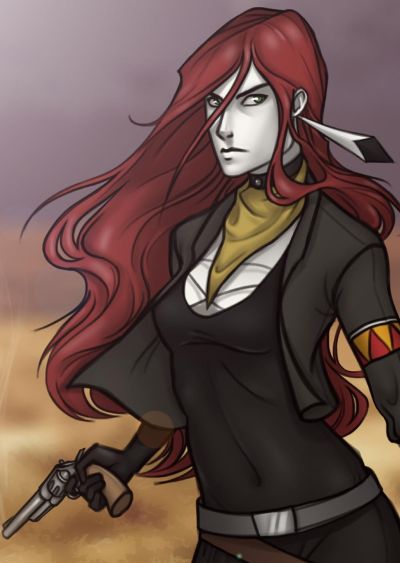 The show itself takes place around 1876 and is great fun. Calamity Jane is an adult, red-haired and green-eyed woman, with a whip that regularly comes in handy for dangerous situations. She is serious-minded and on the side of the law, meaning whenever help is needed, she will be there. She has a horse called Dakota and drinks milk (hey, what do you expect – it’s made for kids!). Always on her side is old Joe Presto (Welker) who can best be described as her comic sidekick, though sometimes comes across a bit simple-minded. Also, I sometimes had problems understanding his mumbling, though you get used to it. Of course, when you tell the story of Calamity Jane, Wild Bill Hickok is never far away. In real life she claimed that they were a couple in Deadwood. though according to historians, this could easily be another made-up story, as she was famous for doing. In this show, he helps her from time to time and is voiced by Clancy Brown (the Kurgan from Highlander).
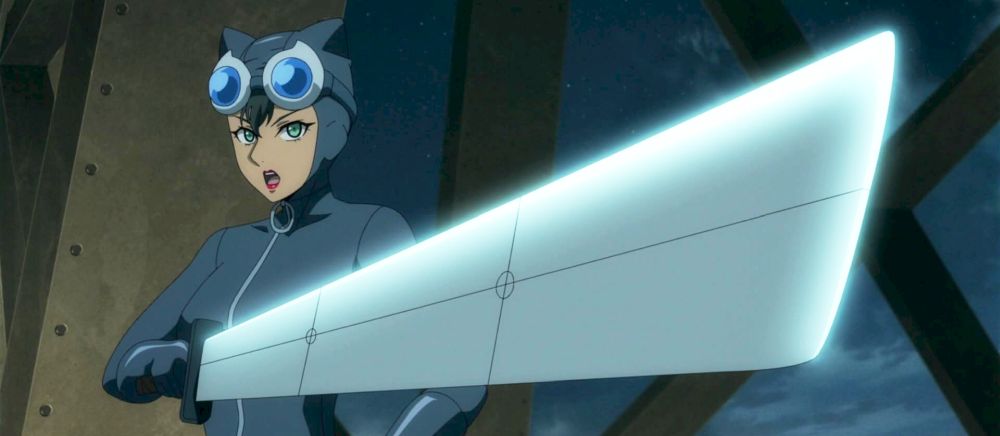 ★★
★★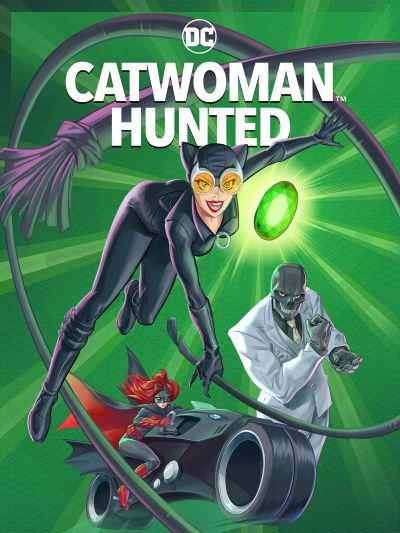 What sounds as if it could be an interesting story, turned out to be a very disappointing movie. I had to watch it twice because even though the film is a short 78 minutes, I almost fell asleep. The introduction to the story feels clumsily handled, scenes are overlong, and after we know where the story wants to go, the movie basically is a constant follow-up of fight scenes of Catwoman and Batwoman against a range of well-known and lesser known DC villains. These include Cheshire, Nosferata (one I had never heard of before, and I used to read DC comics quite regularly in my youth), Solomon Grundy and the Cheetah herself, Barbara Minerva who is Leviathan’s chairwoman, though Talia al Gul is managing everything from the shadows.
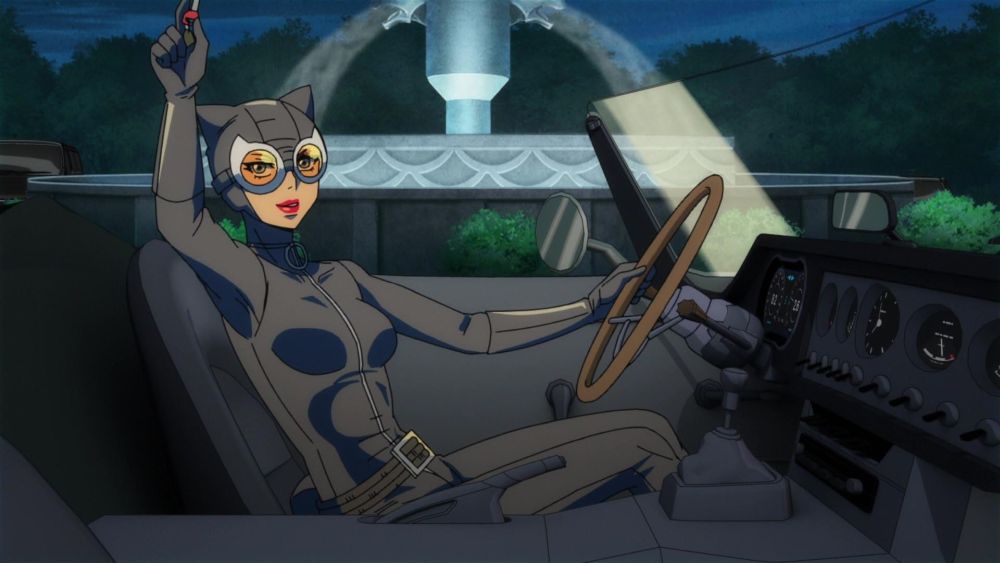 Another ill-fitting decision is the score by Yutaka Yamada. Don’t get me wrong. His music will probably please you if you like jazz, but for a DC action movie it’s just the wrong choice. What almost – but only almost – saves the movie is the final chase when Barbara Minerva turns into an oversized version of her Cheetah personality and goes after Catwoman. For the first time in this movie you have the feeling Catwoman is in real danger. But this is too little too late. It can’t compensate for all the mistakes that had been made in the movie before.
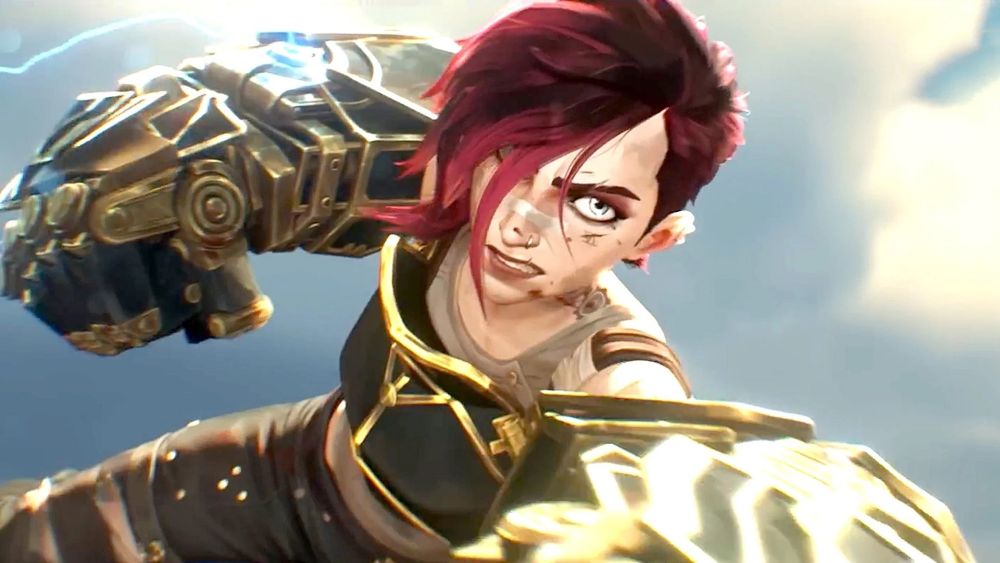 ★★★
★★★ For this show, it means what would be enough for your average action movie or TV series, is just the beginning. It’s what I think makes the series above average in general. It always gives more than you asked for, and at the same time surprises you with sudden twists, unexpected developments, plus nuanced characterizations and relationships that escape standard black-and-white. Well, at least the
 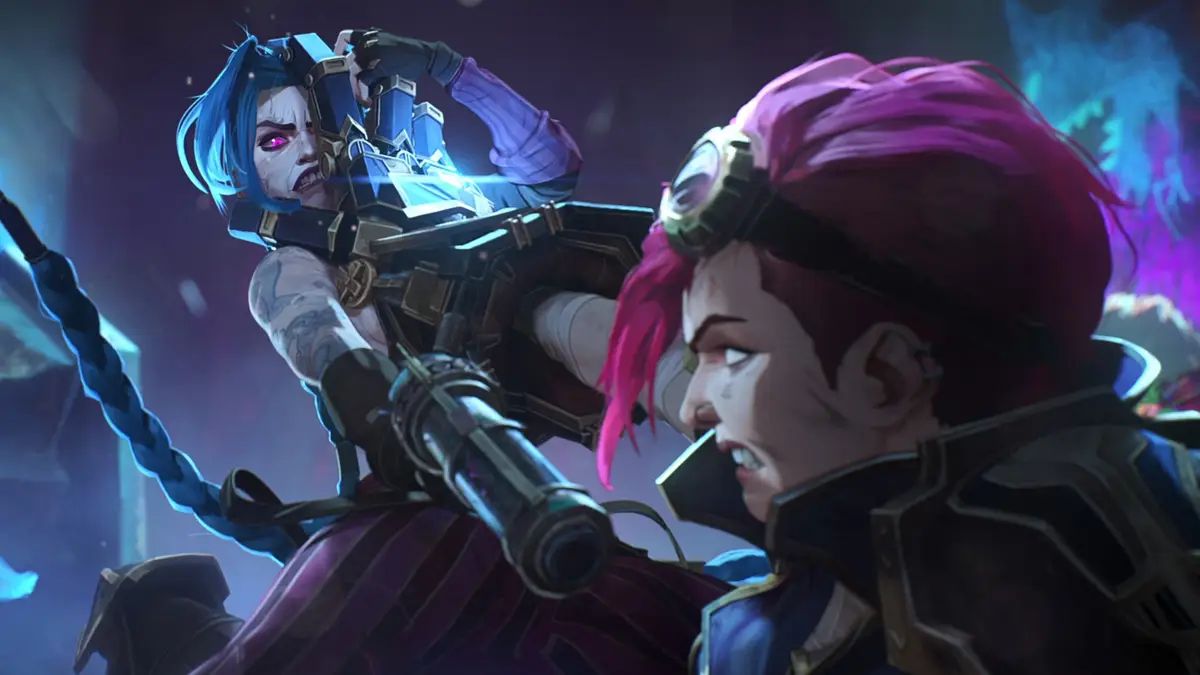 Why should the council accept Caitlyn as a new member, given she is only the daughter of Cassandra? Are political positions inherited in Piltover? If so, I’m not astonished the twin cities are having so many problems. Ambessa makes Caitlyn de facto commanding officer of the city and Caitlyn takes that position, only to backpedal an episode later. Why? If you want to tell an Emperor Anakin story, do so. But then go the full mile and
 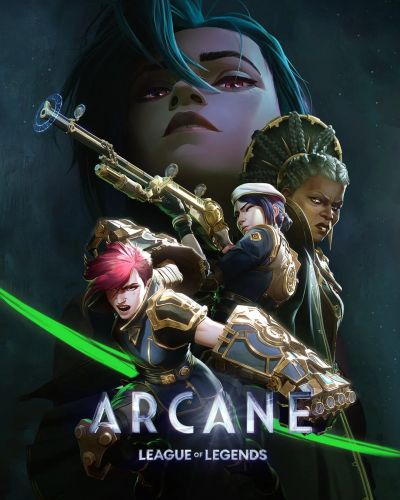 Disappointingly, the expected big final fight between Vi and Jinx is not to be found here: instead, they get along again after a bit of a brawl. Jinx the psycho? She seems quite normal again, after playing surrogate mother to the mute Isha for a couple of episodes. That’s far from any normal psychological reality. The screenwriters aren’t even above shamelessly milking nostalgia by giving us a flashback to Vander, Silco and the mother of Vi and Jinx sitting in “The Last Draw” – in a way it’s even repeated later again. Cheap, cheap, cheap!
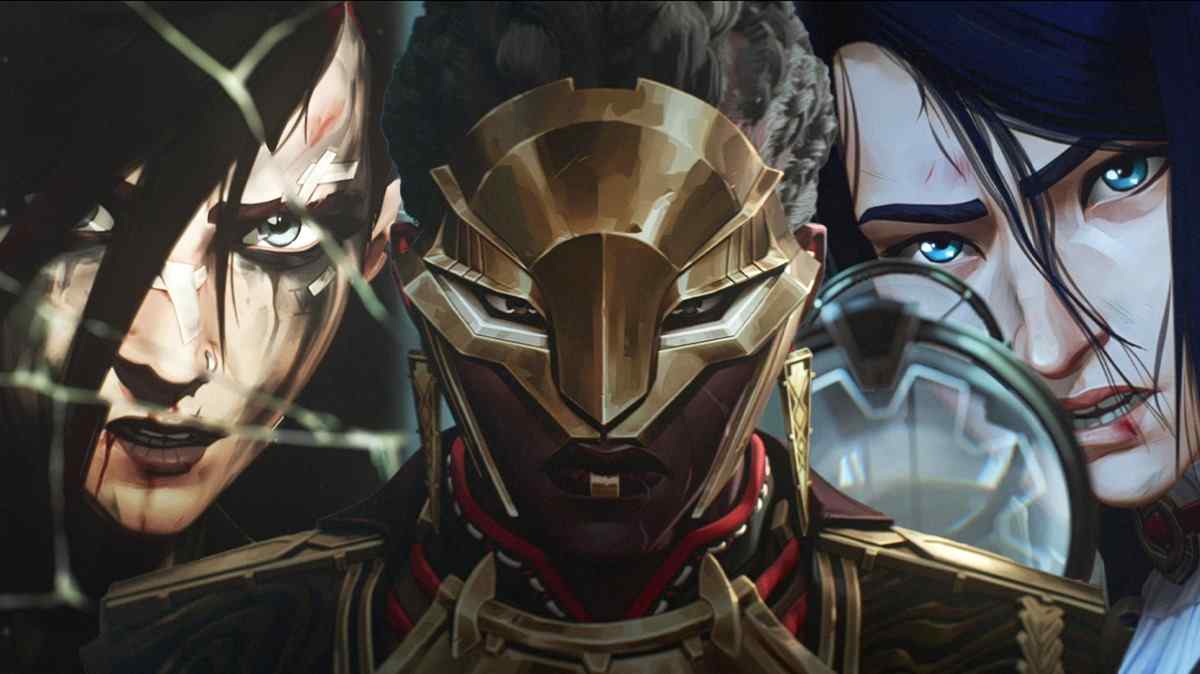 But there are also psychological and social themes of conflict: emotion versus intellect, safety versus liberty, preservation of the status quo versus progress by destruction of the existing system. These are best represented in sisters, Jinx and Vi, whose already shaky patchwork family has been torn into pieces by these battles. Yet it also shaped them, and put them on a collision course against each other. Or so it seemed, since the final confrontation is between Jayce and Viktor, while Jinx is given an unnecessarily bland, sacrificial death to save her sister – although the creators hint at the end that she may have survived. You could argue the character’s potential has been entirely wasted in the attempt to reshape her into a more positive protagonist in season two. I repeat: it feels absolutely weird. Looking at the titles of the first season I always expected the final fight to be between Jinx and Vi, and it feels like another broken storytelling promise.
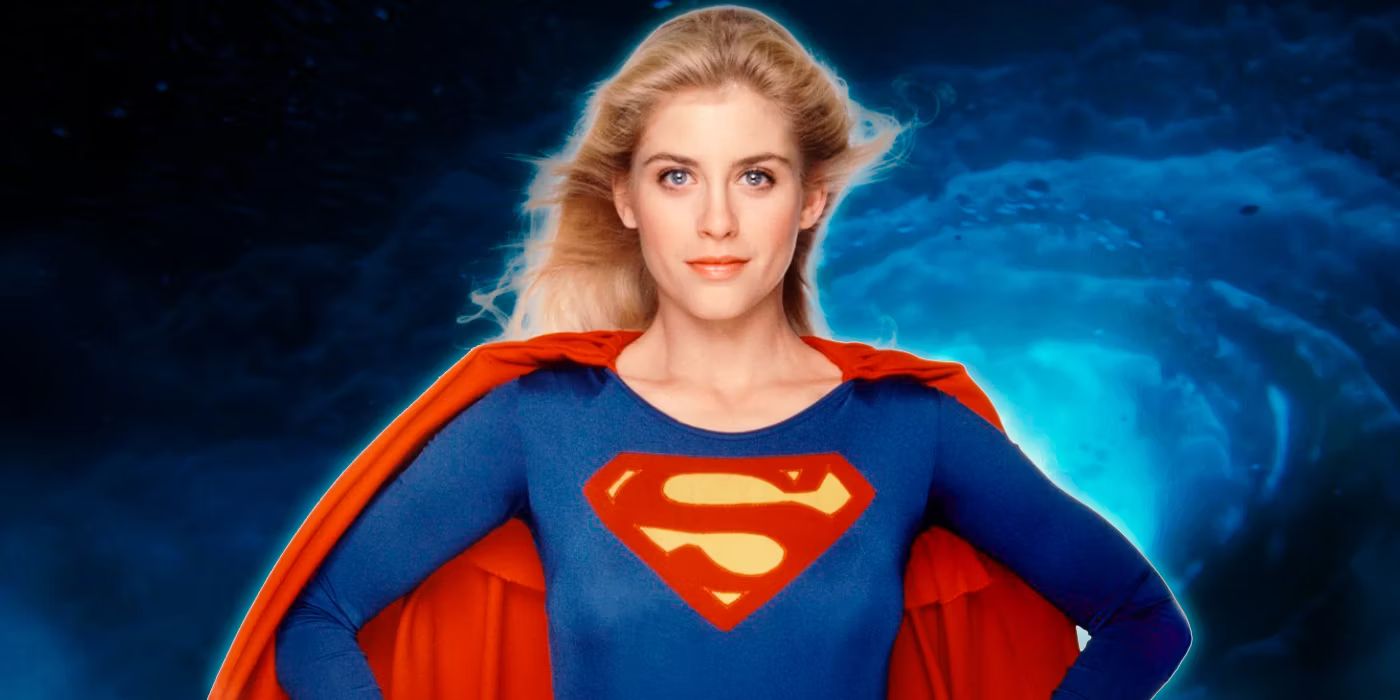 ★★★
★★★ Here, Kara lives with her parents, other families and scientist mentor Zaltar (Peter O’Toole). The parents are played by Mia Farrow and Simon Ward in cameos; obviously the producers wanted to give Supergirl the same support, with famous or well-known actors, as they did for the Man of Steel. After losing the Omegahedron, the power source of the city, Kara follows it via unexplained Kryptonian technology to our Earth to bring it back. Unfortunately, evil wanna-be witch, quack doctor and esoteric Selena (Dunaway) has taken it with plans to conquer the world. Their mutual interest in young gardener Ethan (Bochner) and Kara’s need to conceal her real identity, going by the alias of school girl Linda Lee, complicate matters further.
 It’s no surprise O’Toole and Dunaway were nominated for Razzie Awards, though it’s not all their fault. Obviously, director Jeannot Szwarc had no problem with Dunaway going as campy as she wanted. It’s a pity because her role could have been convincing or even menacing, played straight. There is no doubt Dunaway, with a fine reputation of playing difficult characters, could have given a good, villainous performance. Heck, she already played a first class femme fatale in the Musketeer movies for the Salkinds in the 70’s. Of course when you go camp, you can hardly blame Dunaway for trying to repeat what Gene Hackman successfully did as Lex Luthor, But you have to be really funny, something that worked for the Hackman-Beatty pairing but not here.
 Supergirl is still not a
  ★★★
★★★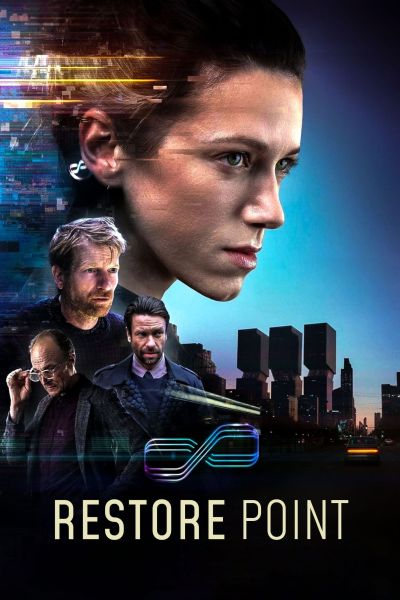 The above sounds a bit confusing. It may be at first glance, with a large number of characters with different interests popping up in the story. But once you have bought into the SF premise, things are actually not that complicated. What we have here is a crime thriller with cops, agents, terrorists and big money companies. It all leads to a well thought-out and very satisfying action-mystery, where for a long time you can’t be sure who is behind it all and why. Hint: it’s not who you may think. The solution was – at least for me – quite a surprise.
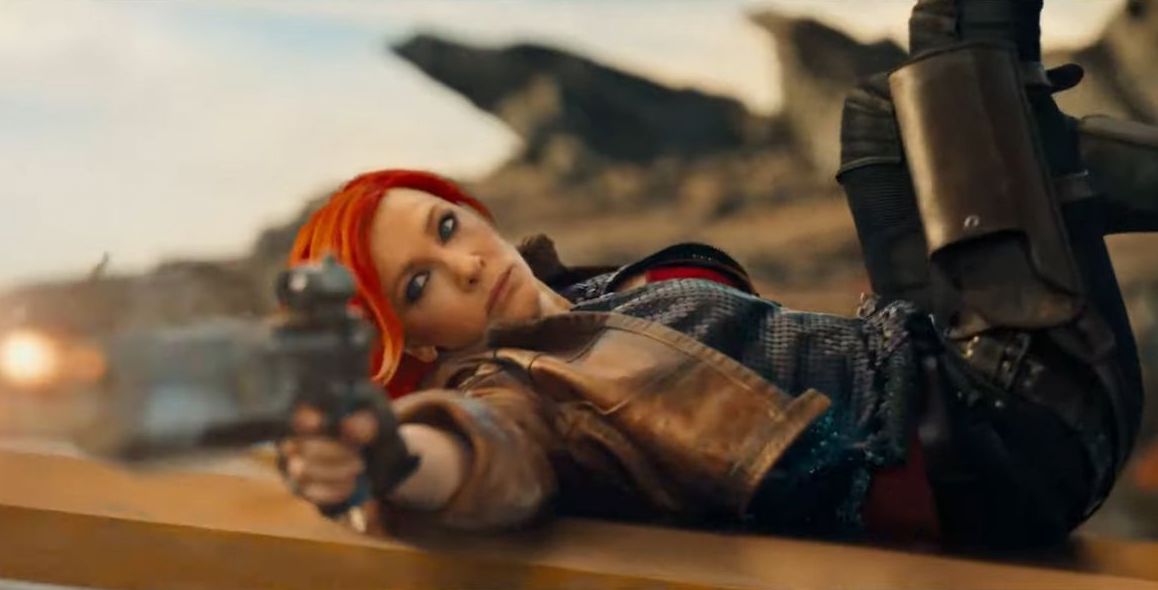 ★★★
★★★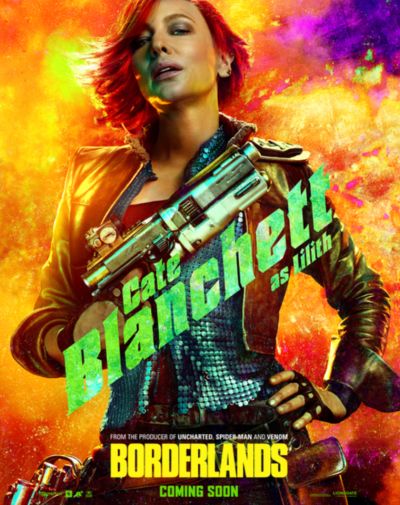 While that may have bothered the gamers, I had no problem with it at all. Admittedly, I have never played the games, so what do I know? But Cate Blanchett, who is in her mid-fifties, still looks fit and beautiful enough to play an action role – which is, at least for me, something I always wanted to see. I was quite disappointed when her villainous Hela in Thor: Ragnarok (2017) was side-lined in favor of Thor and Hulk battling it out on another planet. Her red hair here, incidentally reminded me of old dystopian SF movie Cherry 2000. Fans will always complain about how their heroes are portrayed. It’s an old story: Hugh Jackman was too large for Wolverine, Tom Cruise too small for Jack Reacher, I tend to file these under “Bond is not blond”: I don’t think these complaints should matter much, if the respective actor can fill out the role in question believably.
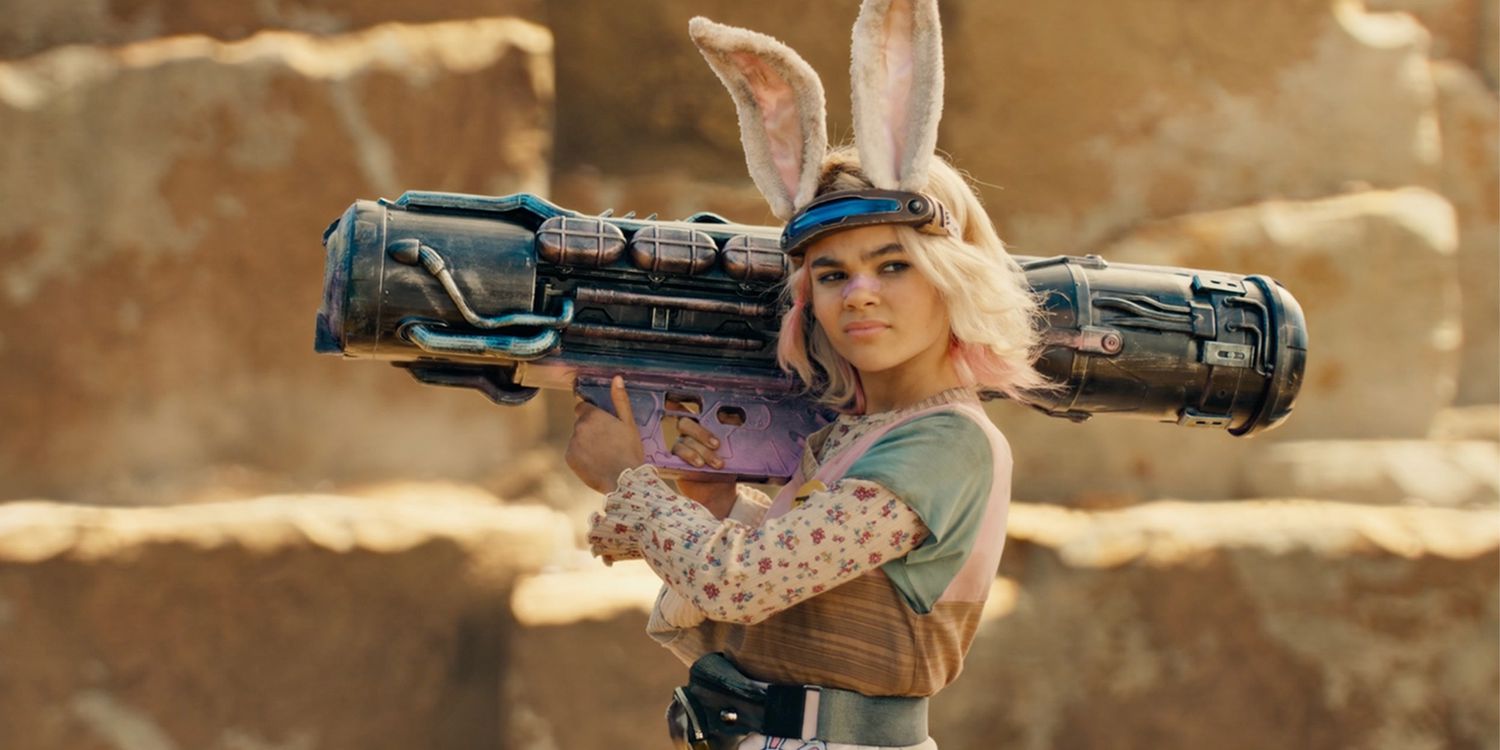 Instead, most of the time, these characters feel like cardboard cut-outs. Apart from Lilith no one gets any kind of backstory. There are one or two nuggets about Tiny Tina, Claptrap or Tannis and that’s it. It’s even worse with the male characters, I know literally nothing about Krieg or Roland. Who are they supposed to be? Where do they come from? Don’t get me wrong, I hardly need an extensive biography: a bit more than nothing would have been nice. Also, who are these different groups? What do they stand for? Why are they fighting? Against whom? It feels as if the filmmakers expect me to know all this before I go into the movie.
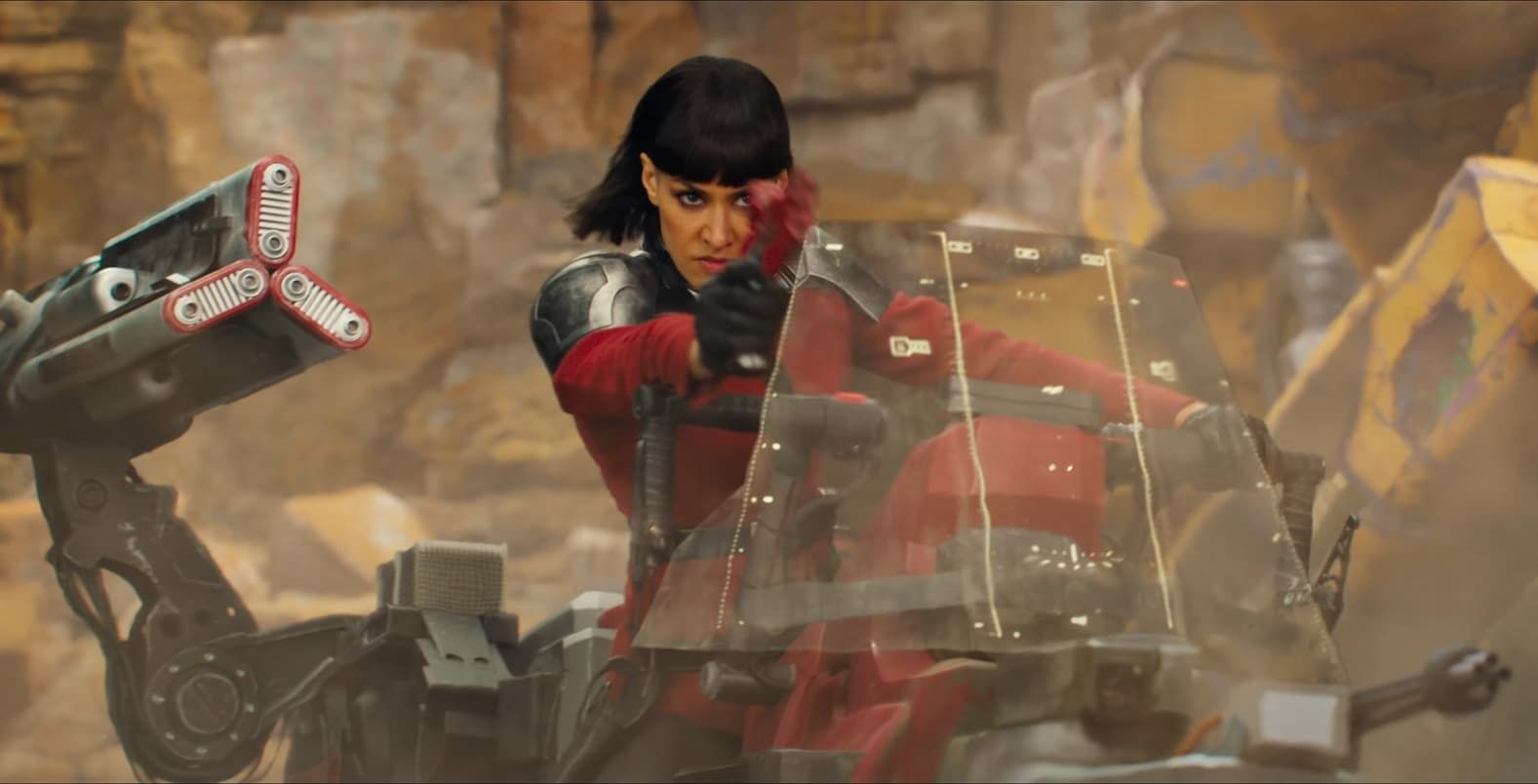 For, yes: Borderlands disappoints, whether or not you know the games. A simple comparison with James Gunn’s Guardians of the Galaxy movies or his second Suicide Squad shows you that so much more and better could have been possible. Instead of a good movie you get, as with Madame Web recently, a fairly mediocre one. But again: “fairly mediocre” is not the same as “utterly terrible”. That popular interest in action heroines seems to have largely evaporated, for a range of reasons, may be an additional factor in the clear financial failure of the movie. But I guess those in charge expected it would happen, going by the lack of marketing worth mentioning. Just compare the few interviews available online for this movie, with the huge marketing campaign that was launched for Deadpool & Wolverine.
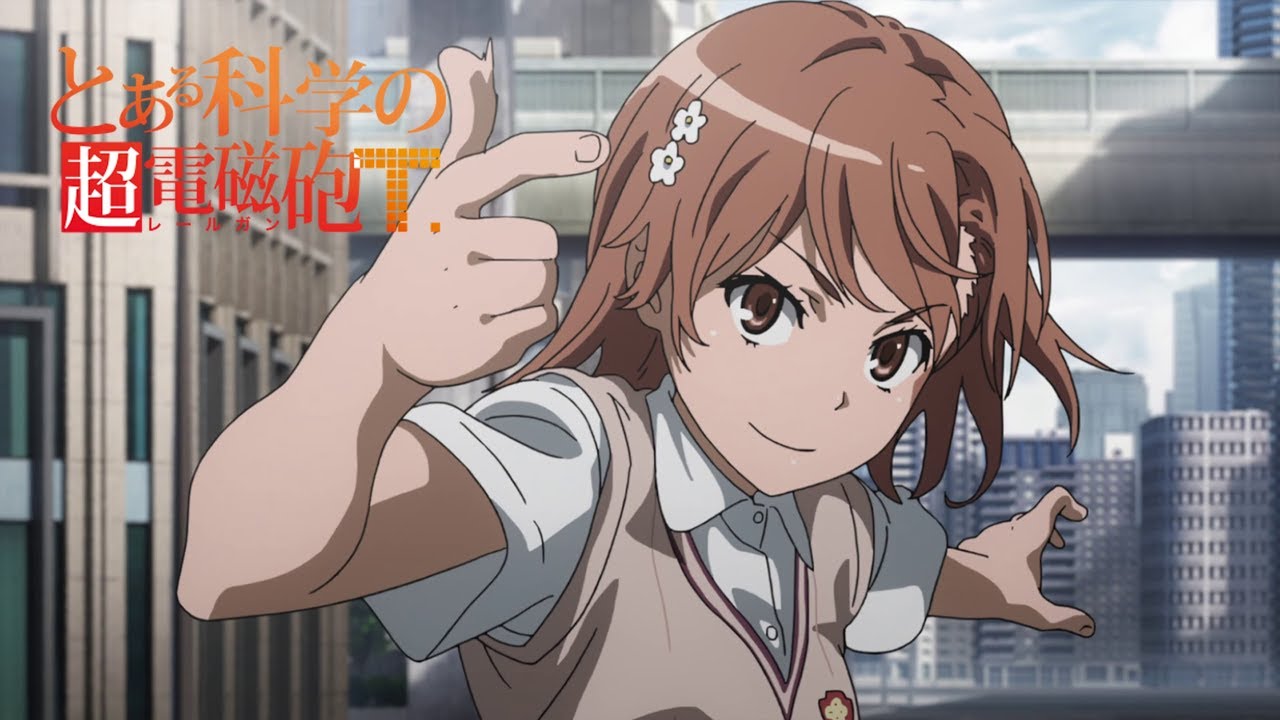 ★★★
★★★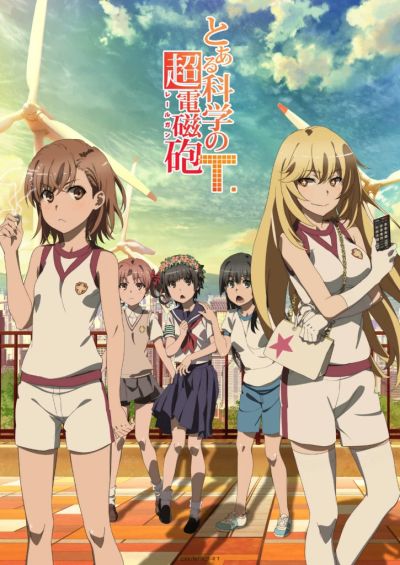 The first new arc deals with the “Daihasei” festival in Academy City – essentially a sports event, where the different schools compete with each other. Nice to look at, also very funny, but hardly life-threatening. Or so you may think in the beginning: these stories have a tendency to develop from harmless to world-endangering. For the kidnapping of one of the Misaka clones, as well as Saten investigating an urban legend, as she did in previous seasons, lead to something much bigger than anyone could have predicted. Newcomers to the series, include Shokuhou Misaki, another of those rare level 5-espers, who can control people and read their minds with the help of something that looks like a TV set. She seems to have a personal beef with Mikoto. Also new is Sogiita Gunha, whose special power is that “he has guts”; this may not sound much, yet he does some impressive things with it.
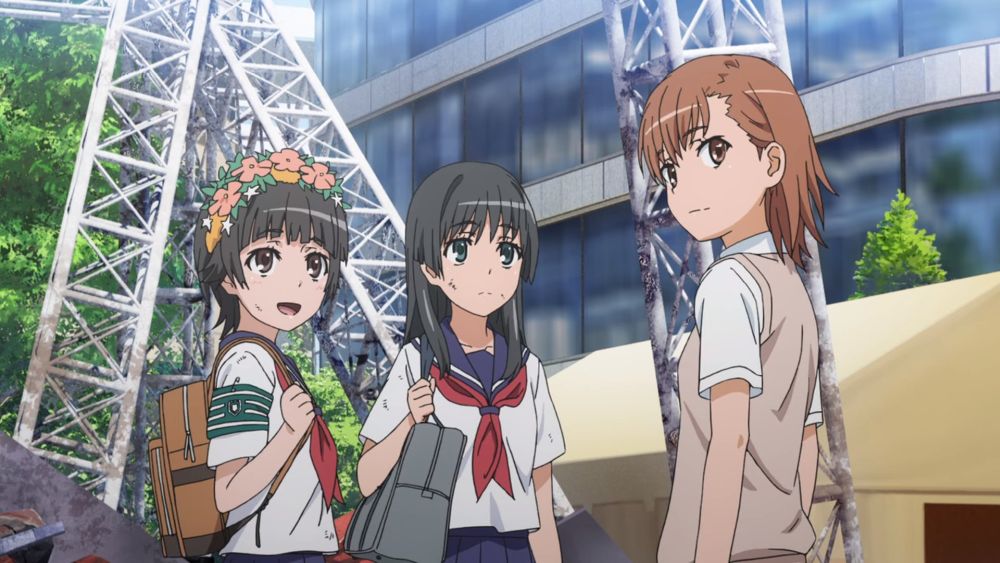 Time is spent on the “Dreamranker” Indian Poker game cards arc. When put on your forehead, these can make you relive the dream whoever made the card has dreamed before. While the concept itself is interesting, not enough is done with it. After having saved Mikoto from becoming a level 6, this is just “nice”, and a little bland. For example, an entire episode is wasted on Mikoto and another girl seeking a card that is said to be “the bust-upper” – that is supposed to do what the name suggests. Though, the story takes a curve (as it were!) with a mysterious girl Kuriby Ryouko making a human-looking machine to help her sick mother. It results in a clash not only between the girl and her machine, who wants to take over her life, but also Mikoto and a girl-gang called “Scavenger”. In the end it’s up for our favourite railgun again, to battle against the over-powerful android that threatens to destroy Academy City.
 ★★★★
★★★★ Have you ever had this experience? There is a series you see and the series is fine, okay, solid. But without you noticing, you connect with these characters subconsciously, on an emotional level. As you watch them regularly, you get accustomed to them (though they are totally fictional) and don’t realize it until something happens, and you suddenly feel how much you have gotten attached to them. It’s not a new experience for me. It happens from time to time, but not often enough I would call it a rule, every time I watch a new TV show. Usually, I just passively experience the respective episodes and don’t waste much thought on it, least of all any kind of emotional investment.
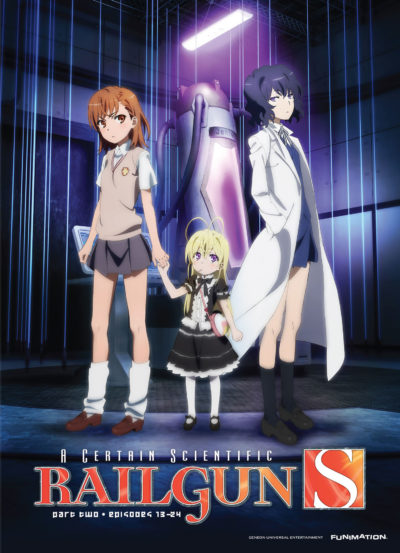 Another strange thing occurs. Somebody is leaving envelopes containing money in small, dark side-streets, leading to people going on their own treasure hunt, and Mikoto & Co. try to find out who’s doing that and why. The story constantly builds and you slowly realize that you are paying much more attention to the show then you ever did before. When Mikoto finally meets her doppleganger, it’s initially almost a shock. It leads to questions: who is the girl, why is she behaving so strangely, and where does she come from? Mikoto indeed has “sisters”. Actually, a lot of them. And these girls are part of an unethical and inhuman experiment.
 After this very well-built, suspenseful story arc, running from episode 2 until episode 16, I can understand why some felt the remainder of this season was a bit of a letdown. While we get another arc, the new one can’t quite compete with what happened before, though is decent on its own merits. For a while, we go back to small stories of the girls getting together and the usual jokes like e. Saten pulling up Uiharu’s skirt to embarrass her. Yes, that’s a thing. It’s alright by me. After you have clashed with the Big Bad, it’s
  ★★★
★★★ Misaka is an esper of the highest degree, level 5. And while she is one of only seven level-5 espers in Academy City, this is not as unusual as it may sound at first. For the whole city is filled with students that Charles Xavier would probably have called “extraordinarily gifted”! They are all learning to develop and use their abilities at school, though for what purpose I still have not found out; is there a job market for those kind of abilities? Still, given their powers it’s a very sensible thing to do, since otherwise the students might easily misuse their powers.
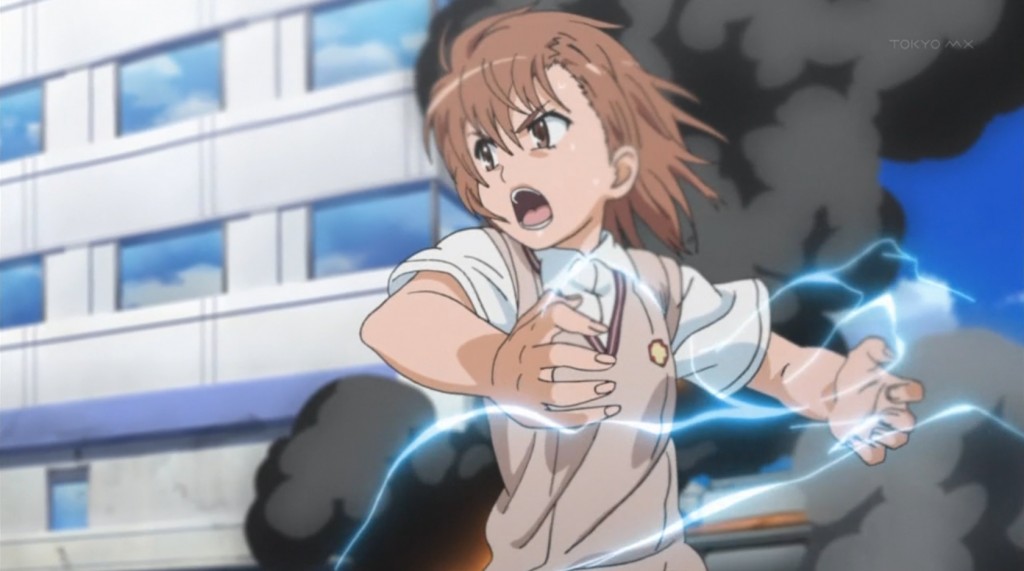 These powers are what gave her in the previous Index show the name of “Railgun”- in her words, “because even objects of a minor size can generate an enormous power when thrown with enough energy in one’s direction”. She also comes across Touma, the main character of Index, who embarrasses her when he tries to rescue her from the company of some teenage boys. Unfortunately for him, she takes his well-meant help as a personal insult, which leads her to constantly challenge him to a fight. Unfortunately for