



★★
“Is that a machete?”
 I completely get what the director here is trying to do: make a homage to the seventies women-in-prison movies, made by the likes of director Jack Hill (who has a cameo here as a judge). The plot here, certainly, feels like it’s almost a straight-up copy, in particular from Bruno Mattei’s 1982 film, Violence in a Women’s Prison. Both have undercover journalists who get themselves sent to prison as an inmate, in order to expose the corruption of those running the facility. In this case, it’s TV reporter Valerie March (Anderson), who is asked to look into the dubious Sugar State Women’s Prison by the aunt of an inmate.
Naturally, it turns out the prisoners get sent there in order to become prostitutes for the warden, Beverly Buckner (Dona), who has a cosy arrangement with various suppliers to the jail. March, in her incarcerated alter ego, becomes part of the out-call service, though matters are complicated by one of the suppliers, chicken magnate Gilbert Sackry (Hunter), being the subject of one of her previous exposes. After tragedy strikes, the scheme is revealed, only for it to be swept under the carpet by authorities. March is having none of this, the system having failed to bring them justice, and with the help of former inmate pal Loretta (Brown, in the Pam Grier role) and a repentant guard, sets out to take revenge on Buckner and the rest of her cronies.
The films which inspired this were never high-end product. But in comparison to this, they are Avatar. The paucity of the resources here is all too often painfully obvious. The “prison” consists of a couple of tents in a field; while this could be a nod to infamous Arizona sheriff Joe Arpaio and his “Tent City”, the absence of… oh, I dunno: fences or bars, is glaring. In the early going, I was prepared to overlook this, since there’s enough energy (and, let’s be honest, gratuitous nudity) to sustain interest. As well as Hill, there’s a cameo by GWG goddess Tura Satana, also playing a judge; another Russ Meyer muse, Kitten Natividad, plays a prison guard, and is fun to watch in that role.
However, the previously mentioned tragedy flicks a cinematic switch. Valerie’s reaction to it is laughably bad, and she’s then taken to a “hospital”, which we only know is a hospital, because it has a large Red Cross flag tacked to the wall. As hospitals do. The lack of effort put in finally overpowered my goodwill, and there was little thereafter which proved capable of taking up the slack. It really needed more actresses capable of going full-throttle into their roles here. While Brown seems to have a decent handle on her role – even if she’s no Grier – Anderson is too anodyne to make the necessary impact. The further we get into the film, the less her ability to hold the audience’s attention, and interest withers and eventually dies, as a direct result.
Dir: Cody Jarrett
Star: Geneviere Anderson, The’la Brown, Linda Dona, Jack Hunter
 This feels like a Canadian version of
 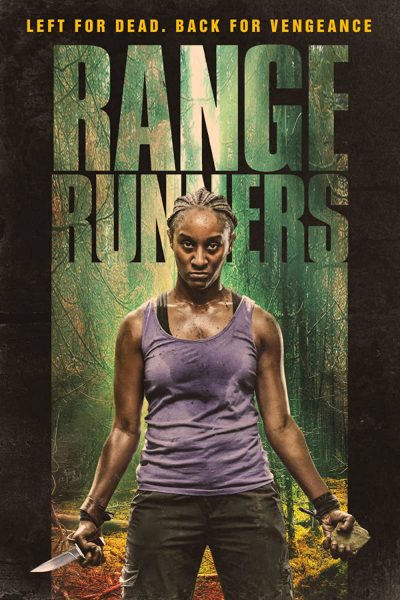 Mel (Cooper) is engaged on a project of running the Appalachian Trail (or a convincing facsimile thereof), with some help from her sister, who meets her at various points to provide support and fresh supplies. Mel is currently on her own, starting an eight-day section of the hike where she’ll be out of contact. However, she bumps into a couple of suspicious characters, deep in the woods: Wayland (Leonard) and his partner, Jared (Woods). Initially, it seems like a creepy, but one-off random meeting. It turns out to be considerably more and subsequent encounters escalate, until Mel is sent plummeting over the edge of a drop-off, badly injuring her leg, but in possession of something very important to Wayland and Jared. Will she be able to escape her pursuers and make it to safety?
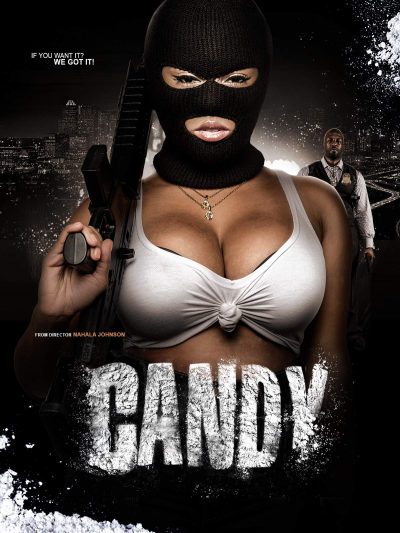 You’ll probably understand why that cover picture got me to pause my casual scrolling through Amazon Prime. Well played, movie producers. Well played… Likely inevitably, the film didn’t quite live up to the advertising, mostly due to a significant lack of plot. The film barely runs 65 minutes, before we get to a sloth-like end-credit crawl, and there’s probably not enough story-line to fill a music video for one of the gangster rap songs which pepper the soundtrack. Yet, in terms of atmosphere and setting, it
  While ultimately hamstrung, not least by its limited resources – this cost a mere five thousand dollars – it does what low-budget films should generally tend to do. That is, go where their better-off siblings dare not tread. In this case, that’s the forbidden territory of religion. Two young, female missionaries, Amber (Durand) and Martha (Crosland) are going door-to-door, seeking souls they can save and bring into the body of their church – clearly Mormon, going by the reference to Salt Lake City among other things, though operating under a pseudonym here! While their attractive shape proves successful at getting them in the door, the residents who don’t live up to the ladies’ high moral standards are in for a shock. For the two kill non-believers, with Amber in particular, having a zero tolerance policy. And she considers herself “saved”, basically giving her a free pass to do anything necessary in the name of the Lord.
 When I first put this on, and saw it was only 41 minutes long, I thought there had been some kind of mistake. 41 minutes later, it was clear the mistake had been all mine. Additionally, I was now thoroughly grateful for the abbreviated running-time. A feature length edition would have constituted cruel and unusual punishment, and may be forbidden by the Geneva Convention. This blatant Buffy the Vampire Slayer knock-off is missing only two things: a budget, and everything else.
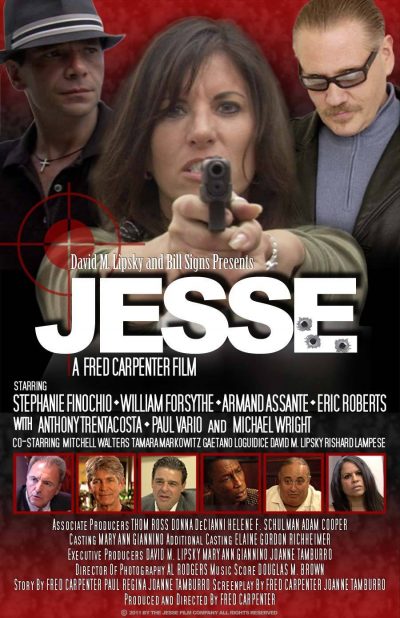 Jesse (Finochio) is a Long Island cop on the edgeTM. Since losing custody of her kids, she has gone into a downward spiral of drinking, casual relationships and taking her anger out on any perps unfortunate enough to cross her path. She has driven her captain (Vario) to the edge of distraction, and is perpetually feuding with her mother and brother. The latter dies in a road accident – only his foot is found! – but when Jesse and Mom go to cash in his life insurance policy, they get a shock. The beneficiary has been changed to be Ralph Sirna (Trentacosta), a notorious local gangster. Suddenly, the accident seems rather less accidental, and nothing – not her boss nor Sirna’s “godfather”, Vince (Forsythe) – will be able to stop her.
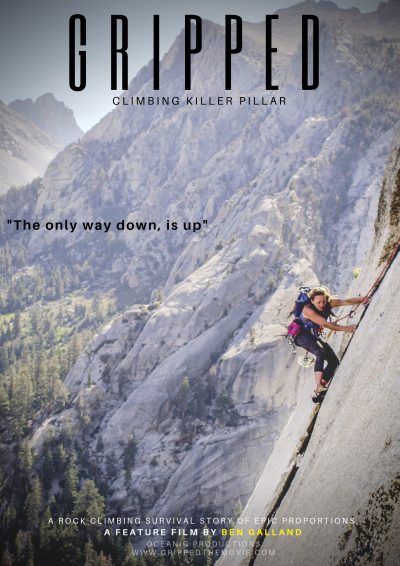 Newbie climber Rose (Maddox) is on her first trip to do some “real” climbing, rather than on a rock wall at her local gym. There, she meets and falls for the insanely rugged good-looking Bret (Lyman, who appears to have strayed right off the cover of a romance novel entitled “Love in the Surf”). After a couple of successfully, but relatively simple climbs, the pair head to take on something more challenging: the infamous “Killer pillar” of the title. Half-way up, a hand-hold used by Bret breaks, sending him tumbling down the cliff-face. Though the rope stops the fall from being fatal, he suffers a torn shoulder and head injury, leaving him unable to lead, and unable to descend. As the poster tagline says, “The only way down is up.” So, it falls on Rose, despite her lack of experience, to take over and forge a route up the near-sheer escarpment, that Bret will be able to navigate in her wake.
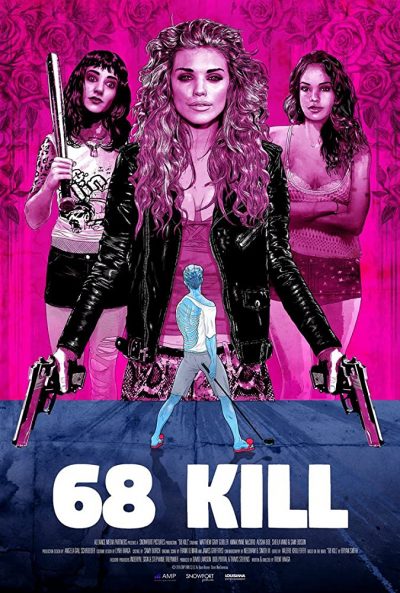 Is it possible for an action heroine film to still be chauvinist? While that criticism was frequently levelled at