 It has been a very quiet year for action heroine films. Here we sit, entering the sixth month of the year, and the only one of the top 100 movies in 2023 at the North American box-office I’ve reviewed here is Everything Everywhere All at Once – and that actually came out in April last year. [I’ll probably add Polite Society to the list shortly] There have been a couple of high-profile streaming titles, such as The Mother, and last week, I discovered the third series of La Reina Del Sur had hit Netflix. It made the top ten shows in the US, which is quite impressive. But it’ll take a few months for me to get through its 60 episodes.
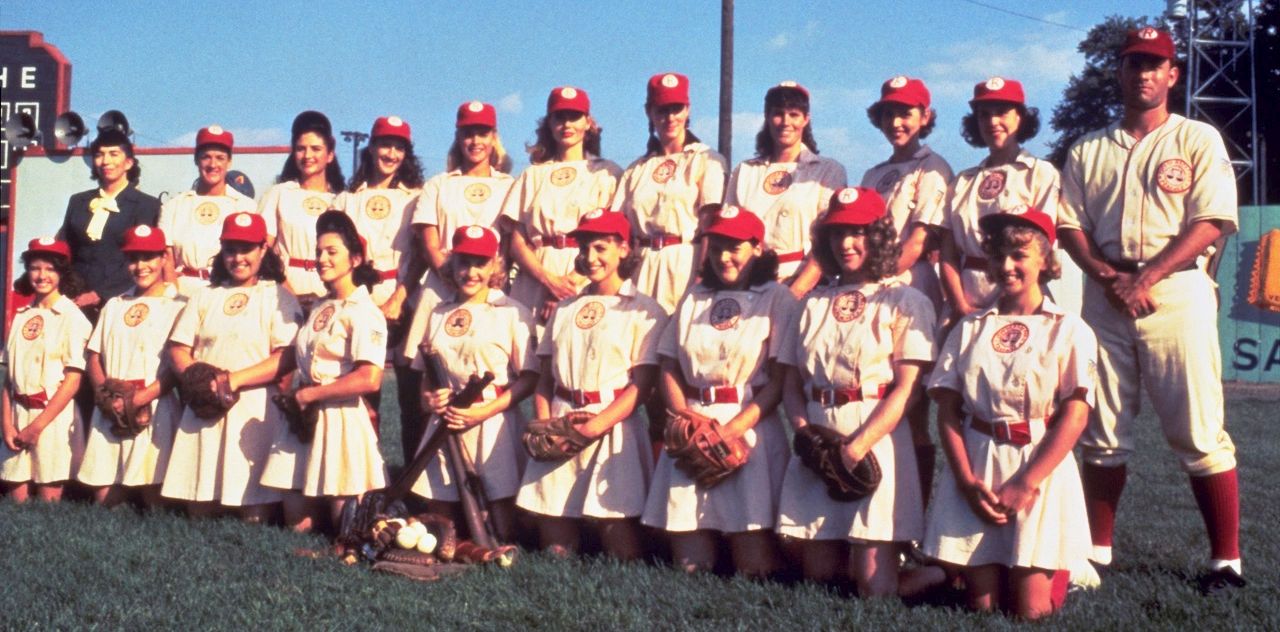
Since there’s nothing new to “feature”, I decided to dip back into the archives and revisit some old reviews, which are in need of updating for one reason or another. I’m starting with League of Their Own. This is partly because it deserves more than the three hundred words it got when originally reviewed 20+ years ago, and partly because of the Amazon reboot into a TV series which came out (as we’ll see, a very apt phrase!) last year. I think my original review (below) was a little harsh, though it may be that I’ve changed since. Baseball is now an intrinsic part of my everyday life, especially during the summer, and I can perhaps appreciate the film that much more.
Indeed, of all the films about baseball – and there have been some classic – I’d rate League behind only The Natural overall. The latter captures the mythic, almost epic quality of the sport, but League simply sparkles in terms of story, characters and dialogue. Virtually everyone involved gives at or near career-best performances, and considering that includes Tom Hanks and Geena Davis, this is a high bar indeed. Hell, even Madonna is good, though it feels more as if the character was written for her, rather than she’s playing a role.
At its heart is the relationship between sisters Dottie (Davis) and Kit (Lori Petty). Kit has been overshadowed by her sister for her whole life, but can at least hold her own in the baseball arena. When the chance comes to play professionally, it’s Dottie the scout wants, but Kit who needs the opportunity, and convinces the scout to take them both. Thereafter, it’s partly about Kit trying to come out from under the shadow of her sister, but also coach Jimmy Dugan (Hanks) rediscovering his love for the game, and all the women proving the game they provide can be every bit as entertaining for spectators as the male version, even if the quality of play is lower]
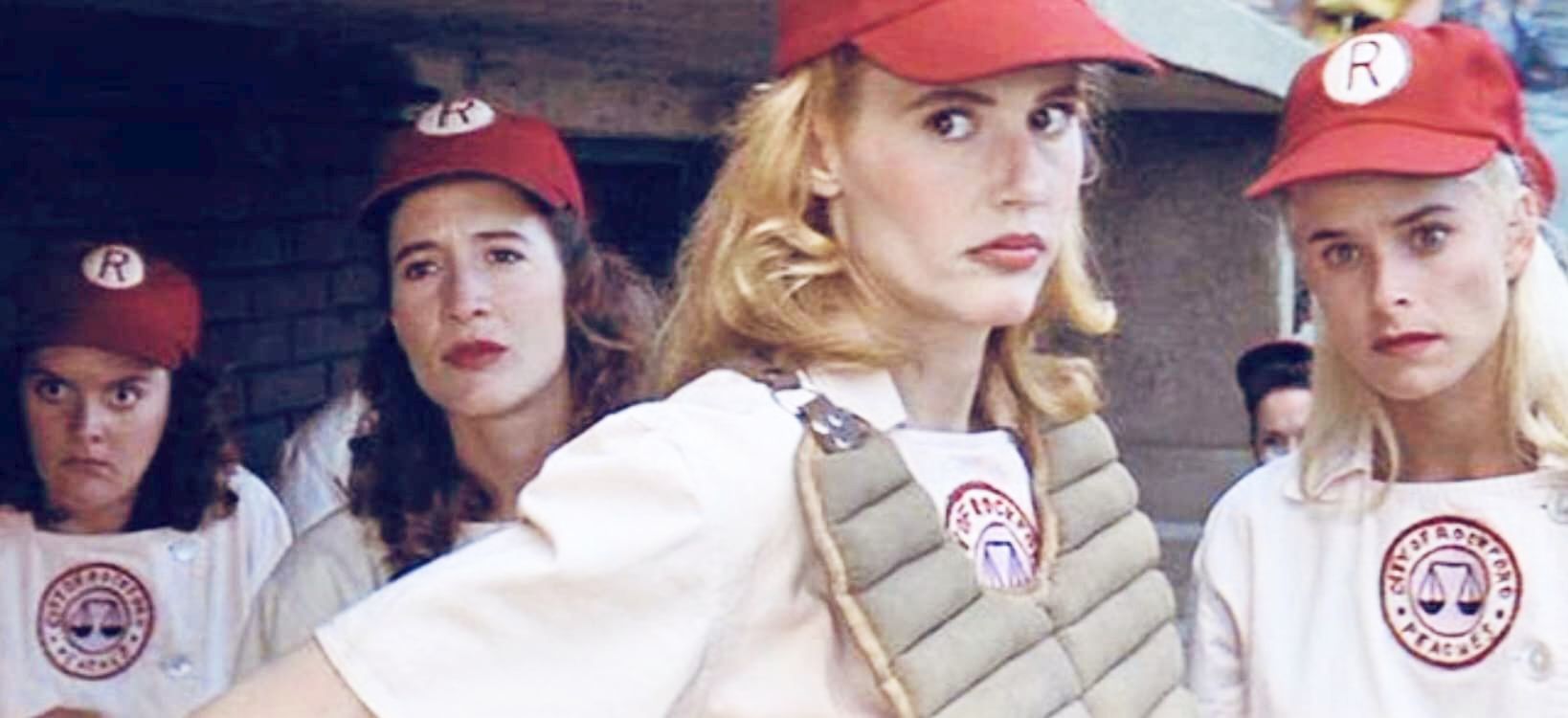 [Diversion. The distinction between quality and entertainment was made clear to me over the past few months as I’ve followed the battle for Wrexham to get promotion from the fifth to the fourth tier of English football. The talent on view is not of Premier League quality, clearly. But the decisive contest against rivals Notts County – won 3-2 by Wrexham after their keeper saved a penalty in injury time – was the most dramatic and enthralling game of football I’ve ever watched. So, the appeal of the All-American Girls Professional Baseball League doesn’t need explaining, even if they’re not the major-leagues]
Writers Lowell Ganz and Babaloo Mandel do a remarkably good job of keeping all the threads of the story moving forward over the course of the season. Events culminate in the final game, where the two sisters face off, on different teams, for the championship. Dottie knows its her last game, since she’s going to quit and start a family. Kit, however, needs the win, for her self-esteem. It is, of course, Sports Cliche 1.0.1, with the title decided on the final play, Kit barreling into Dottie at home-plate. Yet it still works. Even the wraparound segments, which I disliked at the time, now seem to provide a suitable send-off for the characters we have grown to love over the preceding two hours. Hence, its rating is upgraded to a very solid ★★★★.
Then there’s Amazon’s League of Their Own. It’s basically unwatchable. I tried, trust me. But it takes a story that operated at the intersection of sports and humanity, and turns it into one firmly located on the cross-streets of sexuality and race. And that’s fine. It’s certainly a version which could be told about the AAGPBL. But it isn’t what I wanted to see, and it certainly shouldn’t have been called A League of Their Own, because that creates a set of expectations which the film is unable to fulfill, despite forcing in famous lines like “There’s no crying in baseball!” Call it Lesbians in the War Who Occasionally Play Baseball: that’d be a more accurate reflection of the show’s interests.
Even as that, it’s not very good. The CGI used during the baseball games is flat-out terrible: nobody involved here looks even slightly competent (an area where it differs radically from, say, GLOW). It’s also a thoroughly unconvincing rendition of the period. The dialogue, attitudes and even the incidental music, all appear to come from significantly later times, to the point why you wonder why they bothered setting it in in the forties at all. Turning a frothy and subtly empowering comedy-drama into a social commentary sledgehammer, where baseball is an escape from straight society, was never a good decision. At least the largely (and justifiably) forgotten 1993 series, for all its flaws, operated in the same thematic ballpark. Pun not intended.
None of which takes away in the slightest from the joys to be had in the original movie. We watched it last night, and never mind baseball, it has to be one of the best sports movies, regardless of gender, of all time. That’s probably because it’s a rare entity which works both in terms of its sport and without it. You could remove every scene of them playing baseball and you’d still have a thoroughly entertaining, if somewhat confusing, film. About an all-women bus tour of the Midwest, I guess. But the AAGPBL was an entity that certainly needed to be better known too, and A League of Their Own is the telling of their story which it deserves.
★★★½
“A chick flick with balls…and strikes.”

 Deserving credit for being about the only female sports film of note, this is actually pretty good, despite a pointless and schmaltzy wraparound, which gives us nothing but some wrinkly baseball, one of Madonna’s least memorable songs and Geena Davis as a thoroughly unconvincing pensioner. Which is a shame; if the bread in the sandwich is stale, the meat is tasty and filling.
From 1943 to 1954, women played professional baseball, a fact largely forgotten until this film. Davis plays the star catcher, taken from the countryside to play ball – giving a new meaning to “farm team”, hohoho – along with her sister (Petty). The movie covers the first season, under a recovering alcoholic coach (Hanks), leading to a face-off between siblings in Game 7 of the championship.
Davis is excellent and entirely convincing (she’d go on to make final trials for the US 2000 Olympic archery team): the interplay between her and Hanks is great, and most of her team-mates are also true personalities. However, Madonna is superfluous, given the similar presence of Rosie O’Donnell [I’m struggling to avoid obvious jokes here]. Jon Lovitz steals the first quarter as an acidic scout, and it’s a shame when he leaves.
If the characters are great, there’s a lack of narrative drive; how can you get excited over playoffs, when it looks like every team qualifies? The friction between Davis and Petty vanishes for much of the movie, in favour of a series of entertaining but – being honest – unimportant diversions. When we reach the finale though, it’s great; ever bit as exciting as any World Series Game 7. And coming from an Arizona Diamondbacks fan, that’s praise indeed.
Dir: Penny Marshall
Star: Geena Davis, Lori Petty, Tom Hanks, Rosie O’Donnell



 I’ve mentioned before the general lack of action-heroine films for the pre-teenage crowd: The Golden Compass is a rare example of one which would play for that audience. This is another, though that is largely where the similarities end. This likely cost considerably less than 1% of Compass‘s $180 million budget, being an independent production out of Minnesota. However, what it almost entirely lacks in spectacle, it largely makes up for with no small amount of heart. The little heroine is 12-year-old Harper ‘Kid’ West (Bair), who has just moved with her Mom from Missouri to Minnesota. Dad, a sheriff, was killed in the line of duty, but right from the start, we see he clearly instilled a strong sense of right and wrong in his daughter.
 Twenty minutes into this, I was certain I had made a terrible mistake. These four young women were among the most grating and unpleasant characters I’d seen in a movie. I’m talking actively awful: crass, shallow and entitled. They head off to Thailand for a girls’ getaway on a private jet owned by the father of Diamond (Luss), a film producer. By the time they land, check out their mansion and enjoy the local sights, I was ready to set up the guillotines. Then there’s a luggage mix-up, leaving them with a large quantity of Thai cartel coke, and one of their number is kidnapped, in order to coerce them into returning the goods.
 I stumbled across this entirely by accident, Tubi’s autoplay feature putting it on after watching some World Cup highlights. But the start was intriguing enough to keep me watching, and turned out to be a really good documentary, even if the story is a bit clichéd. The original title was the rather more forthright, Who the Fxxk is Charlotte? and that sums up the approach here. Any viewers with an aversion to strong language should not apply. It’s the story of the Charlotte, North Carolina women’s Gaelic football team, and their quest to win the national title. Gaelic football? Yes: an Irish sport, which combines elements of football and rugby. In Ireland, it’s close to a religion with fierce rivalries that go back to the 19th century.
 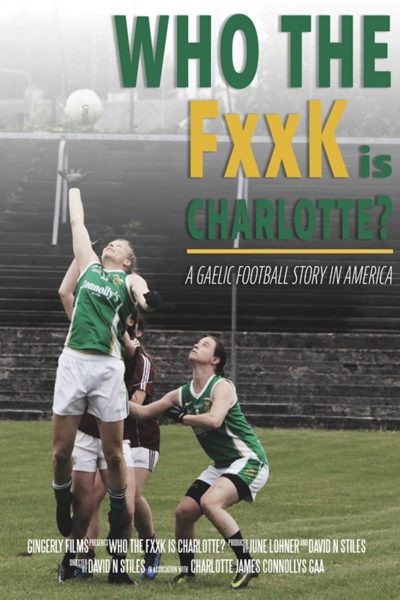 The Charlotte club was formed in 2000, and based on what we see here, is as much a social organization as a sports club. There does appear to be quite a lot of consumption of adult beverages. But there’s no doubt, they take the sport seriously, and recruit from all round the area, both Irish and American players. On North America, teams can bring in experienced players from Ireland, known as “sanctions”, to help grow the sport. But some clubs do that to excess: Charlotte refuse to go that route, putting their team at a potential disadvantage compared to Boston, or their arch-rivals from San Francisco, the Fog City Harps. The film follows Charlotte as they develop their team, and take part in the 2016 and 2017 senior women’s tournament, for the best sides in North America.
 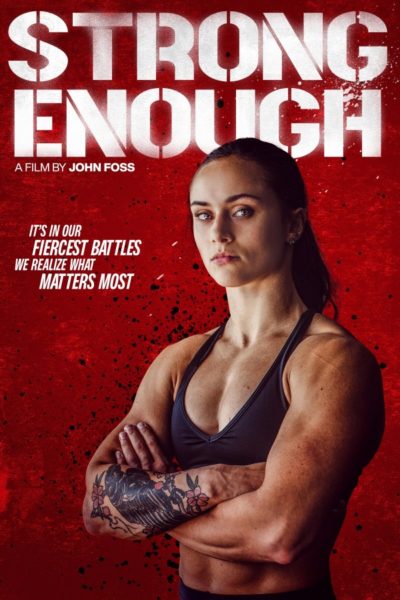 This is a very small-scale and restrained production, which unfolds, largely in real time, over one afternoon in the single location of a cross-fit gym. Athlete Sam (Jerue) is set for an attempt to see five world records in a 30-minute span, supported by her trainer Shane (Grosse) and under the eagle eye of adjudicator Alec (Sawyer) – it’s clearly intended to be the Guinness Book of World Records, but their name is never mentioned! However, a fly in the ointment shows up, just minutes before Sam is scheduled to start. Her husband, Charlie (Kershisnik), from whom she is currently separated, arrives at the gym, followed rapidly by Sam getting served with divorce papers, in what can only be called a dick move.
  I’ve no problem per se with faith-based cinema. My main issue is that they tend to be, literally, preaching to the converted, and if you’re not already on board, they tend not to work, purely from a cinematic perspective. There are exceptions:
 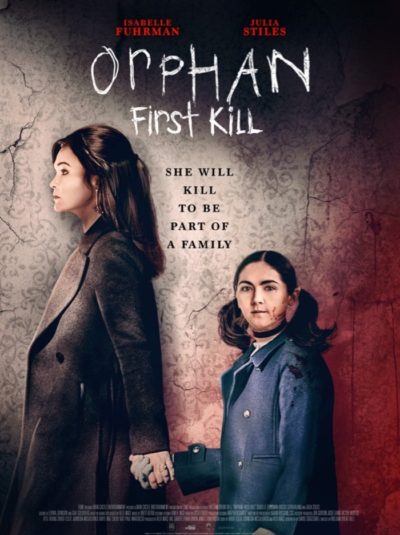 I’ve not seen the original Orphan. I suspect this does not matter very much, since what we have here is a prequel. I will admit to having been lured in by the barking mad central idea. It does justice to the lunacy, though can’t sustain itself entirely, and at least somewhat collapses under its own weight. We begin in Estonia, where Leena (Fuhrman) is a very, very angry 31-year-old. Not without justification, being trapped in a 9-year-old’s body due to a hormonal condition. Previous violence has got her committed to a secure facility, but Leena breaks out and decides to adopt the identity of Esther Albright, an American child who went missing years previously.
 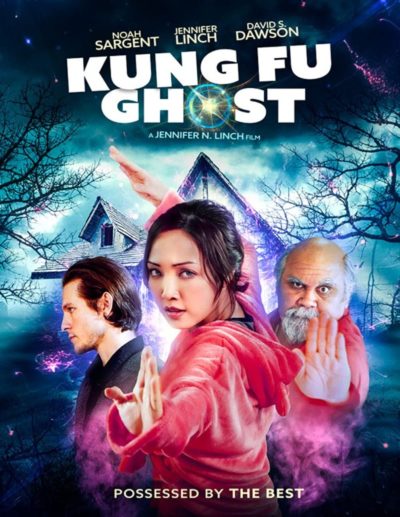 This is another example of someone simply trying to do too much on their movie. For Linch not only starred in, produced and directed this, she also edited it, did the sound design and was the colourist. It’s not hard to predict her talents are not equally divided. It’s a shame, since I really wanted to enjoy this: much like its heroine, there’s a plucky, can-do attitude present, which can only be admired. Unfortunately, anyone above the age of eight is going to be quite hard-pushed to overlook the flaws. While the action is not especially one of those, the volume there is underwhelming, and the romantic, comedic and dramatic elements are hugely variable, to put it politely.
 Tubi TV has become a goldmine of obscure, weird and,
  I spent much of the first thirty minutes here going “That can’t be Juliette Binoche.” Yet, it is, the French actress looking thoroughly unglamorous and very convincing in her portrayal of white trash trucker Sally. Her brother Dennis (Frank Grillo, whose role isn’t as big as the poster would have you believe) is in prison, and under pressure from even sketchier parties, so Sally has been delivering packages for said parties as she criss-crosses the country. He’s about to get out, so this will be her last run. She’s still shocked to discover the item in this case is a