
“X(ena) marks the spot.”
“In a time of ancient gods, warlords and kings, a land in turmoil cried out for a hero.
She was Xena: a mighty princess, forged in the heat of battle.
The power. The passion. The danger. Her courage will change the world.”
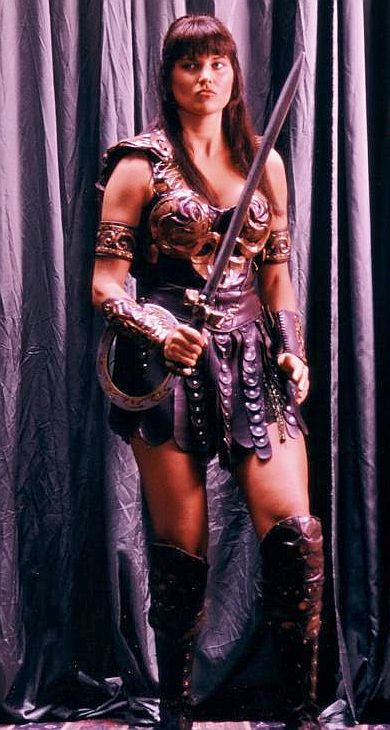
 Xena is one of the definitive action-heroine shows of all time. Originally appearing as a supporting character in a three-episode story arc on Hercules: The Legendary Journeys, in which she abandons her life as a warlord and opts instead to fight for good, as a way of making amends for her life. The producers opted to develop her as a spin-off, and the show ran for six seasons between 1995 and 2001, ending in a two-part finale (the review of which, below, was written first, hence it somewhat duplicates the overview here). It proved highly-popular for a show with no designated network home, pulling an audience in syndication of up to 7.8 million viewers during its second season, and inspiring a devoted fanbase that persists, even a decade after the show has come to an end.
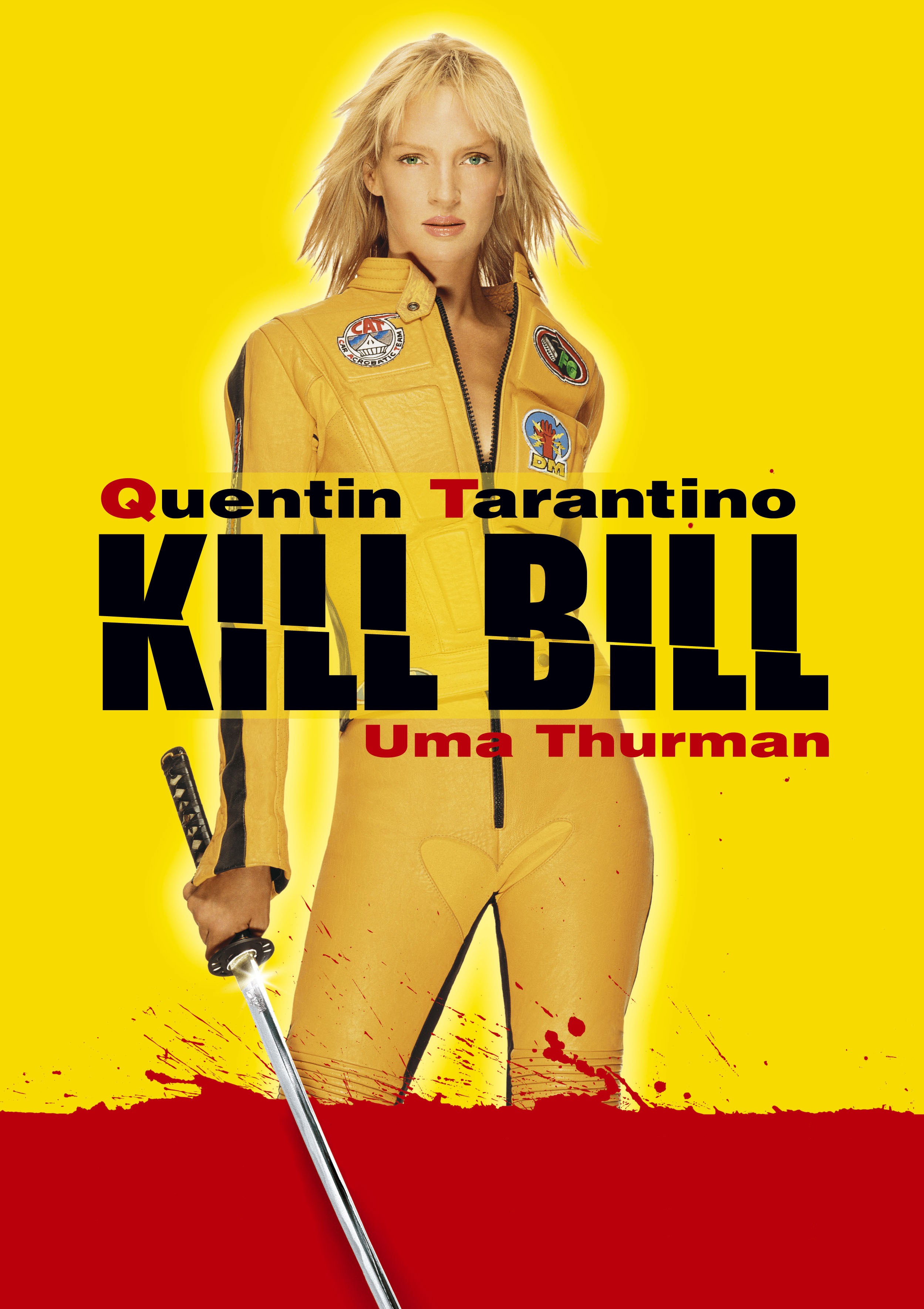
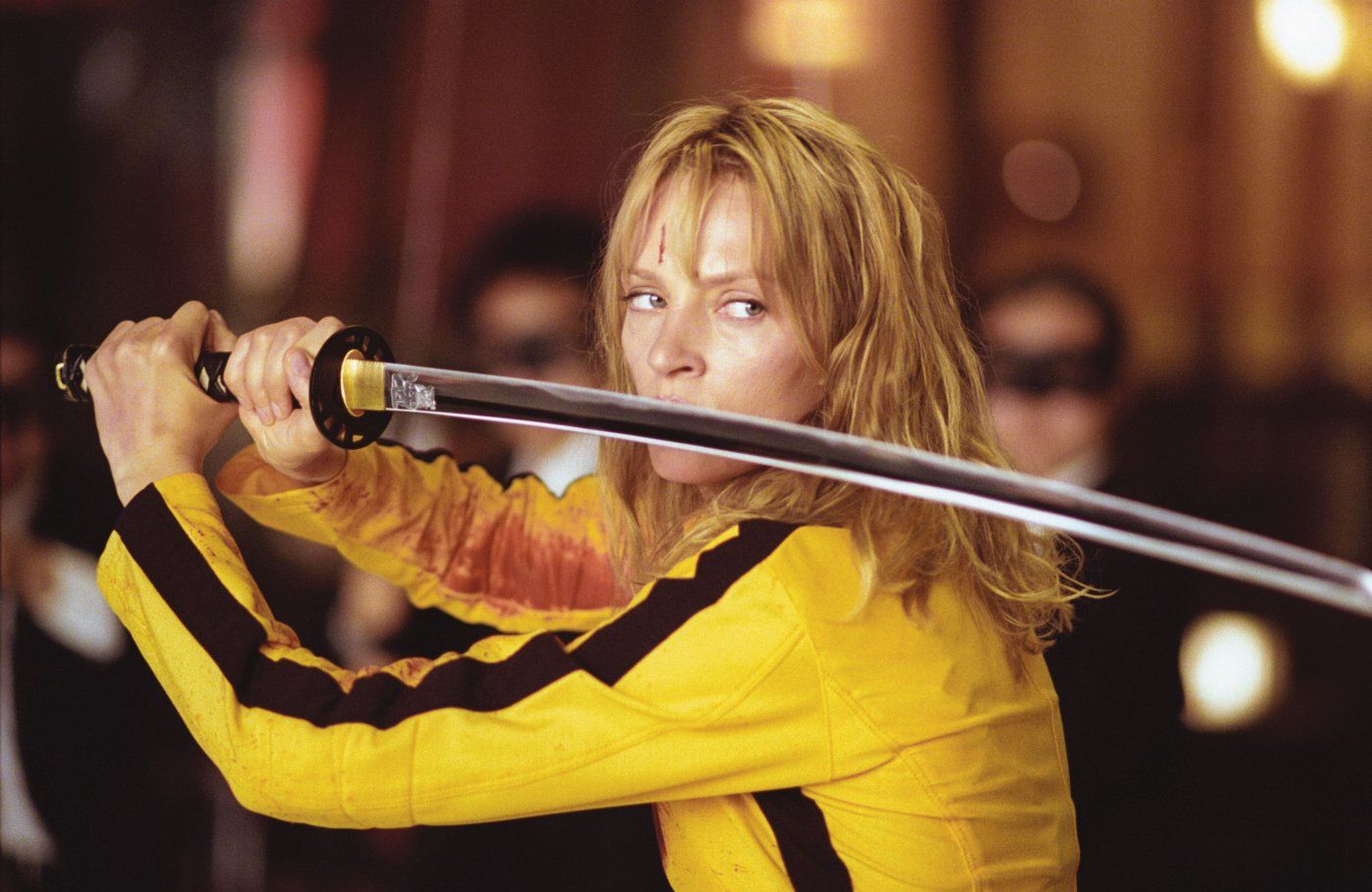
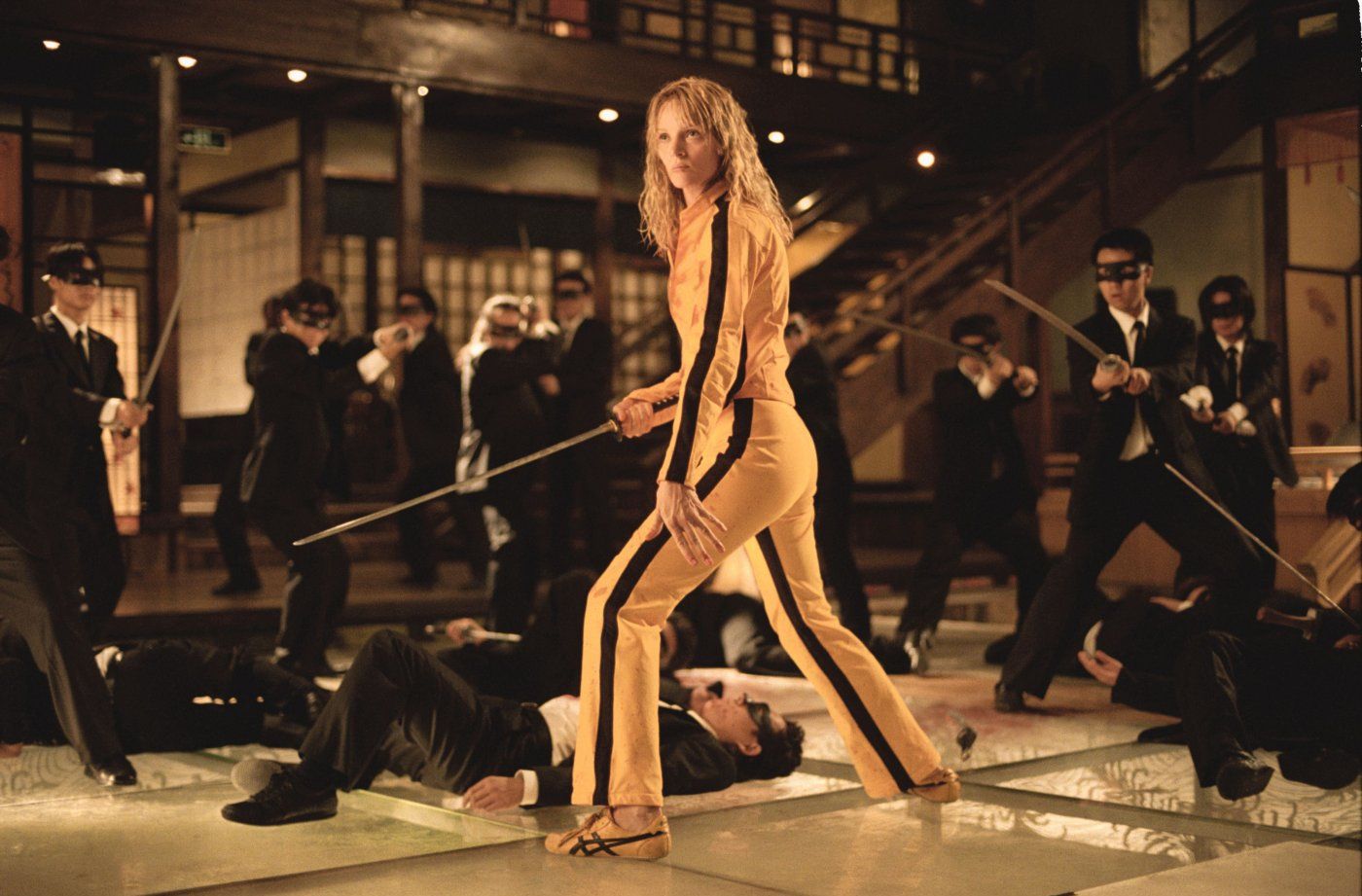
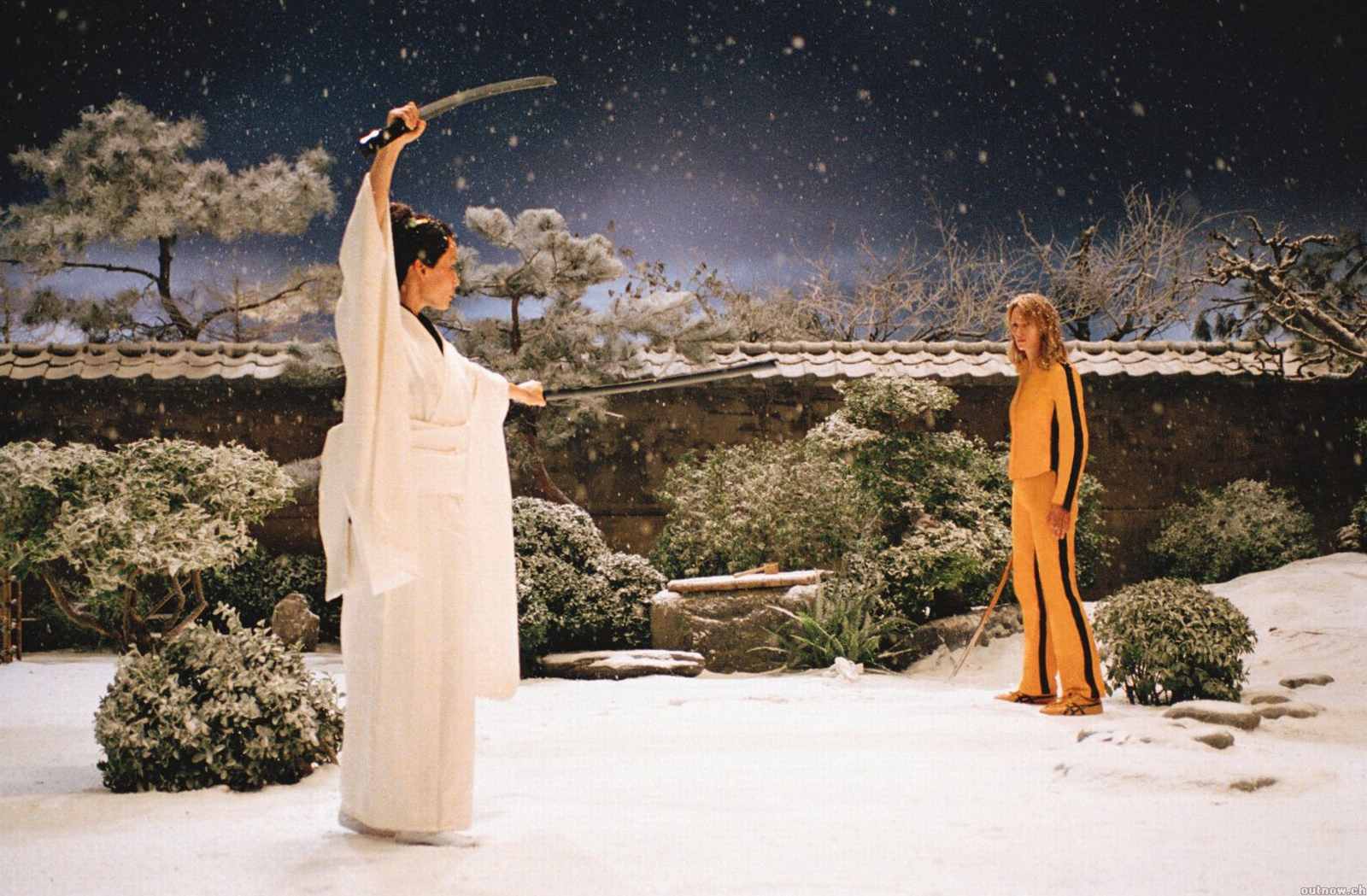
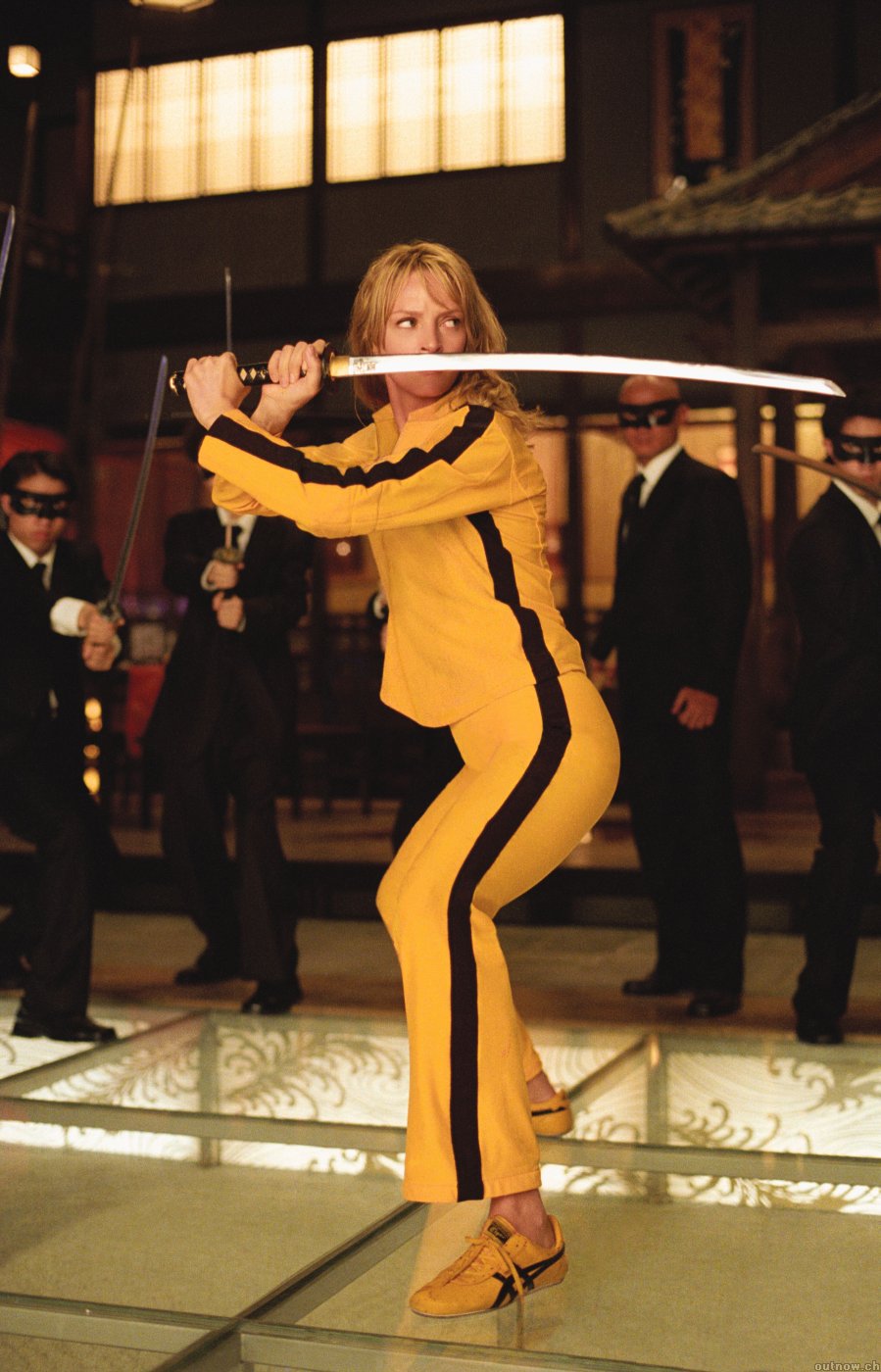
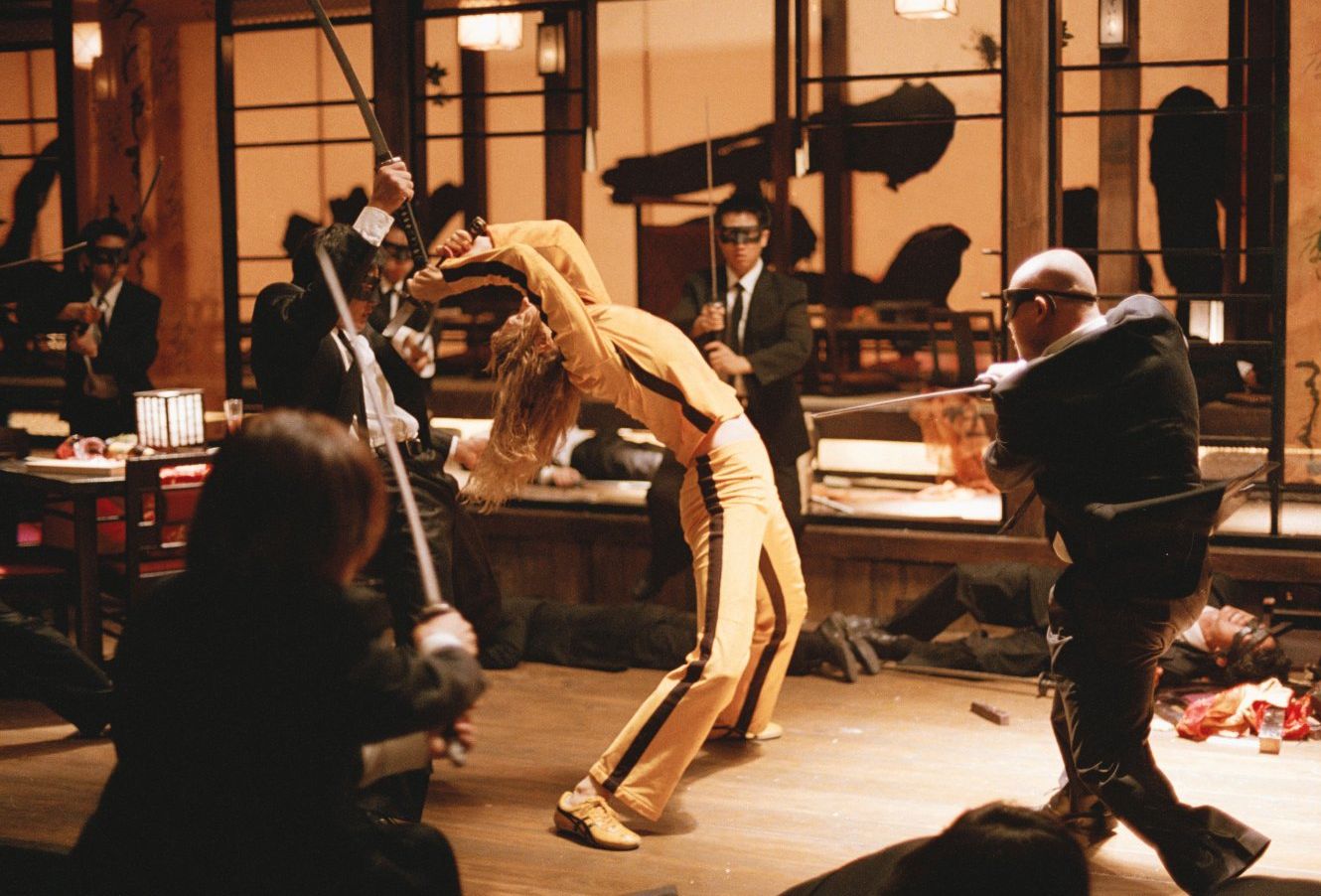
I am not, apparently, the only person to remember the show fondly, and it is an important precursor to subsequent entries, both on television and in film. Joss Whedon has apparently credited the show with blazing the trail later followed by Buffy – not least in its musical episode, “Bitter Suite,” which was an obvious influence on “Once More, With Feeling”. The creator of Kill Bill, Quentin Tarantino, was also a fan of the show; as documented in Double Dare, he hired Lawless’s stunt double, Zoe Bell, to double for Uma Thurmann in his two movies.
Central to its success was the marvellously-named Lucy Lawless, a New Zealand actress who was, surprisingly, not the first choice for the role. It was originally Vanessa Angel, but she fell sick and was unable to take part – and the rest is, as they say, history. Lawless simply looks the part, possessing an undeniable physical presence. Unlike many heroines, it’s very easy to believe she genuinely looks like she could kick your ass! Add cheekbones that could cut class, plus a smile giving the impression she was perpetually one step ahead of you, so don’t even think about it, and you have the perfect person for the character.
Alongside Xena is Gabrielle (Renee O’Connor), who represents the moral compass of the show. Gabrielle left her home in a (mostly) peaceful village, to pursue a life of adventure with Xena, but became as much a spiritual adviser as sidekick. While certainly possessing the potential to be immensely irritating, in a Jiminy Cricket kind of way, she did perhaps have a more interesting character arc, described by one writer as “from a spunky kid into an idealistic fighter who didn’t kill, then a total pacifist, and finally a formidable but battle-weary warrior.”
Both the setting and the approaches taken to the storytelling are, to be honest, all over the place. The locations roam from Greece to China, the period could be anywhere over a spell of several centuries, and the dialogue is absolutely late-20th rather than even remotely classical. Similarly, the tone, even within a single episode, can leap from drama to pathos to comedy to a slugfest, without pausing for breath. It’s an approach which is difficult to pull off: even Hercules, from much the same creators, often seemed forced or trite, but Xena manages, by and large, to get away with its cheerful disregard to historical veracity and consistency of atmosphere. That it’s clearly not intended to be take seriously, is clear from the sound effects, where even a turning of Xena’s head is accompanied by a “Whoosh!”
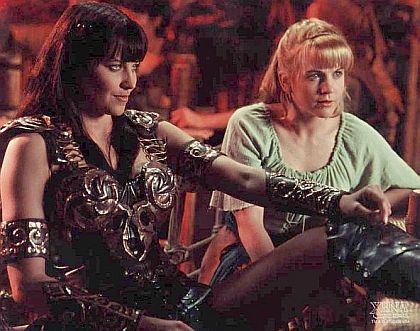 There was enormous, often ferocious debate among fandom over the nature of Xena and Gabrielle’s relationship, some asserting they were a lesbian couple. While both showed plenty of evidence of heterosexuality, there was a lot of content open to interpretation – much of it absolutely deliberate, and known as “subtext” in Xena fandom. I never found it convincing. My issue with it was not one of sexuality, simply compatibility: Xena and Gabrielle were absolute opposites, in background, upbringing, personality and approach. They just didn’t “fit” each other, from what I could see, and there was no chemistry visible. Xena and Hercules: I could see that. Xena and the Queen of the Amazons: no problem there either. But Xena and Gabrielle? Sorry. Not buying this. It also played into the stereotype that any strong woman has to be a lesbian.
The ongoing discussions screaming matches in Xena fandom about this, as nicely documented in this piece, is largely what drove me away [s’funny, those screeching about tolerance often proved remarkably intolerant of others’ views]. Eventually from the show itself, as the makers opted to pander towards this vocal subset with increasing frequency, too often investing the show with elements which felt taken from a soap-opera. The finale was the only episode of that season I’d even seen. But the memories of the show remained, and when I discovered it on Netflix, I decided it was time to go back and watch the series. All 134 episodes. From the beginning. Seemed like a good idea at the time…
I’ll be covering them a season at a time. If you’re interested in more details, my notes can be found over on our forum, covering each episode in a bit more depth, with a pic from each.
Star: Lucy Lawless, Renee O’Connor, Ted Raimi, Hudson Leick
- Xena: Warrior Princess season one
Originally screened: September 1995
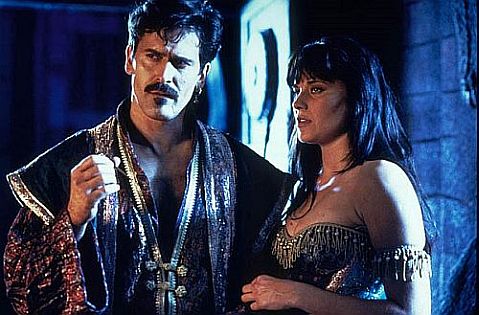 It’s assumed viewers are at least somewhat familiar with Xena’s background, as she is first seen burying her armour in an effort to bury her past. Of course, this is about as successful as it usually is in fiction, and it’s not long before she’s saving villagers, including Gabrielle, from slavery. That includes an aerial battle atop platforms, which is the first sign of the show’s strong influence from Hong Kong action films; it was using wirework, in a way that predated its popular arrival in Hollywood. Similarly, the stunning New Zealand locations foreshadow Lord of the Rings, to the extent that I kept expecting to see hobbits gamboling along in Xena’s wake.
There is a sense that the makers were still feeling their way to some extent, not quite certain how the relationships would work out, and the characters develop as the actors grew into them. The same goes for the action; especially early on, the doubling is clunkily shot, and Lawless is obviously not doing as much of her own work. The improvement over the course of the season was palpable, and by the end, both Xena and the stunt players had got a much better handle on the subtleties required. That said, I always had to wince when Xena would cartwheel her way into a situation – wouldn’t, oh, running have been quicker?
There are some good guest appearances; Tim Thomerson plays a mercenary on the downside of his fame and career [think True Grit in ancient Greece], and we also see Karl Urban, who’d go on to play Bones in the Star Trek reboot. The best of these, however, is Bruce Campbell in “The Royal Couple of Thieves”. Show producer Rob Tapert was one of the producers of The Evil Dead, so has known Campbell for years, and used him to play Autolycus, the self-proclaimed King of Thieves. Xena demands his help to recover a potentially lethal religious relic, stolen from its owners, so the two have to pair up. The dialogue and coming timing here is great, and the same goes for “Warrior… Princess…” which sees Lawless play both Xena, and her look-alike, flighty princess Diana. It’s a startling demonstration of Lucy’s genuine talent as an actress.
Player loading
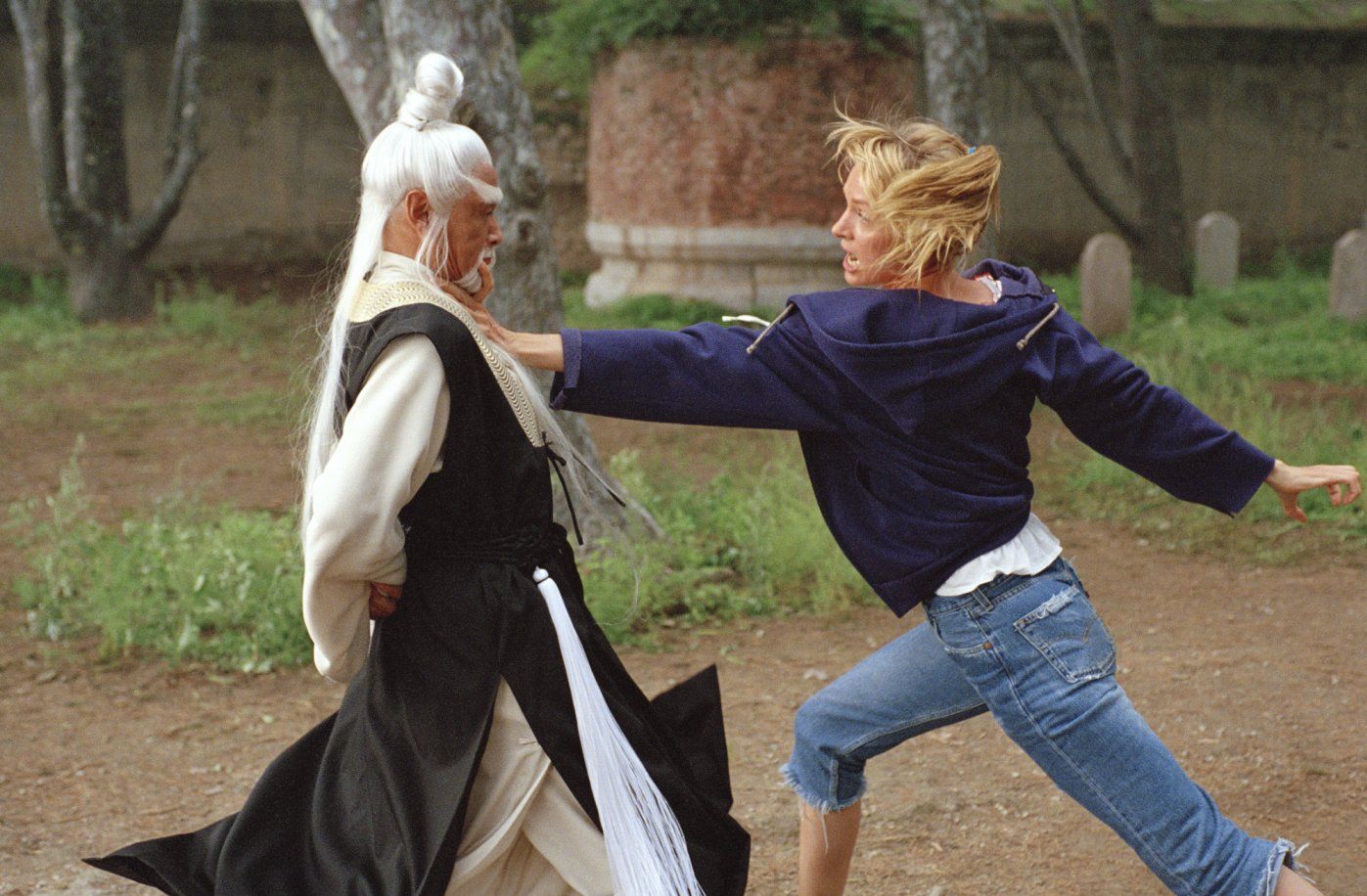
The best episode, however, is about as far from comedy as the show gets. I write a good deal more about it over on the forum, but it centers on Callisto, who watched her family die in a fire during a raid by Xena’s army, back when she was bad. Now, Callisto has set out to destroy Xena from the ground up. Featuring an amazingly psychotic performance from Hudson Leick as Callisto, it goes to prove that every great hero needs a great villain, and Callisto is the Joker to Xena’s Dark Knight. They play two sides of the same coin, Callisto pointing out that Xena has never been brought to justice for all her past crimes.
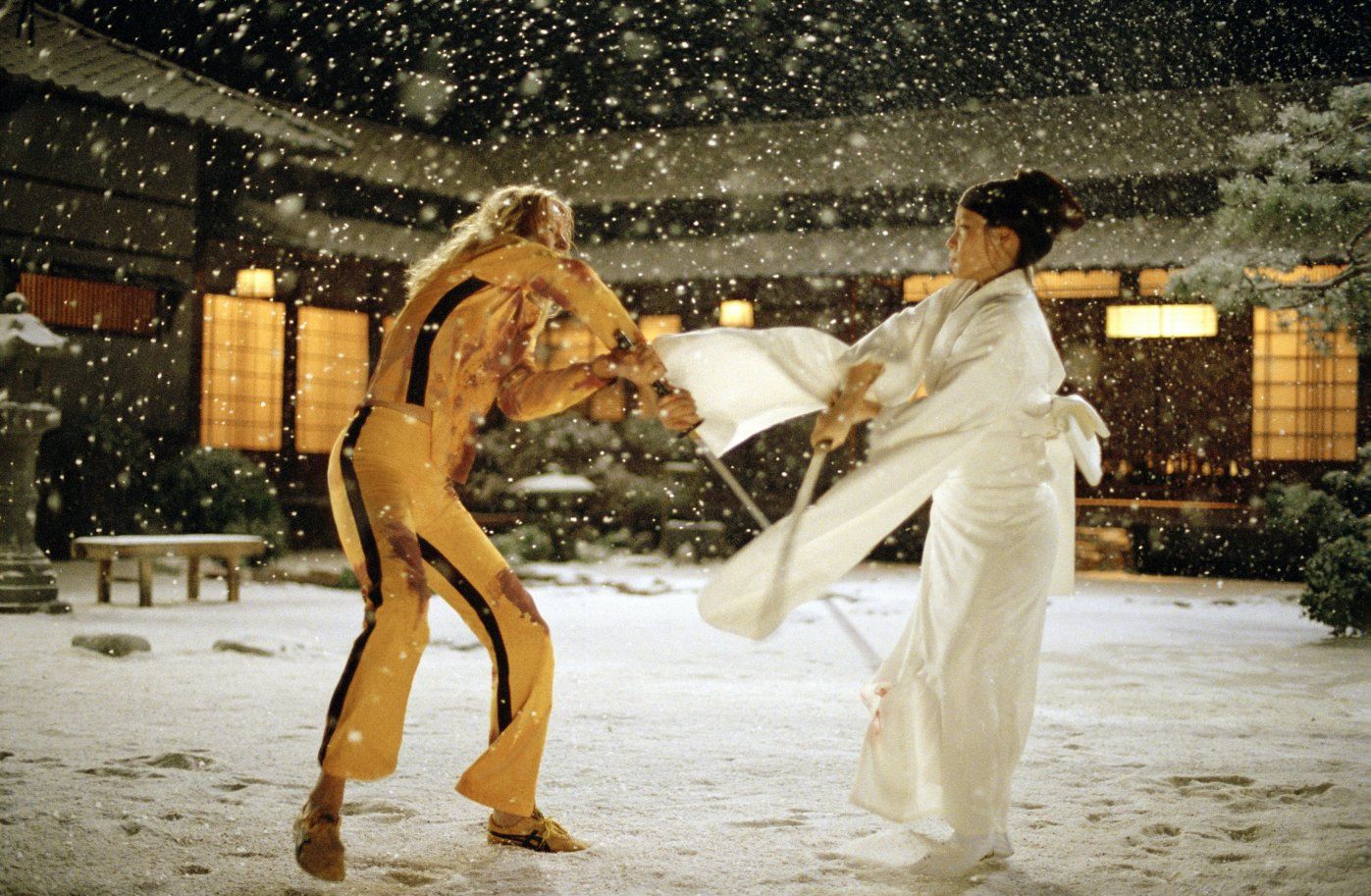
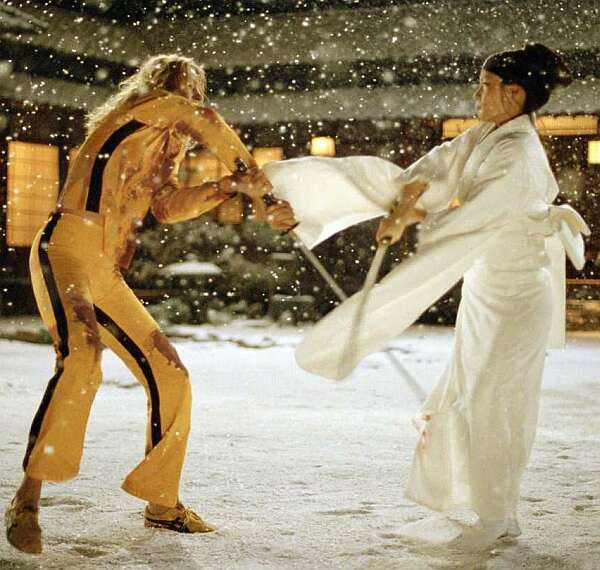
Callisto is much further gone into the insanity abyss, as this speech she gives to Xena shows. “You let me go, and I will dedicate my life to killing everything you’ve loved: your friends, your family, your reputation, even your horse. You see, I am being so honest with you, because the idea of your pity is worse than death for me. You created a monster with integrity, Xena. Scary, isn’t it?” The show builds to a great battle between the two (above), inspired by a similar fight Jet Li had in Once Upon a Time in China. Watching this again… Yeah, I see why I loved the show!
Season 1: Top 5 episodes
Continue reading →# Jim IMDB voting 1. Callisto Callisto 2. The Royal Couple of Thieves Prometheus 3. Warrior… Princess… Sins of the Past 4. Sins of the Past The Greater Good 5. Altared States Warrior… Princess… - Xena: Warrior Princess season two
Originally screened: September 1996
 The defining moment of Xena’s sophomore season didn’t take place in any episode. In fact, it didn’t even take place in New Zealand, but thousands of miles away, During a rehearsal for an appearance on The Tonight show with Jay Leno, Lucy Lawless was thrown off a horse after it lost its footing, and broke her pelvis. It’s interesting to compare the reaction of the producers to what the Tapert/Raimi team did when the star of Spartacus, Andy Whitfield, was similarly a victim of severe misfortune, more than a decade later. There, they put the show entirely on hold and opted instead to film a prequel without him.
Now, it’s not quite identical: Whitfield had cancer, which unfortunately proved fatal, and shooting had not commenced on his second series. Still, one wonders if, in hindsight, it might have been better – for the viewer at least – had the show gone on hiatus, rather than trying to (literally) limp along, with an action star incapable of doing any action for most of its run. Oh, you certainly have to admire the creative way in which everyone worked around it: rewriting an episode here, inserting a body swap there. But having Hudson Leick pretending to be Xena trapped in Callisto’s body, is like having Sir Anthony Hopkins play Clarice Sterling inside Hannibal Lecter. While I’m a huge Callisto mark, even I have to say, it completely negates the whole point.
With Lawless’s limitations, the show was largely forced back on to the supporting characters post-fall, and that’s a bit of a mixed bag. Leick was better at being bad than being good, and Bruce Campbell was reliable as ever. But both Renee O’Connor and Ted Raimi were overexposed, and although they are fine in light comedy, they are just not capable of carrying a show from a dramatic point of view. Still, there were some solid episodes, my personal favorite being a successor to Warrior… Princess, giving Lawless three characters of disparate tone to juggle, and she does so magnificently. Despite general loathing in the fan community, I also enjoyed the Christmas episode, A Solstice Carol, for its loopy inventiveness. I mean… hula-hooping?
There’s no doubt that the subtext between Xena and Gabrielle was more explicitly brought out in this series, with several sequences in various episodes that are clearly there purely to tease the fans. However, by the end of the seasons, there seems to have been a certain feeling, among some creators at least, that this had run its course. For instance, writer Chris Manheim said, “We kind of backpedaled a lot on all that [subtext]. I don’t know whether it’s getting read in no matter what we write. But I think we’ve said “Ah, we’ve had our run at that,” and just concentrate on other aspects of their relationship. Whatever people read into it they do… You can only do that so much before it gets to be old hat and kind of tired.”
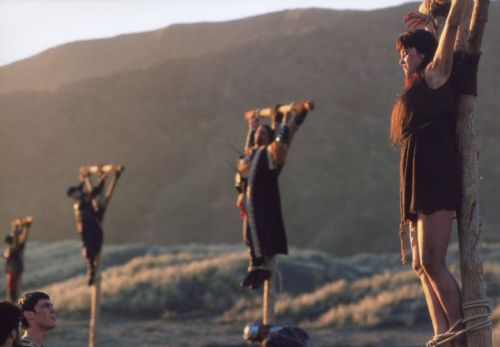
 In terms of style and approach, the show covers even more ground here than the first time, from absolutely froth to grim darkness. Xena even gets crucified by Julius Caesar in one episode [confusingly, the actor responsible also crops up later, playing Cupid, complete with fluffy wings…]. I’m sure I’m not the only one who found themselves whistling Always Look on the Bright Side of Life, during the scene shown above right. Another unwitting Python reference is the wretched Here She Comss, Miss Amphipolis, a dreadful tale of drag-queen empowerment, featuring perhaps the least convincing female impersonator since John Cleese put on a dress – as on the left, watch that Adam’s apple bob….
Having Xena wander round a beauty pageant, defusing tensions between both competitors and organizers, seems to represent both the most desperate and transparent effort by the makers to save her pelvis, and the nadir of the series thus far. [Though producer Steven Sears said that episode was unaffected, it’s hard to believe such a woeful installment was as originally intended, and Manheim said the story “came about partly because…Lucy couldn’t fight much.”] While the underlying cause was unfortunate and certainly outside the makers’ control, their reaction seemed more concerned with contractual obligation than show quality, and it’s hard to deny the resulting, significant drop-off in standards which can be seen post-accident in this series.
Season 2: Top 5 episodes
Continue reading →# Jim IMDB voting 1. Warrior… Princess… Tramp A Day In The Life 2. Return of Callisto Ten Little Warlords 3. A Solstice Carol Return of Callisto 4. Intimate Strangers A Necessary Evil 5. A Necessary Evil Warrior… Princess… Tramp - Xena: Warrior Princess series finale
“Get your yi-yi’s out.”
 I used to be a Xena fan; for the first couple of series, I was a die-hard, never missed an episode, bought the merchandise, went to the gatherings, etc. I loved (with one exception) the supporting cast – Joxer, Ares, Autolycus – and still reckon Callisto remains one of the great TV villainesses of all time.
But the dynamic of the series slowly changed; Xena’s irritating sidekick, Gabrielle, started getting more screen time, and it became more of a relationship-based show than the action/humour cross which I knew and loved. Finally, around the end of Series 3, I gave up (I think the musical episode was a watershed – as with Buffy); not even the news that the series was ending could lure me back, and the finale in Summer 2001 passed me by. It even took me a month to decide to pick up the DVD, and then it was only ‘cos I had a Best Buy gift card burning a hole in my pocket. But I’m glad I did, as it’s an ending fit for a warrior princess.
Warning: the following, of necessity, contains extreme spoilers for the show’s end. Readers are advised not to proceed if they wish to avoid such knowledge.
Let’s get the spoiler out of the way first: the original title for this review was, Oh My God – They Killed Xena! You Bastards!, but wiser counsel prevailed. To screams of fury from the Hard Core Nut Balls (as Lawless herself once described the more extreme fans), Xena died. And this time, it was permanent – something of a change for a show in which fatality was previously only a minor inconvenience. Indeed, one of the problems was there was no longer any tension, characters having come back from the grave so many times, even death no longer had a sting. The reason for the reaction, it seems, was less the actual death, than the separation of Xena and Gabrielle. For a small but extremely vociferous part of fandom invested the relationship between those two with far more than the actresses (and most of the creators) intended. These “subtexters” wanted to see the two walk off into the sunset, hand-in-hand – probably sporting crew cuts and Birkenstocks too, if you catch my drift. The makers sometimes jokily acknowledged these obsessives, which was perhaps like trying to put a fire out by throwing petrol on it.
The things which made them dislike the finale were, perhaps, the ones why I enjoyed it. I was never bothered by the concept of a Xena being a lesbian, it was just the idea that whiny waste of space Gabrielle was her partner which I found inconceivable: sidekick, yes; love interest, no. The finale largely downplayed Gabrielle’s role: she was entirely absent from the half told in flashback, concerning a previous adventure back when Xena was, shall we say, “morally independent”. This created the drive for the film. The incident in question saw Xena ransoming a Japanese girl – forming a bond with her which certainly has subtextual elements of its own. But it all went horribly wrong, and Xena caused – albeit inadvertently – the deaths of 40,000 people. Now, the only way for her to find redemption is to kill the demon which consumed their souls…but the only way to do that is to become a ghost herself. While there’s the usual escape clause, at the end we discover that any return to life would condemn the souls forever; Xena is not prepared to do this, and so remains dead into eternity.
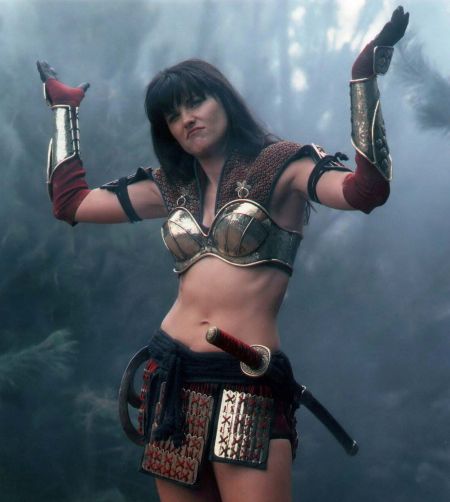 Like the series itself, the finale veered wildly between the fabulous and the questionable, vacuuming up influences like Tarantino on speed. From Japan: Kwaidan, Shogun Assassin and Akira Kurosawa. From Hong Kong: A Chinese Ghost Story, Once Upon a Time in China, Swordsman. From the West: The Evil Dead and Sergio Leone – the former makes sense, since director Tapert produced that classic slice of low-budget horror. Fortunately, it has a lot of its own to admire, rather than being a series of homages; the story is great, and the acting largely excellent.
The highlight is probably Xena’s death, a five-minute sequence of harrowing intensity featuring a never-ending hail of arrows, into which our heroine struggles, intent on finding a warrior’s death. It’s a fabulous combination of effects and acting, which would be worthy of any movie – at the end, there’s a mass exhalation of breath, as you realise that those who live by the sharp, pointy object, die by the sharp, pointy object. It’s entirely fitting, and if the show had ended there, I’d have had no complaints. The actual climax is clunky and contrived in comparison, though the shock value present remains huge, since you confidently expect the revival of Xena, right up until the credits roll.
On the downside are various, jarring inaccuracies: Xena’s ghost hugs Gabrielle but is incapable of holding her chakram (the “round killing thing”, if you didn’t know); some of the “samurai” possess blatant New Zealand accents; a giant explosion implies the medieval Japanese possessed nuclear weapons (given the location, this is in somewhat dubious taste). If Xena really cared for Gabrielle, why send her on a wild-goose chase of resurrection, when Xena knew it wouldn’t happen? Why did Gabrielle pause to get a full-back tattoo first, before going off on this, presumably somewhat urgent, quest? These are clumsy and obvious flaws which could/should have been corrected.
It still remains a brave and uncompromising finale, in an era when “final” is usually about the last word you’d use to describe them. While the door is not completely closed – not in a milieu where humans can become immortal and then get killed anyway – in all likelihood it is the end of Xena, and marks the close of her chapter. From a beginning as a minor character on another show, she became a cultural icon; whatever you may think of the series, its important place in female action heroine history cannot be denied.
Dir: Rob Tapert
Continue reading →
Stars: Lucy Lawless, Renee O’Connor

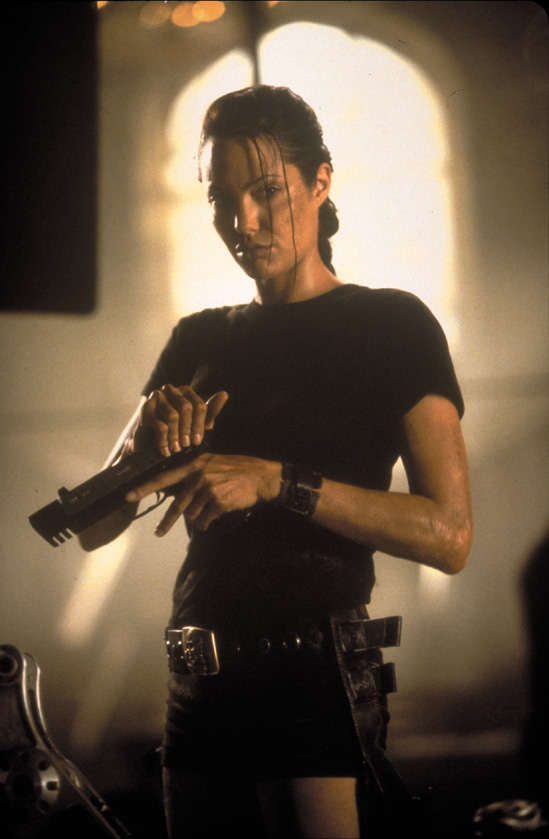
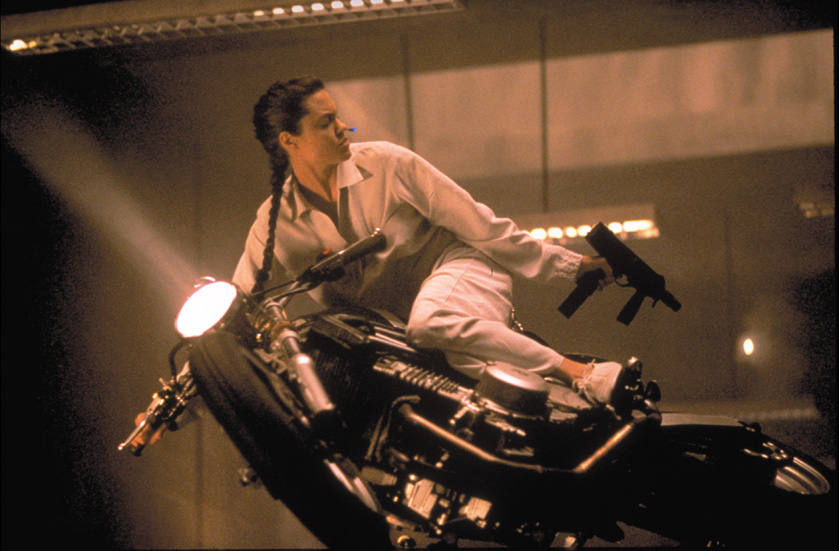
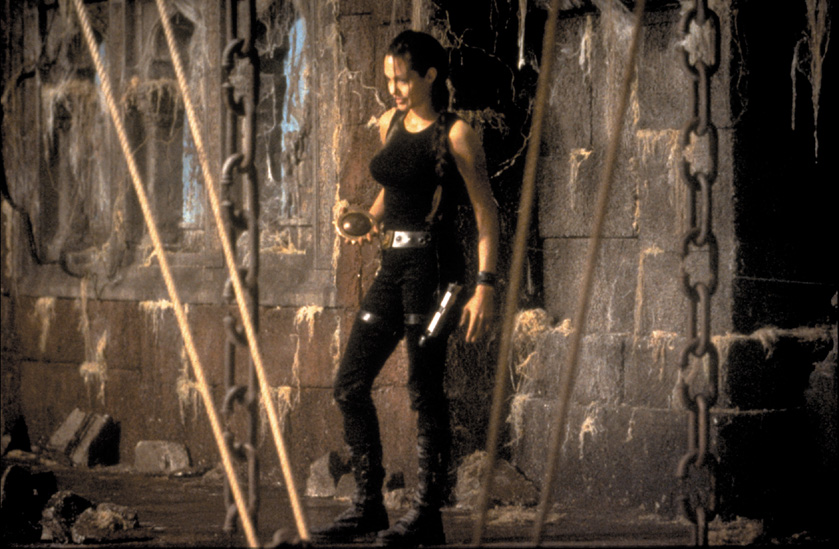
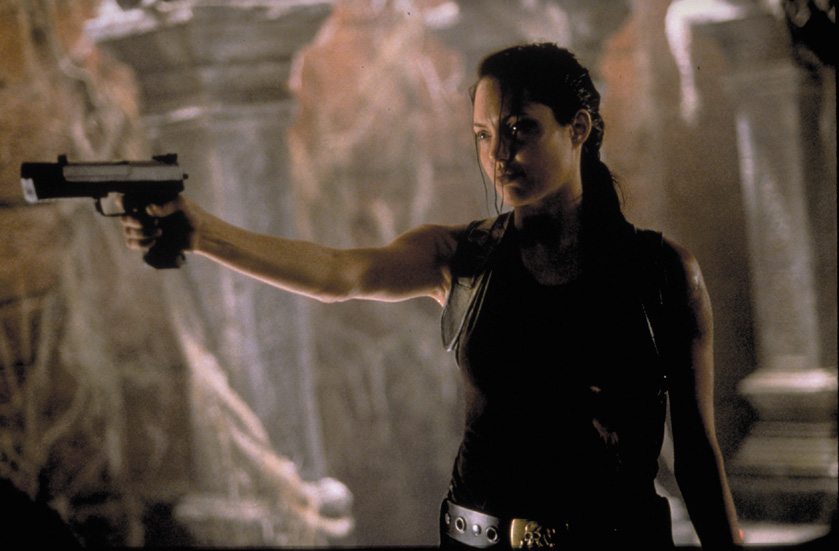
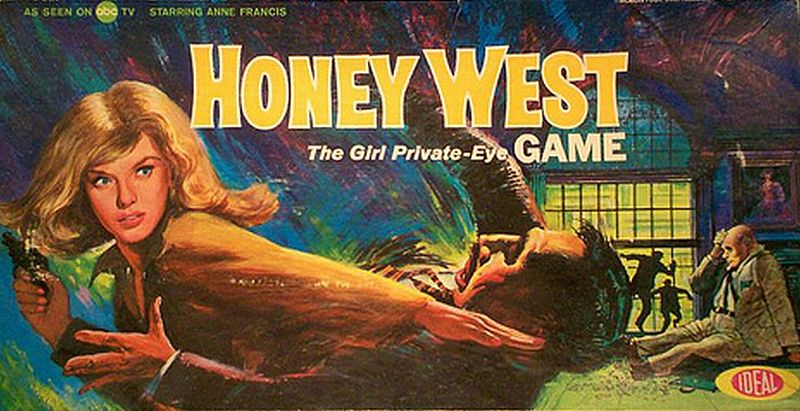 ★★★★
★★★★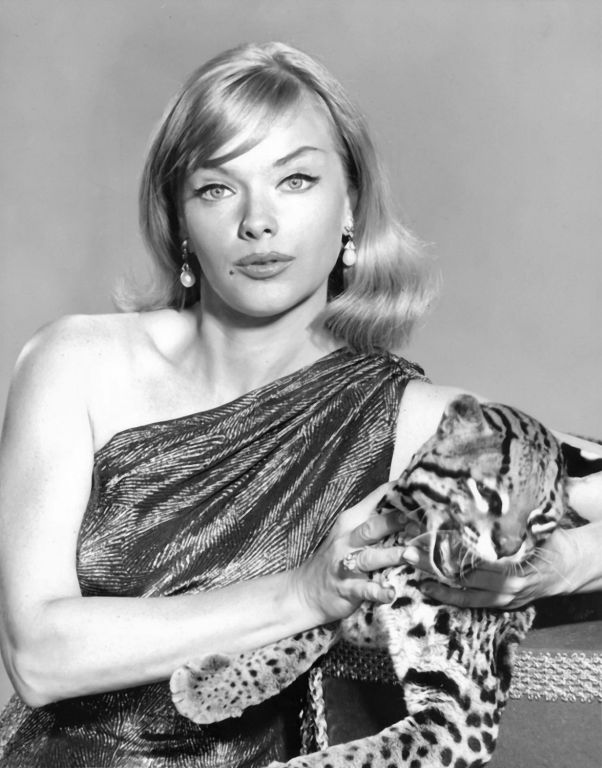 Naturally, this being the mid-sixties, the racier elements of the pulp novels had to be toned down, but the presence of Forbidden Planet star Anne Francis added its own share of potential, especially to boys of the appropriate age, which
 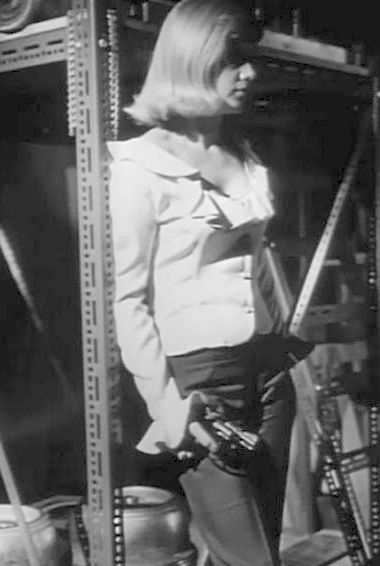 We also appreciated the parade of supporting actors, which include a significant number of familiar names, especially if you watch other shows from the era. Other names should be recognized regardless, including Kevin McCarthy, Michael J. Pollard, Richard Kiel, Joe Don Baker and Dick Clark. The music, by Joseph Mullendore, is an appropriate blast from the past, resulting in much snapping of fingers and shaking of shoulders from the GWG couch by myself and Chris. Indeed, Chris even came up with her own set of lyrics for the theme-tune, which you can find in the sidebar; we were singing lustily along with the opening credits, to the utter bemusement of our son. [The middle section is a bit tricky, and should probably only be attempted by trained professionals. We ended up going, “Raindrops on roses, and whiskers on kittens…” much of the time!]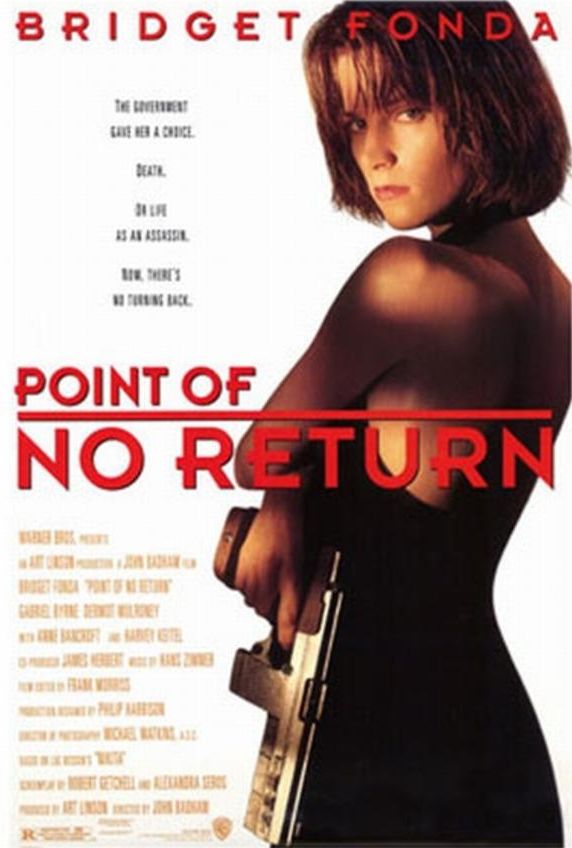
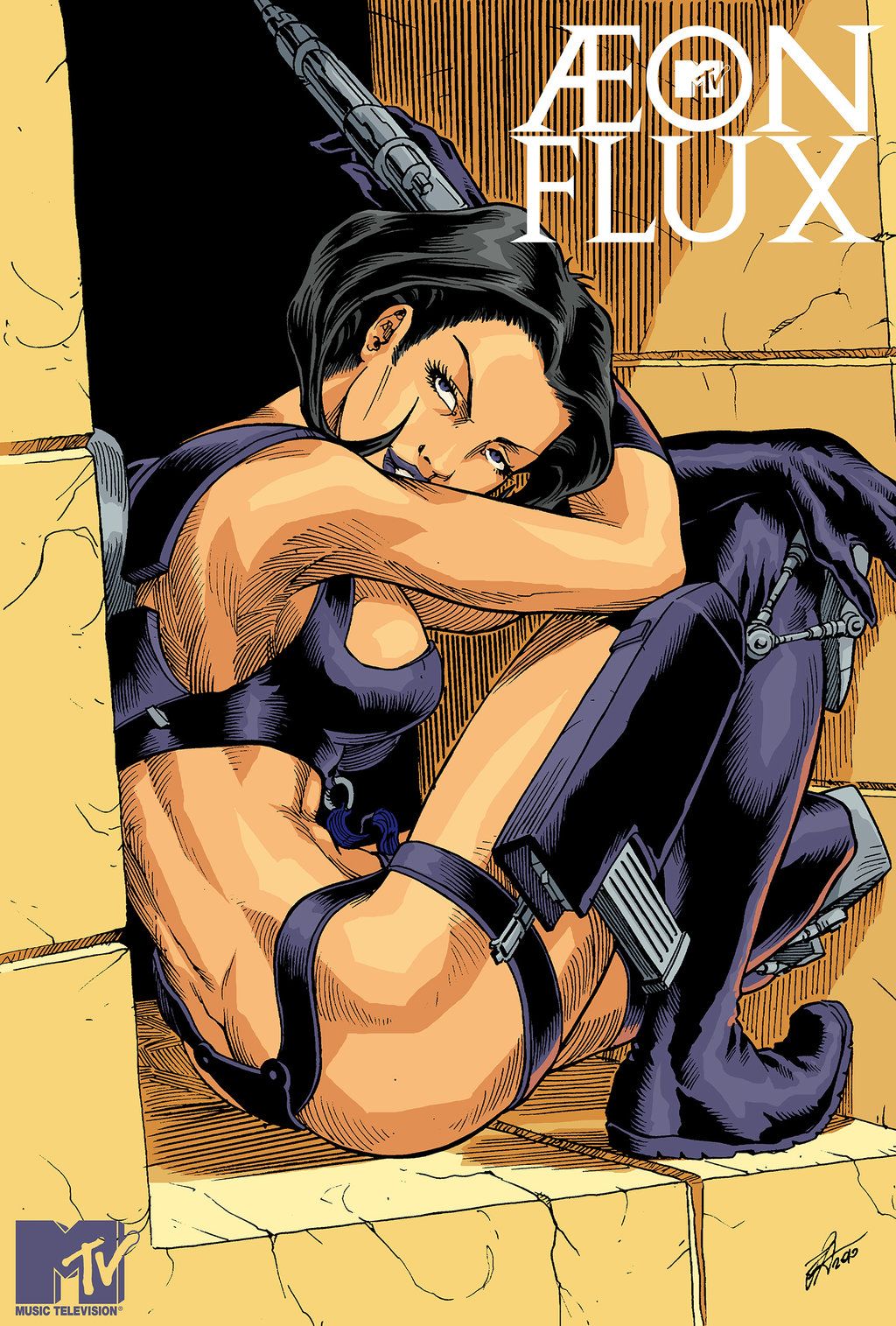
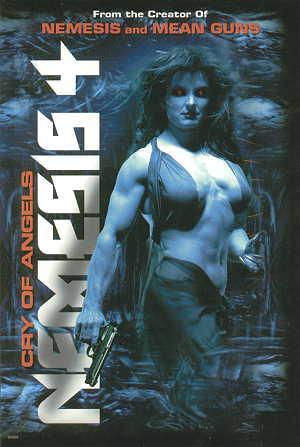 Though the lead actress, body-builder Sue Price, looks nothing like the cover pic (right), credit is due for choosing someone who defies conventional standards of female beauty. However, take all the points away, and then some, for pretending she does; having her spend half the film naked is something both Chris and I could very easily have lived without. She is, frankly, scary. That’s a shame, as while the budget here was obviously tiny, it’s put (mostly) to good use, with an interesting script.
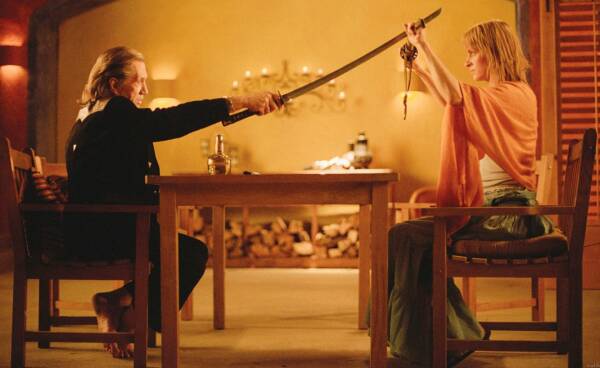 ★★★★
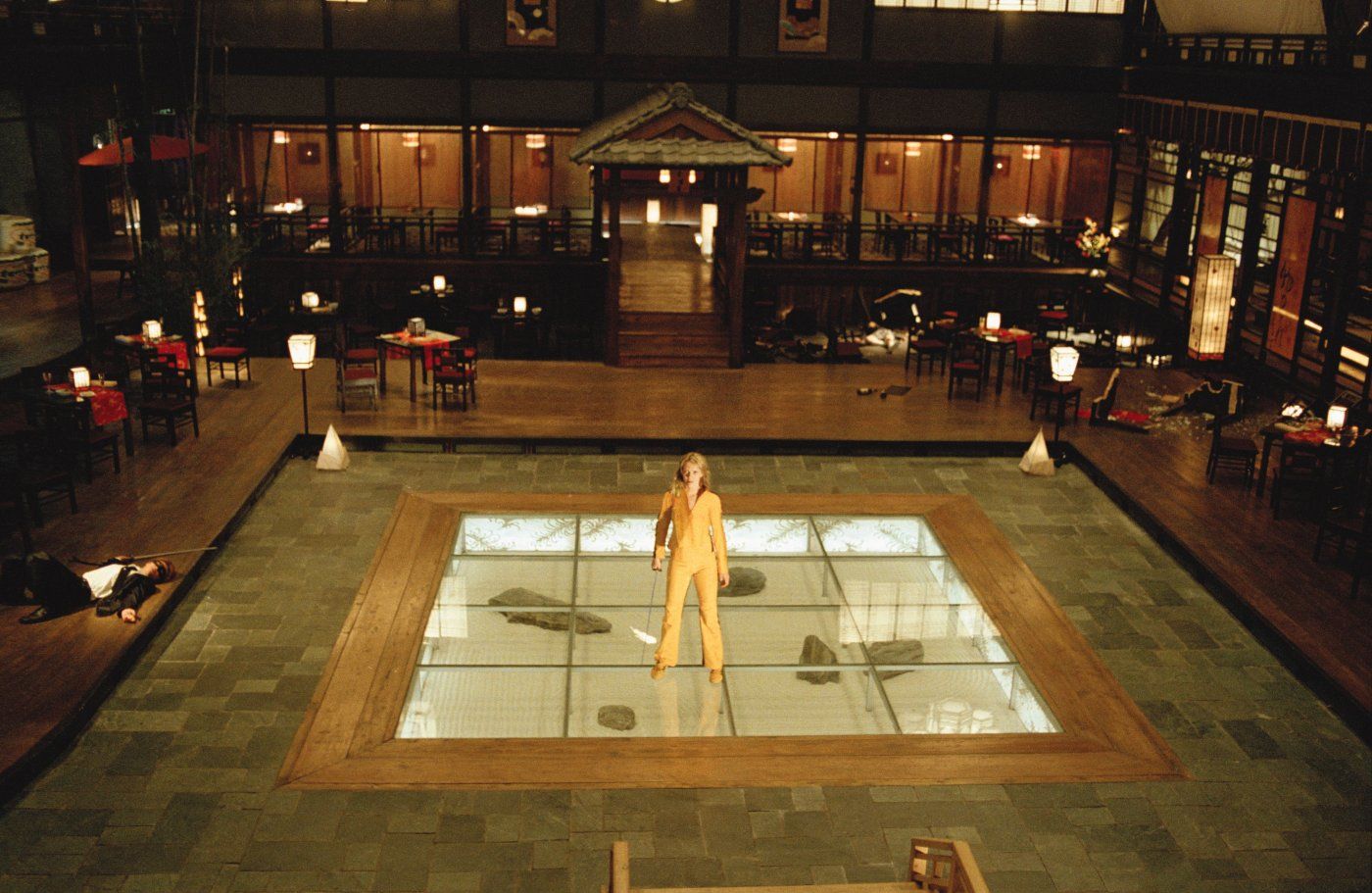
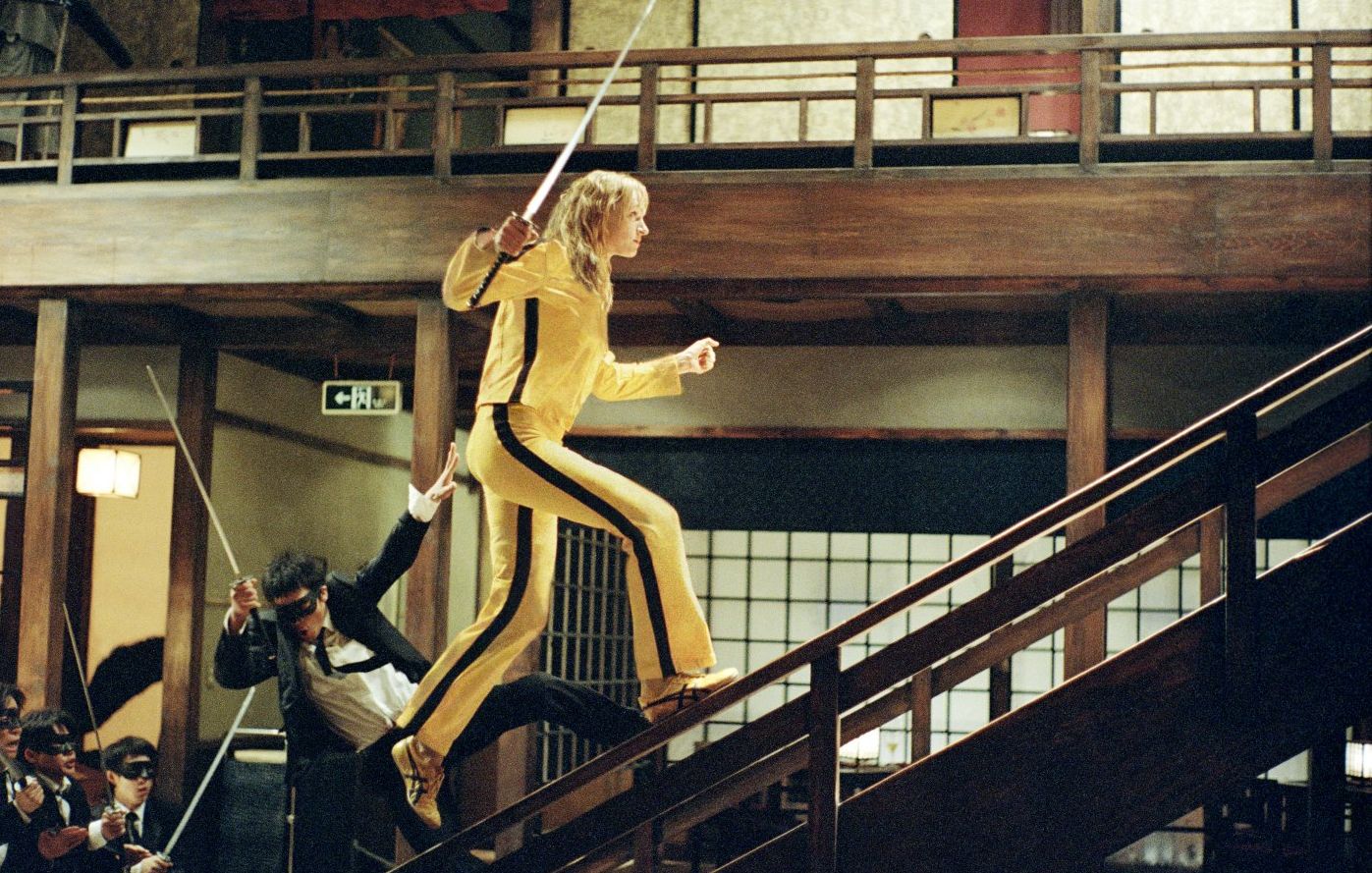
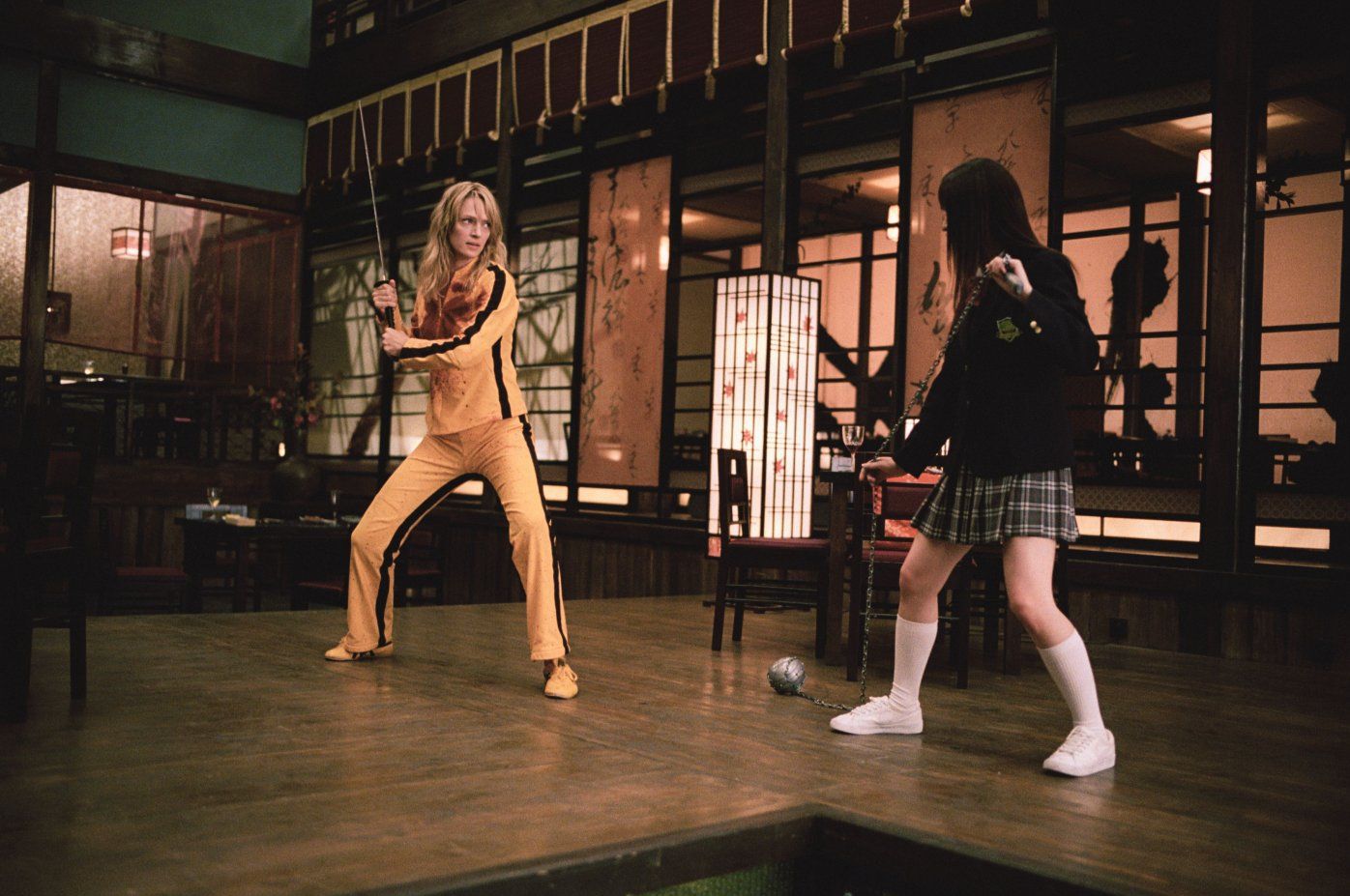
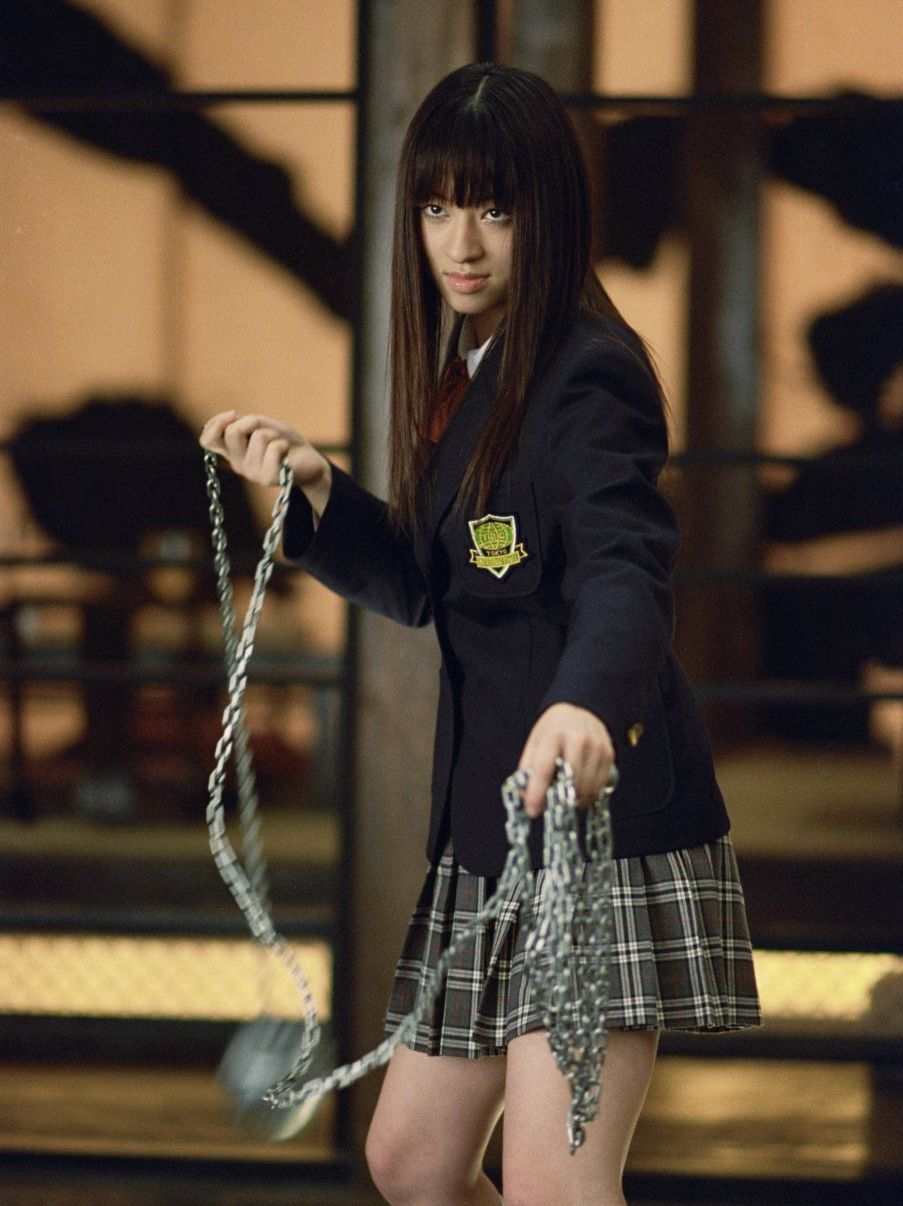
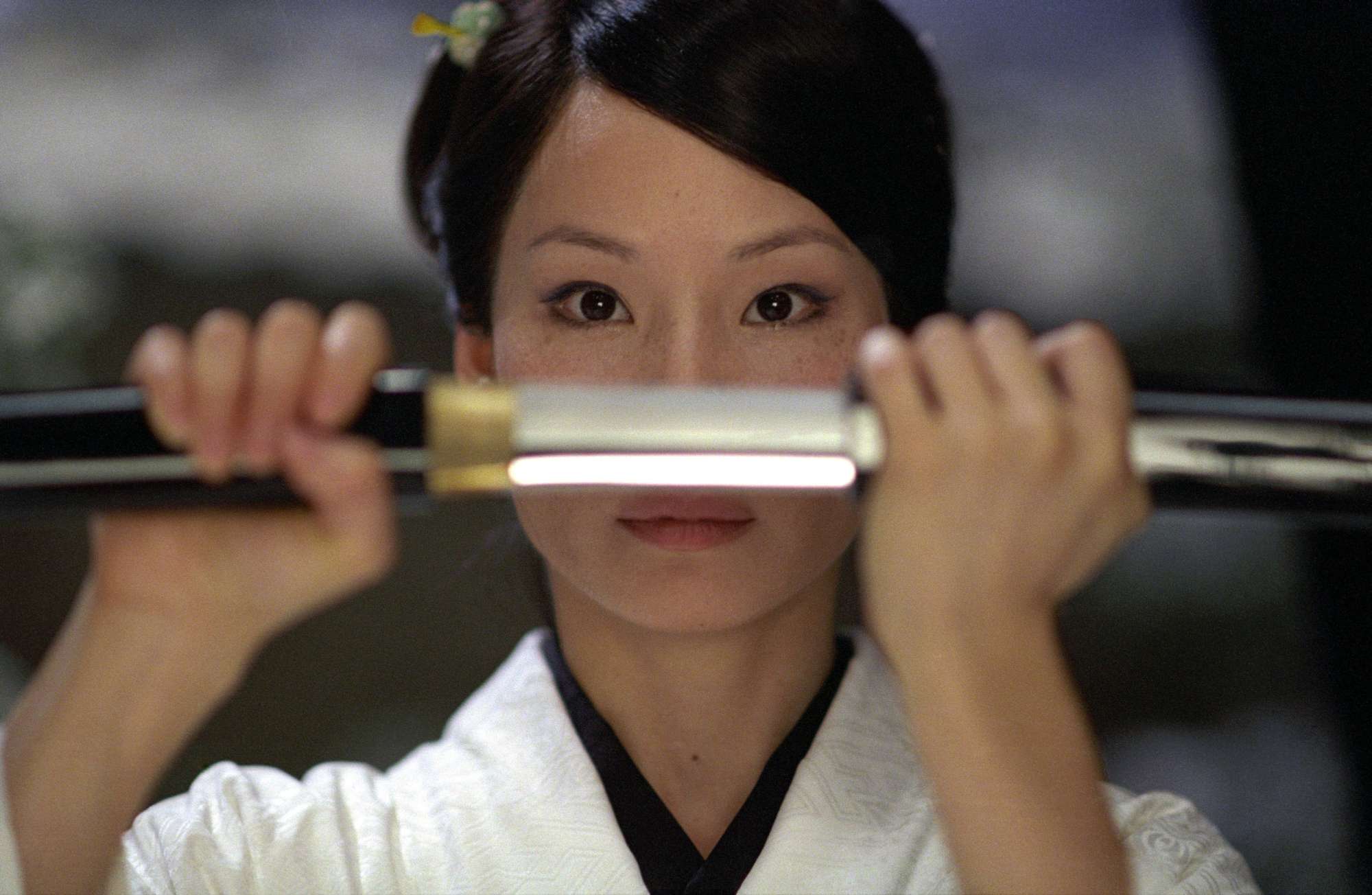
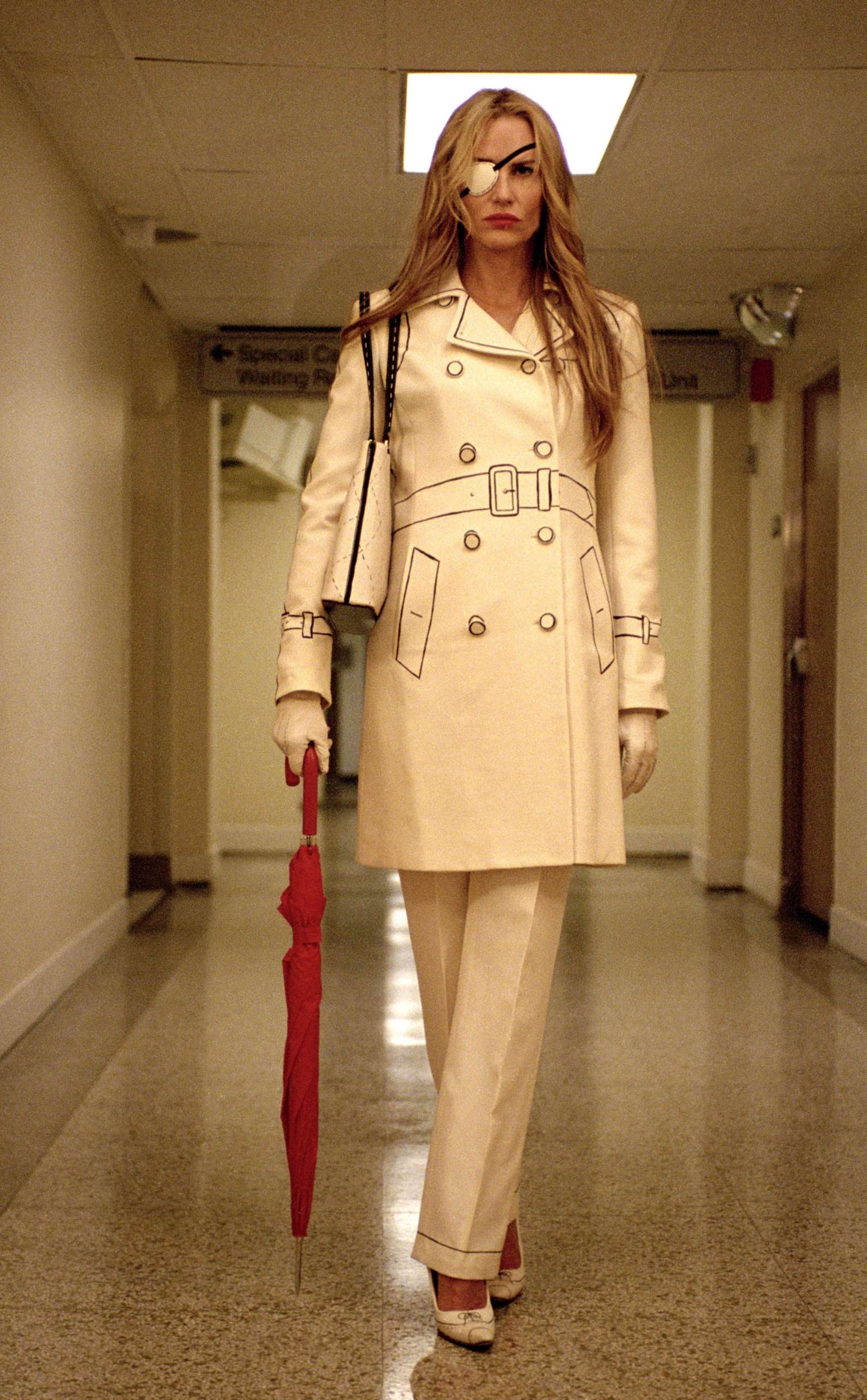
★★★★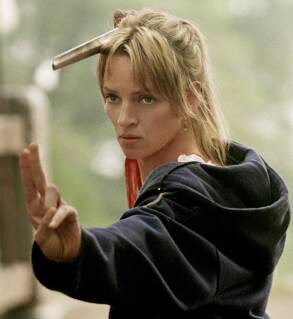 Precisely what, I’ll get to in a minute. But I also have to say that when this film works, it does so extremely well, with moments – and a good number of more lengthy sequences – that are just about perfect. We learn why Elle Driver (Hannah) has only one eye; the relationship between Budd (Madsen) and Bill (Carradine); the reason the Bride quit her life as an international jet-setting killer; and how the Crazy 88’s didn’t actually have 88 members. All these elements are dealt with swiftly and efficiently, plugged in like jigsaw pieces in their correct place, so it’s not as if Tarantino
  But when Tarantino just nods to other movies, rather than waving them in the air and shouting “Look at me! Amn’t I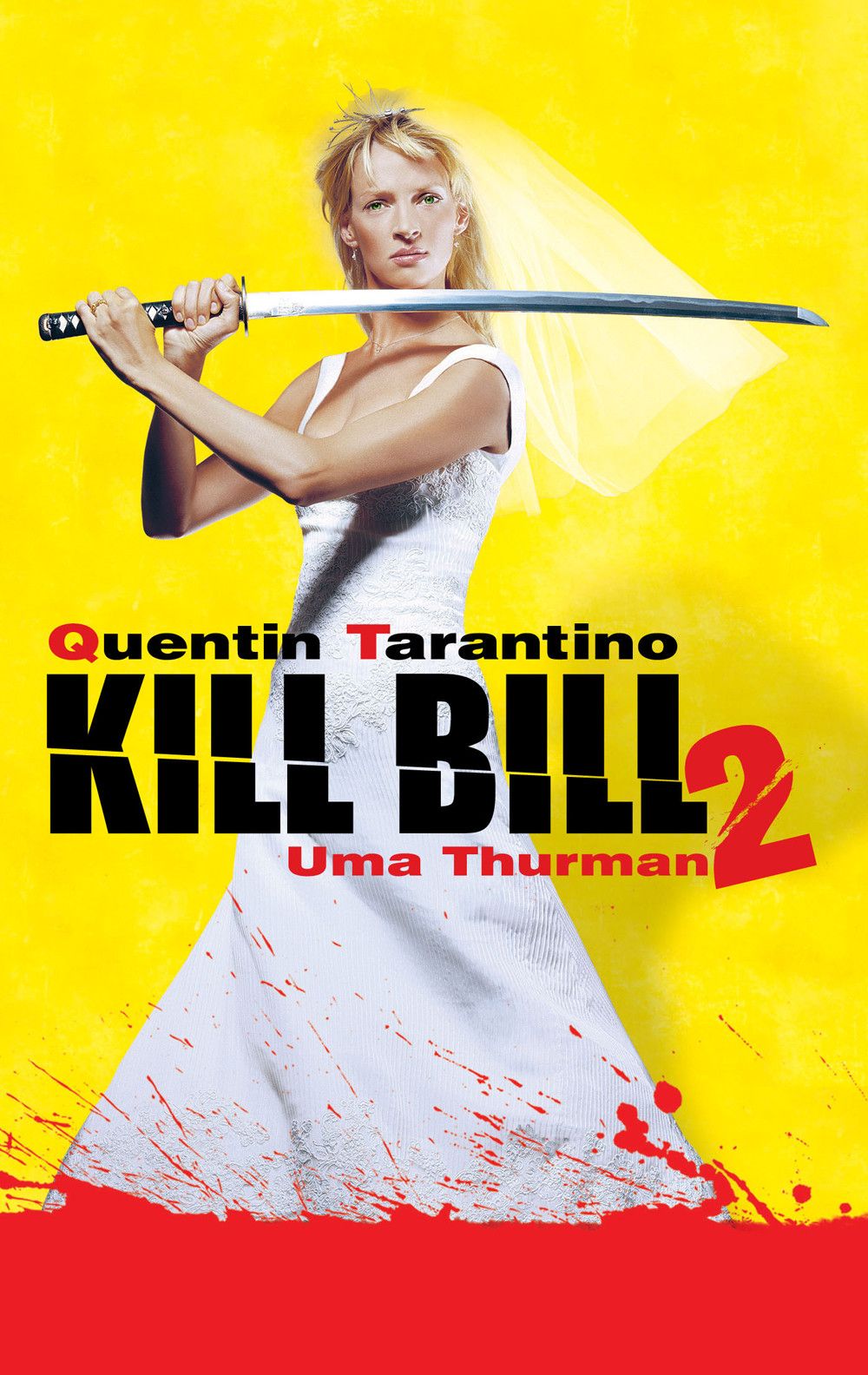
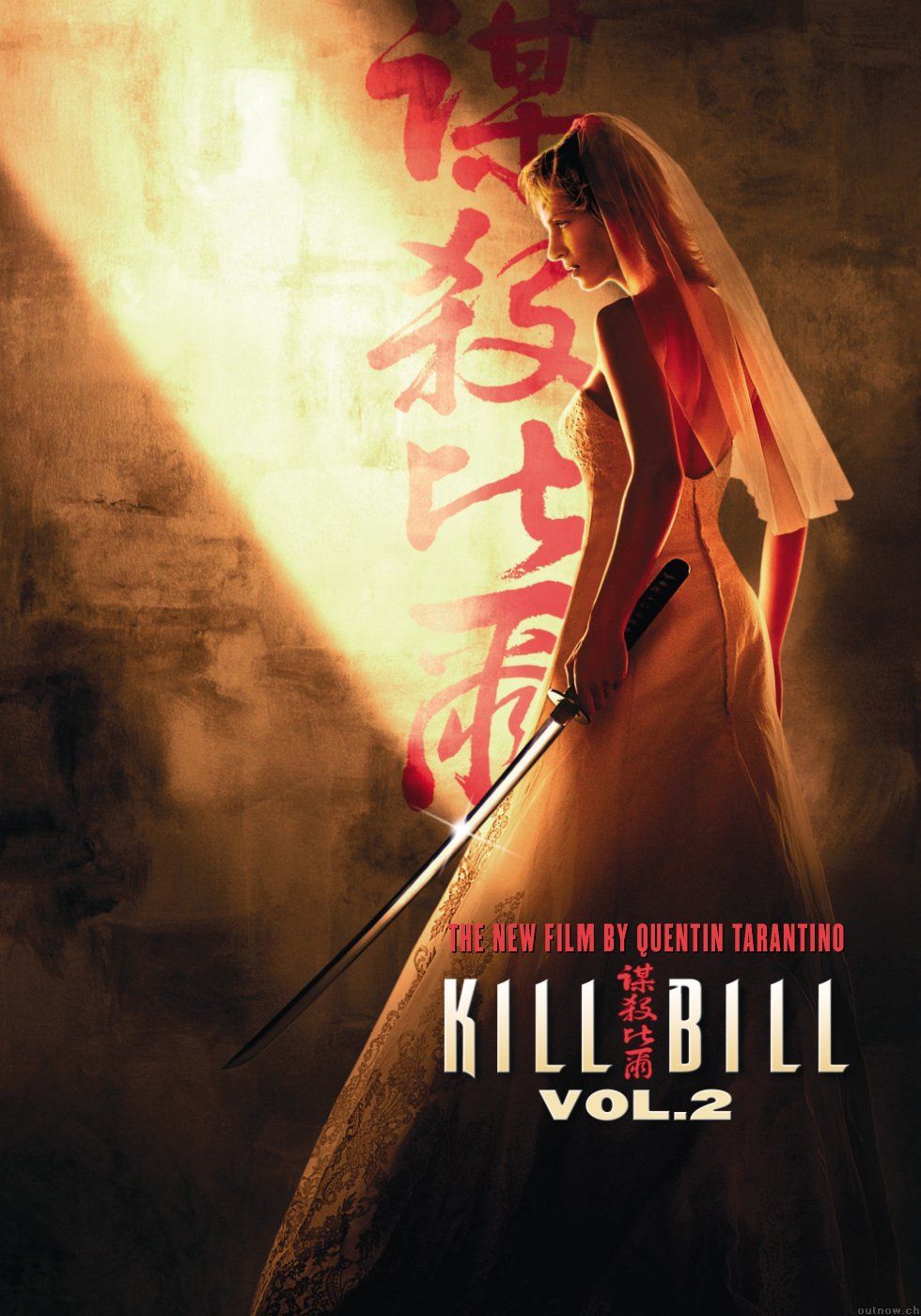
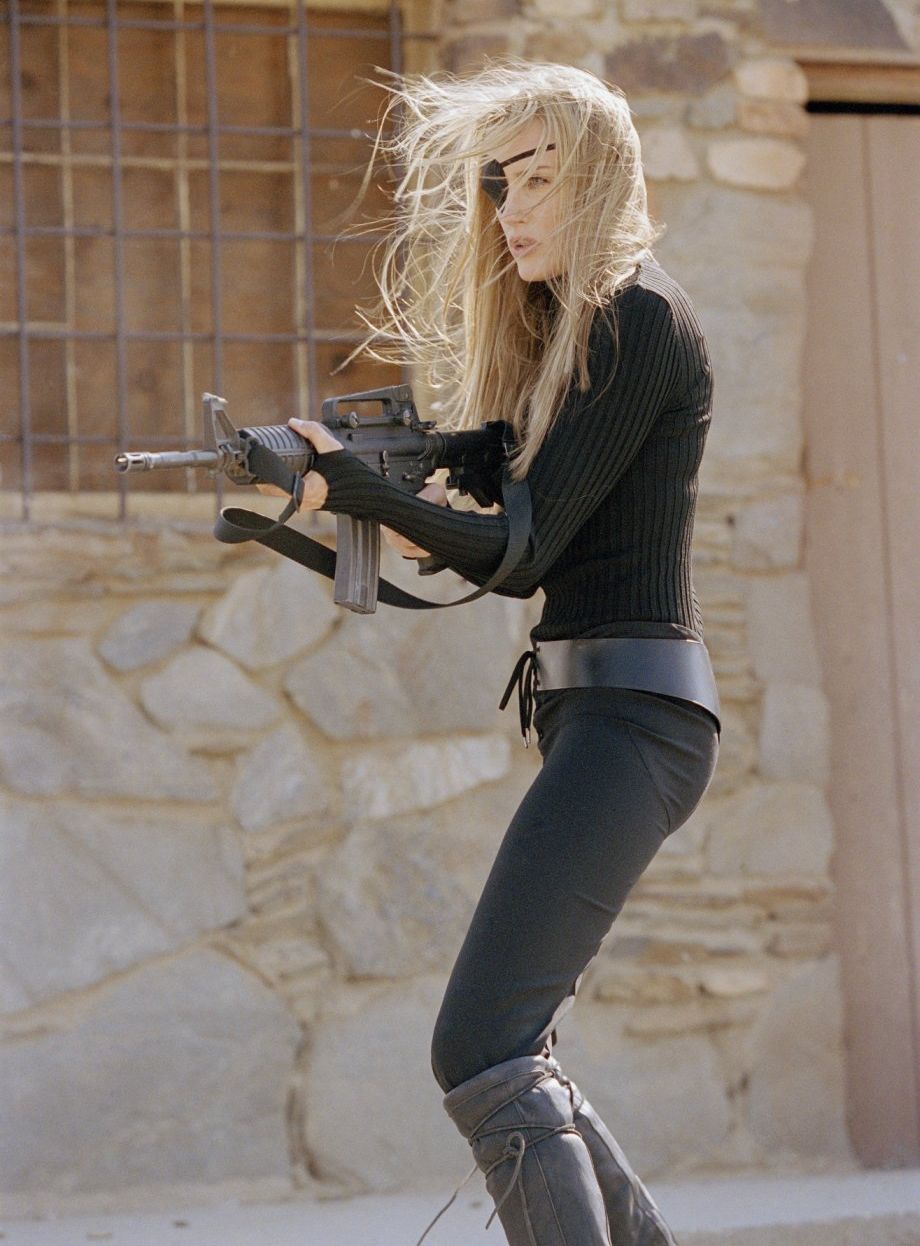
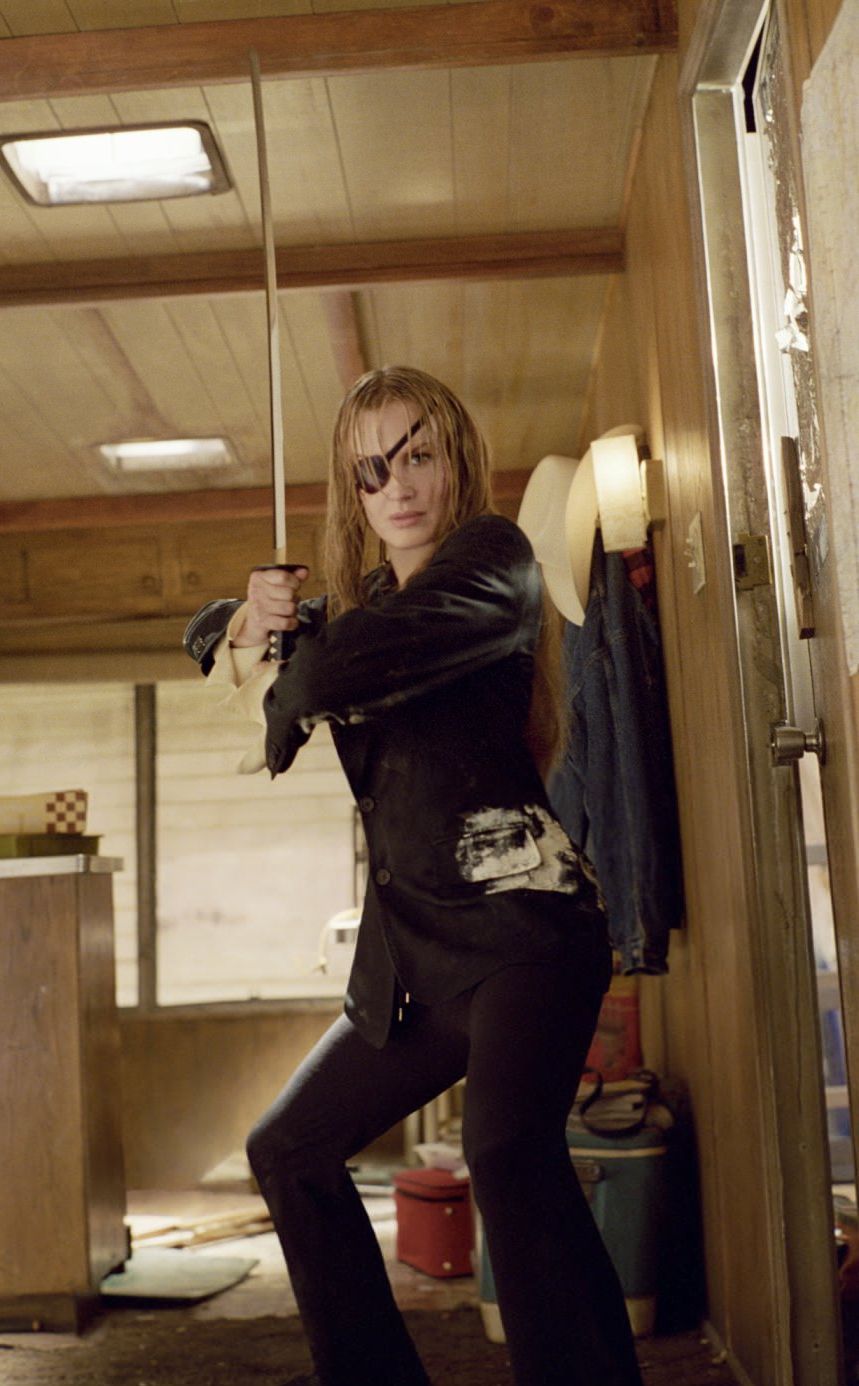
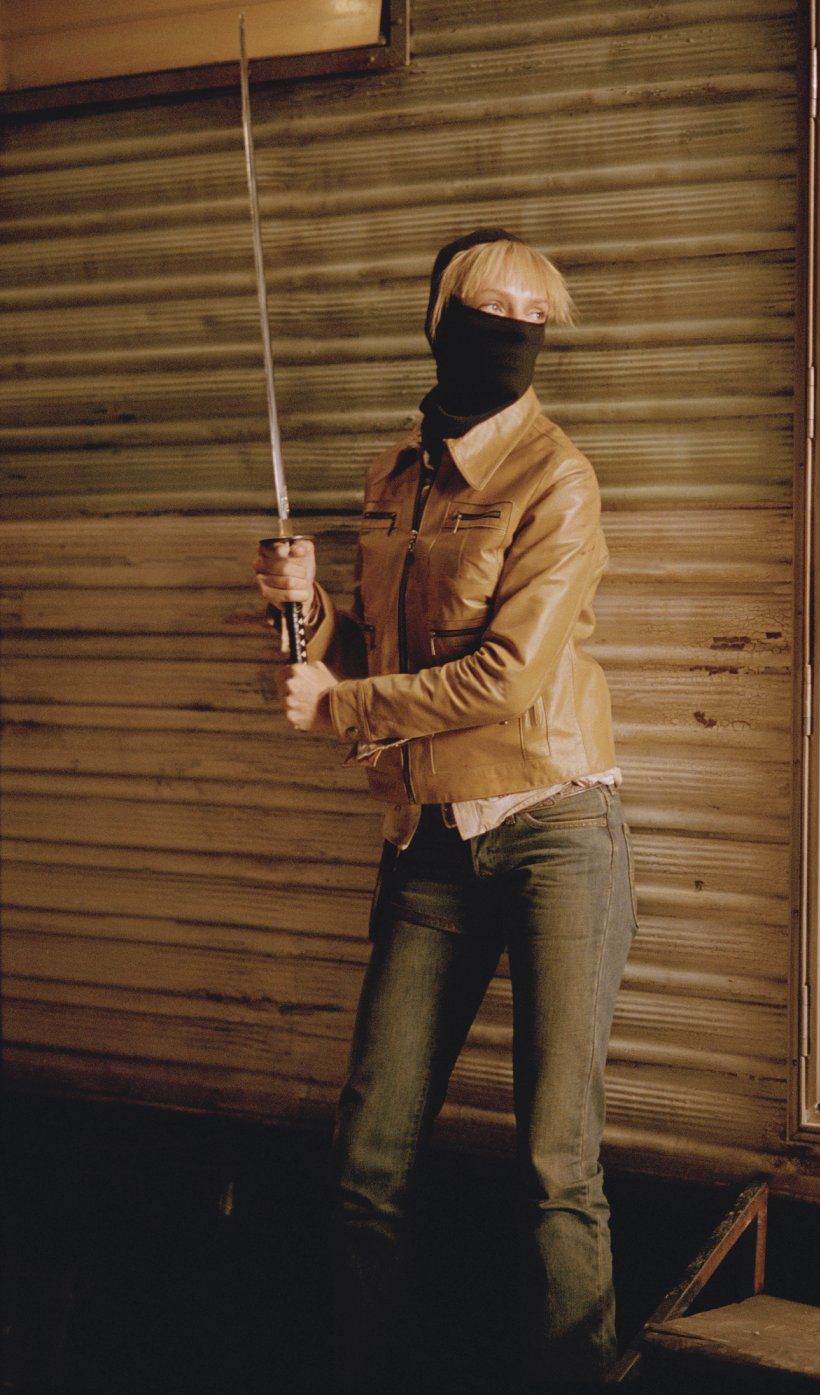
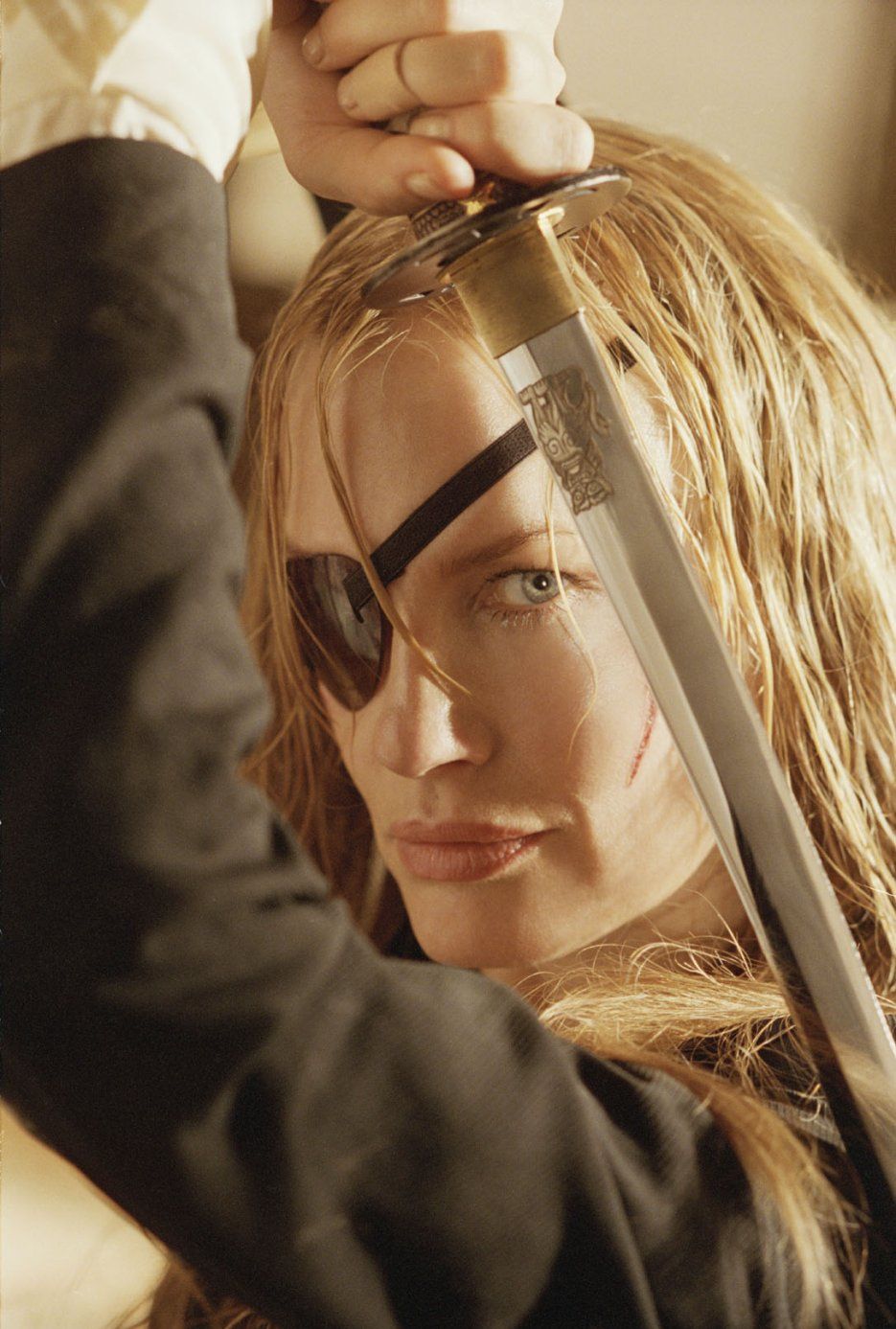
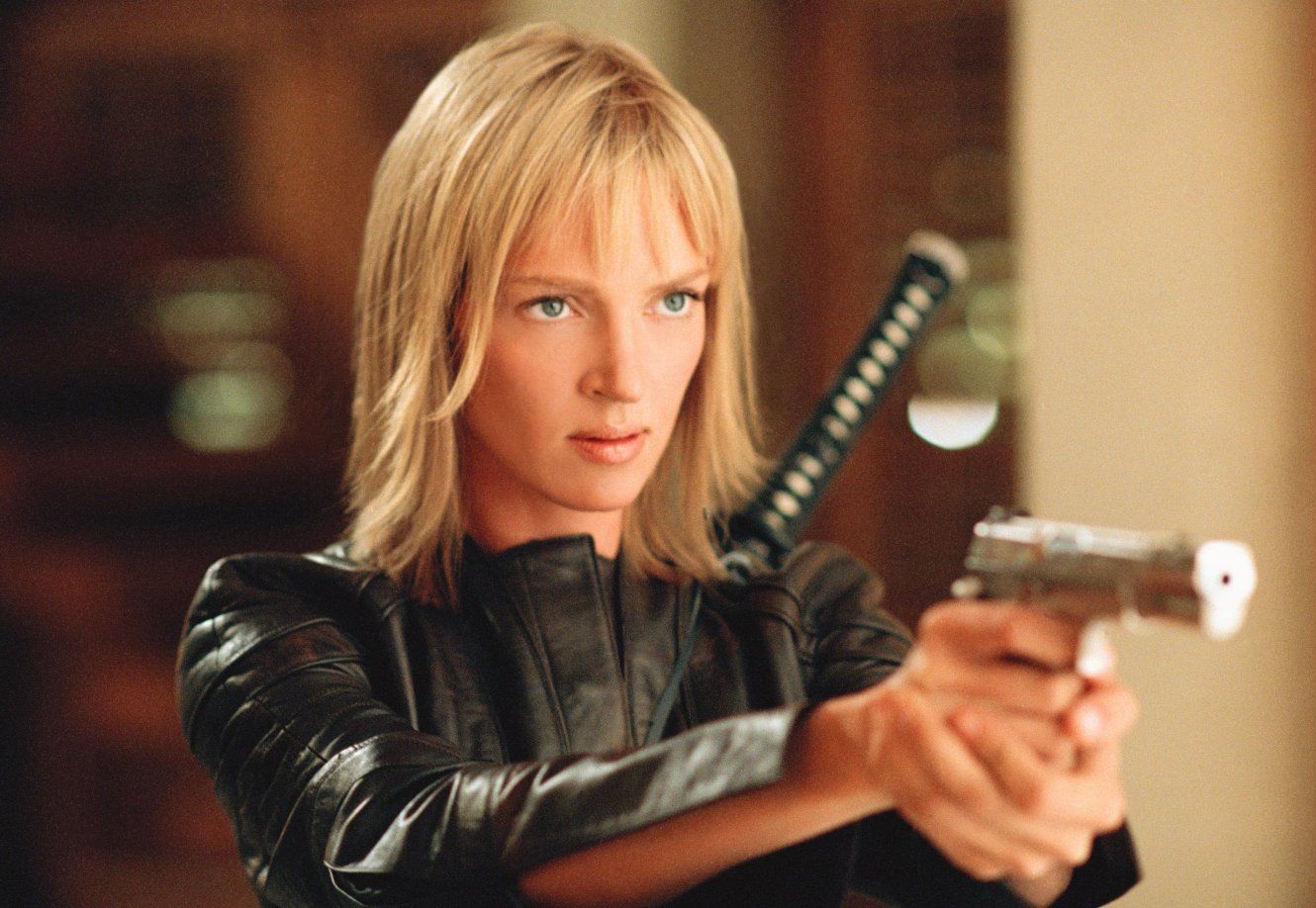
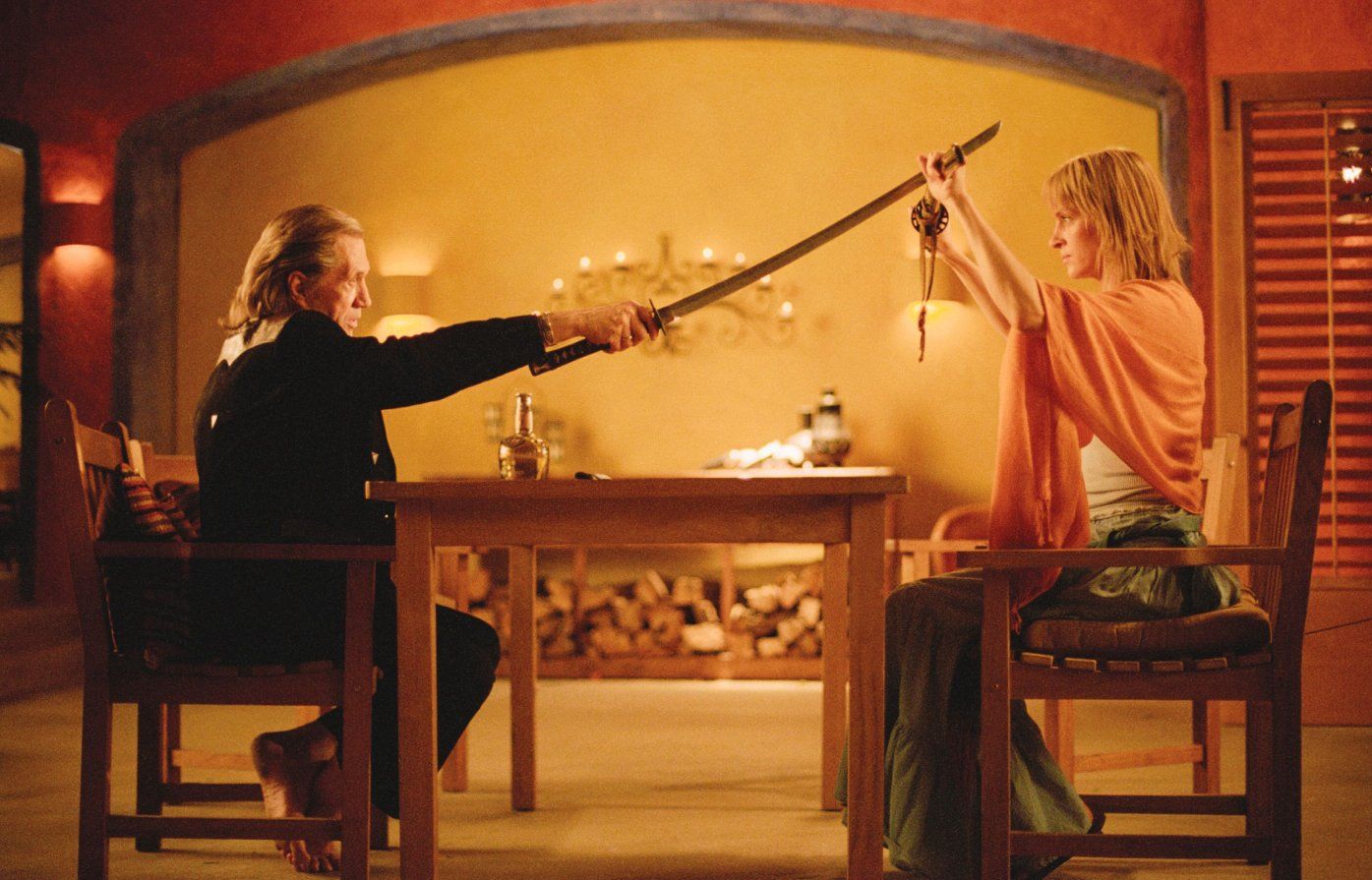
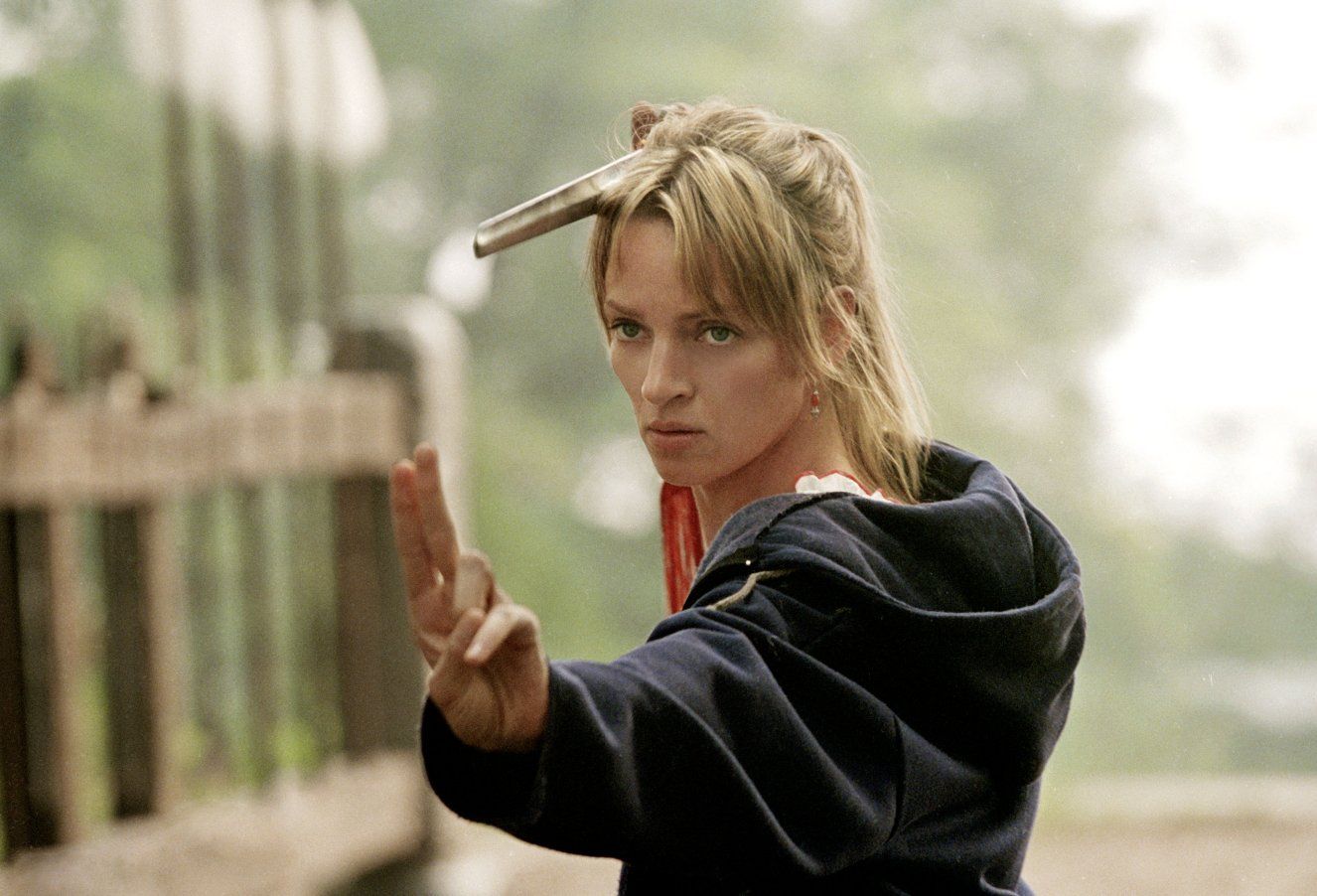
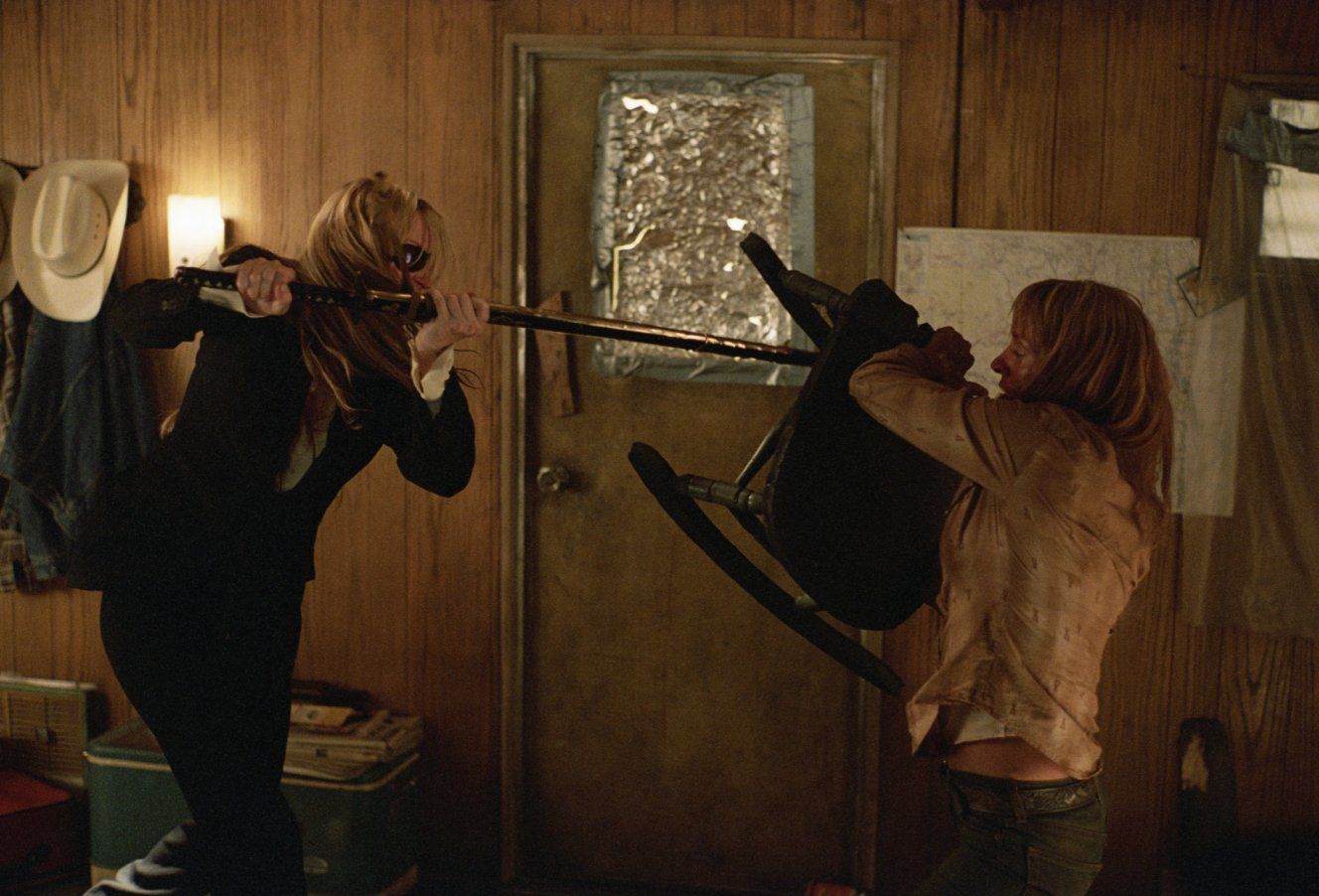
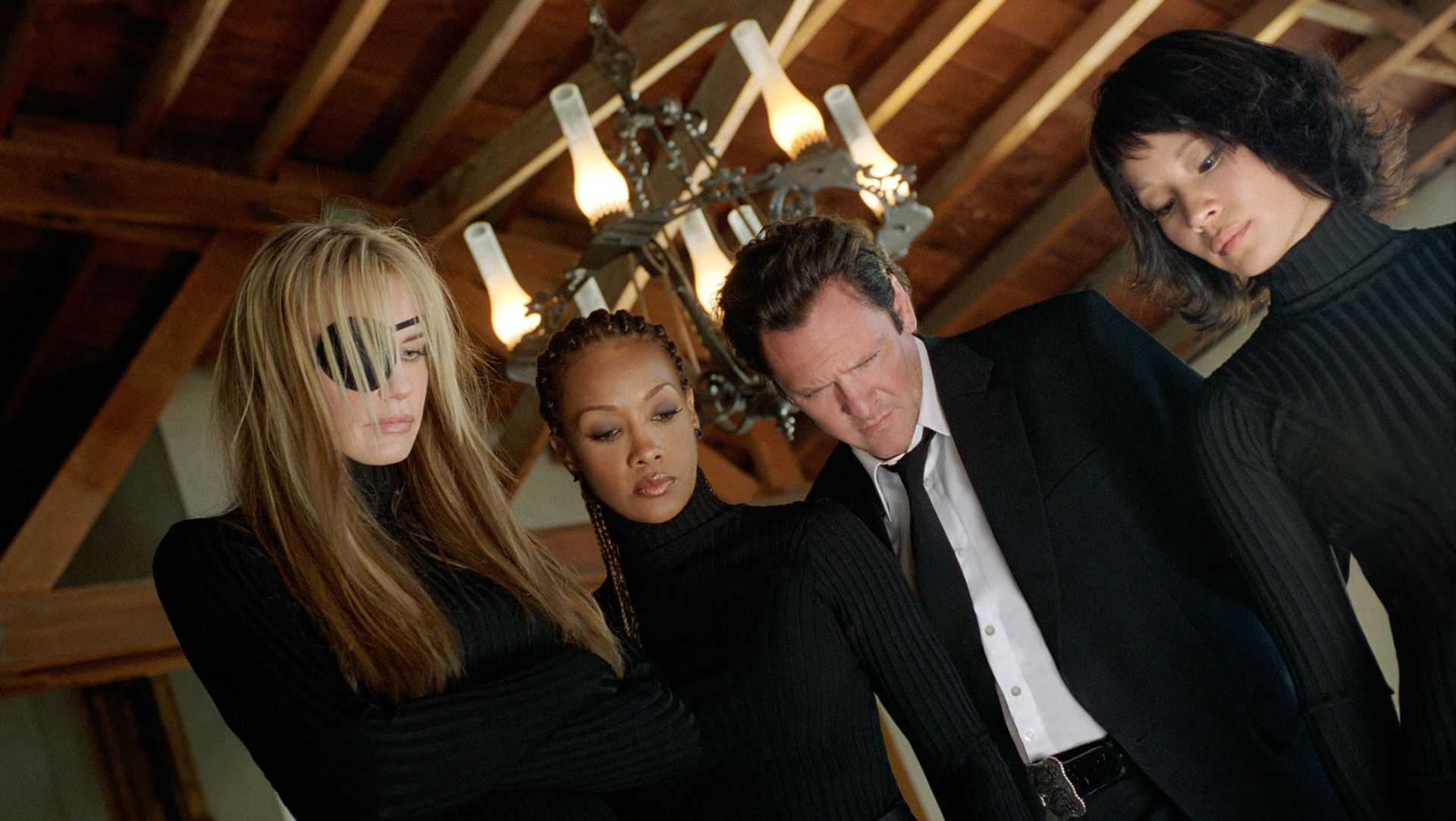
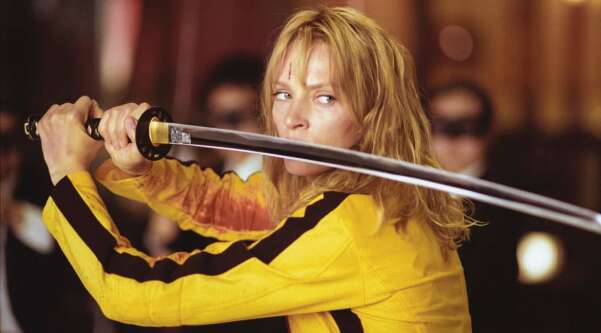
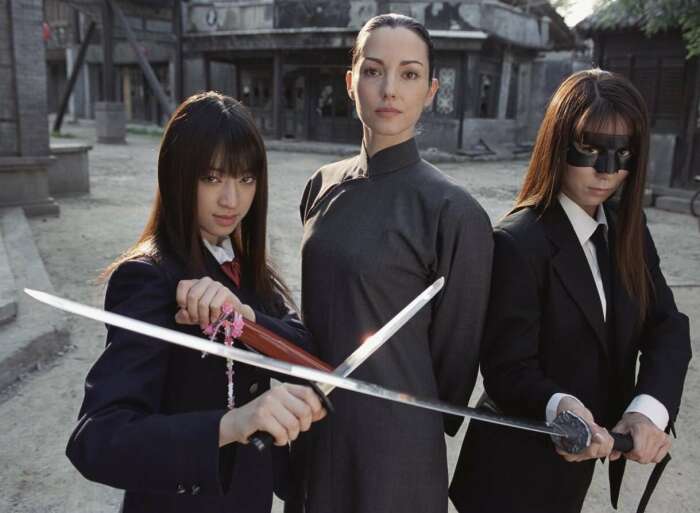
 There is also the nasty question of how much of what is praiseworthy, is actually Quentin’s own work. If you’ve seen the infamous Who Do You Think You’re Fooling?, which intercuts clips from Reservoir Dogs with very similar scenes from a Hong Kong movie made several years previously, City on Fire, you’ll know what I mean. I’d rather praise film-makers such as David Cronenberg, who do more than cobble together pieces “borrowed” from other people, no matter how amusingly post-modern the results may be.
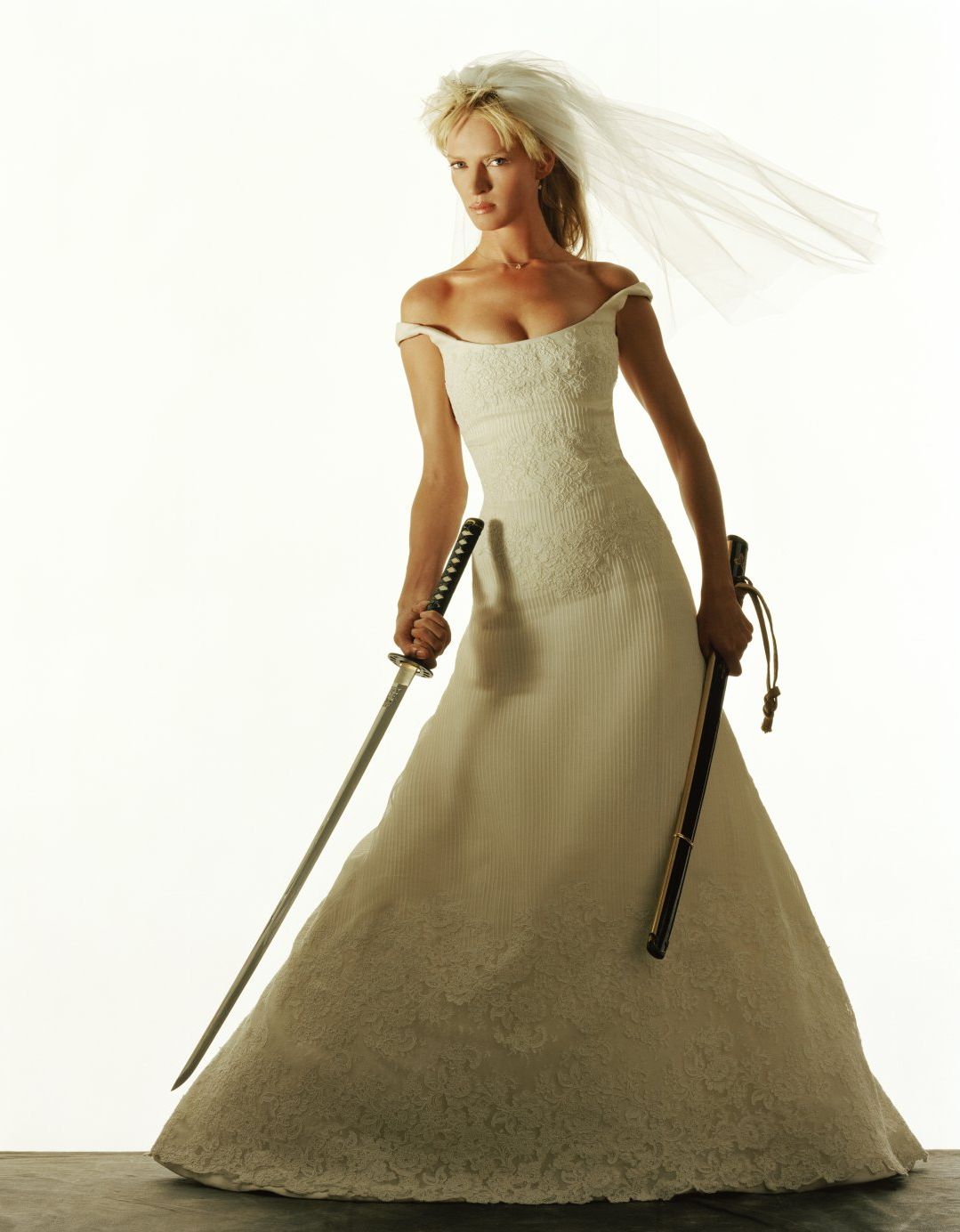
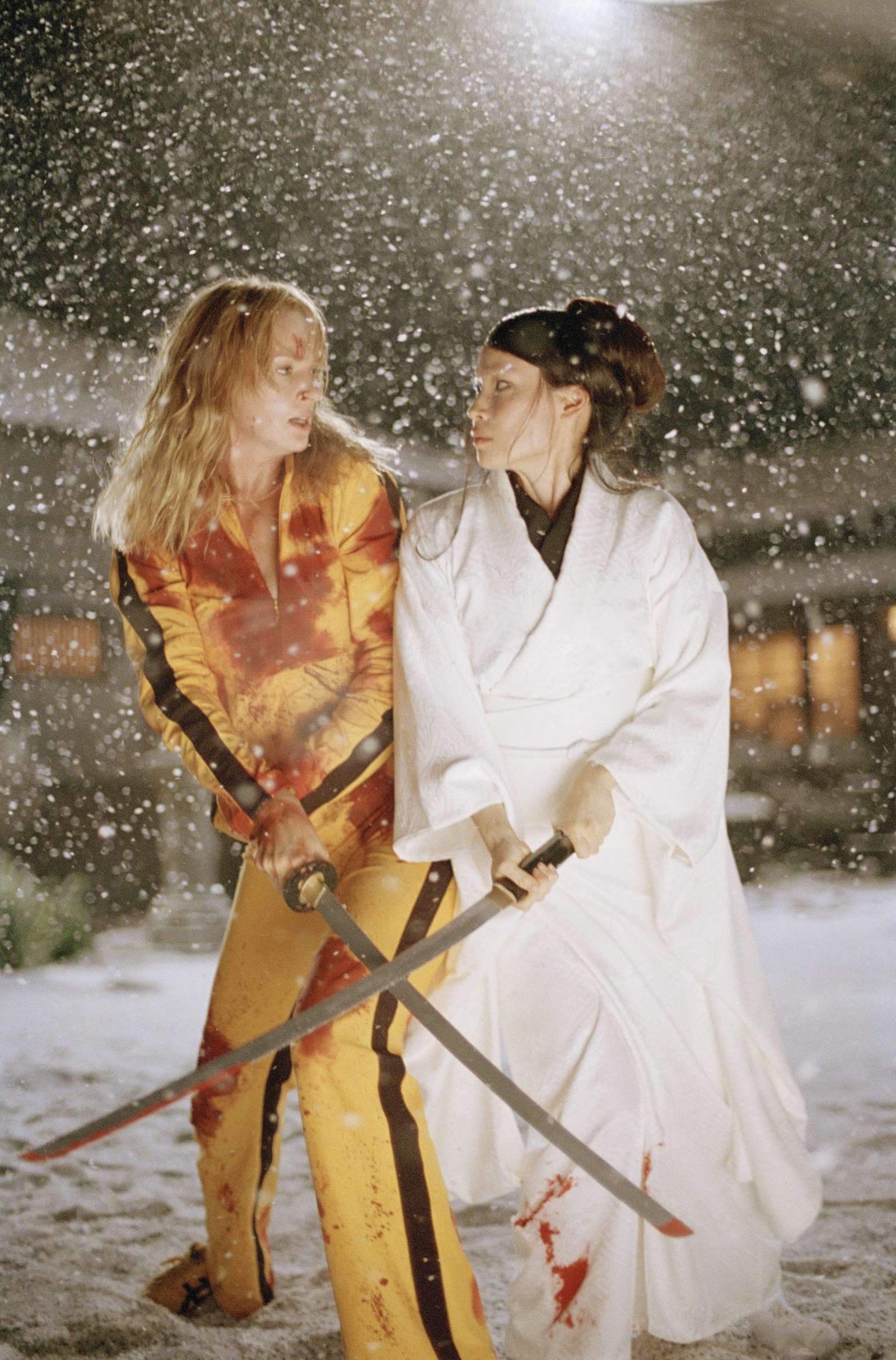
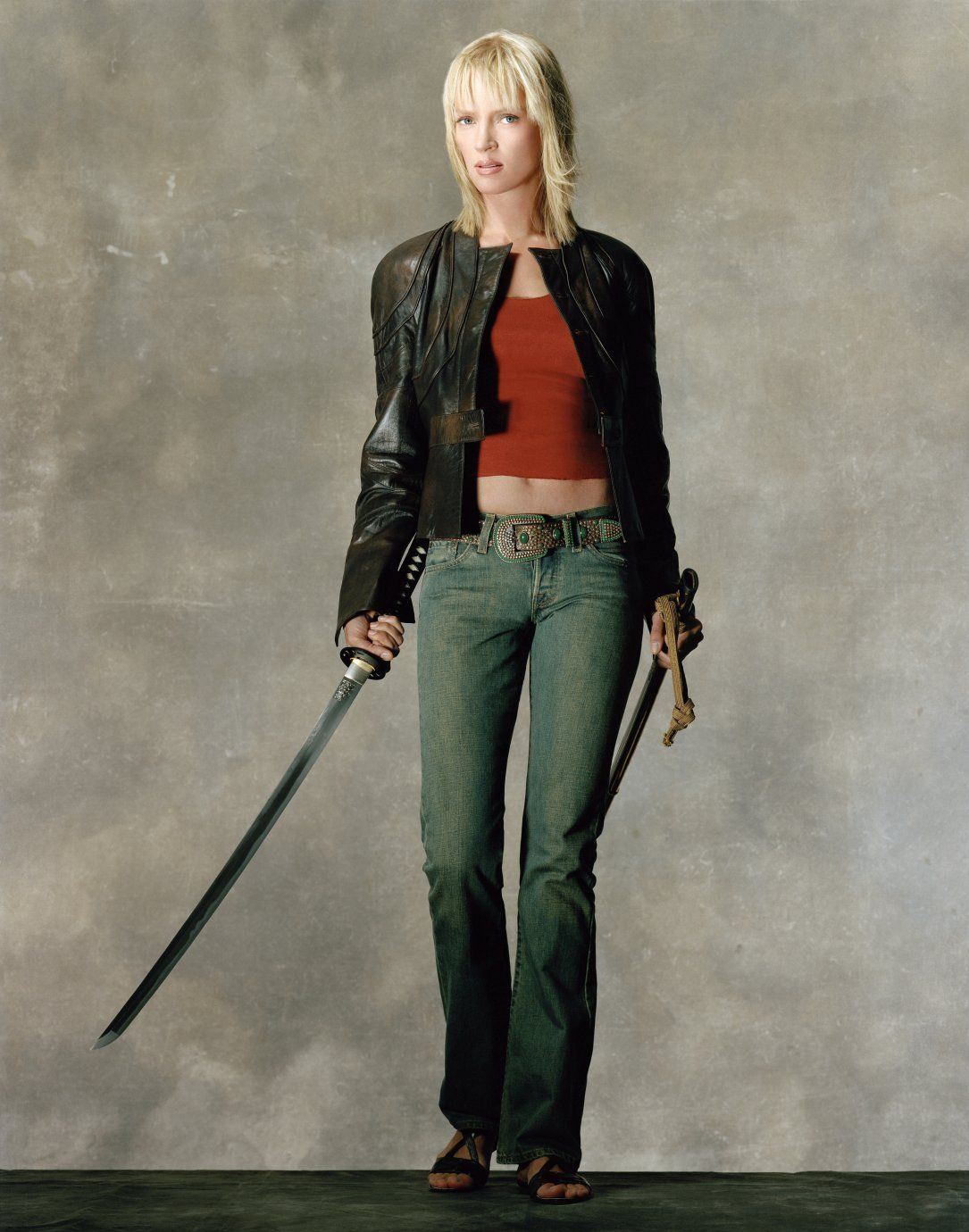
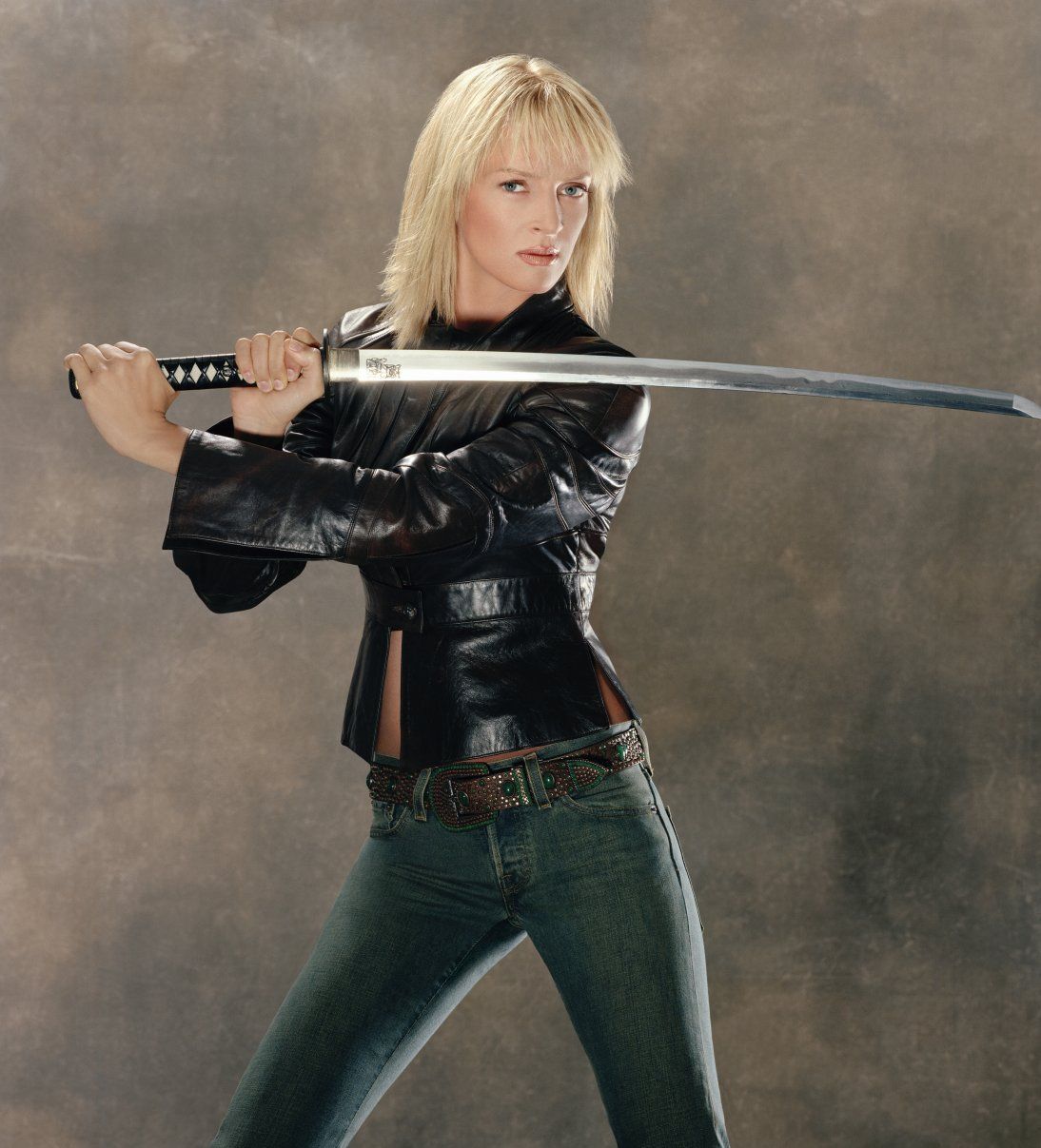
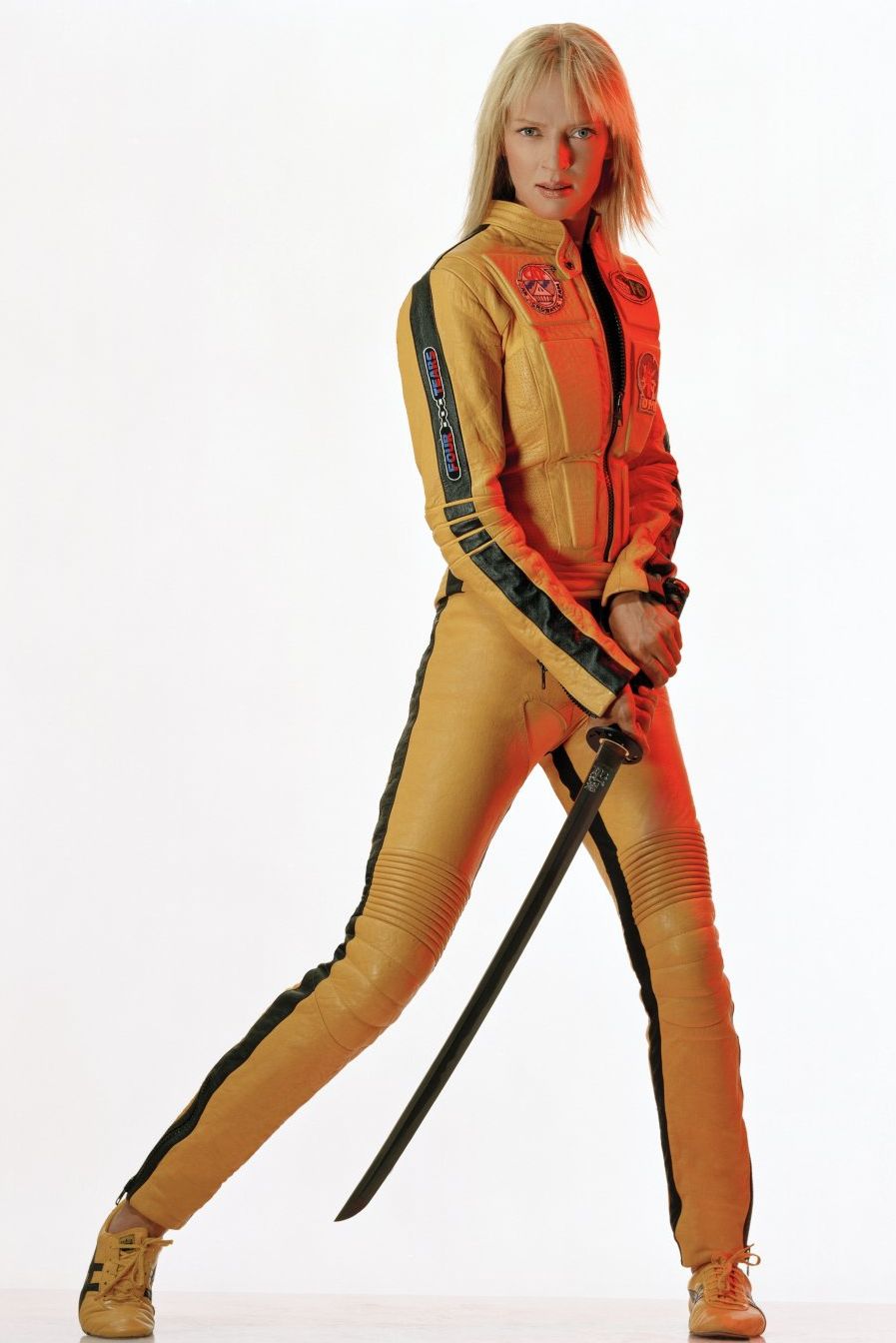
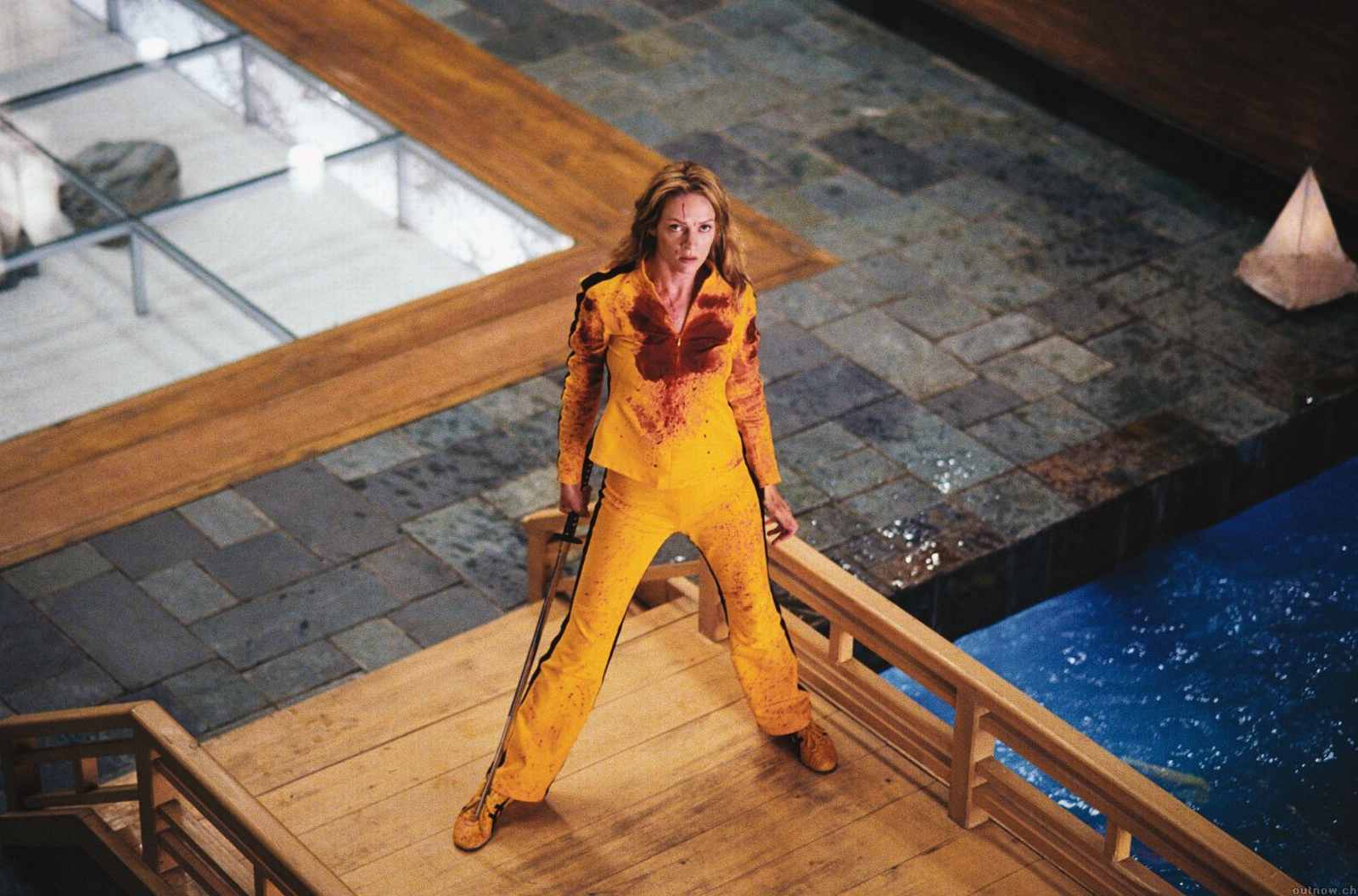
 Uma Thurman is The Bride – her character is never named (it’s given a couple of times, but beeped out) – a member of the Deadly Vipers Assassination squad operating under the eye of Bill (David Carradine, not yet seen). When she tries to quit, her marriage is interrupted by the rest of the team, who kill the groom, the priest and even the guy playing the organ. They think they’ve killed the pregnant bride. They’re wrong.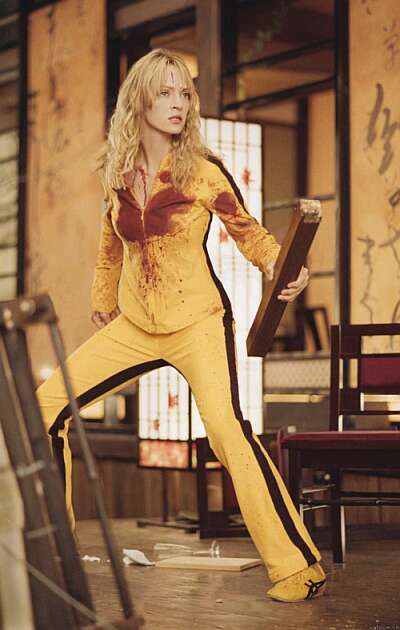
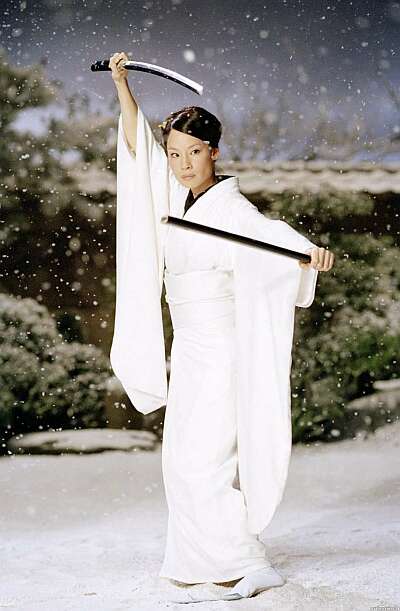
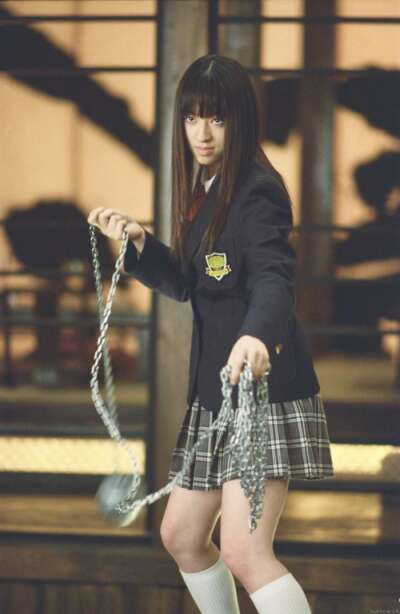
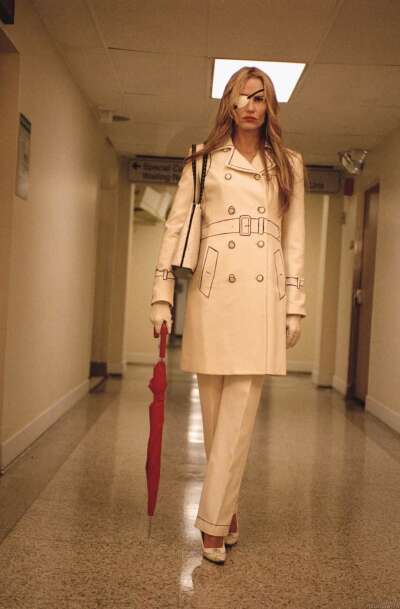
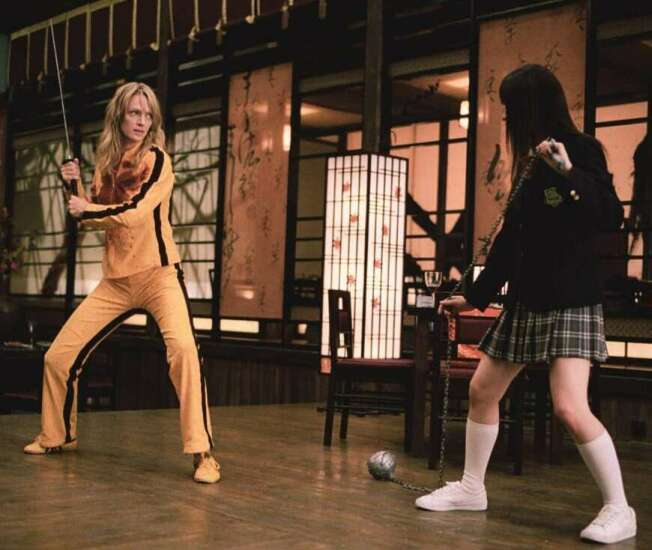 The trailers make this look as if it’s non-stop action, but it isn’t really – there are only a couple of proper set-pieces. The first (cinematically, if not chronologically for the characters) is between The Bride and Green, a brawl around the latter’s house. Despite imaginative use of kitchen utensils, the photography is all wrong, with way too many closeups, leaving it impossible to tell whether there’s any skill – or, indeed, what the hell is going on. I wouldn’t be surprised if this was one of the first things Tarantino shot, since it’s the kind of mistake you’d expect from someone like him, unfamiliar with shooting martial arts.