




★★★
“Great for wrestling fans, non-marks may be less impressed.”
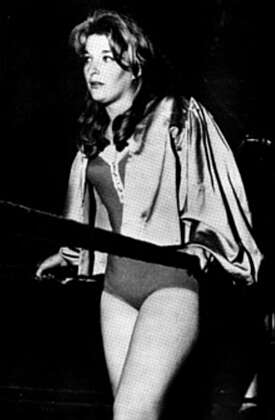 Despite the title, and the fact that Vivian Vachon is the most featured wrestler, the portion of this film which has much to do with women’s wrestling is actually rather small. It’s more a general overview of wrestling and it’s fans, during a strangely innocent era (the early 1970’s), before Vince McMahon dominated, when it still worked to give the illusion of a genuine sport.
Vivian Vachon was one of thirteen children, and with two brothers already involved in pro wrestling, it was no surprise she followed them in. This film follows her on a tour of the States, but it also diverts into her family history, and has interviews with her relatives, fans, other wrestlers, promoters and, it seems, anyone else who happened to come within range of the cameras. There’s also a fair amount of wrestling action, but this is probably the weakest point of the film; it’s edited, removing any flow, but they also only have a single camera at ringside, often making it hard to see what’s going on.
The interviews, on the other hand, are fab, though I speak as a pro-wrestling enthusiast, and action femme enthusiasts will likely be less impressed. But I find characters like her brother Maurice ‘Mad Dog’ Vachon, endlessly interesting anyway; with a voice like Bluto, he made the leap from Olympic wrestling to the pro ring 40 years before Kurt Angle. Some of the fan insights are also priceless, not least the footage of them getting seriously carried away. As a documentary on wrestling, it’s thus a hit – as a feature on women’s wrestling, it’s less relevant, but anyone who has ever been embarrassed by what all too often passes for women’s wrestling in the WWF, will undoubtedly feel a sense of nostalgia for an era when it was every bit as legitimate as the male version.
Dir: Don Chaffey
Star: Vivan Vachon, Maurice “Mad Dog” Vachon, Andre the Giant

 “I’m working with a man named Monkey Fist. My evil career is
 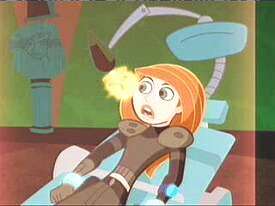 It does remain a Disney show, hence the irritating musical interludes and, while the action is fast and furious, no-one ever gets hurt – though the sequence where a naked mole-rat comes out of a kid’s trousers is frankly freaky. But assisted by a stellar supporting cast (Elliott Gould, Michael Dorn, Dakota Fanning, Michael Clarke Duncan, Vivica A. Fox and – slightly less stellar – Freddie Prinze Jr.), this is a great parody of the whole genre: as one character says, “Time travel – it’s a cornucopia of disturbing concepts.” The tongue-in-cheek self-awareness is a delight, both heroes and villains having a refreshingly world-weary attitude, cheerfully admitting the paradoxes inherent in the story. Even an evil, golfing, kilt-wearing Scot comes over as endearing rather than insulting – Mike Myers, please note. The expected fluff blends with some surprisingly dark moments, such as the “Re-education Center” which seems right out of 1984. This is what the Tomb Raider movies
 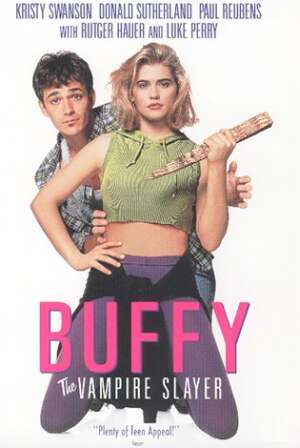 Buffy may be the only successful TV series based upon a failed film. A critical and commercial flop, creator Joss Whedon just wouldn’t let it lie, and finally got the mix of drama, horror, comedy and action he wanted in the show. The movie is a different matter, and has not aged well. The SoCal culture now seems incredibly dated, and Swanson takes too long to become the sympathetic heroine essential to the film. It also has no idea what to
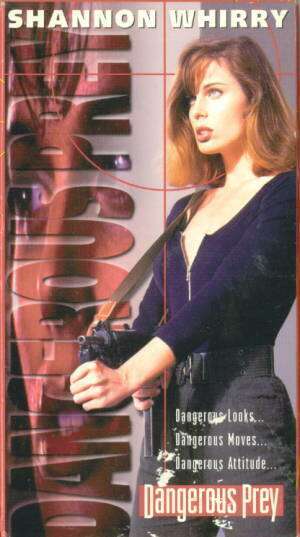
  Even given that this was shot in 6 days for $5,000, it sucks on every conceivable level. Scenes are twice as long as necessary, or totally superfluous. The script has little of interest. And since there’s absolutely no sign of talent whatsoever, I have to presume the director slept with his leading lady. Hope she was better in bed than on screen. Rachel and Jane execute drug deals for their boss – emphasis on “execute”, since they get both the cash and your drugs. Jane’s qualms get worse when Rachel is shot dead, and she leaves the organization, until an FBI agent forces her to return, in order to kill her employer. She also gets frequent visits from the ghost of her dead friend.
 If you
 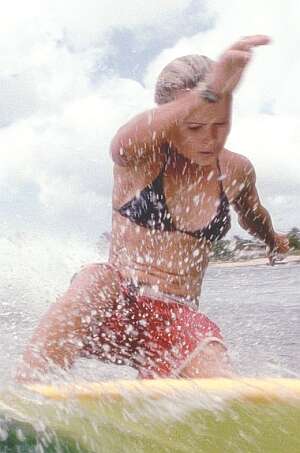 The marketeers screwed up: aimed at teenage girls, our daughter refused to see it, on the grounds – Hollywood, please note – that their bikini tops and bottoms didn’t match in the poster… Anyway: Anne Marie (Bosworth) sees her ticket to stardom in a surf competition on Hawaii’s North Shore. But she has to come to terms with waves bigger than she’s ever faced before; a rebellious kid sister (Boorem); a dreadful job as a hotel maid; and, inevitably, the guy who wants to spend quality time with her on dry land (Davis), while her friend Eden (Rodriguez) tries to keep her focussed on surfing.
 Bandits started as a hugely popular short – confusingly, titled Episode 7 – on Atomfilms.com. Its success led Grasse to churn out a number of extremely loosely-connected ‘sequels’ (also on this DVD), as well as 50-minute feature (sold separately) The Bikini Bandits Experience, featuring the late Dee Dee Ramone and Corey Feldman. The basic idea is grand, and is established in the original short, where bikini-clad, gun-toting babes rob a convenience store (which stocks some beautifully surreal imaginary products, not the least of which is ‘Beef Flaps’), kidnap a clerk, and lasciviously kill him. It is politically incorrect on almost every conceivable level, and on its own, is an undeniable guilty pleasure of the highest level.
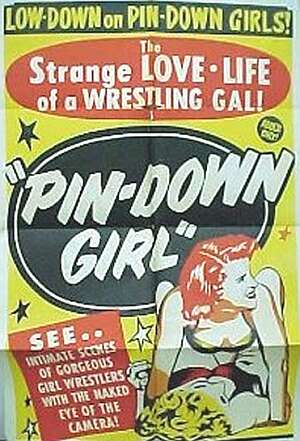
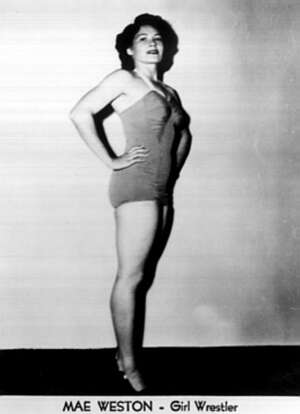 Another eclectic DVD package from the always-oddball Something Weird Video, this gathers together a whole range of stuff, from roller derby through pro wrestling to apartment catfighting, as well as the 1951 film Pin-Down Girl. It all adds up to 212 “sexy-but-savage” minutes of entertainment, by the time you’ve picked through a DVD menu that is about as far from intuitive as possible. So, let’s get ready to rumble…
 A pleasant surprise was the roller derby. Once I’d sussed out the scoring, I enjoyed a sport I’d heard of, but not seen, and I could appreciate why, at one time, only baseball and football had more spectators. Less amusing were Glamazon Living Room Rumble and several bouts of Amateur Outdoor Catfighting, clearly aimed at a different audience, shall we say.
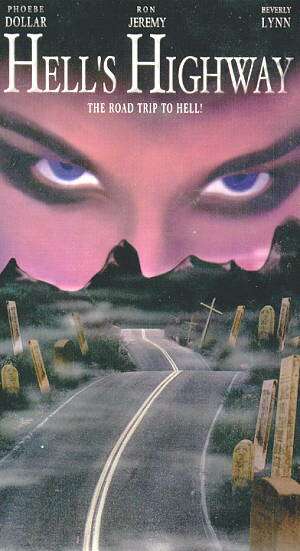 Chris’s chicken parmigiana is legendary here for its narcotic effect: eat it, fall asleep, simple as that. It thus perhaps means more than it seems that Hell’s Highway kept me awake, post-parmigiana. Sure, it’s cheap (cost about $5K, shot on video); sure, it’s dumb – but to counter that chicken, a film must have