



Literary rating: ★ ★ ★ ★
Kick-butt quotient: ☆☆½
“I’m just you without the guilt.”
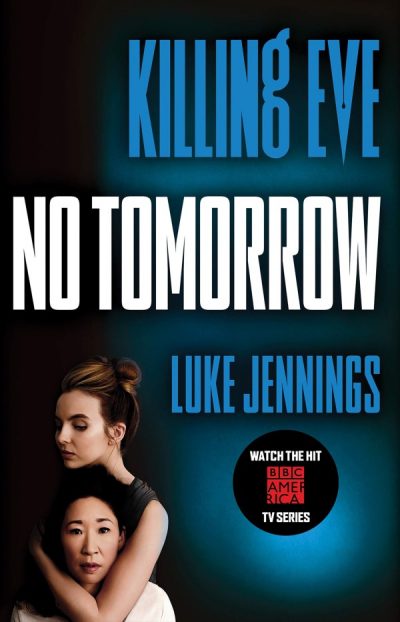 As we recently discussed, the first book and first season of the TV series had some major differences. The second book does make a significant effort to narrow the gap. Indeed, by the end, we have almost got to the same point as at the end of the TV show, albeit by a rather different route. Then, just when I was expecting this to wrap up and set the stage for the second season, Jennings drops a major bomb. I have to say, well-played: I don’t think I’ve ever been quite as stunned by a twist in a novel before, yet thinking about what had gone before, it made perfect sense. I’m really curious to see whether the TV show follows suit, because if so – nothing will be quite the same again.
To that point, we had more of the cat-and-mouse games between the international assassin codenamed “Villanelle” [though these days, it’s basically her real name, with her true identity buried deeply in the past], and harried MI-5 operative Eve Polastri. The latter is struggling to balance her increasing obsession with Villanelle, and a husband who would greatly prefer it if she was not jetting off to Venice or Moscow at a moment’s notice, leaving him to open a tin of beans. Eve is very much a desk jockey, and not exactly suited to go head-to-head with a ruthless killer. Can wits and persistence counter cold-blooded psychopathy?
It was the twisted relationship between the two which separated the first book and the TV series, with the show having much more development in this area. Jennings said his approach to the second book was altered by the strong reaction of fans to the TV version, and you can tell: there are a couple of scenes which can only be described as fan service, apparently inspired by one notorious broadcast line [Villanelle’s confession to Eve, “I think about you, too. I mean, I masturbate about you a lot.”] This angle really doesn’t fit, considering Eve finished the first book literally tooling up to kill Villanelle, and I found it an abrupt and jarring shift in tone.
The rest of it though, is really well-done, from the explanation of The Twelve’s intent through to Eve’s dogged piecing together of her target’s identity. I read the whole thing in about 30 hours, which is far from my usual leisurely pace. Staying up late, waking up early, in front of the TV… I ripped through it, powered by Jennings’s great eye for description; particularly in terms of locations. Whether it’s attending a conference of neo-Nazis on an Alpine mountain-top or shivering in a cell, deep in the bowels of the infamous Lubyanka prison, the reader feels there.
The balance of the book also feels improved. The first was mostly about Villanelle, with Eve almost feeling like a supporting role; this time, it’s much more even. Indeed, the contrasts in the transitions between the two lead characters form some of the book’s most memorable imagery. For example, we jump from Villanelle prepping the ground by seducing her next target, Rinat, to following Eve on her way home from work:
“The sun is low in the sky, half obscured by oyster-pink cirrus clouds. Rinat turns to beckon to the waiter, but he’s already standing there, as patient an unobtrusive as an undertaker. In the bus, moving at a snail’s pace up the Tottenham Court Road, the only person to give Eve a second glance is an obviously disturbed man who winks at her persistently. It’s a warm evening and the interior of the bus smells of damp hair and stale deodorant.”
This bone-dry dark wit is fairly common, and the style with which Villanelle operates can only be applauded, making up for in quality of mayhem perhaps what the book lacks in quantity. I suspect she would make a fine Bond villain, with an eye for the grandiose and demonstrative over the purely functional [There’s an idea: with all the talk about diversity for 007, why have we never had a Mrs. Blofeld?] In the absence of that, Sunday nights can’t come quickly enough.
Author: Luke Jennings
Publisher: Mulholland Books, available through Amazon, both as a paperback and an e-book
Book 2 of 2 in the Codename: Villanelle series.
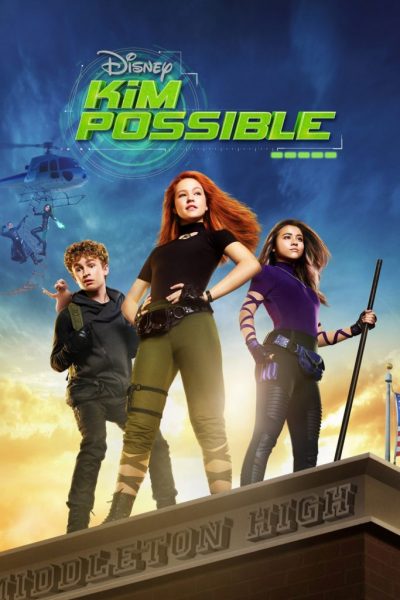 The new trend for Disney appears to be, live-action version of their beloved classic movies. This year alone, we can expect to see Dumbo, Aladdin and The Lion King, with Mulan to follow in 2020. A possible stalking horse for this was the live-action version of (somewhat) beloved TV series, Kim Possible, which ran for four seasons from 2002-07. It was pretty good, likely peaking with TV movie
 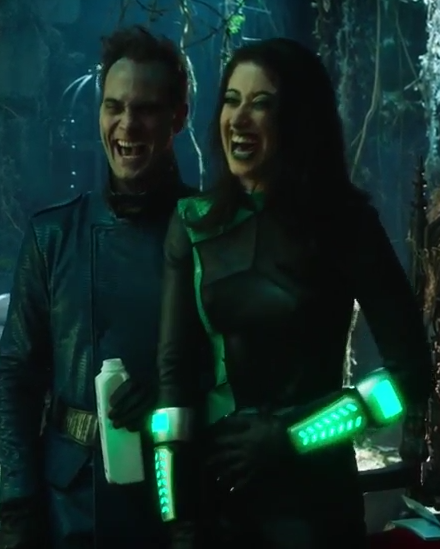 Instead, however, there’s a really horrible plot about Kim befriending Athena (Wilson), another new student. I’m sorry, when did Kim Possible become a relationship drama? Jealousy of Athena – despite her being super-annoying – causes Kim to suffer self-doubt, and fail when she is needed most… blah blah blah. Awful scripting, the portrayal of their relationship is sub-juvenile pap, which I’m sure would turn the stomach of any actual high-schooler. Worse, it goes beyond “flawed”, making the heroine weak and no longer heroic. And what’s with Kim being obsessed with joining the school’s soccer team? She was a
  It took me about six years after reading the series opener to get back to the adventures of one of my favorite action heroines, Seeley James’ Pia Sabel; but I only wish I’d done so a lot sooner! Some of my comments in my
 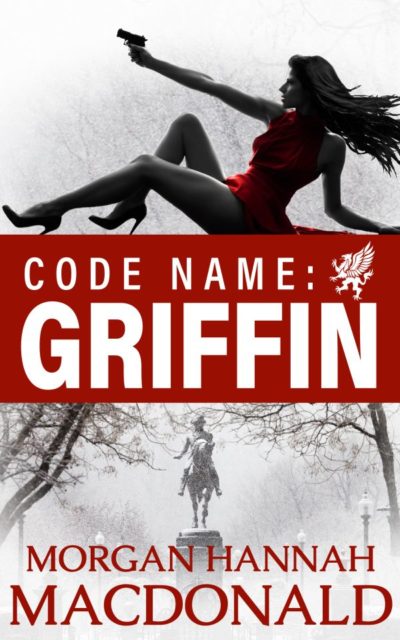 A painfully clunky mix of spy and crime thrillers, this really needs to decide which it wants to be. Alexandria Kingston – code name Griffin, in case you hadn’t guessed – was an abused child, with the good fortune to be rescued and brought up by Margaret Murphy, the head of Irish organized crime in Boston. Though to avoid Alex being targeted for leverage, she was never acknowledged to be part of the family. As an adult, Alex joined the CIA and became a top field agent, jet-setting over the globe on demand. But when her foster mother suffers a stroke, she returns to Boston to find herself in the middle of a war for control of the turf. The rival Killeen clan, sensing an opportunity, pounce. It’s up to Alex and her brothers to defend the family – and then take the battle to the Killeens.
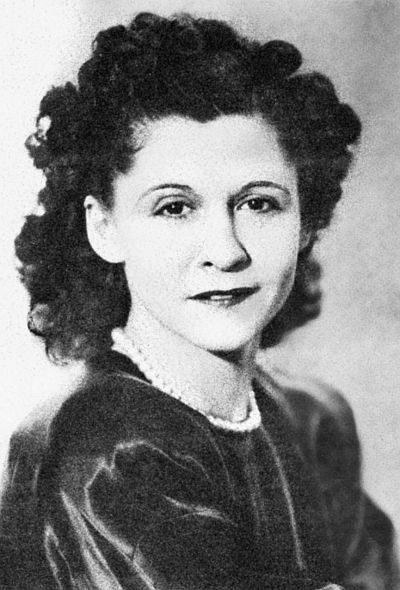 In September 1941, the author returns to Manila, the capital of the Philippines, starting work as a nightclub singer and falls in love with American GI, John Phillips. Which is unfortunate timing, because soon after, the Japanese bomb Pearl Harbor, kicking off the war in the Pacific. A hasty marriage to John follows on Christmas Eve, but Japan invades, and Claire’s husband becomes a prisoner of war. Left to fend for herself, after a period spent hiding out in the countryside, she returns to Manila, adopting the persona of Dorothy Fuentes, born in the Philippines of Italian parents. In order to help the resistance, she opens a venue, Club Tsubaki, aimed at officers of the occupying forces.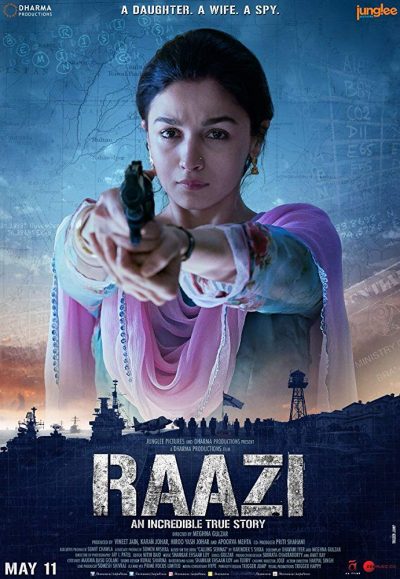
 This Indian spy thriller manages to be both remarkably restrained and human, avoiding a potentially jingoistic approach, and going for something considerably more measured. It takes place just before the war between India and Pakistan in 1971, when Indian agent Hidayat Khan is pretending to give information to Pakistan. In order to get close to their top brass, he convinces his daughter, Sehmat (Bhatt), to enter an arranged marriage to Iqbal Syed (Ahlawat), an officer whose father (Sharma) is a Brigadier in the Pakistani army. After being trained by senior intelligence officer Khalid Mir (Kaushal), she goes to join her new husband, and begins operations as a spy inside the Brigadier’s household.
 briskly functional rather than particularly memorable: by which I mean, I read the book in fairly short order… only to discover, when I finished it, that I didn’t remember very much about it. Not even the heroine’s name. Mallory? Mindy? Miley? Definitely an M word… Ah, yes: Melody Cale. She’s an agent for the Geirty Solutional Diversity Group, a murky government organization – also known as the Get Shit Done Group – who “do what the CIA couldn’t… without having politicians, or reporters, looking over their shoulders.”
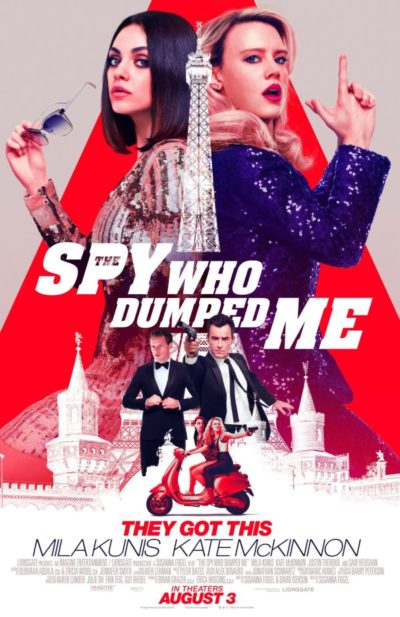 A breezy yet slightly odd mix of comedy and ultra-violence, this drops Audrey (Kunis) and her gal pal Morgan (McKinnon) into the middle of a spy caper, after Audrey’s boyfriend Drew (Theroux) dumps her, only for Audrey to discover he was a CIA spy. He tells her she must deliver a statuette to a Viennese cafe, or the world will be in great peril. After the peril rapidly arrives, heavily-armed, she and Morgan head off to Europe, with no idea of who they can trust. In hot pursuit – whether for reasons good or bad – are MI6 agent Sebastian Henshaw (Heughan), and the agents of “Highland”, a criminal syndicate also very keen to get their hands on the statuette and what it contains. A whirlwind tour of European cities follows, including Budapest, Paris, Amsterdam and Berlin.
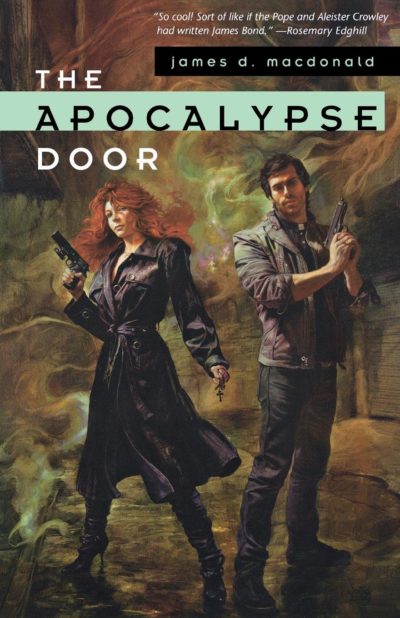 Those criticisms aside, however, this is a very gripping, exciting read, that moves along at a rapid pace right out of the starting gate. We have two distinct narratives here, alternating: a main one set in the author’s present (2002), laid out in the numbered chapters, and an earlier one from 1980, interspersed between each chapter in short sections titled “In-Country.” How the one strand is related to the other isn’t clear until near the end, although one connection comes into focus sooner than that. This is a challenging structure for a novelist to pull off, and to my mind Macdonald does it very well; both strands held my interest, and the rapid cutting between the two made for a constant cliff-hanger effect. I was completely hooked for both of them early on.
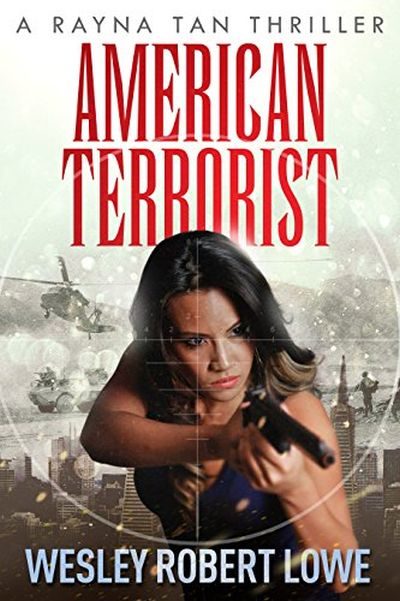 This was a disappointment, and a real chore to get through. If it had been a film, I’d have been reduced to surfing Facebook distractedly on my phone for the majority of its running time. Unfortunately, you don’t get to leave a book on in the background. It’s a stylistic and literary mess, throwing at the reader Canadian Special Forces heroine Rayna Tan, without providing any real background or character building beyond an incident in the Middle East. It then randomly switches around between her, a brother/sister pair of Islamic terrorists, Ahmed and Fatima, and their startlingly incompetent American recruits, who appeared to have strayed in from Four Lions. Throw in some unsubtle politicizing – even if I don’t necessarily disagree with the ideas expressed, it’s not what I want to read in my fiction – and it feels more like a half-finished collection of ideas than a coherent novel.