
Travelers: Dimension Police

★★
“Explanations? They’re vastly over-rated.”

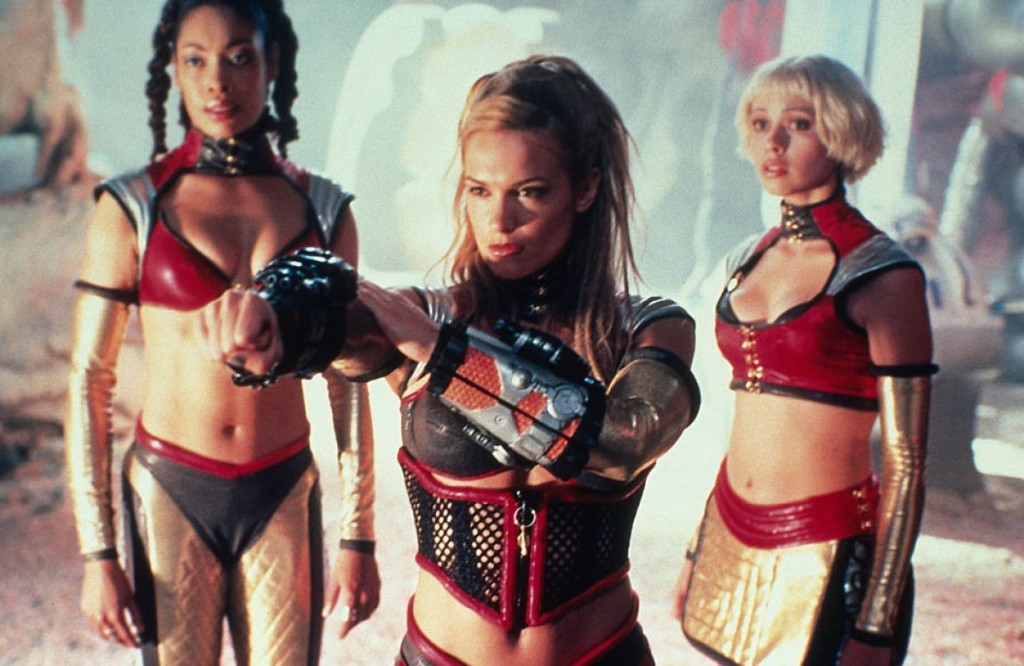
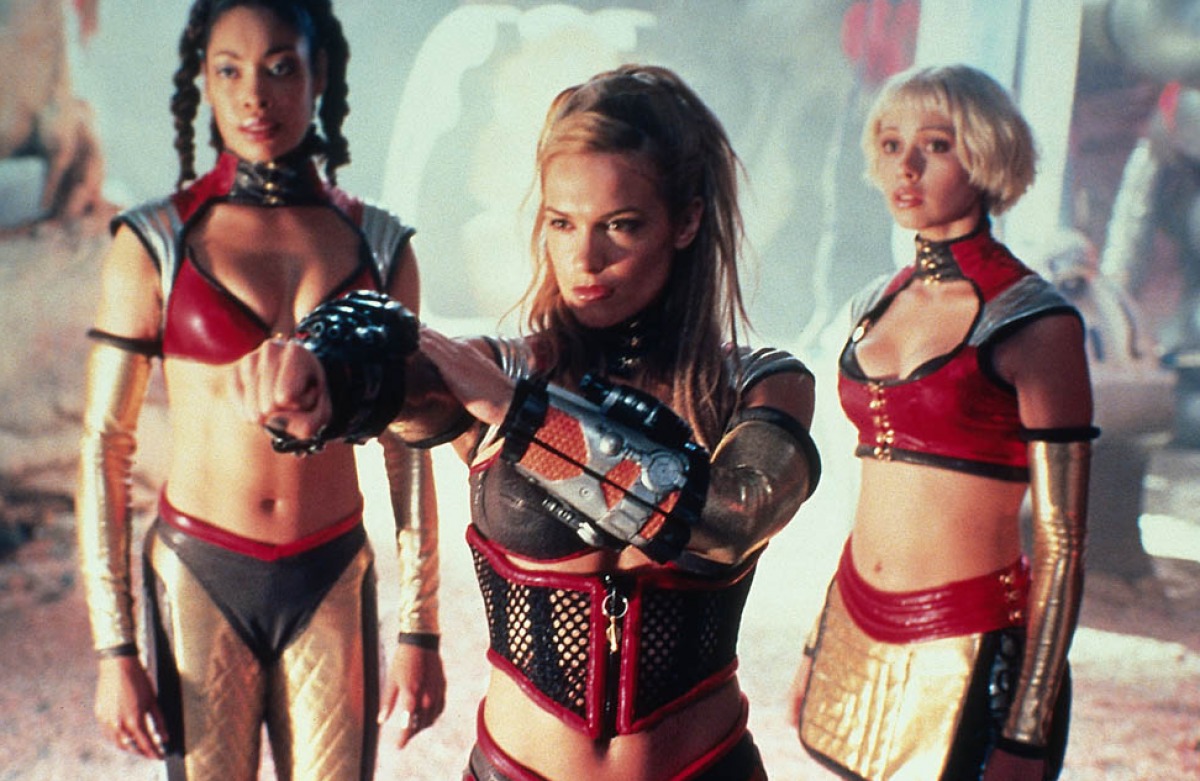
Travelers_-_Dimension_Police_PosterThis doesn’t so much hit the ground running, as plummet into it at top speed, to such an extent I genuinely stopped the film, to check if this was perhaps part two of an ongoing series. It isn’t: it’s just that unconcerned about explanations. What seems to be going on, is a universe where the different dimensions are now connected. Hence, there’s Retro World, Fairy World, Lost World, etc. This offers new criminal possibilities; to counter these, a trans-dimensional police force is also created. One such officer is Ai (Nagasawa), but her mission, to protect a psychic (Takayama) against the terrorist group Doubt is thrown into… Well, doubt after she meets her former partner Yui (Kinoshita), who appears to have thrown her lot in on the side of the villains.


At least, I think some of the above is probably fairly accurate. I am not prepared to commit any more strongly than that. Easily the best thing this has to offer are the actual fight: Sakamoto did a lot of work on Power Rangers, and also the cult classic Mark Dacascos vehicle, featuring a young Britney Murphy, and the style here is fast and frenetic, with people being punched hard enough to fly into things. A lot. Credit both lead actresses for doing a good chunk of this themselves. Less successful, are just about all the other elements, led by the confusing plot, that appears to think whizzy SFX will remove any need for coherence. Admittedly, it’s not helped by subs, even the official DVD English ones, which are borderline illiterate, and on at least one occasion appear to contradict directly the on-screen action.

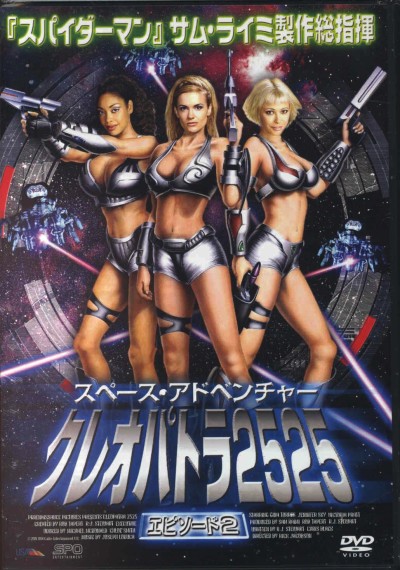
I was also more than a little uncomfortable with the apparently leering approach taken to the heroines. Chris, breezing through the living room, airily dismissed it with a roll of her eyes as “Oriental women in shorts,” (see the cover on the right for a good example). While part of me wanted to argue the point, the cheesecake quotient here was just too high for any credible defense: I mean, do you really need skimpy clothes for inter-dimensional travel? The final battle is kinda decent, but I’ll confess, my brain had largely given up on the entire exercise by that point, my attention only being somewhat regained whenever things e.g. fists or actresses started to fly. Sakamoto’s credentials as a fight choreographer are fine, just not in the director’s chair.

Dir: Koichi Sakamoto
Star: Nao Nagasawa, Ayumi Kinoshita, Yuko Takayama, Kenji Ebisawa

Ang Huling Henya

★★
“Pushing the Manilla envelope too far.”

huling-henyaI’ve seen quite a few Phillippine GWG movies – mostly thanks to Cirio Santiago and/or New World Pictures. But this is likely the first made for local consumption, rather than the West, which may explain why I found large chunks of it almost impenetrable. Is this the kind of thing that has them cheering in the aisles there?

The heroine is Miri (Quinto), an agent for an international organization devoted to protecting scientists, and keeping their inventions out of the wrong hands. After a mission goes bad, resulting in the death of her partner, Miri is sent back home for some time off. However, she’s called back in to help investigate the odd case of a professor who vanished for two weeks, only to return a cannibal and rip his wife’s throat out – and her corpse isn’t apparently entirely dead either. There’s also a mad scientist (Chan) who is experimenting with sucking memories out of people’s heads; her brother (Guzman), who is wasting his potential away in a dead-end job as a barman; and flashbacks revealing the tragic circumstances under which their parents, also scientists, apparently were killed for their invention.

Is it a horror film? It does have zombies. Is is a SF film? The memory transference and some nifty guns, which seem to shoot energy, suggest that. Comedy? The main villainess (Weigmann) shoots anyone who tells her she could be a model, and her sidekick perpetually needs to go to the bathroom. Action? Why not? There’s running around and pointing of guns. Family drama? Sure! The problem is – and some of the local reviews echo this – it just doesn’t commit to any of them, resulting in a movie which pays lip service to being scary, thrilling, funny, or intriguing. A few moments do work. I liked Miri having to go to the supermarket, prosaic stuff international agents aren’t usually seen doing. The finale, pitting heroes against the bad guys, very quietly, in a room full of sleeping zombies, also has potential. I even liked the cool way characters slid from English into the local tongue and back, in the middle of sentences.

However, at over two hours, it’s a good thirty minutes too long, and you could just about slice any half-hour out, and the result would be an improvement. Quinto also makes for a thoroughly unconvincing action star: from what I’ve read, a credible comparison would be a Pinoy version of Amy Poehler, and I’m not sure I would want to see Poehler try her hand in this genre. It’s certainly different, and it’s not bad enough to put me off other example of cinema from the Philippines. However, it’s certainly not good enough to make me actively seek them out.

Dir: Marlon N. Rivera
Star: Rufa Mae Quinto, Edgar Allan Guzman, Ricci Chan, Valerie Weigmann

Gravity

★★★★½
“Run Sandra Run”

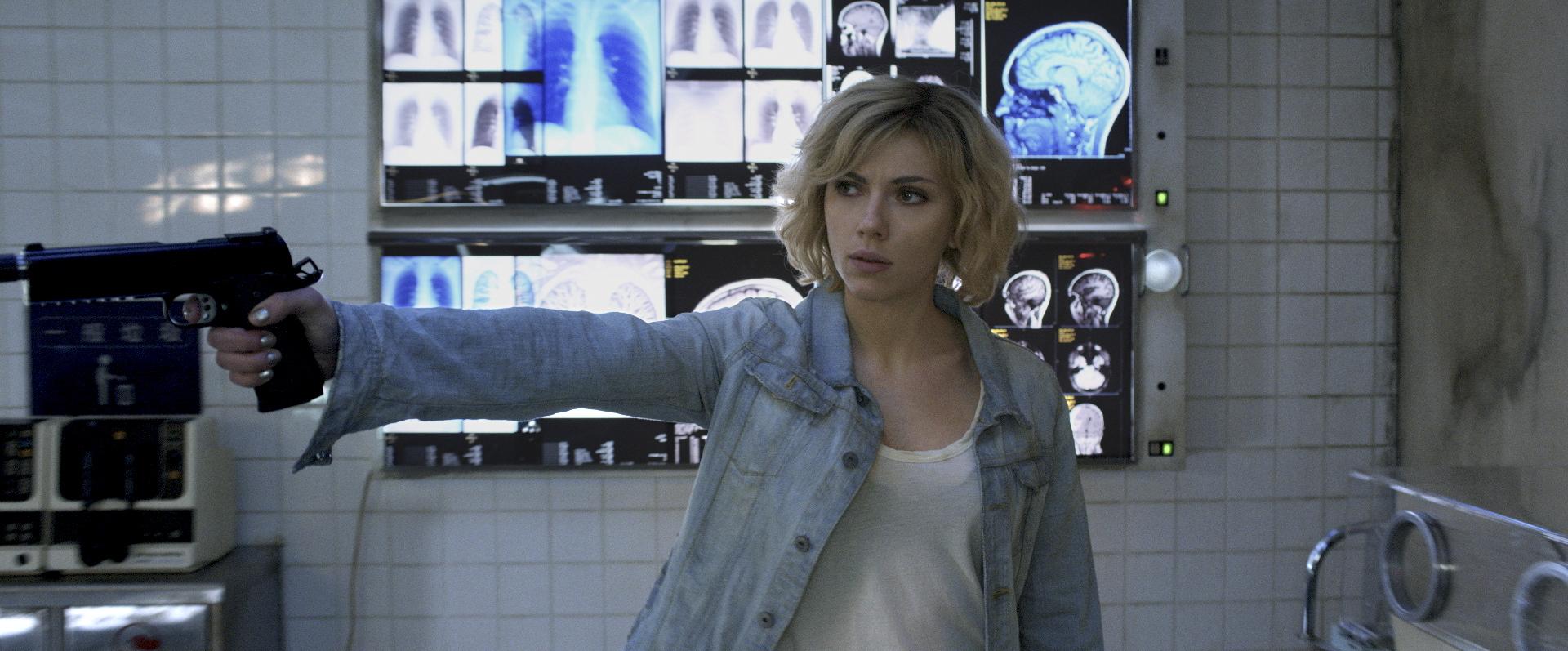
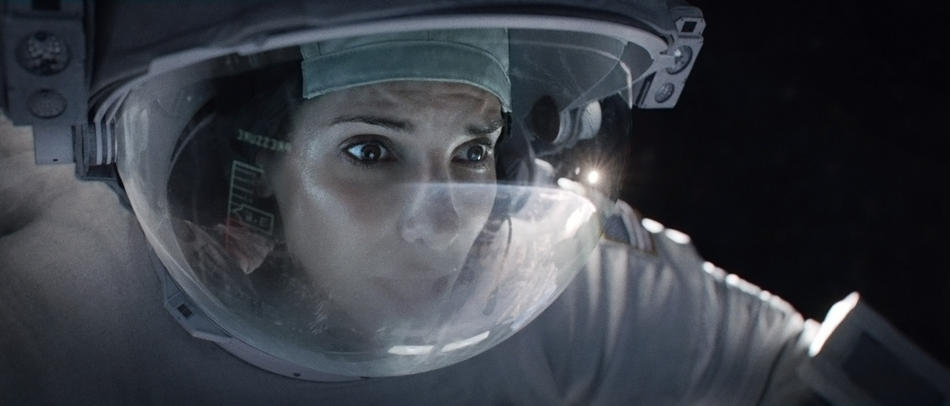
GRAVITY2013 was perhaps a landmark for women in action films. with the top slot at the American box-office going to Jennifer Lawrence in Catching Fire. But also present in the top five was this, which kicked Katniss’s arse for critical acclaim, snaring 10 Oscar nominations to Fire’s… Well, none at all, actually. That’s probably a little starker contrast than is accurate – they are respectively 97% and 90% Fresh at Rotten Tomatoes – but it is interesting to compare the two films and their approach. In Gravity, the sex of the lead character simply isn’t very relevant: you could switch it to being a man, and you wouldn’t need to change much, not even the name – Ryan Stone. I’d be unsurprised if told that, like Salt, this was originally written for a male lead. Indeed, it also fails the infamous Bechdel Test of feminism, passing none of its three criteria – though this says more about Bechdel’s uselessness than Gravity, I feel (Run Lola Run also goes 0-for-3, and it’s not the last thing it has in common, as we’ll see).
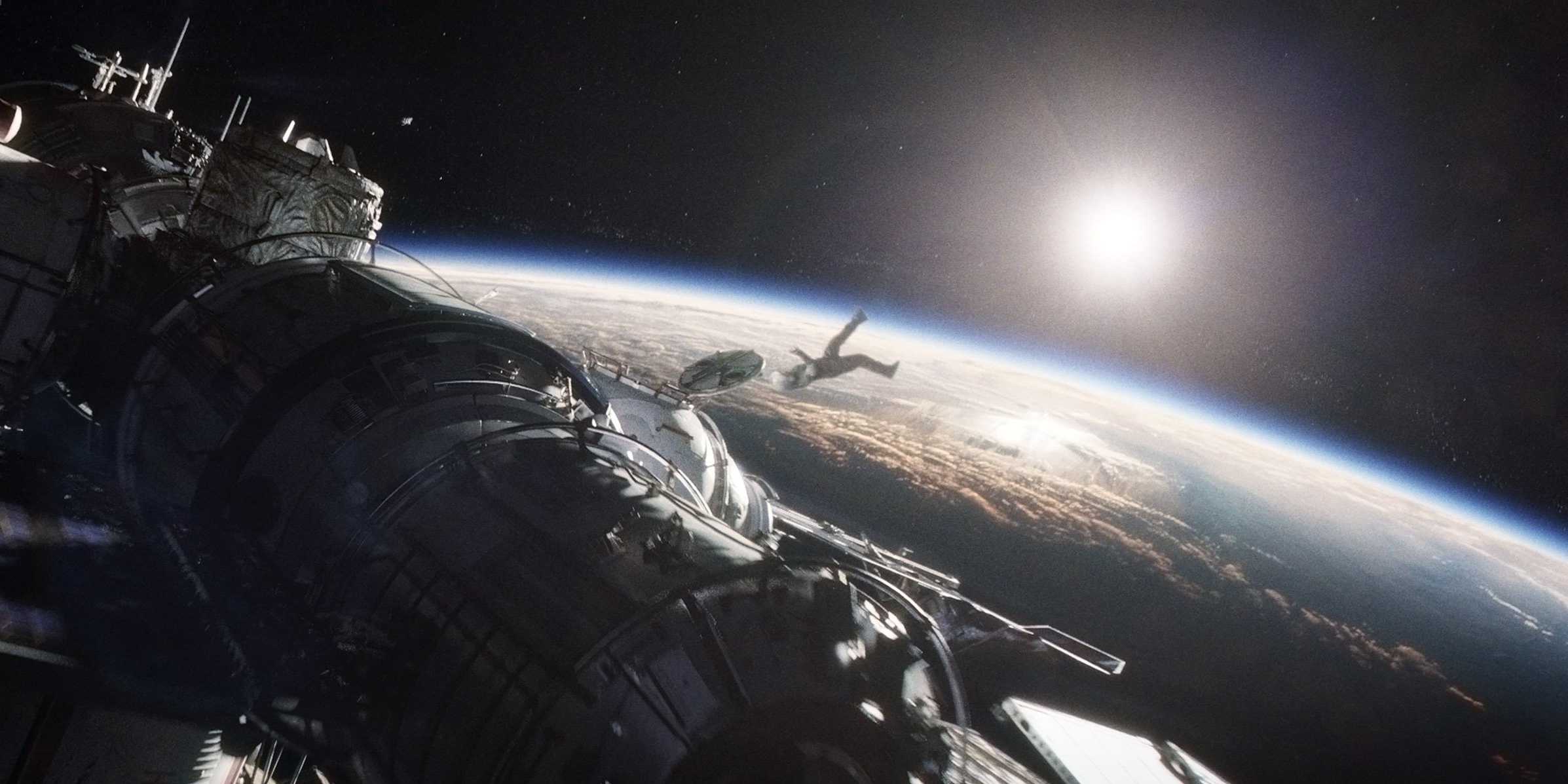
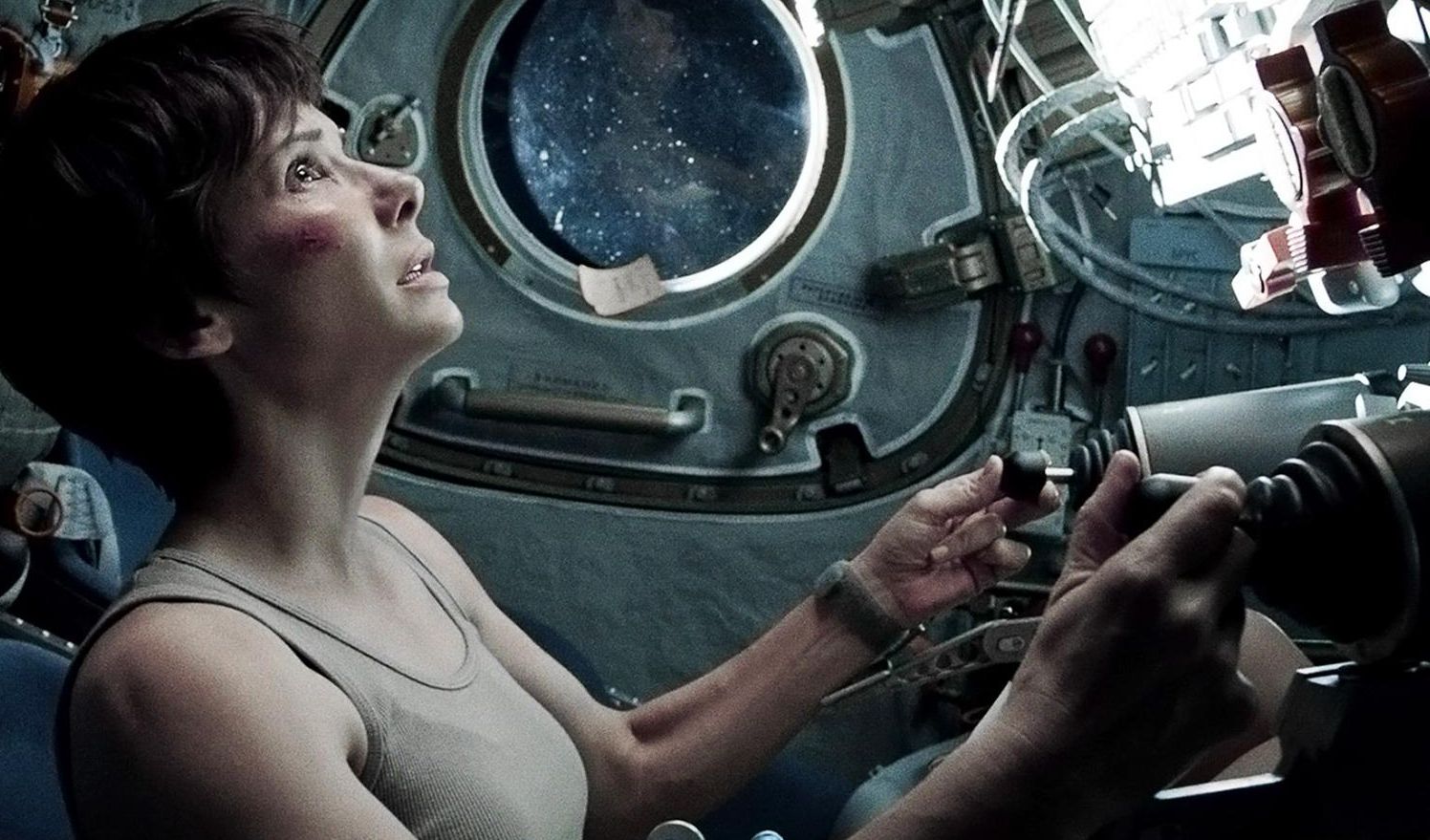
But Gravity certainly deserves coverage here, every bit as much as Alien – another film where the gender of the hero is largely irrelevant.  Admittedly, in some ways, it’s the very antithesis of what we now associate with “action film”, most obviously with an average shot length claimed in a number of places to be about 45 seconds. I’m not sure the math on that quite works out, and it’s certainly boosted by its amazing opening shot, which runs well over 10 minutes. But in an era where the dreaded “MTV-style” of editing has hampered many a genre entry e.g. a number in the Resident Evil franchise, this is truly a breath of fresh air, with Cuarón happy to let things unfold in front of us, rather than jazz things up with frenetic and pointless cutting, that doesn’t generate tension and excitement less than confusion. Of course, that’s Cuarón’s style: his previous (and excellent) Children of Men had a couple of similarly spectacular long shots.

Stone (Bullock) is a mission specialist, whose debut flight into space is to carry out maintenance on the Hubble. She’s on a spacewalk with shuttle commander, Matt Kowalski (Clooney), when a devastating storm of debris strafes them, knocking out their comms with Earth and leaving Stone tumbling through space. Though Kowalski, with the aid of his jet-pack, brings her back, the shuttle is toast, and there’s no option but to head for the International Space Station, hoping it will provide a safe haven and means of returning to Earth, before both Stone’s air hits empty, and the debris completes another orbit and blasts them once more. However, before getting inside [SPOILER], they get hung up on deployed parachute cords from a module attached to the ISS, and Kowalski cuts himself loose, drifting off in to space. This saves Stone from immediate threat, but she’s now utterly alone and [END SPOILER] facing an escalating series of predicaments, requiring her to dig deep into her inner resources, both mental and physical.

gravity2More than once, I found myself holding my breath, as the heroine fought against the implacable foe of a brutal, unforgiving environment. That’s the first element this has in parallel with Lola, which also had no human adversary. There, it was time which was the enemy, and that’s an aspect here too, with every 90 minutes bringing a new barrage of destruction. But the main thing this has in common is the heroine’s initial dependence on a paternal figure (her true father in Lola) for rescue from their difficult situation. It’s only when that support is removed, and she is thrown back to surviving entirely on her own merits, that the film blossoms fully. For the first 30 minutes, this is little more than space opera heroics, with Clooney being Clooney and some eye-rolling clichés: Kowalski is on his last mission, and another member of the crew has a picture of his family taped to his spacesuit. Yeah, that’ll end well. Still, extremely nice visuals – stunning, to the point this is one of those rare films I will buy on BluRay – are enough to get us through to the last hour, which is basically woman vs. space, and is absolutely compelling.

B-movie critic Joe-Bob Briggs once declared, “The first rule of great drive-in movie-making: Anyone can die at any moment.” By this metric, Gravity is a great drive-in movie, because Ryan’s survival is, often literally, dangling by a slim thread. Whether she’s bouncing around like an interstellar crash-test dummy, running out of oxygen, or bailing out of a space-station on fire, the peril is right there, and it’s Stone finding ways to deal with it that help make her one of the best heroines in mainstream cinema of the past few years. Cuarón, mercifully, doesn’t give her a romantic interested, no boyfriend or even a child back on Earth as motivation for survival: she explicitly says at one point, “No one will mourn for me. No one will pray for my soul.” And it doesn’t matter.  Indeed, that’s a big part of her transformative journey, going from someone who relies on others, uncertain of her own abilities, to being completely self-assured and single-minded. She wants nothing but to live – not for a man, or her offspring, just for herself.

Her final words are a simple, “Thank you”: it’s not clear to whom they’re addressed, since it has been made clear, Stone isn’t religious. Perhaps it’s gratitude for her rebirth: I suspect it’s no coincidence that there are scenes and shots here, which appear consciously to echo a caterpillar emerging from a cocoon, or a turtle struggling out of the egg. Bullock’s performance is beautifully understated, which is exactly as needed for the scenario – what’s the point in hysterics when there’s no-one around to see them? – and over the course of the film, she goes from a somewhat annoying, dependent second banana, to someone in whom you are fully invested. With her survival highly uncertain, right until the final frame (hey, cameo appearance by Arizona’s own Lake Powell!), I’m not certain how much repeat viewing this might have. It’s possible knowing the outcome may degrade the tension which is certainly one of the film’s strongest suits. However, even discounting that, there’s an awful lot here to like and appreciate, Cuarón has likely become one of those few directors whose name alone is enough to get me to watch, but everyone involved here deserves enormous praise for their work in crafting a memorable piece of cinema.

Dir: Alfonso Cuarón
Star: Sandra Bullock, George Clooney

gravity3

Catching Fire, by Suzanne Collins

★★★★
“Certainly better than Battle Royale 2.”

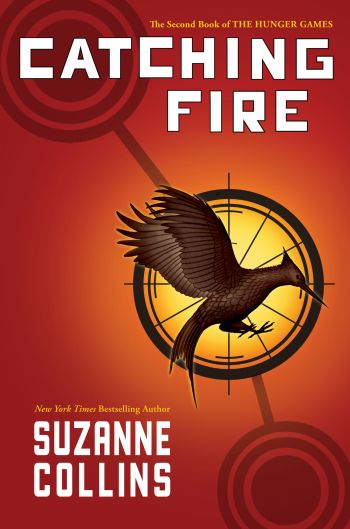
catchingfireWe rejoin heroine Katniss Everdeen in the second book of the trilogy, after her success in the 74th Hunger Games, where she out-lived the other contestants, in part through a fabricated love-affair with fellow District 12 tribute, Peeta. However, as well as her previous love, Gale, she now has to cope with life as a celebrity, beginning with a “Victory Tour” through the other districts. It soon becomes clear that not all is well, with her stand against the Panem government having fanned the flames of rebellion elsewhere. To demonstrate their power remains unshaken, the leaders announce the special, 75th Hunger Games will involve two previous winners from each district, meaning Peeta and Katniss are sent back in to a new, even more lethal environment, to take on other champions.

That this works better than its predecessor, is mostly due to the pacing department, which builds through a first-half of impending doom, and on to an upgraded Hunger Games, before dropping a bomb in its final paragraph. There’s more depth given to the Panem hierarchy than first time around, and the undercurrent of growing revolution is nicely depicted. The Twilight-esque love-triangle aspect, which bogged down the first book, is reined back, with Gale almost absent, though Katniss still has deal with her feelings for Peeta, whom she has sworn to protect at any cost. However, can she trust those with whom she is allied in the games, and whose motivations are less clear? It’s this angle which largely keeps you turning the pages, along with the arena, throwing one threat after another at her.

At its center is Everdeen, who remains an entirely admirable creation. She is loyal, brave and phenomenally-skilled with her bow, yet possesses enough doubts and flaws to keep her human, rather than becoming some kind of superheroine. Clearly, the first-person narrative does mean there’s not much sense of direct threat to Katniss’s survival; however, Collins has enough other cards in her hand, to leave you concerned as to what the emotional cost of that survival might be. Hopefully, the second film can capture the nuances and improve on its predecessor in the same way. For when that literary bomb was dropped on me at the end, I gave serious consideration to heading straight into the third book. Damn you, Suzanne Collins.

Author: Suzanne Collins
Publisher: Scholastic

Iria – Zeiram the Animation

★★★½

Though released several years later, this is a prequel to the two Zeiram movies, telling the story of the first encounter between Iria (Hisakawa, who was also Sailor Mercury) and Zeiram. At the time, she was an apprentice bounty-hunter, working alongside her brother Gren. They take a mission to rescue a VIP and recover the cargo from a stranded space-ship. However, once there, they discover the “cargo” is actually the alien Zeiram, which a corporation is interested in using as a weapon. The result leaves her brother apparently dead, and Iria now the target for the corporation, who want to hush up their thoroughly-dubious plan, by any means necessary. Fortunately, as well as her own skills, our heroine has the assistance of former rival bounty-hunter, Fujikuro (Chiva), endearing urchin Kei (Kanai), and Bob (Ikeda), a colleague whose consciousness has been turned into an AI.

The six-episode (about 25 mins per part, by the time you skip the opening and closing credits) series worked, for me, a little better than the live-action, simply because of the nature of animation: there’s no need for restraint. There were times in the movies where you could see where Amamiya wanted to, but has to restrain his imagination for budgetary reasons. Here, there’s close to a fully-fledged universe, with content which would likely be well beyond the budget of anyone not named James Cameron. There’s also a nice character arc for Iria: initially, she is probably too big for her boots, with an over-inflated sense of her own skills. When she meets Zeiran, she soon discovers she isn’t quite the cat’s whiskers, at least, not to the extent she thinks.

As with most animation of the time, it’s not going to be confused with Miyazaki, and it would be silly to expect otherwise. However, there remain weaknesses. Most obviously, and surprisingly – because it’s the same issue as in the live-action version – is the diversion of time to secondary characters, in particular Kei and sidekick, the latter of whom is there for one purpose only (too spoilerific to discuss in detail; I’d say it falls into the category of “surprising, but almost entirely pointless”). That’s true for much of the plot, which feels over-similar to the Aliens series, and at times, the conspiracy angles just seem to be there to fill in time, before we get to the inevitable final battle between Iria and Zeiram. It did generally keep my interest, overall; but I can see why it hasn’t exactly been remembered as a classic of the medium.

Dir: Tetsuro Amino
Star: (voice) Aya Hisakawa, Shigeru Chiba, Mika Kanai, Masaru Ikeda

Zeiram + Zeiram 2

★★★

Zeiram and its sequel, Zeiram 2, both concern a creature which combines all the most unpleasant and lethal features of The Thing with The Terminator. It’s humanoid, at least in the number of functioning limbs, but its head appears almost mushroom shaped – though it’s hard to tell where Zeiram ends and its hat begins, for there’s a second face, embedded in the hat. This is capable of extending on a tentacle, to attack victims, taking in nourishment, and there’s evidence to suggest that it can absorb their DNA and use it to create monsters. Oh, and the rest of it is almost impossible to destroy.

However, trying to do exactly that is Iria (Moriyama), an interstellar bounty hunter, who has laid a trap to take Zeiram into an alternate, uninhabited dimension, in order to deal with him in a way that will pose no threat to the local population. However, she reckons without the arrival of electrical techs Kamiya (Hotaru) and Teppei (Ida), who have been dispatched by the power company to investigate the power-drain resulting from Iria’s tech. Through an unfortunate series of events, they end up in the alternate dimension with Zeiram, while Iria is largely stuck in our world, trying to keep them alive until she can fix her portal and get in there to help them.

The problems here are largely two-fold. Kamiya. And Teppei, There are few things less appealing than comic relief characters whose antics and mugging are supposed to be endearing or amusing, but fail miserably on both fronts. They bring very little to proceedings except for running time, and that’s a shame, because there is no shortage of bizarre inventiveness on view. And when the pair stop trying to be characters, shut the hell up, and simply team up with Iria to kick alien arse, it’s a lot better, because whatever they do to Zeiram, he/she/it just keeps mutating into another form and fighting back. You get the sense being fed through a wood-chipper would only be a minor inconvenience.

This also helps cover up Moriyama’s somewhat limited set of fighting skills. Admittedly, it’s possible she had to slow things down in order to fight a giant mushroom, but the hand-to-hand combat here is choreographed at about the speed of a Strauss waltz. She does have screen presence, however, and looks decent enough firing a gun. To a casual eye – that’d be my wife’s, wandering through the living-room – this could look like an episode of Amemiya’s Power Rangers, and it’s not surprising he would go on to direct some Kamen Rider films. But it’s too uneven to succeed: for every moment where you go, “Cool!”, there’s another where you’ll roll your eyes, or just go “Eh?”. For instance, the section where Zeiram squeeze out goo onto the ground, which grows into a half-man that has a burbling conversation with Zeiram, before getting its head stomped on. Altogether, now: eh?

The sequel, which came out three years later, restores the “i” in the title, which was inexplicably removed from the original for it US release by Fox Lorber. This installment starts off as if it’s going to go in some radically different directions, even if all the main players are back. Iria is seeking an ancient artifact called the Carmarite, and additionally, has a new assistant, but he turns out to be untrustworthy. Meanwhile, a shadowy group has succeeded in regenerating Zeiram as a cyborg warrior (which makes a lot more sense if you’ve seen the anime, and know its origins), bending its will to their needs and turning it into a weapon. While initially successfully, this works about as well as most plans usually do, and it’s not longer before Zeiram is much more a menace than an ally.

However, just when you think the film is going into new and interesting territory… Well, I’m not quite show how it happened, but before long we were back in more or less the same situation as the original. Blah blah irritating comic relief blah another dimension blak Iria unable to help (this time because she gets herself locked in a room), etc. You’re looking at something which borders on being a remake of the original, and unlike something like Terminator 2, which upped the ante significantly, while telling a largely similar story, there isn’t any real sense of progression or development. Much as before, things do get better when things move into action, and Zeiram is again, a shape-shifting nightmare that won’t stay dead. And this time, not even a cute dog which strays into proceedings is off the menu.

It also helps that, this time around, Moriyama has a better handle on the action angle. Previously, it was very much a case of kick, pause, punch, pause, move, but she is a good deal more fluid here, and makes for a more credible heroine as a result. However, her strength is still more in the “looking cool with a gun” department, because her punches still look like they might be troubled by a damp paper-bag. On balance, the sequel’s lack of invention is approximately balanced by the overall improvement in Iria’s character and the slightly better overall production values – it still looks like you could fund it from your bedside table change – and it’s as worth watching as the first part. Which would be “somewhat”: call both of them a rent (or more likely these days, a download), rather than a buy.

Dir: Keita Amemiya
Star: Yûko Moriyama, Mizuho Yoshida, Kunihiro Ida, Yukijirô Hotaru

Zeiram

“Z is for Zeiram”

Keita Amemiya was one of the directors of the show Kyõryû Sentai Zyuranger, a Japanese series which provided the initial basis (and much footage) for Mighty Morphin’ Power Rangers. But he is a bit of a Renaissance man, also working in animation, video games and illustration. His work seems to have a common sense of imagination, to the extent that it can be a bit overwhelming. A review of his first feature, Cyber Ninja – a title that, alone, give you a fairly idea of the location from where Amemiya is generally coming – hits the mark: “A feature length video game commercial, a much too-long advertisement for a Namco arcade game that never made its way into American pizza parlors.”

For our purposes here, however, we are concerned solely with Zeiram, his creation which spawned two live-action movies, a six-part anime adaptation, and I’m pretty damn sure a comic-book [though Google isn’t proving much help, and I’d have to go down and open my comic boxes to confirm that; since the last time they were cracked was, I kid you not, in 2000, I am reluctant to break the seal on them now]. As we’ll see the titular creature is very much the villain, but it easily qualifies here thanks to its kick-ass heroine. I had hoped to get round to watching the anime in time for this month’s installment, but I didn’t quite make it. Since baseball Opening Day and the subsequent summer go-slow is almost upon us, probably best if I cover the two movies now, and I’ll add the anime… hopefully in April, but no promises! [Update: got to it in May, so not too bad!]

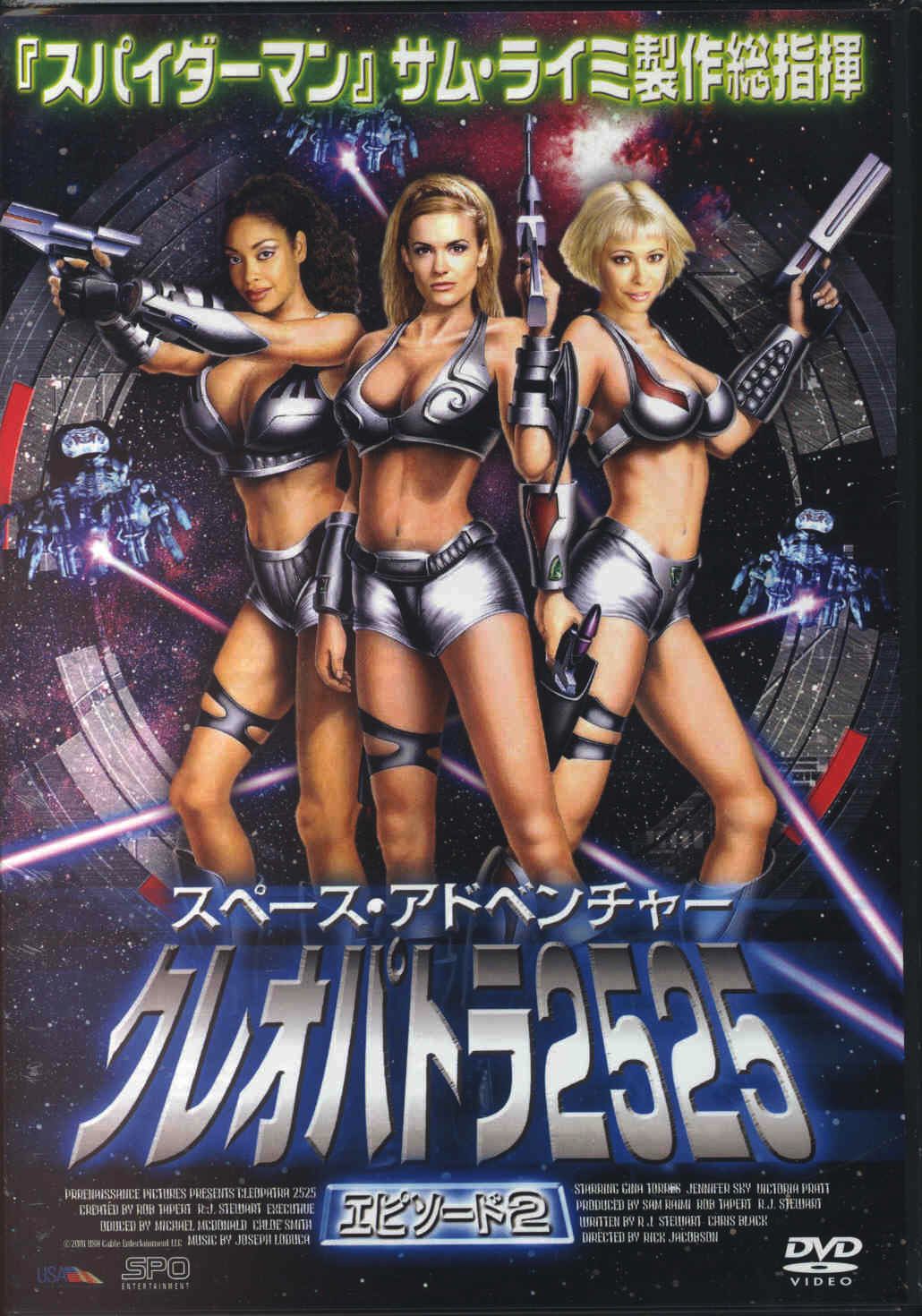
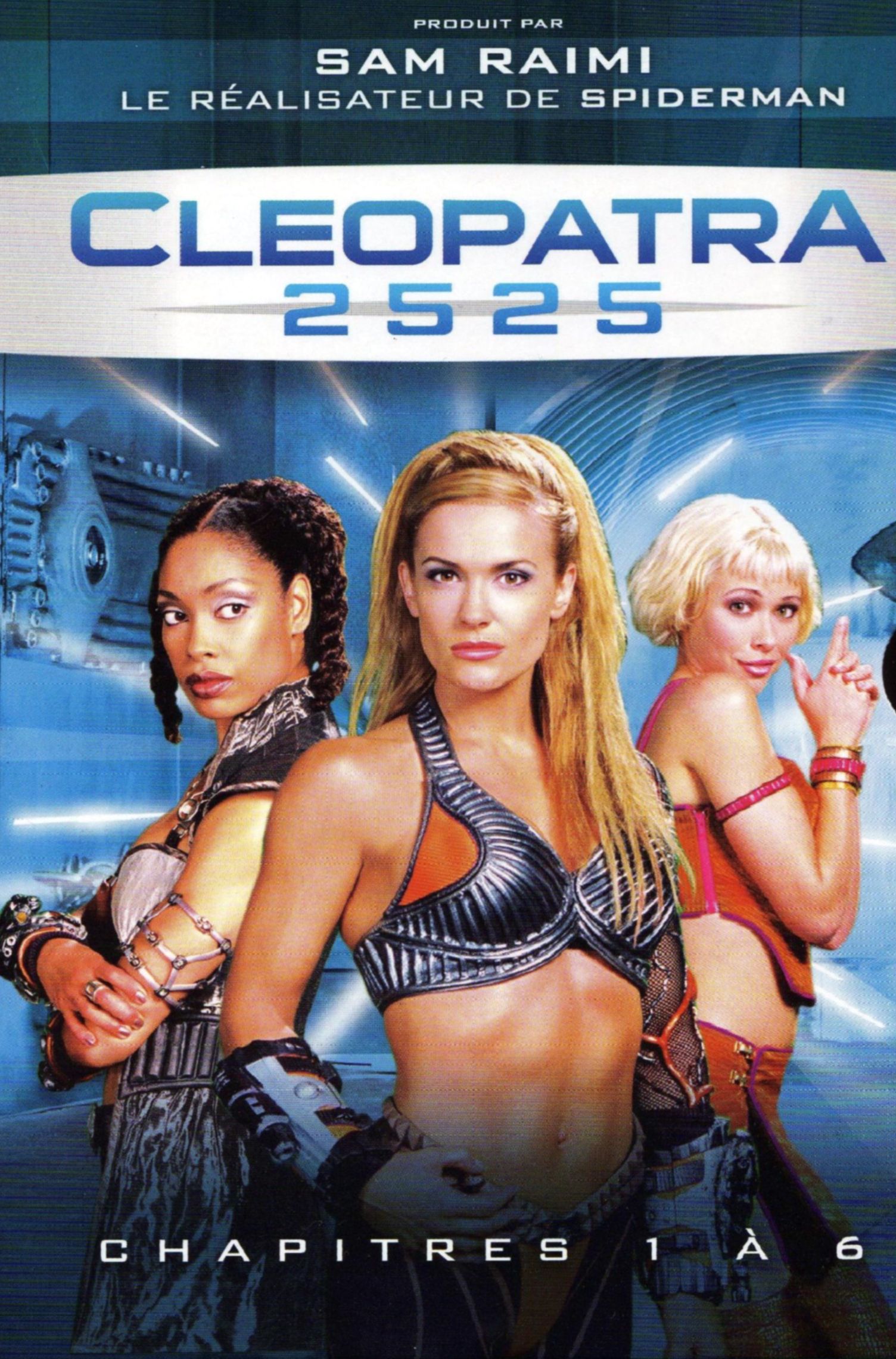
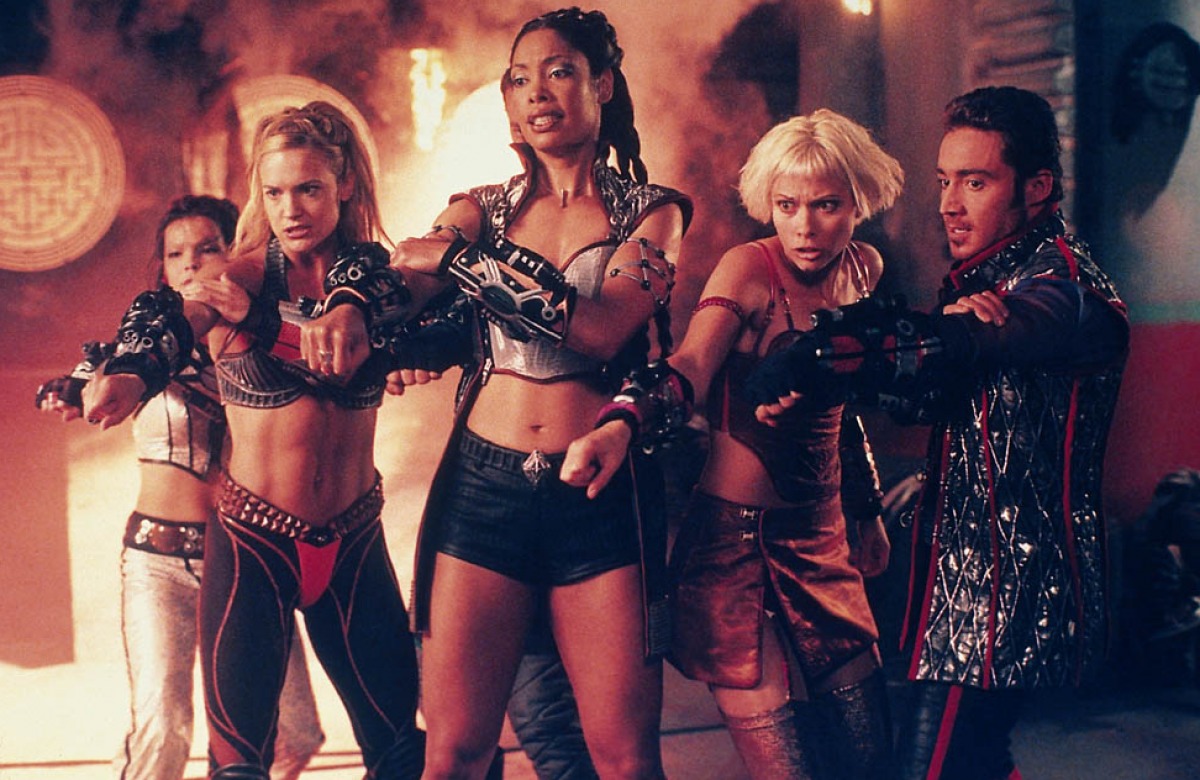
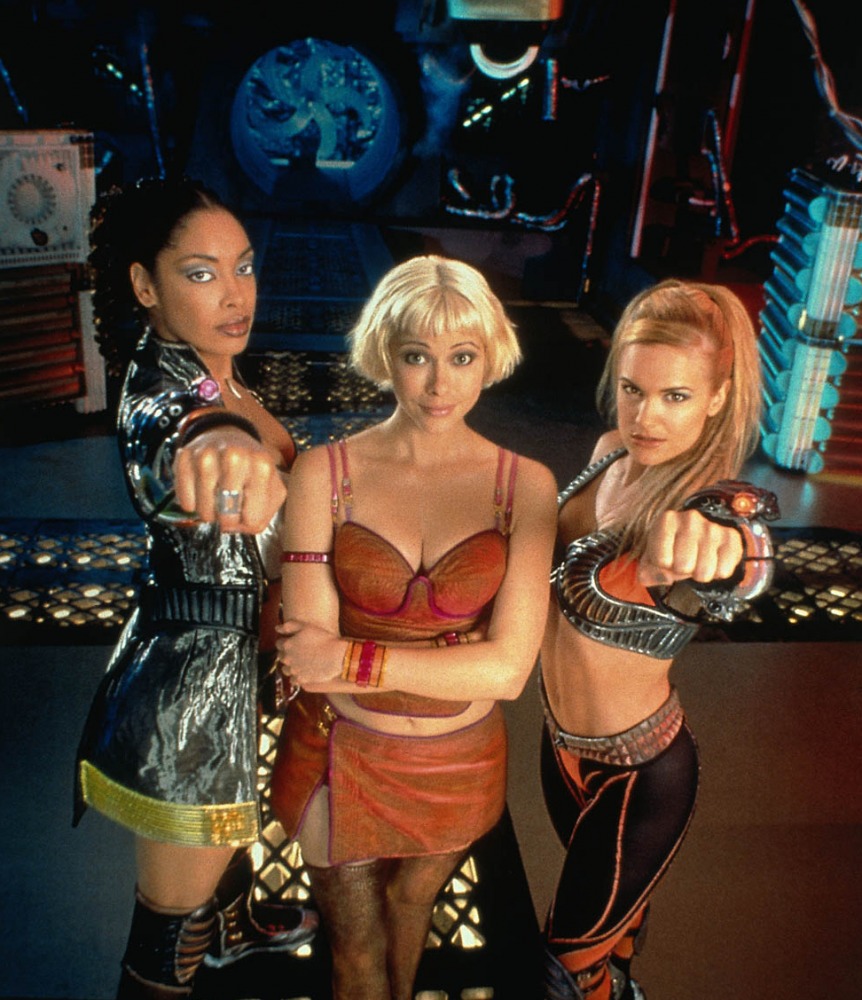
Zeiram + Zeiram 2

By Jim McLennan

★★★

Zeiram and its sequel, Zeiram 2, both concern a creature which combines all the most unpleasant and lethal features of The Thing with The Terminator. It’s humanoid, at least in the number of functioning limbs, but its head appears almost mushroom shaped – though it’s hard to tell where Zeiram ends and its hat begins, for there’s a second face, embedded in the hat. This is capable of extending on a tentacle, to attack victims, taking in nourishment, and there’s evidence to suggest that it can absorb their DNA and use it to create monsters. Oh, and the rest of it is almost impossible to destroy.

However, trying to do exactly that is Iria (Moriyama), an interstellar bounty hunter, who has laid a trap to take Zeiram into an alternate, uninhabited dimension, in order to deal with him in a way that will pose no threat to the local population. However, she reckons without the arrival of electrical techs Kamiya (Hotaru) and Teppei (Ida), who have been dispatched by the power company to investigate the power-drain resulting from Iria’s tech. Through an unfortunate series of events, they end up in the alternate dimension with Zeiram, while Iria is largely stuck in our world, trying to keep them alive until she can fix her portal and get in there to help them.

The problems here are largely two-fold. Kamiya. And Teppei, There are few things less appealing than comic relief characters whose antics and mugging are supposed to be endearing or amusing, but fail miserably on both fronts. They bring very little to proceedings except for running time, and that’s a shame, because there is no shortage of bizarre inventiveness on view. And when the pair stop trying to be characters, shut the hell up, and simply team up with Iria to kick alien arse, it’s a lot better, because whatever they do to Zeiram, he/she/it just keeps mutating into another form and fighting back. You get the sense being fed through a wood-chipper would only be a minor inconvenience.

This also helps cover up Moriyama’s somewhat limited set of fighting skills. Admittedly, it’s possible she had to slow things down in order to fight a giant mushroom, but the hand-to-hand combat here is choreographed at about the speed of a Strauss waltz. She does have screen presence, however, and looks decent enough firing a gun. To a casual eye – that’d be my wife’s, wandering through the living-room – this could look like an episode of Amemiya’s Power Rangers, and it’s not surprising he would go on to direct some Kamen Rider films. But it’s too uneven to succeed: for every moment where you go, “Cool!”, there’s another where you’ll roll your eyes, or just go “Eh?”. For instance, the section where Zeiram squeeze out goo onto the ground, which grows into a half-man that has a burbling conversation with Zeiram, before getting its head stomped on. Altogether, now: eh?

The sequel, which came out three years later, restores the “i” in the title, which was inexplicably removed from the original for it US release by Fox Lorber. This installment starts off as if it’s going to go in some radically different directions, even if all the main players are back. Iria is seeking an ancient artifact called the Carmarite, and additionally, has a new assistant, but he turns out to be untrustworthy. Meanwhile, a shadowy group has succeeded in regenerating Zeiram as a cyborg warrior (which makes a lot more sense if you’ve seen the anime, and know its origins), bending its will to their needs and turning it into a weapon. While initially successfully, this works about as well as most plans usually do, and it’s not longer before Zeiram is much more a menace than an ally.

However, just when you think the film is going into new and interesting territory… Well, I’m not quite show how it happened, but before long we were back in more or less the same situation as the original. Blah blah irritating comic relief blah another dimension blak Iria unable to help (this time because she gets herself locked in a room), etc. You’re looking at something which borders on being a remake of the original, and unlike something like Terminator 2, which upped the ante significantly, while telling a largely similar story, there isn’t any real sense of progression or development. Much as before, things do get better when things move into action, and Zeiram is again, a shape-shifting nightmare that won’t stay dead. And this time, not even a cute dog which strays into proceedings is off the menu.

It also helps that, this time around, Moriyama has a better handle on the action angle. Previously, it was very much a case of kick, pause, punch, pause, move, but she is a good deal more fluid here, and makes for a more credible heroine as a result. However, her strength is still more in the “looking cool with a gun” department, because her punches still look like they might be troubled by a damp paper-bag. On balance, the sequel’s lack of invention is approximately balanced by the overall improvement in Iria’s character and the slightly better overall production values – it still looks like you could fund it from your bedside table change – and it’s as worth watching as the first part. Which would be “somewhat”: call both of them a rent (or more likely these days, a download), rather than a buy.

Dir: Keita Amemiya
Star: Yûko Moriyama, Mizuho Yoshida, Kunihiro Ida, Yukijirô Hotaru

Iria – Zeiram the Animation

By Jim McLennan

★★★½

Though released several years later, this is a prequel to the two Zeiram movies, telling the story of the first encounter between Iria (Hisakawa, who was also Sailor Mercury) and Zeiram. At the time, she was an apprentice bounty-hunter, working alongside her brother Gren. They take a mission to rescue a VIP and recover the cargo from a stranded space-ship. However, once there, they discover the “cargo” is actually the alien Zeiram, which a corporation is interested in using as a weapon. The result leaves her brother apparently dead, and Iria now the target for the corporation, who want to hush up their thoroughly-dubious plan, by any means necessary. Fortunately, as well as her own skills, our heroine has the assistance of former rival bounty-hunter, Fujikuro (Chiva), endearing urchin Kei (Kanai), and Bob (Ikeda), a colleague whose consciousness has been turned into an AI.

The six-episode (about 25 mins per part, by the time you skip the opening and closing credits) series worked, for me, a little better than the live-action, simply because of the nature of animation: there’s no need for restraint. There were times in the movies where you could see where Amamiya wanted to, but has to restrain his imagination for budgetary reasons. Here, there’s close to a fully-fledged universe, with content which would likely be well beyond the budget of anyone not named James Cameron. There’s also a nice character arc for Iria: initially, she is probably too big for her boots, with an over-inflated sense of her own skills. When she meets Zeiran, she soon discovers she isn’t quite the cat’s whiskers, at least, not to the extent she thinks.

As with most animation of the time, it’s not going to be confused with Miyazaki, and it would be silly to expect otherwise. However, there remain weaknesses. Most obviously, and surprisingly – because it’s the same issue as in the live-action version – is the diversion of time to secondary characters, in particular Kei and sidekick, the latter of whom is there for one purpose only (too spoilerific to discuss in detail; I’d say it falls into the category of “surprising, but almost entirely pointless”). That’s true for much of the plot, which feels over-similar to the Aliens series, and at times, the conspiracy angles just seem to be there to fill in time, before we get to the inevitable final battle between Iria and Zeiram. It did generally keep my interest, overall; but I can see why it hasn’t exactly been remembered as a classic of the medium.

Dir: Tetsuro Amino
Star: (voice) Aya Hisakawa, Shigeru Chiba, Mika Kanai, Masaru Ikeda

Alien Resurrection

★★★½
“Alien vs. Firefly”

It’s not often that a film series manages to recover from – or even, survive – such a disastrous mis-step. But the Alien franchise managed it, though it took five years to come to fruition, and a Really Big Cheque to Sigourney Weaver [reportedly, $11 million, as well as a producer’s credit. The results, while short of the original two movies, are an awful lot better than its predecessor, managing to progress the story, re-invent Ripley and be generally entertaining. However, from a 2012 perspective, it’s painfully obvious that writer Joss Whedon recycled large chunks of the supporting characters, and turned them into Firefly. We’ll get to that a bit later.

It is set 200 years into the future, and begins with scientists on a space-station creating a clone of Ripley, using DNA from blood samples. They also remove the alien queen embryo which she was carrying, growing that, but keep her around for further study, intrigued by her apparent mix of human and alien DNA that’s giving her unusual powers [not unlike the way Alice fuses with the T-virus in the middle Resident Evil movies]. Docking with them is the Betty, a ahip operating on the fringes, which is bringing the scientists some meat popsicles in which they can incubate more aliens. Annalee Call (Ryder) appears to recognize the threat Ripley poses, and tries to kill her – but it’s too late, as the aliens have escaped their containment facility. Ripley and the crew have to team up, to try and fight their way back through the station to the Betty, which is the only means of escape left.

That’s an improvement in terms of a storyline over 3, simply because it is one, and provides a skeleton upon which a good amount of interesting ideas and fun sequences can be built. Jeunet came to the movie from some visually-striking French films, such as The City of Lost Children, and there’s a much better sense of cinematography apparent here – it’s a striking contrast to Fincher’s approach, where it appears his main direction to the DP was “Darker. Make it darker.” Here, you can see what’s happening: particular standouts include the first confrontation between Ripley and the Betty crew, in the basketball court, where Ripley sinks a long-range shot behind her back [legitimately done by Weaver], and a lengthy underwater sequence, where you’ll probably find yourself trying – and likely, failing – to hold your breath.

But the central idea is the one of Ripley now being something more than human, and Weaver has a great deal of fun with that, playing as if she’s half a beat ahead of everyone else, and completes her transition by no longer being scared of the aliens. It’s them who need to be scared of her, and again, I’m reminded of Milla Jovovich in the RE series: more than human, and yet, less than human at the same time. There’s even a creature with the proportions the other way round – monster with a touch of human – like Nemesis from RE: Apocalypse, and it was no surprise to read that Paul W.S. Anderson was one of the many directors considered for this (Danny Boyle, Peter Jackson, Bryan Singer and David Croneberg beinh among the others). I briefly drifted off to speculate on the possibility of an Alien vs. Resident Evil cross-over; would probably have been a lot more fun than anything involving Predators.

As noted, what’s startling are the parallels between the Betty and the Serenity, from Whedon’s show Firefly, which came out in 2002. Both operate on the edge of legality, with a small crew of oddballs: Capt. Frank Elgyn (Michael Wincott) is somwhat less sympathetic than Mal Reynolds, but in both you have a captain/first-mate/pilot trio of two men and a woman, two of whom are in a relationship, plus a mechanic from an unexpected minority (there, a woman; here, disabled). If Perlman’s lumbering mercenary Johner isn’t a blatant dry run for Jayne Cobb, I don’t know what is, and there’s more than a touch of mechanic Kaylee Frye to be seen in Annalee. Writing as someone who found Firefly no more than a passable timewaster, it’s amusing to see Whedon was stealing from himself. Still, if you’re going to plagiarize, best use your own work, I suppose.

Oddly, Whedon hated this finished product almost as much as Fincher did the third, saying, “It was mostly a matter of doing everything wrong. They said the lines…mostly…but they said them all wrong. And they cast it wrong. And they designed it wrong. And they scored it wrong. They did everything wrong that they could possibly do. There’s actually a fascinating lesson in filmmaking, because everything that they did reflects back to the script or looks like something from the script, and people assume that, if I hated it, then they’d changed the script…but it wasn’t so much that they’d changed the script; it’s that they just executed it in such a ghastly fashion as to render it almost unwatchable.” It seems likely that’s why he recycled so many of his characters for Firefly.

It’s far from perfect, however. The biggest flaw is Ryder, who is completely unconvincing, and not a patch on her predecessors [if you’re thinking, “What predecessors?”, there’s a clue in the initial letter of her character’s surname…]. I wasn’t too fond of the way the film went in the final act, and the human-alien hybrid is neither convincing nor scary. It’s damn hard to believe that Whedon came up with five endings, and this was the one Jeunet picked as the best. But, really: after the dismal failure which was part three, it was a major relief to see something even semi-competent, which managed to sustain my interest (okay: consciousness) much better, and be generally entertaining.

Dir: Jean-Pierre Jeunet
Star: Sigourney Weaver, Winona Ryder, Ron Perlman, Dominique Pinon

Alien 3

★½
“Lost in space.”

“No one hated it more than me. To this day, no one hates it more than me.”
David Fincher

Few films have had such a troubled path to the screen. The story of those struggles, and the various versions of the story generated by William Gibson, Eric Red, David Twohy, Vincent Ward and others, is probably worthy of an entire separate article. For now, we concentrate on what finally came out, but let’s quote writer Rex Pickett:

“I was hired by 20th Century Fox four weeks prior to the start of principal photography… First on my agenda was a complete rewrite of the second half of the Walter Hill/David Giler screenplay due to certain major character and narrative changes mandated by Walter Hill. Once that was accomplished I was to attend to the first half and write an amalgamated version which was to include scenes from their draft and new scenes that I wrote. Thus, the resultant screenplay – particularly the first half – contains scenes that I was instructed to include whether I wanted to or not.”

The end result is every bit as awful and borderline incoherent as you’d expect, given the circumstances. At the time, Fincher had no feature-film experience. He was known almost entirely for music videos, particularly for Madonna – when it was announced he would be helming the third part, I recall idly wondering if we were going to see the aliens in pointy bras. That isn’t quite the case, and it does make more sense in the light of Fincher’s subsequent work, from Seven through to the The Girl With The Dragon Tattoo remake. But it’s worth considering that neither Ridley Scott nor James Cameron had worked on a large-budget sci-fi flick before their entries – Cameron had made The Terminator, but it was low-budget, at barely one-third the cost of Aliens. Both seemed to deliver a more consistent vision, though I suspect neither suffered from the copious degree of studio interference apparently seen here.

Right from the get-go, the script basically junks its predecessor. An emergency on the spacecraft bringing Ripley, Newt, Hicks and Bishop home causes it crash-land, with Ripley apparently the only survivor. It’s a near-derelict former prison planet, which was about to be decommissioned, but the inhabitants, under spiritual leader Dillon (Dutton), opted to stick around, under minimal supervision. They’re none too happy to have a woman dropped into the middle of their society, and a message is sent to request Ripley be removed as soon as possible. Needless to say the Weyland-Yutari Corporation are more than happy to oblige. However, it soon becomes clear that Ripley was not the only living thing to escape the crash, as local residents start turning up “diced.” When it’s confirmed, through Ripley re-activating Bishop, that there was indeed an alien present: destroying it is necessary, not only to survive, but also to stop it from falling into the hands of Weyland-Yutari.

You can almost take Aliens and this, using them as point-counterpoint examples, of how you should and should not handle almost every aspect of genre film-making. Aliens built logically upon what had gone before, but this throws it all out the window, apparently making the rules of engagement up as it goes along. Aliens was a near-textbook example of how to create supporting characters with a few simply brush-strokes, giving them character and motivation: this has very little beyond a bunch of unlikeable bald-headed monk/prisoner types, with absolutely no reason provided for the audience to care about anyone beyond Ripley, as they get picked off. The pacing is terrible too, with little or no sense of progression or any significant twists, beyond the one that Ripley finds out about herself. And that makes no logical sense, given what we learned about the alien’s life-cycle in the first two movie. Everyone – Ripley, the prisoners and even the marauding alien – seems to be in a holding pattern, waiting for the corporate ship to show up so something (pleasegodanythingatall) can happen.

Without wishing to give away too much about the finale, it bears more than a slight resemblance to the one used by Aliens director Cameron in Terminator 2, which came out the previous year. He later told the BBC, “I couldn’t stand Alien 3 – how they could just go in there and kill off all these great characters we introduced in Aliens, and the correlation between mother and daughter. It stunk.” So was the similarity coincidence? Or did Cameron see a script during the long, pre-production process and opt to swipe it, to thumb his nose at the makers for basically jettisoning his entire contribution to the series? I’d like to think it was the latter, but suspect it was indeed one of those Hollywood flukes.

However, it’d be no better than this massively disappointing movie deserved, with Fincher and co. literally making it up as they went along. The first time I saw it, was on Hollywood Boulevard in Los Angeles, its original theatrical release coinciding with a trip to California. I fell asleep. 20 years later, I saw it for the second time, in the comfort of my own home… I fell asleep again. As Oscar Wilde might have said, “To lose consciousness once, Mr Worthing, may be regarded as a misfortune; to lose it twice looks like carelessness.”

Dir: David Fincher
Star: Sigourney Weaver, Charles S. Dutton, Charles Dance, Brian Glover

Running Delilah

★★
“Cast better than the material, in female version of Robocop.”

Agent Delilah (Cattrall) is undercover investigating arms dealer Alec Kasharian (Voyagis), and his connection to Palestinian terrorists [this was 1993, when people were concerned about such things]. At the behest of her handler Paul (Zane), she copies a floppy-disk containing vital information [I repeat, this was 1993, when an entire arms dealer’s business would apparently fit on a floppy!], but she’s discovered, shot multiple times, and left for dead. Paul drags her Swiss cheese-like body back to a secret government lab, where she is repaired, upgraded and generally enhanced in terms of speed, power and other abilities.

Initially, this is the subject of some emotional trauma, as she is understandably shocked to discover a Terminator arm where her own used to be. So she breaks out, roaming the streets, and proving to be a nasty surprise for sleazy low-lives. Though her creators probably need to work on the insulation thing, since her arm seems to short-circuit in the rain. That’s government work for you. Naturally, she eventually gets her act together, and the agency boss (Rigg) sends her and Paul out, to bring Kasharian to the justice he so richly deserves. This being a TV movie – or perhaps a pilot, it’s not clear – there are no prizes for guessing how this pans out.

And that’s the problem. No prizes, no surprises either, and precious little in the way of invention or inspired execution that could lift this up above the humdrum, with director Franklin (best known for Psycho II) unable to add enough impetus to proceedings. The only thing that redeems this are the decent performances from the leads, who manage to give this more impact than the material deserves – it was particularly cool to see Rigg, who played one of the prototypical action heroines. Emma Peel, in the mid-60’s. Any scenes that are memorable, such as Delilah shattering all the windows in a hotel, make absolutely no sense, and the parts that make sense, aren’t exactly memorable.

Dir: Richard Franklin
Star: Kim Cattrall, Billy Zane, Yorgo Voyagis, Diana Rigg