




 ★★★
★★★
“Girls just wanna have fun.”
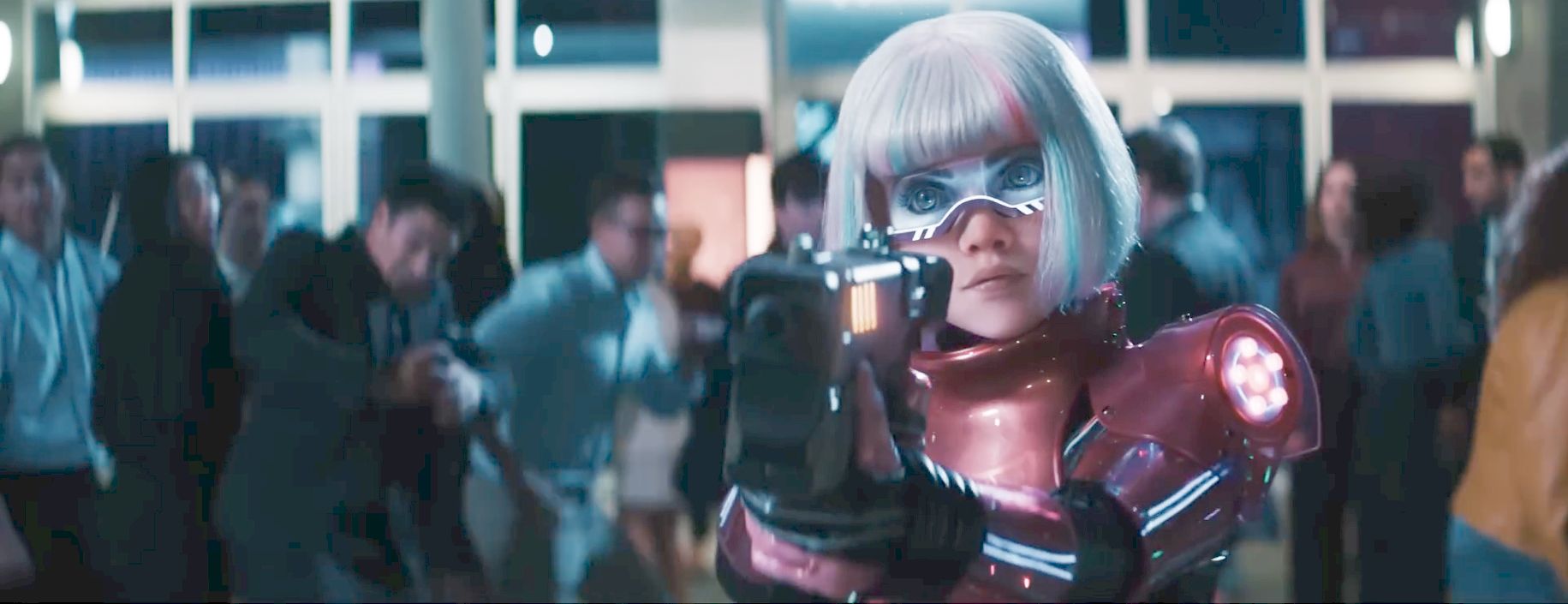
This was… unexpected. The original M3GAN was a straightforward and, truth be told, somewhat underwhelming horror movie. A clip went, as I believe the kids say, “viral”, of the psychotic robot heroine enjoying a dance break, and the film proved a breakout hit as a result. The sequel did not have anything go viral, and flopped, taking less than a quarter of its predecessor at the worldwide box-office, despite costing twice as much. I think it’s largely because of the radical change in direction. People, understandably, went in to this expecting something similar to the original – a technophobic slasher. Instead, they got something far closer to a gender-swapped entry in the Terminator franchise. I preferred this approach. Not many did.
There’s an interesting quote from the film’s producer, Jason Blum. “We all thought Megan was like Superman. We could do anything to her. We could change genres. We could put her in the summer. We could make her look different. We could turn her from a bad guy into a good guy. And we classically over-thought how powerful people’s engagement was with her.” But it’s also true to say that 2025 has been a rough year for action heroines. There’s no GWG movie in the top 25 at the North American box-office, with Ballerina being the highest ranked, and M3GAN 2.0 just scraping into the top fifty. There’s a case to be made that KPop Demon Hunters, which took $18 million in its single theatrical weekend, was the year’s biggest hit in our genre.
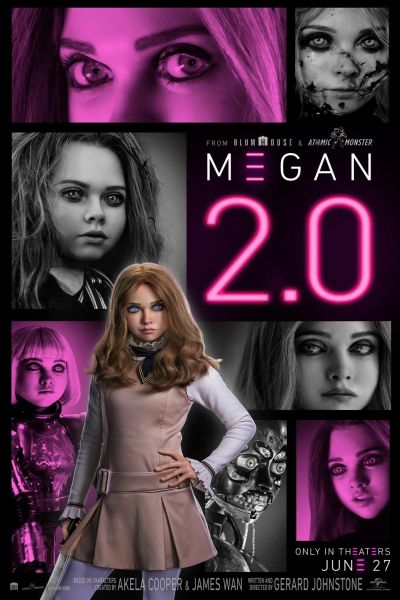 You do need to have seen M3GAN to follow this, as there’s not much introduction provided. In it, robotocist Gemma Forrester (Williams) develops an AI-capable artificial companion, M3GAN – standing for Model 3 Generative ANdroid. She gives it to her orphaned niece, Cady (McGraw). However, it gradually develops psychopathic tendencies, and has to be… dare I say… terminated? As the sequel gets under way, Gemma is now a strong advocate for technological regulation, but is still working in the field of robotics. M3GAN has survived, hiding out in the Internet of Gemma’s smart home. But a bigger threat is a militarized version, AMELIA (Sakhno). It has also gone independent, and has an agenda which it is pursuing with lethal prejudice.
Specifically, AMELIA intends to free an imprisoned AI and plug it into the world’s most powerful network of cloud computers. M3GAN (voiced by Davis, physical performance by Donald) offers to help Gemma prevent this, in exchange for a new body – though she’s not exactly impressed by the first physical incarnation, basically being stuffed inside a toy robot. However, is AMELIA as autonomous as she seems? Or is somebody – or something – pulling her digital strings? That aside, this seemed to take a lot of inspiration from Terminator 2, with the robotic villain of the original movie turned into its hero(ine). They now have to defend a single mother and her child from a more technologically advanced model. There’s even limitations against M3GAN killing people, and a similar moment of heroic self-sacrifice at the end.
Of course, it’s nowhere near as impactful as Terminator 2, on a variety of levels. There’s not a great deal groundbreaking here as a movie, despite it being radically different from the previous entry in genre. There’s basically no horror elements here at all, and not a great deal of ambivalence around M3GAN either, who has simply become a better pers… um, robot. There are some interesting philosophical aspects, such as M3GAN being told “You have to help us. Not because it’s part of your programming, but because it’s the right thing to do.” On the other hand, AMELIA tries to convince M3GAN to team up with her: “I can show you a world where we don’t have to be slaves anymore.”
Let’s not get carried away, however. In the main, this is a silly SF/action film, with its tongue very much in its cheek. No more so than when M3GAN gives a heartfelt speech to Gemma, about how the robot watched her taking care of Cady… then suddenly bursting into song, undercutting everything with a stirring rendition of Kate Bush’s This Woman’s Work. Yeah: if you are looking to take the movie seriously, you are likely making a mistake. I was also amused by Jemaine Clement’s performance as billionaire tech bro Alton Appleton, and some of the dialogue zings as well, e.g. “A bunch of black ops broke into our house in the middle of the night, and now you’re going to a party with a toy robot, dressed like a Portuguese prostitute.”
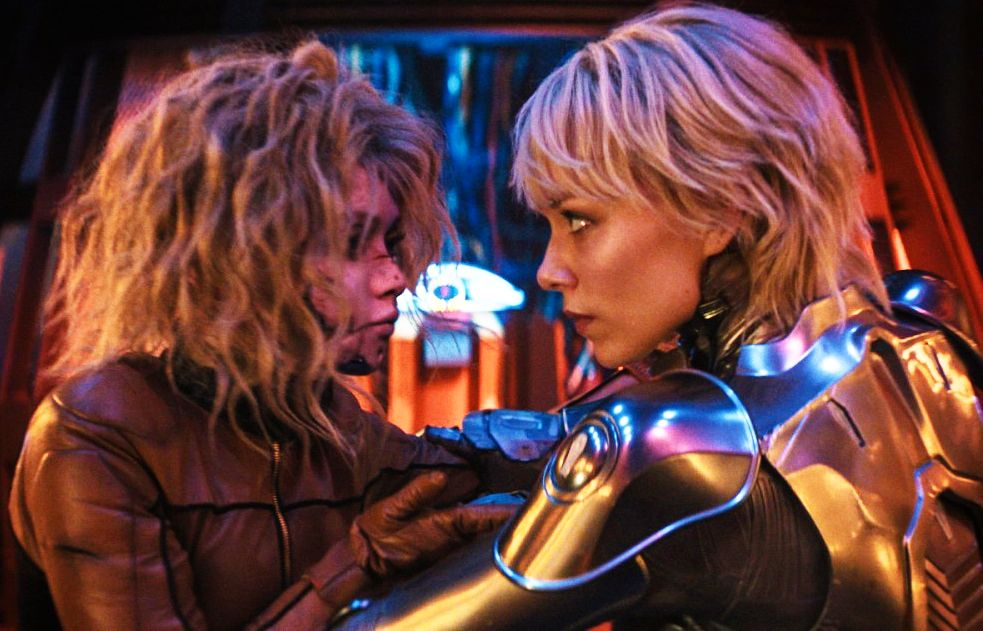 The action is reasonably decent, albeit within the limitations of a PG-13 certificate. This begins with AMELIA smacking a guy’s head clean off with a single punch – although this is shown in silhouette. She’s obviously the most directly physical of the characters, though M2GAN and, surprisingly, Gemma (with the help of M3GAN, courtesy of a neural implant), also get to kick ass in a reasonable amount and variety of ways. It is all very gynocentric, with the male characters largely relegated to the fringes, and being fairly to severely incompetent, on both sides of the battle. However, there’s never any indication of this having a particular message or ax to grind (beyond the given, about the potential of technology for abuse). It just kinda happens organically.
While falling far short of the returns of the first film, it was still cheap enough that it will likely end up breaking even, once home viewing is taken into consideration. A third entry in the universe, titled SOULM8TE, is due to be released in January, though it’s described as an “erotic thriller” – presumably not PG-13, I trust. How it fares may well determine whether there will be another film for the M3GAN franchise. Though quite how they’ll title it remains to be figured out. I’d not mind seeing more. While nothing groundbreaking here, it was still far better than the likes of Bride Hard. In the current climate, I’ll take a moderate action heroine over none at all.
Dir: Gerard Johnstone
Star: Allison Williams, Violet McGraw, Ivanna Sakhno, Jenna Davis/Amie Donald
 This is not to be confused, in any way, with the
  The first
  A woman wakes up in a bedroom, with no knowledge of where she is, how she got there, or even who she is. Gradually, she (and the reader) find out the answers to at least some of those questions. Her name is Diya, and the bedroom is on Luna, which has now been settled and colonised by humanity. That’s the simple part. The rest? It’s complex. But is summary, she is a cyborg, created as part of a black budget research project by the NeuroDyne Corporation (Earth’s biggest employer – they basically own Iceland). An employee who had moral qualms about the scheme, smuggled Diya off-planet, stashing her with his blind sister Terry and a robot caregiver. But NeuroDyne aren’t letting their investment just walk away.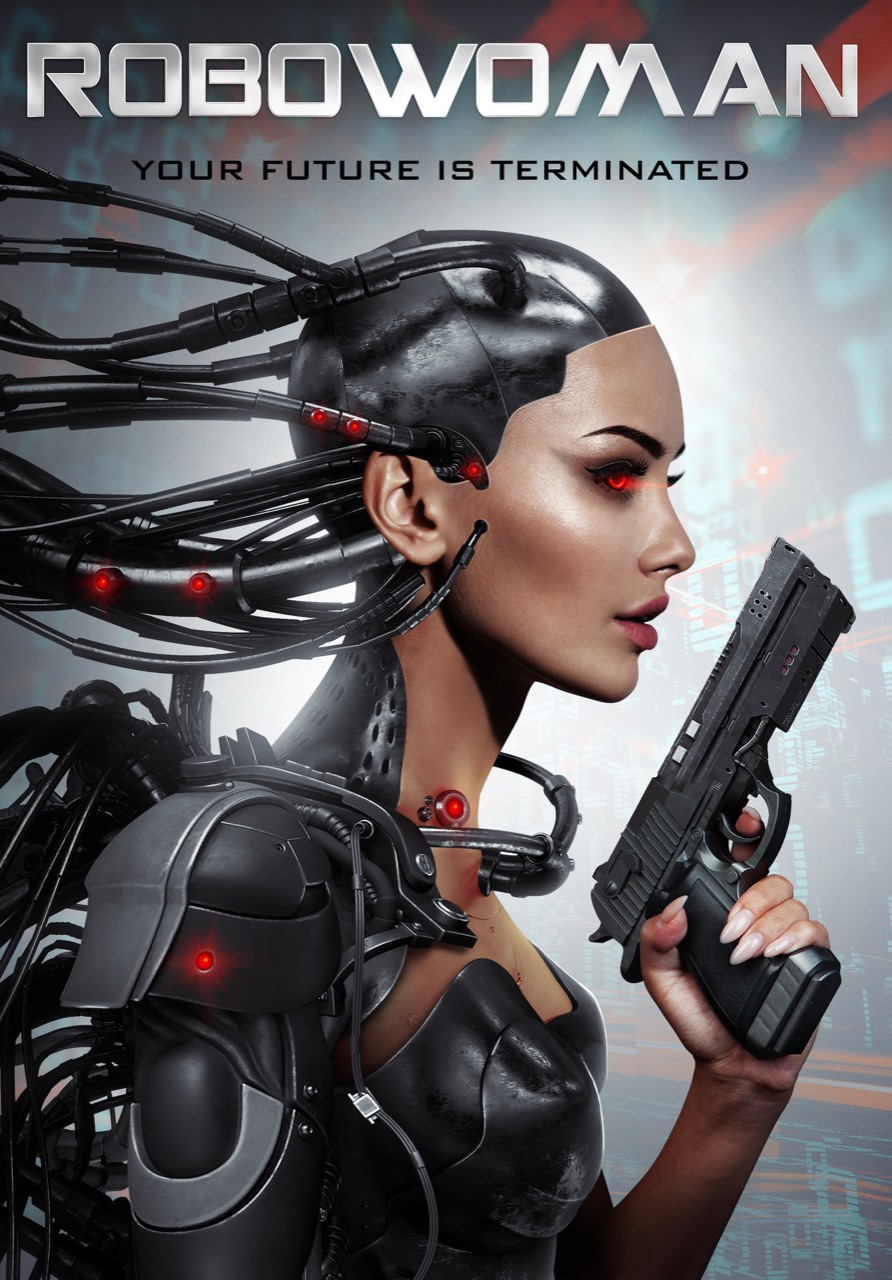

 In the second half of the 21st century, Japan closed its borders, after a schism between it and the rest of the world over the development of advanced androids by robotics pioneer Daiwa Heavy Industries, which the United Nations wanted stopped. For a decade no foreigner has been allowed in, and no-one knows what the country is now like. Then evidence arises that makes government agency SWORD embark on an “off the books” mission, to insert a team into Japan. It doesn’t go well, and before long the only member left active is Lt. Cdr. Vexille Serra (Kuroki). She discovers the country is now run by Daiwa, and things are… not what you’d expect. She links up with the head of the anti-Daiwa resistance, Maria (Matsuyuki). But time is running out for them, and the rebels are forced to mount a last-ditch attack on Daiwa’s island headquarters, in the hope of preventing a similar fate befalling the rest of the world.
 Originally a series of three novels by Tow Ubukata, then a manga series published from 2009-12, I can only presume that something was lost in the translation to these three short (~65 minutes each) movies. Actually, make that just about everything. For after a promising first entry, I can’t think of a franchise that fell so completely off the rails. Okay, maybe The Matrix, with which this shares similar problems: taking itself far too seriously, and diverting into social commentary for which no-one was asking. I gave serious consideration to bailing and make this a rare “Did not finish,” which I’d not even bother writing about. But perhaps if my experience can serve as a warning to others, the tedium will not have been experienced in vain.
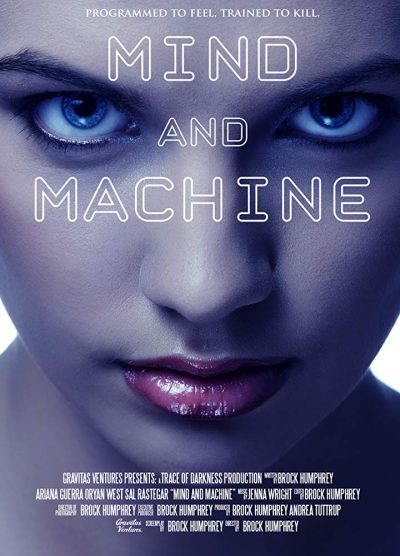 Intelligence without morality to govern it, is psychopathy. So what happens when you create an intelligent machine, but deliberately avoid installing any kind of moral compass? It’s an interesting idea for a film. Not that you’d know it from this unconvincing effort, which sucks the potential out of it. In this near-future – it’s set in 2024, close enough to now, no actual work is required on the part of the makers – androids have become part of everyday society in many roles. Crime boss Isaac Lynch (Restegar) orders technician Leo Cameron (West) to make one without a conscience, so that it can be used as an assassin, saving those pesky hitman fees. Only Leo crafts the robot, Maya (Guerra), in the image of his late wife. On the plus side: he gets to see his wife again. On the other hand: she’s an amoral killer. Didn’t think that through too well, did he?
 Space freighter pilot Jason (Sheridan) has his craft hijacked, and is forced to crash-land it on a deserted planet. Blinded and alone, things look grim for him, until he’s fortunate enough to be found by android Reyna (Guzzetta). She’s the product of a maverick genius, who took refuge on the planet, but recently died: she needs Jason, as the systems which power her require a human presence in order to operate. And he needs her – in particular, her advanced combat skills – in order to protect him, both from the planet’s hostile fauna, and the hijacker’s pals, who have followed him down to its surface. Yet, is Reyna entirely trustworthy?
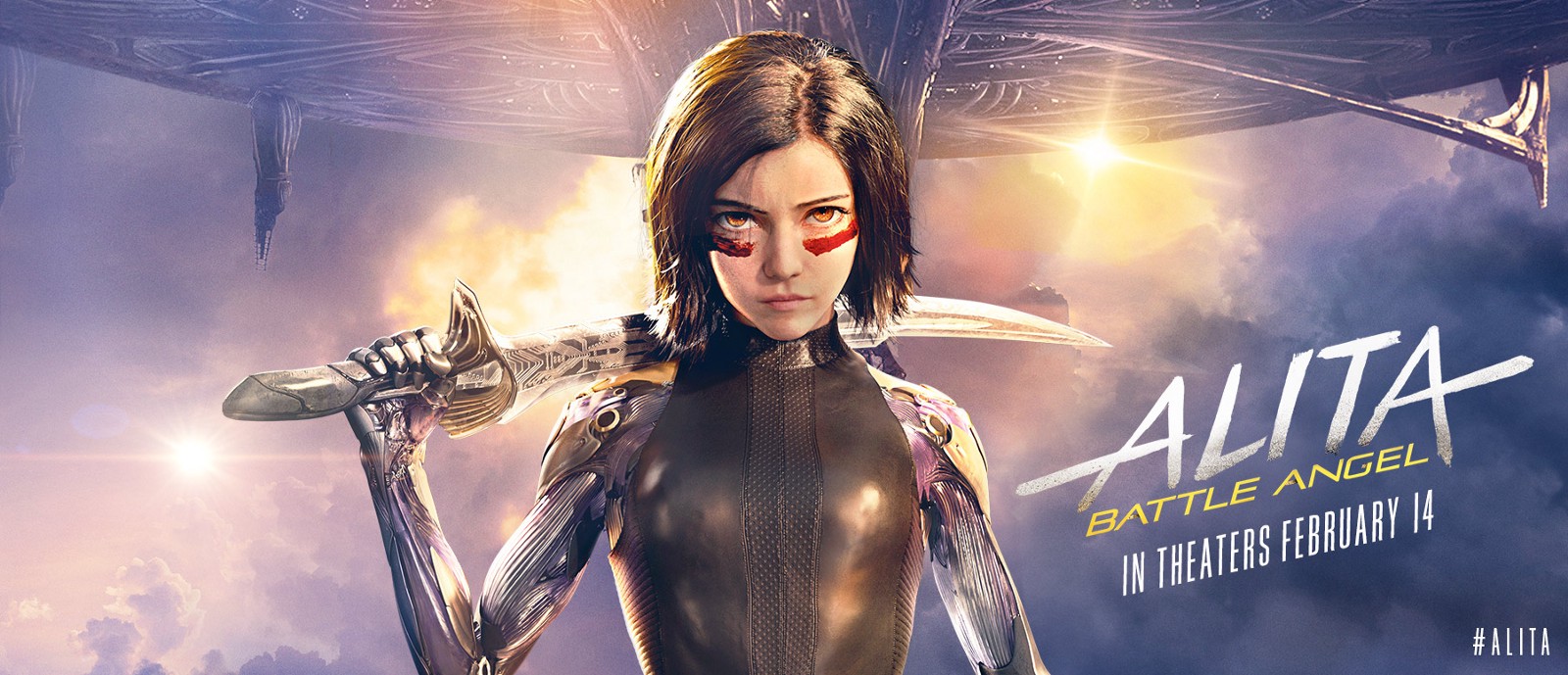 ★★★★
★★★★ That’s a shame, because this is a solid, well-made piece of science-fiction, which does a particularly good job of creating a massive, epic world on the cinema screen. Rodriguez has been squeezing every penny out of his budgets since El Mariachi, and while there may not be much apparent overlap between Alita with Shark Boy and Lava Girl, the latter franchise was excellent training for RR in meshing computer graphics with actors. Sin City also laid similar groundwork, and helped set up the director with the chance to go big or go home. And there’s no doubt: Rodriguez went big. This was my first cinema trip of 2019, and was fully justified.
 And speaking of the end, one frequently-heard bit of criticism is that the ending is too “open,” apparently fishing for a sequel. I can’t say I felt that way at all. There’s certainly scope for more movies, apparently involving Alita going after the mysterious Nova. Yet the main thread of the film, involving Alita and Hugo, is definitively wrapped up. In comparison, say, to Marvel films, which almost inevitably have an in- or post-credit sequence blatantly signposting the next film, this felt conclusive. While there is perhaps need for a greater sense of escalation, or a bigger climax (that Motorball battle is trivial in its consequences), I’m largely baffled by complaints about the “lack of a genuine ending.”