It has been forty years since the first crack at adapting the Marvel comic series, in turn inspired by Robert E. Howard’s character, Red Sonya of Rogatino. The first stab, released in the wake of Conan, starred Brigitte Nielsen, and was pretty bad. There have been rumblings of further attempts over the years, with a Robert Rodriguez version, starring Rose Macgowan, gaining traction in the late 2000’s. Though given the dreck in which Macgowan has appeared, it’s probably for the best this never came to fruition. Instead, we have a lower profile – read, smaller budget – version from director Bassett, who previously gave us mercenary Megan Fox, and lead Lutz, who was totally awesome taking her Revenge.
Indeed, that would make a fine “Matilda Lutz overcomes impalement to take vengeance” double-bill with this. The reboot isn’t bad at all. It certainly is miles better than the eighties version, mostly because of Lutz. She may not be quite as muscular or buxom as the comic-book version. But she does bring the required intensity, and that goes a decent way to making this watchable. The supporting cast are good too, although I was less convinced by the plot in general, which is little more than a grab-bag of clichés. We begin with the quick slaughter of Sonja’s village, then see the adult Sonja (Lutz) roaming the forests of Hyrkania. These are under threat from Emperor Dragan (Sheehan) and his psycho sidekick, Annisia (Day).
After being captured, Sonja is made to fight in gladiatorial combat. She helps the other captives escape, and they fight a guerilla war to prevent Drakan from obtaining the other half of a mystical tome which has great power. Sonja is almost killed by Annisia – the impalement mentioned above! – but brought back by Ashera, the forest goddess, to face her enemies again. Pretty rote fantasy stuff, in other words. It’s the stuff around the edges that is more fun and, beyond the lead actress, is where the improvement is biggest over the Nielsen version.
I enjoyed the arena scenes, which felt like Spartacus with monsters. Always nice to see Rhona Mitra (Doomsday), though her role is briefer than I’d like. I also liked Day, whose portrayal of Annisia is entertainingly unhinged, like a psycho version of Lady Gaga. Her relationship with Dragan doesn’t play out as I thought, and I would have preferred more places where the script confounded expectations in this way. I was a little disappointed by the fights, which aren’t as hard-hitting as I expected. Although they feel workmanlike and competent, the hits only seem to have much impact on a couple of occasions. Some editing might have helped: 110 minutes feels longer than necessary.
On the other hand, for a reported $17 million budget, it looks decent, and Bulgaria offers some impressive backdrops on which to paint things like the largely-CGI arena. There are occasional moments of self-effacing humour which help, such as the scene where Sonja gets her battle bikini. The end clearly wants a sequel: however, the very token cinema release (one midweek screening in theatres!) suggests the studio had little faith in it. A pity. I’ve definitely seen much worse, and would welcome further tales of Hyrkania.
I’ve seen worse films, to be quite clear. Technically, this is perfectly acceptable, with an apparently reasonable budget, put to decent use. But I don’t think I’ve seen one which has been more annoying. It manages to hit that sweep spot of being both incredibly stupid, while also congratulating itself for being very smart in its attempts at social commentary. But the annoyance extends beyond that, to purely instinctive reactions like really bad hairstyles sported by some players. I can’t explain these responses, and am not interested in analyzing or defending them. But they certainly played their part in my steadily increasing irritation at the plot, characters and execution, over an excessively long running-time of one hundred and sixteen minutes.
The heroine is Robbin (Serayah) – and, yes, there are two b’s there. She is a former bank employee, who was falsely accused of stealing two million dollars. With the evidence stacked against her, she took a plea agreement rather than risk a long jail sentence. When she gets out, she decides the best way to respond is… by actually stealing from the bank. Yeah. Let that morality and wisdom sink in. She assembles her old crew from the South Central ‘hood where she grew up, and they begin planning their heist. But one theft is deemed insufficient payback, and another, even bigger robbery is planned. This is despite the increasing attentions of the police, including a detective (Lee), who has known Robbin and her friends since they were kids.
Far and away the worst thing here is the script, also by Stokes. It demonstrates a repeated, startling level of ignorance about how banks work, how computers work [authority check: I spent over a decade in IT with HSBC], and how the police work. For example, in the world of this movie, a detective under announced and active investigation by Internal Affairs for corruption, is not only allowed to keep working on the case concerned, she then gets to lead a raid on the suspects’ base of operations. #NotHowCopsOperate Hell, you could possibly also throw how criminals work onto this heaping pile of no-knowledge, since at one point a robber clearly asks a bank cashier for “No unmarked bills.” Um… shouldn’t that be “No marked bills”?
Then there’s the whole clunky parallels to Robin Hood, beginning with the heroine’s first name. All her team – fresh off robbing a convenience store, I note – suddenly acquire altruistic reasons for their move into big-ticket crime. Add on a nasty racial strand, where just about everyone black is good, and everyone white is malicious and evil, to an almost tiresome degree, and you will perhaps begin to see from where my irritation stems. “Tubi Originals” are well-known for setting a low bar, to put it kindly. This falls short of reaching that bar. If it weren’t for the fact that Tubi is a free service, I would seriously be contemplating cancelling my subscription.
Dir: Chris Stokes Star: Serayah, Erica Pinkett, Jadah Blue, Robinne Lee
You could accuse this film of pulling a bait-and-switch. The first thirty minutes are set up to point emphatically towards one scenario. It then goes off in a completely different direction for much of the final hour – one very clearly inspired by French New Wave of Horror masterpiece, À l’interieur (Inside). Then it circles back around to kinda-sorta tie up the loose ends. Fortunately, I came into this one with almost no preconceptions. A poster of a nun wielding a shotgun? That’s all it took to add this one to my watch-list, and whatever happened thereafter was alright with me. Providing it delivered on the promise of a heavily-armed Sister of No Mercy on the advertising, at least.
It does, somewhat – though I have reason to doubt her nun authenticity. It’s Amanda (Hoffman), whom we first see forcing a man into the trunk of her car at the point of her boomstick. We then flashback to her working as a hotel maid, alongside BFF Rebecca (Casey). One day, Amanda is raped by a hotel guest (Jousset), whom we recognize as the man getting trunked, and ends up getting pregnant. She decides to keep it – that’s a discussion in itself – but to offer the baby up for adoption, and the selected parent is Dr. Catherine Gilden (Rubino), who initially appears perfect. Key word there: initially. Because Catherine becomes too stalkery for Amanda’s tastes, so she breaks off the arrangement. Which is where the film makes a sharp right.
Admittedly, in the annals of poor decisions, Amanda escaping her stalker by going to a remote cabin owned by Rebecca’s dad, is probably not the best idea. Anyone who has ever seen a horror movie can predict how well this works, i.e. not at all. After a brief homage to The Shining, we’re off to the races, with Catherine and Amanda engaged in a no-holds barred battle over the unborn child. Well, some holds barred: Inside, now that was truly no-holds barred, most memorably when Beatrice Dalle tried to excavate the disputed foetus with scissors from its mother. Nothing so extreme here, although this does have its moments. For good reason does Amanda proclaim, “Why won’t you fucking die?”
I would probably have to admit, this is rather more fun than the early going, though the relationship between Amanda and Rebecca feels genuine. You will probably learn more about the process of cleaning hotel rooms than you wanted to know, and it feels as if the makers suddenly realized the movie they originally set out to make wasn’t very interesting. I feel the second half makes up for it, and it’s clear by the end, when we circle round to her assailant, that Amanda has been changed by her experience. I certainly have questions, not least about Rebecca’s fate, and its definitely not as grindhouse as it thinks it is. But as a nasty slice of female empowerment, I reckon this certainly has its moments.
Dir: Brian Darwas Star: Kate Hoffman, Rosanne Rubino, Christy Casey, William Jousset
Here’s a real obscurity. 18 years old, and yet still with a mere seven votes on the IMDb. There, I had to find it by going through the director’s name, as the title brought up nothing. To be fair, it’s not even the best-known film of the year, because some guy called David Lynch made a short called Ballerina in 2007. But it turns out to be an early work from Mauser, whose Lady Outlaw we covered earlier in January. That was certainly better – as it should be, coming almost two decades later, the director having made a good forty (!) features since. It doesn’t look like his budgets have increased much, but Outlaw does a better job of working within it.
Here, the ballerina is Tara, a ten-year-old girl who sees her parents ruthlessly gunned down because of their connection to the Capello crime family. She vows to find and kill whoever was responsible, and is brought up by her big brother Angelo (Jasso). He trains her in the ways of his own profession, as a hitman for the Capellos. Eight years later, Tara (Nutting) still has not been able to take her revenge, and is studying dance at college, while working alongside Angelo. She gets a visit from the mysterious Ruby (Young), a near-legendary figure in the underworld, who offers to tell Tara who killed her parents, if she helps fix things to his advantage. But she may not like what she is told.
Mauser clearly subscribes to the notion that talk is cheap, for it is very chatty. Sometimes, this is ok: Young has a presence which commands the listener’s attention. But too often it comes off as a bad Tarantino wannabe – and even a good Tarantino wannabe would be on thin ice. Witness the lengthy early discussion about smoking, which had me wishing I had a knitting needle to jab into my ears. Fortunately, nothing thereafter is quite as terrible. However, it’s a film more interested in telling, rather than showing. There’s a corrupt female cop (Posas) in the mix, and I liked the way all the police station scenes were shot in shadow. Clearly to hide that they couldn’t afford a set, yet it works well enough.
The action is no great shakes, with Nutting being slow and having a limited set of moves. Certainly, there’s little or no indication of the expected balletic grace. She seems about as much a dancer as I am: I won’t see fifty again, and my knees aren’t what they used to be. Jasso comes off like you ordered Joe Mantegna on Temu, which isn’t necessarily a bad thing, It all builds to an ending which strongly suggests Mauser is a big fan of The Usual Suspects in addition to Tarantino. As a pastiche of better film-makers, it’s just about okay, though the ten-year-old version of the heroine may be the most disturbingly intense thing this has to offer.
Dir: Brett William Mauser Star: :Amanda Nutting, Matthew Jasso, DeMarcus Young, Valerie Posas
When I reviewed Furiosa, I discussed how action heroine films have been having a tough time at the box-office since before COVID-19. Add another data point to that decline, with the underwhelming performance of Ballerina. Or, to give it its clunky and excessive full title (for the first and only time), From the World of John Wick: Ballerina. Which – much like Furiosa – is a real shame, because it’s top-tier stuff. The critics liked it (76% on Rotten Tomatoes) and those who saw it, liked it too (93% audience score there). But it just did not seem to connect in a large-scale way with the cinema-going public, and will struggle to cover its $90 million budget, not excessive by today’s standards.
Admittedly, it was a rather troubled production. Filming began all the way back in November 2022, and it was in post-production the following February. But a year later, word came out that additional shooting under John Wick director Chad Stahelski was taking place. There’s uncertainty how significant those were. Suggestions that much of the film was redone have been denied by both Stahelski and Wiseman, who said they were actually due to the studio providing them with additional resources. This allowed them to add scenes, such as the opening depicting the death of the heroine’s father. But regardless, the extra work was certainly a factor in the film being pushed back a full twelve months from its original release date of June 2024.
To be honest though, I really couldn’t tell based on the end product. I have read a lot of criticism suggesting, in brief, “Nobody asked for this.” While that’s dumb – nobody asked for John Wick either – there is an element of truth in it. If they wanted a spin-off, they might have been better using Sofia Al-Azwar, the existing character played by Halle Berry, who was key to one of the best scenes in John Wick: Chapter 3 – Parabellum. It’s worth noting, the script by Shay Hatten, written back in 2017, was not originally part of the Wick universe (although Hatten was inspired by the trailer for John Wick 2), and subsequently got tooled into it. But I wonder, how often are spin-off movies ever successful? Ok, except the Minions franchise.
It’s not the first effort to expand the Wick-iverse which has fallen short either. In 2023, they made a TV mini-series The Continental, which… Um, well… We watched the first episode? You’re certainly left to wonder what might happen about the other spin-off film, focused on Caine, the blind swordman played by Donnie Yen in John Wick 4. We love Yen, and have since the days of In the Line of Duty IV, over 35 years ago. But he has a much lower profile in the West than Ana de Armas, and the appetite for films “from the world of John Wick” which do not have Wick front and center, certainly appears to be muted. Enough about such coarse, commercial considerations. How is Ballerina as a movie?
In this world, there are two specific tribes of assassins. The Ruska Roma, who are structured and orderly, and another group, known as the Cult, who are anarchic and savage. Lawful Neutral and Chaotic Evil, for those who know their D&D alignments. The two groups don’t get along, but generally tolerate each other, basically agreeing to go their separate ways and not interfere, under the current leadership of the Director (Huston) and the Chancellor (Byrne) respectively. A decade or so ago, there was Romeo and Juliet-style romance across the divided houses, resulting in the birth of Eve. When her parents tries to leave their factions, both are killed, her father dying in front of her after being killed by the Cult. She is then brought up in the Ruska Roma.
Eve (de Armas) is trained both as an assassin and a ballerina, although the latter is never of any real significance. On one of her missions, she encounters a Cult member and realizes they are responsible for killing her father. Against the express wishes of the Director, she goes in search of them, finding their headquarters in the remote (and very lovely) Austrian town of Hallstatt, and chewing her way through the Cult towards the Chancellor. But when the Director hears about Eve’s quest for vengeance, posing a threat to the uneasy truce between the Ruska Roma and the Cult, she sends a certain J. Wick (Reeves) after her, to restore the balance and keep the peace.
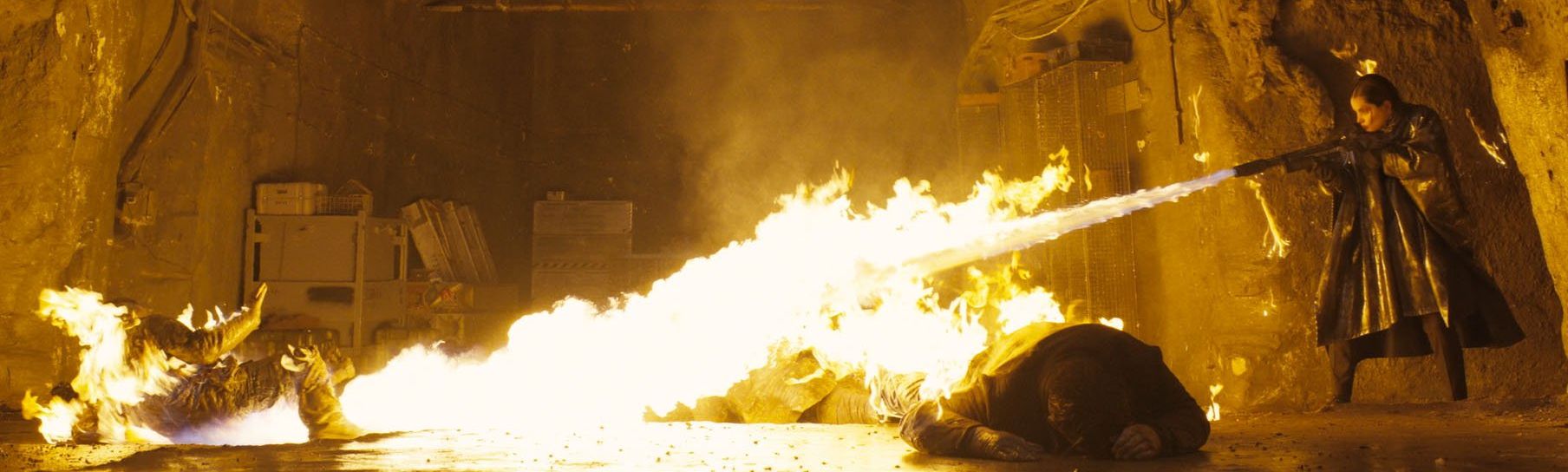
It’s borderline awesome, and on occasion, there’s no “borderline” about it. Let’s just say, I will now be looking into acquiring a flamethrower for home defense. Ok, I should explain. There’s a scene where Eve and one of the Cult members have a – bold font, capital letters, please – DUEL WITH FLAMETHROWERS. It’s every bit as epic and wonderful as that sounds, and it escapes me how they could possibly have achieved it, without reducing the entire stunt team to charcoal briquettes. That’s just the action highlight in a film which has a number of them. I was also impressed with the nightclub sequence – is this obligatory for every film in the Wick-iverse? – of Eve’s first mission, as much for the thumping techno tunes, as for the high-quality fisticuffs.
I do say, some elements feel under-developed, and I wonder if they were a result of the adjustments made during production. The character of Daniel Pine (Norman Reedus), seems particularly an afterthought, not least the fact he’s supposed to be the Chancellor’s son. Adding John Wick in does feel like an unnecessary afterthought and, to be honest, smells a little of desperation. It’s just not necessary, because de Armas is capable of carrying things. This is likely, not just to be the best action heroine film of the year, it’s quite possibly – admittedly, I haven’t seen the last Mission Impossible film yet – going to end up as the best action film of 2025. Such a pity it appears likely to be one and done for this tiny dancer.
Dir: Len Wiseman Star: Ana de Armas, Gabriel Byrne, Anjelica Huston, Keanu Reeves
Sira (Cissé) is a young African woman, travelling through the fringes of the Sahara Desert in Burkina Faso, on the way to get married to Jean-Sidi (Barry). However, their caravan gets involved in an incident with Islamic terrorists, which escalates into murder, with Sira being abducted by the terrorist leader, Yéré (Minoungou). He changes his mind, raping Sira and leaving her in the desert, because she is “not worthy” to die by his weapon. She survives, and stumbles across the terrorist camp, and takes shelter nearby, sneaking in to obtain food and water. After a group of other kidnapped women show up, to be used as sex slaves, Sira begins to put a plan in motion, with help from an unexpected ally.
Lured in by the poster, I was hoping for something along the lines of Revenge, especially in the wake of early dialogue about how the heroine had been trained to take care of herself by her brothers. But this is a very different kettle of fish. I have a bunch of questions, not least over the time frame involved. Sira is living in the rocks beside the camp for the better part of a year. It’s long enough, to go from not being aware of a pregnancy, to giving birth in the same rocks. While it’s certainly a memorable image to have her blazing away with an automatic weapon, her child strapped across her back… It doesn’t make a great deal of sense.
Yéré’s terrorists don’t appear to do anything much for the great bulk of the time either, except sitting around. They do eventually go out on an attack in the final twenty minutes, but the amount of terror they generate is minimal. Indeed, everyone does their share of sitting around since nobody seems particularly bothered by Sira’s long-term absence. The police, and the authorities in general, are notable by their absence until the very end. Though this may be an accurate assessment of the local situation; I can’t say. Jean-Sidi makes a half-hearted effort to join up with Yéré’s forces. The fact he’s a Christian proves a bit of an instant red flag there, and Yéré does not take kindly to the attempt.
It’s only at the very end things crack open, with the terrorist camp proving to be unexpectedly flammable. It does offer a glimpse into a culture of which I had little experience or knowledge, and Sira is an interesting character, one whose resilience is remarkable, given the circumstances under which she has to operate. This was the first time Burkina Faso submitted a movie to the Oscars (it was filmed in Mauritania for safety reasons), and is technically decent. But for a film over two hours long, it’s in need of significantly greater narrative impetus. It has the shape of a thriller, yet definitely wants to be a drama. At least I get to cross another country off my map of world cinema.
Rebecca Ryan (Goose) is an undercover cop, who has been working for three years as “Margaret”, infiltrating the McCann family, a South London organized crime outfit, with Darius Cruise (Ofoegbu) as her handler. He’s just been given a new partner, Abby Barrett (Air), and isn’t happy about it. Rebecca, meanwhile, has fallen in love with Harry McCann (Calil), but his sister, Marla (Riana Husselmann), recently out of jail, suspects something is up with ‘Margaret’. When an incident appears to blow her cover, and Rebecca returns home to find her daughter murdered, she decides it’s time to make the entire McCann family pay for their actions. As the title suggests, everything subsequently unfolds over the course of a single day.
It’s all a bit wobbly at the beginning, with the director struggling to get all the various plot threads up and running. Trimming them back would have been helpful, such as Abby’s contentious relationship with her former partner; it adds little. Air’s performance isn’t the best either; she’s considerably less convincing as a cop than Goose or Ofoegbu, although the latter is clearly channelling the spirit of Idris Elba as Luther. As a low-rent version thereof, he’s not bad, with the script throwing on copious quantities of cynicism, such as Darius telling his partner, “The only thing I don’t believe in anymore is this job.” Goose is decent too, playing a woman who is teetering on the edge of losing herself, with her daughter providing the sole reliable anchor in her life.
When that tether gets removed, there’s really only one way things can go: downhill, quite rapidly. The problem is, the further in we get, the more likely it is that the McCann’s weren’t responsible (though I have to say, the actual resolution doesn’t feel credible, especially for a British-set movie). But by the point Rebecca discovers the truth, a quote from Lady Macbeth fits the anti-heroine very well: “I am in blood stepped in so far that, should I wade no more, returning were as tedious as go o’er.” It does feel almost Shakespearean, in the sense that tragedy seems inevitable, and the characters are largely powerless to do anything about it.
I’d like to have seen more of Marla, who makes an immediate impression from her first scene. The character has a calculating edge, and a civilized veneer thinly covering a most unfeminine fondness for brutality. I almost wish the makers had gone the whole way, and made Darius a woman as well, to complete the quartet of strong female characters. The low budget does occasionally show through, and some of the action might leave a bit to be desired, though the inevitable brawl between Marla and Rebecca does achieve a satisfactory resolution. However, by concentrating on the women, it does stand out from the slew of “gritty” British crime film to come out in the two thousands. While it’s no Luther, I found myself adequately entertained and surprisingly engaged.
Dir: Ian David Diaz Star: Claire Goose, Donna Air, Anthony Ofoegbu, George Calil
Surprising to see a rough, occasionally nasty slice of rape-revenge was funded by the British government, through the National Lottery scheme. Not that I’m complaining: it’s preferable to period nonsense or kitchen-sink dramsa depicting inner-city life. But I would not typically have expected something as unrepentantly exploitative to get money from such a source. The film kicks off when Alice (Anderson) and her boy toy, Adam (Dyer) are on the way home from a party. A road rage incident leads to him being savagely assaulted, and her being gang-raped, leaving both of them severely traumatized by their experience. Interestingly, it’s Alice who is the one most intent on finding the perpetrators and taking revenge.
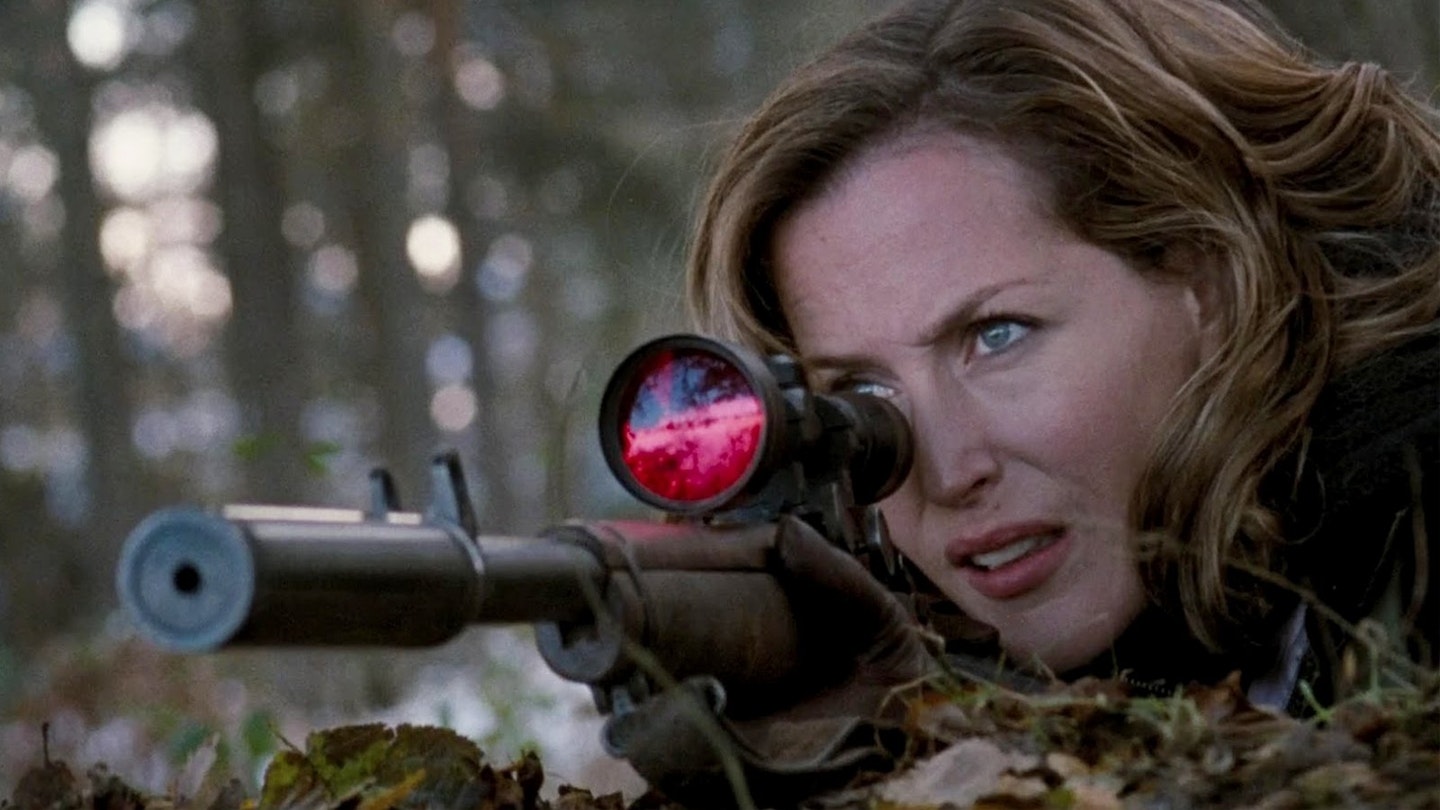
Turns out her recently deceased father was a soldier, who taught her not to turn the other cheek, and left her a weapon with which she can carry out her vengeance. This makes her considerably more interesting a character than Adam, who now mopes around smoking weed and suffering from erectile dysfunction. Alice locates one of the attackers, Heffer (Calf), and sets her plan in motion. However, things become increasingly complicated, first with the presence of his daughter, and the discovery that his participation in Alice’s sexual assault was not as purely predatory as it seemed at the time. She begins to understand that retribution can be messy; on the other hand, Adam is becoming more gung-ho about the process, and refuses to back down from his revenge.
I guess these two sides of the coin, and their contrast, are key to the film’s message, though the sudden way in which it ends might leave you wondering if there’s any genuine message intended at all. Maybe it was all the fulfillment of some weird, albeit understandable, Gillian Anderson fetish for writer-director Reed (there are a couple of scenes which lean towards that interpretation). She is certainly the best thing about this, and her journey from predatory cougar through to literally predatory cougar would have been worth following. Dyer continuing to get roles remains a mystery, not least because he was at least five years older than his supposed 23-year-old character here, and can’t exactly make up the deficit in acting ability.
“Do you know what they did after they finished with me? They laughed.” That’s Alice’s chilling explanation of why she’s so hell-bent on making Heffer and his colleagues pay. While I did appreciate the way the rapists were neither your stereotypical yokels nor yoofs, being middle-class and middle-aged, it’s really only when Anderson is on screen that this movie shows credible signs of life, Anderson again proving that she is considerably more than Dana Scully. Even here though, the film manages to fumble things in a final act which feels a severe cop-out, albeit after we are treated to the site of Alice sticking a gun where a gun is not normally expected to go. Take that mental image with you, the next time you buy a lottery ticket.
Dir: Dan Reed Star: Gillian Anderson, Danny Dyer, Anthony Calf, Adam Rayner
a.k.a. Straightheads
Make no mistake, this is a cheap and tawdry excuse to show nekkid women, which may well leave you with a more cynical view of human nature. But if you’re going to watch a cheap and tawdry excuse to show nekkid women… You could probably do a lot worse. The main area in which this punches above its weight is in the script, which has had some thought put into it. The viewer may actually leave the film knowing more about Nevada gaming regulations than they did going in: nekkid women and genuinely informative. I did not see that coming. It also has a final twist which will make you rethink much of what has happened.
It takes place in Las Vegas (though the less glitzy resort of Laughlin stands in for Sin City at certain points). Sleazy strip-club and casino owner Barry (Mauro) needs four of his ladies to make a good impression on his business partners, but the evening ends with one woman, Jennifer (Joiner), alleging he raped her. Due to lack of physical evidence, the cops won’t take action, but Jennifer’s friends, led by Amber (Martinez), swear to take revenge, and cook up a scheme that will relieve Barry’s casino of a good chunk of cash. The aim is more than simple larceny, but also to drop him in hot water with the gaming authorities, who require casinos have enough on hand to cover winning payouts.
Doing so requires them to bring on board a friendly blackjack dealer, Scribe (Franke), and also use their womanly wiles to ensure everything goes to plan. That’s what I meant about human nature, because every man here can be easily manipulated to do anything, with the promise of a little action. This is absolutely required by the plot, in order for the heist to work. And every woman is perfectly willing to do the manipulating. By the end, you could argue the case that nobody here, even Jennifer, should be classified as a nice person. And I write as someone who, in my youth, was not unfamiliar with strip-clubs, and so is under no illusions about the illusion, if you see what I mean.
Still, if none of the characters were likeable, the mechanics of the heist managed to keep me interested, along with the way Barry is kept out of touch and unable to deliver the needed funds. He then ends up trying to take revenge on the girl-gang, and it’s that what proves his ultimate downfall. There’s a lovely montage at the end, showing everybody getting laid… ending with Barry in jail, also getting laid. I genuinely LOL’d at that. The women are undeniably easy on the eye, particularly Irina Voronina as the club’s top earner, Paradise. Really, its clear the makers have kept their ambitions here restrained and, I suspect, on those terms, it should be considered a success. Clearly nonsense, yet was I not entertained? Yes: yes, I was.
Dir: Christopher Robin Hood Star: Amylia Joiner, Dean Mauro, Ilsa Martinez, Jay Anthony Franke
I was rather surprised to see the name of Alexander Witt pop up as the director, at the end of the first movie in this Chilean trilogy. He has been a stalwart second-unit director in Hollywood for decades, going back to Speed in 1994. With regard to the site, he fulfilled the same role on Aeon Flux, but is best-known as the director of the second film in the Resident Evil franchise, Resident Evil: Apocalypse. That was his sole directorial credit prior to Sayen, and I must confess… I was today years old when I discovered he was Chilean. I presumed he was German, based off his name and his work on the Berlin-shot Apocalypse. But, no. Born in Chile, albeit of German descent. He returned there to take the helm, almost 20 years later – again with an action heroine story.
Sayen
★★½
This takes place in the Araucanía region, where Sayen Coñuepan (Montenegro) has just returned to her indigenous homeland. Her grandmother is presented with an offer for her land, but a suspicious Sayen discovers it’s a front for a mining company. Things escalate, with Antonio (Piper), the junkie son of the company’s head, Máximo Torres (Arce), shooting the old woman dead. Sayen vanishes into the jungle, with Antonio and his henchmen in hot pursuit, knowing that if Sayen is allowed to go public with what she knows, it could make things very difficult for the company. However, this is very much her territory, and she has skills to make things potentially very difficult for them.
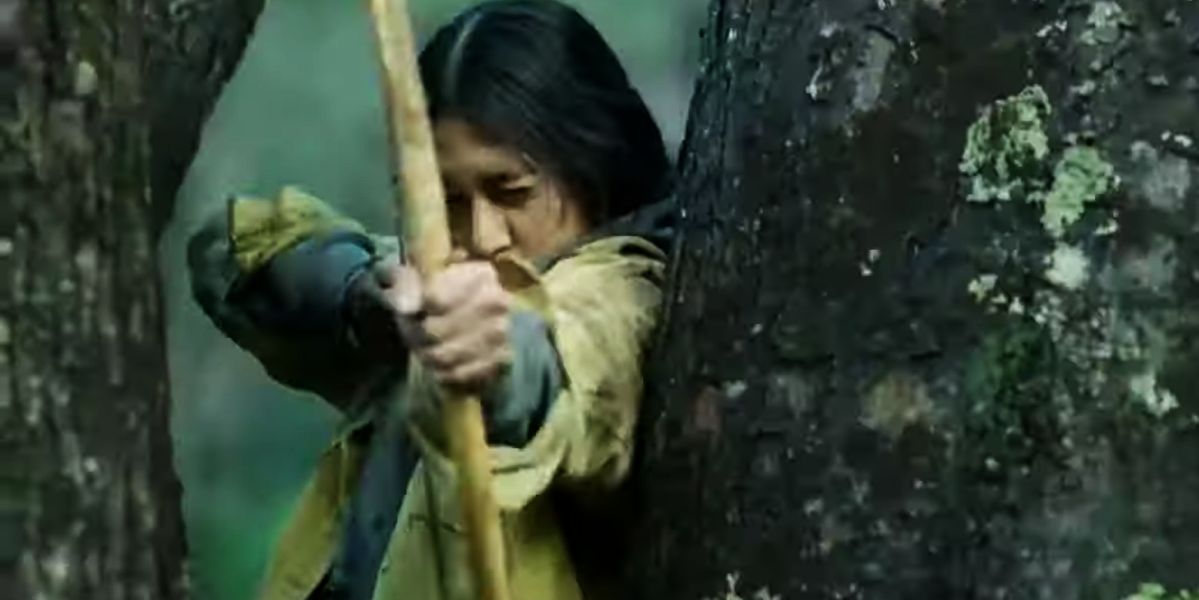
As a jumping-off point, this is… okay, I guess. It begins with a po-faced caption which informs the viewer this is going to be an Important Message Movie. The early going is a bit of a slog, leading to me coming to the conclusion, just because something is “traditional” doesn’t necessarily make it any good. Once granny is gunned down, the film shifts gears and gets more energy. However, I was expecting Sayen to go full Rambo, using the environment to her advantage. She doesn’t really, short of crafting a bow, which she uses one (1) time, and a bit of impromptu first-aid. Meanwhile, the bad guys could hardly be less subtle about their villainy, if they were given wax mustaches to twirl.
Admittedly, this may be necessary to make things clear for the international audience, who may not be up to speed on the intricacies of indigenous politics at the bottom of South America. We need black hats and white hats: keep things simple. Oh, and Chilean rap. Okay. It is interesting how Sayen doesn’t kill anyone – at least not directly. Oh, people die in her wake. Quite a few of them. However, it’s things like death through careless driving, for example. Or pointing a speedboat at a pier, then leaping off. Given the circumstances, surely no jury in the land would convict. After this lacklustre opening, while I can’t say I was keen to get to the next installment, I’m reluctant to quit any story in the middle.
Sayen: Desert Road
★★★
However, I felt the sequel works a little better. It takes place in an entirely different environment, relocating from the southern forests to the Atacama desert, one of the driest places in the world. The enemy remains Actaeon, the predatory industrial corporation headed by Torres, who have built a lithium extraction facility, after bribing their way to approval. Sayen, now with a businesslike crew-cut, is looking to find evidence of this corruption, and gets help from Qumal (Sánchez), a young woman whose father was among those who accepted the money. A SD card contains the required proof, but Acteon and their minions remain hot on Sayen’s trail, and prepared to stop her, by any means necessary.
This is at least somewhat more nuanced and less simplistic. While Torres remains the personification of evil, things are greyer elsewhere. A good example, is Qumal’s father: turns out he used the money received from Acteon to build a school for the town. There’s also one of the minions, Gasper, whose loyalties seem flexible, and who makes good points about the realities of life in the area. Sayen, though, is largely unbothered by these, though still defiantly proclaims herself not to be a murderer, despite what the authorities and media are saying about her. The desert locations provide some good opportunities for vehicular mayhem. I’d say Actaeon should probably look at revamping their driving courses, because some of their employees literally can’t steer to save themselves.
I’m still not entirely on board with Sayen’s mission: I tend not to feel eco-terrorism is better than any other flavour. However, this benefits from not needing to spend time on set-up, though does mean you really can’t watch it without having seen the first part. I was definitely surprised by a couple of twists at the end, where one character I expected to survive into the next movie, ended up dead, and one I thought was already dead, turned out to be alive. This set things up for the third installment, with Actaeon’s parent company Greencorp proving, in the corporate world, there’s always someone bigger and more morally dubious than you. Will Sayen be able to continue her battle, and also maintain her “clean hands” policy? Guess we’ll find out…
Sayen: The Huntress
★★★
There’s a further shift in setting here, the series moving to an urban location, of the Chilean capital Santiago, where Sayen has joined up with a group of activists. They are seeking evidence that Greencorp, under its CEO Fisk (Aarón Díaz), has bribed senators to vote against a bill protecting the country’s water from exploitation. There’s treachery on both sides, with a mole in Sayen’s group bringing heat on their heels, in the particularly interesting shape of female enforcer Jo (Niav Campbell – not to be confused with Neve Campbell!). On the other hand, they receive help from an unexpected source, because it’s not just eco-terrorists who have had enough of Fisk’s shenanigans…
There are some positives here, with the city landscape providing another fresh set of locations for Witt to work in action sequences, including zip-lines, base jumping and cycling. I particularly enjoyed the multiple battles between Jo and Sayen, although the director is still too inclined to go with the quick cuts, as he did in RE: Apocalypse. There’s a decent balance between the action and drama, with the high-level political intrigue working well. On the other hand, the film suddenly drops in a romantic interest for the heroine, which had me wondering where this came from. I wouldn’t worry about it. He isn’t around for long. It all ends a little too neatly, Sayen apparently able to sustain her position on the moral high ground.
All told, if you said this was a South American take on The Millennium Trilogy, I would not be inclined to disagree. In both cases, you have a young woman with a grudge against the powerful, who has the skills to make them pay for their unpunished crimes. Sayen is more hands-on than Lisbeth Salander, although the latter could take care of herself. I think the heroine here is probably less unstable: without the death of her grandmother to propel her down this path, you could easily see Sayen living a normal life, getting married, having kids and perhaps opening a legal help centre for the local residents. Instead, she ended up hunting the head of a global corporation, seeking justice for relentlessly putting the quest for profits ahead of everything else.
After a bit of a shaky start, putting the message ahead of the medium, the second and third films made for decent entertainment. They were all close to the ninety minute mark, avoiding the cinematic bloat we see too often in movies that do not need to be two-plus hours, and Witt’s experience in well-staged action is apparent. Having a heroine who won’t directly kill, but who is not averse to cracking heads if necessary, is a tricky needle to thread, and I’m not sure this is always successful. On the other hand, Sayen comes from a fresh and interesting background, and the trilogy as a whole does explore new territory. I can’t truly recommend it, but if you are interested in watching these, nor would I argue against it. You do you, gentle reader – you do you.




 Indeed, that would make a fine “Matilda Lutz overcomes impalement to take vengeance” double-bill with this. The reboot isn’t bad at all. It certainly is miles better than the eighties version, mostly because of Lutz. She may not be quite as muscular or buxom as the comic-book version. But she does bring the required intensity, and that goes a decent way to making this watchable. The supporting cast are good too, although I was less convinced by the plot in general, which is little more than a grab-bag of clichés. We begin with the quick slaughter of Sonja’s village, then see the adult Sonja (Lutz) roaming the forests of Hyrkania. These are under threat from Emperor Dragan (Sheehan) and his psycho sidekick, Annisia (Day).
  I’ve seen worse films, to be quite clear. Technically, this is perfectly acceptable, with an apparently reasonable budget, put to decent use. But I don’t think I’ve seen one which has been more
  You could accuse this film of pulling a bait-and-switch. The first thirty minutes are set up to point emphatically towards one scenario. It then goes off in a completely different direction for much of the final hour – one very clearly inspired by French New Wave of Horror masterpiece,
  Here’s a real obscurity. 18 years old, and yet still with a mere seven votes on the IMDb. There, I had to find it by going through the director’s name, as the title brought up nothing. To be fair, it’s not even the best-known film of the year, because some guy called David Lynch made a short called Ballerina in 2007. But it turns out to be an early work from Mauser, whose
  ★★★★½
★★★★½ When I
  To be honest though, I really couldn’t tell based on the end product. I have read a lot of criticism suggesting, in brief, “Nobody asked for this.” While that’s dumb – nobody asked for John Wick either – there is an element of truth in it. If they wanted a spin-off, they might have been better using Sofia Al-Azwar, the existing character played by Halle Berry, who was key to one of the best scenes in John Wick: Chapter 3 – Parabellum. It’s worth noting, the script by Shay Hatten, written back in 2017, was not originally part of the Wick universe (although Hatten was inspired by the trailer for John Wick 2), and subsequently got tooled into it. But I wonder, how often are spin-off movies ever successful? Ok, except the Minions franchise.
  It’s borderline awesome, and on occasion, there’s no “borderline” about it. Let’s just say, I will now be looking into acquiring a flamethrower for home defense. Ok, I should explain. There’s a scene where Eve and one of the Cult members have a – bold font, capital letters, please – DUEL WITH FLAMETHROWERS. It’s every bit as epic and wonderful as that sounds, and it escapes me how they could possibly have achieved it, without reducing the entire stunt team to charcoal briquettes. That’s just the action highlight in a film which has a number of them. I was also impressed with the nightclub sequence – is this obligatory for every film in the Wick-iverse? – of Eve’s first mission, as much for the thumping techno tunes, as for the high-quality fisticuffs.
 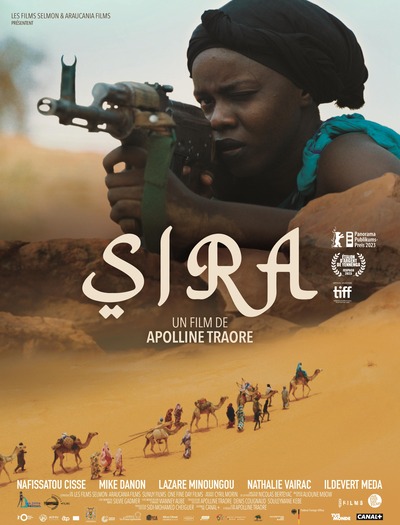 Sira (Cissé) is a young African woman, travelling through the fringes of the Sahara Desert in Burkina Faso, on the way to get married to Jean-Sidi (Barry). However, their caravan gets involved in an incident with Islamic terrorists, which escalates into murder, with Sira being abducted by the terrorist leader, Yéré (Minoungou). He changes his mind, raping Sira and leaving her in the desert, because she is “not worthy” to die by his weapon. She survives, and stumbles across the terrorist camp, and takes shelter nearby, sneaking in to obtain food and water. After a group of other kidnapped women show up, to be used as sex slaves, Sira begins to put a plan in motion, with help from an unexpected ally.
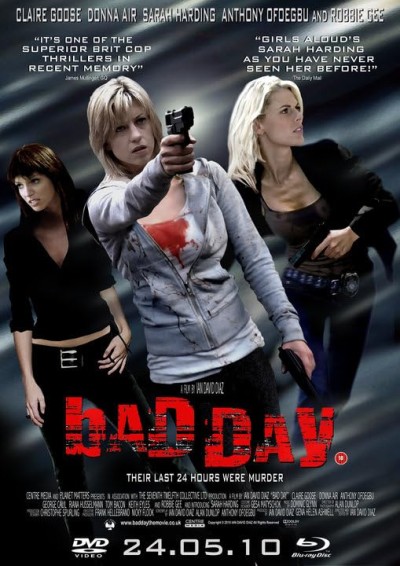 Rebecca Ryan (Goose) is an undercover cop, who has been working for three years as “Margaret”, infiltrating the McCann family, a South London organized crime outfit, with Darius Cruise (Ofoegbu) as her handler. He’s just been given a new partner, Abby Barrett (Air), and isn’t happy about it. Rebecca, meanwhile, has fallen in love with Harry McCann (Calil), but his sister, Marla (Riana Husselmann), recently out of jail, suspects something is up with ‘Margaret’. When an incident appears to blow her cover, and Rebecca returns home to find her daughter murdered, she decides it’s time to make the entire McCann family pay for their actions. As the title suggests, everything subsequently unfolds over the course of a single day.
 I guess these two sides of the coin, and their contrast, are key to the film’s message, though the sudden way in which it ends might leave you wondering if there’s any genuine message intended at all. Maybe it was all the fulfillment of some weird, albeit understandable, Gillian Anderson fetish for writer-director Reed (there are a couple of scenes which lean towards that interpretation). She is certainly the best thing about this, and her journey from predatory cougar through to
 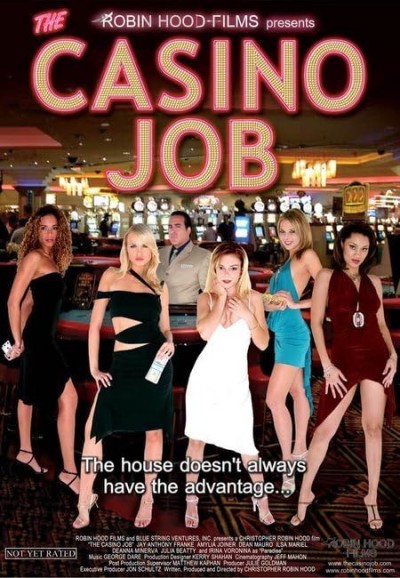 Make no mistake, this is a cheap and tawdry excuse to show nekkid women, which may well leave you with a more cynical view of human nature. But if you’re going to watch a cheap and tawdry excuse to show nekkid women… You could probably do a lot worse. The main area in which this punches above its weight is in the script, which has had some thought put into it. The viewer may actually leave the film knowing more about Nevada gaming regulations than they did going in: nekkid women
  I was rather surprised to see the name of Alexander Witt pop up as the director, at the end of the first movie in this Chilean trilogy. He has been a stalwart second-unit director in Hollywood for decades, going back to Speed in 1994. With regard to the site, he fulfilled the same role on
  As a jumping-off point, this is… okay, I guess. It begins with a po-faced caption which informs the viewer this is going to be an Important Message Movie. The early going is a bit of a slog, leading to me coming to the conclusion, just because something is “traditional” doesn’t necessarily make it any good. Once granny is gunned down, the film shifts gears and gets more energy. However, I was expecting Sayen to go full Rambo, using the environment to her advantage. She doesn’t really, short of crafting a bow, which she uses one (1) time, and a bit of impromptu first-aid. Meanwhile, the bad guys could hardly be less subtle about their villainy, if they were given wax mustaches to twirl.
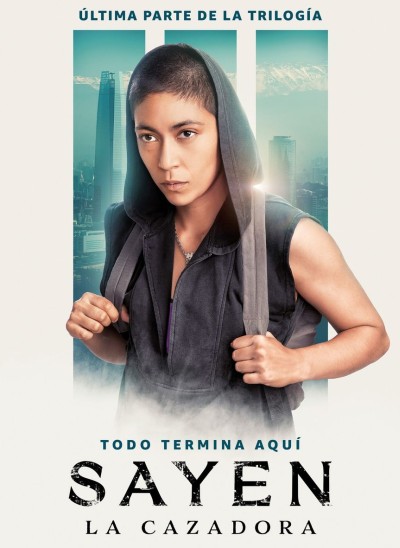 Sayen: The Huntress