




★★½
“Death Wish, Bollywood style.”
 For the first hour and forty minutes, you may well be wondering why this is here. You will need to be patient: it gets there… eventually. However, to start with, it’s the story of the battle between crime boss Nikka Shaitan (Grover) and dogged cop Inspector Sidhu (Kumar). After members of the former’s gang are caught attempting a bullion robbery, Sidhu seeks to leverage them to reach their boss. But Shaitan uses all the power – both legal and illegal – at his disposal, to avoid justice. Initially, a state of martial law (the title translates as “emergency”) gives the cops the edge, but after that is declared over, the balance shifts, culminating in Shaitan’s gang invading Sidhu’s wedding and gunning everybody down.
Shaitan again avoids justice, getting a corrupt politician to give him an alibi, leading to his acquittal. This is where we finally achieve GWG relevance, for the Inspector’s bride, Shikha (Sabah), vows to take revenge on every single person responsible for the death of her husband. She delivers, taking them out in a variety of ways, from shooting repeatedly in the head after removing their tongue, through burning alive, to hacking apart with a sword. It’s certainly enthusiastic, though the execution isn’t nearly as much fun as it should be. It demands a lot more blood. Naturally, Shikha uses the gang’s tactics to escape legal punishment, the film ending in a large caption asking the audience, “Do you agree with this?”
Well, since you ask… It’s a typical early nineties Indian pot-boiler, with all that implies. So, it’s overlong at 144 minutes, stuffed with terrible songs (and I like some Bollywood music – Singh is Kinng is one of only two soundtracks I actually listen to outside the film), and painfully simplistic, rarely approaching any level of delicacy. By most standards, this is not a “good” movie. But I did find it interesting. As depicted here, Indian cops do not give a damn about civil rights; how much of that’s due to the declared state of emergency is unclear (there was such a two-year period in India, but earlier, from 1975-77). On the other hand, the courts are depicted as incompetent and/or corrupt, basically useless at dispensing justice.
The sudden blossoming of Shika in the final act is also surprising. It’s rare for a film to end up with its hero or heroine being one who is barely even a supporting role during the first two-thirds. However, Rao manages to pull the switch off, albeit mainly through killing everyone else who you liked to that point. Shikha, assisted by her friend Razia, as well as another survivor of the massacre, then goes to work after the legal system has failed her, in a way which makes Charles Bronson look like subtle understatement. This is a clarion call to the vigilante inside the audience, about as subtle as a brick, and all the more fun for that. I’d edit this down to eighty minutes and call it a vast improvement.
Dir: V. Subba Rao
Star: Sabah, Gulshan Grover, Kiran Kumar, Aatish Devgan
 I don’t subscribe to the belief that authors need to be the same sex, race, religion or whatever as their characters. A good author can put you inside the head of their heroine, even if they’re a different species, an extra-terrestrial, or whatever. But there needs to be an authenticity of voice for it to work. This is where, for example, Quentin Tarantino fails for me: his characters almost always end up sounding like Quentin Tarantino. And I wrote that before noticing the blurb on Amazon actually says, “Jerry Furnell exudes a Quentin Tarantino vibe in his narrative.” That’s meant as an incentive; I’d have taken it as a warning.
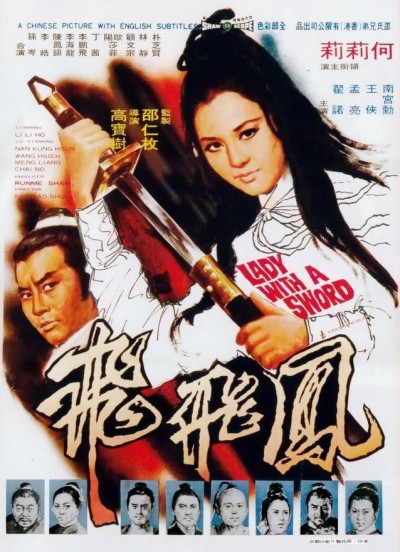 This was originally titled after its heroine, but since that obviously wouldn’t work in the West, it was changed to become about as generic a title as you could get. Behind this is a decent little flick, which is also worthy of note, because it may be the first Shaw Brothers action film to be directed by a woman. Pao-Shu Kao had been an actress with the studio since 1958, but this ended up being her sole movie as director for Shaw, as she started her own company, Park Films, with her husband. But this, her debut, is the highest-rated on the IMDb of the eleven features she helmed, at a respectable 6.8.
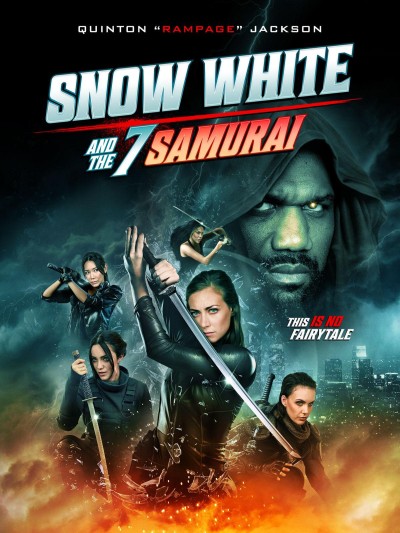 I added an extra half-star here out of how much I was entertained by this. Although this was more a result of us yelling things at the screen than any intrinsic merits. The idea is kinda cool, but if you can’t think of ways this should have been improved you are simply not trying. Anya Voight (Dorn) is known as ‘Snow White’, because her father, Joseph (Eric Roberts), is a coke dealer. He’s killed by a mysterious assassin, and when his will is read, her jealous stepmom, Quinn (Vitori), is highly annoyed to discover Anya will be the one inheriting the business, and has plans to go legitimate.
 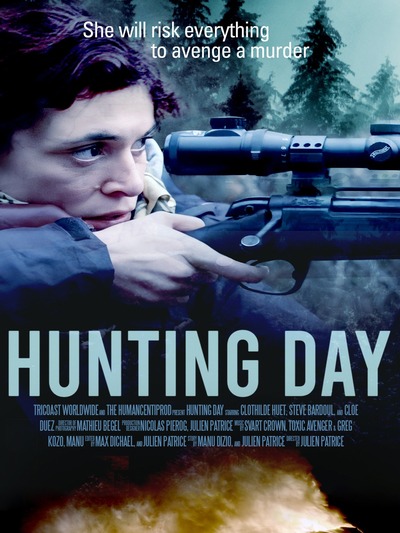 I like to think I am not an idiot. I can assemble words into a coherent order, perform fairly complex mental arithmetic with reasonable accuracy, and recently connected a printer to my wife’s computer on the first attempt. So, when I tell you I did not understand this film… I really did not understand this film. I’ve seen movies before, where I may be unclear on some points. But I could still provide a reasonably detailed synopsis. Here? I am utterly at sea, beyond the most basic level, to the point I’m wondering how the heck I will be able to reach my standard five hundred words. How many can I spend describing my bemusement?
 I guess it’s equality at work. This film, written by, starring and directed by women, proves that they are every bit as capable as men… Of knocking out vaguely competent, forgettable, low-to-mid tier action films, anyway. #GirlBoss This is another in the ongoing series of Tubi Originals I’ve reviewed here, including
  This was my favourite new television show of 2024, and might have been my pick overall. It’s a very strong mix of action and drama, with a fabulous cast of characters. I think I might have to go back to the first season of
 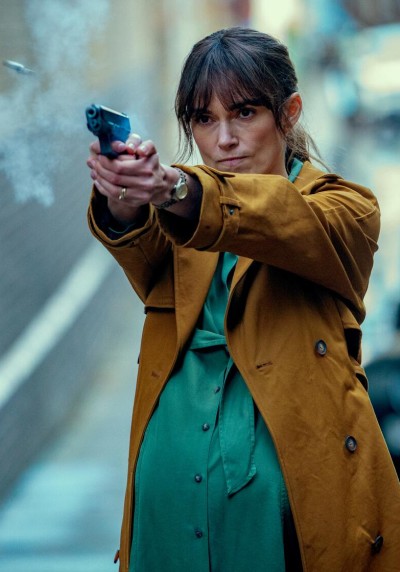 Reed calls in her top assassin, Sam (Whishaw), to protect Helen, fearing she might also be targeted. He has a history with Helen, dating back to before the birth of her children with Wallace. Things spiral out of control, involving the suspicious death of the Chinese ambassador, his missing daughter, a previous hit Sam botched, and Helen’s relentless pursuit of revenge, while trying to keep her family life intact. It’s a lot of balls to keep in the air, but the script does a fine job of avoiding confusion, with the wrap-up proving particularly admirable in its clarity. While I’ve read complaints about it being implausible, I have definitely seen worse. There’s room for both this, and more grounded spy shows like Slow Horses.
 She was badly injured in the crash, and ends up taking shelter in the small town of San Lucas, at the home of police officer Julio (Carvajal) and his family. He’s gathering evidence against his corrupt boss, Chief Santiago (Compte), who’s working with the cartel. When Julio is exposed, Santiago decides an example must be made of the informant, wiping out not just his employee, but his entire family. The only thing standing between them and annihilation is Dominique. After she successfully repels the initial assault, she has to fortify the family home, and prepare to fend off everything Santiago can throw at her. Which is a lot of cannon fodder. Most of it tactically inept, I must say.
 This one ends by informing us definitively that “Bang Bang Betty will return.” The statement may cause some confusion to viewers in this installment, because Bang Bang Betty is not present to begin with. No, this sequel to
  Well, that only took… twenty-one years. Back in 2003, I watched and reviewed