




Literary rating: ★★★½
Kick-butt quotient: ☆☆
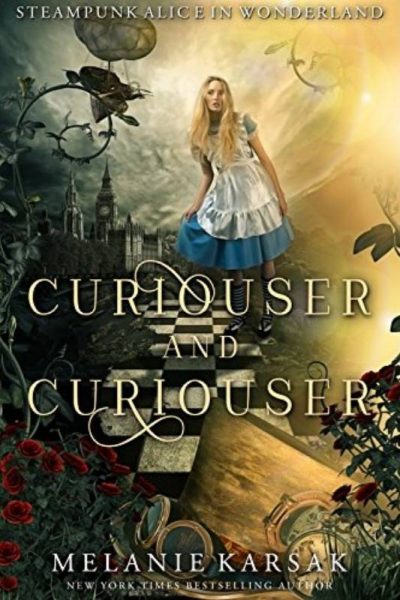 If you thought “Alice in Wonderland was okay, but it really needed more air-ships,” then this book is for you. It’s a steampunk take on Lewis Carroll’s classic tale, set in an alternate universe version of Victorian London. Specifically, 1851, when the renowned Great Exhibition took place in Hyde Park. Though it doesn’t actually feel particularly “alternate”; this angle lives mostly in its trappings, such as people using air-ships to get around, or clockwork cats, rather than in elements necessary to the plot. But that’s okay, because at its core, the story is strong enough to stand on its own.
The heroine is Alice Lewis, an orphan who, along with her sister Bess, was rescued from the workhouse and brought up by the Jabberwocky, one of the leaders of London’s underworld. She fell in love with William, another of the Jabberwocky’s employees, but Alice walked away from both the criminal life and William, after being morally unable to handle the actions it required from her. But several years later, she gets dragged back in, and has to re-unite with William on a job to steal the famous (and cursed) diamond, the Koh-i-Noor, which belongs to Queen Victoria, from the Great Exhibition. It’s the only way William can pay off a debt to the occultist known as the “Queen of Hearts,” who intends to use the Koh-i-Noor in a ritual to make her immortal. And that’s far from the creepiest thing about the Queen, since her role-model is Countess Bathory.
Karsak does particularly well with her world-building, to the extent that this feels like an established universe. The timeline bounces back and forth, between the present and the various incidents which brought Alice to where she is. It’s an approach which could easily be disruptive, but I felt this was admirably pulled off, and balanced nicely. I was, however, a bit disappointed that much of the book seems to be directed towards a final-act heist, to which I was quite looking forward. Only, the plot makes a left-turn in the later stages, which renders the heist superfluous. This sends the book onto somewhat thin ice in terms of believability on a couple of aspects, and an alternate method of resolution might have worked better.
All told though, this is a fun insight into a world that is both familiar and strange, with both heroine and villainess being strongly characterized and memorable. You probably need to be at least somewhat aware of the works of Lewis Carroll – otherwise some of the terms might seem more like unpleasant STDs (“I caught a bad dose of Bandersnatch”). But Alice in Wonderland is deeply enough ingrained into the collective unconscious that this isn’t likely a major issue for most potential readers. I look forward to the Guillermo del Toro adaptation in due course. Well, we can dream, can’t we?
Author: Melanie Karsak
Publisher: Clockpunk Press, available through Amazon, both as a paperback and an e-book
1 of 4 in the Steampunk Fairy Tales series.
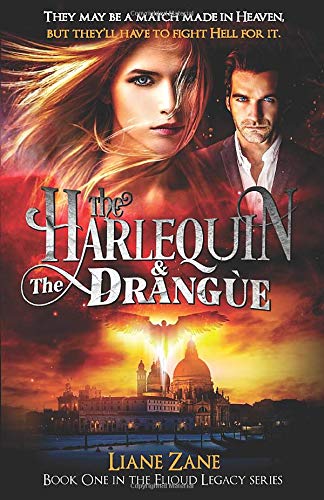
 Goodreads author Liane Zane is a published novelist under her real name, but has adopted this pen name for her new venture into paranormal romance, beginning with this opener for a projected series. She and I are Goodreads friends, so I accepted her offer of a free review copy, with no guarantee of a favorable one. PNR as such isn’t typically my thing (nor is “romance” in general, in the book trade sense); but both supernatural fiction and action adventure are, and I could easily approach this book in those terms. I’m also a sucker for a well-drawn action heroine who kicks butt and takes names –and here we have not just one but three such ladies.
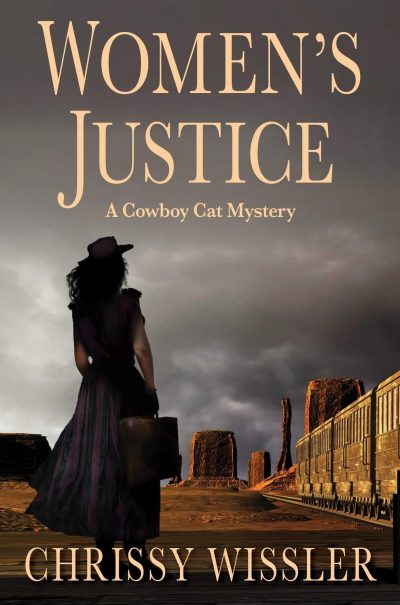 In the 1880’s, the town of Butte, Montana is a mining boom-town – instead of gold, it’s mostly copper which fuels its economy. The wealth comes at a cost, as the huge amounts of acrid smoke belched from the smelters and plants turns day into night, along with creating perpetually “noxious, disgusting air.” Off the train and into this smog steps Cat, a woman with no shortage of a past. A former prostitute, but also a ranch-hand, her preferred outfit of blue jeans and six-shooter is most atypical for a woman of the times. Almost immediately, she is drawn into the mysterious and suspicious death on the street of another “fallen woman,” Norma. The apparent cover-up goes right up to “Copper Kings” such as Marcus Daly (a real tycoon from that time and place), and it quickly becomes clear that whoever was behind Norma’s demise, is none to happy to find Cat looking into the matter. To find the truth, she’s going to have to navigate her way through both ends of Butte society.
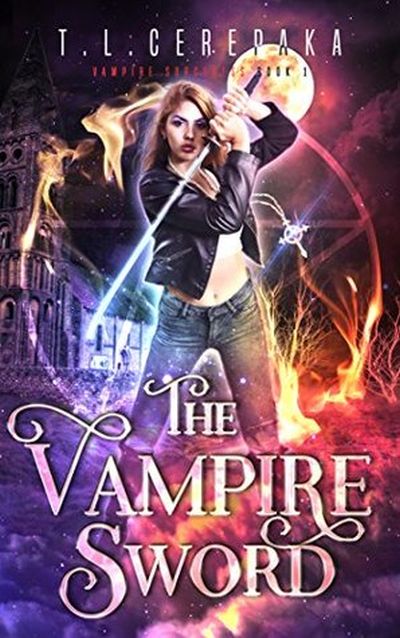 Vampires generally don’t bite their Sorcerer enemies; they just try to kill them. But a rare bitten Sorcerer becomes a half-vampire, with some vampire traits (including a blood thirst –though vampires don’t have to indulge that with human blood, despite the strong temptation) combined with ability to use magic, though just as in the Potter books, that takes training. Unfortunately for Tara, that not only poses theological conundrums for a good Baptist young lady; half-vampires are considered by both the Vampire Council and the Sorcerer’s Parliament as unnatural abominations that need to be killed on sight. And then there’s the added wrinkle that, as Council agent Lucius soon reveals, Tara’s assailant was working for a rogue Vampire Lord who has his own agenda –and it’s an agenda the rest of the world won’t like.
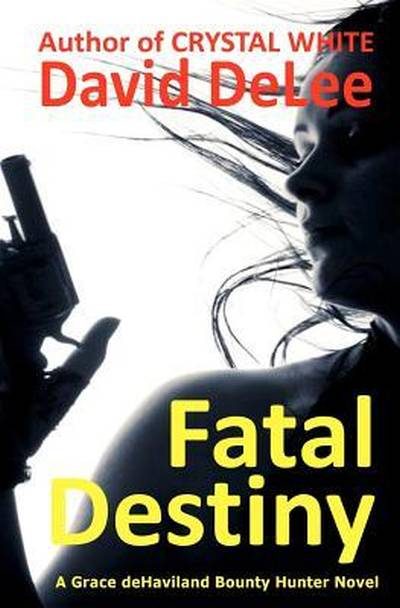 Grace deHaviland is a former cop, fired from the force in Columbus, Ohio under circumstances which remain murky. To continue in the justice field, she turns to bail enforcement, bringing in perps who have gone on the lam in exchange for a percentage of their bond. They don’t necessarily want to come in, as we find out right at the start; her first target causes Grace almost to become a victim herself, save for the grace of her stun-gun. Following this, she gets to take on what should, in theory, be a nice, simple case: locating white-collar criminal Barry Keegan. He was the accountant for a pharmaceutical firm engaged in shady financial practices, and has skipped bail shortly before the trial involving him and the company’s head honchos.
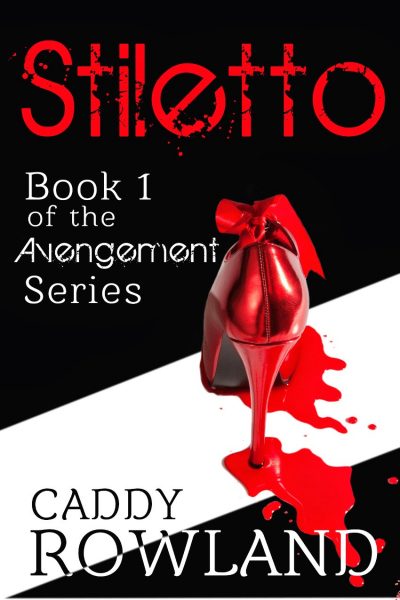 Revenge, as the saying goes, is a dish best served cold. Or, from another saying, hell hath no fury like a woman scorned. Illustrating both are the story told here. Jasmine Albertson had already gone through the lows and highs of life, before meeting and getting married to Stu. But when Stu’s business partner John Mickelson makes him take the fall for John’s embezzlement, leading to Stu’s suicide, Jasmine vanishes off the grid in Los Angeles. She moves to New York and sets her sights on a long-term plan to make John pay. And not financially: as she tells her gay best friend Tory, “I want him to know he fucked with the wrong people when he fucked over Stu and then me. I want him to suffer. And then I want to send him to hell.”
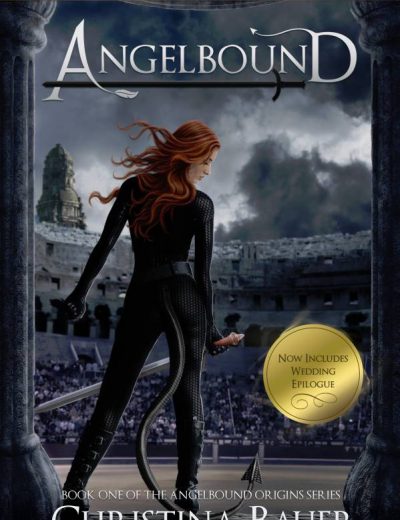 It’s nice to be reminded of why I’m generally averse to romance in my reading – particularly poorly written and unconvincing romance, like we get here. An interesting scenario with potential gets bogged down in gooey mush during the second half: let’s just say, there are phrases such as “my tummy goes all tingly again.” Yes: again… If I wasn’t already committed by that stage, being more than half-way through a 500+ page book, that sentence might well have led to this ending up as a Did Not Finish. Instead, I figured I’d at least get a review out of it. You’re welcome.
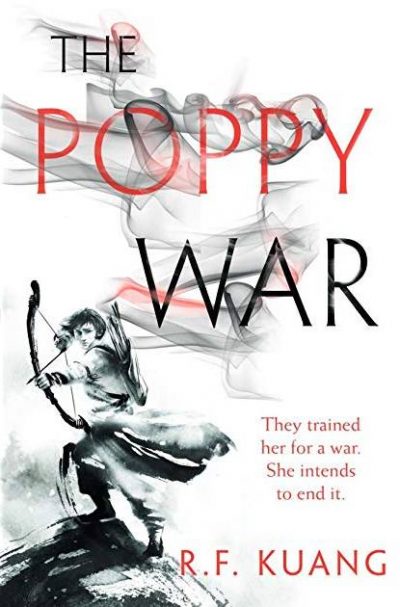 There can’t be many fantasy novels based on the events of World War II. But here we are, and Kuang has done an amazing job of taking historical events and weaving them into a saga of gods, magical powers and monsters, that works very well, even if you have no clue about the background.
 In the late 22nd-century, Earth is pretty much screwed. The impact of a giant meteor killed a huge number of people, wiped out the everyday infrastructure, and sent the world into perpetual twilight. Thirty years ago, the wealthy upped and left, never to be seen again, abandoning the rest of the survivors to scramble in the ruins of civilization, simply trying to survive. Holly Danger is one of them, a salvager who lives by her wits in the labyrinth of a coastal city’s destruction. Which means dodging the seekers, addicts of the hyper-destructive drug, Plush, as well as the outskirts, those who come in to the city and raid it for supplies.
 There is an interesting set-up here: unfortunately, it’s one which truly doesn’t get developed far enough. Elen-Ai is a 21-year-old woman, who has been brought up since birth to be an assassin for hire, part of “The Family.” Her latest commission is a little different: it’s not to kill, but to protect. For she is hired to make sure that Gidyon, the teenage son of Latana, Queen of the Second Country, stays alive. This is a matriarchal society, where power passes down the female side. But Latana has only her son, and is set to upset the traditional apple-cart by proclaiming Gidyon as her heir apparent. This decision will potentially be rejected by some among the seven clans who comprise the queendom, and may make him a target for those who’d rather see him out of the way. Hence, Elen-Ai’s presence, to make sure that doesn’t happen, as he begins a national tour around their estates, seeking support for his position.