



Literary rating: ★★★
Kick-butt quotient: ☆☆☆
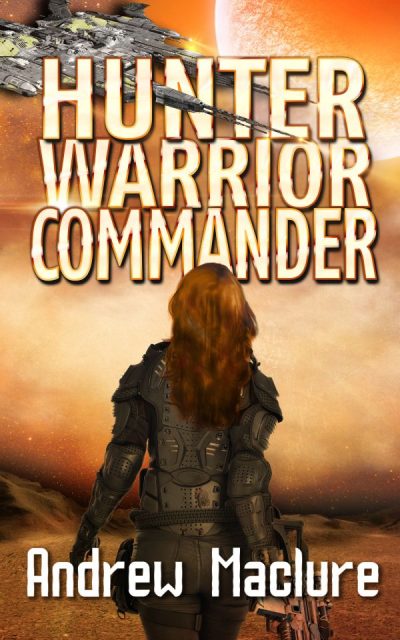 This may be a first, in that the heroine here is non-human – contrary to what you (and, indeed, I!) might expect from the cover. I think I may have covered various crypto-humans before, such as vampires or elves. But this is likely the first entirely alien species. I began to suspect on page 1, when I read that Sah Lee “sank her pin-sharp teeth through the thick fur of the calf’s throat, and tasted the sweet metallic tang of its young blood.” This is clearly not your average twelve-year-old. And so it proves. The story really kicks under way two years later, when Sah Lee leaves her rural village on the planet of Aarn to attend school in the city of Aa Ellet.
She is out of town on a class trip, when demons descend from the sky, causing massive death and destruction. Of course, they’re actually an alien tribe known as “outcasts”, who specialize in this kind of thing. But Sah Lee being a pre-first contact civilization, demons it is. Eventually, the rest of the galaxy, led by the super-advanced group known as “the People”, come to the rescue, but by that point, the planet is uninhabitable and most of the Aarnth dead. Sah Lee is taken aboard a ship, and vows to take revenge on the outcasts by any means necessary, which involves joining one of the galactic armies. But there will be a period of sharp adjustment from the pastoral life she had on Aarn, to being an interstellar soldier. Not drinking out of the toilet will be a start.
It’s not quite clear what Sah Lee is. Mammalian, to be sure – and that’s significant, since one of the features of the universe depicted here is that it is peopled not just by mammals, but reptilians, avians and even insectoid species, generally (but not universally) getting along. Thank heavens for universal translators. Anyway, something cat-like is probably my best guess, though quite how… furry she is, is never established. It doesn’t matter much though: her story is what’s important. And this is at its best in the relatively early stages: seeing an alien invasion from the side of the natives, then following Sah Lee as she has to adjust to a radically new and unimaginably different life. It makes me wonder what first contact will be like for Earth, when it finally happens. Potentially not good.
It’s rather less effective one she settles in, becoming fairly standard space opera. Through a special relationship with the People, Sah Lee has a cutting-edge AI and tech which does make her a bit super-powered. She breezes through every situation, even getting harshly disciplined after breaking military protocol (albeit for good reason). I’m also very unsure of the timeframe here. By the end, she’s basically in charge of her own army, and I’m guessing she is no longer a teenager. Not least because the galaxy as a whole has more or less conquered disease, meaning that violent death is about the only thing preventing near-immortality, with one character being over 172,000 years old. But again, it’s just not clear.
It is, at least, a self-contained story, rather than being volume one of a saga. The book reaches its end at an appropriate and generally satisfying point, which could go on, yet doesn’t have to. I’d have been very interested at the half-way point, when this was offering a different and original perspective on a super-advanced society – looking at it from the bottom up. Now Sah Lee is no longer in that position, she has become considerably less appealing.
Author: Andrew Maclure
Publisher: Amazon Digital Services, available through Amazon, as an e-book only.
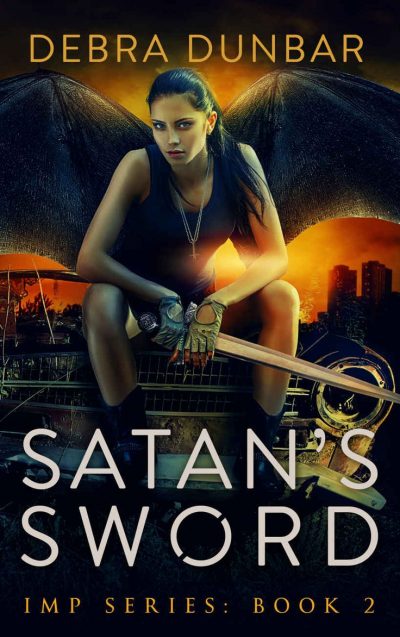 The first volume in the Imp series,
  Barb and I discovered evangelical Christian author Mary Connealy through her Sophie’s Daughters trilogy, partially set in Montana in the years from 1878 to 1884. Several characters who figure in her earlier Montana Marriages trilogy, of which this novel is the third, also play important roles in the later one. So we were interested in their back stories; and when I found this book in a thrift store, it was a natural purchase! (We’ve also just started reading the second installment; long story!) This means we’re reading the trilogy in reverse order; so we started with much more knowledge of the characters’ future than the original readers would have (the read was more like a visit with old friends). However, I’ll avoid spoilers in this review. (Obviously, though, it might contain “spoilers” for the earlier Montana Marriages novels.)
 Early 20th-century pulp-fiction author Howard Philips Lovecraft created a substantial corpus of writing, mainly in the short story format and mostly in the form of horrific science fiction which in many ways reads like classic supernatural fiction. The most enduring body of his work has been the novellas and stories making up what has come to be called his Cthulhu Mythos, based on the premise that the prehistoric Earth was dominated by the Great Old Ones, or Elder Gods, malevolent and repulsive, but very powerful and dangerous, alien beings who were ultimately dethroned by another alien race, and whose hidden remnants want to regain their past dominance. A number of Lovecraft works present the idea that these beings have an evil and often murderous cult of human worshipers, handed down from the dawn of mankind, who seek to further their return to power. Numerous later writers have been inspired by HPL’s example to create their own pastiches and spin-offs of the Mythos. Brent Nichols’ self-published Gears of a Mad God novella series (there are six in all), of which this book –set in Canada in May 1921, mainly on Vancouver Island– is the opener, is one of these spin-offs. One of my Goodreads friends gave this one a favorable review; and since I’m a Lovecraft fan and the novella is free for Kindle and relatively short at 98 pages, I downloaded it.
 Though just called “Brian Cox” on the book, it’s probably wise to begin by distinguishing the author here from his more famous namesakes, both the actor and the “rock-star physicist.” That said, this is a brisk if not particularly memorable spy novel. The main outstanding feature is that the heroine is neither American nor British, but Chinese. Rather odd to be reading this very positive portrayal of Communist state security personnel, during the protests in Hong Kong.
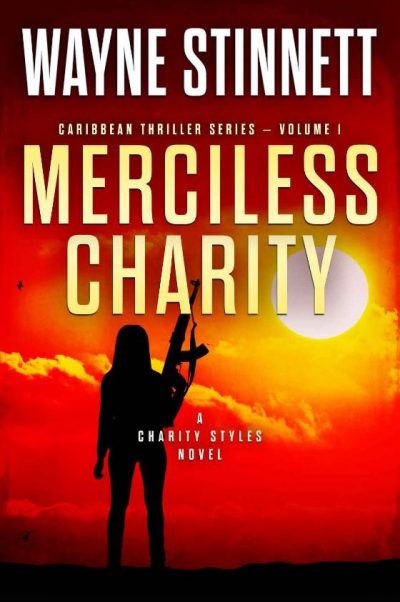 To be charitable (pun not intended), this might perhaps have come across better if I were familiar with the “Caribbean Adventure” series by the same author, featuring the exploits of ex-marine
 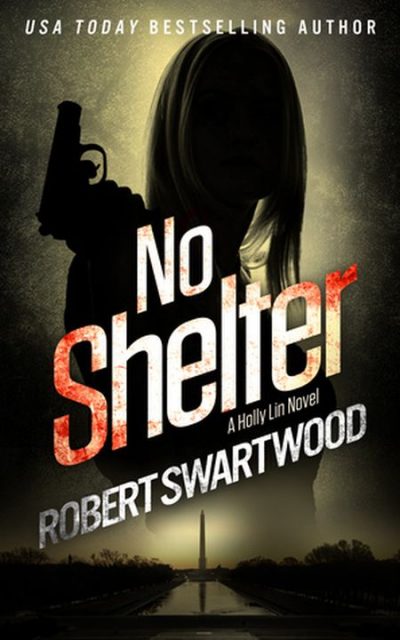 “Meet Holly Lin. Nanny by day, assassin by night.” That was the tagline here, and you’ll understand why it jumped off the Amazon page and onto my Kindle. I was expecting something like Mary Poppins crossed with Atomic Blonde [“A spoonful of C-4 helps the terrorists go down…”], which is a great concept. However, I guess I’m going to have to write that book myself, because this isn’t it. I suppose, technically it is, though may be closer to like “vaguely nannies some times, assassin at others”. It certainly helps in terms of workplace schedule flexibility, that she nannies for her government boss. So it’s apparently fine when she has to abandon her charges and jet off from Washington to Las Vegas to assassinate someone selling a flash drive, on which is… Well, we’ll get back to that.
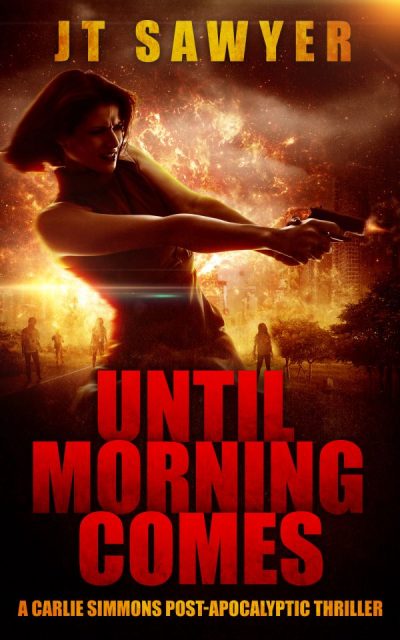 This omnibus edition contains the first three volumes in Sawyer’s post-apocalyptic story: Until Morning Comes, In Too Deep, and The Way Back. The central character is 31-year-old Secret Service agent Carlie Simmons, who is on secondment to Tucson, Arizona to provide protection for the President’s daughter, Eliza Huntington, who is attending university there. Things take a sudden wrong turn, with the outbreak of a fast-spreading infection, which turns its victims into psychotic flesh-eating ghouls.
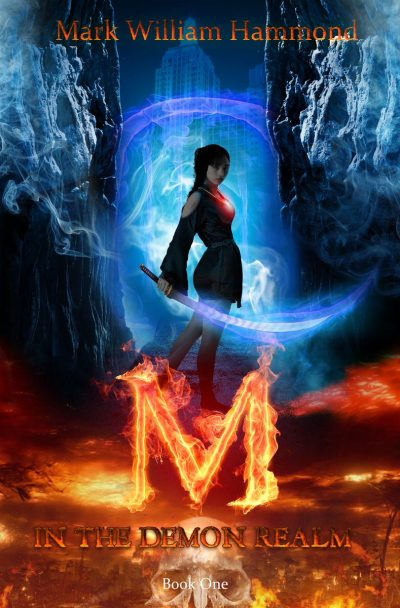 I feel a little uncertain about reviewing this, since it’s basically two-thirds of a single novel. Or maybe two connected novellas. Oddly, the three entries get longer as they go, starting at 110 pages, increasing to 160 for the second and finishing off at around 210. I’ve been waiting for the third and final part to show up on special offer for a while, but it hasn’t happened. The first two parts were somewhat intriguing, just not enough to convince me to pay full price. So I finally decided to publish and be damned. Wait and see its cost drop the week after this goes live…
 Some years ago, my Goodreads friend Mary J.L. gave the original novel of the author’s Nadia Stafford trilogy a favorable review, and that put it on my radar. As a rule, I don’t read novels that are only published in electronic format (it does have a audio version, but I don’t listen to audio books either), but I do read short e-stories; electronic publishing provides a forum for those works which no longer exists in print, what with the demise of general-circulation magazines. This tale, as a novella, occupies a middle ground, but commercially novellas are in much the same boat as short stories –a single one wouldn’t sell very well in print format. So I felt it was fair to treat it the same way, and thought it would be a good way to check out the series for myself.