



Literary rating: ★★★★
Kick-butt quotient: ☆☆
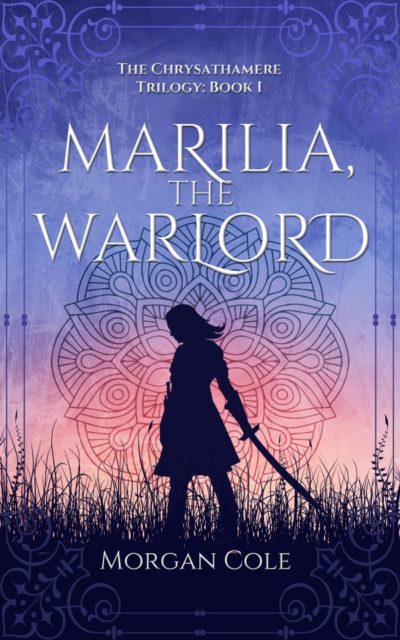 This is a fairly classic “rise from nowhere” story, yet is well-executed and done in a world which is interesting for its differences. The heroine is – surprise! – Marilia, whom we first meet on the battlefield, about to face an opponent of superior numbers. We then flash back to her childhood, growing up in a Tyracian brothel. Her mother was one of the “painted ladies,” but after she dies, Marilia and her brother Annuweth are on increasingly thin ice. Their effort to run away is unsuccessful, yet does bring them a chance at a new life. While it’s here that Marilia discovers her tactical savvy through board games, it’s not without its downside, the siblings being split up after Marilia enters an arranged marriage in another territory.
Yet that, too, has its pluses, for her new home of Svartennos is a little more liberated in terms of gender equality. This matters, especially after her husband dies and she inherits his responsibilities, which include war. There’s also a somewhat convenient prophecy about their warrior queen Svartana: “That someday, when the island is in peril… the spirit of Svartana will return in the form of another, to lead out people to victory and save the island.” No prizes for guessing, this is something which Marilia can leverage to her advantage, especially when combined with her genuine tactical wits.
There are a number of other threads woven into the plot, such as her relationship with her brother, and their joint passion for revenge on the warrior, Sethyron Andres, who killed their (absentee) father. That he’s known as “The Graver” gives you some idea of what to expect, and awkwardly, he’s now part of the forces on their side for the war. The resolution of this will bring them both back to Tyrace, and the very house where they grew up. This provides one of the rare bits of meaningful action for Marilia. While she is well-practiced with the sword, she discovers there’s a big gap between that and the hellish realities of the battlefield: it’s something Cole does not soft-pedal, to good effect.
I was quite surprised to realize the book is almost five hundred pages long, as it feels considerably shorter: I’d call this a good sign. It does take some time to get going, with the second half definitely moving at a quicker pace, compared to the first, which is more concerned with Marilia’s upbringing. Turns out, she’s gay – not that the book makes anything out of it, and even the heroine doesn’t quite know what she is (I’m guessing the culture doesn’t acknowledge it). It’s just a “Why do I want to spend my time with that woman?” thing. The first volume offers a nicely self-contained story, without many dangling elements, except the ultimate fate of The Graver. I suspect I may well end up finding out what happens there, in due course.
Author: Morgan Cole
Publisher: Self published, available through Amazon, both as a paperback and an e-book
Book 1 of 4 in the Chrysathamere Trilogy series.
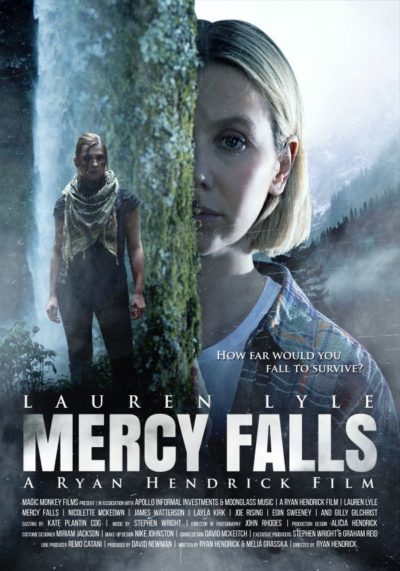 Even though I haven’t lived there since the eighties, I remain a sucker for a Scottish film. This delivers, with no shortage of rugged mountain landscapes, beautiful lochs, a ceilidh band and trees. So. Many. Trees. The foliage is understandable, because most of it takes places in the woods, where Rhona (Lyle) and her friends are looking for a cabin, deep in the wilds, which belonged to her late father. To help find it, they enlist the help of local Carla (McKeown), whom they meet down the pub when they have a pre-trip planning get-together. She initially seems fun to be with. But once they’re away from civilization, a shocking incident proves she… has issues, shall we say. And might not be the only one in the party.
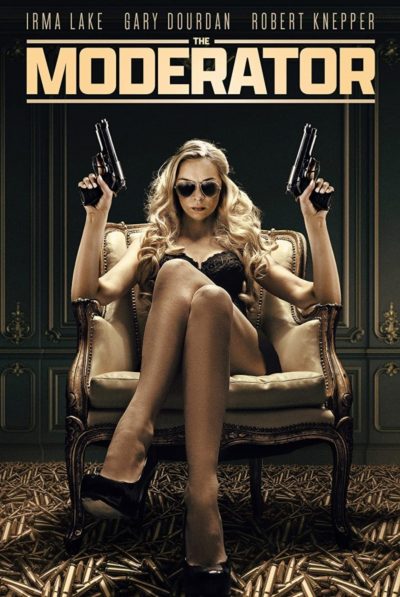 Oh, dear. Where to start? Let’s get the positives out of the way. This looks reasonable enough, and clearly was not a poverty-row production. The central idea isn’t bad either: while a vigilante killer taking out misogynistic online sexists is a fairly ludicrous concept, if you squint a bit, you can see how it could have become an acerbic comment on the toxicity of social media. And that’s all I’ve got. For any potential is ruthlessly exterminated by staggeringly feeble execution. We’re there inside two minutes, when an unnamed Russian supermodel wakes, to get a video message from two pals vacationing in Morocco, then turns on the TV immediately to see a news report about them being executed by ISIS, with the video online for all to see. Wait, what?
 It has been a very quiet year for big-budget action heroine movies so far. Here we are, more than one-third of the way through 2023, and this Netflix Original is likely the highest profile entry to date. There is a certain pedigree here, albeit of the direct-to-streaming variety, with director Caro having also helmed the (considerably more expensive)
 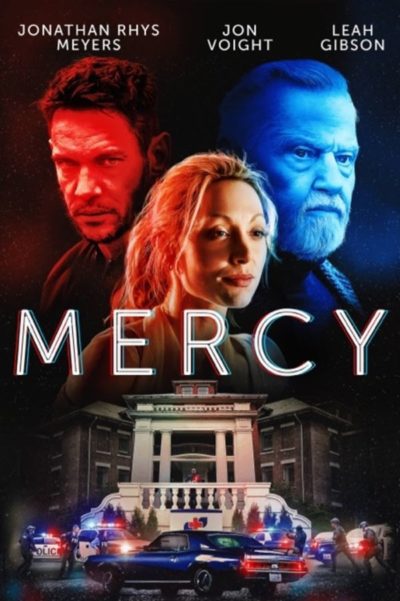 I’m almost tempted to leave it at that, because there are points where it feels like writer Alex Wright left it at that as well. Heroine Michele (Gibson) gets down to her vest? Check. Takes a walkie-talkie off a bad guy? Check. At one point, she even lost a shoe. If she’d gone crawling through an air-duct, I’d have flipped a table. Anyway, Michele is a former military doctor, now working in a civilian hospital. Rushing in one day is an FBI agent with Ryan Quinn, son of an Irish crime family, who was shot in an ambush after agreeing to flip on his relatives. Not far behind is family boss Patrick (Voight) and Ryan’s brother, Sean (Meyers), the latter intent on finishing the job.
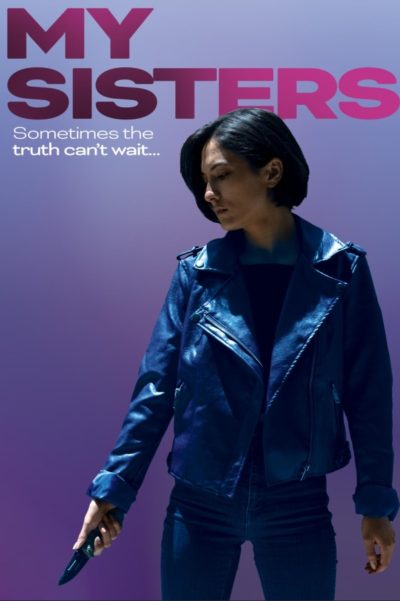 This felt oddly familiar, like I had watched it before. One scene in particular – a maintenance man comes to replace a light-bulb, only to become an apparent threat – had me
 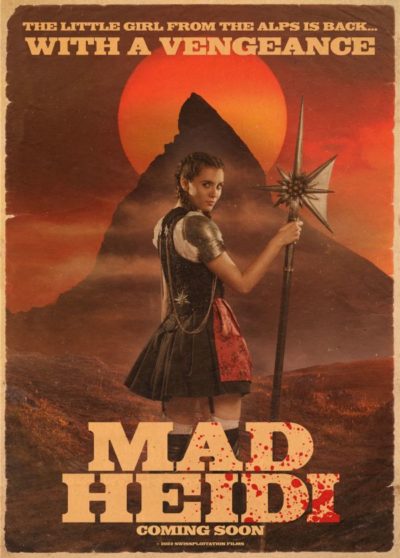 I’d been aware of this movie for some time, through its innovative crowd-funding approach, which raised $3 million to cover the cost of production. After COVID hit, there were doubts it’d ever see the light of day, but here it is: the first “Swissploitation” film [If not quite the case, it’s certainly the first one with a seven-figure budget, as well as the first Swiss movie covered on this site] And it’s not bad: if you’re familiar with similarly crowd-funded spoof, Iron Sky, this is along similar lines of broad parody. It covers almost every genre of cult from kung-fu films through Starship Troopers to women-in-prison films, e.g. there’s an Asian prisoner
 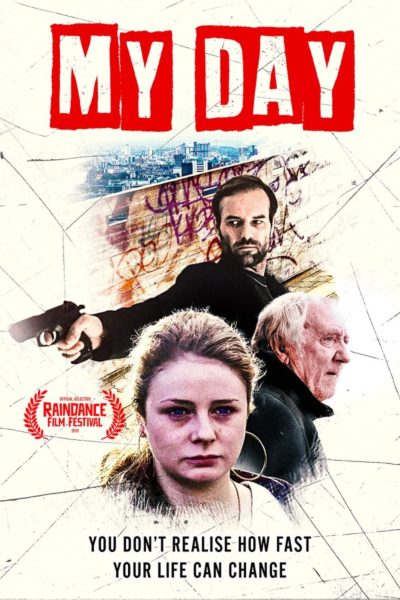 Sixteen-year-old Ally (Smith) is living her life very much on the fringes of society. Coming from a broken home, she is now homeless on the streets of London, relying on the dubious charity of questionable friends. Though Ally does have her limits as to what she’s prepared to do, she has no issue with occasional bits of work, delivering drugs for dodgy couple Carol and Gary. It’s this that gets her into trouble: a job goes wrong, after the customer tries to rape her, and Ally flees – without either the drugs or the money. Carol and Gary are bad enough. Yet even they live in mortal fear of their boss, Eastern European gangster Ilyas (Adomaitis). He wants his merch back – and Ally, as interest, for sale to his sex trafficking friends.
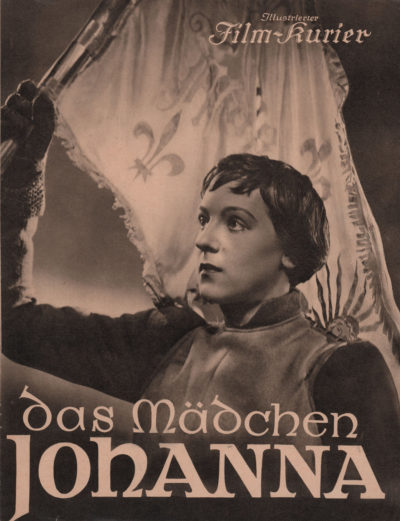 It’s basically impossible to separate this from the time and place in which it was made: that being Nazi Germany, just a few years before the outbreak of World War II. The portrayal of, not only Johanna/Joan of Arc, but the rest of the participants, has to be read in this light. It certainly explains why neither the English nor the French sides exactly come over as covered in glory. From the former camp, we have Lord Talbot, who is cruel to an almost cartoonish degree. On the latter we have King Charles VII (Gründgens), who is cynical to a fault, and has no qualms at all about using Joan when convenient, then discarding her when she isn’t.
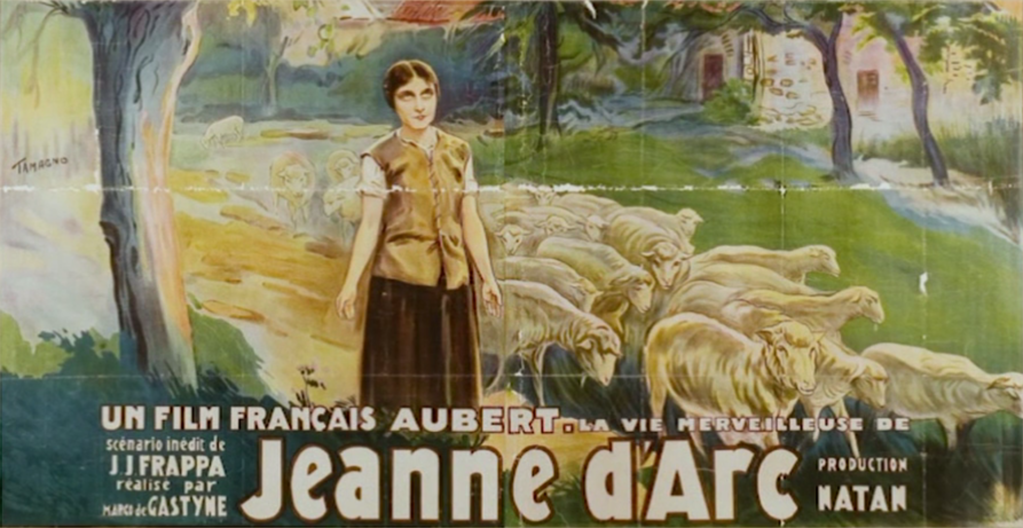 ★★★★
★★★★ I generally make it a rule not to review foreign movies without subtitles, simply because it’s difficult to judge them reasonably if you can’t understand them. I made an exception for this 1929 French film for a couple of reasons. Firstly, it’s silent, so comprehension is limited only to the intertitles: I can read the language better than I can understand it spoken. Also, it was approximately the eleven millionth version of the Joan of Arc story I’d seen in the past month: I think I had a pretty good handle on the plot by this point. Boy, am I glad I did, because it’s the best silent film I’ve seen, albeit in my quite limited experience of them.
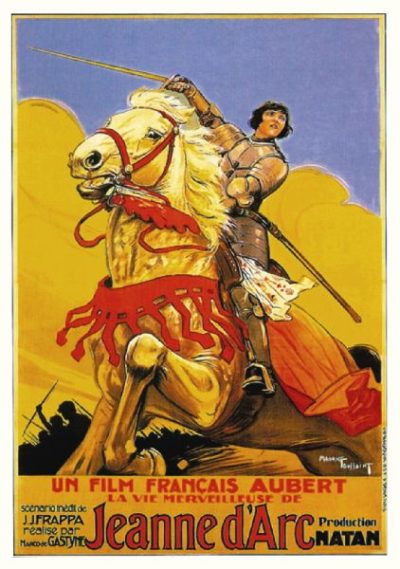 History has largely forgotten this version, in favour of Carl Theodor Dreyer’s La Passion de Jeanne d’Arc. Both movies were produced concurrently, interest in the topic apparently having been spurred by the canonization of Joan at the start of the twenties, and the approaching 500th anniversary of the events in her life. However, delays during filming meant this adaptation was beaten to the cinema by Dreyer’s. It perhaps was also impacted commercially by the arrival of the new-fangled “talkies”, leaving silent movies like this looking old-fashioned. Half a century later, the film was eventually restored, and can be found on YouTube as well as
 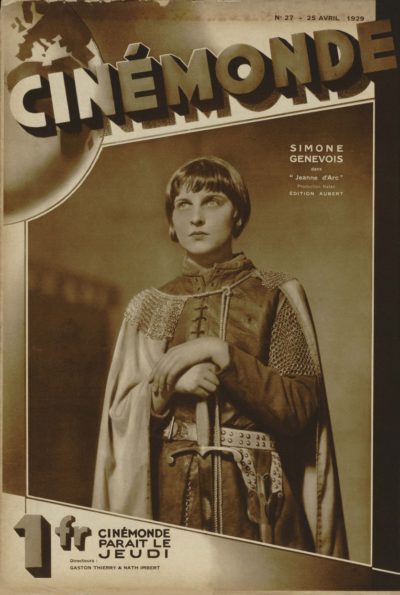 Then there’s the burning at the stake, another scene which came uncomfortably close to historical accuracy for Genevois. “The moment the wood caught fire I yelled ‘It burns!’ [The director] Marco was so sure I was afraid, that he did nothing at all. All of a sudden the cameraman, Gaston Brun, shouted ‘She’s burning!’ and everyone ran towards me, because I was tied up and couldn’t budge. I was very frightened.” Even putting that aside, there’s no denying the emotional wallop it packs, particularly in the extended shot of Joan walking towards her death: Simone’s face, again, sells this in a way which left me genuinely distraught. This doesn’t happen often, and never before while watching any silent movie.