




★★★
“A polit-thriller in Fantasy-land”
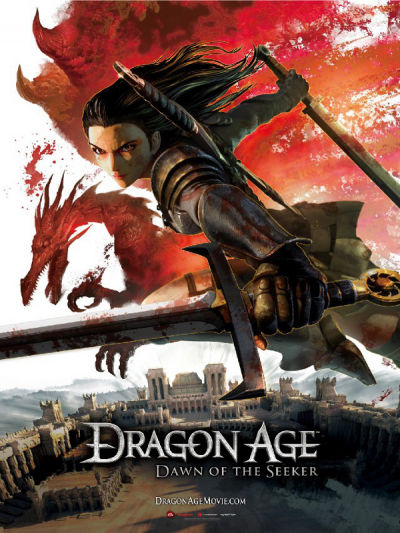 I have to start off with an important confession: I am not a gamer. I’ve never really been one. I might have played… two computer games in my entire life: “Tomb Raider 2” and “No-one Lives Forever 2”. That very special thing computer gamers experience when in front of the consoles? I’ve never felt it, it never got me. But then, I was born in the mid-70s, and this could be the territory of another generation. So maybe I’m not even qualified to evaluate a movie which was based on a computer game. On the other hand, I’m not reviewing a game here, but a film – and I think I know a fair bit about them! Hopefully, I get the details right.
Dragon Age: Dawn of the Seeker is based on the fantasy computer game franchise by Canadian computer game label BioWare. The series started in 2009. In 2012 – to probably the surprise of everyone – it received a movie version. Released in the West and co-produced by American anime label Funimation, it tells a separate story that ties in with the second released game “Dragon Age 2” (2011).
The story takes place in a land called Ferelden, where knights secure the freedom and which is governed by a religious organisation known as “the Chantry”. This is similar to a medieval church with, for want of a better description, a female Pope called “the Divine” at the top. Among the knights are the Seekers; they seem to be the superiors of the knights and hold a special place, reporting directly to the Chantry. There are tensions between the knights and blood magicians who seem to follow (as far as I understand this universe!) their own agenda.
When one of the knights, Byron, leaves the castle with a girl that the Seekers had just rescued from mages, his young colleague Cassandra (Kuriyama) gets in his way, demanding an explanation. Byron is her mentor and a father figure to her, but shortly after he gets killed in an attack. Before dying, he is able to tell Cassandra there is intrigue brewing in the Chantry, and that this was the reason he wanted to secure the girl, who obviously has magical abilities (she looks very much like an elf to me).
Regalyan D’Marcall (Tanihara), a mage whom Cassandra finds on the scene, turns out to be an ally of Byron who wanted to help him expose the intrigue. But having previously lost her brother to mages (there was a decapitation incident), Cassandra is suspicious of him. Still, together, the unlikely duo search out who’s behind all of what’s going on, and in the nick of time, also prevent an assassination attempt (with a dragon!) on the Divine at a jubilee celebration.
First off, the story moves quite quickly and never gets boring, coming in at a viewer-friendly runtime of 90 minutes. Personally, I am really happy to see, once in a while, a fantasy movie that sticks to the length I had been used to in the 80s, before all these Lord of the Rings, Hobbit and Harry Potter movies with their 2½-hour running times. The visual style is something the viewer will have to make up their own mind about. You will either like it or you won’t. It’s not total CGI. It looks as if people were acting, then motion-captured into the computer and their image re-worked. It looks similar to the science fiction movie Vexille that the same director had made earlier. For my personal tastes, I didn’t really embrace this style. Also, I thought for much of the time the movie looked too dark with regard to its colour palette. But then, fantasy seems to be going through a “dark phase” right now, so maybe it’s unfair to count this as a real negative.
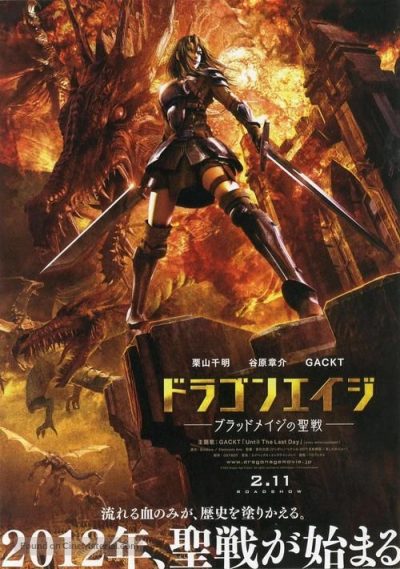 The story was smarter than I thought it would be, having ordered the used DVD to a low price, and knowing virtually nothing about the “Dragon Age” universe. To be honest, I still don’t know much about it – but you don’t need to be Albert Einstein to figure out the basics. Interestingly, I believe the character of Cassandra Pentaghast was a side character in the second computer game but was such a well-received badass, the developers decided to make her the main character in the first movie. (Also in 2011, there was another, live-action movie put together from a series of webisodes with the title Dragon Age: Redemption, about an Elvish assassin Tallis, starring Felicia Day. I haven’t seen it, as it’s too difficult/expensive to get here in Germany.)
Some changes in the game character were made to make Cassandra look a bit more feminine, e. g. she gets longer hair here. They also give her a backstory about why she hates mages so much, explaining why she treats the mage Regalyan with strong suspicion. He has to earn her trust: while that underlying subplot doesn’t make the story Shakespeare, it gives the characters enough emotional layers to come across as more than just one-dimensional. That doesn’t lead to a big love story, as would typically have been the cast. but lightens what could otherwise have been a very bare storyline, and leads to a satisfying end. At least he gets a little kiss on the cheek for helping her. Obviously, she is becoming soft, considering how quickly she has been drawing her sword over the entire movie! 😉
There are some surprises along the way, though I wouldn’t call them earth-shattering. There are steady, regularly appearing action sequences, between escape and investigation scenes and a grand finale showing that, while a female knight may not alone be able to prevent an assassination, she can at least deal with a gigantic dragon. But we all need a little help from our friends, right? There are some gory scenes, so this is not for kids, though nothing really shocked me. Admittedly, 8 seasons of Game of Thrones may have desensitized me in regard to the depiction of bloody fantasy violence. If you need them, they’re in here; if you don’t like gore, there aren’t too many to distract you from an otherwise entertaining enough, and comparatively short, fantasy movie.
The end seems to indicate another story will follow. But if that happened, it was probably in the form of another computer game, as the movie didn’t get a sequel. Overall, I think it’s safe to say that the movie can serve as a quick fantasy fix, if there is nothing else for you out there right now. Entertaining enough without being extraordinary, it has some nice developments and the main character is layered enough so that she doesn’t bore you. I give it 3 stars for acceptable, though hardly ground-breaking, solid fantasy entertainment. A fan of the franchise may value it higher or lower; as I’m not in the know about an extended universe that also features several books and comics, I will not presume to decide that for them!
Dir: Fumihiko Sori
Star (voice): Chiaki Kuriyama, Shōsuke Tanihara, Hiroshi Iwasaki, Kaya Matsutani
 [Jim] Almost four years after
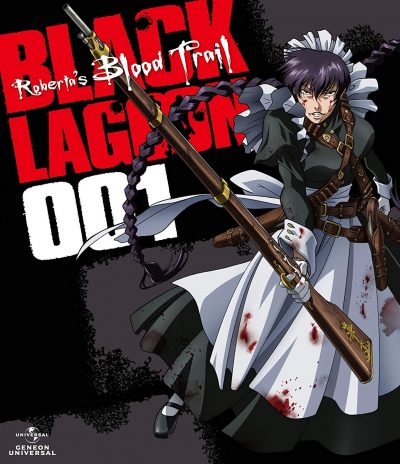
  This could draw unwanted attention to the criminal underworld of Roanapur, and endanger the peace between the criminal factions there, including Hotel Moscow. Mr. Chang from the Chinese triads asks Rock to help son Garcia Lovelace, and his younger employee, Fabiola, find Roberta – the sooner she leaves the island the better. Unfortunately, this is much more difficult than thought and leads to a three-front war between Roberta, Hotel Moscow and a CIA special squad lead by Major Caxton, responsible for the death of Garcia’s father.
 The story repeatedly stresses the fact that children who are mistreated by authority figures may end up as frightening, violent monsters when they grow up. They struggle with what they have become, and look back filled with pain to the innocent dreams of their youth. It’s something also covered in previous story-arcs, e. g. the vampire twins, but there is more insight (and more pain) here, and it has become a predominant theme. At the same time, Hiroe and Katabuchi do not release their anti-heroes from responsibility. Revy in particular is called out by Fabiola about her hypocrisy. If she is so unhappy with her life what stops her leaving Roanapur with Rock and opening a fruit stand in some other place? Revy’s response is little more than the usual showing-off and “I’m already dead!” speech.
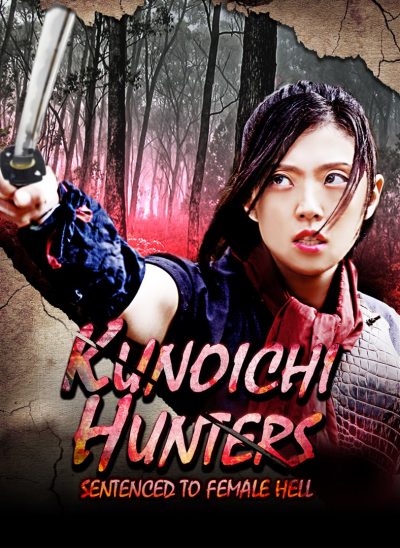 This rating is perhaps influenced by my seriously low expectations here. Having seen my share of generic “female ninja” films, all too often they tend to be thinly-disguised exercises in soft-porn. Any action elements are usually secondary, at best. That’s not the case here. Well, at least, not entirely. You’ll not mistake this for Crouching Tiger, yet there has been some thought put into the plot and characters, and this helps elevate proceedings to the level of satisfactorily watchable. Which is, as noted, considerably more than I was anticipating. It comes as a pleasant surprise, especiallyfor a film so obscurist, the IMDb doesn’t recognize it, director Noto’s sole credits being as an assistant in that role. The Amazon Prime synopsis is also from
 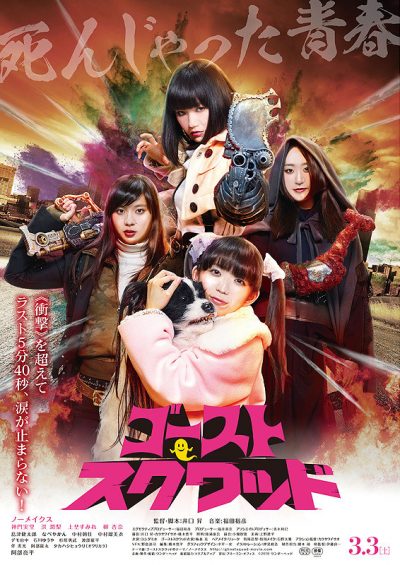 I’ll confess, the headline above is a bit click-baity. This is perhaps closer to a female version of The Frighteners, the early Peter Jackson film in which Michael J. Fox could see dead people, and had to learn to work with them. The conduit in this case is Rika (Yanagi), a young woman who has been able to see ghosts since a young age. But an encounter with a trio of ghosts, all murder victims who are seeking revenge on their killers, opens a whole new realm. For, it turns out, whenever Rika is in a life-threatening situation, the spirits can take physical form. They can also draw energy from her, which can be used to create weapons, which range from the merely strange (the “meat hammer”) to the bat-shit insane. None more so there, than that of Akari (Mikado). She has a tendency to go into puppy mode when stressed, which involves her becoming… a bit licky. So inevitably her weapon transforms Akari’s hand into Grudge Dog, capable of ripping the face off her opponent.
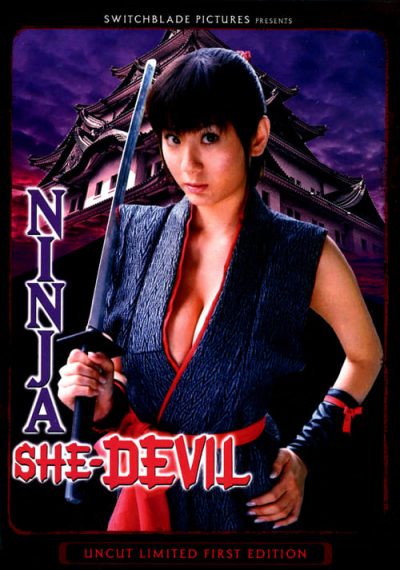 Ninjas were famed for their mystical powers, but Tsubame (Asami), the heroine here, has… well, let’s just say, a rather different talent. And I quote her brother, Hayabusa: “The ability to store a man’s seed inside your womb for seven days after intercourse.” This raises a number of questions, not least: how did this get discovered, considering Tsubame is a virgin at this point? Anyway, this skill is needed because of… Ah, to heck with it. Hayabusa explains it as well as I could:
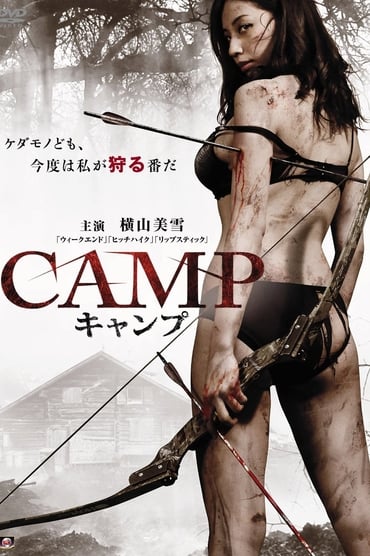 Kozue (Yokoyama) and her younger sister Akane (Momomiya) are driving through the countryside when their car breaks down, near a closed camp-ground. Closed – but, unfortunately for them, not deserted. The well-mannered young man whom they first encounter turns out to be a lure, who brings the two women into the grasp of a pack of psychopaths. The nicknames these weirdos have, largely sum up the extreme peril of the situation for the siblings: Hypo, Pyro, Copro, Necro and Thanatos. It turns out they were all pals during an enforced stay in a nearby mental hospital. When that shut down suddenly (in a way explained later on), they opted to hang around, forming some kind of sexually-deviant collective. Kozue and Akane pretty much represent a theme-park for these perverts.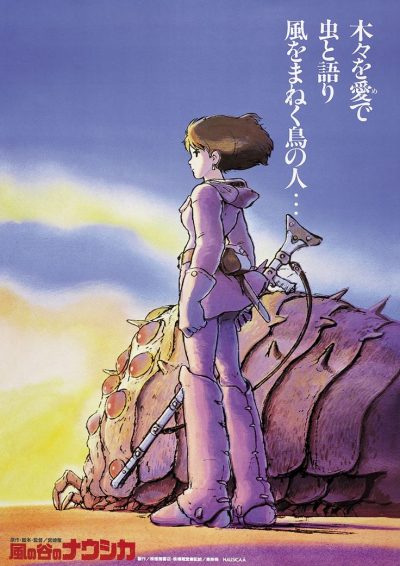
 After the enormous critical, if not commercial, success of Lupin III: Castle of Cagliostro, Miyazaki was commissioned to create a manga series for Animage magazine, with a potential film adaptation attached. Publication began in early 1982, but it would take a dozen years, albeit of intermittent publication, before that story was complete. When the series’s popularity among Animage readers was established, work began on the film adaptation, covering the early portion of the manga. Since this was before Miyazaki’s own Studio Ghibli was founded, an external company, Topcraft, were commissioned to create the animation. The budget was only $1 million, with a mere nine-month production schedule leading up to its release in March 1984.
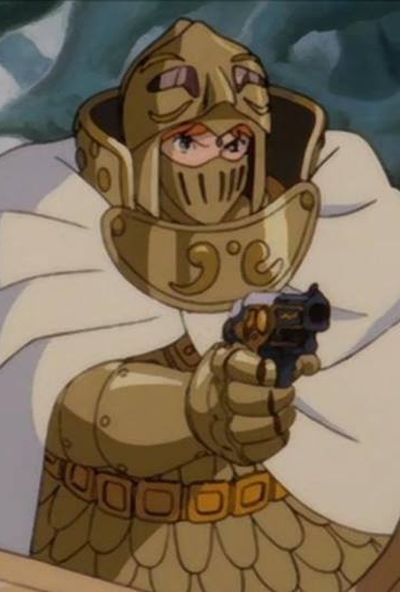 Miyazaki’s father ran an airplane parts company in World War II, and even his film company, Studio Ghibli, was named after an Italian plane. Almost every one of his movies
 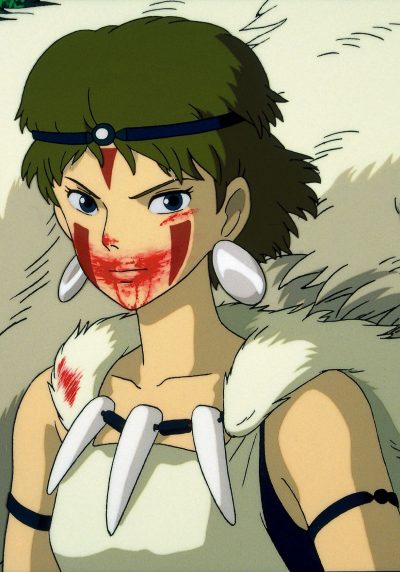 To some extent, this was the film which “broke” Miyazaki in the West, being his first feature to receive an unedited theatrical release in America. It wasn’t a huge commercial success, taking only about $2.4 million in North America. But it was very well-received, Roger Ebert listing it among his top ten films of 1999. It likely opened the door for the success of Spirited Away, which would win Miyazaki the Oscar for Best Animated Feature at the 75th Academy Awards. But if I’m being honest, I don’t like it as much as many of his movies. While there’s no denying the imagination and enormous technical skill here, it doesn’t resonate emotionally with me in the same way. I think it’s probably the central character, who is relatively bland and uninteresting, even compared to other characters in the movie.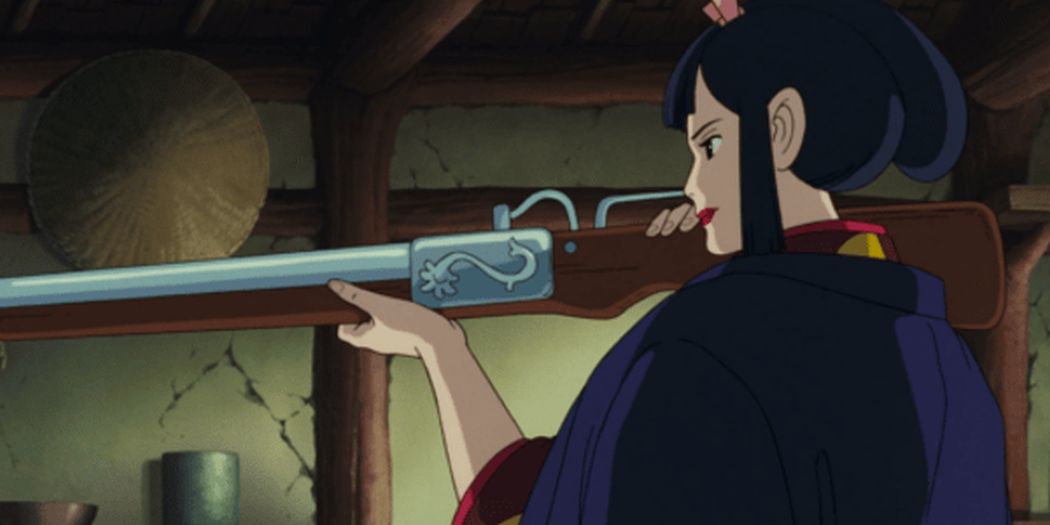
 A solid enough entry in the Jap-splat genre, this benefits mostly from a winning central performance from Uchida as the title character, Giko Nokomura. Her family are in the demolition business, which is at least a token gesture towards explaining the F-sized chainsaw she carries everywhere – initially in a guitar case! She’s a bit of a delinquent, harking back to the sukeban movies of the sixties like
 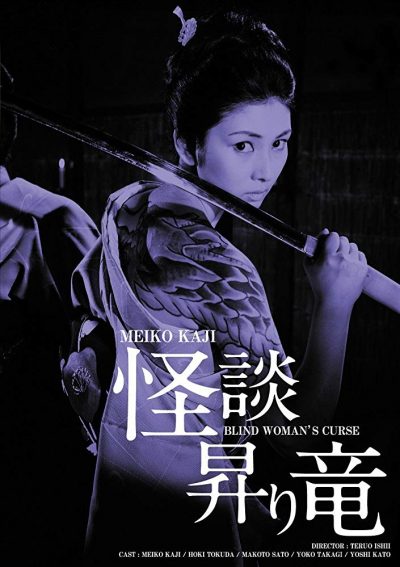 Akemi Tachibana (Kaji) is second in command of her yakuza gang. During a battle with another group, she accidentally blinds Aiko Gouda (Tokuda), the sister of an enemy – an incident Akemi believes leaves her cursed, after a black cat laps up the blood spilled as a result. Following three years in jail, she returns to find the clan on the verge of war against their rivals, the Dobashi group. Various members of the Tachibanas are turning up dead, and with their tattoos flayed off. Turns out that Gouda has joined the Dobashi gang, with the aim of extracting vengeance on the woman who took her sight, even though Akemi has borne the guilt of that event ever since.