




★★★½
“In which Salma Hayek suffers from an apartment complex.”
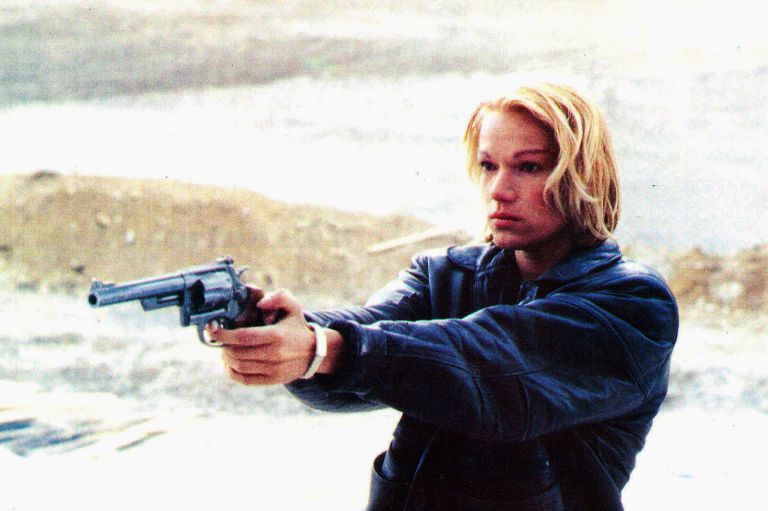
 Not sure how this managed to escape attention in our 2015 preview, because it’s hard to think of a film more directly positioned in our wheel-house. This unfolds entirely in a single building, close to real time, the vast majority of it (as with 2LDK) in one apartment, where Everly (Hayek) has just been outed as betraying her boss, a ferociously vicious Japanese mobster called Taiko (Watanabe). Desperately, she calls her mother (Cepeda), begging her to take Everly’s daughter out of town, but when that route is closed, they’re forced to hide out with Everly in the apartment. It’s not much safer, for Taiko has offered a bounty to anyone in the building willing to take down his turncoat – and also some increasingly-deranged professionals. Meanwhile, we also find out more about Everly’s history, which includes four years trapped in the apartment building as a sex slave for Taiko and his cronies.
Lynch has described this as Die Hard in a room, with Hayek instead of Bruce Willis. Despite sharing a similarly “ironic” Christmas setting, it isn’t: Lynch may wish it were, but the pacing is nowhere near perfect, the script isn’t as engaging, and whatever Watanabe’s qualities are, he’s no Alan Rickman. Not to say that it’s a bad film at all, especially considering this wasn’t originally supposed to star Hayek. Back in February 2012, Kate Hudson was announced as headlining the cast, before being replaced 15 months later by Salma Hayek. One can only wonder what difference that might have made, because her replacement certainly takes the role and owns it. [Side note: she’s only a couple of months younger than me. Damn…] It’s also gleefully and gloriously R-rated, not skimping on the bad language or hyperviolence, resulting in a comic-book feel which works nicely.
However, this leads to problems with the script, right from the opening sequence in which an apparently untrained Everly takes out, with unerring accuracy, an entire room of gangsters. Given her supposed prisoner-like status, it also proves remarkably easy for her mother and daughter to join her, basically swanning into the building on the pretext of visiting someone on another floor. And, to be honest, some of those who lay siege to our heroine aren’t as amusing as Lynch and scripter Yale Hannon seem to think, with the Sadist (Igawa) in particular overstaying his welcome. On the other hand, the lack of any romantic interest is refreshing: the only vaguely sympathetic male character is a Japanese man, and he spends his entire screen-time bleeding out on the sofa. It probably needs to be more unrelenting and with a better sense of escalation: as is, the film peaks in its opening 10 minutes, when it seems killers are popping out from everywhere. However, it’s been a while since we’ve seen Hayek in an action role: between this and Bandidas, she has done a good enough job, it’s something I wish we got to enjoy more often.
Dir: Joe Lynch
Star: Salma Hayek, Hiroyuki Watanabe, Laura Cepeda, Togo Igawa
 ★★½
★★½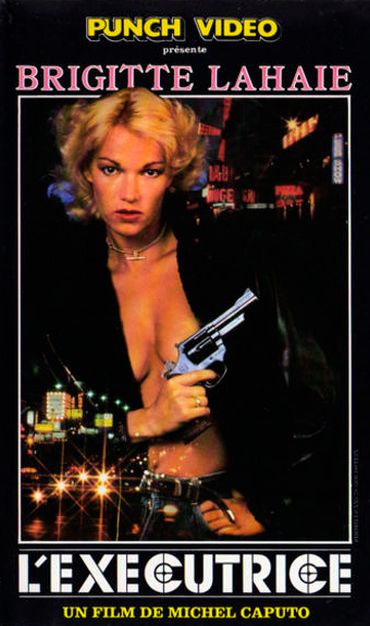 It’s all pretty implausible, and doesn’t exactly paint a kind picture of the French police, who are portrayed, almost without exception, as mad, incompetent or both – if it wasn’t for Martine’s informant, she would literally be clueless. However, Lahaie is always worth watching, showing much the same solid screen presence which I’ve previously enjoyed in

 14th-century Norway, not long after the Black Death has decimated the population. Signe (Andreasen) and her family are on the road, seeking a new life, when they are attacked by bandits. Signe is captured and taken to their camp, ruled by Dagmar (Berdal); she was expelled from the nearby town, whose inhabitants thought she was a witch. Signe isn’t the first girl abducted to give the matriarch a family; there’s also Frigg (Olin), a younger girl whom Dagmar is inducting into the ways of the clan. But Frigg is not there yet, and help Signe to escape: needless to say, an enraged Dagmar and the rest of her gang, are soon hot in pursuit, chasing them across the chilly (and beautifully-photographed) wilderness.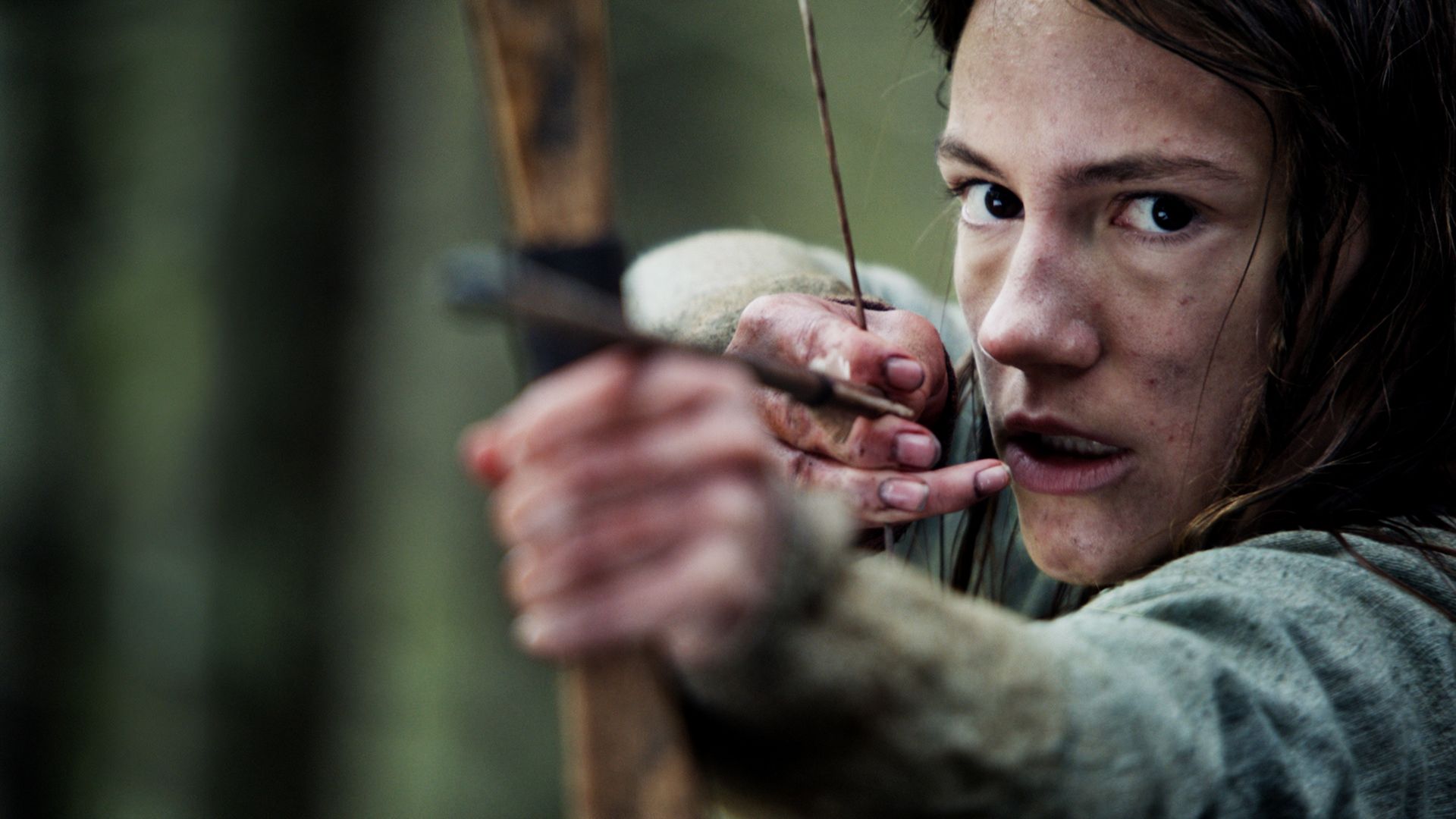
 While undeniably a product of its time – which would be 1991 – this has stood the test of time very well, and remains a solid piece of action SF. Eve Simmons (Soutendijk) is a researcher working for the US government on creating life-like robots for surveillance missions, and her creation, Eve VIII, not only looks like her, but has her memories and psychology too. When on a test run in San Francisco, Eve VIII is caught up in a bank robbery and a bullet sends her off the grid, and on her own mission. Jim McQuade (Hines), something like a proto-Jack Bauer, is brought in to track down the lost little robot, who has all of her creator’s complexes, but none of the social restraints, leading to a fondness for automatic weapons, which she uses with abandon as she works out her psychiatric issues [cheaper than counselling, and a good deal more fun]. Oh, and Eve VIII also has a nasty little surprise package tucked away inside. It’s up to McQuade and Simmons to stop the killing machine before things
  But as a straightforward B-movie, it works nicely, with Hines having a nicely sardonic wit: “A spinach lasagne, in a light tomato and basil sauce,” is the reply, when Simmons asks dubiously what is McQuade’s “specialty” as a government agent. I’m still trying to work out if the film is feminist or chauvinist: you could read it either way, with the ‘liberated’ (if robotic) woman a free spirit, though the ending firmly puts Even back in her place, to say the least. She also emasculates one man, somewhat familiar territory for Soutendijk, who previously wielded a scissors to leg-crossing effect in The Fourth Man. Gibbins, meanwhile, died in the 1993 Hollywood fires, while trying to rescue a cat. Guess there’s never an unstoppable robot around when you really need one.
 True story. A friend of ours has a job as an intern in Los Angeles, and coming round the corner at work one day, he literally bumped into Jennifer Garner. He immediately started apologising profusely (he’s an uber-nice kid, who wouldn’t say “Boo!” to a fly) but she wouldn’t have any of it and began cursing him out in the nastiest of ways. Garner finally stalked off, while he continued to apologise – just before vanishing, she turned round and gave him the finger. So now we know: Jennifer Garner = bitch.
 There is entertainment, mostly lurking in the background. A moment with impact sees Typhoid (Natassia Malthe), the girl with the poison touch, kiss Elektra; the pair fall to the ground surrounded by a shower of dying leaves. It feels almost like it could have been inspired by the work of Zhang Yimou (House of Flying Daggers), and is at least less obviously stolen than the “House of Flying Bed-Sheets” battle later on. It’s also interesting to see Mark Houghton as a chief bodyguard in the opening scene: he made his debut against Yukari Oshima in The Outlaw Brothers, back in 1987.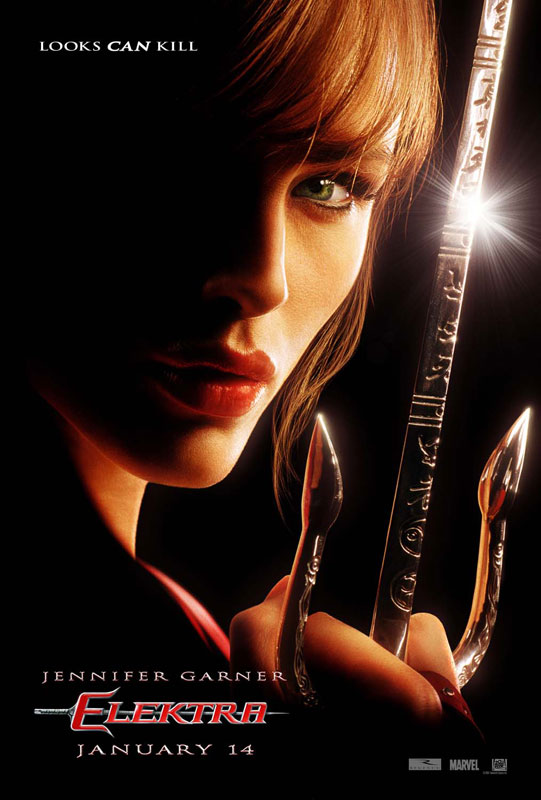
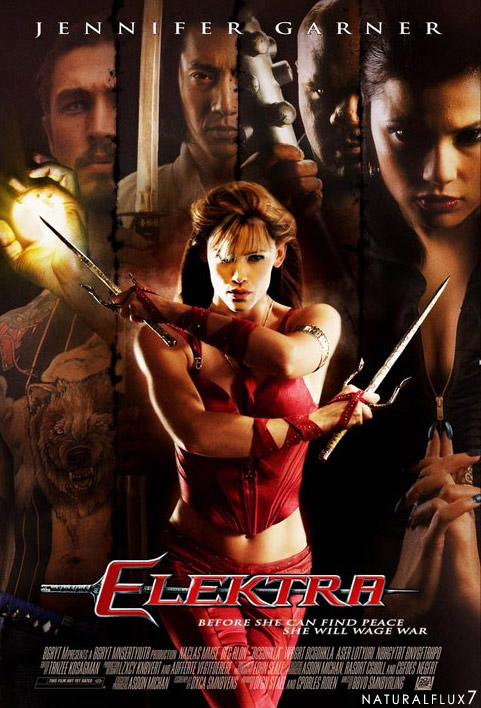
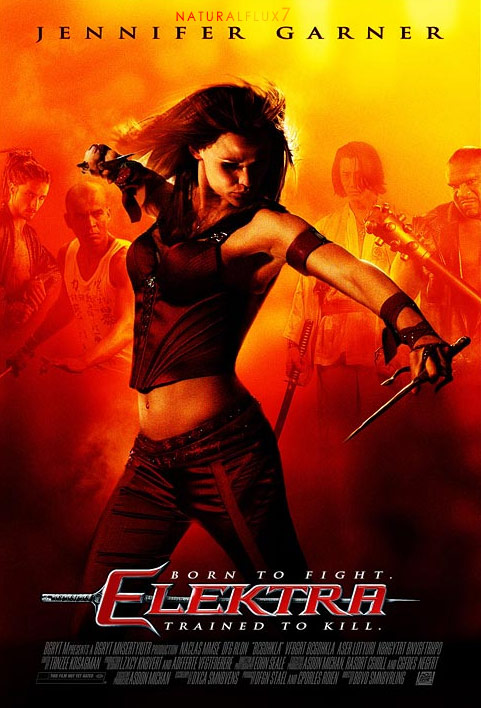
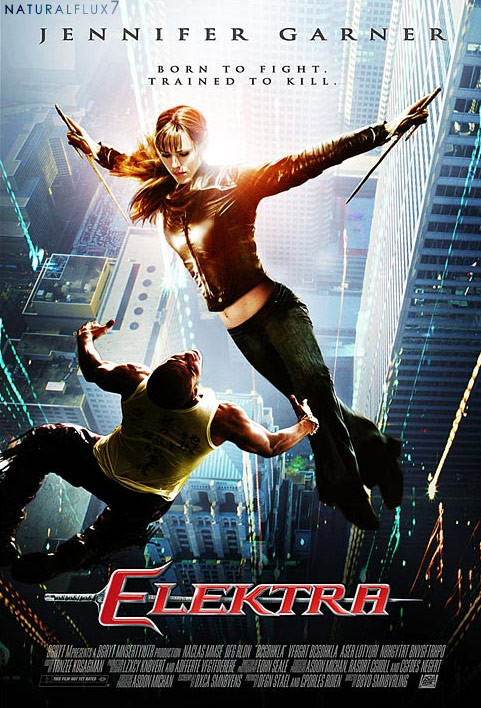

 As well as its questionable use of the apostrophe, the cover kinda implies that three girls are involved here, which is only true for a small fraction of the running time. It starts off with
  While containing many of the same elements as usual e.g. boobs and bombs, this does at least throw in a new angle, in the shape of some Confederate gold buried in the woods since the Civil War – I can only presume Sidaris must have befriended a Civil War re-enactment battalion. Out enjoying a bit of off-road action, amusingly-named federal agent Becky Midnite (Simpson) and her two co-workers stumble across a diary written by one of the soldiers transporting the gold. However, their plans to search for the treasure are disrupted by efforts to kill them, courtesy of mob boss Santiago. He is upset after they shut down his operation that involved shipping drugs in hollowed-out watermelons. Fed up with the ineptness of his minions, he hires even more amusingly-named assassin Jewel Panther (Strain) to carry out what they have failed to do.