




★★
“Kazakhstan, number one exporter of potassium”
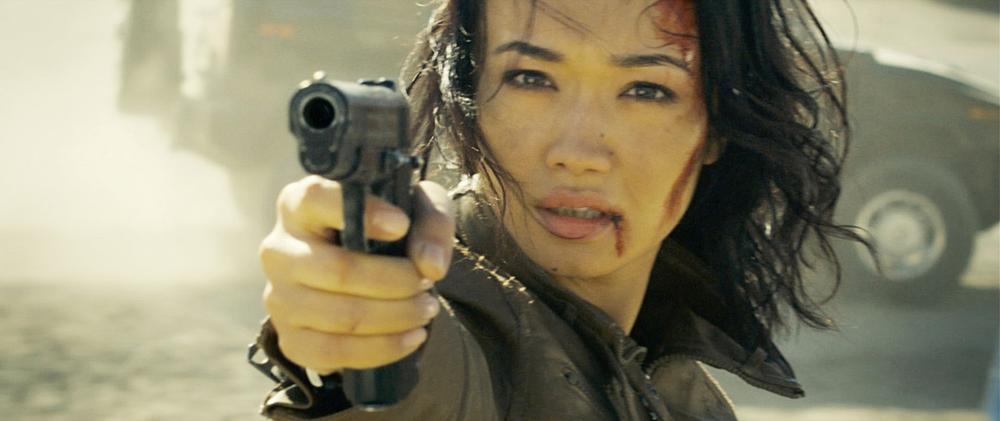
This Kazakhstani production took its time in seeping out to the West, having originally been filmed over a three-year (!) spell back in 2011-13. While slickly produced, and with some impressive sequences of action, its storyline is garbled nonsense, to the point of almost being incomprehensible, and is utterly without heart or soul. Millionaire crime-boss Musar (Assante) is negotiating the purchase of a renowned diamond from another gang, but the deal goes south, with both diamond and cash ending up in the hands of one of his assassins, Aliya (Mukhamedzhanova). She goes on the run with her former boyfriend (Frandetti), pursued by her more recent boyfriend, who is another one of Musar’s hitmen.
Which would be fine, if that’s what this was. But the film muddies the waters terribly, with secondary plots, a bevy of superfluous characters, and a convoluted flashback structure which explains how Aliya went from a casino croupier to part of Musar’s posse. In some ways, that story would probably have been more interesting that the one actually told, not least because of all the other leather-clad hitwomen he keeps hanging around his lair. Not that they appear to do much; outside of the attempted double-cross at the diamond handover, they are notable by their absence from the action elements, disappointingly.
I should instead talk about the supporting cast, which is far more laden with Western stars than you’d expect from the source. Though by “laden”, this does include people with one scene, such as Michael Madsen. And by “stars”, beyond Assante, I mean people such as Cary Hiroyuki-Tagawa, Bolo Yeung, Don ‘The Dragon’ Wilson and Tommy ‘Tiny’ Lister. But the name which stands out is Oscar-winner Peter O’Toole – sadly, in his final film role before his death in December 2013. Here, bizarrely, he plays a Kazakhstani customs agent. And it’s not even O’Toole’s own voice, because his performance has been dubbed over, making for a sad end to a stellar career. Though he’s not alone in losing out in post-production, with even the lead actress, as well as her copious voice-over narration, being dubbed too.
The only aspects which pass muster are the technical ones. Mukhammed-Ali seems to have studied at the same school of flashy visuals as the other Kazakhstan director, Timur Bekmambetov, who gave us Wanted and The Arena. It’s hard to deny that the frequent car-chases and shoot-outs here are handled with a decent degree of hyperviolent flair. But this is in pursuit of nothing having any significance. The plot falls somewhere between uninteresting and incoherent, and the audience will have little or no reason to care about even the reasonably photogenic lead, whose story this is supposed to be. It comes over as little more than a poorly-constructed exercise in stunt casting, with a succession of somewhat recognizable names, passing across the screen to trivial effect. I hope they at least got a nice holiday in Kazakhstan out of it.
Dir: Salamat Mukhammed-Ali
Star: Karlygash Mukhamedzhanova, Aleksey Frandetti, Armand Assante, Cary Hiroyuki-Tagawa
a.k.a. The Whole World at Our Feet
 Del Castillo is the undisputed queen of the action telenovela. She made her name as the original “Queen of the South” in one of the most popular entries ever,
  I am a sucker for bulk-buying. Regular readers will know this, since one of the first things reviewed here was the
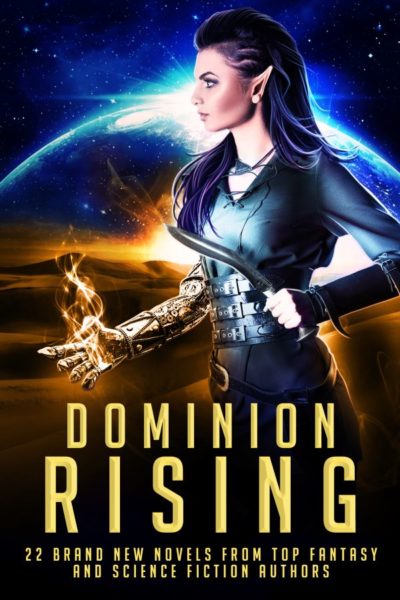
  This certainly doesn’t waste any time, starting in the middle of a brutal pitched battle between the kingdom of Yatres, and their mortal enemies, the Nyhans. Among the Fae – basically, elves – in the former army is the warrior Caeda, and it’s her side that emerges victorious. But the price paid by the fallen on both sides is an ugly one. Their souls are absorbed through a magical sword, wielded by the Fae known as the Soul-Reaper, and fed to an artifact called the Bone. The trinity of Bone, sword and Reaper have helped sustain Yatres’s power down the centuries.
 I’m not sure if the problems here are a result of there being two authors credited on this story. It could certainly explain them. For rather than providing a single coherent vision, this feels like both its universe and characters are being pulled in too many different directions. It’s overstuffed with ideas and, instead of them being developed fully, scurries from one to the next, as if the writers were competing to have the final word. This comes to an end in a rather ludicrous finale. There, the entire plot takes a right turn, with the biological weapon which has formed much of the early focus all but discarded.
 The blurb for this one reads, “Terra Cross is just your typical paranormal princess. She plays poker with goblins and leprechauns. She savors her morning muffin from the Pacific Sunrise Bakery in suburban California. She solves galactic crime cases. And on a particularly wild day, she can even see into the future.” It is somewhat inaccurate, at least as far as this novel goes. I don’t recall any poker at all, muffins appear once, and as for the crime-solving… Well, sorta but not really. There is, however, likely good reason, since the novel is a prequel to Summers’s “Sorcery and Science” series, in which I presume Terra does more of the above.
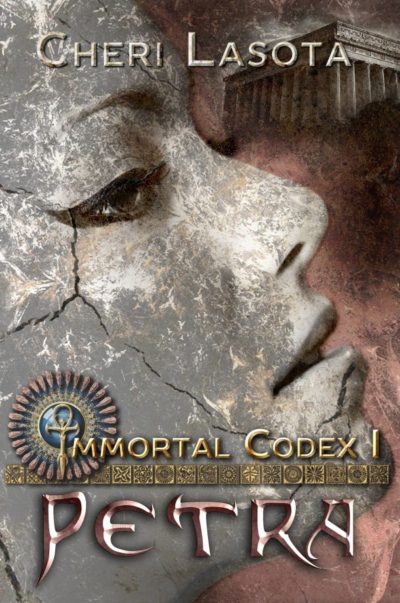 Petra is a teenage Roman slave at around the birth of Christ. She is completely under the thumb of her sadistic master, Clarius, until a strange conjunction of events and a poisonous herb with mystical qualities changes the power dynamic entirely. Both of them, together with her lover, Lucius, attain immortality. But it’s an immortality which requires the two men to drink from Petra annually, or they will degenerate into sub-human monsters. Neither is happy with the arrangement: Clarius is not used to being reliant on anyone, least of all his former property, and Lucius hates the fact Petra agreed to submit to their ex-master, in order to save him. As the centuries stretch into millennia, Petra begins, slowly, to put together a group people who will be capable of defeating Lucius and the immortals he has recruited, allowing her to live in eternal peace with Lucius.
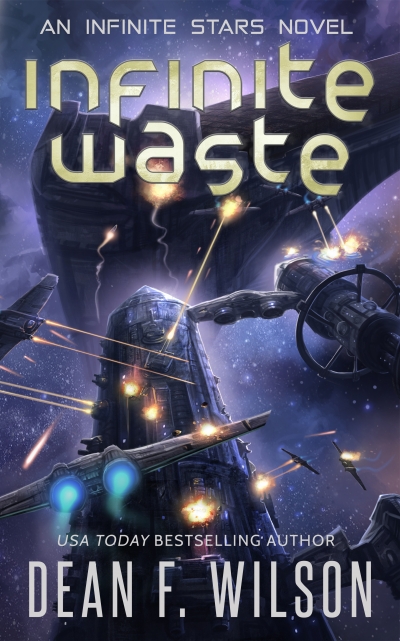 This initially seemed like a borderline entry, which I kept reading purely for entertainment. It’s about an exploratory star-ship, the Gemini, out on the very edge of known space, which comes across a giant barge, packed with nuclear waste and populated by a race of rat-humanoids, the Raetuumak. The Gemini is an appropriate name for the craft, as it’s effectively two separate ships, each with their own captain and very different approaches. Maggie Antwa, commander of Gemini Right, is a cautious scientist who abhors violence in any form, and was compelled to take on this mission after being involved in a environmentalist rebellion against the ruling Empire. Over in Gemini Left, on the other hand, Skip Sutridge is a square-jawed believer in shooting first and asking questions… well, never, to be honest. He has been sent to the fringes, probably to try and keep him out of trouble.
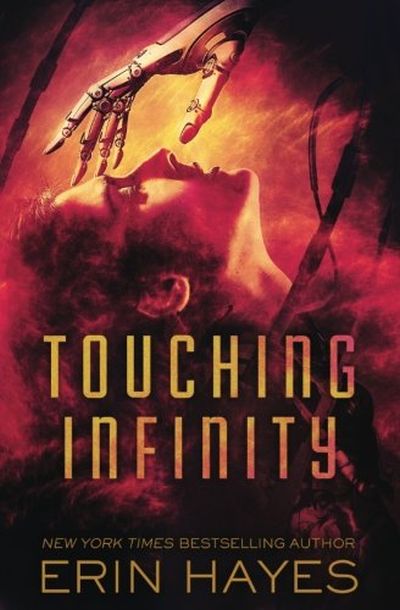 I will confess to a little post-read confusion here. Amazon calls this Volume 2 in the author’s Rogue Galaxy series – but I could find no information, there or elsewhere, regarding Volume 1. I suspect Amazon and Goodreads are wrong, and this is actually the first entry, as stated in the Dominion Rising collection. It certainly
  If you thought “Alice in Wonderland was okay, but it really needed more air-ships,” then this book is for you. It’s a steampunk take on Lewis Carroll’s classic tale, set in an alternate universe version of Victorian London. Specifically, 1851, when the renowned Great Exhibition took place in Hyde Park. Though it doesn’t actually feel particularly “alternate”; this angle lives mostly in its trappings, such as people using air-ships to get around, or clockwork cats, rather than in elements necessary to the plot. But that’s okay, because at its core, the story is strong enough to stand on its own.
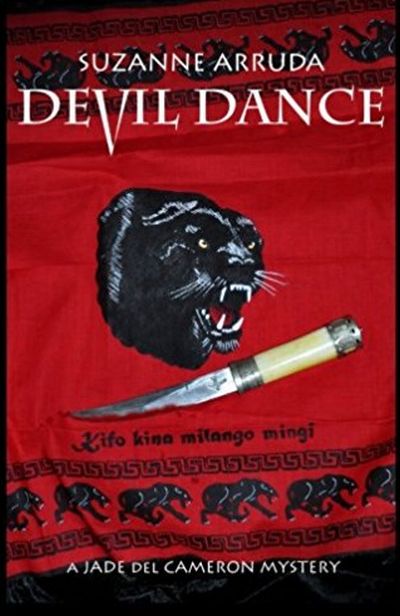 This final installment (the author confirms that fact in her Acknowledgments) of the series is set in May 1921, a few months after the previous one. The book’s opening finds Jade in Zanzibar, a new setting for her, which takes her out of the Nairobi area and away from her friends there. One reviewer complained about their absence, but as a compensation, we get to not only spend some more time with Jade’s formidable Spanish-born mother, Inez, but to meet Jade’s dad as well. Her parents have come to Africa for her impending nuptials, and she and Inez plan to enjoy a relaxing sight-seeing trip while Richard del Cameron gets acquainted with his new son-in-law on a planned safari.
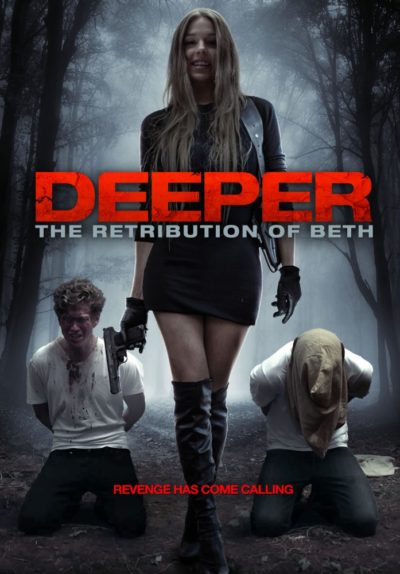 Investigative journalist Mark (Anderson) is not too happy about his latest investigative assignment: going on a ride-along with Steve (Francis), the sleazy owner of porn company “XBus”. He picks up girls on the street and supposedly, talks them into getting naked for his website, Girls Gone Wild-style. But Steve’s latest predatory mission doesn’t go as planned, after picking up the very lovely Beth (Sam) and her friend Sam (Gatien). For Beth pulls a gun, hijacks the limo, and drives the two men into the forests on the outskirts of town, clearly with savage vengeance on her mind for an incident in her – and Steve’s – past. Not quite the story Mark anticipated getting.
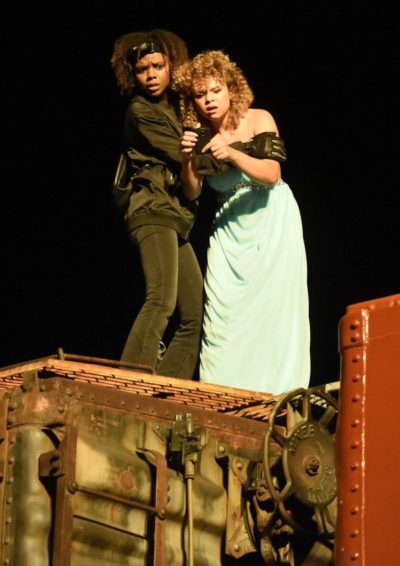 After their mother has a meltdown at her job and ends up in jail: teenage sisters Deidra (Murray) and Laney (Crow, somewhat infamous for her post-elimination meltdown on The X Factor) are left to fend for themselves. With household bills piling up – never mind trying to fund Mom’s bail, or even Deidra’s long dreamed-of college tuition – and Child Protective Services looming, things look bleak. But a visit to deadbeat Dad Chet (Sullivan, channeling David Spade), who works for a railway company, gives Deidra an idea. Hop aboard the freight trains that run by the back of their house, pop open a container to take some goods, and fence them on for cash. Things go surprisingly well, until a disgruntled railroad cop, Truman (Nelson), starts to close in on the pair, intent on rebuilding his reputation after an incident in Arizona.
 This is set in a world where various kinds of magic exist, alongside humans. The former include shapeshifters, vampires, faes (fairies), mages and the despised “Legacies”. The last-named cover the heroine, Levy Michaels, and that’s a bit of a problem. The reason for the hate, is because some of her kind were responsible, in previous generations, for a very nasty bit of spellcasting called “The Cleanse”; it was basically intended to cause occult genocide, and only narrowly avoided. Since then, Legacies have been harried and hunted by the other kinds. Levy’s late parents taught her to hide her abilities and pass as human, and she does so now, albeit occasionally having to handle those who track her down.
 This is apparently a sequel to a previous movie about an alien invasion of Earth (and, specifically, the United Kingdom) from the same director, Hungerford. While I haven’t seen it, this likely didn’t impact things too much here; I sense it’s perhaps closer to a separate story, unfolding in the same universe, than a true sequel. It’s the story of teenage sisters Chloe (Leadley) and Sam (Wallis), with the former getting a video camera for her birthday – just in time for said invasion to kick off, with their family being separated in the ensuing chaos. Toting her camera, Chloe and her sibling take shelter, then scurry through the blasted landscape, facing the threat not just of the extra-terrestrials, but renegade bands of survivors. For it also turns out Chloe, specifically her blood, is a key to the resistance. What are the odds?
 If you’re familiar with Jackie Chan’s life story, you’ll know he (along with fellow future start Sammo Hung and Yuen Biao) was basically brought up in a Peking Opera school, where he learned martial arts and acrobatics as well as theatrical skills. Discipline there was notoriously strict – the film Painted Faces gives a good idea of what it was like. But that was the sixties. Surely no such abusive educational regime exists nowadays?