




Literary rating: ★★★
Kick-butt quotient: ☆☆☆
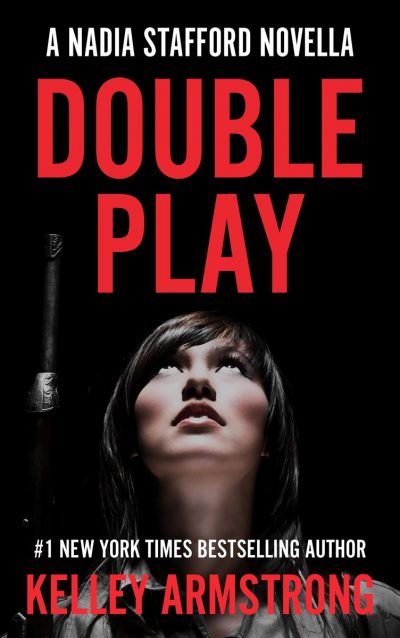 Some years ago, my Goodreads friend Mary J.L. gave the original novel of the author’s Nadia Stafford trilogy a favorable review, and that put it on my radar. As a rule, I don’t read novels that are only published in electronic format (it does have a audio version, but I don’t listen to audio books either), but I do read short e-stories; electronic publishing provides a forum for those works which no longer exists in print, what with the demise of general-circulation magazines. This tale, as a novella, occupies a middle ground, but commercially novellas are in much the same boat as short stories –a single one wouldn’t sell very well in print format. So I felt it was fair to treat it the same way, and thought it would be a good way to check out the series for myself.
From reading the descriptions, and some reviews, of the novels in the original trilogy, I figured I would have enough knowledge of the characters and their situation so as not to have a problem understanding this one. That proved to be true. However, a significant caveat is that this continuation does contain spoilers in the romantic-triangle aspect of the novels and some of the denouement of the third novel, Wild Justice, so readers who would be very bothered by that should read the series in order. (And regarding the romantic triangle, probably shouldn’t read either this review or the novella description!)
Ex-cop turned guest lodge owner/manager Nadia (“Dee”) Stafford’s action qualifications aren’t in question; but some might challenge her heroine qualifications since, as the Goodreads description makes clear, her unadvertised side occupation is as a hit woman. But Nadia’s not your average amoral, anything-for-money hired killer; she’s actually a lady with a very lively conscience, a concern for justice and the protection of the innocent, and a strict code of professional ethics to govern her extra-legal line of work. Though I haven’t read much fiction with assassin protagonists, I think they can be interesting characters when they approach their work with a sense of right and wrong and ethical obligation; and Nadia qualifies in that respect. Of course, I don’t endorse her career choice (and she’d actually agree that it’s objectively wrong, even though she’s not planning to quit). But I can still like and respect her, and wish her well; and when she’s willingly putting her life on the line to help someone in trouble, as she is here, I’m not one to deny her a “heroine” accolade.
When our story opens, Nadia and her lover, fellow assassin Jack (who was introduced in the first novel) are in the process of building a house in the woods near her lodge. At the moment, though, Jack’s in his native Ireland on business, and phone communication between the two is precarious because of their security concerns. In the first chapter, she’s approached by an acquaintance from a shadowy vigilante organization she’s had contact with before, who’s looking for Quinn, one of the organization’s operatives –and Nadia’s ex-boyfriend (pre-Jack). He’s dropped out of sight, and it’s clearly not intentional; he’s been kidnapped, by parties and for purposes unknown. In their milieu, just placing a missing persons report and letting the police do their job isn’t a practical option; so Nadia’s soon off to Virginia to help with the search and (hopefully) rescue, and the action takes off. (And don’t forget Jack in Ireland….)
The 17 chapters alternate between Nadia’s first-person narration and third-person narration, but from Jack’s perspective and in his vocabulary. Some readers may find his predilection for the f-word as all-purpose adjective and adverb wince-worthy –he doesn’t say it much, being notoriously laconic, but he thinks it repeatedly. (No other character uses it to that extent, however, and Nadia, while she might occasionally let slip a cuss word or vulgarism, doesn’t use it at all.). A Byzantine plot lies behind the kidnapping, and I deducted a star for ultimately contradictory plotting: a number of details in the previous chapters, given the denouement, don’t really make sense, IMO. (And, recalling the old TV show America’s Dumbest Criminals, the villain here could qualify for star billing on a World’s Dumbest Criminals show, if there were one.)
For all that, though, the story is a page-turner, and the two lead characters are, for contract assassins, genuinely likable. Readers of the trilogy already are familiar with them; but I got to know them here in a way that’s not possible just from book descriptions. We also get glimpses of their psychological baggage –Jack’s going back to Northern Ireland’s bloody Troubles in his teens, and Nadia’s as a past rape victim. (While the two aren’t married, their love for each other is sincere and has a good effect on their lives, and the references to their lovemaking aren’t very explicit.) While I hope the novels in the trilogy are better plotted, I still liked this literary appetizer enough to plan to give the series opener a try!
Author: Kelley Armstrong
Publisher: Traverse Press; available through Amazon, currently only along with the next novella, Perfect Victim – both as e-books and in paperback.
A version of this review previously appeared on Goodreads.
 This one might sound familiar, as I did previously review it
 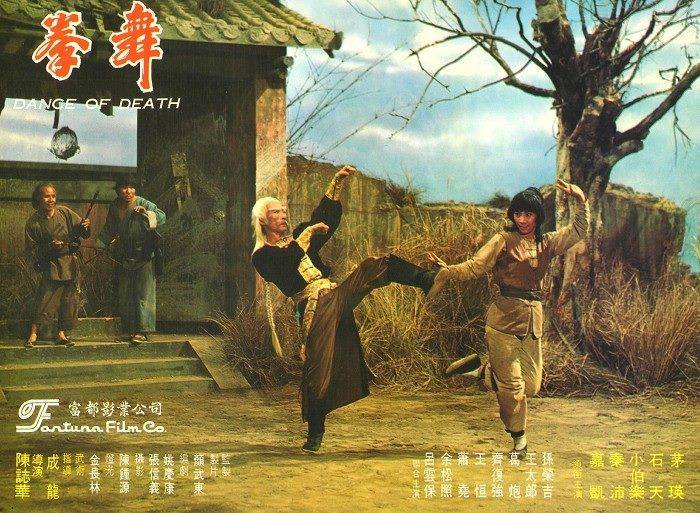 There were aspects which still befuddle me, such as most of the plot. Why, exactly, is Angela Mao pretending to be a boy? It’s completely unconvincing, and entirely unnecessary to the story-line. No-one ever discovers her true gender: it’s almost as if this were originally written for a man, then they got Mao, and in all the excitement, forgot (or, alternatively and equally credibly, couldn’t be bothered) to change the script. The rest of it is an odd mix. It’s partly vengeance with Fei Fei (Mao) out to pick up enough martial arts skill to take revenge on those who killed her family. Yet this sits alongside slapstick comedy which you’d not expect given the title, such as the two kung fu masters – one drunk, one stoner – whom she tricks into sharing her talents, or the villain with the world’s tiniest fan whom she defeats on her way to the big bad.
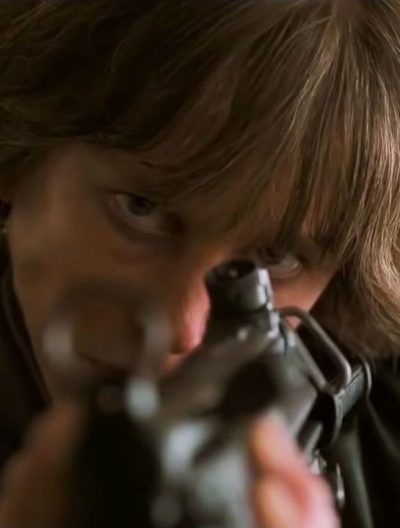 A fine, almost unrecognizable performance by Kidman succeeds in maintaining interest, despite a script which appears to regard time less like an arrow, and more like a big ball of wibbly-wobbly, timey-wimey stuff. Deeply troubled cop Erin Bell (Kidman) wakes up in her car, apparently badly hungover, looking like ten pounds of crap in a five-pound bag. Not far away, her colleagues are poring over a newly-discovered murder scene: a body with a dye-stained hundred-dollar bill on the corpse. And that’s about the last time when I was quite certain of the timeline.
 Marginally competent, and just not very exciting, this low-budget offering is the story of December (Kurishingal). As a young girl, she watched as the rest of her family was slaughtered by Law (Ramsey) and his villains, the result of a debt owed by her father. A decade or so late, she has grown up and taken to the streets as a vigilante, seeking vengeance on those responsible. Or, until she finds them, any other perpetrators she comes across during her night-time ramblings through the mean back alleys of the city. Helping her mission, is that she now works for the police, which puts her in a prime position to ensure, for example, that any evidence pointing in her direction goes “missing”.
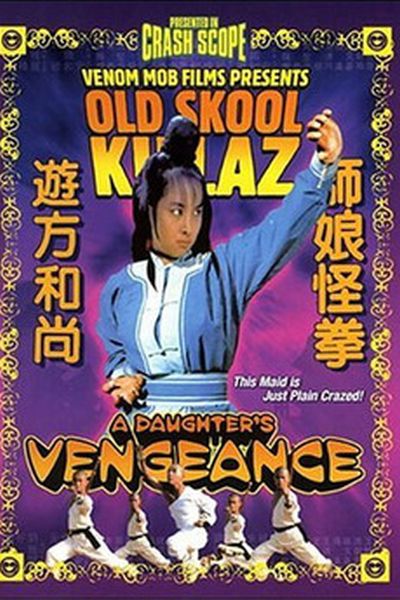 Look, I tried. I really did. When I found my attention had drifted away from watching the film, in good faith, I rewound the film to the point where I’d lost interest, and took up the movie again the following day. After all, maybe it was me. But when I still could barely bring myself to finish this leaden lump of poorly-crafted revenge-fu… No, having gone above and beyond the required effort, it’s really not me. This is lacklustre stuff, to put it mildly, even by the generally low standards of Taiwan.
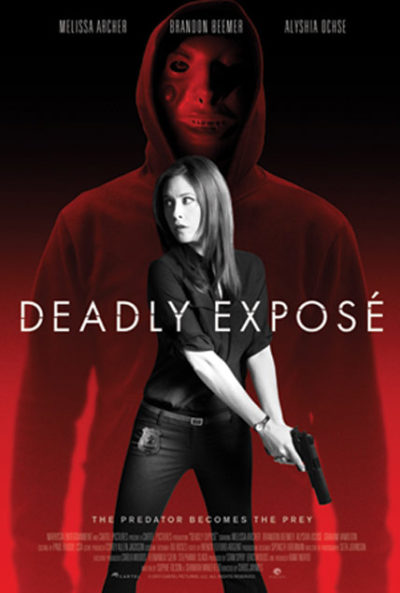 After hacktivists expose the identities of users to a dating site, someone starts targeting the victims, murdering them in ways appropriate to their particular sexual fetish. Detective Maxine Peyton (Archer) leads the investigation, but it soon becomes clear that, as well as acting as a moral judge, jury and executioner, the killer has a particular interest in and connection to Maxine. Potential suspects include over-attached boyfriend and college teacher Simon (Hamilton), her cop partner Nick (Beemer), ex-husband Ryan, or even slutty best friend, Jen (Ochise), who keeps trying to hit on Simon. Might even be e) None of the above. As the bodies continue to mount, Maxine has to find the perpetrator before he/she finds her.
 That’s the voice-over with which this starts, segueing into a bit of nude interpretive dance – well, semi-nude, the guy keeps his Y-fronts on, for which I am grateful – that has absolutely no relation to the rest of the film. At its core, this is a battle of triad versus triad: one overseen by Lau, the other by Fung. The former is assassinated, and his daughter, Angel (Yeung) takes over – she’s also keen to track down the perpetrators, with the most obvious beneficiary being Fung. But not so sure is Fung’s right-hand man, Jimmy Lee (Lee), who was there for the killing, and helps Angel’s investigation.
 Oh, be afraid… Be
 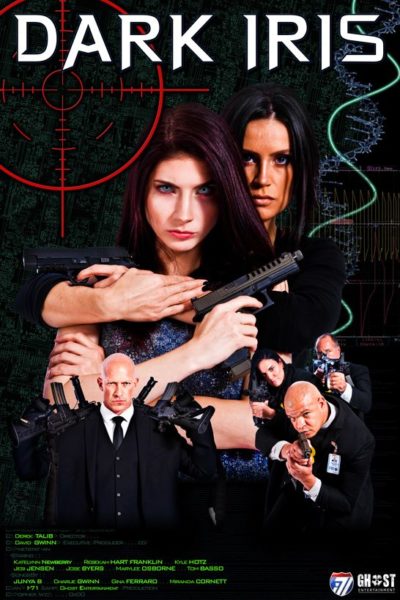 The Hyde Project was a secret government experiment to create artificially-enhanced super-soldiers. Due to difficulty controlling their aggressive tendencies, it shut up shop, but not before 13 of them escaped. They are now being hunted down by a pair of MI-6 agents, Damion Crow (Kyle Hotz) and Lina Petrov (Jensen). Connected to this, somehow, is Iris Black (Newberry). She’s a put-upon barista, with a cheating boyfriend, sleazy boss, alleged stalker – and an increasing body-count of the people around her, the corpses being tagged with religious symbols, in line with the work of an active serial killer. This quickly brings her to the attention of the FBI, in particular Agent Fry (Osborne) and her partner, who have been hunting the killer. They’re not exactly prepared for what they will discover.
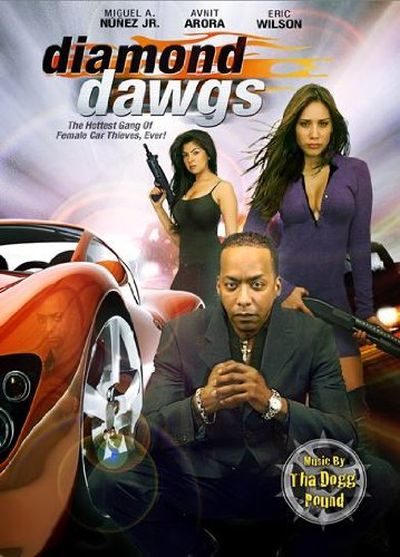 It’s hard to believe a film rated two stars exceeded expectations, but when I saw this had scored just 1.7 out of ten on the IMDb, I was braced for something much worse. I mean, cross off the friends of the cast and crew who scored it a “10”, and 72% of voters have given it the lowest mark possible. Make no mistake, this isn’t great. It’s not even good. But this is not quite as irredeemably bad as that score would imply.