



★★
“Preferred this when it was called Counterfeiting in Suburbia.”
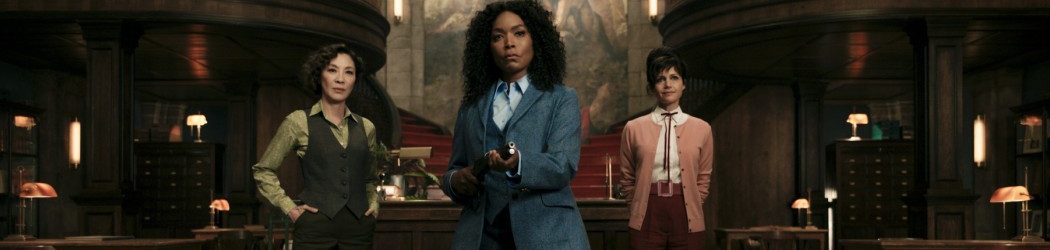
 Turns out that The Asylum are not the only company who makes mockbusters. As its alternate name makes clear, this Lifetime TVM is clearly a knock-off of the title mentioned above, down to the same, basic plot. Two teenage girls begin doing crime, largely for the excitement. A teacher becomes aware of their exploits and decides to blackmail them for his own benefit, by making them escalate their activities. This brings them increasingly under the scrutiny of both authorities and criminal elements, not to mention parental disapproval, eventually leading to a climax where all these aspects cross paths. As my review of Counterfeiting mentioned, it wasn’t even a particularly original idea there. As you can imagine, a second-generation copy is not an improvement, even if the idea of a knock-off of a movie about forgery possesses a certain irony.
The main twist here is that instead of counterfeiting, the crime in question is car theft. Emily (Belkin) is being brought up by her mother, after her father died in a car accident, and is working to restore her late dad’s muscle car, a task which has helped give her certain car skills, including hot-wiring them. She has teamed up with classmate Max (Helt), to boost cars, purely for joy-riding purposes, but the pair decided to make a commercial endeavour out of it, and sell the vehicles to a local chop-shop they know. Their shop teacher, Mr. Curnow (Hynes) finds out about their work, and decides to use them to start stealing high-end cars, to provide seed money for his own business involving exotic sports vehicles. This doesn’t sit well with the chop-shop owner, the cops are beginning to close in, and worst of all, Emily’s Mom is growing increasingly suspicious. When she pays Curnow a visit at his home, she is held hostage to ensure Emily completes one final task, stealing a Hummer belonging to a well-connected local club owner.
This is so painfully bland, it should have been called Barbie and Friends Do Crimes. Admittedly, I was hoping for something like a female version of a Fast and the Furious movies. As I soon as I realized this was a Lifetime TVM, all hopes of that evaporated, but it could still have avoided having less edge than a rusty butter-knife. It shoehorns in a hot teenage boy delinquent (Manley) on whom Emily can crush, largely as a means of filling time, since he serves no real plot purpose. Even the car-stealing scenes, which could have generated tension, are feeble: witness in particular the example which consists largely of one girl starting intently into her handbag, waiting for a light to go green. Hitchcock is turning in his grave. It did manage to leave me yearning nostalgically for a film which only got 2½ stars, so that’s a new experience.
While I have already written more about this than it deserves, I just discovered there is still another TVM going down the same furrow: Smuggling in Suburbia. I’ll just leave its synopsis here. mostly as a warning that the possibilities appear, sadly, endless: “Joanie gets recruited to travel with other girls to exciting cities delivering camera lenses to photographers–and falls in love with Tucker, a partner in the courier business. When she searches the camera case she’s carrying and finds diamonds hidden inside a lens, Joanie realizes she is part of an illegal smuggling ring! She just needs to pay for her brother’s cancer surgery that would otherwise bankrupt the family.” Yeah, I’m good, thanks.
Dir: Jason Bourque
Star: Zoë Belkin, Samantha Helt, Tyler Hynes, Jake Manley
a.k.a. Hotwired in Suburbia
 We reviewed
  For one reason or another, in the last few years Great Britain has become the place to go for medium-budget action thrillers. Examples include the Pierce Brosnan-Milla Jovovich-actioner
 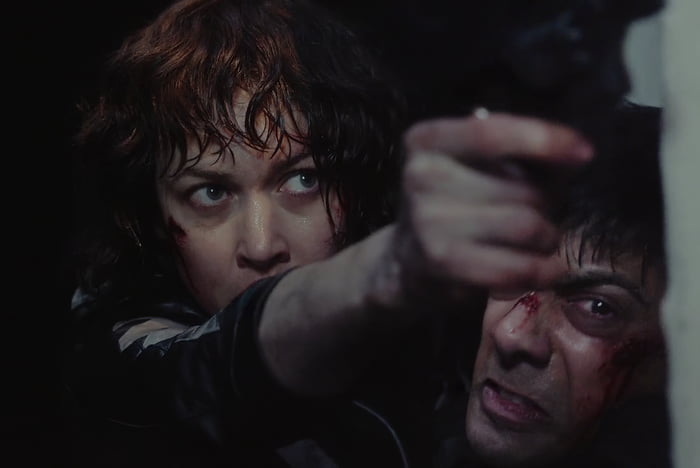 If Kurylenko’s character never reveals her name, at least some backstory is given as to why she is such a badass fighter. She used to be an Ukrainian soldier, part of a special forces battalion in Syria. After the death of her brother, she deserted and went to ground, taking menial jobs like this one. So for once we’ve got an explanation, as to why a smaller woman can take on big men who are professional killers. The fact that she is not just throwing them over her shoulder to the wall – like, let’s say, Angelina Jolie in
  I was enormously surprised to see this one pop up on Netflix – it’s not as if the
 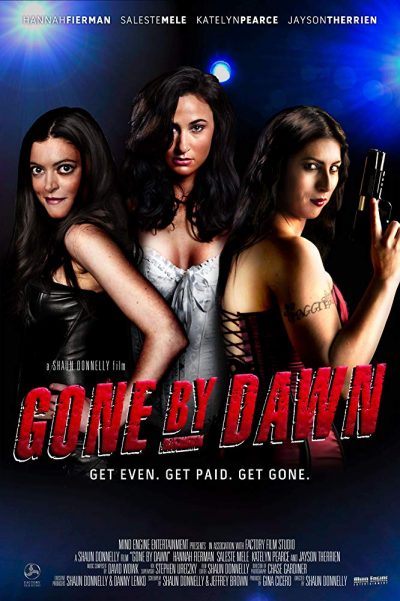 I decided I might as well combine these two into a single review. Having watched them back-to-back, even though made and set three years apart, they felt very much like the continuation of a single story about the same characters. The main one is Roxy (Mele), who is a dancer at a Wisconsin strip-club run by the sleazy Stag (Therrien), mostly as a money-laundering front for local organized crime. When he and his pal rape an employee, Alana (Pearce), Roxy along with the victim and another dancer, Crystal (Fierman), decide to take revenge by robbing Stag. That means getting into the safe in his office where the money is, and he’s not exactly going to give up the combination freely. Still, nothing that a piano-wire garrotte round the testicles can’t solve, surely? Except, as usual in this genre, the heist doesn’t go smoothly. Stag’s office quickly begins to resemble a mortuary, as unwelcome guests need to be handled.
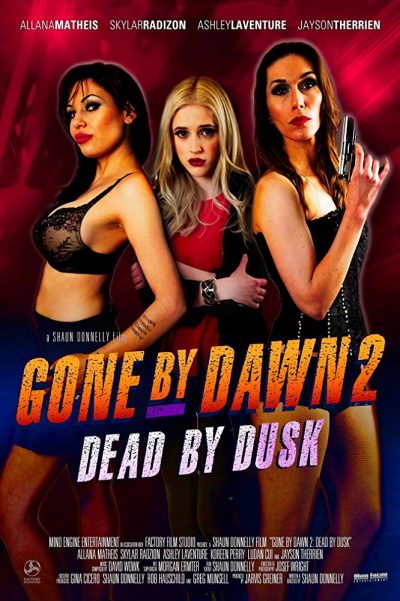 I didn’t think the sequel worked as well. While Roxy returns, she has been recast, being now played by Matheis – I’m not sure what happened to Mele. Still, I did laugh when one supporting character greets her with, “You look different!” Oddly, while the first film started with Roxy skipping town, the second sees her back, working at the same venue where she was involved in a multiple homicide. I know strippers are renowned for making poor decisions, but still… It turns out, having absconded with nine hundred grand of the mob’s money isn’t a good idea. They want it back, and to this end, have sent a trio of hired killers, named the Three Bears by Roxy. They’re prepared to do anything, up to and including both kidnapping and murder. But Roxy, along with Jesse (Radzion), a friend of Alana’s, and another dancer, Alura (Laventure), plots to turn the tables on the Three Bears, by robbing their boss.
 Even if the film doesn’t quite live up to the title and poster, it turned out to be better than I expected… from the title and poster, to be honest. It has been my experience that, the more lurid the advertising, the more disappointed I’m likely to be. Films like this often don’t just fail to deliver on what they promise, they also struggle with basic aspects of film-making, like plot and characterization, providing a double-whammy of failure. While the former is true here (no-one, at any point, is
  Nine years after the events of the
 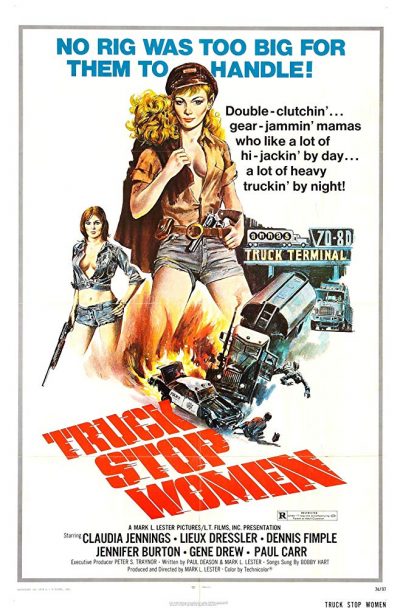 Ostensibly, Anna (Dressler) runs a New Mexico truck-stop, catering to drivers and ensuring they are kept fed and watered as they run their rigs across country. However, she has several more lucrative businesses. It seems that a majority of her waitresses, for example, moonlight as hookers in the brothel Anna runs. But the key side-line of work is sending her gals out to lure in unsuspecting truckers, typically with an alluring combination of fake breakdowns and tight shorts. When the truckers stop, their vehicles are hijacked, the contents stolen and the trucks themselves repainted and sold on.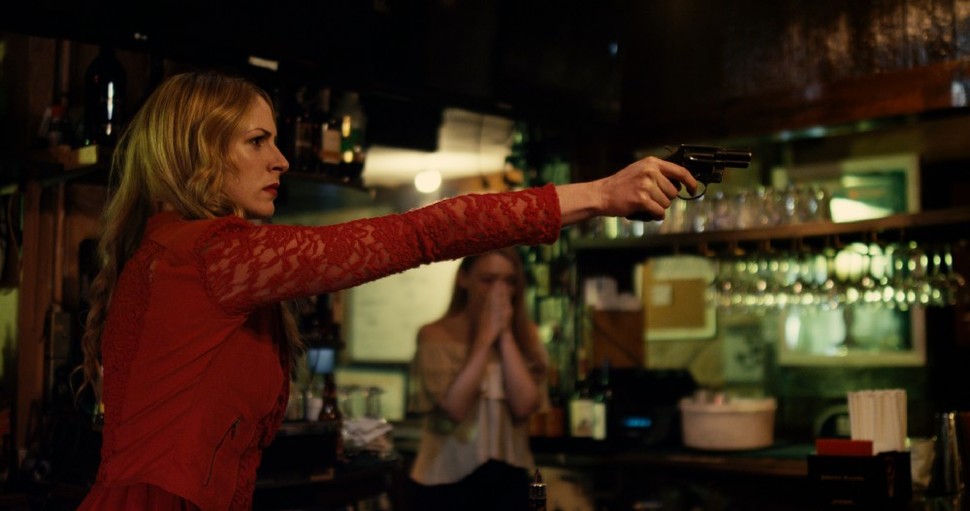
 You could skip the first 30-45 minutes of this, and it really would not affect your enjoyment level significantly. It seems to be one of those cases where the director is far more in love with the dialogue and characters than they deserves, and so we have to sit through far too much flapping of jaws by the latter, delivering the former in inane and uninteresting conversation, before we get to the meat of the story. Which is, as follows.