




★★★
“The beauty is a beast, in lurid yet chaste 1960’s European comic adaptation.”
 Originally, Satanik was the villain in a series of Italian photonovels/comics. But in 1964, writer Max Bunker changed the sex and this 1968 movie – set in Spain, made by Italians – followed, though Satanik isn’t mentioned by name (I guess, a little like Heavy Metal). The central character here is a disfigured scientist, temporarily turned beautiful by a potion which also removes all her morals and inhibitions. The body count mounts, and to escape the cops, she takes another woman’s identity; unfortunately, her victim was a police stoolpigeon, and those she grassed up are also very keen to find her. Plus, her medication is wearing off…
The comics had a broad range of supernatural themes, featuring vampires, etc. but the only extra-real element in the film is the potion. What delights here, is a villainess totally lacking in scruples, reliant only on herself, making the film years ahead of its time in this aspect. Less appealing are some truly horrible fashions, proving the 60’s match the 70’s for wardrobe atrocities.
Still, the soundtrack grooves, and some thought went into this, even if the ending leaves much to be desired, almost as if it was tacked on to appease the censors. Konopka was obviously cast for looks, as her (kinda tame) stripteases prove – in one, a homage to another comic-book character, Diabolik, the last item removed is a balaclava – yet doesn’t disgrace herself. Neither does anyone else, save perhaps the costume designer, though you won’t mistake this for less than 30 years old.
Spooky coincidence time: we finished watching it about 11pm, and went to sleep. Woke up next morning, turned the TV on…and the first thing we saw? Konopka’s only other film of note: When Dinosaurs Ruled the Earth. Does this mean anything? No, not at all. But it was kinda cool. :-)
Dir: Piero Vivarelli
Star: Magda Konopka, Julio Pain, Umberto Raho, Luigi Montini
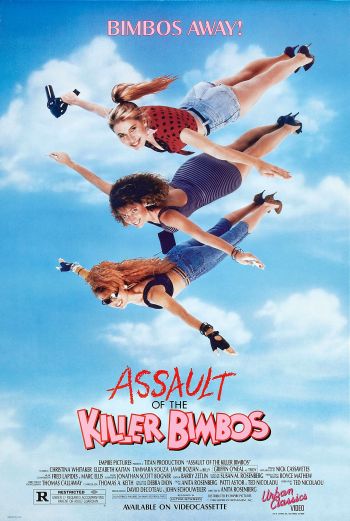
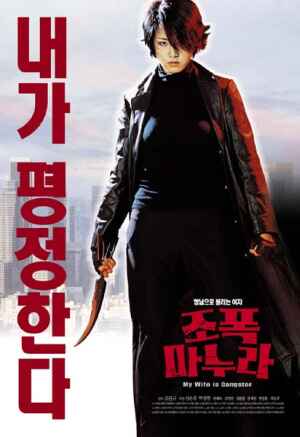 Another slightly clunky Korean title (see also Guns & Talks), but the first forty minutes or so of this are about the driest comedy/action you could ever hope to see. In order to fulfill the wish of her terminally-ill sister, mob boss Eu-jin (Shin), or “Mantis” as she is known, decides she to get married. Of course, she needs an especially stupid husband who won’t realise her true occupation, and finds one in Soo-il (Park), a civil servant with a 0% success rate on his blind dates. Their courtship, pre-nuptials and wedding (the last interrupted by a rival gang – a “martial arts demonstration”, as a fast-thinking sidekick calls it) are executed perfectly, largely thanks to Shin and her expressions of shock and horror at the mating game.
 “It was a nightmare to shoot: the producer and director were constantly fighting… It was completely unorganised. Alexis [Denisof] was also in it and he and I would go into each other’s trailers and go, “We’ve made a huge mistake, this is the worst thing ever!” It just went terribly, terribly wrong.” So says Hannigan: wouldn’t say it was
 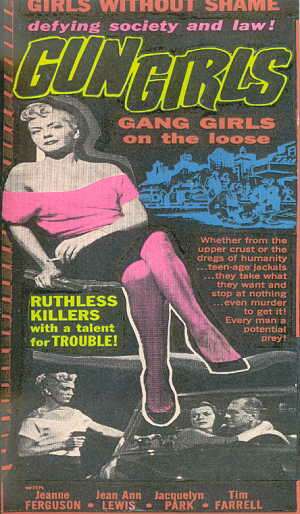 Based on the director’s novel, Girls on Parole, this prime slice of Juvenile Delinquent nonsense remains endlessly fascinating for students of “bad” movies, not least for its schizophrenic approach. It manages to combine moralistic doctrine – most notably from a parole officer who speaks Entirely In Headlines – and exploitation, with the heroines stripping down to their foundation garments (hey, this was 1956, whaddya expect?) about every ten minutes.
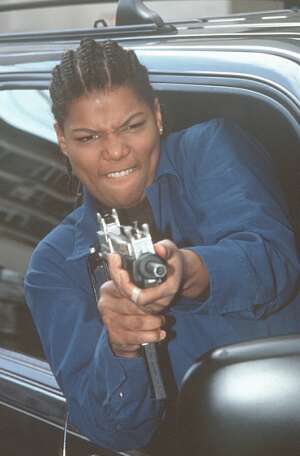 After a couple of less-than-perfect entries in the ‘robbery girls’ subgenre, this came as a refreshing blast, with decent characterisation and a storyline that goes past the painfully obvious. Mind you, the moral remains the same – crime doesn’t pay – but at least the road taken to get there is interesting and complex. These women all have their own reasons for wanting to rob banks: getting back at society for perceived injustice, supporting a child, or simply for kicks. Interestingly, you can see both their point of view and society’s, the latter most clearly in a surprisingly sympathetic cop, Strode (John C. McGinley). The results are more a product of tragic circumstance than anything else.
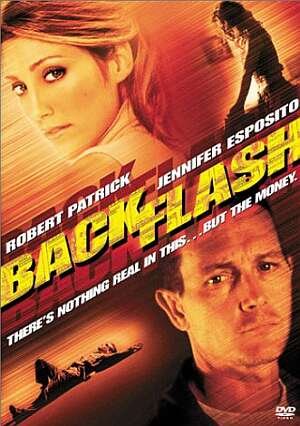 Harley (Esposito) comes out of prison, and links up with timorous video store owner Ray (Patrick), who must impersonate her boyfriend in order to collect $2m stashed in a safe-deposit box. The cash was swindled from mob money-shuffler Gin (Meaney) – understandably he’s keen to get it back before his boss notices. You will not be surprised to hear that hardly anyone in this film is quite what they seem.
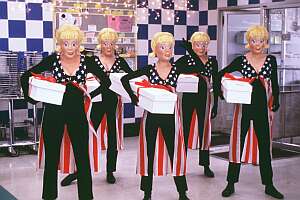 “Get ready to cheer for the bad girls,” goes the tag-line, and despite an exterior fluffier than candy-floss, the message here is actually extremely subversive: crime
  Certainly not the best high-school studio satire ever (Heathers or Election), it’s likely the only one post-Columbine to feature semi-automatics, albeit in watered-down fashion. According to Mena Suvari, “It was really frustrating, because the movie we all signed on to do was very dark and very offensive, and while the finished movie is still that to a degree, it’s completely different.” One can only imagine what the original would have been like.
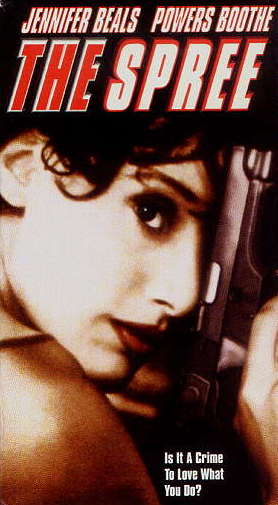 Good films about women burglars are hard to come by, for some reason. Mind you, good films about
 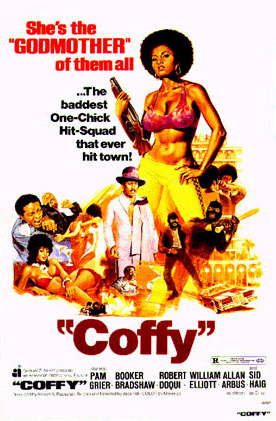 Neither star Grier nor director Hill were exactly strangers to the world of exploitation when they made this, but their combination here created a whole new subgenre, crossing action heroineism with black cinema. Following her would come Foxy Brown, Cleopatra Jones and the rest, but let it be said, Coffy was the first of any significance.