


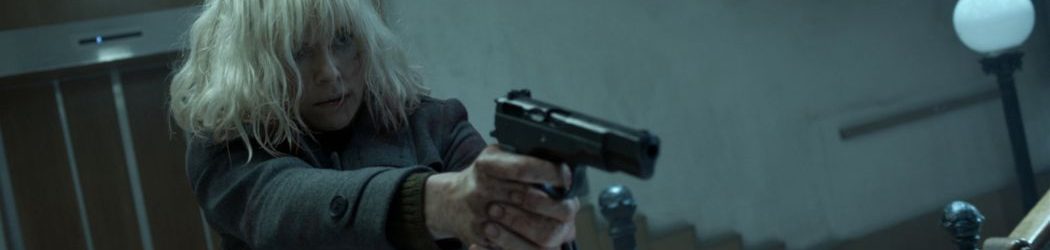

★★★½
“Bad Girls – the musical.”
 Not the Billy Bob Thornton/Bruce Willis vehicle of the same name, this German film is several years older. Four girls, in the titular prison band, seize the chance to escape when playing at a police function. With freedom comes unexpected fame, thanks to a tape sent to an unscrupulous record company executive. There is plenty of potential for a Natural Born Killers-style hack at the media, manafactured celebrity: the Bandits could go after the exec for exploiting them, he could encourage the cops to shoot the fugitives and increase sales, etc. Von Garnier largely avoids this, in favour of unsuccessful chick-flick emoting, and a slightly surreal approach, like a long-format pop video. Add an irrelevant subplot in which the Bandits take a hostage, play with him for a bit, then dump him, and it’s clear the script is embarrassingly weak.
Fortunately the rest of the film holds the script up, aided by Von Garnier’s good visual style – albeit one perhaps more appropriate for MTV (one scene is in danger of turning into Fame!). The characters, too, deserve better, a fascinating mix of archetypes: the tough girl, the slightly mad oldie, the ditzy sexpot, etc. They could easily slump into shallow cliche, and it’s a credit to the actresses that they don’t. The music is a key element, and isn’t terrible, though personally, I’m a long way from going out and buying the soundtrack. In the end, all the elements combine with the unstated potential to create an engaging failure. Could have been, should have been, yet there’s still enough to make it worth a look.
Dir: Katja von Garnier
Star: Katja Riemann, Jasmin Tabatabai, Nicolette Krebitz, Jutta Hoffman
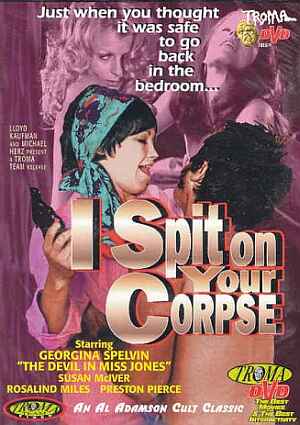 Porn stars who try to act are usually on shaky ground – see Traci Lords’ career – except, it seems, when the characters they play have something of the porn star in them. Brigitte Lahaie in Fascination is a good example, and Spelvin, best known for The Devil in Miss Jones, impresses here as Tate, a cold, animalistic killer, freed from prison by mob boss Moreno (Taylor) to kill a treacherous lawyer. Which goes fine, it’s when her unwitting accomplice Donna (McIver) realises what happened, and goes on the run, that the film really starts. The chase is on: can Tate and sidekick Erica (Miles) hunt Donna down before she reaches Mexico?
 Originally, Satanik was the villain in a series of Italian photonovels/comics. But in 1964, writer Max Bunker changed the sex and this 1968 movie – set in Spain, made by Italians – followed, though Satanik isn’t mentioned by name (I guess, a little like Heavy Metal). The central character here is a disfigured scientist, temporarily turned beautiful by a potion which also removes all her morals and inhibitions. The body count mounts, and to escape the cops, she takes another woman’s identity; unfortunately, her victim was a police stoolpigeon, and those she grassed up are also very keen to find her. Plus, her medication is wearing off…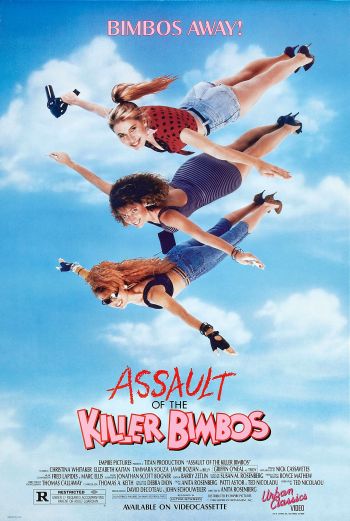
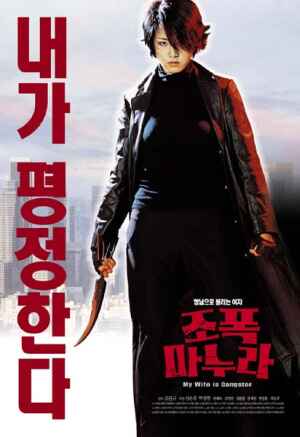 Another slightly clunky Korean title (see also Guns & Talks), but the first forty minutes or so of this are about the driest comedy/action you could ever hope to see. In order to fulfill the wish of her terminally-ill sister, mob boss Eu-jin (Shin), or “Mantis” as she is known, decides she to get married. Of course, she needs an especially stupid husband who won’t realise her true occupation, and finds one in Soo-il (Park), a civil servant with a 0% success rate on his blind dates. Their courtship, pre-nuptials and wedding (the last interrupted by a rival gang – a “martial arts demonstration”, as a fast-thinking sidekick calls it) are executed perfectly, largely thanks to Shin and her expressions of shock and horror at the mating game.
 “It was a nightmare to shoot: the producer and director were constantly fighting… It was completely unorganised. Alexis [Denisof] was also in it and he and I would go into each other’s trailers and go, “We’ve made a huge mistake, this is the worst thing ever!” It just went terribly, terribly wrong.” So says Hannigan: wouldn’t say it was
 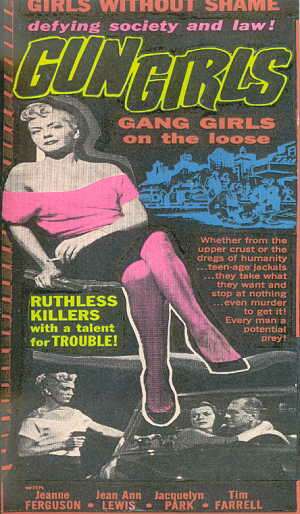 Based on the director’s novel, Girls on Parole, this prime slice of Juvenile Delinquent nonsense remains endlessly fascinating for students of “bad” movies, not least for its schizophrenic approach. It manages to combine moralistic doctrine – most notably from a parole officer who speaks Entirely In Headlines – and exploitation, with the heroines stripping down to their foundation garments (hey, this was 1956, whaddya expect?) about every ten minutes.
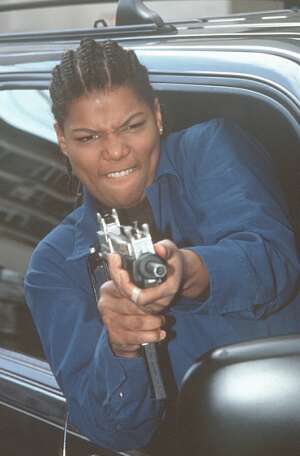 After a couple of less-than-perfect entries in the ‘robbery girls’ subgenre, this came as a refreshing blast, with decent characterisation and a storyline that goes past the painfully obvious. Mind you, the moral remains the same – crime doesn’t pay – but at least the road taken to get there is interesting and complex. These women all have their own reasons for wanting to rob banks: getting back at society for perceived injustice, supporting a child, or simply for kicks. Interestingly, you can see both their point of view and society’s, the latter most clearly in a surprisingly sympathetic cop, Strode (John C. McGinley). The results are more a product of tragic circumstance than anything else.
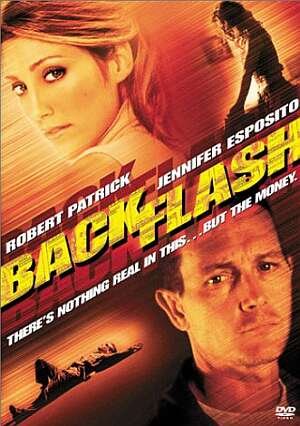 Harley (Esposito) comes out of prison, and links up with timorous video store owner Ray (Patrick), who must impersonate her boyfriend in order to collect $2m stashed in a safe-deposit box. The cash was swindled from mob money-shuffler Gin (Meaney) – understandably he’s keen to get it back before his boss notices. You will not be surprised to hear that hardly anyone in this film is quite what they seem.
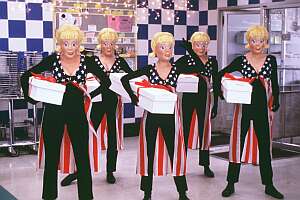 “Get ready to cheer for the bad girls,” goes the tag-line, and despite an exterior fluffier than candy-floss, the message here is actually extremely subversive: crime
 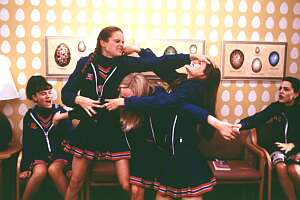 Certainly not the best high-school studio satire ever (Heathers or Election), it’s likely the only one post-Columbine to feature semi-automatics, albeit in watered-down fashion. According to Mena Suvari, “It was really frustrating, because the movie we all signed on to do was very dark and very offensive, and while the finished movie is still that to a degree, it’s completely different.” One can only imagine what the original would have been like.