
★★★½
 Director Ichimura returned for the fourth episode, and despite similar problems as the third installment – most obviously, an apparent doubt that Oichi’s character can hold the viewer’s interest by herself – makes a much better stab at things here. Bounty-hunter Oichi finds out what life is like on the other side of the law, after she helps rescue an unwilling bride from a local magistrate; he slaps a 100 gold-piece reward on her head, which naturally, brings other bounty-hunters on her trail, led by Sankuro (Meguro).
She ends up in a fishing village, where the “evil property developer” subplot makes a surprising appearance, despite the historical era. The reconstruction of the harbour threatens to put the locals out of work, but a plot is afoot among the local authorities to pay them only one gold piece each in compensation, rather than the 15 gold pieces actually provided by the federal government. Residents, officials, bounty-hunters and Oichi all inevitably collide, including one character played by Tetsuro Tamba, who remains even now one of the most respected (and prolific – the IMDB lists 193 films for him!) actors in Japanese cinema.
There’s a lot of devious double-crossing and deception here, which is okay to watch, but isn’t really the reason we watch these things. And that it also turns out to be Sankuro’s birthplace is too much of a fluke to swallow. Fortunately, it all builds nicely to an extended finale, where our heroine (now also framed for the murder of a village elder) gets a chance to take out her aggression and resentment on all those who have turned her life into that of a hunted animal. It’s a great urban battle, through the town which is being demolished around her, in and out of buildings until she finally confronts the chief villain of the piece.
Though this was the last entry in the series, there isn’t much sense of closure at the end, with (and I trust I’m not really spoiling this for anyone) Oichi merely walking off into the sunset, alone again, naturally. One senses Shochiku were hoping to continue, but for whatever reason – most likely box-office success, or rather, the lack thereof – it never materialised. However, for a series from the 60’s, it was undeniably ahead of its time, and most of the films have survived the passage of three and a half decades in an impressive style. If any enterprising DVD company were to snap them up, the rewards would likely be significant.
Dir: Hirokazu Ichimura
Stars: Yoko Matsuyama, Yuki Meguro, Tetsuro Tanaba, Reiko Oshida
a.k.a. Mekura No Oichi Monogatari: Inochi Moraimasu
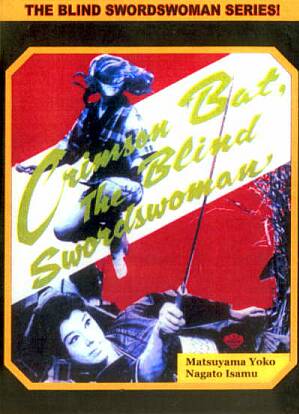 We meet our heroine Oichi as a young child, who has just been being abandoned by her mother – not sure what happened to father, but we later discover Mom’s a prostitute, so can probably fill in the blanks ourselves. To make matters worse, the tree under which Oichi takes shelter from a storm is struck by lightning, rendering her totally blind, in a way that’s – probably wisely – left medically unexplained. However, she is then taken in by a kind gentleman, who brings her up, and on into adulthood.
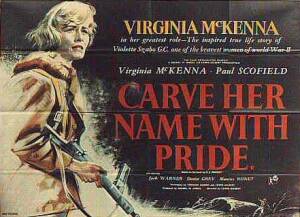 This is based on a true story, so we know from the start this is going to end in front of a firing-squad – at least until the Hollywood remake, with a happy ending. Given this, the film still tries to crank up the tension, but as written, Violette Szabo comes off as beyond saintly, without flaws or imperfections. Almost as irritating, she is shown as being mostly inspired by the death of her husband, rather than any innate patriotism (Charlotte Gray similarly portrayed a female SOE agent as passive-reactive). Having said that, the movie generally stays true to the facts, though the poem supposedly written by her husband was actually, in far less romantic reality, by her SOE codemaster – interestingly, the SOE’s name is not mentioned at all. Much of the end is fictionalised; details of her interrogation, for example, are obviously unavailable.
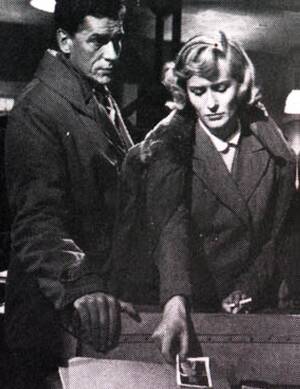 The film does take
  Love story or wartime thriller? The script here tries to have it both ways, and as a result of this uncertainty, the undeniable potential in the idea is unfulfilled. Gray (Blanchett) is dropped into Vichy France during World War II as an agent, but her bosses don’t realise she is more interested in finding her pilot lover (Penry-Jones), who’s been shot down nearby. While conflict between love, and love of country, would have been interesting, the former is almost ignored, then disposed of in a thoroughly unconvincing manner. Not that this diversion is uninteresting; you get a real sense of the terrors of war, with people being “vanished” in seconds, and the tension of living your life on a knife-edge behind enemy lines.
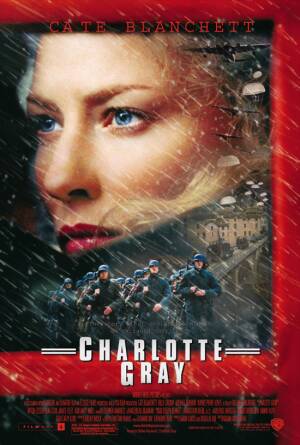 Mostly, the film is concerned with Charlotte’s protection of two Jewish children, and involvement in a resistance cell led by Julien (Crudup). They’re communists, so the British don’t really like them, but they’re convenient – and can be abandoned when necessary, the revelation of which provides the film with its most chilling moment. Blanchett has the right steely resolve for the role, and the cast is generally excellent; particular credit to Gambon (magnificently surly as Julien’s father), Ron Cook as Gray’s contact, and Anton Lesser, an oily collaborator who had us screaming “Die! Die!” at the TV set.
 Despite an overall rating that is only mildly above average, when this is good, it is
 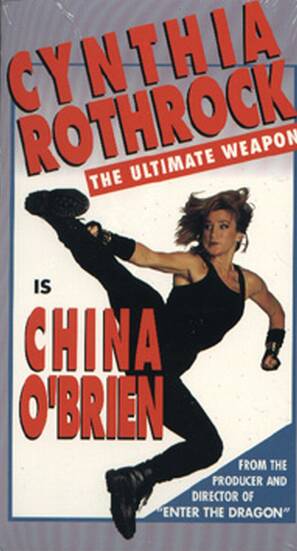 There’s something charmingly naive about this film. It inhabits, and expects us to believe in, a world where a villain can blow up the sheriff and his deputy with car-bombs, yet federal authorities take no interest. Nor do they apparently care when an election rally is machine-gunned. Mind you, in this same world, a new sheriff is elected five working days after the incumbent dies, but that’s still enough time for a massive parade down main street to be organised by a candidate.
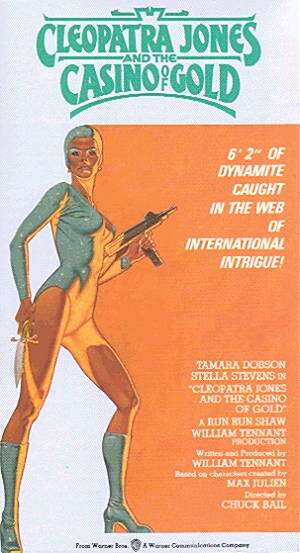 In the 70’s, Shaw Brothers hooked up with Western studios, to various effect, e.g. the inept Dracula and the Seven Golden Vampires, made in conjunction with Hammer. Co-production works rather better here, lending genuine exotic locations, and an endless array of stuntmen, prepared to hurl themselves off things. Jones heads to HK after a couple of her minions are captured by the evil, lesbian, sword-wielding Dragon Lady (Stevens), intent on bringing down the operation, with a little local assistance.
 Though I hope 80’s hair
 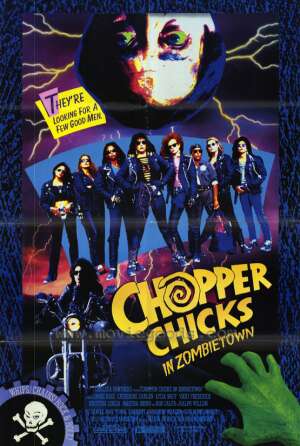 The Cycle Sluts motorcycle gang roar into town, to the consternation and distaste of locals, who drive them off. This decision is regretted soon afterwards, when they come under siege from the walking dead, raised to work in the local mine – a plot stolen from Hammer’s Plague of the Zombies – by the local mortician (Calfa) and his midget assistant. Luckily, the girls are still near, and can assist the townsfolk, including Billy Bob Thornton, who plays a redneck hick, proving it’s possible to be stereotyped