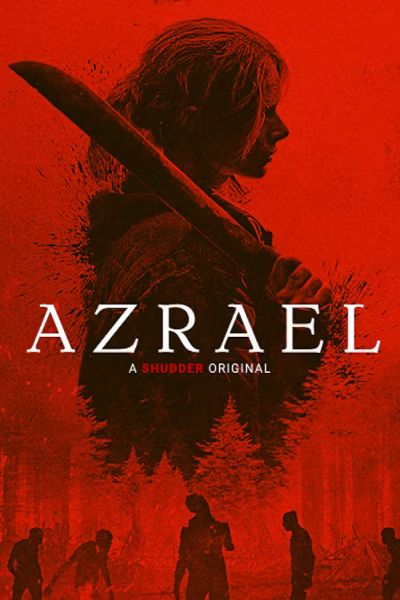
If I see a more relentless and brutal film in 2025, I’m going to be quite surprised. This doesn’t let up, with people being eaten alive, impaled, decapitated and slitting their own throats when they realize the horror of… Well, let’s leave that to the film to divulge, shall we? I must say, you should probably read the first sentence of the Wikipedia synopsis, because there is a lot there, which the film does not explain. Admittedly, this is in part because it contains almost no dialogue, and there are a number of elements which feel near impossible to show, rather than tell. You don’t need to know them to enjoy this. But they will certainly answer some questions.
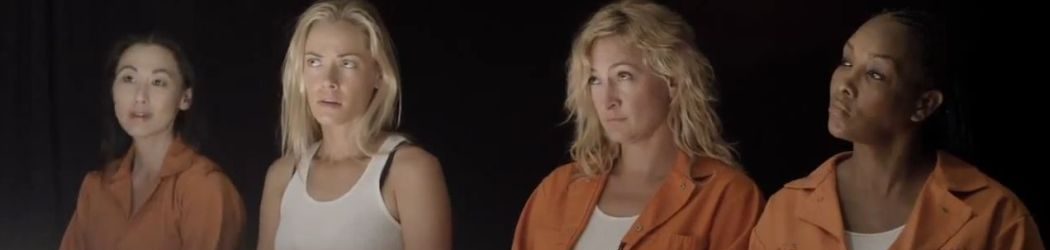
What the film has is a mute woman, Azrael (Weaving) and her boyfriend, Kenan (Stewart-Jarrett), getting captured by an equally silent cult in a forest. The time and era is uncertain, but they do have working cars, so it seems fairly contemporary. They want to sacrifice her to dark, humanoid creatures which inhabits the woods, but she is able to escape back into the wilderness. She attempts to return, so she can rescue her boyfriend, and encounters the group’s spiritual leader, the pregnant Miriam (Sonne). After failing to save Kenan, and narrowly escaping from the dark creatures more than once, as well as getting buried alive, Azrael vows to take bloody and fiery revenge on the cult, and also discovers the true nature of Miriam’s pregnancy.
I don’t want to send Eva Green or Milla Jovovich out to the Sunnyside Retirement Home quite yet. But when they do decide go to the farm upstate, Samara Weaving might be best-placed to replace them. In Guns Akimbo, Ready or Not and now this, she has shown the ability to compel the viewer’s attention, even if the film might not be the greatest. She does it again here, despite doing the acting equivalent of having one hand tied behind her back, robbed of emoting with her voice. I can’t think of many current actresses who could pull such a trick off with such apparent ease, and help make what is admittedly a gimmick, feel surprisingly like a natural scenario.
She becomes quite the bad-ass over the course of proceedings as well. It’s not clear whether she was initially, since we get no real information regarding her previous history. But she needs to be, in order to survive against the monsters in the woods, who are among the creepiest things I’ve seen in a while. By the end, she’s enthusiastically hacking her way through what appear to be her former allies, although the ending is… ambivalent. I suspect there’s a lot of religious back-story here – Azrael is the angel of death in Islam [It’s also the name of Gargamel’s cat in The Smurfs, but that’s probably less relevant!] There’s scope here for an entire feature before this, plus likely one after, and I’d watch both. Just a shame it got buried on a second-tier streaming service like Shudder.
Dir: E.L. Katz Star: Samara Weaving, Vic Carmen Sonne, Nathan Stewart-Jarrett, Katariina Unt
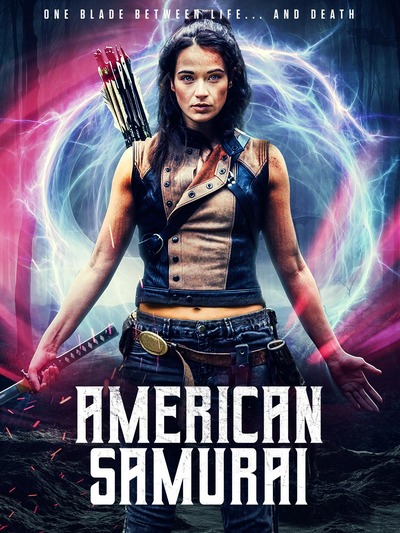
If I’d realized earlier this was by the director of the underwhelming, non-GWG film, Once Upon a Time in the Apocalypse, I would likely have set my expectations considerably lower. This has much the same “running around the woods after civilization has collapsed” vibe, though I did see Willard has added some digital effects to enhance the post-apocalyptic atmosphere. It is likely an improvement technically, but there just isn’t enough going on here to sustain interest. In this version, the rich have abandoned the failing civilization on Earth and decamped in self-sustaining spaceships. Everyone else has been left to fend for themselves, and this includes the community here, who keep themselves to themselves, deep in the Oregon woods.
In charge of its security are Larkin (Hastings) and her acolyte, Alyssa (Fortuna). They go on regular patrols around the area, or when they get word of strangers who might pose a threat. On one such excursion, they meet Ryan (Pelfrey) who begs for their help, offering them tickets to space if they help him reach the take-off point. Alyssa wants to take him up on the offer, but Larkin over-rules her. However, they come across a couple of the elites, who have returned to Earth on a “hunting expedition”, and the encounter turns lethal. This puts them in the crosshairs of the accompanying, ‘enhanced’ bodyguard (Mann). It poses a dilemma, because the last thing Larkin wants is to bring the pursuer back to their settlement.
The idea isn’t terrible. Unfortunately, the execution largely is, in a variety of ways. The most obvious one is the action. Using the S-word (incidentally, there is zero connection to the 1992 film of the same name, starring Mark Dacascos) sets… certain expectations in regard to your fight scenes, which Fortuny and Hastings are in no position to meet. Slowly and carefully waving swords about is not an acceptable answer, despite guns and bullets apparently (though not consistently) being in short supply. Too many plot threads never go anywhere of significance. These include both Ryan and his space tickets, as well as little girl Mary, back in the settlement, who is supposed to be in dire need of a doctor – though she looks pretty healthy to me.
Fortuny and Hastings aren’t terrible; the latter grew on me after a shaky start to her performance. Their two characters form a decent contrast, the cautious Larkin with the impetuous and more emotionally driven Alyssa. The individual scenes where they are talking with each other are okay. It’s just there are far too damn many of them, each bringing the film to a halt. Then, when we finally see the settlement, it looks like a well-maintained holiday camp, where a hippie festival is happening (fire dancers!). It’s salutary to contrast this with another recently reviewed low-budget slice of post-apocalyptic cheese, in Ride Hard: Live Free, which did a far better job of working round its limited resources, and retained my interest considerably better. Guess they don’t make apocalypses like they used to.
Dir: Nathan Willard Star: Rosa Fortuny, Larkin Hastings, Rob Pelfrey, Mikel Mann
★★★
“Everything that goes up, must come down again.”
Note: Watching season 1 or at least reading Jim’s review of it is highly recommended. Spoilers will follow!
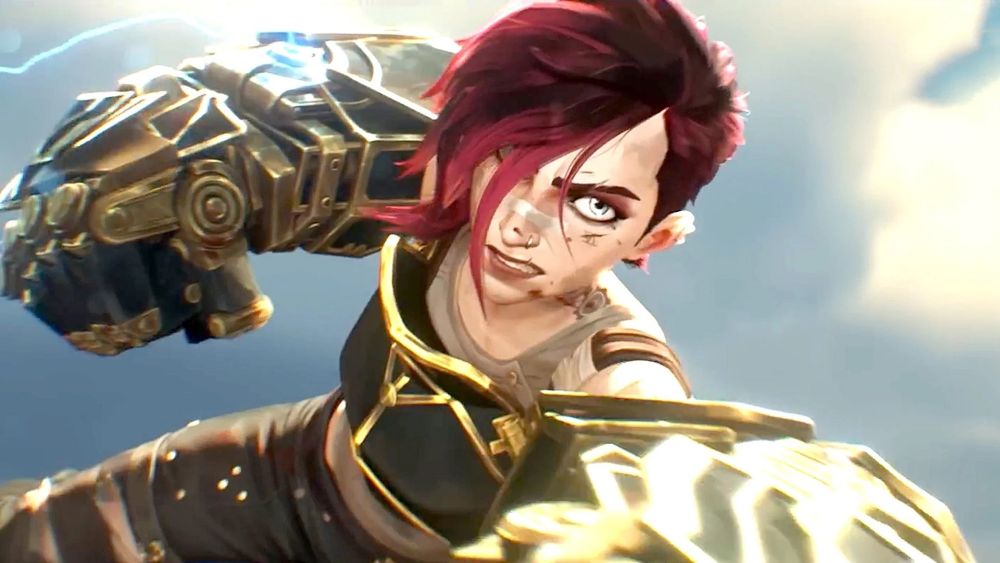
I never played the MOBA (multiplayer online battle arena) video game League of Legends. But I guess this was the case for many people, when they discovered the first season of the animated series based on it in 2021 on Netflix, and were surprised by its great quality. For Arcane – League of Legends was a show long in the making. That it finally came to fruition is probably mainly due to the persistence of producers Christian Linke and Alex Yee. The whole project had many creative problems to overcome, not least the indifference of Hollywood, where Riot first tried, unsuccessfully, to find a partner for a possible translation of their stories into a film version. It would probably never have seen the light of day if they hadn’t employed producer and writer Amanda Overton. She was able to see the dramatic potential of Riot’s fictive world Runeterra and take the needed steps for this to become a story.
The whole project was something absolutely new for all involved, because animated clips for games are not the same as an animated series. It spent a long time in development – production for the first season took seven years. Success could not be guaranteed, therefore needing another three for the second season to go into production without finished scripts for every episode, according to Variety. This resulted in a total budget of $250 million for the entire series. The first season cost $80m to produce; the second, $100m; the rest went into marketing the first season. This means every episode cost $13.9 million, the highest budget per episode of any animated series ever.
Given that, it’s no surprise to hear the rumoured three further seasons are not happening. However, the producers say that was just an inside joke: it was always intended for the story of the twin cities Piltover and Zaun to be finished with the second season. At least, it’s what they claim. Watching the rushed events play out in season 2, with new, underdeveloped characters being introduced and old characters sometimes behaving inconsistently, and not necessarily in line with the way they were presented in season 1, make doubts about such statements absolutely justified.
In any case, here we go again! While normal watchers and fans had to wait 3 years for Arcane‘s second part. Season 2 continues its story immediately after the big bang, which we don’t get to see here, caused by Zaunite and gangster protégée Jinx, previously known as Powder. We get to discover which council members died and survived. That question seemed the most important one for many people, maybe only topped by the unresolved relationship issue between Jinx’s sister Vi and Piltoverian enforcer Caitlyn. Surprisingly, only half perished but Caitlyn’s mother, Cassandra, bit the dust, a potential catalyst for a revenge arc. But then, from the very beginning on, Arcane has followed much more complex storylines than your average Hollywood blockbuster.
For this show, it means what would be enough for your average action movie or TV series, is just the beginning. It’s what I think makes the series above average in general. It always gives more than you asked for, and at the same time surprises you with sudden twists, unexpected developments, plus nuanced characterizations and relationships that escape standard black-and-white. Well, at least the first season did.
Characters are flawed, not just good or evil. They try their best, or at least react in a way that is human and understandable. Yes, the road to hell is paved with good intentions. Sometimes your effort to do good is exactly what leads to society’s downfall. That theme was prominent in season 1; for season 2, it’s also about how the actions and intentions of different people can clash with each other. Also, Riot and its creative team seek to put things on their head, with unforeseen developments for their characters. Viktor becomes a kind of helpful messiah in Zaun; Jinx teams up with her former gangster-stepfather’s loyal lieutenant Sevika, with whom she was at odds before, and young girl, Isha; Jinx becoming the poster girl for what seems to be Arcane’s prepared re-enactment of the French revolution; and Caitlyn is de facto declared sole ruler by Ambessa Medarda. A fallout between Caitlyn and Vi puts their developing love story on ice and drives Vi into nasty underground fights. There’s a lot happening here and a lot to unpack, too; no review can cover it all, so I won’t even try.
The dreamlike quality of the animation is still overwhelmingly beautiful. Though in some scenes and moments, you may feel you already know French animation studio Fortiche’s shtick. Anything repeated can hardly retain a feeling of originality, though it still may look beautiful. Once again, the musical score is fine and offers something for everyone. When music and visuals come together, they very often make a fine combination, reminding me of MTV music videos of my youth.
Unfortunately, the songs are usually at the beginning of each episode. I preferred it the way season 1 did it – we didn’t know when a song would pop up. It could be the beginning, middle or the end of an episode, so it was a nice surprise. Also, while the previous season had around eleven songs, here there might be twice as many. After a while, the constant interruptions of the story for another music sequence can start to feel quite a bit distracting if not outright annoying.
Is this season better or worse than season 1? It depends on what is important for you. What I liked very much of the first season, was it being character-focused and psychologically deeper than you would normally expect from your average entertainment product. Also, the realistic depiction of characters and their conflicts with each other made me buy into the more fantastic elements of the story. I got the strong impression that, in contrast to many Hollywood creators today, those in charge had actually read books on screenwriting and building dramatic conflicts, as well as believable characters.
Season 2 is different: focus appears to be elsewhere. It seems there is so much the writers feel the need to tell, and by wanting to introduce more of the game’s lore, it sometimes becomes too much for its own good. There are many new developments, arcs, characters, etc. Don’t get me wrong: characters are still likable, but they and their developing relationships had much more time to breath in the previous season. Here, things seemed to go a bit too quickly, and I couldn’t escape the impression characters were sometimes turning 180° within minutes. Very often events or explanations are kind of summarized in montages with music put underneath. Of course, you can do that. But you shouldn’t do it all the time.
A clear minus point in my book: things that felt logically had to happen based on season 1, are discarded in favor of other story decisions out of nowhere. You can say while the first season was character-orientated, the second wants to bring in boatloads of lore. Didn’t Jinx kill Sevika’s boss Silco just a day ago? And now they are teaming up? Really? A kiss finally confirms the love between Caitlyn and Vi, which can be probably counted as pure fan service for the lesbian community. But then there is a breakup a few minutes later, and Caitlyn, who was introduced as a shy and sexually unaware person in season 1, is shown in bed with fellow officer, Maddie Nolan. That’s a new character, and we don’t get any explanation why and how they became a couple. Where did that come from? How convenient it happened between episode 3 and 4, which saw another time-skip of unknown length.
The same is true for the revolution of Zaun against Piltover. It seemed to be just about to break out but is skipped over, too. Suddenly we have a Zaun held in check by Ambessa’s Noxian troops. I guess it relieved the animators from the burden of drawing extensive large battle scenes here between Enforcers, Zaunites and Noxian soldiers. All we get is a small demonstration led by Sevika, that’s immediately put down. Nor are we given an explanation why Jayce thinks that the Hexcore could save Viktor – how badly was he injured? While we can assume why Viktor leaves his friendship with Jayce behind, he never really states a specific reason.
Why should the council accept Caitlyn as a new member, given she is only the daughter of Cassandra? Are political positions inherited in Piltover? If so, I’m not astonished the twin cities are having so many problems. Ambessa makes Caitlyn de facto commanding officer of the city and Caitlyn takes that position, only to backpedal an episode later. Why? If you want to tell an Emperor Anakin story, do so. But then go the full mile and show me her devastating actions, as well as the resulting impact. What is a story decision worth when you have no intention to make something out of it, and reverse it a couple of episodes later? It’s like starting to tell a story, then suddenly deciding against it.
Other things didn’t make sense, as if the writers lost track of their own story. How come Ambessa knows Vi? She is virtually a total stranger to her. How does she know Vi and Caitlyn were close? And why should she be glad when Caitlyn fakes the capture of Vi, since she has little or no meaning for her? I do get that Linke & co. are in favor of “show don’t tell”, and prefer visuals and the intelligence of the audience to deduce things, instead of showering them in spoken info-dumps. But these things don’t appear logical anymore and demand explanations that are not given here. As someone who doesn’t know the game, I also had quite some problems understanding what was happening with the Hexcore, especially at the end.
Caitlyn in particular has a lot to answer for: she changes so often this season, that she could be called the poster child for inconsistent character writing. It’s as if the makers were preparing certain things, then didn’t want to follow through or got scared of their own boldness. Where is the bloody revolution, the big civil war that loomed all over season one, and whose ending seemed to be so unavoidable? I have to shake my head in disbelief at the storytellers, obviously preparing a love story between two main characters, only to chicken out for want of not having them come together too early, meaning they bond physically just shortly before the finale. Unfortunately, when said scene finally happens, it feels very much “too little, too late”. [Did they really do it on the floor of a dirty prison cell, while the climactic battle was simultaneously brewing outside?]
It should be noted that the series is not a Netflix product; Netflix was just offered the show as a distributor. Riot Games, its creator, financed the series themselves and had French animation studio Fortiche produce it. It might explain why the usual “propaganda” we see in a lot of Netflix-productions is less obviously present in this. This show mainly abandons lectures in favour of its narrative. Though it’s fair to stress the story is focused on strong, powerful women. Male characters appear either as weak and emasculated (Viktor, Salo, Heimerdinger, Caitlyn’s father), negatively portrayed (Silco, Singed, Marcus, Finn, Smeech), non-intimidating boyfriend material (Jayce, Ekko) or – and this becomes almost a dead horse – dead/absent father figures (Silco, Vander and Marcus).
If you are an imposing strong man, here it is usually as a supporting character without any agency of his own (such as “The Scowler”, Loris or Riktus, Ambessa’s muscular right-hand man). If you had told this story a few years ago, Jayce and Caitlyn would have become an adored couple – an idea the first season seemed to toy with for a moment, then quickly discarded. But as we live in ‘enlightened times’, the show sees the sensitive Jayce being seduced by powerful black leader Mel Medarda, and Caitlyn is revealed as a lesbian.
Disappointingly, the expected big final fight between Vi and Jinx is not to be found here: instead, they get along again after a bit of a brawl. Jinx the psycho? She seems quite normal again, after playing surrogate mother to the mute Isha for a couple of episodes. That’s far from any normal psychological reality. The screenwriters aren’t even above shamelessly milking nostalgia by giving us a flashback to Vander, Silco and the mother of Vi and Jinx sitting in “The Last Draw” – in a way it’s even repeated later again. Cheap, cheap, cheap!
Certain developments feel hasty, rushed and insufficiently explained. If I didn’t look it up, I’d have no idea about the meaning of the Black Rose. Maybe the Ambessa novel coming out next year might make things clearer? Fans may know what this is about; but it’s not how you present a story to people who have no prior knowledge of the game’s lore. By doing things like this you essentially exclude them from the show. I will say, it becomes better in later episodes. Episode 7 function as some kind of alternative universe story, that works as a stand-alone. Episode 8 finally gives us information we could have used earlier, when the characters have some much needed discussions with each other. Unfortunately, the last episode opts for a finale akin to a typical Tolkien adaptation by Peter Jackson, with what appears to be the villain from Avengers 2: The Age of Ultron, and partly falls prey to esoteric mumbo-jumbo.
Also, newly introduced characters such as Isha, Loris or Mattie are never developed. What can we really say about them? What is the sense of introducing an admittedly cute little girl into the story, having her do or say little of significance, only to kill her off a few episodes later? Yeah, I know, it has shock value when a child dies. But “kill the cutie” is one of the cheapest cliches. I did not expect the makers would fall to the level of George R. R. Martin, after the screenwriting skills they demonstrated in season one. [But there might be a simple explanation: I read that four of the screenwriters in season one were not part of the writing committee for season two.] For me these things indicate a rushed, not thought through screenwriting process. Obviously having “only” three years for the second season, compared to seven for the first, led to a tangible loss of quality in the careful construction of scripts and characters.
The first season’s story built up, with logical progression, and you could quickly identify with the characters’ psyches and what drove them. Don’t get me wrong, the show is still very good and entertaining, but would have been much better served if this edition had more time to breath and been spread over two or maybe even three seasons, instead of just one. Too often you feel that there are scenes or needed explanatory dialogues missing, as if they had to be cut or were never written. Consequently, while I would easily have given season one 4 stars, season two lands with only 3.
Also, there is a slight change in style. While it’s still a drama, this season seems to skew a bit more horror-orientated. Body modification (see Viktor) plays a role here, as well as the frightening abilities of the “Hexcore”, which seems to develop like a living organism. We get enforcers hunting Jinx with gas into the deep mines, and unscrupulous scientist Singed creating Warwick, a kind of werewolf-ian monster, predicted by some LoL fans after seeing the last scene of season 1. The show as a whole gets more fantastic, compared to the more retro-SF leanings of the first season.
That said, the story arcs started three years ago are brought to an end, and that doesn’t necessarily mean a happy end for all. You have to deal with the new developments, regardless if you might have wished the show to develop in a different direction. The series is still the best in its specific genre – I guess that would be animated steampunk fantasy? – and market segment, though potential new competitors like Blue Eye Samurai are lurking around the corner.
Piltover looks very much Art Deco to me while Zaun is influenced by the style of Art Nouveau. I sometimes feel the twin cities remind me of a fantastic, retro-version of Paris at the beginning of the 20th century. Or maybe a bit earlier, around 1870 and the Belle Epoque – which makes sense, considering animation studio Fortiche has its headquarters in Paris. There is a clear commitment of Fortiche to artistry; there is hardly a frame that is not incredibly beautiful or fascinating. You could easily cover your whole living room wall with pictures of the show. Any complaints I have, are not about them: they did their work. They already are working on animated movie Penelope of Sparta (about Odysseus’ wife in Greek mythology). If it has half of the technical quality of Arcane, consider my ticket bought!
I liked season 2 but I didn’t love it. The action is still great, as are the visuals, in combination with a captivating soundtrack. You still care for the characters – though sometimes you just want to slap them right and left in the face, to get them to their senses or make up their minds. The show is complex and deals with modern but also timeless themes underneath its entertaining facade such as social injustice, the advantages and dangers of new technologies (if you want you can read “Hextech” as a metaphor for nuclear energy, environment endangering industrial processes in general, weapons of mass destruction, body modification or politics that are lead by economical interests only), and the corruption and ignorance that power creates.
But there are also psychological and social themes of conflict: emotion versus intellect, safety versus liberty, preservation of the status quo versus progress by destruction of the existing system. These are best represented in sisters, Jinx and Vi, whose already shaky patchwork family has been torn into pieces by these battles. Yet it also shaped them, and put them on a collision course against each other. Or so it seemed, since the final confrontation is between Jayce and Viktor, while Jinx is given an unnecessarily bland, sacrificial death to save her sister – although the creators hint at the end that she may have survived. You could argue the character’s potential has been entirely wasted in the attempt to reshape her into a more positive protagonist in season two. I repeat: it feels absolutely weird. Looking at the titles of the first season I always expected the final fight to be between Jinx and Vi, and it feels like another broken storytelling promise.
A minor complaint I have is, all these problems are shown, but a real solution isn’t offered for them. Yes, there are many good-hearted people here. who want the best for everyone, all fighting on different fronts, But in the end these eternal conflicts that mankind has suffered from since its existence are not really solvable. It’s kind of a downer when it comes to this original, very ambitious story. So, is season 2 what The Last Jedi was to The Force Awakens? Naah. It’s more what The Matrix sequels were to the first Matrix. Less a major disappointment than an unnecessary continuation of a perfect original. Honestly, I could have done without all the new fantastic elements and story arcs. I just wanted to see the resolution of the story the first season promised me.
Expectations set by the first season were maybe too high, but could have been at least partly fulfilled. The first gave us some kind of Greek tragedy in a fashionable modern dress, this feels more like just another fantasy show, with added modern “diversity”. The end of season one, though an open one, felt logical and justified. In a way, we could imagine the results of the final action and it didn’t really demand a sequel. The ending here feels kind of average and is unsatisfying as storytelling, perhaps partly due to already preparing another new show, probably set in Noxus. While still an entertaining series, the sad thing is that might be it for the time being.
While further TV and movie projects are planned, it appears the TV and film department of Riot has been disbanded and the team members moved to other departments in the studio, according to media reports. With a $3 million license fee per episode from Netflix and another $3 million from a Chinese distributor, do the math yourself. The show will not really be profitable, despite its popularity, though it may try to recover some costs from merchandise, the release of season one on Blu-Ray this year, selling skins for their game. But it has been reported, the best they can hope for is to break even, which is not a recommendable business model, understandably. Therefore, I’m quite astonished to hear producer Christian Linke talking about another project already in preparation since last year.
Personally speaking, it would be a shame if this is the last story we see from the League of Legends universe outside of the game. The screenwriters and producers would just have to be given enough time to develop something of a similar dramatic quality to season one. Focus on characters, not so much on lore. One story at a time is enough; we don’t have to know them all immediately. But who knows? Maybe one day it might come back due to popular demand, and because someone puts enough money on the table. Films of yesteryear (like right now: Gladiator) get sequels decades later, and TV shows I last saw when I was a hopeful 30-something return all the time. Why shouldn’t that be possible for this series, too?
Creators: Christian Linke and Alex Yee Star (voice):Hailee Steinfeld, Ella Purnell, Kevin Alejandro, Katie Leung
You know you’re in for a shaky experience when the film can’t even spell its own title right. That proves a fairly accurate assessment of the overall experience: while not without its merits, these are outweighed by the negatives in the final analysis. The heroine is Victoria Travers (Payne), an FBI agent on holiday with her family in Romania, when she spots a fugitive from justice, John Slater (Mandylor). She attempts to extract him over the border, to where he can be extradited, but while that takes place, her husband is killed, and her daughter snatched by an organ harvesting ring, run by Ivan Raj (Saini). Suddenly, Slater with his local knowledge, is the only hope of Victoria rescuing her child.
It’s all very basic and quite linear. The plot feels almost like it might have been lifted from a video-game, as the odd couple roam Bucharest, working their way up the criminal organization. with the occasional side quest such as rescuing another kidnapped child, freeing hookers, etc.There’s an NPC, in the form of hacker Tony (Hauck), who provides helpful information whenever Victoria and John appear to be at a dead end. The low-budget nature does work for the film, in that there’s an overall scuzzy feel to proceedings which is appropriate, and the location enhances this. It feels like the kind of place where organ harvesting would take place, though I suspect any such organization would, in reality, be more ruthless – and considerably more competent, to be frank.
Mandylor helps elevate proceedings, as he usually does: nice that his brother, Costas, also appears in this, playing Victoria’s long-suffering boss. Shame the Mandylors don’t get any scenes together. Payne is just about adequate as the relentless mother, and much less convincing as an FBI agent. However, she’s still better than certain members of the supporting cast. Some don’t even appear to have English as a second language, but there are others who can’t lean on that excuse. The action is intermittent, albeit not badly-staged in general. We could have done with more, perhaps in lieu of the interminable scenes of our heroine and hero driving around town, talking to people on the telephone or, occasionally for variety, driving around town while talking to people on the telephone.
I wobbled back and forth for much of this between 2 and 2½ stars. While low-budget, often obviously, it keeps moving forward, and there’s something to be said for simplicity, rather than burdening the viewer with unnecessary subplots. It’s never boring, over its seventy-five minute duration. But the ending is particularly weak, falling well short of providing Constance with an opportunity to face off against a final boss, something the movie undeniably needs. This passed the time adequately, yet I cannot say I was ever engaged, and there’s not enough to make me look into other work by Cerchi, whose talents appear limited to making sure the image is mostly in focus.
Dir: Massimiliano Cerchi Star: Constance Payne, Louis Mandylor, Adam Saini, Alexander Hauck
The palpable sense of disappointment I felt when the end credits rolled, was all the more striking, given the decent way this opened. Ayse (Koç) is enjoying a shower after some afternoon delight with her lover, when there’s a thunderous knocking on the door. It’s her thoroughly disgruntled ex-husband. In the resulting fracas, the boyfriend is shot dead, and Ayse has to leap out of a window, and go on the run. Friends and family disown her, as the ancient concept of the honour killing still holds sway in contemporary Turkey. She can’t even go to the authorities, since the ex-husband is a policeman.
Ayse attempts to head to the big city of Istanbul, more secular and offering a chance to hide out. This plan is derailed when a routine traffic stop leads to her capture. She manages to steal a police car, thanks to the cops underestimating her – you’ll find that is a bit of a theme. However, it crashes in fog and she’s forced on the run again, this time into the wilderness of the forest. She is pursued there by her former husband and various relatives, including a teenage cousin. They feel, to varying degrees that her actions have brought shame upon their family, and that she must pay for that, with her blood. Ayse, has other plans, especially after she wrests a weapon from one of the hunters.
It’s the kind of thing we’ve seen quite often before: a woman being chased through the wilderness, before turning the tables on them. When done properly, it can be highly effective. Examples of the proper execution – pun intended – would include Revenge or Arisaka. This, on the other hand, manages to get just about everything wrong. Part of it may be down to an overseas audience not being aware of the honour concepts, something the makers here don’t bother to explain. That’s forgivable. After all, it wasn’t made for us. But there are any number of other flaws, such as the ease with which she can best everyone in hand-to-hand combat. Or the lengthy, almost entirely pointless scene where Ayse tries to bribe a bus-driver to take her to Istanbul.
These pale entirely beside the ending, which is solely responsible for losing the film an entire star. For, in general, it looks decent, with some impressive cinematography, such as the drone shot that follows Ayse as she’s fleeing the apartment, and pans up to reveal the city. Despite its flaws, we were probably looking at ★★½. And then, we weren’t. I do not know what the director was trying to say with the ending. If I had to guess, something like “I have no idea how to wrap things up, and frankly, am getting bored with the entire endeavour, so I’m just going to roll the credits.” Almost makes me want to recommend watching this, purely for how bad the finish is. There’s certainly not much else to justify the experience.
Dir: Emre Akay Star: Billur Melis Koç, Ahmet Rifat Sungar, Yagiz Can Konyali, Adam Bay
I guess the title is trying to riff off Gang’s of New York, though this is set significantly later. It begins in 1884, when the Apache gang run the Parisian underworld. Young orphans Billie, Paulie and Tricky are on the fringes, until Tricky is killed when forced to play Russian roulette by the gang’s leader, Jésus (Schneider). Billie is framed for the death by a corrupt cop, and spends fifteen years in jail. When she gets out, now a grown woman, Billie (Isaaz) seeks revenge on all those responsible for Tricky’s death, infiltrating the Apaches to get close to Jésus. Matters are complicated, by the presence in the gang of Paulie (Paradot), who was brought up by Jésus, and also by the seductive nature on her of the Apache lifestyle.
There’s a fair bit of truth to the history here. From what I’ve read, the Apaches were a force to be reckoned with in Paris, from about the turn of the century through the outbreak of World War I. They valued style as much as savagery, preying on the middle- and upper-classes. I’ve not been able to find any indication women were a significant part of the Apaches, beyond using prostitutes as decoys to lure and distract the intended targets of a mugging. Still, can’t argue Billie makes the necessary impression, stabbing the Paris police chief (who is also the man who framed her) to death in a cinema, when she was indeed supposed just to be there as bait.
To this point, the film has done well at generating the atmosphere of a wild, anarchic setting, and populating it with interesting characters. It even manages to overcome the deliberate use of anachronistic songs on the soundtrack, opening up with the not-so sultry 1880’s sounds of… um, Iggy Pop? The problem is, the further in we and Billie get, the less interested she appears to be in her vengeance. The turning point might be when she goes after someone who has abandoned the Apache lifestyle entirely. My reaction to this was, “Oh. Is that it?” – and not for the last time either. You may well find yourself saying the same thing when the end credits abruptly roll.
The problem is less her diversion from revenge, than the absence of anything significant to replace it. I’m usually the last person to want romance in a genre film, but that would at least have helped explain her growing indifference to something which clearly sustained Billie through her fifteen years in jail. The nearest is when Paulie tries to kiss her and she repels her advances. It’s only when Jésus gives her an order she can’t obey, that Billie remembers why she’s there, though what results is hardly redemptive. I’ve read the budget was 4.5 million Euros, and if that’s true, I’m very impressed, since it looks consistently good. With a decent lead performance too, it feels they were just half a script short of having a successful feature.
Dir: Romain Quirot Star: Alice Isaaz, Niels Schneider, Rod Paradot, Artus
[A version of this review previously appeared on Film Blitz]
Published in 2019, this is the opening volume of Wolfpack Publishing’s Avenging Angels series. My wife Barb and I had previously read the seventh and second installments out of order (long story!); and having really liked those, we recently decided to commit to reading the series. This one takes us to the very beginning of the titular “avenging angels'” adventures.
The Bass twins, George Washington (nicknamed “Reno”) and Sara, were 16 in the fall of 1865, just after the Civil War, when they returned home from school and found their western Kansas homestead burned and their parents and three older siblings dead or dying, murdered by a band of vengeful renegade ex-Confederates. (Their sister had also been gang raped.) Before he died, their father charged them to avenge that slaughter. This book is the story of that quest and its outcome (hence the title). “A. W. Hart” is a house pen name; all of the books of the series have different actual authors. Here, the writer was Peter Brandvold, who grew up as a Western fan in the 60s and 70s and went on to write over 100 Western novels, under his own name or his “Frank Leslie” pen name. (Neither Barb nor I had any prior experience with his work.)
There are a couple of significant continuity issues between this volume and the later ones, though these aren’t Brandvold’s fault. Starting in the second book, our hero’s and heroine’s promise to their father is said to have explicitly included a charge to continue to hunt down and rid the earth of other evil-doers, even after justice was served on the original villains. That’s not at all clear and explicit here. At the end of this book, their resolution to make their quest a continuing one is said to be their own decision, a response to an emotional need of their own. And in the seventh book (and possibly others earlier), the late John Bass is described as having been a Lutheran pastor. In this book, while he’s said to have been a God-fearing person who raised his kids to be familiar with the Bible, there’s no hint that he was a clergyman of any kind. IMO, on both points, the portrayal here is more plausible and realistic.
However, there are definite flaws in Brandvold’s craftsmanship here, starting with chronology. John Bass served in the Mexican War, after which he married and settled in Kansas. The Bass family graveyard on the homestead is said to hold the remains of an infant sibling who died over 20 years before 1865 –in other words, before 1845, and the Bass twins would have been born ca. 1849. But the Mexican War was fought from 1846-1848. There isn’t time between Feb. 1848 and the end of 1849 to fit in John Bass’ post-war activity, subsequent courtship and marriage, the couple’s move to Kansas, and four pregnancies prior to Reno and Sara. (And Kansas was not even opened for settlement until 1854.) If his general knowledge of U.S. history didn’t furnish red flags here, very basic research would have precluded these kinds of mistakes.
Editing and proofreading here is poor. Brandvold loses the thread of which character is speaking in one key conversation; he can’t make up his mind whether two or three antagonists are positioned in one spot during a gun fight, and near the end, a character’s last name unaccountably changes from Hill to Stock in the space of two pages. The third-person narrative is consistently from Reno’s viewpoint, but in the earlier chapters it incorporates gunslinger’s slang (thankfully abandoned later) that a peaceful teenage farm boy would be unlikely to be acquainted with. Near the end, conduct by two of the villains is inconsistent with their group’s overall plan. There are other logistical and editorial quibbles that could be made as well.
Both Sara and another important female character, Isabelle Mando, act out of character, or unrealistically for the situation, in one place (though not in the same place). Sara’s character, in particular, comes across as less winsome here than it does in the two later books we read. Of the two twins, she’s always been the more enduringly angry and vindictive over her family’s tragedy, the more aloof and self-contained, and the more ruthless and readily inured to violence. Here, though, she has a readiness to execute even disabled and helpless adversaries that alarms Reno, and at the same time a willingness to ignore a rape attempt on someone else as none of her business. (Thankfully for the victim, Reno didn’t share that indifference.) At one point, Reno was feeling a genuine concern for the state of Sara’s soul, and a resolution to try to influence her for the better. But later, he’s surprised and puzzled when Sara expresses a concern about her own spiritual state; and that theme is never developed any further, just forgotten and left hanging. Brandvold is undeniably a prolific writer; but he comes across to me as a careless and hasty one who sacrifices quality to quantity.
While the main characters here are Christians, and there’s a definite theme of good vs. evil, with the idea that God sides with the former and against the latter, none of the series writers are necessarily Christians themselves as far as I know. Bible verses serve as epigraph and postscript, and are quoted at times in the text; but there’s no real presentation of the gospel of grace and mercy, and not much wrestling with the Christian ethics of lethal force in a fallen world. Despite the teen protagonists, this is not really YA fiction either; it’s a very violent book, with a high body count. (It is, however, free of sexual content, beyond some references to scantily-clad chorus girls in a frontier music hall, and has very little bad language.) There’s a chaste romance which some readers will see as marred by an insta-love factor; but in the cultural context, I wasn’t bothered by the latter, and for me it’s a plus that it’s inter-racial. (Positive portrayal of half-Lakota characters and a black character do Brandvold credit.)
While I didn’t rate this book as highly as the two later ones, Barb and I still plan to continue with the series. It won’t disappoint genre fans who like a heavy dose of gun-fighting action.
Author: A. W. Hart. Publisher: Wolfpack Publishing; available through Amazon, both for Kindle and as a print book. A version of this review previously appeared on Goodreads.
This was watched, effectively as the B-feature before Furiosa, with expectations along appropriate lines, given that basis. And as such, this is fine. It’s glossy, shiny and well-crafted technically, albeit making little or no emotional impact. This is partly because, in the early going, it feels suspiciously like someone said, “Hey Siri! Rewrite the script for Aliens, replacing xenomorphs with bad AIs, and Sigourney Weaver with J-Lo.” She plays Atlas Shepherd, an AI expert, decades after a revolt of the robots killed millions before it was contained, with leader Harlan (Liu) vanished from Earth. Now he’s been tracked to a distant planet, and a military mission sent to capture Harlan. Atlas reluctantly goes along with the soldiers as an “advisor”.
Fortunately, on arrival, the story heads in its own direction. The force is ambushed and forced down, with Atlas and her AI-enabled mech, Smith (voiced by Cohan) as apparently the only survivor. She opts to forge on with reaching Harlan’s base, a choice which brings her into conflict with Smith, who insists on putting his pilot’s safety first. Complicating matters is the need for Atlas to allow a neural link from Smith into her mind, in order to complete the mission successfully. This is something which she is very loathe to allow. There’s more than paranoia here, with pretty good reasons for her reluctance, connected to Atlas’s past and how it was responsible for the previous AI rebellion.
Topical for this to come out the week Google’s AI search results suggest using glue to stop cheese sliding off your pizza. Yet, despite the initial scenario, it ends up being rather – some might say, suspiciously – pro AI. Not quite, “I, for one, welcome our new AI overlords.” But definitely suggesting, even haters are going to have to bite the bullet and accept them into their lives. I will say, Smith ends up a likeable character, with an awareness of things like sarcasm, which make him approach human. Some might say, more so than Atlas, and certainly more than one of the other mechs, who insists on informing people of her preferred pronouns. I rolled my eyes hard at that.
Between this and The Mother, Lopez seems to be aiming to carve out a career as a Netflix action heroine. In both cases, the films work better on the action front than the dramatic (Lopez as a boffin is always a stretch). This has some nice examples of mechanized set pieces, as the Atlas/Smith partnership makes its way across a hostile planet towards their goal. It’s refreshingly free of any romance, being unexpectedly close to hard SF. Admittedly, this isn’t a film I’m probably ever going to revisit. But it provided a decent two hours of mindless entertainment, and let’s face it, that’s largely why we still have a Netflix subscription. If J-Lo wants to keep making this kind of thing, I’m happy to keep watching them. Just so long as she doesn’t start singing.
Dir: Brad Peyton Star: Jennifer Lopez, Gregory James Cohan, Simu Liu, Sterling K. Brown
SPOILER WARNING FOR THIS REVIEW: ESPECIALLY IF YOU HAVEN’T SEEN THE TRAILER!
Trailers can do a lot of damage to a movie’s impact, and is definitely the case here. If the trailer hasn’t outright told us the idiot gangsters had kidnapped a little vampire girl, the first third could have been very suspenseful. To elaborate: we witness the kidnap of an innocent little girl; normally our sympathies would immediately be with the victim, worrying about her well-being. We explore the setting and characters are more or less established. Then a gruesome murder happens and the gangsters wonder, “Who’s killing our people? Why? The girl’s father is big in the (criminal) underworld and has a mysterious henchman named Valdez. What’s his story? Is it all a reckoning for past misdeeds?”
This potential homage to Bryan Singer’s semi-classic The Usual Suspects falls flat, as anyone who saw the trailer (and posters) already knows it’s the little girl who is pulling the strings and will murder the gang of misfits. It’s a total fail by the marketing department responsible, though you understand a wish to signal to horror fans it’s something for them. I guess it will pay a dividend in the end – though will keep people away who are not horror fans and might have gone, expecting a crime thriller. In any case, the big surprise is ruined and you can’t help wonder if that was the best way to go.
When Hitchcock released Psycho in 1960, no people were allowed into the cinema after the movie had started, and the audience had no idea what awaited them. You thought it was about Marion Crane stealing money and going on the run… until she got stabbed in the shower. That was a real shock. You won’t experience that here, and no-one cares for the first victim (played by the unfortunately now deceased Angus Cloud). At one time, a plot with a group of people in an enclosed space and a killer amongst them, would have made for fine suspense. The film makes no secret about taking inspiration from Agatha Christie’s 1939 thriller And Then There Were None (originally known by another, non-PC title!), and the same concept works in Alien – a fine horror/thriller in space with as much focus on characters as on suspense.
Today, it doesn’t seem to be enough. You instead end up with superficially drawn characters, about whom you just get to know enough to understand where they come from, and then you blast in with the gory action scenes. Don’t get me wrong; I liked the movie. But I would have liked it more if I had cared for the characters fate. They die here and there, they twist and they turn – and I just don’t care for them at all. The movie just has not the time to build its characters, or doesn’t want to take the time for it. Which is a pity but perhaps a sign of our frantic, “more, more, more” times. I recently saw a new BBC version of Christie’s story; while they took the time to tell it, they overloaded the plot because simple, storytelling has gone out the window in today’s film narrative.
The big problem is, the moment the main characters are established as gangsters, you don’t really feel pity for them. Why should you? They are mean spirited people – bad guys – and that is a minor flaw in the concept. Having largely sympathetic space travellers finding an alien life form is quite the opposite. We are supposed to side with them because it’s a vampire. But the necessary character building hasn’t been done, and because one twist isn’t enough the movie gives us two or three more. At the end we are supposed to root for Abigail (Weir) and last surviving gangster Joey (Barrera), fighting one of her own who turned against them. Directors Bettinelli-Olpin and Gillett are asking too much of us emotionally. Should we always side with the underdog? Why? In the end they are all monsters, therefore equally unlikable, though the movie tries to make us pity the little vampire, that big daddy doesn’t really seem to care about, until he shows up at the end.
The same directors did much better with Ready or Not, where you constantly felt for Samara Weaving’s character, thrown into the pit with an insane, blood-thirsty family. It doesn’t work well here, due to the basic premise. The leads are hardly more than sketches and even Joey doesn’t get much more than being a junkie mom who cares for her little boy. It’s not enough in the development department, folks! The actors all do good work – as far as I can tell. In Germany, you get distracted by the choice of dubbing actors: the voice actor for Cloud is hardly bearable and Kevin Durand’s German voice sounds almost like Patrick from SpongeBob Squarepants which is… distracting! Also, I feel in the German version, a lot of humour is lost, I guess something to do with line delivery. I can imagine a line like “I hate ballet!” being hilarious in English, but in the German version it has no real effect.
I don’t know any of the actors save Durand and supporting actor Esposito, but the greatness of Weir’s performance can’t be stressed enough. I did believe her helpless girl – or would if I hadn’t been spoiled before – as well as the frightening vampire. How many people can scare a bunch of grown-ups? Though, of course, it’s not new ground. We saw how effective such casting can be when Kirsten Dunst did it thirty years ago in Interview with a Vampire. The trope of the “scary, evil kid” in general reaches back until at least the 1950s. The production design is beautiful and luxurious for the old villa with bar and billiard table, a kitchen (strangely situated in the cellar?), secret tunnels in a library, a computerized control room and a pool underground for corpse disposal. Similarly great is Brian Tyler’s effective score which I would really like on CD instead of the digital release.
I was less impressed by Barrera who plays the main gangster role. She is set-up as the intelligent, tough and strong woman, but her actions constantly contradict this, e. g. she can’t imagine a kid could be evil. Why? Because she has a child of her own? Everyone knows children are natural monsters and only by time, education and life experience become “human”. Her colleagues turn out partly smarter than her there. And when she, a normal mortal, tells a vampire, “I’m going to kill you now!” you wonder how delusional she can be. There’s a big goof at the end, when she gets her mobile out to call her son and say goodbye. Weren’t all cells collected early on by Esposito’s character? If she had another, wouldn’t she have been able to call help? Why didn’t she? Perhaps I missed how she got it back – maybe in the control room when the two vampires were fighting. Someone please enlighten me? [Jim. I think when she’s in the control room unlocking the house, she sees the bag of collected phones and takes one from it. Not exactly highlighted though!]
Strangely, the movie is claimed to “re-imagine” Universal’s Dracula’s Daughter from 1936. Having seen the classic movie, I can hardly see any similarities, save the main character is a female vampire, and daughter of a vampire. Her father turns up in a last minute surprise, effectively adding nothing except for re-establishing the classic Hammer vampire, of the Christopher Lee variety. Still, despite these flaws this is a good, entertaining horror movie. It’s not really suspenseful as the main characters are disposable and not developed enough to care about. And the trailer… (see previous rant!) It’s also surprisingly gory. I remember a time when such a movie would have been for 18+ audiences in Germany; this is 16+. Well, it’s not the 1980s anymore and Catholic priests aren’t sitting in German censorship board meetings anymore, so… enjoy!
Dir: Matt Bettinelli-Olpin, Tyler Gillett Star: Melissa Barrera, Dan Stevens, Kathryn Newton, Will Catlett
It’s a little hard to explain the universe in which this takes place. Humanity existed. However, their encounter with other races proved problematic for a variety of reasons, and led to them being exterminated, a genocide that was partly collateral damage in a war between the human-adjacent Eugenes and the definitely not Sceeloids. The former have a severely class-based society, where the lower-tiers are bred specifically to be soldiers, for example. One such “breeder” is Sela “Ty” Tyron, though she differs from the rest of her platoon in a couple of important ways. Firstly, her son is part of her group – though he doesn’t know it, having been removed from her care on his birth. His death (at the very beginning of the book, so not much of a spoiler) causes Ty to question everything she has believed about society, and her place in it.
Then there’s her commanding officer, Captain Jonvenlish Veradin. While her absolute loyalty to him is one thing, Ty’s feelings go past that, even if she won’t allow herself to admit it. Veradin is suddenly accused of treason; while he refuses to do anything except trust in the process, she spirits him away from execution, to life as a fugitive on the run. The cause of the accusation turns out to be related to his sister, Erelah. She’s a scientist who has just made a discovery which will revolutionize faster-than-light travel. She and Jonvenlish share a secret, which brought them to the attention of Ravstar, the regime’s infamous black operations group, and its even more notorious commander, Defensor Tristic. She’s half-Sceeloid (which raises questions in itself) and has plans to use Erelah as a vessel, whether or not the target consents. But doing so awakens some long-dormant talents in Erelah. Between those and Ty’s rogue military abilities, Tristic won’t find things going all her own way. On the other hand, Erelah and Ty have their own issues to work through, not least their conflicting ideas of what’s best for Captain Veradin.
This is… okay. The split focus is a bit rough, in that the switch from focusing on Ty to Erelah, is sudden and perhaps too long to work. The two stories don’t come together at all in the first third, and the unclear previous history turns out to be quite significant, to the point I wished it had been better explained. If the plotting is generally too murky for its own good, the characterization is well enough handled to balance things, or thereabouts. Ty, in particular, is a genuine bad-ass, whose loyalty is exemplary. If the action is limited in quantity, it’s partly because she’s so competent, the fights in which she’s involved tend not to last long. While it is enough to salvage this as a read, it’s not sufficient to get me more than slightly interested in reading further entries.
Author: Amy J. Murphy Publisher: Self-published, available through Amazon, as an e-book only (unless you fancy paying $59.99 for the paperback!). Book 1 of 5 in the Allies and Enemies series.



 If I see a more relentless and brutal film in 2025, I’m going to be quite surprised. This doesn’t let up, with people being eaten alive, impaled, decapitated and slitting their own throats when they realize the horror of… Well, let’s leave that to the film to divulge, shall we? I must say, you should probably read the first sentence of the Wikipedia synopsis, because there is a lot there, which the film does not explain. Admittedly, this is in part because it contains almost no dialogue, and there are a number of elements which feel near impossible to show, rather than tell. You don’t need to know them to enjoy this. But they will certainly answer some questions.
  What the film has is a mute woman, Azrael (Weaving) and her boyfriend, Kenan (Stewart-Jarrett), getting captured by an equally silent cult in a forest. The time and era is uncertain, but they do have working cars, so it seems fairly contemporary. They want to sacrifice her to dark, humanoid creatures which inhabits the woods, but she is able to escape back into the wilderness. She attempts to return, so she can rescue her boyfriend, and encounters the group’s spiritual leader, the pregnant Miriam (Sonne). After failing to save Kenan, and narrowly escaping from the dark creatures more than once, as well as getting buried alive, Azrael vows to take bloody and fiery revenge on the cult, and also discovers the true nature of Miriam’s pregnancy.
  If I’d realized earlier this was by the director of the underwhelming, non-GWG film,
  ★★★
★★★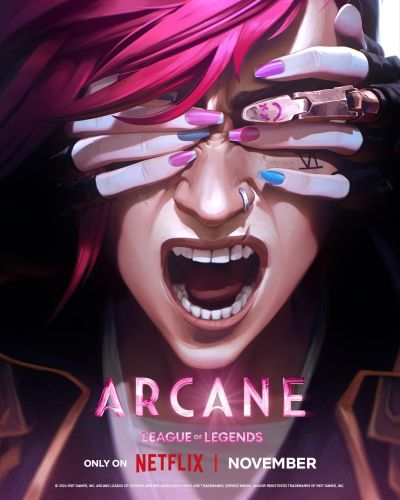 For this show, it means what would be enough for your average action movie or TV series, is just the beginning. It’s what I think makes the series above average in general. It always gives more than you asked for, and at the same time surprises you with sudden twists, unexpected developments, plus nuanced characterizations and relationships that escape standard black-and-white. Well, at least the
 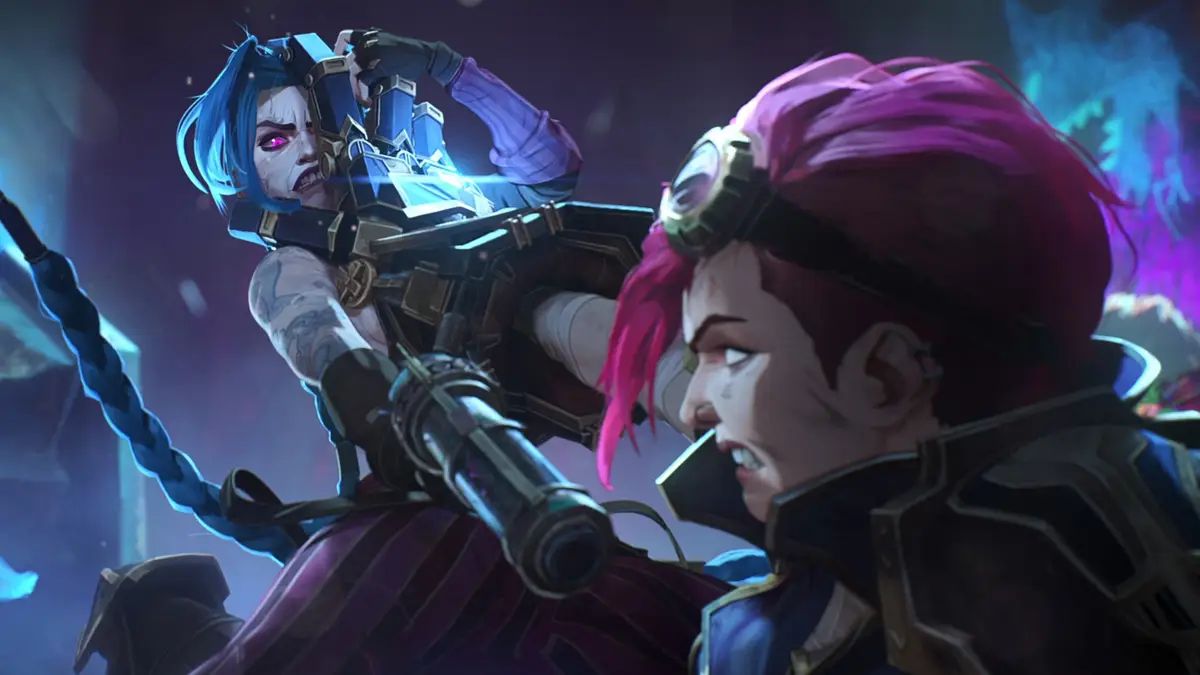 Why should the council accept Caitlyn as a new member, given she is only the daughter of Cassandra? Are political positions inherited in Piltover? If so, I’m not astonished the twin cities are having so many problems. Ambessa makes Caitlyn de facto commanding officer of the city and Caitlyn takes that position, only to backpedal an episode later. Why? If you want to tell an Emperor Anakin story, do so. But then go the full mile and
 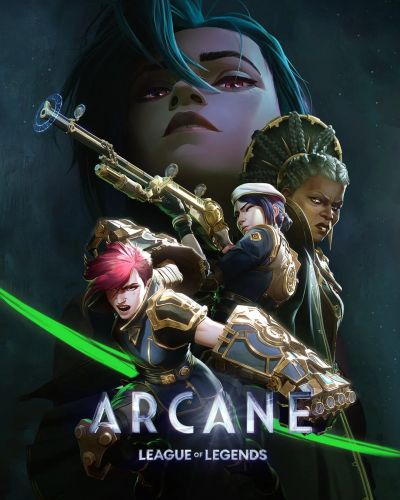 Disappointingly, the expected big final fight between Vi and Jinx is not to be found here: instead, they get along again after a bit of a brawl. Jinx the psycho? She seems quite normal again, after playing surrogate mother to the mute Isha for a couple of episodes. That’s far from any normal psychological reality. The screenwriters aren’t even above shamelessly milking nostalgia by giving us a flashback to Vander, Silco and the mother of Vi and Jinx sitting in “The Last Draw” – in a way it’s even repeated later again. Cheap, cheap, cheap!
 But there are also psychological and social themes of conflict: emotion versus intellect, safety versus liberty, preservation of the status quo versus progress by destruction of the existing system. These are best represented in sisters, Jinx and Vi, whose already shaky patchwork family has been torn into pieces by these battles. Yet it also shaped them, and put them on a collision course against each other. Or so it seemed, since the final confrontation is between Jayce and Viktor, while Jinx is given an unnecessarily bland, sacrificial death to save her sister – although the creators hint at the end that she may have survived. You could argue the character’s potential has been entirely wasted in the attempt to reshape her into a more positive protagonist in season two. I repeat: it feels absolutely weird. Looking at the titles of the first season I always expected the final fight to be between Jinx and Vi, and it feels like another broken storytelling promise.
 ★★
★★ The palpable sense of disappointment I felt when the end credits rolled, was all the more striking, given the decent way this opened. Ayse (Koç) is enjoying a shower after some afternoon delight with her lover, when there’s a thunderous knocking on the door. It’s her thoroughly disgruntled ex-husband. In the resulting fracas, the boyfriend is shot dead, and Ayse has to leap out of a window, and go on the run. Friends and family disown her, as the ancient concept of the honour killing still holds sway in contemporary Turkey. She can’t even go to the authorities, since the ex-husband is a policeman.
 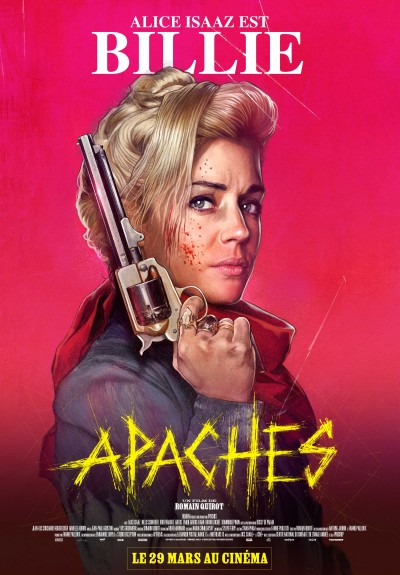 I guess the title is trying to riff off Gang’s of New York, though this is set significantly later. It begins in 1884, when the Apache gang run the Parisian underworld. Young orphans Billie, Paulie and Tricky are on the fringes, until Tricky is killed when forced to play Russian roulette by the gang’s leader, Jésus (Schneider). Billie is framed for the death by a corrupt cop, and spends fifteen years in jail. When she gets out, now a grown woman, Billie (Isaaz) seeks revenge on all those responsible for Tricky’s death, infiltrating the Apaches to get close to Jésus. Matters are complicated, by the presence in the gang of Paulie (Paradot), who was brought up by Jésus, and also by the seductive nature on her of the Apache lifestyle.
  However, there are definite flaws in Brandvold’s craftsmanship here, starting with chronology. John Bass served in the Mexican War, after which he married and settled in Kansas. The Bass family graveyard on the homestead is said to hold the remains of an infant sibling who died over 20 years before 1865 –in other words, before 1845, and the Bass twins would have been born ca. 1849. But the Mexican War was fought from 1846-1848. There isn’t time between Feb. 1848 and the end of 1849 to fit in John Bass’ post-war activity, subsequent courtship and marriage, the couple’s move to Kansas, and four pregnancies prior to Reno and Sara. (And Kansas was not even opened for settlement until 1854.) If his general knowledge of U.S. history didn’t furnish red flags here, very basic research would have precluded these kinds of mistakes.
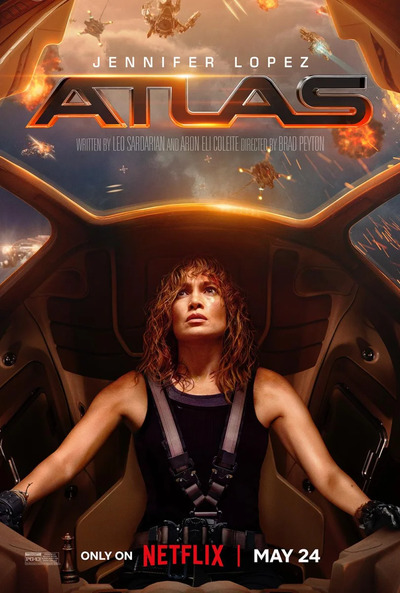 This was watched, effectively as the B-feature before Furiosa, with expectations along appropriate lines, given that basis. And as such, this is fine. It’s glossy, shiny and well-crafted technically, albeit making little or no emotional impact. This is partly because, in the early going, it feels suspiciously like someone said, “Hey Siri! Rewrite the script for
  ★★★
★★★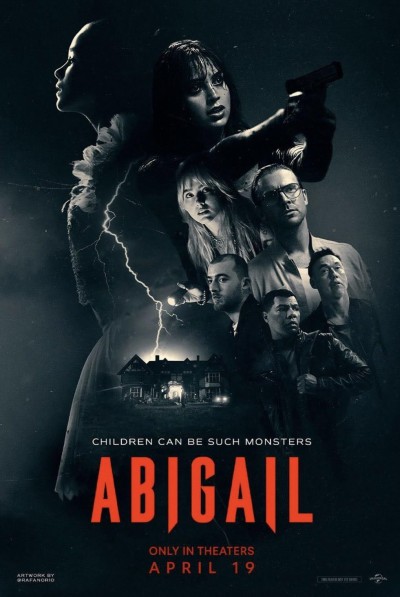 Today, it doesn’t seem to be enough. You instead end up with superficially drawn characters, about whom you just get to know enough to understand where they come from, and then you blast in with the gory action scenes. Don’t get me wrong; I liked the movie. But I would have liked it more if I had cared for the characters fate. They die here and there, they twist and they turn – and I just don’t care for them at all. The movie just has not the time to build its characters, or doesn’t want to take the time for it. Which is a pity but perhaps a sign of our frantic, “more, more, more” times. I recently saw a new BBC version of Christie’s story; while they took the time to tell it, they overloaded the plot because simple, storytelling has gone out the window in today’s film narrative.
 I was less impressed by Barrera who plays the main gangster role. She is set-up as the intelligent, tough and strong woman, but her actions constantly contradict this, e. g. she can’t imagine a kid could be evil. Why? Because she has a child of her own? Everyone knows children are natural monsters and only by time, education and life experience become “human”. Her colleagues turn out partly smarter than her there. And when she, a normal mortal, tells a vampire, “I’m going to kill you now!” you wonder how delusional she can be. There’s a big goof at the end, when she gets her mobile out to call her son and say goodbye. Weren’t all cells collected early on by Esposito’s character? If she had another, wouldn’t she have been able to call help? Why didn’t she? Perhaps I missed how she got it back – maybe in the control room when the two vampires were fighting. Someone please enlighten me? [Jim. I
 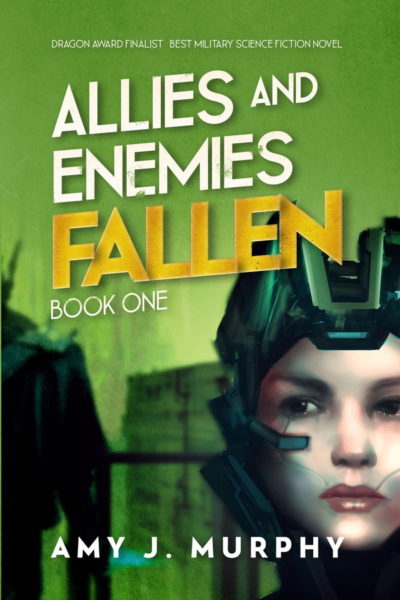 It’s a little hard to explain the universe in which this takes place. Humanity existed. However, their encounter with other races proved problematic for a variety of reasons, and led to them being exterminated, a genocide that was partly collateral damage in a war between the human-adjacent Eugenes and the definitely not Sceeloids. The former have a severely class-based society, where the lower-tiers are bred specifically to be soldiers, for example. One such “breeder” is Sela “Ty” Tyron, though she differs from the rest of her platoon in a couple of important ways. Firstly, her son is part of her group – though he doesn’t know it, having been removed from her care on his birth. His death (at the very beginning of the book, so not much of a spoiler) causes Ty to question everything she has believed about society, and her place in it.